Starting your RV journey can feel like exploring new lands. We remember the excitement and confusion we felt. The many choices, technical details, and hidden costs were hard to handle.
Many first-time buyers buy without knowing everything. We learned that knowing what you’re getting into is key. The right info can save you money and stress later.
This guide shares essential insights we wish we knew sooner. We cover everything from understanding RV types to budgeting for costs. Our aim is to help you make a smart choice that suits your life and wallet.
These RV buying tips are for anyone planning trips or living full-time in an RV. They’ll give you the confidence to avoid mistakes that could cost you a lot.
Key Takeaways
- Research different RV types thoroughly to match your travel style and needs
- Budget for hidden costs including insurance, maintenance, and campground fees
- Inspect used RVs carefully or hire a professional inspector
- Consider your towing capacity and driving experience with larger vehicles
- Plan for storage costs and seasonal maintenance requirements
- Test drive multiple units to understand handling and comfort levels
Understanding RV Types and Features
The RV market has many options for different travel styles. Knowing the differences between RV types is key. This knowledge helps you save money and avoid regret.
Many first-time buyers rush into buying RVs without doing their homework. Each RV type has its own benefits and challenges. Knowing this is essential for a good camping experience.
Different Types of RVs Available
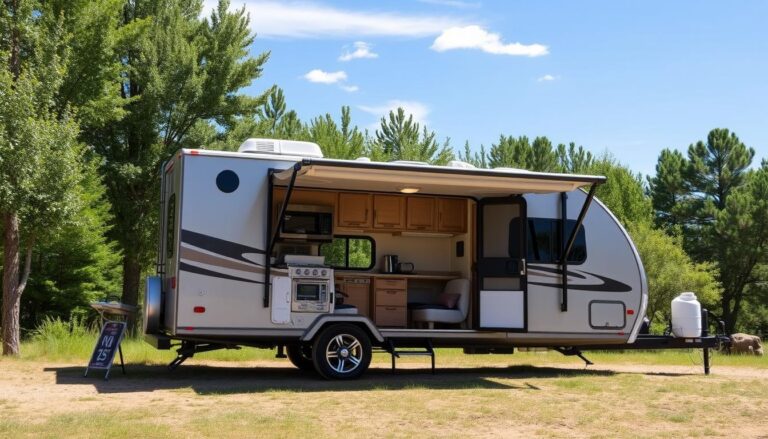
Travel trailers are a popular choice for new RV owners. They range from small pop-ups to large models over 30 feet. Travel trailers need a tow vehicle but let you explore without moving your whole setup.
Fifth wheels offer more space and stability than travel trailers. They connect to a special hitch in your truck bed. These units have separate bedroom areas and high ceilings, great for long trips or living full-time.
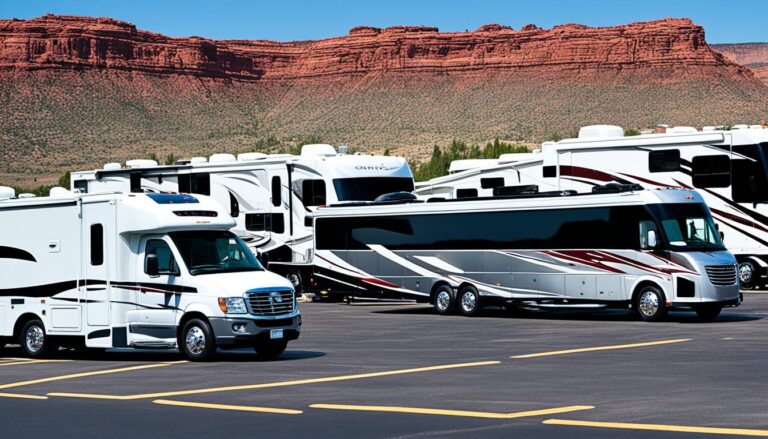
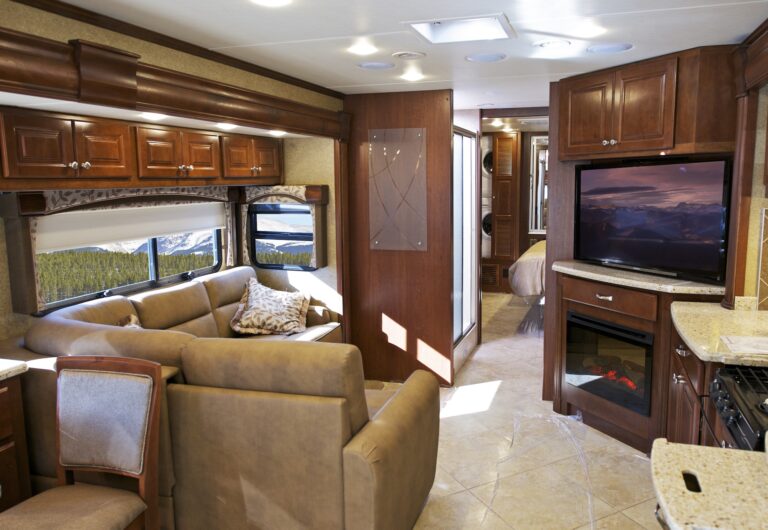
Class A motorhomes are the most luxurious and spacious. They have residential amenities like full kitchens and bathrooms. But, they need skilled driving and cost a lot to fuel.
Class B motorhomes, or camper vans, are great for couples or solo travelers. They offer basic amenities and are easy to drive. They’re perfect for quick adventures and city camping.
Class C motorhomes offer a balance between luxury and practicality. They have distinctive over-cab sleeping areas and are good for families. They have more space than Class B but are easier to drive than Class A.
Key Features to Consider
Sleeping capacity is very important. Count beds, dinettes, and sofas. Quality mattresses and enough headroom are key for comfort on long trips.
Storage space is also critical. Look for exterior and interior compartments. Think about both how much you can store and how easy it is to access.
Kitchen facilities vary a lot. Check the fridge size, counter space, and cooking options. Some RVs have big appliances, while others have compact ones.
Bathroom setups differ too. Wet baths save space but need careful water use. Separate showers and toilets offer more comfort but use more space.
Towing capacity and vehicle needs are important. Make sure your vehicle can safely tow your RV. Or, consider the cost of a suitable tow vehicle.
Pros and Cons of Each Type
Knowing the pros and cons of each RV type helps you choose the right one. This choice should match your needs and budget.
| RV Type | Pros | Cons | Best For | Price Range |
|---|---|---|---|---|
| Travel Trailer | Affordable, flexible, easy storage | Requires tow vehicle, setup time | Weekend warriors, families | $15,000-$80,000 |
| Fifth Wheel | Spacious, stable, residential feel | Requires pickup truck, expensive | Full-time living, long trips | $30,000-$150,000 |
| Class A | Luxurious, spacious, powerful | Expensive, poor fuel economy | Luxury travelers, full-timers | $80,000-$500,000 |
| Class B | Easy to drive, fuel efficient, versatile | Limited space, expensive per square foot | Couples, urban camping | $60,000-$200,000 |
| Class C | Good value, family-friendly, easier to drive | Moderate fuel economy, over-cab bed access | Families, first-time buyers | $50,000-$200,000 |
Travel trailers are great for occasional use and are the most affordable. They need practice to tow safely. Maintenance costs are low because the tow vehicle does double duty.
Motorhomes offer convenience and comfort but cost more to operate. Engine maintenance, insurance, and fuel add up. Think about these costs when budgeting.
The best essential RV shopping tips are to match RV type to your use. Weekend warriors might like travel trailers, while full-time travelers prefer motorhomes or fifth wheels. Honest self-assessment helps avoid mistakes and ensures fun adventures.
Budgeting for Your RV Purchase
Buying an RV is more than just the price tag. Successful RV buying means planning your finances well. This way, you can enjoy your travels without money worries.
First-time buyers often forget about costs beyond the sticker price. Smart budgeting looks at the whole picture. This helps avoid surprises and makes your RV investment smart.

Initial Costs of Buying an RV
Buying an RV comes with more than just the price. You should budget for key expenses right away. Down payments usually range from 10% to 20% of the RV’s cost.
Here are the main costs to think about:
- Purchase price: Changes based on RV type and features
- Sales tax: 6% to 10% of the price, depending on your state
- Registration fees: $50 to $500 a year
- Inspection costs: $100 to $300 for a pre-purchase check
- Delivery fees: $500 to $2,000 if needed
Don’t forget about documentation fees and extended warranties. Get quotes for all fees before you buy. This helps you compare costs between dealers and RVs.
Being prepared helps avoid overspending. Research typical costs for your RV type. This knowledge helps you negotiate better and set realistic expectations.
Ongoing Expenses (Insurance, Maintenance, etc.)
RV ownership costs don’t stop after you buy. Insurance premiums usually cost $1,000 to $4,000 a year, based on RV value and coverage.
Key ongoing costs include:
- Insurance: Keeps your RV safe
- Storage fees: $50 to $300 a month when not using
- Maintenance: 3% to 5% of RV value each year
- Fuel costs: Plan for lower gas mileage
- Campground fees: $20 to $100 a night
Regular maintenance keeps your RV in good shape. Set aside money each month for unexpected repairs. Preventive care is cheaper than emergency fixes.
Seasonal costs change with climate and use. Winterization services cost $150 to $500 a year in cold areas. Knowing these costs is key before buying an RV.
Tips for Financing Your RV
RV financing is different from car loans. Look at various financing options before deciding. Credit unions often have good rates for RV loans.
Compare these financing options:
| Financing Source | Interest Rate Range | Loan Terms | Best For |
|---|---|---|---|
| Credit Unions | 4% – 7% | 10-20 years | Members with good credit |
| Banks | 5% – 9% | 7-15 years | Established customers |
| Dealer Financing | 6% – 12% | 10-20 years | Convenience and promotions |
| Online Lenders | 5% – 10% | 5-20 years | Quick approval process |
Boost your credit score to get better financing terms. Pay down debt and avoid new credit before applying. Higher credit scores mean better rates and terms.
Think about the total loan cost, not just monthly payments. Longer terms mean lower payments but more interest. Choose the shortest term you can afford.
Get pre-approved before looking for your RV. This shows dealers you’re serious. Pre-approval also helps you stay on budget and avoid impulse buys.
Choosing the Right RV for Your Lifestyle
Before falling in love with an RV, think about how you’ll use it. The most important RV ownership lessons are about matching your RV to your real travel habits. Many first-timers choose based on dreams, not reality.
Think about how often you’ll travel, where you’ll go, and what you need for comfort. Understanding these factors helps avoid costly mistakes and regret.
Assessing Your Travel Style
Ask yourself honest questions about your travel likes. Do you like RV parks or boondocking? Your choice affects the RV systems you need.
Weekend warriors and full-time travelers have different needs. Short trips focus on fuel and easy setup. Long trips need more storage and comfort.
Think about your trip length too. Three-day weekends need different things than month-long trips. Short trips can do with less, while long trips need more self-sufficiency.
Considerations for Family or Solo Travel
Family travel has its own challenges. Privacy needs are key with teenagers or family members. Look for RVs with separate sleeping areas and bathrooms.
Solo travelers focus on different things. Maneuverability and fuel efficiency are more important when you’re alone.
Safety is different for solo and family travelers. Solo travelers might want better visibility and parking. Families need secure storage for kids’ stuff and sleeping areas.
Selecting the Right Size and Layout
Size affects where you can go and park. Buying a camper tips say choose the smallest RV you need. Bigger isn’t always better for tight spaces.
Floor plan is more important than size. A well-designed small RV can feel bigger than a big one. Think about your daily routines and how you’ll move around.
Don’t forget about storage needs. Full-time RVers need more closet and kitchen space than weekenders. Outdoor gear storage is key if you bring bikes or kayaks.
Remember, your first RV might not be your last. Many RVers start small to learn before getting their dream RV.
Essential RV Accessories You Shouldn’t Forget
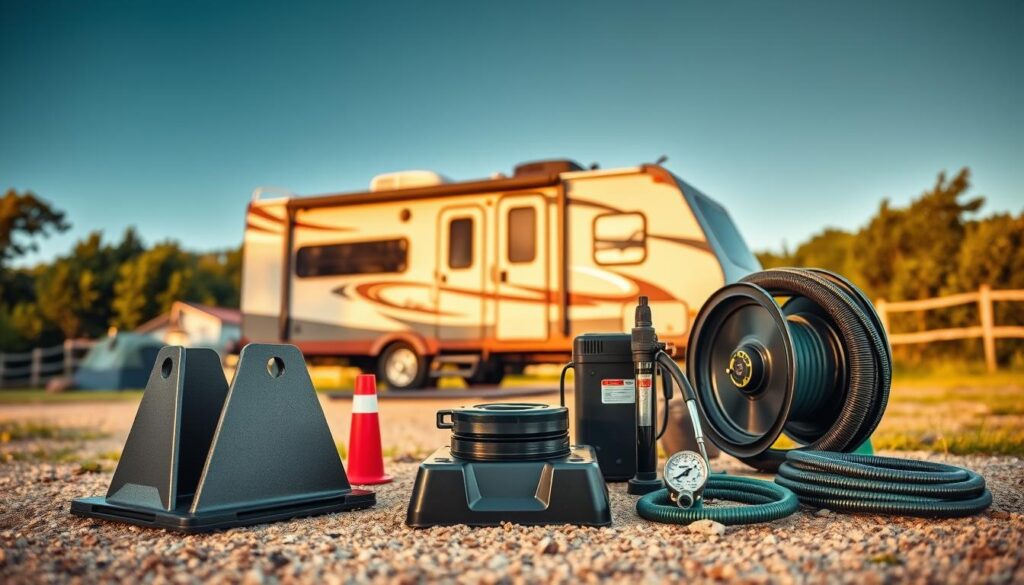
One big RV beginner mistake to avoid is not getting the right accessories. These items make your RV trip better and safer. Many new RV owners find out they’re missing important things.
Good accessories make your RV feel like home. It’s easy to forget about them when buying an RV. But, they’re key to a great camping trip.
Must-Have Kitchen Gadgets
RV kitchens are small and tricky. Start with multi-functional appliances to save space. They help you cook more without taking up too much room.
A compact pressure cooker is great for many things. It cooks, slow cooks, and steams all in one. It uses less propane and electricity. Use a collapsible colander and nesting mixing bowls to save space too.
A good water filter system is very important. Water quality at campsites can be bad. A good filter keeps your water clean for drinking and cooking.
Don’t forget a magnetic spice rack, over-the-sink cutting boards, and stackable food storage containers. They help keep your kitchen organized and make cooking easier.
Safety Gear for Your RV
Safety gear is a must. It keeps you and your RV safe. Always have the right safety gear before you go.
A surge protector is very important. Bad electrical systems can damage your RV’s electronics. Look for one that also monitors the electricity.
Every RV needs a water pressure regulator. High water pressure can damage your plumbing. This can cost a lot to fix.
Fire safety is key. Install smoke and carbon monoxide detectors if needed. Carry a fire extinguisher for electrical and grease fires. A fire blanket is also good for kitchen fires.
Don’t forget emergency communication devices. A two-way radio keeps you in touch with others. A satellite communicator is great for emergencies in places without cell service.
Comfort Enhancements
Comfort accessories make your RV feel like home. They might seem like extras, but they really make a difference. They help you avoid common RV beginner mistakes.
Good memory foam mattress toppers make your RV bed better. Most RV mattresses are not very comfortable. A topper can make a big difference in your sleep.
Leveling blocks are very important. An unlevel RV is not comfortable and can affect how well things work. Interlocking leveling blocks help you adjust and save space. Your fridge needs to be level to work right.
For better air, use vent fans. For privacy and to control the temperature, use window coverings. Outdoor rugs make your outdoor space more comfortable. These items help you deal with different weather and places.
| Accessory Category | Essential Items | Estimated Cost | Priority Level |
|---|---|---|---|
| Kitchen | Pressure cooker, water filter, collapsible storage | $200-400 | High |
| Safety | Surge protector, water regulator, fire extinguisher | $150-300 | Critical |
| Comfort | Mattress topper, leveling blocks, vent fans | $300-600 | Medium |
| Utilities | Sewer hose, electrical adapters, water hose | $100-200 | Critical |
Start with the most important safety and utility items. Add comfort items as you can. This way, you can enjoy your camping trips more.
Choose quality over quantity with RV accessories. Good items last longer and save you money. They also prevent problems on your trips.
Learning About RV Maintenance Basics
Learning RV maintenance basics is key to protecting your investment. It ensures safe travels for years. Regular maintenance turns big problems into small ones, letting you explore freely.
Think of RV maintenance as investing in your freedom. Every hour you spend on maintenance saves you from frustration later. We’ll teach you essential skills, from simple checks to seasonal prep.
Routine Maintenance You Should Know
Your RV needs regular care to work well. Start with a systematic check of all systems. Start from the top down to avoid big problems.
Roof maintenance is key to avoiding water damage. Check your roof monthly for cracks and wear. Different roofs need different care:
- Rubber roofs need gentle cleaning with mild soap
- Fiberglass roofs can handle stronger cleaners
- Metal roofs need rust prevention treatments
- All roof types need regular sealant checks
Battery care keeps your electrical systems running. We check batteries monthly and clean cables. Clean terminals mean reliable power for lights and more.
Exterior resealing keeps your RV strong. Focus on wear-prone areas like windows and doors. Check seals every three months and reseal as needed.
Seasonal Checks and Preparations
Each season brings its own challenges for your RV. We have seasonal checklists for weather-related issues. Preparation stops problems before they start.
Spring prep wakes up your RV from winter. Check all systems after being idle:
- Test all electrical components and lights
- Inspect plumbing for freeze damage
- Check tire pressure and tread wear
- Verify propane system functionality
- Clean and inspect air conditioning units
Summer maintenance focuses on cooling and heat protection. We check tire pressure more often in hot weather. Overheated tires can cause dangerous blowouts.
Fall prep gets your RV ready for cold weather. We focus on protecting plumbing from freezing. This includes draining water lines and adding antifreeze.
An ounce of prevention is worth a pound of cure, when you’re far from RV service centers.
Common Repairs and Troubleshooting
Every RV owner faces common issues. We have guides for the most frequent problems. Basic repair skills save time and money and boost your confidence.
Electrical issues often come from loose connections or blown fuses. Keep a multimeter for circuit tests. We carry spare fuses and basic electrical tools for quick fixes.
Plumbing problems usually involve clogs, leaks, or pump issues. Learn to find your water pump and understand your tank system. Simple repairs prevent vacation-ruining emergencies.
Appliance troubleshooting includes refrigerators, water heaters, and furnaces. Most issues are with pilot lights, gas flow, or electrical connections. Read your manuals well and keep them handy.
Slide-out maintenance prevents costly repairs and ensures smooth use. Regular lubrication of tracks and seals is key. We check seals monthly and adjust as needed.
Tire maintenance is more than just checking pressure. Learn to spot uneven wear for alignment or suspension issues. Proper tire care prevents dangerous blowouts and extends tire life.
Keep a well-stocked tool kit for common repairs. Include screwdrivers, wrenches, electrical tape, sealants, and spare parts. Being prepared makes big problems small.
Planning Your First RV Trip
Your first RV trip is coming, and planning is key to making it unforgettable. Planning an RV trip is different from booking a hotel. You need to think about the open road and its unique needs.
Knowing your RV’s limits is important. Look for places that fit your RV and have the right amenities. Planning well helps avoid common mistakes that can ruin your trip.
Finding the Perfect Campgrounds and RV Parks
Looking for campgrounds and RV parks is more than just picking pretty spots. Start by knowing your RV’s size and weight. This helps you find the right places.
Hookup requirements vary a lot. Some places have full hookups, while others have just basic amenities. Think about what you need.
Use sites like Recreation.gov for national parks and KOA.com for private spots. Apps like Campendium and iOverlander are great for reviews and photos from other RVers.
When choosing places, consider these things:
- Maximum RV length restrictions
- Available hookup types and amperage
- Wi-Fi availability and cell service strength
- Pet policies and designated areas
- Proximity to attractions and grocery stores
Building Your Travel Itinerary
Creating a travel plan means balancing dreams with reality. RV travel is different from car travel. You’ll drive less each day.
Plan for shorter drives than you would in a car. Most RVers drive 200-300 miles a day. This gives time for stops and delays.
Remember setup and breakdown time at each stop. It takes 30-60 minutes. Plan for this time.
| Trip Duration | Recommended Stops | Daily Driving Limit | Setup Buffer Time |
|---|---|---|---|
| Weekend (2-3 days) | 1-2 locations | 150-200 miles | 1 hour each end |
| Week-long trip | 3-4 locations | 200-250 miles | 1.5 hours each end |
| Extended vacation | 5-7 locations | 250-300 miles | 2 hours each end |
| Cross-country journey | 8+ locations | 300+ miles | 2+ hours each end |
Be flexible with your plans. Weather, mechanical issues, or loving a spot can change your plans. Book the first nights in advance and leave later plans open.
Mastering Efficient RV Packing
Packing for an RV trip is different from packing for a hotel. Weight distribution and storage space are key. Every item must have a reason to be in your RV.
Start with essential items and pack systematically. Make a checklist that you can update after each trip. Experienced RVers pack 30% less than they think they need.
Choose items that do more than one thing. A cutting board that fits over your sink saves space. Nesting cookware saves room and lets you cook fully.
Organize your storage by how often you use things. Keep daily items easy to reach. Put emergency supplies in harder spots. Label everything to avoid searching.
Weight affects your RV’s safety and handling. Heavy items should be low and centered. Never go over your RV’s weight limits.
Here are some packing tips for efficiency:
- Roll clothes instead of folding to save space
- Use vacuum storage bags for bedding and clothes
- Pack one complete outfit in your tow vehicle for emergencies
- Bring only medications you’ll need during the trip
- Choose lightweight alternatives for camping chairs and outdoor gear
You can buy forgotten items along the way. It’s better to pack light and buy what you need than to overload your RV. Your first RV trip should be about the journey, not managing too much stuff.
RV Insurance and Registration Tips
Many new RV owners don’t get how complex insurance and registration can be. We’ve seen many struggle with paperwork, gaps in coverage, and unexpected costs. Knowing these before you buy can save you time, money, and stress.
RV insurance is different from car insurance. Your RV needs special protection for its unique risks and how you use it. We’ll help you understand the key coverage options and what you need to register your RV.
Coverage Options You Need to Know
RV insurance has many types of coverage. Liability coverage is a must in most states. It covers damages you cause to others. But, it’s not enough for most RV owners.
Collision and comprehsensive coverage protect your RV from damage. Collision covers accidents. Comp covers theft, vandalism, weather damage, and more.
There are also special RV coverages you should think about:
- Vacation liability coverage protects when your RV is parked and used as a temporary home
- Emergency expense coverage pays for lodging and travel if your RV is not livable
- Personal effects coverage protects your belongings inside your RV
- Attached accessories coverage covers awnings, satellite dishes, and more
Your insurance cost depends on your RV’s value, how often you use it, and where you store it. Full-time RVers usually pay more because they’re out more.
Navigating the Registration Process
Registration rules for RVs vary by state. Some states offer better deals for full-time RVers. It’s smart to look into these before deciding where to live.
To register your RV, you’ll need to show proof of ownership, insurance, and sometimes a safety check. Keep these documents handy because you’ll need them often.
States might classify RVs differently based on size and weight. Class A motorhomes might need special licenses in some places. Make sure to check your state’s rules to avoid surprises.
Avoiding Costly Insurance Mistakes
Many RV owners make big mistakes that cost a lot of money. Underinsuring your RV is the biggest mistake. Owners save money by choosing low coverage, then face huge costs after accidents.
Another mistake is not telling your insurer about changes to your RV. Adding solar panels, upgrading appliances, or installing expensive electronics raises your RV’s value. Tell your insurer about these changes to keep your coverage right.
Many RV owners don’t know what their policy doesn’t cover. Standard policies might not cover all types of damage or certain situations. Always read your policy and ask about what’s not covered before you sign.
Lastly, many forget to update their coverage when their use changes. If you start living in your RV full-time, your insurance needs change a lot. Regularly check your policy to make sure it fits your life now.
Connecting with the RV Community
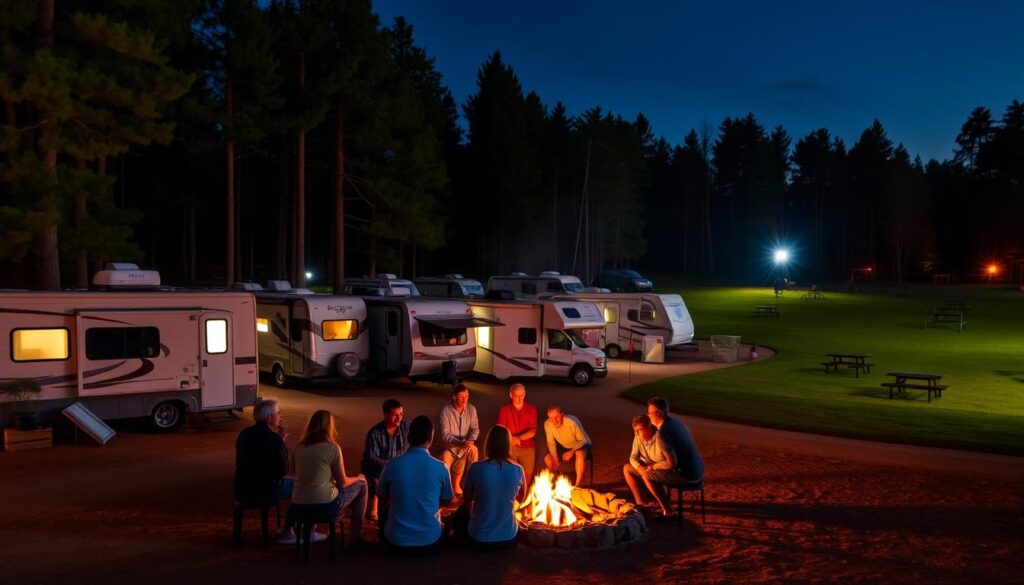
The RV lifestyle brings new friends and resources. Many first-timers don’t expect this. Connecting with the RV community is key. It offers support, knowledge, and friendship that changes your journey.
Starting early saves time, money, and stress. The community welcomes newcomers with open arms. They love to share their knowledge and experiences.
Finding Local RV Clubs and Organizations
Local RV clubs are great for learning from others. They meet monthly and offer hands-on learning. You can’t get this from books or videos.
Clubs have group rallies for camping and learning. There are seminars on maintenance, cooking, and social events. These help you make lasting friends.
Start with the Good Sam Club, which has chapters everywhere. Clubs also post at RV dealerships and campgrounds. Don’t be shy about introducing yourself. They welcome new members and love to share their passion.
Exploring Online Forums and Digital Resources
The internet has changed how RVers share and connect. Online forums offer 24/7 access to knowledge from all over the world.
RV.net, iRV2, and Escapees forums are great for questions. Social media groups on Facebook offer real-time discussions and photo sharing. These make the community feel alive.
Apps like Campendium and RV Life connect you with other RVers on the road. They help you find travel buddies, get tips, and share your adventures.
Discovering the Benefits of RV Networking
Networking with RVers offers more than just advice. We’ve found hidden spots, saved money, and found travel buddies.
Experienced RVers share tips on routes, timing, and attractions. They also offer emotional support and celebrate your wins.
The friendships you build in the RV community last a lifetime. Many RVers plan to meet up with friends they’ve made through clubs and online.
This network is invaluable when you face mechanical issues or need help in new places. The RV community’s willingness to help is amazing. It makes you feel safe on your travels.
Winterizing Your RV for Longevity
Keeping your RV safe all year is key. Winterizing is a must to avoid costly repairs. Cold weather can harm your RV’s plumbing, and knowing how to protect it is vital.
Why Winterization is Important
Water expands when it freezes, putting a lot of pressure on your RV’s pipes. This can cause big problems like burst pipes. Winterizing helps keep your plumbing safe during the cold months.
Step-by-Step Winterization Process
First, empty all water tanks and remove water filters. If your RV doesn’t have a water-heater bypass kit, get one. Use a special RV antifreeze and connect it to your water pump.
Run the antifreeze through all faucets, shower heads, and the toilet until it’s pink. Don’t forget outdoor showers and washing stations.
Common Mistakes to Avoid During Winterization
Don’t use car antifreeze in your RV’s plumbing. It’s toxic and can ruin your water. Make sure to drain all water before adding antifreeze.
Many forget about ice makers and washing machines. Always check your RV’s manual for winterizing tips for all water systems.
FAQ
What’s the most important thing first-time RV buyers should know before making a purchase?
How do I choose between a travel trailer and a motorhome for my first RV?
What are the essential RV accessories I need to buy immediately?
How much should I budget for RV maintenance and repairs?
FAQ
What’s the most important thing first-time RV buyers should know before making a purchase?
First-time RV buyers need to know that owning an RV costs more than the price tag. They should think about insurance, maintenance, storage, and accessories. A good budget helps avoid surprises and makes sure you can afford the RV lifestyle.
How do I choose between a travel trailer and a motorhome for my first RV?
Think about how you like to travel and if you can tow a trailer. Travel trailers are easy to tow but need a separate car for exploring. Motorhomes are all-in-one but bigger. Choose based on your needs and what you already own.
What are the essential RV accessories I need to buy immediately?
First, get safety and basic items like a water pressure regulator and surge protectors. Also, get leveling blocks and sewer hoses. Then, add kitchen essentials for small spaces. Start with the basics and add more as you can.
How much should I budget for RV maintenance and repairs?
Set aside 3-5% of your RV’s value each year for maintenance and repairs. For a ,000 RV, budget
FAQ
What’s the most important thing first-time RV buyers should know before making a purchase?
First-time RV buyers need to know that owning an RV costs more than the price tag. They should think about insurance, maintenance, storage, and accessories. A good budget helps avoid surprises and makes sure you can afford the RV lifestyle.
How do I choose between a travel trailer and a motorhome for my first RV?
Think about how you like to travel and if you can tow a trailer. Travel trailers are easy to tow but need a separate car for exploring. Motorhomes are all-in-one but bigger. Choose based on your needs and what you already own.
What are the essential RV accessories I need to buy immediately?
First, get safety and basic items like a water pressure regulator and surge protectors. Also, get leveling blocks and sewer hoses. Then, add kitchen essentials for small spaces. Start with the basics and add more as you can.
How much should I budget for RV maintenance and repairs?
Set aside 3-5% of your RV’s value each year for maintenance and repairs. For a $50,000 RV, budget $1,500-$2,500. Preventive care is cheaper than emergency fixes, so stay on top of it.
What RV buying mistakes should I avoid as a beginner?
Don’t buy an RV that’s too big or complex for you. Research costs, get inspections, and think about storage and insurance. Start small to learn the ropes before moving up.
How do I find the right RV size and layout for my family?
Think about your family’s needs, like how many people will travel and if you need privacy. Consider how you’ll use the space, like if you’ll be inside or outside a lot. Look at different layouts to find the best fit for your family.
What should I know about RV insurance before buying?
RV insurance is different from car insurance and costs more. It covers liability, collision, and more. Your premium depends on your RV’s value, how often you use it, and your driving record. Get quotes and understand what’s covered before buying.
How important is it to join the RV community as a new owner?
Joining the RV community is very important. Local clubs and online groups offer advice and help. They can save you money and make your RV experience better with their knowledge and friendship.
When should I start planning my first RV trip?
Start planning 2-3 months before your trip, more if you’re traveling in peak seasons. Research campgrounds, make reservations, and plan your itinerary. RV travel is slower, but it’s part of the charm.
Why is winterization so critical for RV owners?
Winterization is key to protect your RV from freezing damage. Water expansion can cause big problems. Replace water with RV antifreeze and protect systems from cold. It’s a small effort that saves you from big expenses.
,500-,500. Preventive care is cheaper than emergency fixes, so stay on top of it.
What RV buying mistakes should I avoid as a beginner?
Don’t buy an RV that’s too big or complex for you. Research costs, get inspections, and think about storage and insurance. Start small to learn the ropes before moving up.
How do I find the right RV size and layout for my family?
Think about your family’s needs, like how many people will travel and if you need privacy. Consider how you’ll use the space, like if you’ll be inside or outside a lot. Look at different layouts to find the best fit for your family.
What should I know about RV insurance before buying?
RV insurance is different from car insurance and costs more. It covers liability, collision, and more. Your premium depends on your RV’s value, how often you use it, and your driving record. Get quotes and understand what’s covered before buying.
How important is it to join the RV community as a new owner?
Joining the RV community is very important. Local clubs and online groups offer advice and help. They can save you money and make your RV experience better with their knowledge and friendship.
When should I start planning my first RV trip?
Start planning 2-3 months before your trip, more if you’re traveling in peak seasons. Research campgrounds, make reservations, and plan your itinerary. RV travel is slower, but it’s part of the charm.
Why is winterization so critical for RV owners?
Winterization is key to protect your RV from freezing damage. Water expansion can cause big problems. Replace water with RV antifreeze and protect systems from cold. It’s a small effort that saves you from big expenses.