Planning your next adventure on the road can feel exciting yet overwhelming. We understand that picking the perfect recreational vehicle requires careful consideration of your family’s unique needs and preferences.
Three main options dominate today’s market, each with its own advantages. A motorhome combines your living space and driving capability into one convenient unit. You can simply hop in the driver’s seat and head to your destination without any towing hassles.
Towable options provide different benefits entirely. Lightweight models offer flexibility and affordability, making them perfect for families who want to unhitch and explore local areas. Larger towable units deliver spacious, apartment-like comfort with superior stability on the highway.
Our guide will help you understand which option aligns best with your budget, family size, and adventure style. We’ll explore the key differences that matter most for your camping experience.
Key Takeaways
- Motorhomes offer all-in-one convenience with integrated living and driving spaces
- Lightweight towable options provide flexibility and more camping location choices
- Larger towable units deliver spacious, apartment-style living with better towing stability
- Your choice depends on budget, family size, and preferred camping style
- Each option has unique advantages for different types of adventures
- Consider towing capacity and campground accessibility when making your decision
Understanding the Basics of RV Types
The world of recreational vehicles has three main types. Each is made for different travel styles and preferences. Knowing the differences between these RV types is key to choosing the right one. Each type has its own benefits and things to consider, affecting your camping experience.
Let’s look at what makes each type unique. The main options are motorhomes, travel trailers, and fifth wheels. They meet different needs and budgets.
What is a Motorhome?
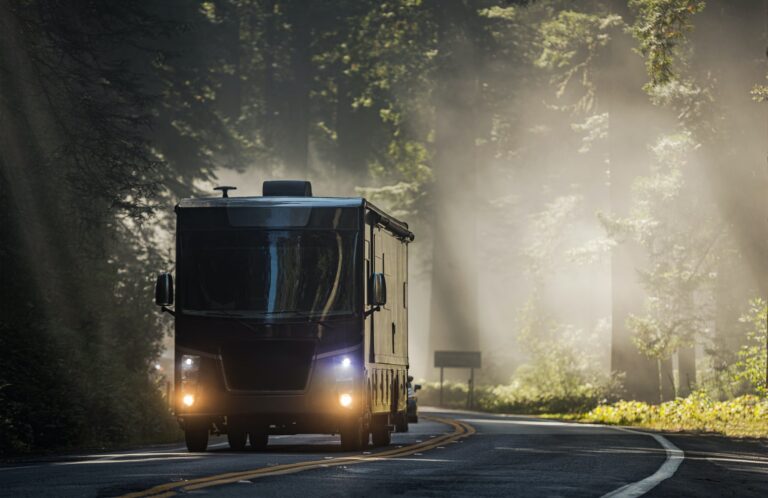
Motorhomes are self-contained units that combine living space and driving in one. You don’t need a separate tow vehicle. This makes hitching and unhitching easier.
These homes on wheels give you instant access to your living space. You can stop anywhere and use your kitchen, bathroom, and sleeping areas right away. Motorhomes range from compact Class B vans to luxurious Class A coaches.
Motorhomes are great for spontaneous travelers. They offer quick access to your living space. This is perfect for those who love simplicity.
What is a Travel Trailer?
Travel trailers are the most versatile option. They connect to a hitch under your tow vehicle’s bumper. You don’t need a truck to tow most travel trailers.
Many vehicles can tow travel trailers, from SUVs to trucks. Once you arrive, you can unhitch and use your vehicle for local trips. This flexibility is great for families who want to explore without driving their whole home.
Travel trailers come in all sizes and prices. You can find small units for weekend trips or large ones for longer stays. This variety suits different budgets and needs.
What is a Fifth Wheel?
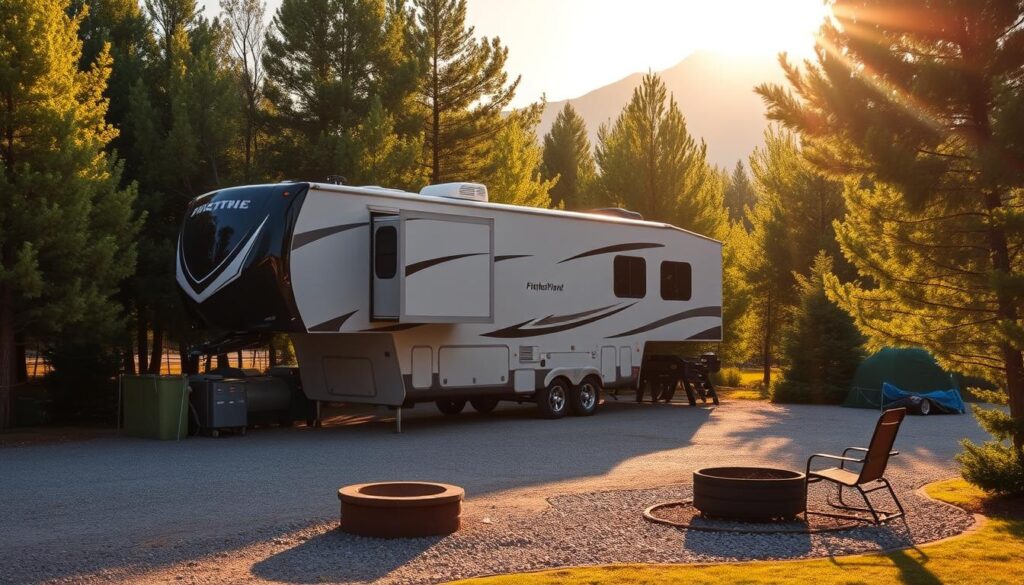
Fifth wheels need a pickup truck but offer the most spacious and stable towing. They connect to a special hitch in the truck bed. The front section, called a cap, extends over the bed with a pin box underneath.
This design gives more interior space and better weight distribution. It makes towing feel more stable than other options. Many see fifth wheels as feeling like a permanent home.
The elevated front section adds headroom and often houses the master bedroom. This design maximizes space while keeping the road stable. Fifth wheels are popular among full-time RVers who value comfort and space.
Now we know the basics of RV types. We can look at the good and bad of each. This knowledge will help us compare them better in the next sections.
Pros and Cons of Motorhomes
Motorhomes have good points and bad points that affect your RV experience. They offer a special way to travel that many families like. But, knowing all about them helps us decide if they’re right for us.
Motorhomes solve many RV problems with their all-in-one design. But, they also have their own special issues. Let’s look at what they do well and what they don’t.

Space and Comfort
Motorhomes are great because they’re all set up for you. You can cook, use the bathroom, and relax while driving. This makes long trips better for families.
The inside of motorhomes is smartly laid out. They often have slide-outs to make more room. Full kitchens, big bathrooms, and separate beds make them feel like home.
But, they don’t have as much room as bigger RVs. You might have to choose what to bring on trips. This can be hard.
Driving Experience
Driving a motorhome is easy because you don’t have to tow anything. It’s like driving a big truck. No worries about trailer sway or jackknifing makes driving easier.
Setting up at campgrounds is also easy. Just park, level, and hook up utilities. This means more time to enjoy your trip.
But, they use a lot of gas and are hard to park. Motorhomes get 6-10 miles per gallon, which is expensive. Finding a place to park can be tough.
Maintenance Considerations
Keeping a motorhome in good shape is hard. It’s like taking care of a car and a house at the same time. Engine and chassis work add to the cost.
Problems with the engine can mess up your living space. This is a big problem on long trips or when living in one full-time.
Insurance for motorhomes is more expensive than for travel trailers. This can be a big strain on your budget over time.
| Aspect | Advantages | Disadvantages | Impact Level |
|---|---|---|---|
| Convenience | All-in-one design, quick setup | No separate vehicle for local trips | High |
| Driving | No towing experience needed | Poor fuel economy, parking challenges | Medium |
| Costs | Single purchase decision | Higher insurance and maintenance | High |
| Flexibility | Travel while using amenities | Limited storage space | Medium |
Knowing the good and bad points helps us decide if a motorhome is right for us. They’re convenient, but the costs and challenges need careful thought before buying.
Pros and Cons of Travel Trailers
Travel trailers are a top choice for American families starting their RV journey. They offer a great mix of cost and usefulness. But, they also have good points and challenges to consider before you decide.
Travel trailers are loved for their easy access and flexibility. They let you keep your living space separate from your car. This way, you can explore, shop, and see sights without leaving your campsite.
Affordability and Variety
Travel trailers are great for families watching their budget. They’re the most affordable way to start RVing. Prices start around $15,000, much lower than motorhomes’ $60,000+.
The variety in travel trailers is amazing. We help families pick from small 16-foot models to big 35-foot ones. You can find everything from bunk beds to outdoor kitchens and luxury features.
Maintenance costs are lower because you don’t have to fix an engine inside. Families save thousands a year on upkeep. Insurance is also 50-70% cheaper than motorhomes.
Towing Capabilities
Towing a travel trailer needs careful thought. Having the right vehicle and learning to tow are key. Many trucks, SUVs, and some cars can tow smaller trailers.
But, towing has its own set of challenges. Backing up takes practice. Start in an empty lot to get the hang of it. Wind and weight affect your drive, making highways and mountains tricky.
Gas mileage drops when towing. Expect a 25-40% decrease, depending on your vehicle and trailer. This affects your fuel budget.
Storage and Space
Travel trailers are easy to store when not in use. They fit in driveways, garages, or storage without taking up motorhome space. Many places allow travel trailers but not motorhomes.
Space inside varies by model and design. Modern travel trailers use every inch well. You’ll find full kitchens, comfy beds, and good bathrooms.
Storage space inside is limited compared to bigger RVs. We help families pick the right model for their storage needs. Look for good closet space, exterior storage, and creative solutions.
| Feature | Advantages | Disadvantages | Best For |
|---|---|---|---|
| Cost | Lowest initial investment, reduced insurance and maintenance | Requires suitable tow vehicle purchase | Budget-conscious families |
| Flexibility | Detach for local trips, easier parking when unhitched | Setup and breakdown time required | Families wanting local exploration |
| Towing | Lighter weight options available, good fuel efficiency when not towing | Reduced fuel economy while towing, requires towing skills | Experienced drivers or those willing to learn |
| Storage | Compact storage when not in use, fits in most driveways | Limited interior storage space | Occasional users with home storage space |
We think travel trailers are perfect for many families starting RVing. They offer great value, variety, and flexibility. Towing might take some getting used to, but most families master it with practice and prep.
Pros and Cons of Fifth Wheels
Fifth wheels are like mobile apartments. They are the top choice for those who want lots of space and comfort. Their design and engineering make them stand out.
Fifth wheels have many good points for RV fans. But, they also have some downsides and costs to think about.
Stability and Towability
The fifth wheel design is very stable. The hitch point is over your truck’s rear axle. This makes towing easier and safer.
Backing up a fifth wheel is easier and more controlled. It’s great for tight spots. Many RV owners say they feel more confident towing a fifth wheel than a travel trailer.
The hitch system connects well to your truck bed. This means less bouncing and jerking. You’ll have a smoother ride, even in bad weather.
Living Space and Layout
Fifth wheels use space well. The front part goes over your truck bed, adding room without being too long. This lets them have taller ceilings and creative layouts.
Most fifth wheels have different levels and areas. The bedroom is up front, giving privacy. The main floor has the kitchen, dining, and living room, all with lots of room.
“The spaciousness of a fifth wheel is unmatched. We have room for everything we need, plus space for guests to visit comfortably.”
Fifth wheels have lots of storage. They have many cabinets, closets, and outside compartments. The basement is great for camping gear and tools.
Price and Resale Value
Fifth wheels cost more than travel trailers. But, they’re worth it for their quality and features. Prices start at $40,000 and go up to $150,000 for luxury models.
But, fifth wheels hold their value well. They’re popular in the used market. A well-kept fifth wheel can keep 60-70% of its value after five years.
| Fifth Wheel Feature | Advantage | Disadvantage | Cost Impact |
|---|---|---|---|
| Hitch System | Superior stability and control | Complex installation required | $1,500-$3,000 setup |
| Living Space | Maximum interior room | Requires capable truck | Higher fuel costs |
| Construction Quality | Better resale value | Higher purchase price | 15-25% premium over trailers |
| Storage Capacity | Abundant interior and exterior space | Heavier weight to tow | Requires heavy-duty truck |
There are extra costs like higher insurance and maintenance. But, many find the extra comfort and features worth it. Think about your RV plans before deciding on a fifth wheel.
Cost Comparison: Upfront and Ongoing Expenses
RV ownership costs more than the sticker price. Knowing all costs helps you choose wisely. Look at purchase prices, insurance, maintenance, and fuel over time.
First-time buyers often overlook the big picture. Smart RV shopping means looking at total ownership expenses over several years. This way, you see which option fits your budget best.
Initial Purchase Prices
Travel trailers are the most affordable way to start. New 2025 models start at $12,000. They make RV adventures possible for families on a tight budget.
Fifth wheels cost more, starting at $32,000. You also need a heavy-duty pickup truck, adding $40,000 to $70,000 to your total cost.
Motorhomes are the priciest, starting at $60,000 for Class C units. Luxury Class A coaches can cost over $300,000. The price varies with size, features, and quality.
The key to RV ownership is not just what you can afford to buy, but what you can afford to own and maintain over time.
Insurance and Maintenance Costs
Insurance costs vary by RV type and value. Travel trailers cost $200 to $500 a year. Fifth wheels cost $300 to $800 annually.
Motorhomes have the highest insurance costs. Annual premiums can range from $1,000 to $4,000 or more based on the coach’s value and coverage.
Maintenance costs also vary. Travel trailers have low costs due to their simplicity. You’ll mainly replace tires and do basic upkeep.
Fifth wheels need moderate maintenance for their systems and appliances. Motorhomes require the most maintenance, including engine and chassis work.
Fuel Efficiency Factors
Fuel costs are a big part of your RV budget. Towing any trailer lowers your tow vehicle’s fuel economy. Expect a 25% to 40% decrease in miles per gallon when towing.
Motorhomes use the most fuel due to their size and weight. Class A coaches get 6 to 10 miles per gallon. Smaller Class C units may get 8 to 14 mpg.
Motorhome owners often tow a small car for local trips. This “dinghy” vehicle adds to both purchase and operating costs.
| RV Type | Starting Price | Annual Insurance | Maintenance Level | Fuel Economy Impact |
|---|---|---|---|---|
| Travel Trailer | $12,000+ | $200-$500 | Low | 25-40% reduction when towing |
| Fifth Wheel | $32,000+ | $300-$800 | Moderate | 30-45% reduction when towing |
| Motorhome | $60,000+ | $1,000-$4,000 | High | 6-14 mpg standalone |
Make a realistic budget that includes all costs. Don’t forget to account for storage fees, registration costs, and campground expenses in your calculations. This ensures your RV dreams don’t become a financial burden.
Think about your travel patterns when evaluating fuel costs. Weekend warriors might find motorhome fuel expenses manageable. But full-time travelers need to budget carefully for this major ongoing expense.
Which RV is Best for Families?
Finding the right RV for families is all about space, comfort, and useful features. Your RV selection gets tricky when you think about everyone in the family, pets, and different needs. Each RV type has its own benefits for families, and knowing these can help you choose the best one.
Family needs shape which RV is best. Families often face challenges picking an RV because they focus too much on how many can sleep there. They forget about the daily living space and privacy.
Space Requirements for Larger Families
Fifth wheels are great for big families because of their bi-level construction. They offer up to three living areas, perfect for family trips. This setup gives everyone their own space, from teenagers to grandparents.
Travel trailers come in many sizes for families. They range from cozy for couples to big ones that sleep ten. Families with young kids often like travel trailers because they’re easy to move around in.
Motorhomes are the easiest for families who don’t want to tow. They make road trips better by letting everyone move around safely and get to bathrooms and snacks easily.

Kid-Friendly Features
Think about your kids’ ages and energy levels when picking an RV. Bunkhouse travel trailers have special sleeping areas for kids. These areas often have entertainment and places to store toys and games.
Fifth wheels are great because they have separate living zones. This lets different ages do their own thing without bothering others. Parents can relax while teens enjoy their own space.
Motorhomes are safe for kids because they can use the bathroom or get snacks without stopping the car. This is super helpful on long trips when kids get restless.
Pet-Friendly Options
All RV types can be pet-friendly, but bigger ones usually have more room for pets. The choice for pet owners often comes down to how much floor space and outdoor access there is.
Fifth wheels have lots of room for pets to move around. The different levels give pets their own quiet spots when needed.
Travel trailers are good for small pets, with features like pet doors and special sleeping areas. Many RVs now come with built-in pet features like feeding stations and leash hooks.
Motorhomes let pets travel with the family, which can make them less stressed. But, it’s important to keep pets safe while driving.
Seasonal Use: Choosing the Right RV for Your Needs
Knowing how you’ll use your RV all year helps pick the best option for fun. Your use pattern greatly affects which RV is best for you. Each season has its own challenges and chances for adventure.
Your camping plans affect the RV’s needs, like heating and cooling. Storage and setup time also matter. Choosing the right RV for your main use makes camping more enjoyable and avoids regrets.
Summer Adventures
Travel trailers are great for summer fun and weekend trips. They’re easy to set up and move around. Their light weight and small size are perfect for national parks and remote spots.
Travel trailers are quick to set up and take down. They’re ideal for frequent stops or shorter trips. Their size lets you camp in places big RVs can’t. The best option for those who love to explore.
Winter Escapes
Larger RVs handle cold weather better with their insulation and heating. Motorhomes are great for winter travel. You can move easily between the cab and living area without getting cold.
Fifth wheels are best in winter with their larger water, battery, and waste capacities. They’re perfect for long stays when facilities are scarce. Their four-season build means better insulation and heating than smaller RVs.
Year-Round Options
Those who camp all year often choose fifth wheels or large motorhomes. These RVs have the space and features for long stays. They offer comfort and storage for full-time or seasonal living.
Match your RV to your main use. Weekend campers might like travel trailers, while snowbirds prefer fifth wheels or motorhomes. Think about your most common use when choosing. The best option changes based on your camping style and season preferences.
How to Choose Based on Your Lifestyle
Your lifestyle is key in RV decision making. Think about how you’ll use your RV. Your camping style, travel habits, and daily routines matter a lot.
Different lifestyles need different RVs. Some want a mobile home for living full-time. Others need a weekend escape. Knowing this helps you make the right choice.
Full-Time Living vs. Weekend Getaways
Living in an RV full-time needs careful thought. Fifth wheels or larger motorhomes are best for this. They have the space and amenities for long-term living.
Fifth wheels offer a home-like feel. They have big appliances, slide-outs, and lots of storage. This makes life comfortable on long trips.
Weekend RV users have different needs. Travel trailers are great for short trips. They’re easy to store and set up for quick adventures.
Travel trailers are flexible for occasional use. You can leave your RV at a campsite and explore with your tow vehicle. This is perfect for those who like to stay in one place.
Outdoor Activities and Hobbies
Your hobbies and outdoor activities should guide your RV choice. Activities like biking or fishing need lots of storage. Fifth wheels have the most storage for this.
Travel trailers are great for outdoor lovers. You can use your truck bed for gear when the trailer is off. This is great for people who do many activities.
Motorhomes are good for families who like resort-style camping. They’re easy to set up and leave, perfect for those who want to start their vacation quickly.
Travel Frequency and Distance
How often and how far you travel matters a lot. Frequent travelers often choose motorhomes for comfort. They have everything you need while driving.
Motorhomes are great for long trips. You can use the bathroom or rest while driving. This is very useful on long journeys.
Those who travel less but stay longer might prefer travel trailers or fifth wheels. These allow you to have a base camp and explore with your tow vehicle. This gives more flexibility for longer stays.
Think about your typical trip length when choosing an RV. Weekend trips and long adventures need different features. Your travel style should match your RV choice for the best experience.
Tips for First-Time RV Buyers
Buying your first RV can feel overwhelming. But with the right approach, you can make a confident purchase decision. We’ve created this RV buying guide to help you navigate the process successfully. Start by understanding your needs, budget, and what the RV can do before falling in love with any unit.
First-time RV buyers often make costly mistakes by rushing into purchases. We recommend taking your time to explore different options and gather information. This careful approach will save you money and help you choose the right RV for your lifestyle.
What to Look for When Shopping
When shopping for your first RV, start with a thorough inspection. Look for signs of water damage, which can be expensive to fix. Check around windows, doors, and roof seams for any discoloration or soft spots.
Test all systems during your visit to the dealer. Turn on the water pump, check the electrical systems, and test the heating and cooling units. Don’t assume everything works perfectly just because the RV looks good on the outside.
Examine the build quality carefully. Open and close all doors, drawers, and cabinets multiple times. Check that they align properly and operate smoothly. Poor construction quality will lead to problems down the road.
Ask dealers about their service capabilities and parts availability. We’ve found that some brands have better support networks than others. Warranty coverage varies significantly between manufacturers, so understand what’s included and for how long.
Test Driving and Inspections
We strongly encourage test driving motorhomes before making any purchase decision. Each model handles differently, and you need to feel comfortable behind the wheel. Pay attention to visibility, turning radius, and braking performance.
For travel trailers and fifth wheels, experience the towing process with your own vehicle. Practice backing up and turning corners in a safe area. This hands-on experience is invaluable for understanding what you’re comfortable handling.
Don’t be afraid to ask for extended test periods. Reputable dealers will allow serious buyers to spend adequate time evaluating their purchase. Take notes during your test drive about any concerns or questions.
Consider hiring a professional RV inspector for used units. They can identify problems that untrained eyes might miss. The inspection cost is minimal compared to expensive repairs later.
Financing and Insurance Options
RV financing options vary significantly between dealers and lenders. We recommend shopping around for the best rates and terms before settling on any particular offer. Credit unions often provide competitive rates for RV loans.
Consider the total cost of ownership when evaluating financing options. This includes your monthly payment, insurance premiums, maintenance costs, and fuel expenses. Don’t focus solely on the purchase price when making your decision.
Insurance costs are often overlooked but can be substantial, even for motorhomes. Get quotes from multiple providers before finalizing your purchase. Coverage requirements and costs vary by state and RV type.
| RV Type | Average Insurance Cost | Financing Terms | Down Payment |
|---|---|---|---|
| Travel Trailer | $200-400/year | 10-15 years | 10-20% |
| Fifth Wheel | $300-600/year | 10-20 years | 10-20% |
| Class A Motorhome | $1,000-3,000/year | 10-20 years | 10-25% |
| Class B/C Motorhome | $500-1,500/year | 10-15 years | 10-20% |
We recommend joining RV forums and clubs to learn from experienced owners. Their real-world experiences provide valuable insights that dealer sales pitches might not cover.
Consider starting with a smaller, less expensive RV to learn the ropes before upgrading to your dream unit. This approach helps many families avoid costly mistakes and ensures they understand their true needs and preferences. Your first RV doesn’t have to be your forever RV.
Conclusion: Making Your RV Decision
Choosing an RV can be tough with so many choices. We’ve looked at motorhomes, travel trailers, and fifth wheels. This helps you see what each offers and what might be hard.
Weighing Your Options
No RV is perfect for everyone. Your choice depends on your budget, what you drive, your family size, and where you like to go. Visit dealers and see different RVs in person.
Think about how you like to camp. Do you like quick trips and staying close to your vehicle? A travel trailer might be right. Want lots of room and stability? A fifth wheel could be best. Need everything in one place? A motorhome is convenient.
Engaging with the RV Community
Join online forums and local clubs to meet RV experts. They share tips on brands, maintenance, and great places to visit. Their stories can help you make a better choice.
Enjoying Your New Adventure
After picking your RV, start with short trips close to home. This helps you get used to your RV and feel more confident. The RV life is full of amazing adventures and memories with loved ones.