Planning an RV trip can be overwhelming. Overpacking is a big mistake. It makes our RV cramped and uncomfortable.
Good packing tips for RV travel mean leaving out things we don’t need. We must think about weight and space. Our goal is to make our RV a comfortable place to live.
Turning our RV into a cozy, organized space is key. By planning well, we avoid the hassle of searching for useless items. Successful RV experiences come from finding the right balance.
Key Takeaways
- Overpacking creates cramped spaces and dangerous weight issues in RVs
- Smart packing decisions prioritize essentials over convenience items
- Weight restrictions and storage limitations require careful item selection
- Planning what to leave behind is as important as choosing what to pack
- A well-organized RV enhances the travel experience, not hinders it
- Balance between preparedness and practicality ensures comfortable living spaces
Overpacking: The Common Mistake
Getting ready for our RV trip can be exciting. But, bringing too much stuff can ruin our plans. Overpacking is the number-one enemy of RVers everywhere, even for those who have traveled a lot.
We get excited and think of all the things we might need. But, when we hit the road, our RV feels too small. It’s hard to move around, and we might even make our tires and insurance coverage a problem.
“The key to successful RV travel isn’t bringing everything you own – it’s bringing only what you truly need.”
What Makes Items Non-Essential
When planning our RV trip essentials, we must learn to spot non-essential items. We need to ask ourselves if we really need each item. Does it have more than one use? Will we use it during our activities?
Non-essential items are anything that doesn’t earn its space through necessity or frequent use. That decorative throw pillow might look nice but takes up space. The specialty kitchen gadget we use once a year at home probably won’t be useful on the road.
We should focus on items that can do many things. A good knife can replace several tools. A tablet can be our entertainment, navigation, and communication all in one.
The Real Impact of Bringing Too Much
Overpacking does more than just make our RV feel cramped. It can also put us and others at risk. Overweight RVs wear out tires faster, use more fuel, and might break down.
Insurance companies also care about weight limits. If our RV is overweight and we’re in an accident, our insurance might not cover it. This could lead to huge repair bills and liability costs.
Overpacking also makes our vacation stressful. When we can’t find what we need, our trip becomes more about finding things than enjoying it. We spend more time searching and less time having fun.
Smart Strategies for Lighter Packing
To avoid these mistakes on your RV trip, we need a plan. Start by making lists for clothes, food, tools, and entertainment. Be specific and stick to your list.
The “one in, one out” rule is great for RV packing. For every new item, remove an old one. This helps us decide what’s really important.
Think about the weather and activities at our destination. We don’t need winter coats for a summer trip to Arizona. Pack for the weather we’ll actually have, not every possible scenario.
Do a trial run before we leave. Load everything into the RV and live in it for a few days. We’ll see what we really use and what’s just taking up space. This test helps us avoid mistakes before we’re far from home.
Remember, we can buy forgotten essentials at our destination. But, we can’t easily get rid of excess weight once we’re traveling. Less is definitely more for RV adventures.
Expired Food and Souvenirs
Expired food and souvenirs are things to leave behind when RVing. They waste space and cause headaches. We often grab items without checking dates or pack souvenirs that take up space.
Smart packing means choosing what to bring wisely. Every square inch counts in a compact RV. We should only bring items that serve a purpose and make our trip better.
Checking Expiry Dates Before Packing
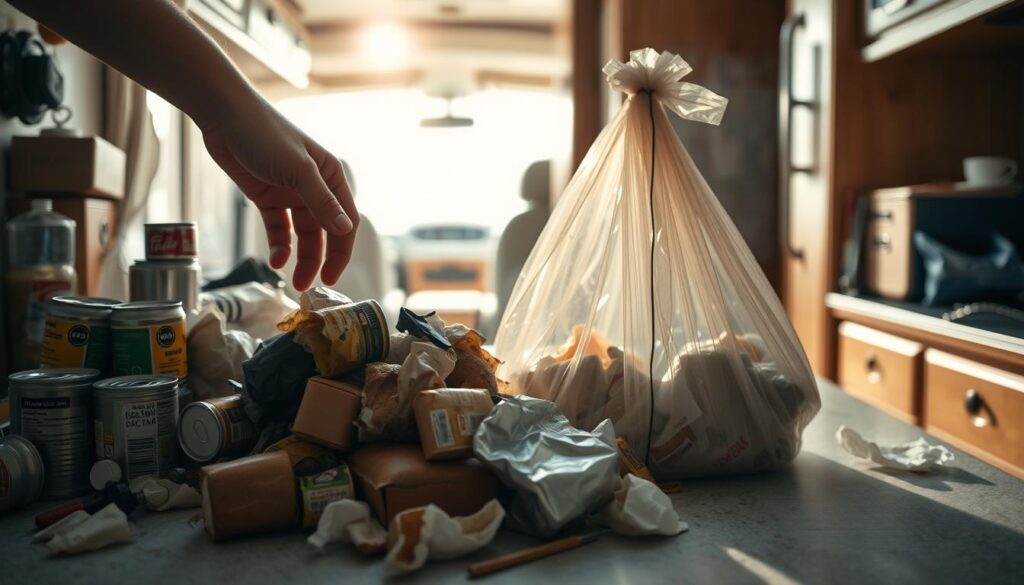
Before packing, check every food item. Expired products can smell bad and attract pests. Check dates on everything from canned goods to spice packets.
Make a simple system for date checking. Sort items by expiration date. Keep only items that will expire in a month or less unless you’ll use them right away.
Think about travel time too. Food that expires during transit is useless. Bring items with at least two weeks left on their expiration date for long trips.
Why Souvenirs Can Be a Bad Idea
Souvenirs might seem like great conversation starters, but they take up space. They add weight without being useful during our travels.
Every souvenir we pack means less room for essential gear. That ceramic mug or wooden figurine won’t help when we need extra clothes or camping equipment. Functionality beats sentimentality in RV packing.
Instead of souvenirs, we can keep digital memories. Photos and travel journals preserve our experiences without taking up space or adding weight to our RV.
Managing Food Storage in an RV
Effective food storage in our RV requires planning. Focus on non-perishable staples and shop for fresh items at our destination. This saves space and reduces spoilage risks.
Pack foods in airtight containers to prevent spills and pests. Organize by meal type and keep often-used items easy to find. This helps us find what we need quickly and prevents food from getting lost.
| Food Category | Best Storage Method | Recommended Quantity | Shelf Life |
|---|---|---|---|
| Canned Goods | Secure cabinets with latches | 3-5 days worth | 2-5 years |
| Dry Goods | Airtight containers | 1 week supply | 6 months – 2 years |
| Spices/Seasonings | Small sealed containers | Essential basics only | 1-3 years |
| Snacks | Resealable bags | 2-3 days worth | Varies by type |
RV refrigerators work differently than home units. They’re smaller and less efficient, needing shore power. Plan meals that use fresh ingredients quickly and rely on shelf-stable options for longer storage.
Shopping at our destination lets us find local specialties and ensures fresh ingredients. This approach avoids spoiled food and wasted money on unused items.
Bulky Furniture and Appliances
Big furniture and appliances might seem like they’re needed for comfort. But, they often take up too much space in our RV. We want to bring things from home to feel cozy. Yet, these big items use up space we need for other important things.
Living in an RV well means knowing that every item must earn its place. This means using things often and for important reasons. When we use RV organization tips, we find that comfort doesn’t need to be big.
Space Considerations in Your RV
RVs usually have between 100-400 square feet of space. This space does many things: sleeping, cooking, eating, and storing things. Big furniture takes up room we need to move around and use things.
Think about how you move around in your RV. Bulky items block the way and make daily tasks hard. We need clear paths for safety and comfort while traveling.
Storage is key when we’re packing smart for RV adventures. Every spot in the RV has a job. Big appliances take up storage space we need for other things.
What to Leave at Home Instead
Some common items should stay home when we travel. Experienced RVers suggest not bringing:
- Extra dining chairs – Most RVs have enough seats
- Large coffee makers – They take up counter space and need a lot of storage
- Bulky recliners – They don’t fit through RV doors and take up a lot of floor space
- Full-size appliances – They don’t work with RV electrical systems
- Heavy decorative items – They add too much weight and clutter
“The best RV is one where everything has a place and serves a purpose. If you can’t use it weekly, it probably doesn’t belong.”
Best Alternatives for Comfort and Function
Smart choices can keep us comfortable without taking up too much space. We can live well in our RV with compact, useful items that make our trip better.
The table below shows good choices instead of big items:
| Bulky Item | Smart Alternative | Space Saved | Additional Benefits |
|---|---|---|---|
| Large Coffee Maker | French Press or Pour-Over | 80% counter space | No electricity needed |
| Extra Dining Chairs | Folding Outdoor Chairs | 90% storage space | Dual indoor/outdoor use |
| Full-Size Blender | Immersion Blender | 75% cabinet space | Easier to clean |
| Large Ottoman | Collapsible Storage Ottoman | 60% floor space | Hidden storage included |
Multipurpose items are great for RV living. A storage ottoman is a seat, storage, and footrest. Nesting cookware saves space and lets us cook fully.
Inflatable and collapsible furniture is another smart choice. They offer comfort when needed but save space when not used. We can have extra seating for guests without using up too much space.
Remember, packing smart for RV adventures means choosing function over familiarity. We aim to make our RV space comfortable and efficient, improving our travel, not making it harder.
Excessive Clothing: Less is More
Smart RV travelers know to leave out top items to exclude from your RV packing list. We often pack like we’re moving forever. This makes our closets small and finding clothes hard.
Our RVs have little room. Every shirt or pants takes up space. Overpacking clothes makes our RVs cluttered and stressful.
Weather-Smart Packing
Planning for the weather doesn’t mean packing everything. We should pack base layers that work together. A light jacket is good for cool mornings and air-conditioned places.
Look at the weather forecast for your trip. Pack for what’s expected, not every possible weather. One warm layer is better than three light ones for the same job.
Think about what you’ll do. Hiking needs different clothes than city trips. But, some pieces can do both with smart picking.
Building Versatile Outfits
The key to packing well is choosing pieces that mix and match. Colors like black, navy, and khaki go with almost everything. They also hide stains well.
Choose classic styles that can be dressed up or down. Dark jeans are good for casual and light hiking. A simple button-down shirt is great for day and evening.
Make sure each piece goes with at least two others. This way, you can make many outfits without too much stuff. Quality over quantity is best.
Smart Clothing Strategies
Pack items that do more than one thing. Yoga pants are good for exercise and comfy travel. A light cardigan adds warmth and style.
Bring only a week’s worth of clothes, no matter the trip length. Most RVs have laundry or you can use laundromats. Washing clothes is easier than dealing with too much stuff.
Roll your clothes instead of folding them. This saves space and reduces wrinkles. Use packing cubes to keep clothes organized.
Don’t bring special items unless you really need them. That fancy dress or extra boots might not be needed. Stick to comfy, useful clothes for a better RV trip.
Unnecessary Tech Gadgets
Packing every electronic device can turn our RV into a cluttered tech store. While tech is useful on trips, too many gadgets go against RV adventures’ goals. We must find a balance between staying connected and enjoying life on the road.
Choosing the essential electronics is key to smart packing. We should pick devices that do more than one thing. This way, we avoid taking up space with gadgets that don’t add much value.
Importance of Digital Detox
Digital detox is a big plus of RV travel. It lets us enjoy nature and our company more. By stepping away from screens, we can see the world around us better.
Too much screen time can make us stressed and less present. RV travel is a chance to reset our tech use. We can stay safe and navigate without the digital clutter we face at home.
Less tech use makes us more aware of our surroundings. We enjoy activities like hiking and stargazing more. It’s a chance to be fully present.
Top Tech Essentials for RV Travel
Smart RV travelers use multi-functional devices to avoid clutter. A smartphone is great because it does so much in one small package. It replaces many gadgets we might pack.
Charging equipment is a must-have. Power banks and cables keep our devices charged. A portable Wi-Fi hotspot gives us internet when we need it.
A tablet or e-reader is good for rainy days or quiet nights. They offer books, movies, and games without taking up much space. Weather radios are also important for safety in areas with no cell service.
Alternatives to Bulkier Devices
Modern smartphones make many travel gadgets unnecessary. We can use our phones for cameras, GPS, and music instead of separate devices. This saves space and keeps us functional.
Tablets are great for basic computer tasks. They’re lighter than laptops and work for email and web browsing. Cloud storage means we can access files without carrying hard drives.
Streaming services mean we don’t need DVDs or books. We can watch movies and read books digitally when we have internet. This cuts down on weight and storage needs, and gives us endless content.
What NOT to bring includes gadgets that do what our phones can. By choosing versatile options, we stay connected without losing the freedom and simplicity of RV travel.
Bathroom Supplies: Only the Basics
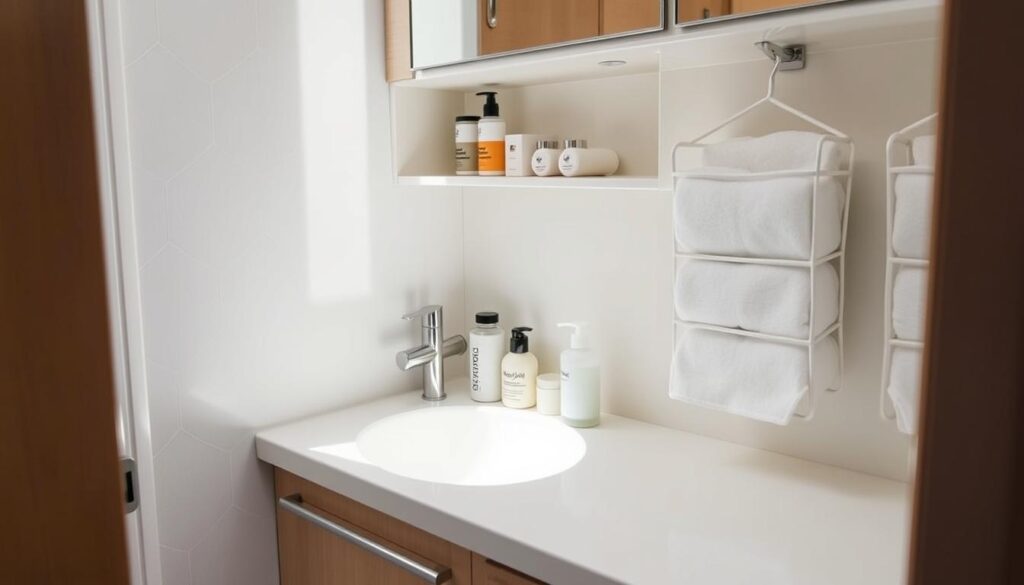
Our RV’s bathroom is small, so we must pack smart. Bringing too many toiletries can make it messy. Knowing what we really need helps keep things tidy.
Must-Have Toiletries for RV Trips
Start with the absolute necessities for bathroom packing. These are items we use every day without fail.
Our list should include must-haves like prescription medications. Also, toothbrush, toothpaste, and any special care products we need.
Travel-sized shampoo, conditioner, body wash, and deodorant are key. We can buy more if we need it, so no need for extra bottles.
Why More Isn’t Always Better
Too many bathroom supplies can cause problems in our RV. Multiple bottles and containers take up space that could be used for other things.
Too many toiletries also make cleaning harder. We waste time moving bottles instead of enjoying our trip.
Extra bottles also add weight. This can hurt our RV’s fuel efficiency and handling.
Organizing Your Bathroom Space
Good organization makes our small bathroom work better. Vertical storage solutions help use every inch.
Keep daily items easy to reach. Store extras in harder-to-get places. This keeps our counter clear.
| Essential Items | Storage Location | Quantity Needed | Space-Saving Tips |
|---|---|---|---|
| Toothbrush & Toothpaste | Medicine Cabinet | One per person | Use travel-sized tubes |
| Shampoo & Conditioner | Shower Caddy | One small bottle each | Choose 2-in-1 products |
| Body Wash | Shower Area | One bottle | Multi-purpose soap bars |
| Prescription Medications | Secure Cabinet | Trip duration supply | Use pill organizers |
Choosing the right containers is key to bathroom organization. Refillable travel bottles help us avoid waste.
Most places have stores nearby for forgotten items. This lets us pack less, without worry.
Dangerous Items: Safety First
Keeping dangerous items out of our RV is key for safety. Smart packing tips for RV travel start with knowing what’s harmful. Our RV is a small space where dangers can quickly grow.
The road is tough enough without extra risks. Every item we pack should pass the safety test before it goes in our RV.
Chemicals and Hazardous Materials
Household chemicals can be dangerous in our RV. Bleach, ammonia-based cleaners, and paint thinners can make toxic fumes. They also risk spilling and damaging our RV.
Propane tanks need special care. We should only use certified RV propane tanks that meet standards. Uncertified tanks can leak or explode.
Flammable liquids like gasoline and lighter fluid are banned in most camps. Border crossings become complicated with these items, leading to delays or confiscation.
“The best RV trip is a safe RV trip. Leave dangerous chemicals at home and buy what you need at your destination.”
What Camping Gear to Leave Behind
Some camping gear is not safe in our RV. Portable heaters not designed for RV use can be deadly. We should only use RV-approved heaters.
Some generators are also risky. Models not made for RVs may lack safety features. Our neighbors at the campground will thank us for choosing RV-specific models.
Cooking equipment like camping stoves or grills should stay outside. Using them inside our RV is a fire hazard and can cause carbon monoxide poisoning.
First Aid Kit Essentials
A well-stocked first aid kit is essential for RV travel. Basic wound care supplies, pain relievers, and prescription medications are must-haves. We need bandages, antiseptic wipes, and medical tape for cuts and scrapes.
But we shouldn’t pack too much medical stuff we don’t know how to use. Simple is often better for emergency care. Include emergency contact info and any medical alert details.
Check expiration dates often and replace items as needed. Effective packing tips for RV travel include keeping our safety equipment in good shape.
Large Sporting Equipment
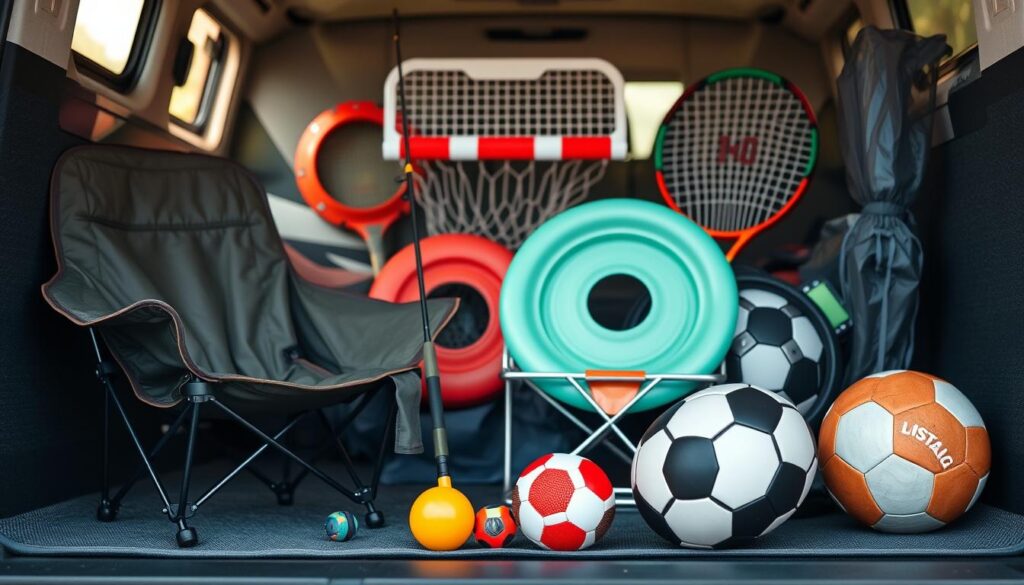
Outdoor adventures are exciting, but we shouldn’t overpack. We have to choose carefully what gear to bring. Big items like full-size bicycles, kayaks, and exercise machines can fill up our RV too fast.
Even bigger RVs have special storage for gear. But we must think about weight and how easy it is to get to. Every item we bring affects how much fuel we use and how well we can drive.
Choosing Compact Alternatives
Smart packing means finding compact alternatives that are fun without taking up too much space. Folding bikes are great for exploring. They take up half the space of regular bikes.
Inflatable kayaks are another smart choice. They’re light and pack small, like a big duffel bag. They work almost as well as hard-shell kayaks but don’t take up much room.
Resistance bands are a good choice for working out. They’re light and can help you work out your whole body. Suspension trainers also offer great strength training in a small space.
Must-Have Fitness Gear for Travel
Our must-haves for RV camping should be versatile and useful for many workouts. A good yoga mat is great for stretching and core exercises. It also adds cushioning for outdoor activities.
Adjustable dumbbells with removable plates are great for strength training. They let us change the weight easily without carrying many sets. Jump ropes are excellent for cardio and take up almost no space.
Foam rollers help us recover after long hikes. Collapsible ones save space but are just as effective. These tools are key for staying fit on long trips.
Managing Space During Your Trip
Managing space well means planning how and when we use our gear. We need to secure everything to avoid damage. Loose items can become dangerous during sudden stops.
Think about renting gear at your destination instead of bringing it. Many places offer bike rentals, water sports equipment, and hiking gear. This saves space and reduces wear on your vehicle.
We should plan our activities around what we can store. Use outdoor gear during the day and then store it for travel. Proper organization keeps our living space comfortable and lets us have more adventures.
Out-of-Season Gear
Out-of-season equipment is a big no-no when RVing. It’s useless during our trips. We often pack for every weather, like winter coats in summer or beach umbrellas in mountains. This wastes space for things we really need.
Smart RV packing means planning wisely, not for every weather. Carrying extra gear makes our RV less fuel-efficient and messy.
Planning for Seasonal Weather
Good weather planning starts with knowing the weather at our destination. We check past weather and forecasts. This helps us pack right, without overdoing it.
Destinations usually have clear seasonal patterns. For example, desert summers need sun protection, while mountain springs need layers. Focus on the weather you’re most likely to face instead of every possibility.
It’s also smart to check nighttime temperatures. Even in summer, it can get cool at night. So, packing a few extra warm layers is wise.
Essential Tools to Keep in Mind
The best RV tools work in many seasons. Layered clothes are better than bulky items. A lightweight rain jacket is good for spring showers and cool evenings.
Choose multi-purpose gear for packing. A good tarp can be shade in summer, wind protection in fall, or ground cover in any season. Versatile items save space and meet many needs.
Opt for tools that adapt to different weather, not special gear for each scenario. A portable fan is better than separate coolers for different temperatures.
Packing for Flexibility in Your Activities
Flexible packing means choosing items for many activities, not just one. Instead of separate gear for hiking, fishing, and photography, pick items that do it all.
A sturdy backpack is great for hikes, grocery shopping, and storing gear. Good walking shoes work for trails and casual walks. This way, we carry less but are ready for anything.
The goal is to enjoy different experiences without too much gear. When we pack for flexibility, we have more room for the things that really make our RV trips better.
Irreplaceable Valuables
Our most treasured possessions need special care when we plan RV trips. It’s tempting to bring family heirlooms, expensive jewelry, or sentimental items. But, these items pose risks during travel.
Why You Should Leave Prized Items at Home
RVs are less secure than our homes. We park in places we don’t know, making theft a worry. Travel’s movement and vibration can harm delicate items like antique china or fragile collectibles.
By avoiding these mistakes, we keep what’s most important safe at home.
Tips for Keeping Valuable Items Safe
Some items must travel with us. Store important documents in RV safes or lockboxes. This keeps them hidden from thieves.
Keep electronics and cameras hidden when we leave our RV. This way, we don’t attract unwanted attention.
What to Protect While Traveling
Important items need protection on our journey. Keep insurance papers, identification, and medical prescriptions safe. Basic electronics for navigation and communication are also essential.
Packing smart means choosing practicality over sentimental value. We can make new memories without risking our most precious items.
By making smart packing choices, our RV trips can be fun and worry-free.