Traveling in your RV all year is exciting. But, it also has its challenges. Smart packing strategies can make your trip either cramped and stressful or comfortable and enjoyable.
Experienced RV travelers have a simple rule: if you don’t think you’ll need it, leave it behind. This keeps your RV spacious and safe. It also helps keep the weight balanced during your travels.
We’ll show you how to prepare for any season. Our RV packing tips are all about being versatile and efficient. You’ll learn to pack smart for adventures all year long.
Packing smart isn’t just about saving space. It’s about making your RV a comfortable home that changes with the weather. Smart decision-making makes you a seasoned traveler ready for anything.
Key Takeaways
- Follow the golden rule: leave unnecessary items at home to maintain comfort and safety
- Focus on versatile clothing and gear that works across multiple seasons
- Prioritize proper weight distribution to ensure safe driving conditions
- Create organized storage systems that maximize your limited space
- Plan for weather extremes while avoiding overpacking
- Choose multi-purpose items that serve different functions throughout the year
Understand Your Destination’s Climate
Before we load our RV, we must dive deep into understanding the weather patterns of our planned destinations. Climate knowledge separates prepared RV travelers from those caught off-guard by unexpected weather changes. Experienced RV travelers emphasize the importance of bringing attire appropriate for the weather and planned activities.
Weather conditions can change unexpectedly, so preparation becomes our best defense against uncomfortable situations. When we research climate patterns thoroughly, we make smarter decisions about our packing list for RV camping. This approach helps us avoid overpacking while ensuring we have everything needed for comfort and safety.
Research Seasonal Weather Patterns
We start our climate research by examining historical weather data for our planned routes and destinations. Temperature ranges, precipitation patterns, and seasonal variations provide the foundation for our packing decisions. Online weather services offer detailed climate information spanning multiple years.
National Weather Service climate data shows us average temperatures, rainfall amounts, and extreme weather events for specific regions. We look at monthly averages instead of daily forecasts for long-term trips. This broader view helps us understand what to expect throughout our journey.
Regional climate zones vary dramatically across the United States. Desert Southwest areas experience extreme temperature swings between day and night. Mountain regions face sudden weather changes and elevation-related temperature drops. Coastal areas deal with humidity and salt air considerations.
| Climate Zone | Temperature Range | Key Weather Challenges | Essential Gear |
|---|---|---|---|
| Desert Southwest | 40°F – 110°F | Extreme heat, cold nights | Sun protection, warm layers |
| Mountain Regions | 20°F – 80°F | Sudden storms, elevation changes | Waterproof gear, insulation |
| Coastal Areas | 50°F – 85°F | High humidity, salt air | Moisture-wicking fabrics, rust protection |
| Great Plains | 10°F – 95°F | Severe storms, high winds | Storm gear, secure storage |
Identify Key Weather-Related Items
Once we understand our destination’s climate patterns, we identify essential weather-related items for our journey. Smart RV storage ideas help us organize these items efficiently while keeping them easily accessible. We categorize weather gear by season and frequency of use.
Temperature control items top our priority list. These include appropriate clothing layers, heating and cooling equipment, and insulation materials. We also consider precipitation protection like rain gear, tarps, and waterproof storage containers.
Wind protection becomes critical in certain regions. Awning tie-downs, windbreaks, and secure storage solutions prevent damage during gusty conditions. We pack these items in easily accessible locations because weather can change quickly.
Sun protection deserves special attention for year-round travel. UV-blocking window covers, sunscreen, and protective clothing help us stay comfortable in intense sunlight. These items are essential even in winter when snow reflects sunlight.
Emergency weather supplies complete our climate preparation. Battery-powered weather radios, emergency lighting, and backup power sources keep us safe during severe weather events. We store these items in designated emergency kits throughout our RV.
Layering Clothing: The Key to Comfort
Building a layering system is key to staying comfy in your RV all year. We’ve found that smart layering means we don’t need to pack for every weather. We can mix and match a few pieces for different looks.
Layering is simple: a base layer for skin, a middle layer for warmth, and an outer layer for protection. This way, we save space and stay ready for any weather.
Choosing the right clothes for RV travel is important. The best clothing for RV travel is versatile and works well in many weather conditions.
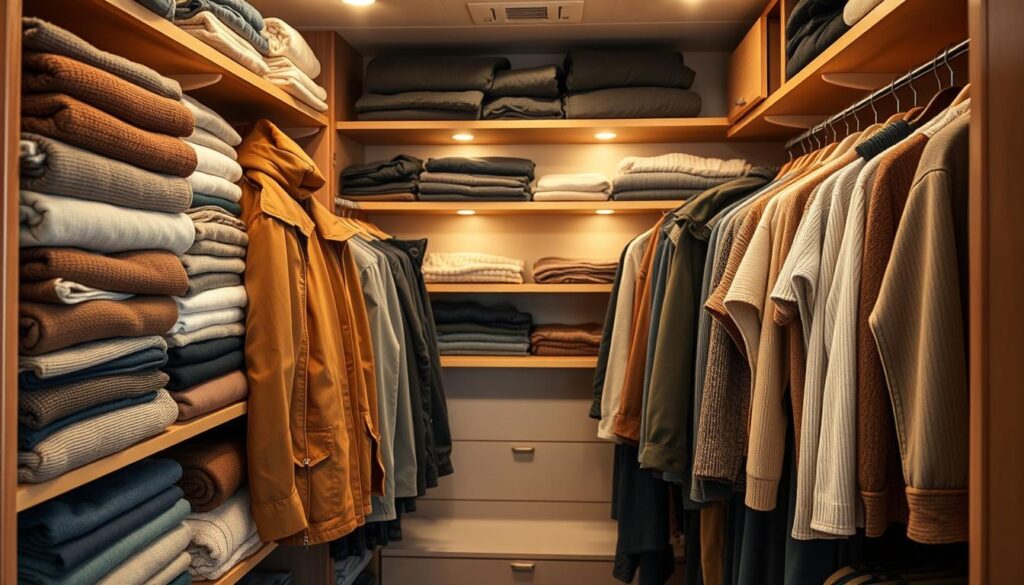
Choose Versatile Fabrics
Choosing the right fabrics is key to a successful RV wardrobe. We look for materials that do more than one thing.
Moisture-wicking synthetic fabrics are great for base layers. They keep sweat away and dry fast. Merino wool is also good because it fights odors and keeps you cool.
Fleece and down are good for middle layers because they’re warm but light. They pack small but expand when it gets cold. Cotton is bad for base and middle layers because it holds moisture and loses warmth when wet.
Our outer layer should keep us dry and warm. Look for:
- Waterproof or water-resistant coatings
- Windproof construction
- Breathable membranes that prevent overheating
- Durable finishes that withstand frequent use
These tips for RV wardrobe help us build a reliable set of clothes for any weather.
Pack for Both Warm and Cold Conditions
Packing smart means being ready for both hot and cold without cluttering your RV. For summer, we choose light, light-colored clothes. These keep us cool and let air flow.
For warm weather, we pack:
- Breathable cotton or linen shirts
- Quick-dry shorts and pants
- Lightweight windbreakers for cool evenings
- Sun hats with wide brims
For cold weather, we need warm, thick clothes that layer well. Must-haves include cotton hats, insulated gloves, and water-resistant boots.
Waterproof pants are a must because they’re useful in rain or wind. They’re great for RV travel because they’re versatile.
The secret to packing for all seasons is to choose clothes that work in different temperatures. A good windbreaker keeps us warm in cool weather and protects from wind. Convertible pants with zip-off legs are perfect for changing temperatures.
We always pack an extra warm layer, even if the forecast says it’s not needed. Mountain weather can change fast, and we’d prefer to be too warm than too cold. This keeps us comfy, even when the weather surprises us.
Essential Gear for Each Season
Having the right gear for each season makes RV trips fun. Successful RV travelers pick RV essentials for all seasons wisely. This way, they stay comfortable and safe, no matter the weather.
Modern RVs can be comfy in any weather with the right gear. Each season needs special equipment for fun and safety.
Summer Gear: What to Pack
Summer RV trips need light, cool clothes. Choose moisture-wicking fabrics that dry fast and protect from the sun. Don’t forget hats, sunglasses, and sunscreen for outdoor fun.
Bring fans, cooling towels, and coolers for drinks and food. Umbrellas and pop-up canopies offer shade when it gets too hot. Store these big items outside to keep your RV tidy.
Fall Favorites: Don’t Forget These Items
Fall camping is cool in the mornings and warm in the afternoons. You’ll need jackets, boots, and layers for changing weather.
For fall fun, pack apple-picking bags, outdoor chairs, and blankets for campfires. RV essentials for all seasons include fire pits and s’mores for a magical time.
Winter Necessities for Your RV
Winter RV camping means warm clothes, boots, and waterproof layers. Bring thermal underwear, wool socks, and gloves for outdoor tasks.
Think about winter sports like skis or snowboards for mountain trips. Water-resistant boots keep your feet dry in the snow. Use vacuum bags for winter clothes and keep wet gear in its place.
Spring Essentials to Consider
Spring weather is unpredictable, with rain and sun. Pack rain gear and light clothes for warm days.
Spring is also for cleaning your RV and gardening. These RV essentials for all seasons help you enjoy spring’s fresh start.
Kitchen Supplies for Seasonal Cooking
Seasonal cooking in your RV needs smart choices. We’ve found that less is definitely more for RV kitchen essentials. The key is to pick tools that do many things in all seasons.
Multi-purpose appliances are your top picks on the road. An InstantPot Pressure Cooker, for example, does three jobs in one small space. It sautés, cooks under pressure, and makes yogurt. This is a top space-saving tip for RV living.
One good cutting knife and a multi-purpose pot and pan cover most tasks. Add durable silverware and paper plates for any meal. Cast-iron skillets are great for stovetops, grills, and campfires.
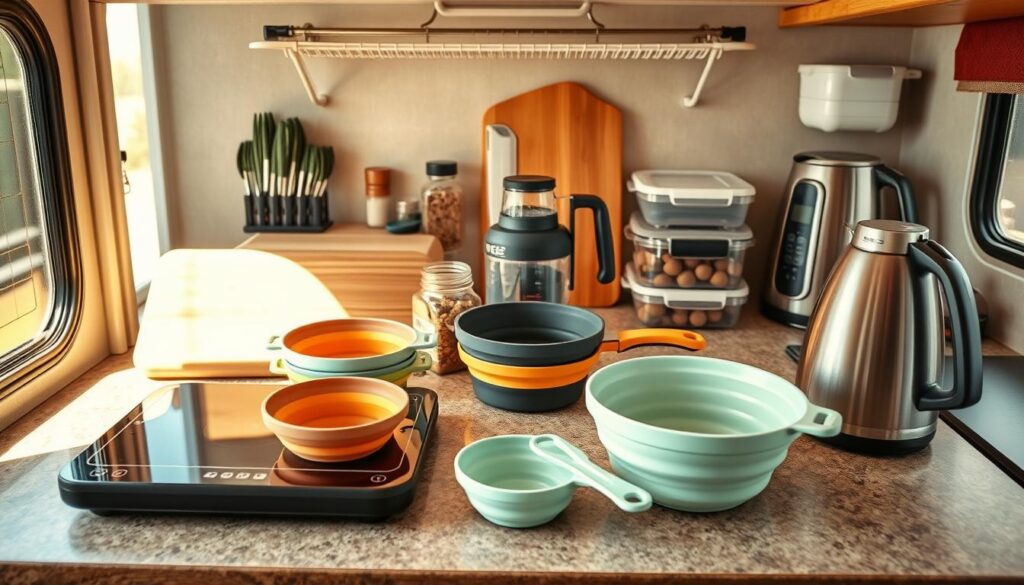
Summer Outdoor Cooking Essentials
Summer cooking means keeping heat out of your RV. Portable grills are key for outdoor meals. Choose compact propane grills that fold for easy storage.
Good coolers keep food safe in the heat. Look for ones with great insulation that fit your space. Lightweight cutting boards and collapsible bowls make outdoor prep easier.
Light meals are best in summer. Stock up on salad items, cold soups, and no-cook recipes to keep your RV cool.
Fall Harvest Cooking Tools
Fall brings lots of fresh produce that needs special tools. A good vegetable peeler and sharp knife are essential for apples, squash, and root veggies.
Slow-cooking is key for fall comfort foods. Your multi-purpose pressure cooker is perfect for stews and roasts. Dutch ovens are great for campfire cooking in the fall.
Bring a few mason jars for preserving seasonal finds. They’re great for homemade sauces or pickled veggies.
Winter Warm-Up Kitchen Gear
Winter cooking focuses on warm, hearty meals. Thermal cooking methods save propane and make tasty dishes.
A good thermos keeps soups and drinks warm for hours. Insulated serving dishes keep food warm during meals. Your pressure cooker is essential for quick, warm meals.
Stock up on ingredients for one-pot meals. Dried beans, grains, and preserved meats make filling winter dishes without many pots.
Bed and Bath Essentials for Every Season
Quality sleep and good hygiene are key for RV living all year. You need the right bedding and bath items for different weather. Smart planning keeps you cozy without using too much space.
Choosing items that work in many seasons is important. We pick materials that keep you comfortable without taking up too much room. This way, you stay cozy all year.
Seasonal Bedding Considerations
Your bedding plan should focus on layering and adaptability. Start with sheets that keep you cool in summer and warm in winter. These sheets are great for all seasons.
In cold months, add down comforters or wool blankets. They take up little space but keep you warm. Merino wool blankets are great because they keep you at the right temperature.
For summer, choose breathable and cool bedding. Use bamboo or linen sheets and a thin cotton blanket for cool nights.
| Season | Primary Bedding | Additional Layer | Storage Benefit |
|---|---|---|---|
| Spring | Cotton sheets | Light fleece throw | Compact folding |
| Summer | Bamboo sheets | Thin cotton blanket | Minimal storage |
| Fall | Flannel sheets | Medium comforter | Vacuum-sealed bags |
| Winter | Thermal sheets | Down comforter | Compression sacks |
Spacious Towels for Various Climates
Choosing the right towels is important for different humidity and drying conditions. Quick-dry microfiber towels are best for RVs. They soak up moisture well and dry fast.
Our RV storage ideas for towels include using compression bags. We keep a set ready and store extras in vacuum-sealed bags. This saves space and keeps towels clean and dry.
In winter, we add a plush cotton towel for warmth. Mixing quick-dry towels for daily use with a luxury towel for cold weather is perfect.
We organize towels by size and use. Hand towels and washcloths are easy to find. Bath towels are stored in overhead compartments using our RV storage ideas to stay fresh and ready.
Outdoor Equipment for All Conditions
Choosing the right outdoor gear makes your RV life better without taking up too much space. We think every piece of gear should be used often, light, and work for all seasons. It’s all about finding fun stuff that’s also easy to store.
We focus on gear that does many things and works in different weather. This way, we don’t pack too much stuff that we don’t use. Quality is more important than quantity when picking outdoor gear.
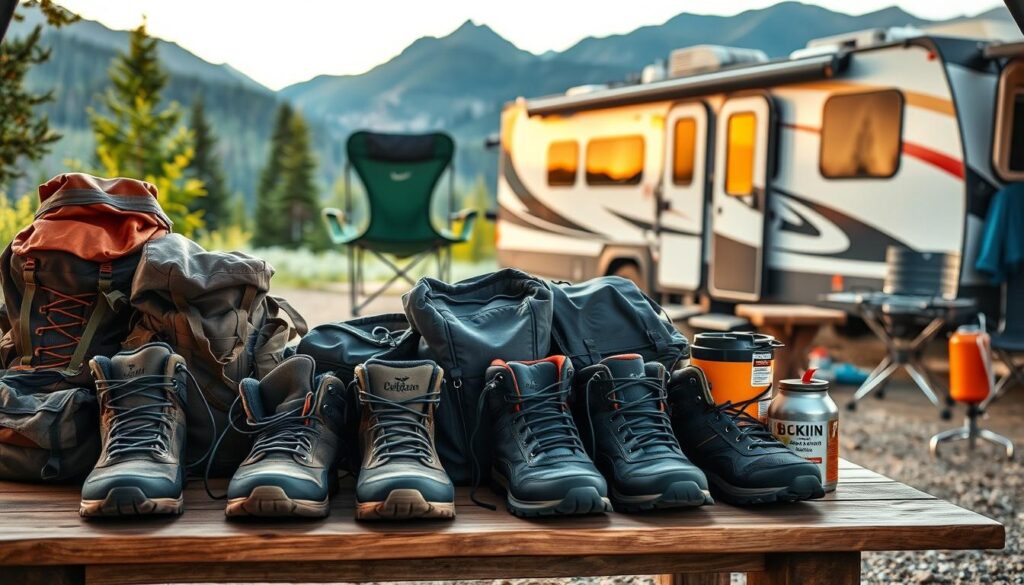
Summer Activities Gear
Summer is for fun in the water with light, easy-to-carry gear. Inflatable stand-up paddle boards are great because they’re fun and easy to store.
Portable shade like pop-up canopies make outdoor eating and relaxing comfy. Cooling accessories like fans and misting bottles keep you cool without using too much power.
For water sports, choose inflatables. Pool floats, toys, and kayaks are fun and don’t take up much space.
Fall Camping Essentials
Fall is perfect for hiking and exploring outside. Light hiking gear is key as it gets cooler and darker. Good headlamps and lanterns let you stay out longer safely.
For taking pictures of fall, choose small cameras over big ones. Binoculars are great for seeing wildlife during fall migrations.
Portable fire pits or bowls are cozy for chilly nights if allowed by camp rules. They’re flat to store and warm you up.
Winter Recreation Supplies
Winter gear needs careful thought about use versus storage. Skis, snowboards, and snowshoes are only worth it if you’ll use them.
Ice cleats and traction devices are useful for walking on ice. Snow shovels and ice scrapers are needed for safety, not just fun.
Insulated furniture covers keep your outdoor stuff safe all year. These tips help your gear last longer in tough weather.
Spring Adventure Items
Spring is for exploring and enjoying the outdoors. Light camping chairs and tables make outdoor living comfy as the weather gets better.
Gardening supplies for growing plants on the road are fun. Compact tools and collapsible watering containers make it easy.
Nature guides and journals add to your outdoor adventures. They’re light but full of learning.
| Season | Priority Equipment | Storage Consideration | Weight Factor |
|---|---|---|---|
| Summer | Inflatable water gear | Compact when deflated | Very light |
| Fall | Hiking equipment | Moderate space needs | Light to moderate |
| Winter | Safety gear | Essential storage priority | Moderate |
| Spring | Exploration tools | Minimal space required | Very light |
Outdoor gear should make your RV life better, not weigh it down. Think about how often you’ll use each item before you buy it.
Staying Comfortable: Climate-Control Essentials
Keeping your RV at a comfy temperature makes any weather great for travel. The right climate control is key for enjoying your trips. You’ll need both built-in and portable solutions to make your RV perfect for any season.
Your RV’s ability to control the temperature is very important. Using different ways to manage temperature keeps you cozy all year.
Heating and Cooling Equipment
Good heating is vital for cold weather comfort. We suggest having more than one heating source. This way, you stay warm, even when it’s really cold outside.
Essential heating equipment includes:
- Ceramic space heaters with safety shutoffs
- Electric heated blankets for energy-efficient personal warming
- Propane catalytic heaters for off-grid heating
- Heated mattress pads for comfortable sleeping
- Portable oil-filled radiators for consistent heat distribution
Cooling is key in hot weather. We look for ways to make your RV’s air conditioning work better. Good ventilation and targeted cooling are the best ways to stay cool.
Recommended cooling equipment features:
- 12-volt fans for improved air circulation
- Reflective window covers to block solar heat gain
- Portable evaporative coolers for dry climates
- Roof vent fans with thermostatic controls
- Battery-powered personal fans for individual comfort
Always test your climate control gear before you go. This makes sure it works when you need it. Keeping your systems in good shape also makes them last longer.
Insulation Tips for Extreme Weather
Good insulation makes your RV more efficient and saves energy. We focus on sealing up weak spots to keep your RV warm or cool. Even small insulation changes can make a big difference.
Key insulation strategies include:
- Installing thermal window coverings for all seasons
- Adding weather stripping around doors and windows
- Using reflective insulation panels behind furniture
- Sealing air leaks with appropriate caulking materials
- Installing skirting around your RV’s base during winter stays
Adjusting your insulation with the seasons is smart. Remove insulation in summer to avoid overheating. Then, put it back in for winter. This way, you stay comfortable and save space.
Floor insulation is often forgotten but is very important. Adding insulation boards or reflective barriers under your RV helps keep it warm. This simple step stops heat loss and prevents moisture buildup.
Window treatments are great for keeping warm or cool. Use thermal curtains in winter and reflective shades in summer. Good window coverings can cut down heat transfer by up to 40%, making them key for climate control.
Keeping your insulation in good shape is important. Check and replace weather stripping every year. Look for air leaks after each trip and update insulation materials as needed. These small steps make a big difference in your comfort on all your trips.
Organizing and Maximizing Space
RV organization makes small spaces useful. We plan smart and use creative storage. Every inch counts, and things should be easy to find.
When moving, things inside can get damaged or unsafe. We make sure everything is secure before we go.
Smart Storage Solutions
Vertical space is key in RVs. We use wall organizers, over-door holders, and ceiling nets for light items. These space-saving tips for RV living use often ignored areas.
Modular storage keeps things together. We pick stackable bins for cabinets and under-bed spots. Clear bins help us find things fast.
Multi-purpose furniture is a must. Ottoman boxes offer seating and hide gear. Folding tables with storage save floor space.
Bungee cords are essential. They keep doors closed, stop sliding, and create storage. These tools prevent accidents and damage.
Seasonal Packing Techniques
We use rotation to keep current items handy. We store off-season gear in hard-to-reach spots. Winter gear is stored away in summer, and summer items are packed in winter.
Vacuum-sealed bags shrink bulky items. We use them for winter coats and blankets. This saves a lot of space.
Labeling helps us find things fast. We use color-coded labels for different items. This stops us from unpacking too much.
We pack often-used items in easy spots. Current-season essentials are near the front. Less used items are in the back or up high.
Even weight is important for safety. Heavier items go low and in the middle. This keeps the RV stable and safe.
Safety Precautions for Different Seasons
We never compromise on safety when preparing our packing list for RV camping adventures throughout the year. Safety equipment is a top priority. Seasonal conditions can be dangerous without the right preparation.
Different seasons bring unique challenges. Winter demands protection against hypothermia and ice-related accidents. Summer heat poses risks of dehydration and heat exhaustion.
Our safety approach includes three key components: prevention through proper equipment, preparation with emergency supplies, and planning for worst-case scenarios. We have separate safety kits for each season. But we keep essential emergency items available all year.
Winter Safety Gear
Cold weather safety needs special equipment. We pack emergency blankets that reflect body heat. Ice scrapers and tire chains are also essential for safe winter driving.
Extra batteries power our safety devices in cold weather. We include cold-weather first aid supplies like instant heat packs. Emergency flares help signal for help during winter storms.
Carbon monoxide detectors are critical in winter. We test these devices monthly and keep backup batteries ready.
Summer Hydration and Sun Safety
Hot weather poses serious safety concerns. We store extra water to prevent dehydration. Electrolyte supplements help maintain body chemistry during excessive sweating.
Sun protection is more than just sunscreen. We pack wide-brimmed hats, UV-protective clothing, and quality sunglasses. Cooling towels and portable shade structures provide relief during extreme heat.
Heat stroke prevention requires recognizing early warning signs. We use a thermometer to monitor temperatures. This ensures our RV’s cooling systems work properly.
| Season | Primary Safety Concerns | Essential Equipment | Emergency Supplies |
|---|---|---|---|
| Winter | Hypothermia, Ice, Carbon Monoxide | Emergency Blankets, Tire Chains, Ice Scrapers | Heat Packs, Extra Batteries, Flares |
| Summer | Dehydration, Heat Stroke, UV Exposure | Extra Water, Cooling Towels, Shade Structures | Electrolytes, Thermometer, UV Protection |
| Spring/Fall | Weather Changes, Storms, Temperature Swings | Weather Radio, Flexible Clothing, Tarps | Multi-tool, Duct Tape, Emergency Food |
Regular safety equipment checks are essential. We test smoke detectors, fire extinguishers, and communication devices before each trip. This systematic approach to safety preparation gives us confidence to enjoy our adventures while staying protected.
Final Packing Checklist
We’ve covered everything you need to know about packing for all four seasons in your RV. Now, let’s put it all together with our final steps. This approach makes sure you’re ready for any weather.
Review Before You Hit the Road
Start by checking your RV and securing loose items. Make sure all cabinet doors and drawers are closed. Your seasonal clothes should be easy to find in storage.
Check that your climate control works well. Test your heating, fans, and portable units. Also, make sure your water system is ready for the weather at your destinations.
Clear off all counters and tables. Store dishes, electronics, and personal items safely. Double-check that your outdoor gear is stowed away and won’t move during driving.
Seasonal Extras for Long Trips
Pack extra supplies for long trips. Include extra batteries, propane, and emergency food for any season. Add comfort items like extra blankets, books, and games for delays.
Keep a weather radio and first aid kit handy. Store emergency contact info and campground details in many places. With proper prep, you’ll enjoy your RV journey through all seasons.