Living in an RV gives you incredible freedom and adventure. But, it’s hard to stay fit while always moving. This is different from going to a gym.
Every day, you face challenges. Limited space in your RV makes it hard to exercise. Long drives mess up your routine. And, local food and drinks are tempting everywhere you go.
The good news? Staying active on the road is easy. You don’t need expensive gear or hard routines. Our guide offers simple solutions that fit your RV’s space.
We’ve gathered tips from RVers who stay healthy while traveling. You can do simple exercises inside your RV. Or, enjoy outdoor activities that show off the scenery. These RV-Friendly Workout Routines will change how you see fitness.
Whether you travel on weekends or all the time, we’ve got you covered. We’ll show you how to make fitness a part of your journey, not a hassle.
Key Takeaways
- Space limitations don’t have to derail your fitness goals with the right approach
- Simple bodyweight exercises can be performed inside most RVs without special equipment
- Outdoor activities take advantage of your constantly changing environment
- Sustainable daily movement habits work better than extreme exercise routines
- Real RVers have developed practical strategies that actually work on the road
- Maintaining fitness enhances your overall RV experience and long-term health
Why Exercise is Essential While Traveling in an RV
Many RVers find that staying active is key for comfort and health on long trips. RV living comes with unique challenges. Mobile home workouts are not just good for you; they’re a must for a good life on the road.
Living in a small space and moving a lot has its own physical and mental needs. Our bodies need to move to avoid stiffness and tiredness from sitting too much. Without exercise, our trips can become less fun.
Benefits of Staying Active on the Road
Doing travel workout routines helps a lot with RV life. Exercise gives you more energy for driving and enjoying places. It also stops leg cramps and stiffness from sitting too long.
Exercise boosts your immune system, which is very important when you’re always in new places. A strong immune system means you get sick less often, keeping your travel plans on track.
Regular exercise also makes you sleep better. This is really helpful when you’re sleeping in different places every few nights. Your body gets used to new places faster when you’ve been active during the day.
Exercise keeps your bones and muscles strong. Travel can make you lose muscle over time. Simple exercises in your RV or at campsites help keep you strong and mobile.
Mental Health Perks of Regular Workouts
Exercise is great for your mind when you’re traveling in an RV. Travel workout routines make you feel good and reduce stress. This helps you handle tough situations better.
RV travel means making lots of decisions and solving problems. Exercise gives you a break from this and makes you think clearer. You’ll make better choices after exercising.
Even a short workout can change a bad travel day into a good one. Exercise helps you stay positive when things go wrong, like mechanical issues or bad weather.
Being active also gives your days structure. With new places and experiences every day, a regular exercise routine is like a steady friend. It helps you feel more grounded and less stressed by all the changes.
Key Considerations for RV-Friendly Workouts
Switching to RV living means changing how we stay fit. We face new challenges that need creative solutions and planning to stay healthy.
RVs have only 6-8 feet of clear floor space for working out. This small area means we can’t use big gym equipment. We must work out outside often, so being flexible is key.
Space Limitations and Equipment Choices
Many RVers find their favorite gym equipment won’t fit in their RV. Peloton bikes, treadmills, and weight machines are hard to keep unless you have a big RV.
It’s better to choose versatile equipment that does many things. For example, resistance bands can replace a whole weight room and fit in a drawer.
Good on-the-go fitness plans focus on equipment that can be used in many ways. Adjustable dumbbells, for instance, can replace a whole rack of weights. This way, we can work out well without needing a lot of space.
Being smart about choosing fitness gear is key. We should think about how much space it takes up, how versatile it is, and how it helps us stay healthy. This smart thinking helps us stay fit while traveling.
Safety Tips for Exercising Outdoors
Working out outside comes with its own safety rules. Weather conditions can change fast, like in mountains where storms can pop up suddenly.
We always have indoor and outdoor workout spots ready for changing weather. In hot places, working out in the afternoon can be too risky. In mountains, the weather can change fast. Having a backup plan means we never miss a workout because of the weather.
When hiking or working out outside, tell someone where you are and carry a way to call for help. Knowing about local wildlife is also important, like bears or snakes in national parks.
These tips for working out while traveling stress the importance of being ready and aware. We check the weather, carry safety gear, and don’t go alone in new places. This careful approach helps us stay safe while working out outside.
Being ready for weather, terrain, and wildlife is what makes RV workouts successful. We’ve learned that preparation and flexibility are key to safe and effective workouts on the road.
Bodyweight Exercises You Can Do Anywhere
Discovering the best camper-friendly exercises shows us that your body is all you need. These workouts don’t need big equipment and give great results. You can do them anywhere, whether you’re in a crowded campsite or out in the wild.
These exercises are great because they can be done anywhere. You can do them inside your RV when it’s raining or outside when it’s clear. No gym membership required – just your willpower and a little space.
A typical bodyweight circuit has exercises done for 45 seconds each, with 15 seconds to switch. After one round, take a 90-second break before starting again. This keeps your heart rate up and lets you recover.
Push-Ups and Variations
Push-ups are key to any good bodyweight routine. They’re great for all fitness levels and can be done in small spaces. Standard push-ups work your chest, shoulders, and triceps, and also engage your core.
Beginners can start with knee push-ups or wall push-ups inside the RV. These make it easier while keeping your form right. As you get stronger, try incline push-ups using the RV’s bumper or a picnic table.
For more challenge, try diamond push-ups or single-arm push-ups. These motorhome fitness ideas keep your workouts interesting. Mix them up to work different muscles from different angles.
Squats and Lunges
Squats and lunges are perfect for RV living because they need little space. You can do basic squats in most motorhomes’ narrow aisles. They strengthen your legs, glutes, and core, and also improve balance and flexibility.
Start with bodyweight squats, focusing on the right form. Stand with your feet shoulder-width apart and lower until your thighs are almost touching the ground. Quality over quantity – ten perfect squats are better than twenty sloppy ones.
Lunges add variety and challenge your balance. Try forward, reverse, or curtsy lunges to work different muscles. For more intensity, add jump squats or single-leg squats once you’ve mastered the basics.
These exercises work many muscles at once, giving you maximum results in minimum time. A full workout takes just 15-20 minutes, making it easy to fit into busy days. The key is to be consistent – a short daily workout is better than longer, less frequent ones.
Creating a Daily Routine on the Road
Maintaining fitness while traveling is all about daily routines that fit your RV lifestyle. Successful travelers don’t need perfect conditions or big workout plans. They make micro-commitments part of their daily life, like brushing their teeth.
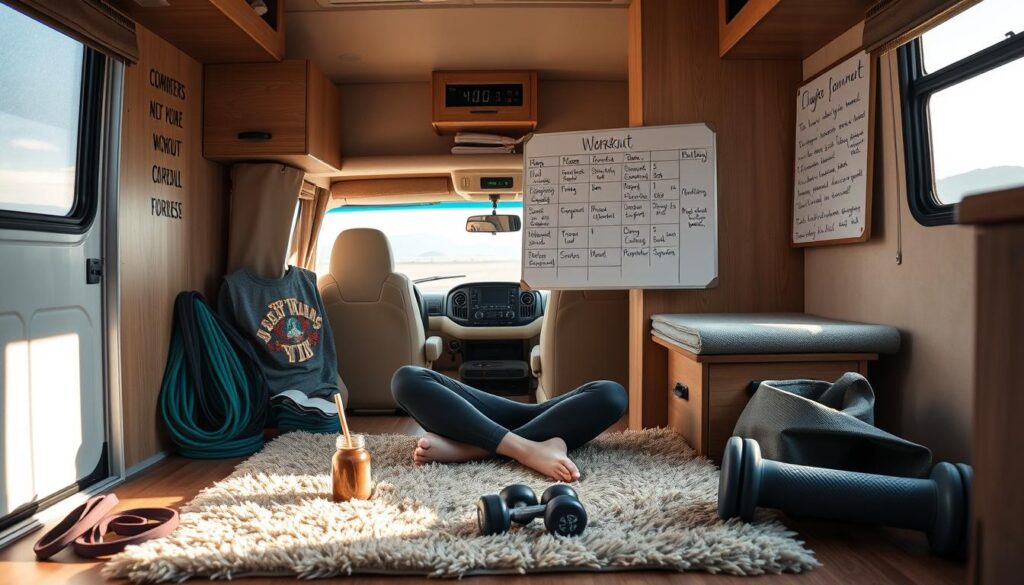
The key to a good RV workout schedule is the “never miss” principle. Choose small goals, like 10 push-ups each morning or a 5-minute walk after dinner.
“The goal is to never have a zero day—even if you only do five minutes of stretching, you’re maintaining the habit.”
Time Management Tips for Busy Travelers
Time management on the road is different from at home. Schedule your workout at the same time every day. Morning workouts work best for most RVers because the day is fresh.
Keep your workout clothes ready. Lay them out the night before, like your coffee. This saves time and makes starting easier.
Have a 10-minute indoor routine ready for bad weather or delays. This keeps your fitness goals on track.
Incorporating Fitness into Your Travel Schedule
See exercise as part of your travel, not a burden. Plan your RV workout schedule around driving, rest, and sightseeing days.
On driving days, do quick morning routines. During long stays, do longer workouts or explore trails. Rest days are for gentle stretching or yoga.
| Day Type | Recommended Workout | Duration | Best Timing |
|---|---|---|---|
| Driving Day | Quick bodyweight routine | 10-15 minutes | Before departure |
| Setup Day | Moderate cardio walk | 20-30 minutes | After camp setup |
| Rest Day | Full workout or hiking | 45-60 minutes | Mid-morning |
| Sightseeing Day | Stretching or yoga | 15-20 minutes | Evening wind-down |
Remember, consistency beats intensity every time. A daily 15-minute routine for months is better than sporadic hour-long workouts. Start small, stay consistent, and let your routine grow as you find what works for you.
Equipment Options for RV Workouts
When space is tight, every workout piece in your RV must be worth it. The right gear can turn your small space into a great place to work out. We found that the best travel workout routines use versatile equipment that saves space but works hard.
We’ve tried many RV fitness tools and found the best ones. They must do many things and fit different workout styles. This way, your on-the-go fitness plans stay on track, no matter the weather or where you are.
Versatile and Compact Training Tools
Resistance bands are our top pick for RV fitness fans. They’re light and strong, like weights but take up less space. A set with different strengths can work your whole body.
You can tie resistance bands to your RV, trees, or use them without anything. They’re easy on your joints, great for all ages. Travel workout routines get a lot easier with one tool for many exercises.
Resistance bands aren’t just for basic moves. They’re also for stretching, rehab, and helping with tough bodyweight moves like pull-ups.
Weight Training Benefits for Road Warriors
Kettlebells are the best space-saving weights for travelers. They’re good for strength and cardio with just one piece. Start with 15-25 pounds for men and 8-15 pounds for women.
Kettlebells are great for swings, squats, presses, and carries. They also work as awning weights when not used for exercise. This makes them super useful for on-the-go fitness plans.
Beginners should start with resistance bands and a good yoga mat. These basics cost under $50 and offer lots of workout options. Add more gear as you find what you like and use often.
Jump ropes are good for cardio, and bikes and hiking boots are great for both fitness and fun.
Finding Local Workouts and Outdoor Activities
RV life is amazing because you can find outdoor activities and workout groups everywhere. Each place has its own way to keep you active while you explore. We’ve found that mixing fitness with travel makes great memories, more than just going to the gym.
Thanks to technology, finding workout tips for travelers and joining local fitness groups is easy. The trick is to know where to look and use each place’s best features.
Apps and Websites for Group Workouts
We use digital tools to find fitness spots on the go. FitOn is our favorite app for workouts and joining virtual groups. It offers free classes like yoga and HIIT.
MyFitnessPal helps us track food and exercise on the road. It lets us log our daily activities and see our progress, no matter where we are.
YouTube channels like Yoga with Adriene are great for workouts anywhere. They offer camper-friendly exercises that need little space and gear.
If you have a gym membership, check out locations on your route. Places like Planet Fitness, LA Fitness, and Anytime Fitness have gyms and showers.
Exploring Nature: Hiking and Biking
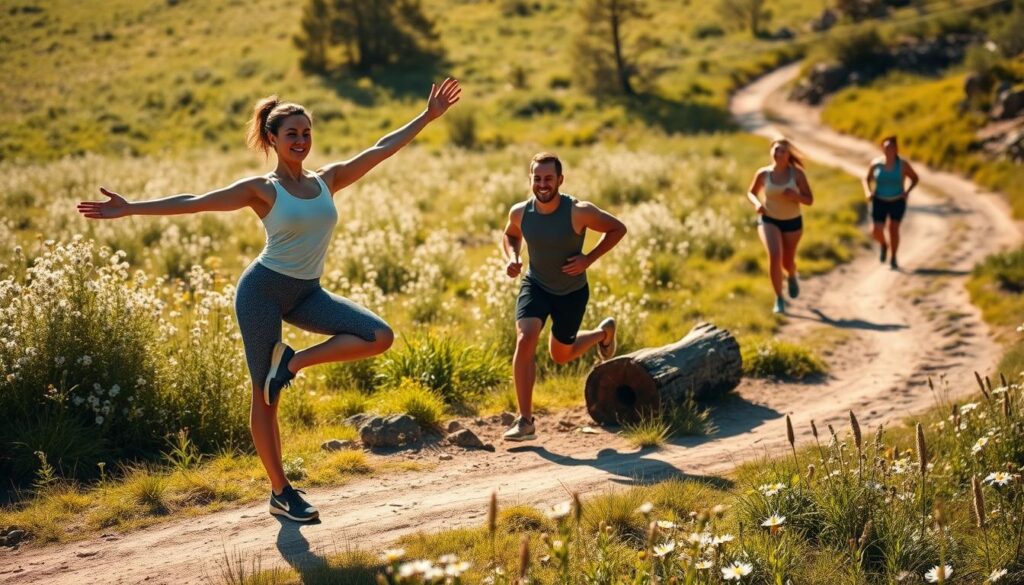
Getting outside is a top way to add fitness to your travels. We use AllTrails to find hiking spots near our campsite. Often, we find secret spots that locals love.
The app shows trail details like difficulty, distance, and reviews. This helps us pick the right trails for our fitness and time. We’ve found trails from easy walks to tough mountain climbs.
Many places have outdoor fitness classes in parks or on beaches. Sunrise yoga, boot camps, and walking groups are great for staying active and meeting people. Check with local visitor centers for free activities.
Biking lets us explore even more. We’ve found scenic bike paths, mountain trails, and city routes that show off each place’s charm. Many campsites have bike rentals or deals with local shops.
Water activities like paddleboarding, swimming, and kayaking are great workouts. Rock climbing and bouldering in parks offer challenges and views.
These natural workouts would be expensive from home. RV travel lets us wake up in new places and find camper-friendly exercises that connect us with nature and keep us fit.
Nutrition Tips for Maintaining Energy Levels
Nutrition planning is key for RV lifestyle success. Living on the road uses more energy than home life. Our bodies adapt to changing climates and altitudes.
Understanding how nutrition affects energy is important. When we travel, our bodies burn more calories. Smart nutrition planning keeps us going on long drives and adventures.
Healthy Snacking on the Go
Plan your snacks as well as your meals. RV space forces us to pick healthy foods. Keep healthy snacks in your cab for hunger during drives.
Good travel snacks give energy without blood sugar spikes. We eat nuts, dried fruits, protein bars, and fresh produce. These snacks fuel our motorhome fitness ideas.
The 80/20 rule guides our food choices. Eat healthy 80% of the time and enjoy local foods 20% without guilt. This keeps us fit and tries new foods.
Hydration: Importance and Strategies
Hydration is key for outdoor activities in different climates. Aim for 100 ounces of fluids daily, mostly water. Altitudes and weather can cause dehydration.
Keep water bottles visible and drink often. Electrolyte supplements are vital on active days or in hot weather.
| Activity Level | Daily Water Intake | Electrolyte Needs | Best Timing |
|---|---|---|---|
| Light Travel Days | 80-90 ounces | Standard intake | Consistent throughout day |
| Active Exploration | 100-120 ounces | Add supplements | Pre and post activity |
| Hot Weather Travel | 120+ ounces | Increased supplements | Every 30 minutes |
| High Altitude | 110-130 ounces | Enhanced minerals | Start early morning |
Microbreweries and unique restaurants tempt us. Plan for these by eating healthy before and after. This balance lets us enjoy local flavors and stay fit.
Combining Workouts with Family Activities
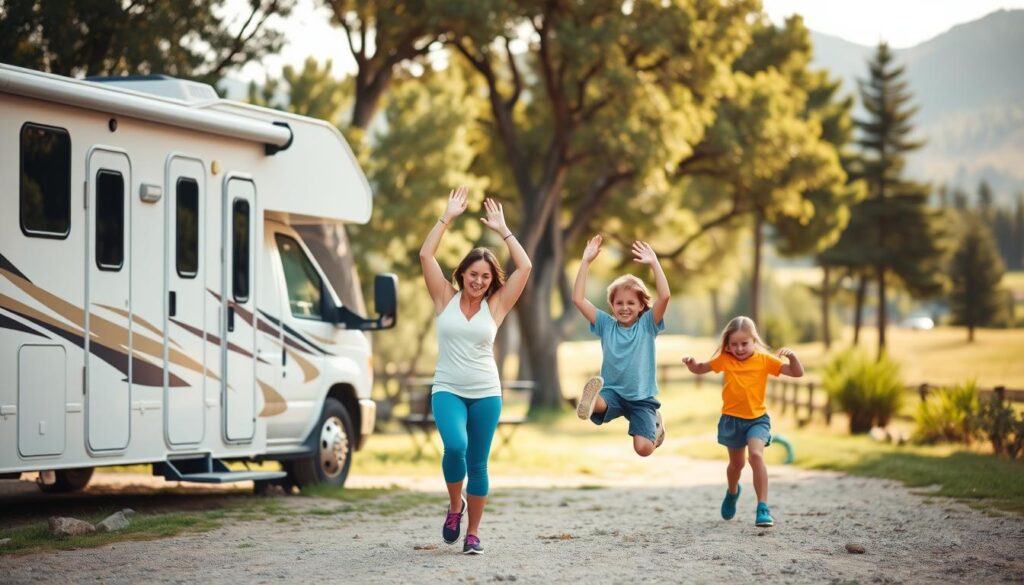
Family RV trips are great for making fitness fun for everyone. Mobile home workouts are more enjoyable when we all join in. It’s a way to make exercise a special time for our family.
RV-Friendly Workout Routines are perfect for all ages and fitness levels. Working out together boosts everyone’s motivation. If one person is feeling down, others can help keep them going.
Fun Fitness Games for Kids
Playgrounds are our outdoor gyms. We play obstacle courses with our kids. Adults and kids can do pull-ups on the same equipment.
Racing games are great for burning energy. We challenge our kids to see who can do the most jumping jacks. It turns exercise into a fun game.
Tag games and relay races are great cardio workouts. Kids push us to move faster. It’s a fun way to get a good workout.
“The best workout is the one that doesn’t feel like work, and family fitness games achieve exactly that.”
Partner Workouts: Bonding and Exercising
Partner exercises are great for bonding. We do partner planks and medicine ball passes. They require teamwork and make workouts fun.
Timing each other in bodyweight circuits adds a fun challenge. Having a workout buddy makes us more consistent. It helps us stay motivated even when we don’t feel like it.
Evening walks are more enjoyable with family or a partner. Dogs are great motivators for walks. They keep us active and healthy.
Partner workouts make us accountable to each other. We support each other and celebrate our fitness wins. It makes our RV lifestyle healthier and more rewarding.
Inspirational RV Fitness Stories
Real stories from fellow RVers show how staying active on the road changes lives. We’ve seen many travelers find their best health while traveling across America.
Real-Life Experiences of Fitness on the Road
Christine from Irene Iron Fitness helps RVers with fitness challenges. Her clients, like full-timers, lost a lot of weight with resistance bands and bodyweight exercises. One retiree started with simple stretches and ran his first 5K at 68 in Yellowstone.
Couples who walked 10,000 steps a day found hidden trails. Their fitness routines were the best part of each trip. Another RVer went from not being able to walk a mile to biking over 100 miles in different states.
Tips from Full-Time RVers Who Stay Fit
Successful RV fitness fans share tips. They start small, like walking five miles a day with their dogs. Many join the “50/50 club” – doing 50 push-ups and 50 squats every day, no matter where they are.
These tips focus on being consistent, not intense. RVers say to find fun activities, like hiking or yoga at sunrise. The goal is to make fitness part of your adventure, not a hassle.