Living on the road is different from staying in one place. Compact living spaces need creative solutions. It’s frustrating when your stuff grows but your space doesn’t.
Your motorhome’s closets are very important. Without good systems, they can get messy. Every square inch matters in small spaces.
But, there’s hope. RV storage solutions can turn small closets into useful areas. The right strategies can change cramped spaces into organized ones.
Organizing your RV closet isn’t about having less stuff. It’s about making systems that fit your life. Small spaces can hold big possibilities with the right techniques.
Key Takeaways
- Compact motorhome closets need special organizing strategies.
- Every inch of space can be used with the right tools.
- Smart storage keeps clutter out of your living area.
- Good planning makes finding essentials easy and stress-free.
- Creative solutions can double or triple your storage.
- Organized spaces make traveling more enjoyable.
Understanding the Importance of RV Closet Organization
RV closet organization is more than just tidiness. It’s about making every inch count. Proper organization is key for comfort and peace of mind. RV closets need careful planning to avoid chaos.
Having an organized RV closet is great for our mental health. A tidy space makes us feel at home, even when we’re far from home. When things are in their place, we feel more in control and less stressed.
Organizing our RV saves us a lot of time. We can find what we need quickly. This is super helpful during quick stops or when we’re in a rush.
Maximizing closet space in an RV is a big plus. Every little bit of organization means more storage. This lets us carry more without feeling cramped.
RV owners often face challenges like small hanging space and weird closet shapes. These problems cause daily stress. Clothes get wrinkled, and finding things is hard.
Disorganized closets can really affect our mood and energy. When our closets are messy, our fun trips feel less enjoyable. Storage problems can make us stressed and less excited for adventures.
| Organized RV Closet | Disorganized RV Closet | Impact on Daily Life |
|---|---|---|
| Items easily accessible within seconds | Searching takes 5-10 minutes per item | Saves 30-60 minutes daily |
| Clothes remain wrinkle-free and protected | Clothes become damaged and wrinkled | Reduces replacement costs and laundry time |
| Peaceful, stress-free environment | Constant frustration and anxiety | Improves mental health and travel enjoyment |
| Maximum storage capacity utilized | Wasted space due to poor arrangement | Allows for more essentials and comfort items |
Knowing these benefits encourages us to organize our RV closets. Investing in organization makes our RV trips better. It turns daily tasks into smooth, enjoyable parts of our journey.
Assessing Your RV Closet Space
Knowing your RV closet space is key to good small space closet organization for RVs. We must understand what we have before we start organizing. This helps us find the best ways to use our space.
Doing a thorough check saves time and money. We won’t buy things that don’t fit or meet our needs. This way, we use every inch of space wisely.
Measuring Your Closet Dimensions
Getting accurate measurements is the first step for RV closet storage ideas. Use a metal measuring tape for precise measurements. Start by measuring from floor to ceiling, noting any obstructions like light fixtures or vents.
Measure the width of the closet, including any narrower sections inside. Don’t forget to measure depth at different points. Many RV closets have shapes that change toward the back.
Write down these measurements in a notebook or on your phone. Include details about electrical outlets, switches, or plumbing that might affect where you can put things. These obstacles can lead to creative solutions.
| Measurement Type | What to Record | Why It Matters | Common Issues |
|---|---|---|---|
| Height | Floor to ceiling, including obstacles | Determines vertical storage space | Sloped ceilings, vents, lighting |
| Width | Opening and interior dimensions | Affects shelf and organizer size | Irregular shapes, door clearance |
| Depth | Front to back at multiple points | Influences storage container choice | Tapering walls, wheel wells |
| Obstacles | Electrical, plumbing, structural | Prevents installation conflicts | Hidden wiring, water lines |
Identifying Current Storage Solutions
Most RVs have basic storage we can improve on. Take stock of what shelves, hanging rods, and built-in compartments you have. Note their condition and if they meet your current needs.
Look for unused areas that could hold more storage. The space above hanging clothes is often wasted. Floor areas might support rolling storage containers.
Document what works and what doesn’t. Maybe the single hanging rod is fine, but you need more shelves. Perhaps the existing shelves are too deep, making items hard to reach.
“The best storage solutions work with your RV’s existing features, not against them. Understanding what you already have prevents costly mistakes and maximizes your investment.”
Consider how easy it is to access current storage. Can you reach everything without trouble? Do doors open fully without hitting other items? These factors guide how we’ll change or enhance the space.
Evaluating Your Needs and Preferences
Our storage needs change based on how we travel and our family size. Full-time RVers need different solutions than weekend campers. Think about how long you stay in one place and what activities you enjoy.
Think about your clothing and seasonal needs. Do you like hanging clothes or folding them? How many shoes do you bring? These choices shape our small space closet organization for RVs plan.
Evaluate what frustrates you about closet storage. What takes too long to find? What items get wrinkled or damaged? What falls out when you open doors? These issues help us know what to improve.
Consider who uses the closet space. Different people need different solutions. Children’s needs differ from adults, and everyone’s preferences matter in the final design.
Make a list of your must-have items versus nice-to-have items. This helps us decide where to put things. Essential items get prime spots, while occasional-use items go in harder-to-reach areas.
Think about your maintenance preferences. Some people like detailed systems with lots of small compartments. Others prefer simple, easy-to-maintain solutions. Choose what fits your lifestyle for long-term success.
Decluttering: The First Step to Organization
Starting to organize your RV closet means making tough choices. You can’t have a good storage system if your closet is full of things you don’t use. It’s important to know what you really need versus what you think you need.
The first step, decluttering, is key to all RV closet organization hacks. Without it, even the best storage won’t work. We need to sort things out carefully to avoid feeling too stressed.
Sorting Items: Keep, Donate, or Toss
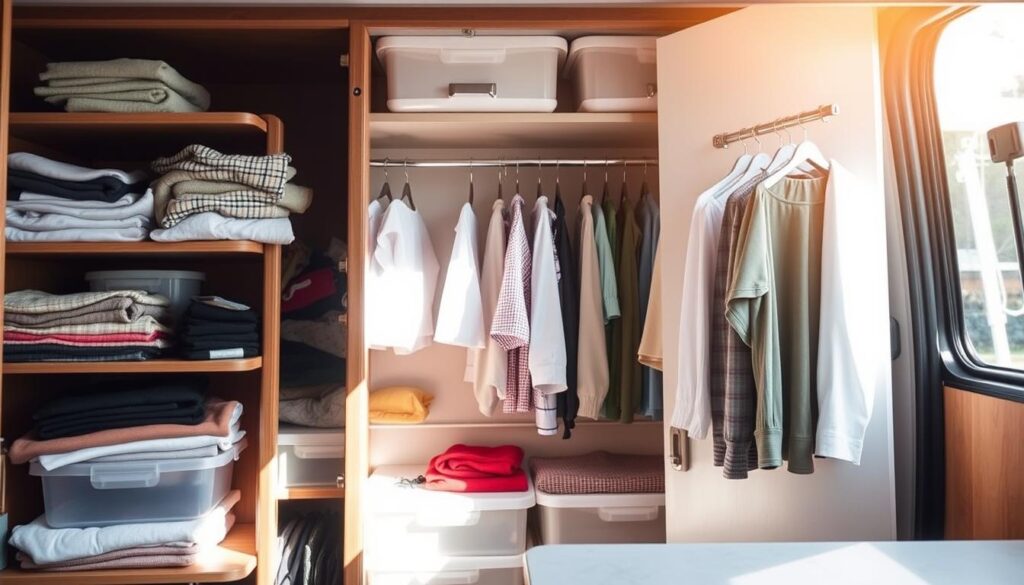
When sorting your closet, make three piles. The keep pile is for things you use a lot. The donate pile is for items that are good but you don’t need anymore. The toss pile is for things that are broken or too worn out.
Start with one type of item at a time, like shirts or pants. This helps you not feel overwhelmed. Ask yourself these key questions for each item:
- Have I worn this in the past year?
- Does it fit my current lifestyle and body?
- Is it in good condition?
- Do I have similar items that serve the same purpose?
Seasonal Item Considerations
Living in an RV makes it hard to store seasonal clothes. You might travel to different places with different weather. Vacuum bags are great for storing seasonal clothes and linens. They make bulky items smaller by removing air.
These bags help you stack things neatly in your closet or under your bed. Keep a few sets of clothes for each season easy to reach. Store the rest in vacuum bags until you need them.
To save space, switch out seasonal clothes based on where you’re going. Keep the clothes for the next season ready to go. Store the rest in vacuum bags.
Creating a Donation Plan
Donating items on the road needs planning. You can’t just drop off donations whenever you want. Look up donation centers along your route to find places to drop off items.
Big chains like Goodwill and Salvation Army have spots all over the country. Plan donation stops when you’re running errands or visiting big towns. This way, donations leave your RV fast, saving space.
Try to declutter big before staying in one place for a while. This lets you donate items without messing up your travel plans.
Choosing the Right Storage Solutions
Living in an RV means using every inch of space wisely. We need storage that’s made for life on the move. The right mix of shelves, bins, and organizers makes your RV space work for you.
When picking storage, think about three things. First, it must be tough to handle constant movement. Second, it should be easy to get to what you need without digging through everything. Third, it should be flexible to change with the seasons and trips.
Utilizing Vertical Space with Shelving
Vertical space is key for more storage. Stackable clear bins are great for keeping things organized. They let you see what’s inside without digging through boxes.
Wire cubbies are also good for vertical storage. They’re light but strong, perfect for RV travel. You can set them up easily, which is great for renters or temporary needs.
Here are some vertical storage ideas:
- Adjustable tension rods for extra hanging space
- Over-door organizers that don’t need to be installed
- Stackable drawer units that fit standard closet sizes
- Hanging shelf organizers for shoes and accessories
Under-Bed Storage Options
Under-bed storage bins with wheels are perfect for off-season clothes, linens, or shoes. The wheels make it easy to get to what’s inside, even in small spaces. Make sure the bins have tight lids to keep things from moving around.
Vacuum-sealed bags help use under-bed space by squishing down big items like blankets and coats. They can cut storage space in half, but keep a hand pump handy for re-sealing.
Rolling storage carts are great for moving things around. You can use them in different rooms or outside for easy access.
Storage Bins and Baskets: Pros and Cons
Clear plastic bins are good for seeing what’s inside but can break in cold weather. Wire baskets are durable and let air in but don’t keep dust or moisture out. Fabric organizers are light and fold up but might not last long.
Here’s how different storage containers compare:
| Container Type | Durability | Visibility | Weight | Best Use |
|---|---|---|---|---|
| Clear Plastic Bins | Moderate | Excellent | Light | Clothing, linens |
| Wire Baskets | High | Good | Light | Shoes, accessories |
| Fabric Organizers | Low | Poor | Very Light | Temporary storage |
| Hard-Shell Cases | Very High | Poor | Heavy | Fragile items |
The best storage mix depends on your needs. Start with a few versatile options and add more as you figure out what works best for you.
Maximize Closet Efficiency with Accessories
The right closet accessories can double your storage without making your RV bigger. These smart tools help us organize every inch. Choosing the right accessories makes our RV closet organized and stress-free.
Quality accessories are key in small spaces. They keep things tidy and easy to find. It’s important to pick items that stay in place and last long.
Hangers and Hooks: Essential Accessories
Layered hangers change how we use vertical space. They let us hang up to five items where we used to hang one. This is a big space saver.
Slim hangers save even more space. They hold 50% more clothing than thick hangers. Velvet-coated ones keep clothes from slipping.
Using hooks on walls and doors is smart. Over-the-door hooks are great for robes and jackets. They use space we wouldn’t have used before.
Multi-Compartment Organizers
Hanging organizers turn vertical space into useful zones. They have many pockets for different things. We use them for shoes, accessories, and folded clothes.
Good organizers are strong and won’t tear. Look for ones with clear pockets so we can see what’s inside. They should fit well in our closet.
Where we put hanging organizers is important. They should be stable during travel. We can use hooks or weights to keep them in place.
Drawer Dividers for Small Items
Drawer dividers keep small spaces tidy. They sort socks, underwear, and accessories neatly. No more digging through drawers.
Adjustable dividers are best for RVs. They fit different drawer sizes and types. Spring-loaded versions stay put without extra hardware.
We use dividers for more than clothes. They organize toiletries, office stuff, and tools. The trick is to pick ones that fit well and don’t move.
The Role of Labels in RV Organization
Labels make your RV storage solutions easy to use. In small spaces, quick packing and unpacking are key. Labels eliminate guesswork and guide us to what we need.
Think of labels as your RV’s GPS. They help everyone find things fast. No more digging through bins or asking “Where did we put the flashlights?”
Labeling Storage Bins Effectively
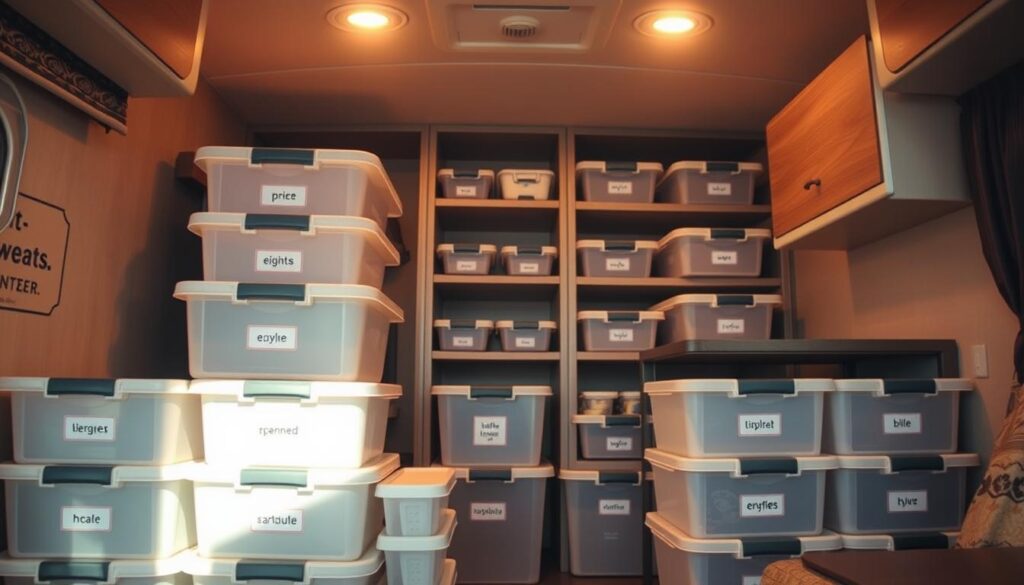
Start with the right materials and methods for labels. Use waterproof labels or laminated tags. Clear, bold fonts are best, even in dim light.
Use color-coded systems with text labels. Colors like red for kitchen items or blue for clothes help. This helps visual learners find things fast.
Put labels on all sides of containers. Front labels are good for shelves, but side labels are better for stacked bins. Consistency in placement makes finding items easy.
Benefits of a Labeling System
A good labeling system saves time and effort. Time savings are huge. We enjoy our travels more.
Labels make everyone responsible for keeping things organized. Kids do well with clear signs.
Inventory management is easy with labels. We know what we have and what we need. This prevents duplicate purchases and keeps us ready.
Labels are also key in emergencies. Clear labels help us find what we need fast.
Tips for Maintaining Your Labels
Keep your labels in good shape. Check labels monthly for wear. Replace them if they’re damaged.
Update labels when things change. Seasonal changes mean new labels for clothes or gear. Keep a label maker ready.
Make a master list of your labels. This helps keep things consistent. Digital photos of labeled areas are extra help.
Teach everyone in your RV about the labels. Hold sessions for new travelers. Everyone needs to use the system to keep it working.
Personalized Organization Systems
Your RV lifestyle needs an organization system made just for you. No two RV owners are the same, so generic solutions don’t work. The best RV closet storage ideas come from systems made just for you.
Creating a personalized system means thinking differently. We must consider our travel habits, the people we travel with, and our favorite activities. This way, our system makes life easier, not harder.
Custom Solutions for Unique Spaces
RV closets often have odd shapes that don’t fit standard organizers. Slanted walls, curved corners, and odd heights need creative solutions. These challenges can lead to innovative storage ideas.
Custom shelving is great for these spaces. We can make shelves that fit the RV’s shape. Simple wooden brackets and boards create flexible storage that changes with our needs.
For DIY fans, making custom dividers can turn wasted space into useful storage. We can use foam board, cardboard, or thin plywood to make compartments for our items. These homemade solutions often beat expensive store-bought ones because they’re made for our exact space.
The best organization system is the one that works for your specific situation, not the one that looks perfect in a magazine.
Tailoring Organization to Your Lifestyle
Our organization system should match how we live and travel. Weekend warriors and full-time RVers have different RV closet storage ideas. Knowing our lifestyle helps us create systems that really meet our needs.
Full-time RVers can use seasonal rotation systems. We can set aside areas for current clothes and store out-of-season items elsewhere. This way, we make the most of our closet space all year.
Weekend travelers need quick packing and unpacking solutions. We might use grab-and-go containers for easy transfers between home and RV. Clear bins with handles make packing and unpacking simple.
Families with kids need systems that grow with them. We should use adjustable parts that change as our family grows. This flexibility is key.
| RV Lifestyle | Organization Priority | Best Storage Approach | Key Features |
|---|---|---|---|
| Weekend Warriors | Quick Access | Portable Containers | Easy transfer, clear visibility |
| Full-Time RVers | Seasonal Rotation | Tiered Storage System | Accessible current items, hidden storage |
| Families | Growth Flexibility | Adjustable Components | Expandable, child-friendly access |
| Solo Travelers | Efficiency | Minimalist Approach | Multi-purpose items, compact design |
Involving Everyone in the Organization Process
Getting everyone on board with RV organization is key. Systems imposed by one person rarely work for the whole group. Collaborative planning leads to success and makes everyone feel involved.
Start by asking everyone about their storage needs and preferences. Kids often have great ideas about what works and what doesn’t. Their input is valuable.
Give each person their own area or task. When everyone has a role, keeping things organized becomes a team effort. This works well for families and couples.
Make simple rules that everyone can follow. Rules like “one item in, one item out” or “everything has a home” help keep things organized. These rules are easy to follow and don’t feel too strict.
Hold regular meetings to talk about organization. Discuss what’s working, what needs tweaking, and any new challenges. This keeps our system up to date with our changing needs.
The best RV closet storage ideas are the ones everyone uses. We should focus on what works best for us, not just what looks good. Our system should make RV life easier, not harder.
Seasonal Organization Tips for RVers
Weather changes require smart planning for RV living. We face unique challenges as we travel through different climates and seasons. Our closets must adapt quickly to temperature shifts and varying weather conditions.
Successful seasonal organization needs advance preparation and smart storage solutions. We need systems that work efficiently in limited space. The key lies in planning ahead and staying flexible with our approach.
Preparing for Seasonal Travel
Research your destination’s weather patterns before hitting the road. We recommend checking seasonal temperature ranges and precipitation levels for each stop. This information helps us pack appropriately and avoid overstuffing our closets.
Create a master packing list for each season. Include essential items like jackets, boots, and weather-specific gear. We find it helpful to categorize items by temperature ranges.
Plan your route with weather transitions in mind. Gradual climate changes allow us to adjust our closet contents slowly. Sudden temperature shifts require more dramatic wardrobe swaps.
Adjusting Closet Items Based on Weather
Monitor weather forecasts regularly during travel. We check conditions for the next week to anticipate needed clothing changes. This proactive approach prevents last-minute scrambling through packed items.
Use the layering system to maximize versatility. Base layers, insulating pieces, and outer shells work together efficiently. We can mix and match fewer items to create multiple outfit combinations.
Store off-season items in vacuum-sealed bags. These bags compress bulky winter coats and sweaters significantly. We place them in hard-to-reach storage areas during warmer months.
Keep a small selection of unexpected weather items accessible. A light rain jacket and warm sweater should stay within easy reach. Weather can change quickly, and we need backup options ready.
Switching Out Items: A Practical Guide
Schedule regular closet reviews every two weeks during travel. We assess current items and upcoming weather needs. This routine prevents accumulation of unnecessary clothing.
Follow the one-in, one-out rule when adding seasonal items. Remove summer clothes before adding winter gear. This system maintains consistent closet capacity throughout the year.
Create designated storage zones for different seasons. We use clear bins labeled by temperature ranges. Hot weather gear goes in one container, while cold weather items occupy another.
Implement a rotation schedule for bulky items. Heavy coats and boots take up significant space. We store these items under beds or in external compartments when not needed.
Pack transition pieces that work across seasons. Lightweight cardigans and versatile pants bridge temperature gaps. These items reduce the need for complete wardrobe changes.
Document your seasonal switches with photos. We take pictures of our organized closets after major changes. This visual reference helps us remember efficient arrangements for future trips.
Consider climate-controlled storage for extreme weather gear. Specialized equipment like heavy winter coats may need professional storage. We evaluate the cost versus convenience for rarely used items.
Maintenance: Keeping Your RV Organized
Keeping your RV closet organized for the long term is all about maintenance. We’ve found that setting up an organized space is just the start. The real challenge is keeping it that way as we travel and live our daily lives.
Effective maintenance means seeing organization as a continuous process, not just a one-time task. By setting up regular routines and quick fixes, we avoid big problems from small issues.
Regular Decluttering Techniques
The “one-in, one-out” rule is our best defense against clutter. Every new item means getting rid of something else. This keeps our stuff in check.
Monthly mini-decluttering sessions are great for keeping things tidy. We spend 15 minutes each month reviewing our closet. We ask three questions about each item:
- Have we used this item in the past month?
- Does this item fit our current travel lifestyle?
- Would we pack this item again if starting fresh?
These RV organization tips help us be honest about what we really need. Regular small decluttering stops big messes from happening.
Setting Up Organization Checkpoints
We have weekly organization checks to catch problems early. Every Sunday evening, we do a quick closet check. This helps us spot areas that need work.
Our system has three levels of review. Daily checks mean putting things back after use. Weekly reviews focus on overall organization. Monthly deep checks check our whole system.
Travel day checks are very important. Before leaving, we secure loose items and make sure everything is stored right. After arriving, we quickly reorganize anything that moved during travel.
These methods make our RV organization tips work better over time. We’ve learned that being consistent is more important than being perfect.
Quick Fixes for Disorganization
Even with good maintenance, disorganization can happen. We have quick-fix strategies to fix it in minutes, not hours.
The “five-minute pickup” is great for daily upkeep. We set a timer for five minutes to put away misplaced items. This stops small messes from getting big.
For items that always get misplaced, we use “landing zones”. These spots give us time to organize items later without clutter.
If our system isn’t working, we make quick changes. Sometimes, we move items to easier spots or add more storage.
In emergency situations, we use our “triage method.” We sort items into three piles: immediate needs, can wait, and needs to be moved. This helps us get back in control fast.
By using these practical RV organization tips, we keep our closet systems working well. Regular care prevents the frustration of searching through clutter. It lets us enjoy our RV life fully.
Creative Ideas for Making the Most of Small Spaces
Every inch counts in small RV closets. We must think differently to find space-saving solutions. Space-saving RV closet organization turns hidden spots into useful storage.
Look for hidden spots in your closet. Use corners, door surfaces, and vertical areas for storage. These ideas help us store more and keep things easy to find.
Door Power: Hooks and Hanging Solutions
Closet doors are great for storage. Use suction cup hooks or command strips without harm. They add space for belts, scarves, or small bags.
Mesh shoe organizers are great on closet doors. They hold toiletries, cleaning stuff, or small clothes. The clear material lets us see what’s inside.
Over-the-door organizers use door space well. Choose ones with adjustable shelves for different heights. This is handy when our storage needs change.
Corner Solutions: Making Awkward Spaces Work
Closet corners are often wasted space. Use triangular corner shelves to fill these spots. They use every inch.
Rotating corner organizers make items easy to find. They’re like lazy Susans for shoes, clothes, or accessories. No more digging through piles.
Tension rods in corners add more hanging space. They’re perfect for delicate items or seasonal clothes.
Portable Storage: Flexibility for Changing Needs
Portable storage lets us change our setup as needed. Rolling storage carts move between spaces. This is great for long stays.
Stackable storage cubes are easy to change. Add or remove cubes as needed. They’re good for clothes and gear.
Collapsible storage bins save space when not in use. They fold flat and expand when needed. This flexibility is unbeatable.
| Storage Solution | Best Use | Space Efficiency | Mobility |
|---|---|---|---|
| Door-mounted hooks | Lightweight accessories | High | Fixed |
| Corner shelving | Folded items | Medium | Fixed |
| Rolling carts | Frequently accessed items | Medium | High |
| Collapsible bins | Seasonal storage | High | Medium |
These ideas help us use every inch of our RV closets. Mix and match solutions for a system that grows with you. The trick is to think creatively about each space’s use.
DIY Organization Projects for RVs
DIY projects turn RV closets into useful storage spaces. You can use simple tools and get creative. These RV closet organization hacks help you make solutions that fit your needs and budget.
Many stores sell pre-made shelving units with easy-to-follow instructions. These are great for beginners who want a pro look without hard work. You can also find basic materials like wood, brackets, and screws for custom solutions.
Crafting Your Own Storage Solutions
Start by measuring your closet space carefully. Cut plywood or MDF boards for extra shelves. Adjustable shelf brackets let you change shelf heights as needed.
Tension rods are perfect for adding hanging space in tight spots. Install them between walls or in deep closets. These RV closet organization hacks need no permanent mounting and are easy to remove.
Pegboard panels turn closet walls into useful storage. Mount them on doors or walls for hooks, baskets, and shelves. This system changes with your storage needs.
Upcycling Items for RV Use
Old shoe organizers are great for toiletries, cleaning supplies, or clothes. Hang them on doors or walls for instant storage. Clear pockets make it easy to see what’s inside.
Use plastic containers and jars as drawer organizers or shelf storage. Cut cardboard dividers for custom drawer compartments. These RV closet organization hacks are cheap but very useful.
Turn unused suitcases into under-bed storage. They fit in tight spaces and protect your stuff. Stack them efficiently to use every inch of space.
Budget-Friendly DIY Tips
Dollar stores have great supplies for DIY projects. Find plastic bins, hooks, and small containers for RV closets. These affordable items let you try out different organization systems.
Use cardboard boxes as temporary drawer dividers. Cover them with contact paper or fabric to make them look better. This way, you can test layouts before buying permanent materials.
Use command strips and removable hooks to avoid damaging your RV walls. These solutions are perfect for renters or anyone who wants to keep their RV’s value. They work great for lightweight storage accessories.
Pool noodles cut into sections are great for drawer bumpers and dividers. They’re cheap, light, and keep items from sliding. These creative RV closet organization hacks solve common storage problems without costing much.
Advanced Storage Strategies for Families
Organizing an RV closet for a family is a big challenge. We need creative solutions for small space closet organization for RVs. Our systems must work for all ages, from kids to grandparents.
Living in an RV means using every inch wisely. Each family member has different needs and habits. Our storage must meet these needs while keeping things organized and easy to find.
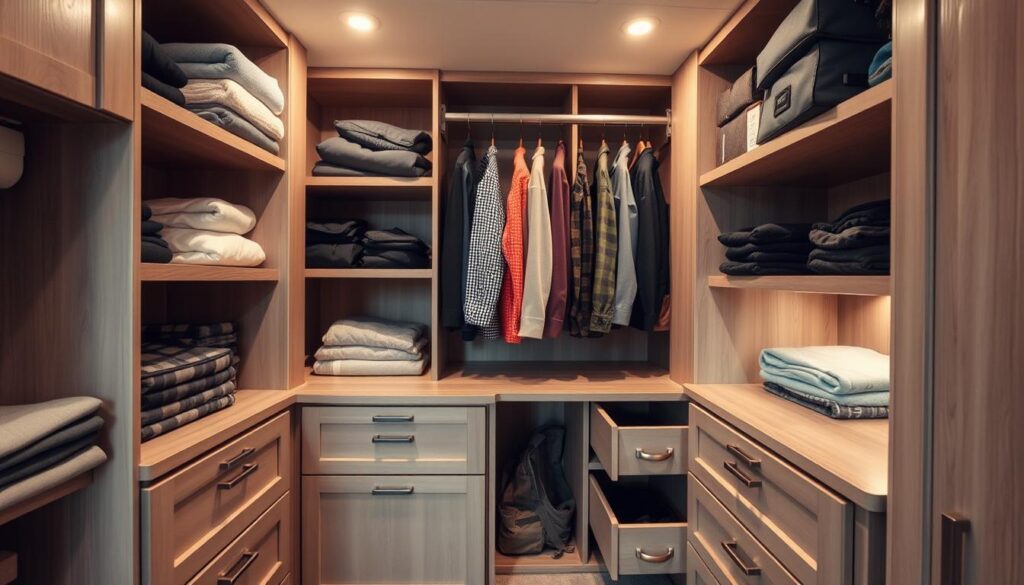
Family-Sized Solutions for RV Closets
We suggest using zone-based organization. This means each person has their own area in the closet. It helps avoid fights over space and makes it clear where things go.
Color-coding is a great idea for families. Give each person a color for their storage. This makes it easy to find what belongs to whom.
Here are some storage ideas for families:
- Stackable cubes that can be rearranged as needs change
- Mesh bags for dirty laundry separation by person
- Adjustable shelving that grows with your family
- Pull-out drawers for easy access to lower storage areas
Managing Gear for Different Activities
Family adventures often need special gear. We need small space closet organization for RVs that can handle everything. This includes hiking boots and formal clothes.
Make zones for different activities in your closet. Have one for outdoor gear, another for work clothes, and a third for casual wear. This keeps things organized and makes packing easier.
Use clear, labeled containers for seasonal or activity-specific items. Vacuum-sealed bags are great for bulky items like winter coats or sleeping bags. They make these items much smaller.
Creating a Shared Organization System
The best organization systems are ones everyone can follow. Involve all family members in creating the system. This makes everyone feel responsible for it.
Set simple rules that work for everyone:
- Everything has a designated home
- Put items back immediately after use
- Weekly family organization check-ins
- Rotate responsibility for maintaining shared spaces
Try a buddy system where older kids help younger ones. This teaches responsibility and keeps the system working for everyone.
Resources and Tools for Ongoing Inspiration
Your RV wardrobe organization journey doesn’t end here. We’ve gathered valuable resources to keep you inspired. They help you find new solutions as your needs change.
Online Communities and Expert Advice
RV lifestyle blogs like RV Life and Do It Yourself RV share tips from seasoned travelers. The RV Forum and Reddit’s RV community offer advice from those facing similar space challenges. They share creative solutions that work in real road conditions.
Proven Products Worth Considering
Roomedys® Spacing Tape for Hangers (RST) is a standout for keeping closets neat. It uses strong 3M adhesive and comes in various colors. Other reliable brands include Rubbermaid for storage and Command strips for hanging without damage.
Learning from Fellow RVers
RV rallies and meetups offer hands-on learning. Many RVers share their organization tricks. Facebook groups for RV living share daily inspiration with photos and guides.
Keep looking for new ideas and updating your system as you travel. The best RV wardrobe organization comes from using proven products and creative thinking. Plus, wisdom from the community.