Starting your RV adventure can feel overwhelming. You might wonder what equipment you need. Unexpected breakdowns and maintenance issues can happen at the worst times. Feeling prepared gives you confidence on the road.
Having the right gear is key. It makes a big difference between a small problem and a big headache. Knowing you can handle basic repairs yourself gives you peace of mind. Your motorhome needs regular upkeep to stay safe and work well.
We’ve made a detailed guide to help you get the right essential RV tools without spending too much. Our picks cover mechanical, electrical, and water system needs. You’ll learn what tools you need and why they’re important for your safety and comfort.
Key Takeaways
- A well-stocked maintenance collection prevents minor issues from becoming major problems
- Essential equipment should cover mechanical, electrical, and plumbing systems
- Basic hand tools form the foundation of any recreational vehicle repair arsenal
- Specialized motorhome equipment handles unique challenges you won’t face at home
- Proper preparation reduces stress and increases safety during your travels
- Budget-friendly options exist for beginners who want quality without overspending
Understanding the Essentials of an RV Tool Kit
Having the right tools can make a big difference. When we’re on the road in our RVs, we face unique challenges. Our RVs are like mobile homes with car parts and home utilities mixed together.
This mix needs special tools to keep everything running smoothly. The best RV tool kit items are key to handling these challenges.
Knowing what tools you need is important for RV life. We must choose tools that work for many systems. We also need to think about how much space and weight they take up.
What is an RV Tool Kit?
An RV tool kit is a set of tools made for RVs. It’s different from regular household tools. These kits are made for the special needs of our mobile homes.
RVs have three main systems: mechanical, electrical, and water. Each system needs its own tools. Mechanical systems include the engine and chassis. Electrical systems power our lights and appliances. Water systems manage our water needs.
We can buy tools separately or in sets. But, picking only what we need is better. This way, we keep our RV light and fuel efficient.
Why Every Newbie Needs One
New RV owners face special challenges. We think every beginner should have a must-have RV tools list. RVs mix car tech with home systems in ways that surprise us.
When we’re far from town, the right tools are vital. Without them, small problems can turn into big ones. Issues like loose connections or leaks can stop our adventure.
RV systems can fail in many ways at once. A storm might damage our electrical, water, and mechanical parts. Having the right tools helps us fix these problems together.
| System Type | Common Issues | Essential Tools Needed | Skill Level Required |
|---|---|---|---|
| Mechanical | Loose bolts, belt adjustments, tire issues | Wrenches, screwdrivers, tire tools | Beginner to Intermediate |
| Electrical | Loose connections, blown fuses, wire damage | Voltage tester, wire strippers, electrical tape | Intermediate |
| Plumbing | Leaky fittings, clogged drains, water pressure | Pipe wrenches, plumber’s tape, drain snake | Beginner to Intermediate |
| Structural | Loose panels, damaged seals, hardware failure | Multi-tool, sealants, replacement hardware | Beginner |
Building your tool collection slowly is a good idea. It lets you learn each tool’s use and spreads out the cost. Start with basic tools and safety gear. Then, add more as you get to know your RV and camping style.
Basic Hand Tools for RV Maintenance
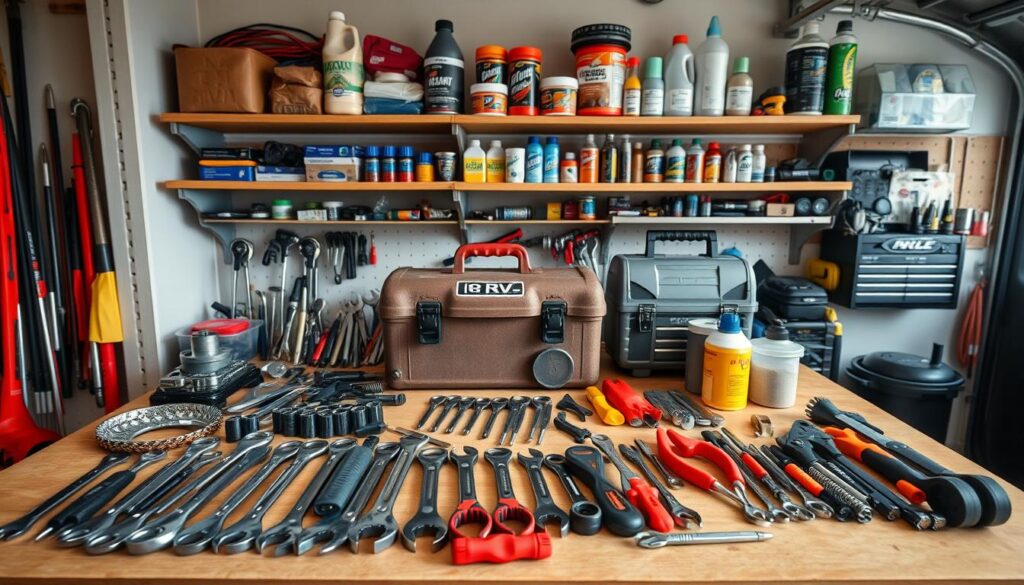
Your RV tool kit needs three main types of hand tools. These top RV tool essentials are key for any maintenance job. They help fix common problems on the road. Road vibrations can loosen fasteners, so good tools are a must for safe travel.
Choose tools that do many jobs and save space. Smart tool selection means picking items for both your RV and tow vehicle. This way, you get more value and don’t waste space.
Screwdrivers: Types You Need
A good multi-bit screwdriver set is a must-have. RVs have different screw types like Phillips and star heads. Road vibrations make these screws come loose often, so you need to tighten them a lot.
Multi-bit screwdrivers are great because they save space and are versatile. Look for ones with magnetic tips to catch screws in tight spots. Quality is important here because cheap tools can damage screws.
Wrenches: The Core Set
You’ll need both combination wrenches and a socket set. Combination wrenches are good for general tasks. Socket sets are better for tough nuts and bolts.
Start with common sizes for your RV’s parts. Most RVs use standard sizes, but check your model for exact needs. Socket sets are versatile for both your RV and tow vehicle, making them a smart buy.
Ratcheting wrenches make quick work of repetitive tasks. They’re great for tight spaces, like under your RV.
Pliers: Versatile and Necessary
Three types of pliers are essential for RV work. Needle-nose pliers are great for small, precise tasks. Their long tips are perfect for tight spots and electrical work.
Channellock pliers are strong for general tasks. They adjust to fit different sizes and offer great leverage. These workhorses handle everything from plumbing to general gripping.
Vise-grip pliers are for tough jobs. They grip fasteners that regular tools can’t. They’re a lifesaver for emergency repairs when other tools fail.
Safety Gear: Must-Have Items for Your Kit
When we talk about essential tools for RV beginners, safety gear is key. It can save you from big problems. We’ve seen how important it is to have the right safety gear.
Your safety kit should be full but easy to carry. Each item should protect you and your friends. Let’s look at the important safety items for every RV.
First Aid Kit Basics
A good first aid kit is a must-have. It should have more than just bandages and wipes. Add pain relievers, antihistamines, and any medicines your family needs.
Don’t forget gauze pads, medical tape, a thermometer, and cold packs. Remember to include tweezers for splinters and scissors for cutting. Keep it all in a waterproof container that’s easy to find when you need it.
Check the expiration dates often and replace items as needed. We suggest checking your first aid supplies every six months. This keeps everything fresh and ready to use.
Fire Extinguisher: Why It’s Essential
RVs have special fire risks. You have propane, electrical, and cooking equipment that can start fires. Always carry a Class ABC fire extinguisher for different fires.
Put your extinguisher where you can easily get to it, near the exit door. Don’t store it where you can’t reach it in an emergency. Check the pressure every month and replace it when needed.
Also, have a small extinguisher in the bedroom. This gives you extra protection and makes sure you’re never far from fire gear.
Safety Triangles and Reflectors
When you’re stopped on the side of the road, you need to be seen. Safety triangles and reflectors help alert drivers. They’re also needed for commercial vehicles in many places.
Put triangles 100 feet behind your RV on highways. Use reflectors to mark your vehicle’s corners and make it visible from all sides. LED road flares are a good choice for all weather.
Keep these items in your outside storage for easy access. You don’t want to search through cabinets when you need to be safe.
| Safety Equipment | Primary Purpose | Recommended Quantity | Storage Location |
|---|---|---|---|
| First Aid Kit | Medical emergencies | 1 complete kit | Interior cabinet |
| Fire Extinguisher | Fire suppression | 2 units (main + backup) | Near exit doors |
| Safety Triangles | Roadside visibility | 3 triangles minimum | Exterior storage |
| LED Road Flares | Emergency lighting | 4-6 units | Exterior storage |
RV Electrical Tools
Electrical problems are a big headache for RV owners. They power lights, appliances, water pumps, and charging systems. Having the right tools in your RV tool kit checklist for newbies can save you from big trouble.
Always put safety first when working on electrical systems. Never work on electrical systems without proper testing equipment. The tools we’ll talk about help you fix problems safely and reliably.
Voltage Tester: Avoiding Electrical Issues
A voltage tester is your first defense against electrical problems. It lets you check for power safely before working on electrical parts. This can prevent dangerous shocks and help diagnose issues quickly.
For RV use, we recommend non-contact voltage testers. They detect electrical current without touching wires. Just hold the tester near a wire or outlet, and it will beep or light up if there’s voltage.
Digital voltage testers give more precise readings than basic ones. They can show exact voltage levels, helping you find weak connections or failing parts. Most RV systems use 12V DC and 120V AC, so pick a tester that works for both.
Wire Strippers: Essential for Repairs
Wire strippers are key for making good electrical connections. Clean cuts and proper stripping prevent future problems. Poor wire connections cause most RV electrical failures.
Look for wire cutter and stripper tools that do it all. These tools have different gauge settings for various wire sizes in RV systems.
Good wire strippers have comfortable grips and sharp edges. Cheap tools can damage wire strands, leading to weak connections. Spend on a reliable pair for years of RV adventures.
| Tool Type | Primary Function | Safety Benefit | Typical Cost Range |
|---|---|---|---|
| Non-Contact Voltage Tester | Detects live wires safely | Prevents electrical shock | $15-$30 |
| Digital Multimeter | Measures voltage, current, resistance | Accurate diagnostics | $25-$75 |
| Wire Stripper/Cutter Combo | Cuts and strips wires cleanly | Prevents connection failures | $20-$45 |
| Electrical Tape | Insulates wire connections | Prevents short circuits | $5-$15 |
Many RV technicians say multimeters are key for finding electronic issues. These devices measure voltage, current, resistance, and frequency. A good multimeter can identify problems that simple testers might miss.
Don’t forget electrical tape and wire connectors in your toolkit. These are needed for most electrical repairs. Quality electrical tape insulates well, and proper connectors ensure lasting repairs.
Plumbing Tools Every Camper Should Carry
Water system problems can ruin your camping trip fast. Plumbing issues strike at the most inconvenient times, often when you’re far from a hardware store. The right tools can fix problems quickly, saving your vacation.
RV plumbing systems face unique challenges. Constant vibration, temperature changes, and tight spaces require special tools. We suggest a plumbing toolkit made for RV life.
Wrenches for Plumbing Issues
Standard wrenches won’t work for RV plumbing problems. We need specialized plumbing wrenches that work in cramped spaces and grip various pipe fittings securely. Basin wrenches are great for reaching faucet nuts in tight spots under sinks.
Adjustable pipe wrenches handle different pipe sizes well. We recommend carrying both 10-inch and 14-inch versions for maximum versatility. These tools grip round pipes better than regular adjustable wrenches.
Strap wrenches protect delicate finishes on fixtures while providing excellent grip. They’re perfect for removing stubborn water filters or working with plastic fittings that could crack under metal wrench pressure.
Plumber’s Tape: The Unsung Hero
Plumber’s tape, also called Teflon tape, is a must-have in every RV toolkit. This inexpensive miracle worker seals threaded connections and prevents leaks before they start. We wrap it clockwise around male threads before connecting fittings.
The versatility extends beyond your RV’s internal plumbing. Leaky campground water spigots become manageable when you wrap them with plumber’s tape before connecting your water line. This simple trick saves water and prevents messy connections.
We keep both white tape for water connections and yellow tape for gas lines. Never mix these up – using the wrong tape on gas connections creates serious safety hazards.
For advanced repairs, PEX pipe cutters and crimping tools handle most RV plumbing jobs efficiently. PEX piping is common in modern RVs because it’s flexible and freeze-resistant. Having proper PEX tools makes pipe repairs much easier than struggling with improvised solutions.
Assorted PEX fittings and clamps complete your advanced plumbing toolkit. These components let you handle everything from simple leaks to complete pipe replacements on the road.
Tire Maintenance Tools
Having the right tools for tire maintenance is key when you’re far from help. Tire failures can be dangerous and leave you stranded in remote areas. It’s vital for RV owners to keep their tires in good shape to avoid blowouts and keep everyone safe.
RVs put a lot of stress on tires because of their size and weight. Regular checks are important, more so when traveling long distances or in extreme weather. The right tools help you spot problems early and deal with emergencies.
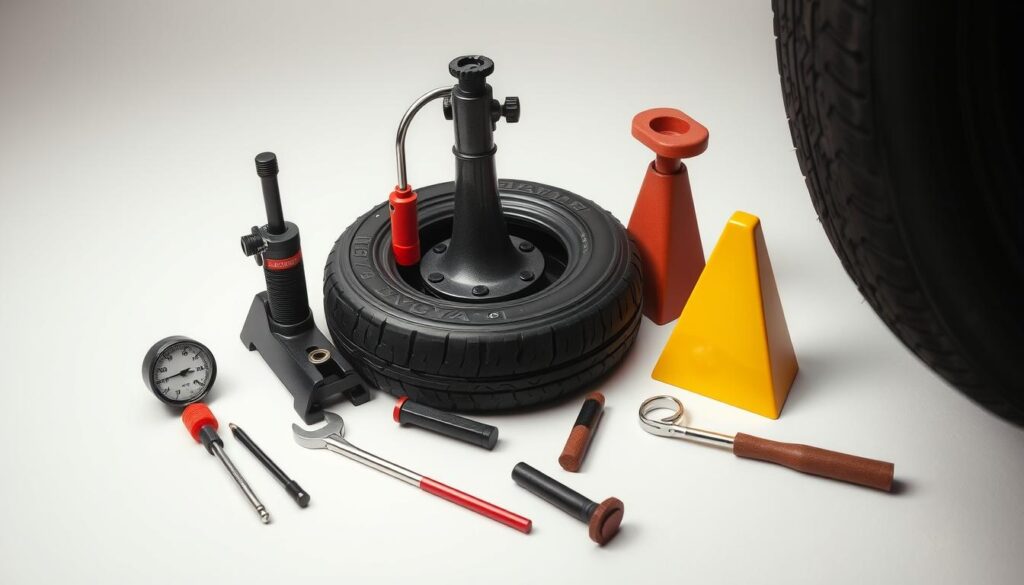
Tire Pressure Gauge: Keeping Tires Safe
A good tire pressure gauge is your first defense against tire issues. Always check tire pressure before and during trips. Wrong tire pressure can damage your RV, use more fuel, and shorten tire life.
Digital gauges give accurate readings and are easier to read than analog ones. Look for gauges that go up to 120 PSI, as RV tires need higher pressure. Many RV owners don’t know that pressure changes with temperature and altitude.
Check pressure when tires are cold, like in the morning. Hot tires give wrong readings that can lead to under-inflation. Keep your gauge handy because you’ll use it a lot.
RV Jack: When You Need a Lift
An RV jack is a must for tire changes, if your RV doesn’t have hydraulic jacks. We prefer bottle jacks for their stability and lifting capacity with heavy RVs. These jacks can safely handle most RV weights.
Bottle jacks are better than scissor jacks because they’re more stable and lift higher with less effort. Most can lift 4,000 to 12,000 pounds, fitting various RV sizes.
Always use jack stands or blocks for safety when working under your RV. Never rely only on a jack to support your vehicle’s weight during maintenance. Place the jack on solid, level ground and use plywood under it if on soft surfaces.
Tire Wrench: Essential for Emergencies
A proper tire wrench that fits your lug nuts is key for emergency tire changes. We strongly recommend including a torque wrench in your kit to check lug nut torque often. Wrong lug nut tightness can cause big problems.
Cross-pattern lug wrenches give better leverage than standard ones and prevent rounding off lug nuts. Make sure your wrench fits your lug nut size perfectly. A bad fit can damage nuts and leave you stuck.
Carry a breaker bar for extra leverage on tough lug nuts. Some RV lug nuts are very tight and need a lot of force to remove. Practice changing a tire at home before you need it on the road.
Also, carry a small air compressor for keeping tire pressure right. Tire pressure changes a lot with climate and altitude. A portable compressor lets you adjust pressure as needed and can help with small leaks until you get to a repair shop.
Camping Tools and Accessories
A great camping trip needs the right tools and accessories. Basic tools keep your RV in good shape. But, special camping tools make your trip better and easier.
Quality camping tools are worth the investment. They solve common RV problems. They also make your daily life on the road easier.
Camp Stove Tool Kit: Cooking on the Road
Your camp stove needs its own tool kit. This kit keeps your stove working well on your travels. A good camp stove tool kit stops meal disasters and lets you cook hot food.
Important items include tools for cleaning burners and gas line wrenches. You should also carry spare parts for your stove.
Don’t forget cleaning brushes for your camp stove. These tools remove tough buildup from burners. Clean burners cook better and avoid uneven heating.
Store your camp stove tool kit in a waterproof place. This keeps your tools dry and easy to find. We keep ours near the cooking area for easy access.
Multi-Tools: Convenience at Its Best
Multi-tools are great for RV living. They do many things in one small package. A good multi-tool replaces many tools and saves space.
Most multi-tools have screwdrivers, pliers, scissors, and knives. Some even have LED lights for dark places. We use our multi-tool a lot in the kitchen.
Multi-tools are light and save space. They let you carry everything you need in one place. This makes your RV lighter and more functional.
| Multi-Tool Feature | Kitchen Use | Maintenance Use | Emergency Use |
|---|---|---|---|
| Knife Blade | Food prep, opening packages | Cutting zip ties, tape | Cutting rope, fabric |
| Scissors | Trimming herbs, cutting foil | Wire cutting, precision cuts | First aid applications |
| Pliers | Gripping hot items | Wire bending, small repairs | Removing splinters, debris |
| Screwdrivers | Appliance adjustments | Quick fixes, installations | Panel removal, access |
Look for a multi-tool with locks for safety. This stops blades from closing by accident. Quality multi-tools last a long time and handle RV tasks well.
Cleaning Supplies for Your RV
We think the best RV cleaning starts with knowing what works best. Your RV faces special challenges that regular cleaners can’t handle. RV cleaning needs special solutions to keep it looking great and safe.
The right cleaning supplies are key to a good clean. Having the right tools saves time and protects your RV’s surfaces.
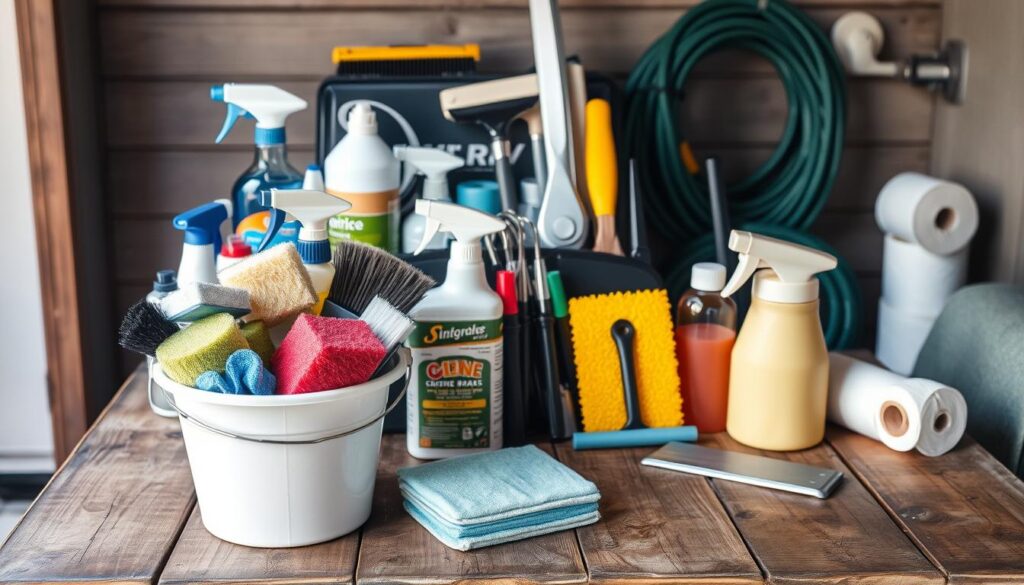
RV-Specific Cleaning Products
Household cleaners can harm your RV’s special materials. RV-specific cleaning products are safe for fiberglass, rubber roofs, and seals. They won’t damage your RV like harsh chemicals can.
It’s smart to use cleaners made for RV roofs, awnings, and exteriors. Roof cleaners prevent damage and awning cleaners get rid of mildew safely. Always check if your cleaners are right for your RV’s materials.
For the inside, use gentle cleaners on upholstery and cabinets. RV interiors have special fabrics and finishes that need careful cleaning to stay looking good and lasting long.
Brushes and Mops: Keeping It Tidy
The right tools make cleaning your RV easier. A small shop vacuum is great for inside cleaning and keeping cargo areas clean. These units are small but powerful and fit well in RV storage.
A basic broom is good for sweeping mats and awnings. Sponge mops are great for cleaning awnings and outside surfaces without scratching.
We like using microfiber towels in different colors for different jobs. This helps avoid mixing up cleaning tasks. Blue for outside, green for inside makes cleaning easier and more organized.
| Cleaning Tool | Primary Use | Storage Space | Maintenance Level |
|---|---|---|---|
| Shop Vacuum | Interior deep cleaning | Medium | Low |
| Microfiber Towels | Multi-purpose cleaning | Minimal | Low |
| Sponge Mop | Awning and exterior cleaning | Medium | Medium |
| Basic Broom | Campsite and awning maintenance | Large | Low |
Good cleaning supplies protect your RV and make upkeep easier. Investing in quality tools means easier cleaning and better care for your RV.
Organizing Your RV Tool Kit
Keeping your RV tool kit organized is key. It’s not just about looking neat. It’s about being able to find what you need quickly. We’ve learned that a good system can save you time and stress.
Creating a system that works under pressure is important. You don’t want to search through everything just to find a simple tool.
Tool Boxes: Choosing the Right One
Choose modular systems with interlocking storage bins. They are flexible and save space. You can customize them to fit your needs and RV layout.
Look for weatherproof construction when picking a toolbox. It keeps your tools dry and safe. Also, make sure the latches are secure so they don’t open up while you’re moving.
Where you store tools is important. Put heavy tools low and in the middle. This keeps your RV balanced and easy to handle.
| Toolbox Type | Best For | Storage Capacity | Accessibility |
|---|---|---|---|
| Modular Bins | Categorized organization | Medium to Large | Excellent |
| Rolling Chest | Extensive tool collections | Very Large | Good when accessible |
| Portable Tote | Basic emergency tools | Small to Medium | Excellent |
| Wall-Mounted | Frequently used items | Small | Outstanding |
Categorizing Tools for Easy Access
Organize tools by function, not size or how often you use them. This makes sense when you’re trying to fix a problem.
Make sections for electrical, plumbing, and hand tools. Keep emergency items like a tire gauge and first aid kit easy to find.
Label everything clearly and make a list. This helps you know what you have and where it is. Use colors to make things easier to find.
Put things you use often in easy spots. Use higher or lower spots for things you don’t use as much.
Tips for Building Your RV Tool Kit
Starting your RV tool kit can seem overwhelming with so many choices. The good news is, you don’t have to buy everything at once. A strategic approach saves money and ensures you get the right tools.
Building your kit bit by bit helps spread out costs. You’ll learn which tools are most important for your RV and camping style. This way, you avoid buying things you don’t really need.
Starting Small: What to Buy First
Your first buys should tackle the most critical situations on the road. These essential items will handle most common problems during RV trips.
Start with these must-have tools:
- Multi-bit screwdriver set with both Phillips and flathead bits
- Basic adjustable wrench set (8-inch and 10-inch)
- Tire pressure gauge for monitoring tire health
- Comprehensive first aid kit for medical emergencies
- High-quality LED flashlight with extra batteries
These five items will cover many situations. A good multi-tool can also save space in your kit. Once you have these basics, you can add more tools based on your experiences.
Think about your mechanical skills when picking tools. If you’re good at basic repairs, choose quality items. If you prefer professional help, focus on tools for emergency situations and simple fixes.
Customized Kits for Specific Needs
Pre-packaged tool sets might seem easy, but they often include unused items. A customized kit ensures every tool has a purpose for your RV and travel plans.
Your RV’s age and systems decide which tools you need most. Older rigs might need more plumbing tools, while newer ones with complex electronics need different tools. Consider these factors when building your kit:
- Your RV’s specific systems and common problem areas
- Types of camping you prefer (boondocking vs. full hookups)
- Your comfort level with DIY repairs
- Available storage space in your RV
Talk to other RV owners with similar rigs to learn which tools they use most. RV forums and camping groups offer valuable insights about real-world tool needs. This research helps you avoid buying tools that sound useful but rarely get used.
Remember, your tool kit will grow as you gain experience. Start with essentials and add items as you discover specific needs. This approach creates a practical, cost-effective kit that truly serves your RV lifestyle.
Maintaining Your RV Tool Kit
Building your RV tool kit is just the start. Keeping it in good shape is key. This way, your tools will be ready when you need them most.
Regular Inventory Checks
Start each camping season with a detailed tool check. It’s as important as checking tire pressure or fluids. Make a simple list of your tools and check if they’re there and in good shape.
Look closely at items that don’t last forever. Things like batteries, first aid, and some adhesives get old. Note when you need to replace them on your list.
Replacing Worn-Out Tools
Swap out tools that are broken or worn before they fail. A bad screwdriver or dull knife can make repairs hard. Good tools are an investment in your safety and peace of mind.
Update your kit based on what you’ve used on trips. Add tools for new problems and remove unused ones. This saves space and makes sure your kit fits your needs.
A well-kept RV tool kit is your trusted friend on every trip. Regular care ensures it’s always ready for whatever comes next.