Recreational vehicle travel is very popular in America. The Washington Post says over 1 million Americans live in RVs full-time. They do this because it’s cheaper than regular vacations.
Learning to RV on a budget can seem hard at first. But, you don’t have to spend a lot to see the country. With good planning and smart tips, you can travel affordably.
Traveling in an RV lets you control your spending. You decide where to stay, eat, and what to do. This freedom helps you have fun without spending too much.
In this guide, we’ll share RV budget travel tips for everyone. These tips will help you enjoy your trips while saving money.
Key Takeaways
- Over 1 million Americans choose full-time RV living for cost savings
- Recreational vehicle travel offers complete control over your vacation expenses
- Smart planning and proven strategies make affordable RV adventures possible
- Flexibility in camping locations and activities helps maximize your travel budget
- These money-saving techniques work for all types of RV travelers
- Proper preparation allows you to explore America without breaking the bank
Understanding the Costs of RVing
Smart RV budgeting means knowing where your money goes. Many first-timers are surprised by hidden costs. Knowing these costs helps us make better choices and find money-saving RV tips that work.
Katherine Bitner and her husband budgeted $1,600 a month for a year-long RV trip. They traveled to 26 states. They saved over $50,000 compared to staying home.
Initial Investment Breakdown
The cost of RVing varies a lot. A new Class A motorhome can cost $100,000 to $500,000 or more. But, we don’t have to spend a fortune to start.
Used RVs are cheaper. Travel trailers start at $15,000 to $30,000. Pop-up campers and small trailers can cost under $10,000.
Remember, there are extra costs at the start. These include registration, insurance, supplies, and repairs. Plan to spend $2,000 to $5,000 extra.
Monthly Expenses to Consider
Monthly RV costs include fuel, campground fees, and food. Fuel costs can be high, depending on prices.
Campground fees vary. Luxury RV resorts cost $50 to $100 per night. State parks are cheaper, at $20 to $40. Free camping is an option but requires planning.
Food costs depend on how much we cook. Eating out can quickly increase our budget. Cooking in the RV helps keep costs down. Katherine’s $1,600 monthly budget included groceries, campsites, fuel, and activities.
Maintenance and repairs are ongoing. RVs need regular care, like tire replacements and appliance fixes. Saving $100 to $200 monthly for maintenance helps avoid surprises.
Insurance costs depend on the RV’s type, value, and coverage. Expect to pay $1,000 to $4,000 a year for full RV insurance, based on your needs.
Choosing the Right RV for Your Budget
Choosing the right RV is key to a smart budget. It affects your travel plans and lifestyle. The right choice means you can enjoy budget-friendly RV trips for years.
Think about how often you’ll travel and the length of your trips. Also, consider if you’re okay with doing maintenance. These points help decide if buying or renting is better for you.
New vs. Used: Pros and Cons
New RVs come with the latest features and a full warranty. They have modern amenities and safety systems. But, they lose a lot of value quickly.
Katherine Bitner found that new RVs have big monthly payments. But, she saved money in other ways. New RV benefits include warranties, roadside help, and fuel-saving engines.
Used RVs save you money upfront and depreciate slower. They cost 40-60% less than new ones. But, they might need repairs and have unknown histories.
Get a professional inspection before buying used. It costs $300-500 but can save you thousands. Research the model’s common problems and include repair costs in your budget.
RV Rentals: A Cost-Effective Alternative
RV rentals save you from a big upfront cost. They let you try different RVs. This is great for occasional travelers or those testing the RV waters.
Rental prices change with the season, location, and RV size. You’ll pay $100-300 per night. Rentals include insurance, maintenance, and storage, which owners pay for.
Compare rental costs to owning to find your break-even point. If you travel less than 30 days a year, rentals might be cheaper. Rental advantages include trying different RVs, no maintenance, and no towing.
Look for loyalty programs and off-season discounts. Book early for popular spots and rent on weekdays for better prices. This way, you can enjoy budget-friendly RV trips without owning an RV.
Planning Your Route Wisely
Every mile you drive costs money. This makes planning your route very important for RV on a shoestring budgets. Smart travelers know that planning well can make a big difference.
They plan their trips six months in advance to get the best deals. This way, they can find free camping spots and compare prices. They also avoid paying too much for last-minute bookings.
Utilizing Free Camping Apps
Technology has changed how we find cheap camping spots. Campendium is a top free app for finding parks and camping areas. It gives us details on amenities, prices, and reviews.
Freecampsites.net helps find free camping spots across the country. It tells us if overnight parking is allowed and what facilities are available. These RV camping budget hacks can save us a lot of money.
Using RV-specific GPS systems with Google Maps is also smart. These tools consider our RV’s size and weight. They help us avoid roads and bridges that are too small for our RV.
Off-Peak Travel for Better Rates
Traveling during shoulder seasons and weekdays can save us a lot. Prices at RV parks and attractions are higher during summer and holidays. Traveling in spring, fall, or winter can cut costs by 30-50%.
Traveling on weekdays has other benefits too. We face less traffic, which saves fuel and reduces stress. Attractions are less crowded, making our visit more fun and often cheaper.
Planning our route wisely saves fuel and makes our trip better. The goal is to find the cheapest way to reach our favorite places.
Fuel Efficiency Tips for Savings
Managing fuel expenses makes cost-effective RV vacations possible for those on a budget. Fuel is a big expense you can control. With smart strategies, you can cut costs and enjoy your trip.
It’s not just about finding cheap gas. We must think about how we drive, maintenance, and tech tools. Small changes can lead to big savings on your trip.
Smart Driving Techniques
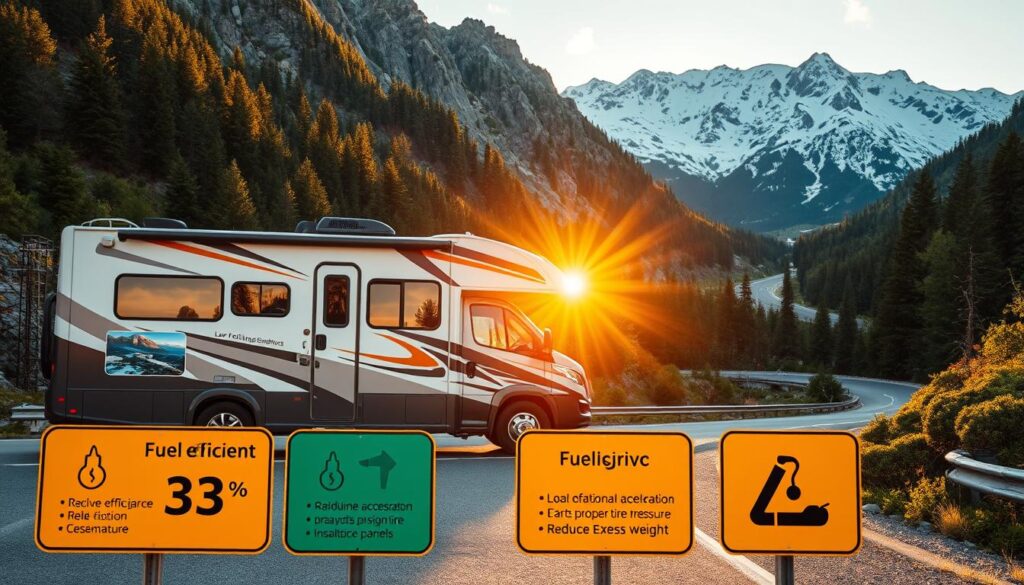
Your driving habits affect fuel use more than anything else. Drive at 55-65 mph for best fuel efficiency. Faster speeds mean more wind resistance, making your engine work harder.
Slow down when starting and stopping. This saves a lot of fuel. Use cruise control on flat roads to save up to 15% on fuel.
Lightening your RV’s load is key. Get rid of things you don’t need before you go. Every 100 pounds of extra weight cuts fuel efficiency by 1-2%.
Use apps like GasBuddy and GasGuru to find cheap gas. The GetUpside app gives cashback on gas, saving you money right away.
Essential Maintenance for Maximum Efficiency
Regular maintenance is vital for fuel efficiency. Proper tire pressure can boost gas mileage by up to 3%. Check tire pressure every month, as RV tires lose air faster.
Engine tune-ups are important. Replace air filters every 12,000 miles or as the maker suggests. A clean air filter helps your engine run better, saving fuel.
Don’t forget about propane costs. Avoid U-Haul for propane, as they charge more. Plan your propane stops to save 20-30% on refills.
Regular oil changes are essential. Use the right oil grade for your engine. Clean oil reduces friction, making your engine more efficient and saving fuel.
Cooking Meals on the Road
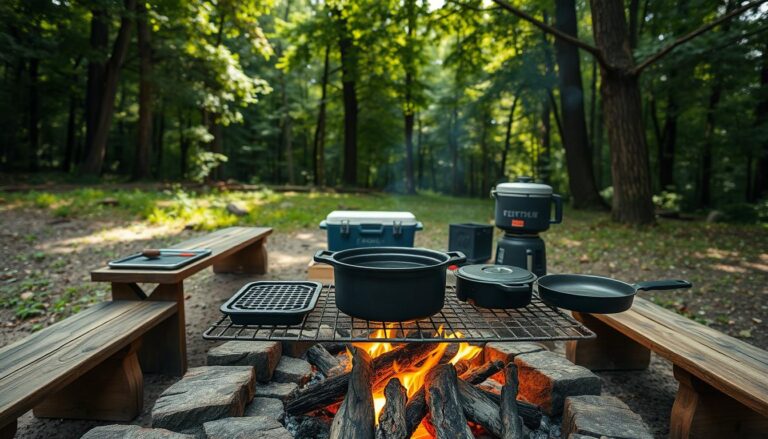
Your RV’s kitchen is key to how to RV on a budget. Eating out can cost $15-25 per person per meal. But, cooking in your RV can cut costs to $3-8 per meal.
Your RV kitchen has the basics for cooking. It usually has a stovetop, oven, microwave, and fridge. These tools help you make tasty, affordable meals on the go.
Katherine Bitner showed that even big meals can be made in an RV kitchen. She made a whole Thanksgiving feast. This shows you can make any meal with a little planning and creativity.
“The key to successful RV cooking is embracing one-pot meals and sheet pan dinners. These methods minimize cleanup while maximizing flavor and nutrition.”
Simple One-Pot Wonders
One-pot meals save time and money. They’re perfect for small RV kitchens where space is limited.
Hearty chili is a great example. It costs under $8 and feeds four people well. Just mix ground turkey, beans, canned tomatoes, and spices in one pot.
Pasta dishes are also cheap. Cook pasta with broth, veggies, and protein in a skillet. The pasta makes a creamy sauce without dairy.
Chuck Sanders suggests using a Crock-Pot while driving. Add ingredients before you leave. When you arrive, you’ll have a hot, ready meal. This saves time and fuel.
| Meal Type | Cost Per Serving | Prep Time | Cook Time |
|---|---|---|---|
| One-Pot Chili | $2.00 | 10 minutes | 30 minutes |
| Skillet Pasta | $1.75 | 5 minutes | 15 minutes |
| Slow Cooker Stew | $2.50 | 15 minutes | 4 hours |
| Sheet Pan Chicken | $3.00 | 10 minutes | 25 minutes |
Strategic Shopping and Storage
Start with smart grocery shopping. Buy at big supermarkets, not small stores or roadside markets. Prices at big stores are 30-50% lower.
Buy versatile ingredients for many meals. Rice, beans, eggs, and veggies are great. They’re cheap and nutritious.
Plan meals around sales and fresh produce. This can save 20-30% on groceries. Stock up on non-perishables when they’re cheap.
Batch cooking saves time and money. Cook big batches of rice, beans, or chicken. Then, use them in different meals all week.
Portion control is easier at home. Restaurants often serve too much. Cooking lets you control what you eat.
Think about the cost of eating out versus cooking. A family of four can spend $1,800 monthly on restaurants. But, cooking at home can cost $300-500 monthly.
Learning how to RV on a budget through cooking changes your travel. You’ll eat healthier, save money, and eat whenever you want. These skills are great for any RV trip.
Finding Affordable RV Parks and Campgrounds
Finding the best deals on overnight stays is key to budget RVing. Your accommodation choices can make or break your travel budget. We’ll share tips to help you find hidden gems and big discounts.
Smart planning and memberships can cut your camping costs by 50% or more. RVers have saved hundreds of dollars per week. Knowing which programs offer the best value is key.
Membership Programs for Discounts
Passport America is a top choice for budget RVers. It offers 50% discounts at over 1,800 campgrounds in North America. For $44 a year, members save hundreds on camping fees.
Good Sam membership gives 10% discounts at thousands of campgrounds. While the savings are less, the network is larger. Many RVers use both memberships for the best deals.
KOA Extended Stay programs offer great value for long stays. Monthly stays can save over 50% compared to nightly rates. Katherine Bitner saved $600 by staying six weeks in Palm Desert for $600, down from $300 for a week.
Thousand Trails and Escapees are good for frequent travelers. These memberships are worth it for those who stay within their networks often. The upfront cost pays off quickly with regular use.
Public and State Park Options
State parks offer beautiful and affordable camping. Most charge $15-30 per night, less than private parks. They have stunning natural settings and activities at no extra cost.
National parks and national forests are even cheaper. Many forest service campgrounds cost under $20 per night. These money-saving RV tips let you see America’s wonders without spending a lot.
Corps of Engineers campgrounds are a great value. Rates are $20-35 per night. They offer waterfront locations and modern amenities at a low cost.
Boondocking on public lands is the ultimate budget solution. BLM areas and national forests let you camp for free for up to 14 days. You’ll need to be self-sufficient, but the savings are big for prepared RVers.
Planning ahead is key for public campgrounds. Many take reservations up to six months in advance. Booking early is a must for budget travelers.
Strategies for Entertainment and Recreation
Looking for fun on a budget while RVing opens up a world of affordable fun. We don’t need to spend a lot on theme parks or tours to make memories. The secret is finding free things to do and using apps for deals on attractions.
Many RVers, like Katherine Bitner and her husband, show that the best fun is often free. They loved outdoor activities and community events. This makes our trips rich and fulfilling without spending a lot.
Free Outdoor Activities
Nature is full of fun for RVers who want to explore. Hiking trails, swimming in lakes, and bike-riding paths are great for hours of fun without paying. These activities keep us active and show off the beauty of our destinations.
Watching wildlife is another fun free activity. We can see birds, deer, and more in their homes. Many parks have special areas and guides for free.
Community events add culture to our travels. Local parades, free concerts, and farmers markets give us real experiences. These events help us connect with locals and learn about their traditions.
Apps for Finding Deals on Attractions
Technology helps us find big savings on attractions. Groupon is a top pick for deals on museums, tours, and shows. It often has savings of 50% or more.
Free Tours by Foot offers free city tours in many places. These tours are based on tips, so we pay what we can. They share local history and secrets.
Other apps help us save on entertainment. GasBuddy finds cheap gas, and Roadtrippers suggests cool attractions. These tools help us find affordable fun.
| App/Resource | Type of Savings | Average Discount | Best For |
|---|---|---|---|
| Groupon | Attraction tickets | 30-70% off | Museums, tours, activities |
| Free Tours by Foot | City tours | Pay what you want | Walking tours, local history |
| Roadtrippers | Route planning | Free discovery | Hidden attractions, scenic routes |
| Local event calendars | Community events | 100% free | Festivals, concerts, markets |
Planning smartly turns any RV trip into an adventure. By mixing free outdoor fun with deals on attractions, we make trips memorable without breaking the bank.
Insurance and Financial Considerations
Smart financial planning is key for frugal RVing. Many new RVers forget about important financial protections. Proper insurance coverage and emergency planning can save you thousands of dollars.
We should treat RV finances like our homes. This means understanding insurance options and building safety nets for repairs. Financial preparedness lets us enjoy our travels without worry.

Comparison Shopping for RV Insurance
Finding affordable RV insurance takes patience and research. Don’t settle for the first quote you receive. Different companies offer varying coverage levels and pricing structures.
Start by getting quotes from at least three different insurers. Many companies provide online tools for comparison shopping. Look for bundling opportunities with your existing auto or home insurance policies.
Consider these key factors when comparing policies:
- Liability coverage limits
- Comprehensive and collision deductibles
- Personal property protection
- Emergency expense coverage
- Roadside assistance benefits
Good Sam offers various insurance and protection services, including specialized RV coverage and tire protection plans. Their membership programs often provide additional discounts on insurance premiums. Ask about discounts for safety features like backup cameras or anti-theft systems.
Budgeting for Repairs and Emergencies
Emergency funds are essential for worry-free RV travel. Unexpected repairs can quickly drain your vacation budget if you’re not prepared. Financial experts recommend setting aside 10-15% of your RV’s value for repairs and emergencies.
“Having a large rainy day fund for unexpected expenses and experiences is key for RV life.”
Build your emergency fund gradually if money is tight. Set aside a small amount each month before your trip. Even $50 monthly can create a substantial safety net over time.
Consider these strategies for emergency preparedness:
- Research common repair costs for your RV model
- Keep a separate savings account for RV expenses
- Learn basic maintenance skills to reduce labor costs
- Carry a credit card for emergencies
Extended warranties can provide peace of mind for older RVs. But read the fine print carefully and understand what’s covered. Sometimes self-insurance through savings proves more cost-effective than warranty premiums.
Smart financial planning makes frugal RVing enjoyable. With proper insurance and emergency funds, we can focus on creating memories instead of worrying about unexpected costs.
Additional Tips for Saving Money While RVing
The RV community is full of ways to save money. We can use creative connections and shared resources. These tips can change how we travel.
Trading Skills and Services
Bartering is a win-win in the RV world. We can swap mechanical skills for camping spots. Or exchange cooking for RV repairs.
Many RVers trade photography for campsite tips or share tools. This helps us save money and makes friends.
RV rallies are great for these trades. We might learn solar panel setup for website help.
Tapping into Online Communities
RV forums like RV.net and Escapees RV Club are full of tips. They share discount codes and insider info. These sites help us find cheap camping spots and RV park deals.
Facebook groups for RV travel post real-time deals. They share fuel, campground, and attraction discounts. We get advice on cheap routes and seasonal deals.
Living the RV lifestyle on a budget is rewarding. It shows that our community is our greatest resource. Through these connections, RVing on a budget is not just possible, but fulfilling.
FAQ
How much does it actually cost to start RVing on a budget?
What are the biggest ongoing expenses we should budget for in RV travel?
Is it better to buy a new or used RV when trying to save money?
How can we find free camping spots while RVing?
What’s the best way to improve fuel efficiency in an RV?
How much money can we save by cooking our own meals in the RV?
Are RV membership programs worth the cost for budget travelers?
What are some free activities we can enjoy while RVing?
How much should we budget for RV insurance and emergency repairs?
FAQ
How much does it actually cost to start RVing on a budget?
Starting costs vary a lot. Used RVs can cost ,000 to ,000. Renting starts at 0-200 a day. Add insurance, registration, and supplies, and you need ,000-30,000 for ownership. Or, rent first to save money.
What are the biggest ongoing expenses we should budget for in RV travel?
Fuel, campsite fees, and food are big costs. Fuel can be 0-800 a month. Campsite fees are -80 a night. Budget for maintenance, insurance, and an emergency fund too.
Is it better to buy a new or used RV when trying to save money?
Used RVs, 3-7 years old, are cheaper. New RVs lose 20-30% value in the first year. Inspect used RVs well to avoid surprises.
How can we find free camping spots while RVing?
Use apps like Campendium and FreeRoam to find free spots. Walmart, Cracker Barrel, and truck stops often allow overnight parking. National forests and some state lands offer free camping.
What’s the best way to improve fuel efficiency in an RV?
Drive 55-65 mph to save 10-15% on fuel. Regular maintenance is key. Carry only essentials and plan routes wisely. These tips help save fuel and money.
How much money can we save by cooking our own meals in the RV?
Cooking saves 60-70% over eating out. Spend 0-500 a month on groceries. Meal planning and cooking while traveling is a big money saver.
Are RV membership programs worth the cost for budget travelers?
Passport America is a great deal at a year. Good Sam offers discounts and perks. These memberships pay for themselves after a few nights, making them worth it for frequent travelers.
What are some free activities we can enjoy while RVing?
Enjoy hiking, swimming, wildlife watching, and scenic views. Look for free festivals, farmers markets, and concerts. State and national parks offer free programs and activities.
How much should we budget for RV insurance and emergency repairs?
RV insurance costs
FAQ
How much does it actually cost to start RVing on a budget?
Starting costs vary a lot. Used RVs can cost $15,000 to $50,000. Renting starts at $100-200 a day. Add insurance, registration, and supplies, and you need $20,000-30,000 for ownership. Or, rent first to save money.
What are the biggest ongoing expenses we should budget for in RV travel?
Fuel, campsite fees, and food are big costs. Fuel can be $200-800 a month. Campsite fees are $30-80 a night. Budget for maintenance, insurance, and an emergency fund too.
Is it better to buy a new or used RV when trying to save money?
Used RVs, 3-7 years old, are cheaper. New RVs lose 20-30% value in the first year. Inspect used RVs well to avoid surprises.
How can we find free camping spots while RVing?
Use apps like Campendium and FreeRoam to find free spots. Walmart, Cracker Barrel, and truck stops often allow overnight parking. National forests and some state lands offer free camping.
What’s the best way to improve fuel efficiency in an RV?
Drive 55-65 mph to save 10-15% on fuel. Regular maintenance is key. Carry only essentials and plan routes wisely. These tips help save fuel and money.
How much money can we save by cooking our own meals in the RV?
Cooking saves 60-70% over eating out. Spend $300-500 a month on groceries. Meal planning and cooking while traveling is a big money saver.
Are RV membership programs worth the cost for budget travelers?
Passport America is a great deal at $44 a year. Good Sam offers discounts and perks. These memberships pay for themselves after a few nights, making them worth it for frequent travelers.
What are some free activities we can enjoy while RVing?
Enjoy hiking, swimming, wildlife watching, and scenic views. Look for free festivals, farmers markets, and concerts. State and national parks offer free programs and activities.
How much should we budget for RV insurance and emergency repairs?
RV insurance costs $1,000-2,400 a year. Set aside $2,000-5,000 for repairs. This fund helps avoid financial stress when unexpected repairs happen.
How can we connect with other RVers to save money through community resources?
Join RV.net forums and Facebook groups for tips and deals. Many RVers trade skills for camping spots. These connections help find cost-saving opportunities.
What’s the most cost-effective way to try RVing before making a big investment?
Rent RVs through RVshare or Outdoorsy to try different types. This costs $100-300 a day. It helps decide what RV is right for you before buying.
How can off-peak travel help us save money on our RV trips?
Travel in shoulder seasons and weekdays to save 30-50% on campsites. Visit popular spots in late fall or early spring for better rates and fewer crowds. Many attractions offer discounts during off-peak times.
,000-2,400 a year. Set aside ,000-5,000 for repairs. This fund helps avoid financial stress when unexpected repairs happen.
How can we connect with other RVers to save money through community resources?
Join RV.net forums and Facebook groups for tips and deals. Many RVers trade skills for camping spots. These connections help find cost-saving opportunities.
What’s the most cost-effective way to try RVing before making a big investment?
Rent RVs through RVshare or Outdoorsy to try different types. This costs 0-300 a day. It helps decide what RV is right for you before buying.
How can off-peak travel help us save money on our RV trips?
Travel in shoulder seasons and weekdays to save 30-50% on campsites. Visit popular spots in late fall or early spring for better rates and fewer crowds. Many attractions offer discounts during off-peak times.