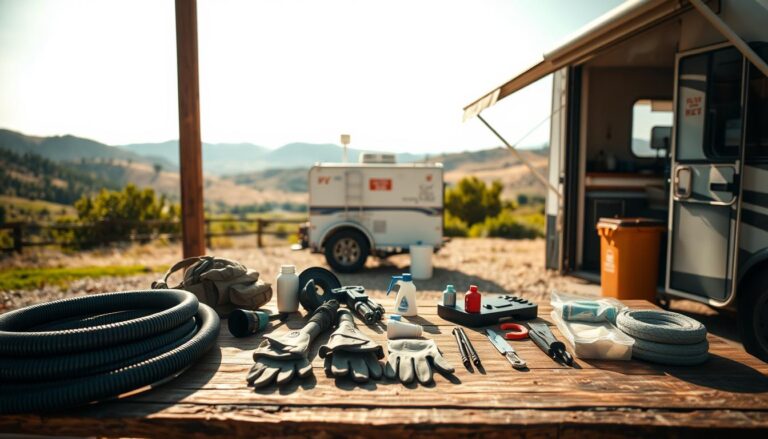
When we dream of hitting the open road in our own RV, we often think about the price and monthly payments. But, the truth goes way beyond that first cost. Understanding the full financial picture is key to knowing if this lifestyle fits your budget.
A 5-year study on a 2020 Keystone Bullet 243BHS showed surprising results. The total costs hit $38,159 before resale value. This included the initial price of $23,557, plus $3,407 for maintenance, $5,890 for carrying costs, $2,560 for improvements, and $2,744.56 for travel expenses.
We’ll cover the key hidden costs of RV ownership that many first-time buyers miss. Being ready for these costs lets you enjoy your travels without worrying about money.
Key Takeaways
- Total RV expenses can exceed the purchase price by 60% over five years
- Maintenance and repairs typically cost $600-700 annually for travel trailers
- Carrying expenses include insurance, registration, and storage fees
- Fuel costs increase significantly compared to regular vehicle travel
- Depreciation affects resale value, specially in the first few years
- Budgeting for improvements and upgrades prevents financial surprises
Understanding the True Cost of RV Ownership
RV ownership costs more than just the initial price. When we start budgeting for RV ownership, we must look at everything. This includes the cost to buy, maintain, and travel with the RV, minus what it’s worth later.
Many unexpected costs of RV ownership surprise new buyers. These hidden costs can affect our long-term budget. Let’s look at each part to help you decide wisely.
What to Expect Beyond the Sticker Price
The price you see is just the start. That $50,000 RV might cost $55,000 or more to take home.
Here’s what adds to the base price:
- Dealer fees: Costs for paperwork, prep, and delivery
- Sales tax: Can add thousands, depending on the state
- Registration and licensing: Costs for the first year and each year after
- Extended warranties: Optional but often suggested for protection
These extra costs can increase our total by 10-15%. We should include them in our initial budget.
Financing Options and Their Implications
Most of us need a loan to buy an RV. The loan terms affect our total cost. Interest payments over the loan term can add thousands.
RV loans often last 10-20 years. This lowers monthly payments but increases total interest. It’s wise to get pre-approved and compare rates before buying.
For example, a $30,000 trailer with 7% interest over 10 years costs about $10,000 in interest. This makes our $30,000 trailer a $40,000 commitment before other costs.
Trade-In Value Considerations
RVs lose value quickly, making trade-in value considerations key. Most RVs drop 20-30% in value in the first year. This decline continues but slows down after the first few years.
Using real numbers in our total cost equation shows the full picture:
- Purchase cost: $30,000 trailer
- Maintenance cost: $3,000 over 5 years
- Carrying costs: $200/month ($12,000 over 5 years)
- Improvements: $2,000
- Residual value: $18,000 after 5 years
Total cost of ownership: $30,000 + $3,000 + $12,000 + $2,000 – $18,000 = $29,000
This is about $5,800 per year for RV ownership. Knowing this helps us choose the right RV for our budget and lifestyle.
Maintenance Expenses You Might Overlook
We often don’t think about how much we’ll spend on our RVs. RVs face special challenges like weather, road vibrations, and storage. These issues can wear them down faster than we expect.
When we get our first maintenance bills, it hits us hard. Financial planning for RV owners needs to include these ongoing costs. They can add up to thousands of dollars a year.

“The biggest mistake I made was not budgeting for maintenance. I thought it would be like owning a car, but RV maintenance is in a completely different league.”
Routine Maintenance and Repairs
Keeping your RV in good shape is key. You’ll need to budget $500 to $1,000 a year for regular checks. This includes roof sealing, slide-out adjustments, and appliance service.
Roof care can cost $200-400 a year. You’ll need to seal seams, check for cracks, and ensure drainage. Slide-outs need lubrication and adjustments, costing $150-300 each time.
Appliance upkeep adds to the cost. Water heaters, refrigerators, and air conditioners need regular checks. A single repair can cost $200 to $800, depending on the issue.
Tire Replacement Costs
RV tires are a big expense. They cost more than car tires and need replacing every 3-5 years. UV rays and age can damage them, even when not in use.
A set of RV tires can cost $800 to $2,500, based on size and quality. Class A motorhomes need six tires, while travel trailers need four. Don’t forget mounting, balancing, and disposal fees.
Emergency tire failures can be costly. Roadside service can cost $300-500 per tire, plus the cost of a new one. Preventive replacement is safer and cheaper in the long run.
Engine and Transmission Care
RV owners face extra challenges with engines and transmissions. These parts need the same care as heavy-duty trucks, not cars. Calculating true cost of RV ownership means understanding these needs.
Engine care includes oil changes, filter swaps, and cooling system checks. Budget $300-600 a year for basic engine upkeep. Transmission service costs $200-400 every two years, based on use and manufacturer advice.
Brake system maintenance is another $400-800 a year for motorhomes. The weight and mountain driving stress brakes more. You might need to replace brake pads and rotors more often than in cars.
| Maintenance Category | Annual Cost Range | Frequency | Emergency Cost |
|---|---|---|---|
| Routine Maintenance | $500 – $1,000 | Ongoing | $200 – $800 |
| Tire Replacement | $200 – $500 | Every 3-5 years | $300 – $500 per tire |
| Engine/Transmission | $500 – $1,000 | Scheduled intervals | $1,000 – $5,000 |
| Appliance Repairs | $300 – $600 | As needed | $200 – $1,200 |
Having a maintenance fund is smart. Set aside $200-400 monthly for upkeep. This way, you avoid big costs and keep your RV ready for adventures.
Also, get to know good RV service centers. Regular checks by experts can catch problems early. This saves money and keeps your RV running smoothly.
Insurance: More Than Just a Standard Policy
RV insurance is a big part of RV ownership expenses to budget for on our adventures. It’s different from car insurance because it covers our mobile home, stuff inside, and special equipment. We need more than just basic liability coverage.
RV insurance can be complex for new owners. Our policy must cover slide-outs, awnings, and what’s inside our RV. Full-timer insurance is key if we live in our RV all year. Vacation liability helps when we’re at campsites.
Types of Insurance Coverage
We need several coverages to protect our RV. Comprehensive and collision coverage helps with damage from accidents, weather, and theft. This costs more than car insurance because of our RV’s size and value.
Liability insurance covers damage and injuries we might cause. Personal effects coverage protects our stuff inside the RV, like electronics and clothes. Most policies don’t cover RV items.
Vacation liability covers us when parked at campsites. It handles accidents like tripping over our gear. Full-timer coverage replaces homeowner’s insurance for those living in their RV full-time.
Factors Affecting Insurance Premiums
Many things affect our annual insurance costs, which can be $1,000 to $3,000 or more. The type and value of our RV greatly impacts costs. Motorhomes cost more to insure than travel trailers because of their value and complexity.
How we use our RV also affects rates. Full-time RVers pay more than weekend warriors because of more risks. Driving experience and safety records also play a role, with more experienced drivers getting discounts.
The RV’s age and condition also matter. Newer RVs cost more to insure but might get safety discounts. Where we store our RV affects rates, with secure places getting lower premiums than outdoor parking.
Additional Coverage Options
Smart RV owners look into extra coverage options. Gap insurance covers the loan difference if our RV is totaled. This prevents owing money on a destroyed vehicle.
RV-specific roadside assistance offers more help than standard auto plans. RV-specific assistance includes services like generator repair and towing for oversized vehicles.
Personal effects replacement cost coverage pays for items at current prices, not depreciated values. Emergency expense coverage helps with lodging and transportation if our RV is damaged.
Shopping with insurers who specialize in RVs often gets us better coverage and rates. They understand RV risks and needs, making them great partners in protecting our investment.
Fuel Costs: The Unexpected Burden
When we hit the road with our RV, fuel costs quickly become a major budget concern. The reality is that managing RV ownership costs means accepting that our fuel expenses will increase dramatically compared to regular vehicle travel. Most new RV owners experience sticker shock at their first few gas station visits.
The math behind RV fuel consumption is sobering. A typical 1,000-mile trip that costs around $150 in fuel with our regular car can easily jump to $400-500 with our RV setup. This dramatic increase stems from reduced fuel efficiency and larger tank capacities that cost significantly more to fill.

Tank Size and Fuel Efficiency
RV fuel efficiency drops significantly when we start towing or driving larger motorhomes. Trucks towing heavy trailers see their fuel efficiency plummet from 17 mpg highway to just 9.6 mpg while towing. This nearly 50% reduction in efficiency means we’re burning almost twice as much fuel for the same distance.
Large motorhomes face even steeper challenges. These vehicles typically achieve only 8-10 miles per gallon, translating to fuel costs of $0.50 to $1.00 per mile or more. When we factor in current fuel prices, every mile becomes a significant expense.
The size of RV fuel tanks compounds this issue. Filling a large RV tank completely can cost between $100-200, depending on current fuel prices and tank capacity. This upfront cost at each fill-up creates immediate budget pressure that many new owners don’t anticipate.
Fuel Price Fluctuations
Fuel price volatility hits RV owners hard because we consume more gallons per mile traveled. A 20-cent increase in gas prices that might add $3-4 to a car’s tank can add $15-25 to our RV fill-up. Over the course of a long trip, these fluctuations can throw our entire travel budget off track.
Regional price differences also impact our travel costs. Fuel prices can vary by 50 cents or more per gallon between states, making route planning key for budget management. We’ve learned that researching fuel prices along our intended routes helps avoid costly surprises.
Seasonal demand affects RV fuel costs too. Summer travel season often brings higher fuel prices just when we’re planning our longest trips. This timing creates a double impact on our travel budgets.
Planning for Long Trips
Successful long-distance RV travel requires careful fuel budget planning. We need to account for both the increased consumption rates and possible price variations along our route. Smart planning can save hundreds of dollars on extended trips.
Here are essential strategies for managing fuel costs on long trips:
- Research fuel prices along your route using apps like GasBuddy or Waze
- Join fuel rewards programs at major truck stops and gas station chains
- Plan fuel stops at locations with competitive pricing
- Consider shorter regional trips to reduce overall fuel consumption
- Budget an extra 20% above calculated fuel costs for unexpected price increases
Real-world data shows the long-term impact of these costs. Over 17,855 miles of towing across five years, incremental fuel costs totaled $2,744.56, calculated at an average of $3.39 per gallon. This represents a significant ongoing expense in managing RV ownership costs that extends well beyond the initial purchase price.
Some RV owners find that focusing on regional destinations helps control fuel expenses while enjoying the RV lifestyle. By limiting extremely long-distance travel, we can better predict and manage our fuel budgets without sacrificing the adventure and freedom that drew us to RVing in the first place.
Storage Solutions and Their Costs
Finding the right storage solution is a big part of RV ownership costs. We often forget about where we’ll keep our RV when it’s not in use. This can cost thousands of dollars a year.
Many neighborhoods have rules against parking big vehicles. HOAs often don’t let RVs be stored in driveways or on streets. So, we have to look for off-site options, which can be expensive.
RV Storage Facilities: Rental Prices
Commercial storage places offer different prices. Outdoor uncovered storage usually costs $50 to $100 a month. But, in cities with little space, it can be $150 to $200 or more.
Covered storage is safer but costs more. We might pay an extra $30 to $50 a month for roof coverage. Indoor storage, which keeps your RV cool, can cost $200 to $300 a month.
The cost also depends on where the storage is. Places closer to home cost more but save us time and gas. Convenience comes with a price tag we must consider.
Home Storage vs. Off-Site
Storing at home might seem easy, but it’s not always allowed. We need to check local laws and HOA rules before parking on our property. Some places let RV storage with certain rules.
Home storage saves us money but might need property changes. We might need to add electrical hookups, level the ground, or improve security. These changes can cost $500 to $2,000.
Off-site storage gives us professional security and upkeep. Many places offer:
- 24/7 security monitoring
- Gated access with keypad entry
- On-site maintenance services
- Wash stations and dump facilities
Winterization and Maintenance Needs
Storage isn’t just about a place to park. We need to get our RV ready for long periods without use. Winterization services cost $150 to $300 a year, based on our RV’s type.
Keeping the batteries charged is key during storage. We might need to remove batteries or use battery maintainers. Regular checks help find problems early, avoiding expensive fixes later.
Some places offer extra services for more money. These can include washing, minor repairs, and getting ready for trips. While handy, these services can cost $200 to $500 a year.
The total yearly cost for storage can be $1,200 to $2,400. Planning for these costs from the start helps us budget better for RV ownership.
Camping Fees: Hidden Charges in Plain Sight
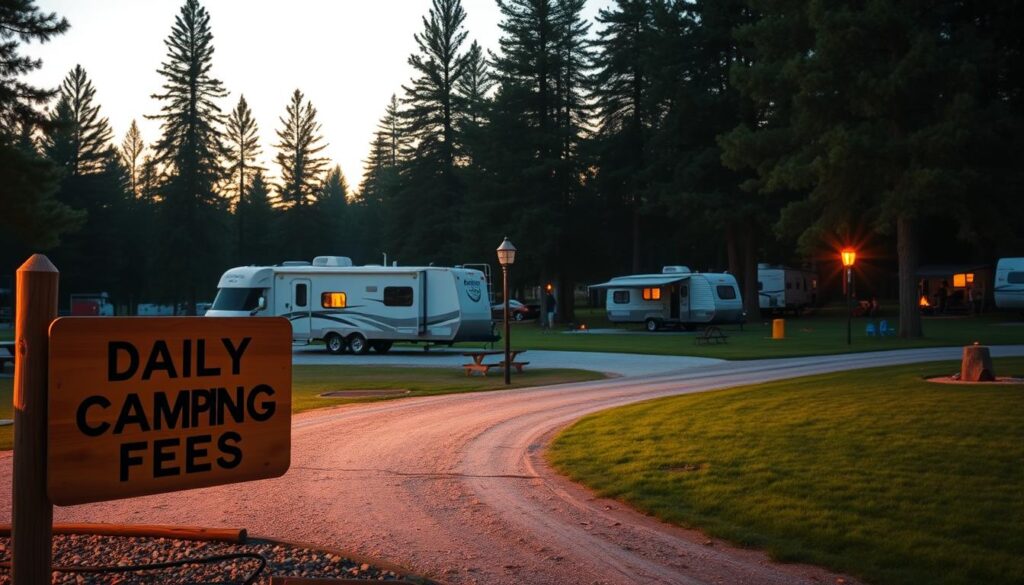
The cost of using our RV can quickly add up. While we often think about the initial cost and upkeep, camping fees can range from $30 to $100 or more per night. This depends on where we are and what’s available. These costs can add up, even more so when we’re traveling for a long time.
Finding places to park that won’t break the bank is a daily challenge. Places that are popular during peak times charge more. Some campgrounds can cost $150 or more per night during these times.
National and State Park Fees
Government-run campgrounds are often the most affordable for our RV trips. State and national parks usually charge between $20 and $40 per night for basic sites. They offer great value with their beautiful settings and well-kept facilities.
But, getting a spot at these parks can be tough. They fill up months in advance, even more so during busy times. We often compete with others for the best spots and dates.
Some parks offer discounts for seniors, military, or annual pass holders. These discounts can help lower our costs throughout the year.
Private Campgrounds vs. Public Sites
Private campgrounds have more amenities but cost more. Full-hookup sites with pools and recreational facilities often cost $50 to $100 per night. They offer comfort and convenience after long drives.
Public campgrounds focus on the basics at lower prices. They provide what we need without extra costs. This means fewer amenities but more money for other travel expenses.
Membership programs like KOA Value Kard or Passport America can offer discounts. But, they require an upfront payment and may have restrictions during busy times. We need to weigh if the savings are worth the cost.
- Private campgrounds: $50-150+ per night with full amenities
- Public sites: $20-40 per night with basic facilities
- Membership discounts: 10-50% off regular rates
- Long-term stays: Better nightly rates for extended periods
Extra Charges for Utilities
Basic campsite fees don’t always cover everything we need. Many campgrounds charge extra for utility connections. Electric, water, and sewer hookups can add $10 to $20 per night to our costs.
Some places charge based on how much electricity we use. Sites with 30-amp service cost less than those with 50-amp. We pay more for higher power needs, like running air conditioning or using many appliances.
Wi-Fi access often comes with extra fees at many campgrounds. Cable TV hookups, laundry facilities, and shower access might also have extra costs. These small fees can add up quickly over time.
Planning our routes around affordable campgrounds helps control these costs. Considering boondocking opportunities lets us enjoy different places while keeping our camping budget in check.
Depreciation: The Long-Term Financial Impact
Every RV owner knows about depreciation. It can be more than all other costs combined. Unlike homes, RVs are depreciating assets that lose value right after we buy them. This affects every choice we make about our RV.
The depreciation is biggest in the first year. Knowing this helps us make smart buying choices and understand our RV’s future value.
Understanding RV Depreciation Rates
New RVs lose 20-30% of their value in the first year. So, a $60,000 motorhome might be worth $42,000 to $48,000 after just one year.
After the first year, the value drop slows down but keeps going. Several things affect how fast our RV loses value:
- Brand reputation and quality
- Maintenance history and service records
- Mileage or usage patterns
- Overall condition and appearance
- Market demand for specific models
High-end brands tend to hold their value better. But, even luxury RVs lose a lot of value in the first years.
Reselling Your RV: What to Expect
Looking at real-world examples, RV resale values are tough. A travel trailer bought for $23,557 might be worth about $22,500 after five years, even with improvements.
When selling, we face a competitive market. Detailed maintenance records help prove we’ve taken good care of our RV.
The resale process can be tough. Finding the right buyer might take months, and private sales often get better prices but take more effort.
Strategies to Maintain Value
We can’t stop depreciation, but we can slow it down:
- Choose quality brands known for holding their value
- Keep detailed service and maintenance records
- Store our RV properly to prevent weather damage
- Address repairs promptly to prevent bigger problems
- Keep the interior and exterior in excellent condition
Depreciation is the cost of having our mobile home ready for travel. Understanding this helps us make smart choices and set realistic resale value expectations.
The key to RV ownership isn’t avoiding depreciation—it’s planning for it and enjoying our investment while we own it.
Upgrades and Customizations: The Temptation
RV upgrades and customizations are tempting but costly. We find new ways to make our mobile homes better, from comfort to tech. These changes make our trips better but increase our RV costs.
The average RV owner spends $2,000 to $5,000 on upgrades in the first few years. We want to make our space our own, leading to a long list of upgrades. This can quickly empty our wallets.
Common Upgrades and Their Prices
We see many upgrade chances to better our RV experience. Solar panel systems are popular, costing $2,000 to $5,000 for pro install. They give us energy freedom but we must think about our power needs.
Comfort upgrades are a top priority. A new mattress costs $500 to $1,500. Better seats and dinette foam are $300 to $800. These changes affect our daily comfort and sleep.
Technology upgrades catch our eye with better connectivity and entertainment. WiFi boosters and signal enhancers are $200 to $800. Full entertainment system upgrades are $1,500 to $3,000. Backup cameras, GPS, and better stereos add $500 to $1,200.
| Upgrade Category | Common Items | Price Range | Installation Difficulty |
|---|---|---|---|
| Power Systems | Solar panels, inverters, batteries | $2,000 – $5,000 | Professional recommended |
| Comfort Features | Mattress, seating, shower heads | $300 – $1,500 | Easy to moderate DIY |
| Technology | WiFi boosters, entertainment systems | $200 – $3,000 | Moderate to difficult |
| Safety Equipment | Backup cameras, tire monitors | $150 – $800 | Moderate DIY |
Evaluating Return on Investment
We need to think if upgrades are worth the cost. Most RV mods don’t increase resale value dollar-for-dollar. Enjoyment is the main return on investment.
Safety upgrades offer the best long-term value. Backup cameras, tire monitors, and better lighting improve safety and might appeal to future buyers. These upgrades can pay for themselves through safety and peace of mind.
Comfort upgrades improve our daily life but rarely recover their cost at resale. We should choose upgrades that solve our specific needs, not just follow trends. A $1,000 mattress upgrade is worth it if we struggle with sleep, but it won’t greatly increase our RV’s value.
Technology upgrades become outdated quickly, making them a poor financial choice. Yet, they greatly enhance our travel experience and connectivity. Focus on upgrades that solve specific problems, not just add features we might not use often.
DIY vs. Professional Modifications
Choosing DIY or professional installation affects our costs. DIY installations can save 40-60% on labor but require time, tools, and skills. Not everyone has these abilities.
Simple upgrades like shower heads, cabinet hardware, and basic electronics are great DIY projects. They need basic tools and little technical knowledge. Most comfort upgrades can be done by ourselves with patience and careful following of instructions.
Professional installation is needed for complex electrical, plumbing, and structural changes. Solar panels, air conditioning, and major appliance installations need special knowledge and can void warranties if done wrong.
We should start with simple DIY projects to build confidence and skills. Keep detailed records of all upgrades, including receipts and photos. This helps when selling our RV and shows the added value to buyers.
Plan upgrades gradually, not all at once. Prioritize safety and essential comfort first, then add convenience items as budget allows. The goal is to enhance our travel experience, not make the most expensive RV.
Emergency Preparedness: Budgeting for the Unexpected
Smart RV owners know that unexpected expenses can quickly turn a dream trip into a financial nightmare. We must prepare for situations that standard planning cannot predict.
Roadside Assistance Plans
Regular auto club services often cannot handle large motorhomes or travel trailers. Specialized RV roadside assistance plans cost between $100-300 annually. These plans cover emergency towing, tire changes, and lockout services. The investment pays off when we need help far from home.
Emergency Repairs and Their Costs
Emergency repairs away from home carry premium prices. We face unfamiliar service centers with limited options and higher labor rates. A blown tire, failed air conditioning, or plumbing emergency can cost $500-2,000 to fix immediately. Mobile RV technicians charge extra for emergency calls.
Tips for Budgeting for Contingencies
We should maintain a separate emergency fund of $3,000-5,000 for unexpected RV expenses. This fund must stay easily accessible during travel. Carrying basic tools, spare parts, and emergency supplies helps us handle minor issues ourselves.
Building relationships with trusted RV service centers along our common routes ensures faster, more affordable service. We can research mobile technicians in areas we visit frequently. Planning for these contingencies prevents unexpected problems from derailing our adventures or straining our finances.
FAQ
What are the hidden expenses of owning an RV beyond the purchase price?
How much should we budget for RV maintenance and repairs annually?
How does RV insurance differ from regular auto insurance?
What are the unexpected costs of RV ownership related to fuel consumption?
How much does RV storage cost and what factors affect pricing?
FAQ
What are the hidden expenses of owning an RV beyond the purchase price?
Owning an RV comes with more than just the initial cost. We must budget for dealer fees, taxes, and registration. Insurance, fuel, maintenance, storage, and campground fees are also key expenses. These costs can add ,000-10,000 or more each year.
Unexpected repairs, upgrades, and emergencies can also pop up. It’s important to plan for these surprises.
How much should we budget for RV maintenance and repairs annually?
Maintenance and repairs can cost ,000-5,000 a year, more as RVs get older. Routine upkeep, like inspections and appliance servicing, costs 0-1,000 yearly. It’s wise to set aside money for both regular and unexpected repairs.
How does RV insurance differ from regular auto insurance?
RV insurance covers more than just the vehicle. It also protects our belongings and specialized equipment. Liability coverage is needed for damage at campsites. Premiums vary based on the RV’s value, size, and age.
Class A motorhomes usually cost more to insure than travel trailers.
What are the unexpected costs of RV ownership related to fuel consumption?
RVs use a lot of fuel, with motorhomes averaging 8-10 mpg. This means big fuel costs for trips. A 1,000-mile trip can cost 0 in a car but 0-500 in an RV.
Large fuel tanks cost 0-200 to fill. Fuel price changes can also affect our travel budget.
How much does RV storage cost and what factors affect pricing?
RV storage costs -200 monthly, with covered storage being pricier. Urban areas with less space charge more. Annual storage can cost
FAQ
What are the hidden expenses of owning an RV beyond the purchase price?
Owning an RV comes with more than just the initial cost. We must budget for dealer fees, taxes, and registration. Insurance, fuel, maintenance, storage, and campground fees are also key expenses. These costs can add $5,000-10,000 or more each year.
Unexpected repairs, upgrades, and emergencies can also pop up. It’s important to plan for these surprises.
How much should we budget for RV maintenance and repairs annually?
Maintenance and repairs can cost $3,000-5,000 a year, more as RVs get older. Routine upkeep, like inspections and appliance servicing, costs $500-1,000 yearly. It’s wise to set aside money for both regular and unexpected repairs.
How does RV insurance differ from regular auto insurance?
RV insurance covers more than just the vehicle. It also protects our belongings and specialized equipment. Liability coverage is needed for damage at campsites. Premiums vary based on the RV’s value, size, and age.
Class A motorhomes usually cost more to insure than travel trailers.
What are the unexpected costs of RV ownership related to fuel consumption?
RVs use a lot of fuel, with motorhomes averaging 8-10 mpg. This means big fuel costs for trips. A 1,000-mile trip can cost $150 in a car but $400-500 in an RV.
Large fuel tanks cost $100-200 to fill. Fuel price changes can also affect our travel budget.
How much does RV storage cost and what factors affect pricing?
RV storage costs $50-200 monthly, with covered storage being pricier. Urban areas with less space charge more. Annual storage can cost $1,200-2,400, plus extra for winterization and inspections.
What should we expect for campground fees and camping costs?
Campground fees vary a lot. State and national parks charge $20-40 per night. Private campgrounds with full hookups cost $50-100+ per night. Resort-style spots can be $150 or more.
There may be extra fees for utility hookups and peak season rates.
How does RV depreciation impact the true cost of ownership?
RV depreciation is a big cost, often more than maintenance and insurance. New RVs lose 20-30% of their value in the first year. A $60,000 motorhome might be worth $42,000-48,000 after a year.
We should see depreciation as the cost of travel.
What are common RV upgrades and their costs?
Upgrades include solar panels ($2,000-5,000), better mattresses ($500-1,500), and entertainment systems. Technology upgrades like WiFi boosters and satellite systems add $1,000-3,000. Most upgrades don’t increase resale value dollar-for-dollar.
Focus on safety and essential comfort upgrades first.
How should we prepare for emergency expenses while RVing?
Keep an emergency fund of $3,000-5,000 for RV expenses, separate from regular maintenance. RV roadside assistance plans cost $100-300 annually but can save thousands. Emergency repairs can cost $500-2,000, so plan for unexpected costs.
What’s the best way to calculate the true cost of RV ownership?
To calculate the true cost, include purchase price, financing, insurance, fuel, maintenance, storage, campground fees, depreciation, and emergency expenses. Create a detailed budget with a 10-20% buffer for surprises. This helps decide if RV ownership fits our finances.
How can we manage RV ownership costs effectively?
Manage costs by setting aside money for maintenance and emergencies. Shop around for insurance and financing. Plan routes for affordable campgrounds. Prioritize necessary upgrades over luxury ones.
Consider buying quality used RVs to avoid steep depreciation. Build relationships with trusted service centers for better repair rates.
,200-2,400, plus extra for winterization and inspections.
What should we expect for campground fees and camping costs?
Campground fees vary a lot. State and national parks charge -40 per night. Private campgrounds with full hookups cost -100+ per night. Resort-style spots can be 0 or more.
There may be extra fees for utility hookups and peak season rates.
How does RV depreciation impact the true cost of ownership?
RV depreciation is a big cost, often more than maintenance and insurance. New RVs lose 20-30% of their value in the first year. A ,000 motorhome might be worth ,000-48,000 after a year.
We should see depreciation as the cost of travel.
What are common RV upgrades and their costs?
Upgrades include solar panels (,000-5,000), better mattresses (0-1,500), and entertainment systems. Technology upgrades like WiFi boosters and satellite systems add
FAQ
What are the hidden expenses of owning an RV beyond the purchase price?
Owning an RV comes with more than just the initial cost. We must budget for dealer fees, taxes, and registration. Insurance, fuel, maintenance, storage, and campground fees are also key expenses. These costs can add $5,000-10,000 or more each year.
Unexpected repairs, upgrades, and emergencies can also pop up. It’s important to plan for these surprises.
How much should we budget for RV maintenance and repairs annually?
Maintenance and repairs can cost $3,000-5,000 a year, more as RVs get older. Routine upkeep, like inspections and appliance servicing, costs $500-1,000 yearly. It’s wise to set aside money for both regular and unexpected repairs.
How does RV insurance differ from regular auto insurance?
RV insurance covers more than just the vehicle. It also protects our belongings and specialized equipment. Liability coverage is needed for damage at campsites. Premiums vary based on the RV’s value, size, and age.
Class A motorhomes usually cost more to insure than travel trailers.
What are the unexpected costs of RV ownership related to fuel consumption?
RVs use a lot of fuel, with motorhomes averaging 8-10 mpg. This means big fuel costs for trips. A 1,000-mile trip can cost $150 in a car but $400-500 in an RV.
Large fuel tanks cost $100-200 to fill. Fuel price changes can also affect our travel budget.
How much does RV storage cost and what factors affect pricing?
RV storage costs $50-200 monthly, with covered storage being pricier. Urban areas with less space charge more. Annual storage can cost $1,200-2,400, plus extra for winterization and inspections.
What should we expect for campground fees and camping costs?
Campground fees vary a lot. State and national parks charge $20-40 per night. Private campgrounds with full hookups cost $50-100+ per night. Resort-style spots can be $150 or more.
There may be extra fees for utility hookups and peak season rates.
How does RV depreciation impact the true cost of ownership?
RV depreciation is a big cost, often more than maintenance and insurance. New RVs lose 20-30% of their value in the first year. A $60,000 motorhome might be worth $42,000-48,000 after a year.
We should see depreciation as the cost of travel.
What are common RV upgrades and their costs?
Upgrades include solar panels ($2,000-5,000), better mattresses ($500-1,500), and entertainment systems. Technology upgrades like WiFi boosters and satellite systems add $1,000-3,000. Most upgrades don’t increase resale value dollar-for-dollar.
Focus on safety and essential comfort upgrades first.
How should we prepare for emergency expenses while RVing?
Keep an emergency fund of $3,000-5,000 for RV expenses, separate from regular maintenance. RV roadside assistance plans cost $100-300 annually but can save thousands. Emergency repairs can cost $500-2,000, so plan for unexpected costs.
What’s the best way to calculate the true cost of RV ownership?
To calculate the true cost, include purchase price, financing, insurance, fuel, maintenance, storage, campground fees, depreciation, and emergency expenses. Create a detailed budget with a 10-20% buffer for surprises. This helps decide if RV ownership fits our finances.
How can we manage RV ownership costs effectively?
Manage costs by setting aside money for maintenance and emergencies. Shop around for insurance and financing. Plan routes for affordable campgrounds. Prioritize necessary upgrades over luxury ones.
Consider buying quality used RVs to avoid steep depreciation. Build relationships with trusted service centers for better repair rates.
,000-3,000. Most upgrades don’t increase resale value dollar-for-dollar.
Focus on safety and essential comfort upgrades first.
How should we prepare for emergency expenses while RVing?
Keep an emergency fund of ,000-5,000 for RV expenses, separate from regular maintenance. RV roadside assistance plans cost 0-300 annually but can save thousands. Emergency repairs can cost 0-2,000, so plan for unexpected costs.
What’s the best way to calculate the true cost of RV ownership?
To calculate the true cost, include purchase price, financing, insurance, fuel, maintenance, storage, campground fees, depreciation, and emergency expenses. Create a detailed budget with a 10-20% buffer for surprises. This helps decide if RV ownership fits our finances.
How can we manage RV ownership costs effectively?
Manage costs by setting aside money for maintenance and emergencies. Shop around for insurance and financing. Plan routes for affordable campgrounds. Prioritize necessary upgrades over luxury ones.
Consider buying quality used RVs to avoid steep depreciation. Build relationships with trusted service centers for better repair rates.
FAQ
What are the hidden expenses of owning an RV beyond the purchase price?
Owning an RV comes with more than just the initial cost. We must budget for dealer fees, taxes, and registration. Insurance, fuel, maintenance, storage, and campground fees are also key expenses. These costs can add ,000-10,000 or more each year.
Unexpected repairs, upgrades, and emergencies can also pop up. It’s important to plan for these surprises.
How much should we budget for RV maintenance and repairs annually?
Maintenance and repairs can cost ,000-5,000 a year, more as RVs get older. Routine upkeep, like inspections and appliance servicing, costs 0-1,000 yearly. It’s wise to set aside money for both regular and unexpected repairs.
How does RV insurance differ from regular auto insurance?
RV insurance covers more than just the vehicle. It also protects our belongings and specialized equipment. Liability coverage is needed for damage at campsites. Premiums vary based on the RV’s value, size, and age.
Class A motorhomes usually cost more to insure than travel trailers.
What are the unexpected costs of RV ownership related to fuel consumption?
RVs use a lot of fuel, with motorhomes averaging 8-10 mpg. This means big fuel costs for trips. A 1,000-mile trip can cost 0 in a car but 0-500 in an RV.
Large fuel tanks cost 0-200 to fill. Fuel price changes can also affect our travel budget.
How much does RV storage cost and what factors affect pricing?
RV storage costs -200 monthly, with covered storage being pricier. Urban areas with less space charge more. Annual storage can cost
FAQ
What are the hidden expenses of owning an RV beyond the purchase price?
Owning an RV comes with more than just the initial cost. We must budget for dealer fees, taxes, and registration. Insurance, fuel, maintenance, storage, and campground fees are also key expenses. These costs can add $5,000-10,000 or more each year.
Unexpected repairs, upgrades, and emergencies can also pop up. It’s important to plan for these surprises.
How much should we budget for RV maintenance and repairs annually?
Maintenance and repairs can cost $3,000-5,000 a year, more as RVs get older. Routine upkeep, like inspections and appliance servicing, costs $500-1,000 yearly. It’s wise to set aside money for both regular and unexpected repairs.
How does RV insurance differ from regular auto insurance?
RV insurance covers more than just the vehicle. It also protects our belongings and specialized equipment. Liability coverage is needed for damage at campsites. Premiums vary based on the RV’s value, size, and age.
Class A motorhomes usually cost more to insure than travel trailers.
What are the unexpected costs of RV ownership related to fuel consumption?
RVs use a lot of fuel, with motorhomes averaging 8-10 mpg. This means big fuel costs for trips. A 1,000-mile trip can cost $150 in a car but $400-500 in an RV.
Large fuel tanks cost $100-200 to fill. Fuel price changes can also affect our travel budget.
How much does RV storage cost and what factors affect pricing?
RV storage costs $50-200 monthly, with covered storage being pricier. Urban areas with less space charge more. Annual storage can cost $1,200-2,400, plus extra for winterization and inspections.
What should we expect for campground fees and camping costs?
Campground fees vary a lot. State and national parks charge $20-40 per night. Private campgrounds with full hookups cost $50-100+ per night. Resort-style spots can be $150 or more.
There may be extra fees for utility hookups and peak season rates.
How does RV depreciation impact the true cost of ownership?
RV depreciation is a big cost, often more than maintenance and insurance. New RVs lose 20-30% of their value in the first year. A $60,000 motorhome might be worth $42,000-48,000 after a year.
We should see depreciation as the cost of travel.
What are common RV upgrades and their costs?
Upgrades include solar panels ($2,000-5,000), better mattresses ($500-1,500), and entertainment systems. Technology upgrades like WiFi boosters and satellite systems add $1,000-3,000. Most upgrades don’t increase resale value dollar-for-dollar.
Focus on safety and essential comfort upgrades first.
How should we prepare for emergency expenses while RVing?
Keep an emergency fund of $3,000-5,000 for RV expenses, separate from regular maintenance. RV roadside assistance plans cost $100-300 annually but can save thousands. Emergency repairs can cost $500-2,000, so plan for unexpected costs.
What’s the best way to calculate the true cost of RV ownership?
To calculate the true cost, include purchase price, financing, insurance, fuel, maintenance, storage, campground fees, depreciation, and emergency expenses. Create a detailed budget with a 10-20% buffer for surprises. This helps decide if RV ownership fits our finances.
How can we manage RV ownership costs effectively?
Manage costs by setting aside money for maintenance and emergencies. Shop around for insurance and financing. Plan routes for affordable campgrounds. Prioritize necessary upgrades over luxury ones.
Consider buying quality used RVs to avoid steep depreciation. Build relationships with trusted service centers for better repair rates.
,200-2,400, plus extra for winterization and inspections.
What should we expect for campground fees and camping costs?
Campground fees vary a lot. State and national parks charge -40 per night. Private campgrounds with full hookups cost -100+ per night. Resort-style spots can be 0 or more.
There may be extra fees for utility hookups and peak season rates.
How does RV depreciation impact the true cost of ownership?
RV depreciation is a big cost, often more than maintenance and insurance. New RVs lose 20-30% of their value in the first year. A ,000 motorhome might be worth ,000-48,000 after a year.
We should see depreciation as the cost of travel.
What are common RV upgrades and their costs?
Upgrades include solar panels (,000-5,000), better mattresses (0-1,500), and entertainment systems. Technology upgrades like WiFi boosters and satellite systems add
FAQ
What are the hidden expenses of owning an RV beyond the purchase price?
Owning an RV comes with more than just the initial cost. We must budget for dealer fees, taxes, and registration. Insurance, fuel, maintenance, storage, and campground fees are also key expenses. These costs can add $5,000-10,000 or more each year.
Unexpected repairs, upgrades, and emergencies can also pop up. It’s important to plan for these surprises.
How much should we budget for RV maintenance and repairs annually?
Maintenance and repairs can cost $3,000-5,000 a year, more as RVs get older. Routine upkeep, like inspections and appliance servicing, costs $500-1,000 yearly. It’s wise to set aside money for both regular and unexpected repairs.
How does RV insurance differ from regular auto insurance?
RV insurance covers more than just the vehicle. It also protects our belongings and specialized equipment. Liability coverage is needed for damage at campsites. Premiums vary based on the RV’s value, size, and age.
Class A motorhomes usually cost more to insure than travel trailers.
What are the unexpected costs of RV ownership related to fuel consumption?
RVs use a lot of fuel, with motorhomes averaging 8-10 mpg. This means big fuel costs for trips. A 1,000-mile trip can cost $150 in a car but $400-500 in an RV.
Large fuel tanks cost $100-200 to fill. Fuel price changes can also affect our travel budget.
How much does RV storage cost and what factors affect pricing?
RV storage costs $50-200 monthly, with covered storage being pricier. Urban areas with less space charge more. Annual storage can cost $1,200-2,400, plus extra for winterization and inspections.
What should we expect for campground fees and camping costs?
Campground fees vary a lot. State and national parks charge $20-40 per night. Private campgrounds with full hookups cost $50-100+ per night. Resort-style spots can be $150 or more.
There may be extra fees for utility hookups and peak season rates.
How does RV depreciation impact the true cost of ownership?
RV depreciation is a big cost, often more than maintenance and insurance. New RVs lose 20-30% of their value in the first year. A $60,000 motorhome might be worth $42,000-48,000 after a year.
We should see depreciation as the cost of travel.
What are common RV upgrades and their costs?
Upgrades include solar panels ($2,000-5,000), better mattresses ($500-1,500), and entertainment systems. Technology upgrades like WiFi boosters and satellite systems add $1,000-3,000. Most upgrades don’t increase resale value dollar-for-dollar.
Focus on safety and essential comfort upgrades first.
How should we prepare for emergency expenses while RVing?
Keep an emergency fund of $3,000-5,000 for RV expenses, separate from regular maintenance. RV roadside assistance plans cost $100-300 annually but can save thousands. Emergency repairs can cost $500-2,000, so plan for unexpected costs.
What’s the best way to calculate the true cost of RV ownership?
To calculate the true cost, include purchase price, financing, insurance, fuel, maintenance, storage, campground fees, depreciation, and emergency expenses. Create a detailed budget with a 10-20% buffer for surprises. This helps decide if RV ownership fits our finances.
How can we manage RV ownership costs effectively?
Manage costs by setting aside money for maintenance and emergencies. Shop around for insurance and financing. Plan routes for affordable campgrounds. Prioritize necessary upgrades over luxury ones.
Consider buying quality used RVs to avoid steep depreciation. Build relationships with trusted service centers for better repair rates.
,000-3,000. Most upgrades don’t increase resale value dollar-for-dollar.
Focus on safety and essential comfort upgrades first.
How should we prepare for emergency expenses while RVing?
Keep an emergency fund of ,000-5,000 for RV expenses, separate from regular maintenance. RV roadside assistance plans cost 0-300 annually but can save thousands. Emergency repairs can cost 0-2,000, so plan for unexpected costs.
What’s the best way to calculate the true cost of RV ownership?
To calculate the true cost, include purchase price, financing, insurance, fuel, maintenance, storage, campground fees, depreciation, and emergency expenses. Create a detailed budget with a 10-20% buffer for surprises. This helps decide if RV ownership fits our finances.
How can we manage RV ownership costs effectively?
Manage costs by setting aside money for maintenance and emergencies. Shop around for insurance and financing. Plan routes for affordable campgrounds. Prioritize necessary upgrades over luxury ones.
Consider buying quality used RVs to avoid steep depreciation. Build relationships with trusted service centers for better repair rates.
What should we expect for campground fees and camping costs?
How does RV depreciation impact the true cost of ownership?
What are common RV upgrades and their costs?
FAQ
What are the hidden expenses of owning an RV beyond the purchase price?
Owning an RV comes with more than just the initial cost. We must budget for dealer fees, taxes, and registration. Insurance, fuel, maintenance, storage, and campground fees are also key expenses. These costs can add ,000-10,000 or more each year.
Unexpected repairs, upgrades, and emergencies can also pop up. It’s important to plan for these surprises.
How much should we budget for RV maintenance and repairs annually?
Maintenance and repairs can cost ,000-5,000 a year, more as RVs get older. Routine upkeep, like inspections and appliance servicing, costs 0-1,000 yearly. It’s wise to set aside money for both regular and unexpected repairs.
How does RV insurance differ from regular auto insurance?
RV insurance covers more than just the vehicle. It also protects our belongings and specialized equipment. Liability coverage is needed for damage at campsites. Premiums vary based on the RV’s value, size, and age.
Class A motorhomes usually cost more to insure than travel trailers.
What are the unexpected costs of RV ownership related to fuel consumption?
RVs use a lot of fuel, with motorhomes averaging 8-10 mpg. This means big fuel costs for trips. A 1,000-mile trip can cost 0 in a car but 0-500 in an RV.
Large fuel tanks cost 0-200 to fill. Fuel price changes can also affect our travel budget.
How much does RV storage cost and what factors affect pricing?
RV storage costs -200 monthly, with covered storage being pricier. Urban areas with less space charge more. Annual storage can cost
FAQ
What are the hidden expenses of owning an RV beyond the purchase price?
Owning an RV comes with more than just the initial cost. We must budget for dealer fees, taxes, and registration. Insurance, fuel, maintenance, storage, and campground fees are also key expenses. These costs can add $5,000-10,000 or more each year.
Unexpected repairs, upgrades, and emergencies can also pop up. It’s important to plan for these surprises.
How much should we budget for RV maintenance and repairs annually?
Maintenance and repairs can cost $3,000-5,000 a year, more as RVs get older. Routine upkeep, like inspections and appliance servicing, costs $500-1,000 yearly. It’s wise to set aside money for both regular and unexpected repairs.
How does RV insurance differ from regular auto insurance?
RV insurance covers more than just the vehicle. It also protects our belongings and specialized equipment. Liability coverage is needed for damage at campsites. Premiums vary based on the RV’s value, size, and age.
Class A motorhomes usually cost more to insure than travel trailers.
What are the unexpected costs of RV ownership related to fuel consumption?
RVs use a lot of fuel, with motorhomes averaging 8-10 mpg. This means big fuel costs for trips. A 1,000-mile trip can cost $150 in a car but $400-500 in an RV.
Large fuel tanks cost $100-200 to fill. Fuel price changes can also affect our travel budget.
How much does RV storage cost and what factors affect pricing?
RV storage costs $50-200 monthly, with covered storage being pricier. Urban areas with less space charge more. Annual storage can cost $1,200-2,400, plus extra for winterization and inspections.
What should we expect for campground fees and camping costs?
Campground fees vary a lot. State and national parks charge $20-40 per night. Private campgrounds with full hookups cost $50-100+ per night. Resort-style spots can be $150 or more.
There may be extra fees for utility hookups and peak season rates.
How does RV depreciation impact the true cost of ownership?
RV depreciation is a big cost, often more than maintenance and insurance. New RVs lose 20-30% of their value in the first year. A $60,000 motorhome might be worth $42,000-48,000 after a year.
We should see depreciation as the cost of travel.
What are common RV upgrades and their costs?
Upgrades include solar panels ($2,000-5,000), better mattresses ($500-1,500), and entertainment systems. Technology upgrades like WiFi boosters and satellite systems add $1,000-3,000. Most upgrades don’t increase resale value dollar-for-dollar.
Focus on safety and essential comfort upgrades first.
How should we prepare for emergency expenses while RVing?
Keep an emergency fund of $3,000-5,000 for RV expenses, separate from regular maintenance. RV roadside assistance plans cost $100-300 annually but can save thousands. Emergency repairs can cost $500-2,000, so plan for unexpected costs.
What’s the best way to calculate the true cost of RV ownership?
To calculate the true cost, include purchase price, financing, insurance, fuel, maintenance, storage, campground fees, depreciation, and emergency expenses. Create a detailed budget with a 10-20% buffer for surprises. This helps decide if RV ownership fits our finances.
How can we manage RV ownership costs effectively?
Manage costs by setting aside money for maintenance and emergencies. Shop around for insurance and financing. Plan routes for affordable campgrounds. Prioritize necessary upgrades over luxury ones.
Consider buying quality used RVs to avoid steep depreciation. Build relationships with trusted service centers for better repair rates.
,200-2,400, plus extra for winterization and inspections.
What should we expect for campground fees and camping costs?
Campground fees vary a lot. State and national parks charge -40 per night. Private campgrounds with full hookups cost -100+ per night. Resort-style spots can be 0 or more.
There may be extra fees for utility hookups and peak season rates.
How does RV depreciation impact the true cost of ownership?
RV depreciation is a big cost, often more than maintenance and insurance. New RVs lose 20-30% of their value in the first year. A ,000 motorhome might be worth ,000-48,000 after a year.
We should see depreciation as the cost of travel.
What are common RV upgrades and their costs?
Upgrades include solar panels (,000-5,000), better mattresses (0-1,500), and entertainment systems. Technology upgrades like WiFi boosters and satellite systems add
FAQ
What are the hidden expenses of owning an RV beyond the purchase price?
Owning an RV comes with more than just the initial cost. We must budget for dealer fees, taxes, and registration. Insurance, fuel, maintenance, storage, and campground fees are also key expenses. These costs can add $5,000-10,000 or more each year.
Unexpected repairs, upgrades, and emergencies can also pop up. It’s important to plan for these surprises.
How much should we budget for RV maintenance and repairs annually?
Maintenance and repairs can cost $3,000-5,000 a year, more as RVs get older. Routine upkeep, like inspections and appliance servicing, costs $500-1,000 yearly. It’s wise to set aside money for both regular and unexpected repairs.
How does RV insurance differ from regular auto insurance?
RV insurance covers more than just the vehicle. It also protects our belongings and specialized equipment. Liability coverage is needed for damage at campsites. Premiums vary based on the RV’s value, size, and age.
Class A motorhomes usually cost more to insure than travel trailers.
What are the unexpected costs of RV ownership related to fuel consumption?
RVs use a lot of fuel, with motorhomes averaging 8-10 mpg. This means big fuel costs for trips. A 1,000-mile trip can cost $150 in a car but $400-500 in an RV.
Large fuel tanks cost $100-200 to fill. Fuel price changes can also affect our travel budget.
How much does RV storage cost and what factors affect pricing?
RV storage costs $50-200 monthly, with covered storage being pricier. Urban areas with less space charge more. Annual storage can cost $1,200-2,400, plus extra for winterization and inspections.
What should we expect for campground fees and camping costs?
Campground fees vary a lot. State and national parks charge $20-40 per night. Private campgrounds with full hookups cost $50-100+ per night. Resort-style spots can be $150 or more.
There may be extra fees for utility hookups and peak season rates.
How does RV depreciation impact the true cost of ownership?
RV depreciation is a big cost, often more than maintenance and insurance. New RVs lose 20-30% of their value in the first year. A $60,000 motorhome might be worth $42,000-48,000 after a year.
We should see depreciation as the cost of travel.
What are common RV upgrades and their costs?
Upgrades include solar panels ($2,000-5,000), better mattresses ($500-1,500), and entertainment systems. Technology upgrades like WiFi boosters and satellite systems add $1,000-3,000. Most upgrades don’t increase resale value dollar-for-dollar.
Focus on safety and essential comfort upgrades first.
How should we prepare for emergency expenses while RVing?
Keep an emergency fund of $3,000-5,000 for RV expenses, separate from regular maintenance. RV roadside assistance plans cost $100-300 annually but can save thousands. Emergency repairs can cost $500-2,000, so plan for unexpected costs.
What’s the best way to calculate the true cost of RV ownership?
To calculate the true cost, include purchase price, financing, insurance, fuel, maintenance, storage, campground fees, depreciation, and emergency expenses. Create a detailed budget with a 10-20% buffer for surprises. This helps decide if RV ownership fits our finances.
How can we manage RV ownership costs effectively?
Manage costs by setting aside money for maintenance and emergencies. Shop around for insurance and financing. Plan routes for affordable campgrounds. Prioritize necessary upgrades over luxury ones.
Consider buying quality used RVs to avoid steep depreciation. Build relationships with trusted service centers for better repair rates.
,000-3,000. Most upgrades don’t increase resale value dollar-for-dollar.
Focus on safety and essential comfort upgrades first.
How should we prepare for emergency expenses while RVing?
Keep an emergency fund of ,000-5,000 for RV expenses, separate from regular maintenance. RV roadside assistance plans cost 0-300 annually but can save thousands. Emergency repairs can cost 0-2,000, so plan for unexpected costs.
What’s the best way to calculate the true cost of RV ownership?
To calculate the true cost, include purchase price, financing, insurance, fuel, maintenance, storage, campground fees, depreciation, and emergency expenses. Create a detailed budget with a 10-20% buffer for surprises. This helps decide if RV ownership fits our finances.
How can we manage RV ownership costs effectively?
Manage costs by setting aside money for maintenance and emergencies. Shop around for insurance and financing. Plan routes for affordable campgrounds. Prioritize necessary upgrades over luxury ones.
Consider buying quality used RVs to avoid steep depreciation. Build relationships with trusted service centers for better repair rates.
FAQ
What are the hidden expenses of owning an RV beyond the purchase price?
Owning an RV comes with more than just the initial cost. We must budget for dealer fees, taxes, and registration. Insurance, fuel, maintenance, storage, and campground fees are also key expenses. These costs can add ,000-10,000 or more each year.
Unexpected repairs, upgrades, and emergencies can also pop up. It’s important to plan for these surprises.
How much should we budget for RV maintenance and repairs annually?
Maintenance and repairs can cost ,000-5,000 a year, more as RVs get older. Routine upkeep, like inspections and appliance servicing, costs 0-1,000 yearly. It’s wise to set aside money for both regular and unexpected repairs.
How does RV insurance differ from regular auto insurance?
RV insurance covers more than just the vehicle. It also protects our belongings and specialized equipment. Liability coverage is needed for damage at campsites. Premiums vary based on the RV’s value, size, and age.
Class A motorhomes usually cost more to insure than travel trailers.
What are the unexpected costs of RV ownership related to fuel consumption?
RVs use a lot of fuel, with motorhomes averaging 8-10 mpg. This means big fuel costs for trips. A 1,000-mile trip can cost 0 in a car but 0-500 in an RV.
Large fuel tanks cost 0-200 to fill. Fuel price changes can also affect our travel budget.
How much does RV storage cost and what factors affect pricing?
RV storage costs -200 monthly, with covered storage being pricier. Urban areas with less space charge more. Annual storage can cost
FAQ
What are the hidden expenses of owning an RV beyond the purchase price?
Owning an RV comes with more than just the initial cost. We must budget for dealer fees, taxes, and registration. Insurance, fuel, maintenance, storage, and campground fees are also key expenses. These costs can add $5,000-10,000 or more each year.
Unexpected repairs, upgrades, and emergencies can also pop up. It’s important to plan for these surprises.
How much should we budget for RV maintenance and repairs annually?
Maintenance and repairs can cost $3,000-5,000 a year, more as RVs get older. Routine upkeep, like inspections and appliance servicing, costs $500-1,000 yearly. It’s wise to set aside money for both regular and unexpected repairs.
How does RV insurance differ from regular auto insurance?
RV insurance covers more than just the vehicle. It also protects our belongings and specialized equipment. Liability coverage is needed for damage at campsites. Premiums vary based on the RV’s value, size, and age.
Class A motorhomes usually cost more to insure than travel trailers.
What are the unexpected costs of RV ownership related to fuel consumption?
RVs use a lot of fuel, with motorhomes averaging 8-10 mpg. This means big fuel costs for trips. A 1,000-mile trip can cost $150 in a car but $400-500 in an RV.
Large fuel tanks cost $100-200 to fill. Fuel price changes can also affect our travel budget.
How much does RV storage cost and what factors affect pricing?
RV storage costs $50-200 monthly, with covered storage being pricier. Urban areas with less space charge more. Annual storage can cost $1,200-2,400, plus extra for winterization and inspections.
What should we expect for campground fees and camping costs?
Campground fees vary a lot. State and national parks charge $20-40 per night. Private campgrounds with full hookups cost $50-100+ per night. Resort-style spots can be $150 or more.
There may be extra fees for utility hookups and peak season rates.
How does RV depreciation impact the true cost of ownership?
RV depreciation is a big cost, often more than maintenance and insurance. New RVs lose 20-30% of their value in the first year. A $60,000 motorhome might be worth $42,000-48,000 after a year.
We should see depreciation as the cost of travel.
What are common RV upgrades and their costs?
Upgrades include solar panels ($2,000-5,000), better mattresses ($500-1,500), and entertainment systems. Technology upgrades like WiFi boosters and satellite systems add $1,000-3,000. Most upgrades don’t increase resale value dollar-for-dollar.
Focus on safety and essential comfort upgrades first.
How should we prepare for emergency expenses while RVing?
Keep an emergency fund of $3,000-5,000 for RV expenses, separate from regular maintenance. RV roadside assistance plans cost $100-300 annually but can save thousands. Emergency repairs can cost $500-2,000, so plan for unexpected costs.
What’s the best way to calculate the true cost of RV ownership?
To calculate the true cost, include purchase price, financing, insurance, fuel, maintenance, storage, campground fees, depreciation, and emergency expenses. Create a detailed budget with a 10-20% buffer for surprises. This helps decide if RV ownership fits our finances.
How can we manage RV ownership costs effectively?
Manage costs by setting aside money for maintenance and emergencies. Shop around for insurance and financing. Plan routes for affordable campgrounds. Prioritize necessary upgrades over luxury ones.
Consider buying quality used RVs to avoid steep depreciation. Build relationships with trusted service centers for better repair rates.
,200-2,400, plus extra for winterization and inspections.
What should we expect for campground fees and camping costs?
Campground fees vary a lot. State and national parks charge -40 per night. Private campgrounds with full hookups cost -100+ per night. Resort-style spots can be 0 or more.
There may be extra fees for utility hookups and peak season rates.
How does RV depreciation impact the true cost of ownership?
RV depreciation is a big cost, often more than maintenance and insurance. New RVs lose 20-30% of their value in the first year. A ,000 motorhome might be worth ,000-48,000 after a year.
We should see depreciation as the cost of travel.
What are common RV upgrades and their costs?
Upgrades include solar panels (,000-5,000), better mattresses (0-1,500), and entertainment systems. Technology upgrades like WiFi boosters and satellite systems add
FAQ
What are the hidden expenses of owning an RV beyond the purchase price?
Owning an RV comes with more than just the initial cost. We must budget for dealer fees, taxes, and registration. Insurance, fuel, maintenance, storage, and campground fees are also key expenses. These costs can add $5,000-10,000 or more each year.
Unexpected repairs, upgrades, and emergencies can also pop up. It’s important to plan for these surprises.
How much should we budget for RV maintenance and repairs annually?
Maintenance and repairs can cost $3,000-5,000 a year, more as RVs get older. Routine upkeep, like inspections and appliance servicing, costs $500-1,000 yearly. It’s wise to set aside money for both regular and unexpected repairs.
How does RV insurance differ from regular auto insurance?
RV insurance covers more than just the vehicle. It also protects our belongings and specialized equipment. Liability coverage is needed for damage at campsites. Premiums vary based on the RV’s value, size, and age.
Class A motorhomes usually cost more to insure than travel trailers.
What are the unexpected costs of RV ownership related to fuel consumption?
RVs use a lot of fuel, with motorhomes averaging 8-10 mpg. This means big fuel costs for trips. A 1,000-mile trip can cost $150 in a car but $400-500 in an RV.
Large fuel tanks cost $100-200 to fill. Fuel price changes can also affect our travel budget.
How much does RV storage cost and what factors affect pricing?
RV storage costs $50-200 monthly, with covered storage being pricier. Urban areas with less space charge more. Annual storage can cost $1,200-2,400, plus extra for winterization and inspections.
What should we expect for campground fees and camping costs?
Campground fees vary a lot. State and national parks charge $20-40 per night. Private campgrounds with full hookups cost $50-100+ per night. Resort-style spots can be $150 or more.
There may be extra fees for utility hookups and peak season rates.
How does RV depreciation impact the true cost of ownership?
RV depreciation is a big cost, often more than maintenance and insurance. New RVs lose 20-30% of their value in the first year. A $60,000 motorhome might be worth $42,000-48,000 after a year.
We should see depreciation as the cost of travel.
What are common RV upgrades and their costs?
Upgrades include solar panels ($2,000-5,000), better mattresses ($500-1,500), and entertainment systems. Technology upgrades like WiFi boosters and satellite systems add $1,000-3,000. Most upgrades don’t increase resale value dollar-for-dollar.
Focus on safety and essential comfort upgrades first.
How should we prepare for emergency expenses while RVing?
Keep an emergency fund of $3,000-5,000 for RV expenses, separate from regular maintenance. RV roadside assistance plans cost $100-300 annually but can save thousands. Emergency repairs can cost $500-2,000, so plan for unexpected costs.
What’s the best way to calculate the true cost of RV ownership?
To calculate the true cost, include purchase price, financing, insurance, fuel, maintenance, storage, campground fees, depreciation, and emergency expenses. Create a detailed budget with a 10-20% buffer for surprises. This helps decide if RV ownership fits our finances.
How can we manage RV ownership costs effectively?
Manage costs by setting aside money for maintenance and emergencies. Shop around for insurance and financing. Plan routes for affordable campgrounds. Prioritize necessary upgrades over luxury ones.
Consider buying quality used RVs to avoid steep depreciation. Build relationships with trusted service centers for better repair rates.
,000-3,000. Most upgrades don’t increase resale value dollar-for-dollar.
Focus on safety and essential comfort upgrades first.
How should we prepare for emergency expenses while RVing?
Keep an emergency fund of ,000-5,000 for RV expenses, separate from regular maintenance. RV roadside assistance plans cost 0-300 annually but can save thousands. Emergency repairs can cost 0-2,000, so plan for unexpected costs.
What’s the best way to calculate the true cost of RV ownership?
To calculate the true cost, include purchase price, financing, insurance, fuel, maintenance, storage, campground fees, depreciation, and emergency expenses. Create a detailed budget with a 10-20% buffer for surprises. This helps decide if RV ownership fits our finances.
How can we manage RV ownership costs effectively?
Manage costs by setting aside money for maintenance and emergencies. Shop around for insurance and financing. Plan routes for affordable campgrounds. Prioritize necessary upgrades over luxury ones.
Consider buying quality used RVs to avoid steep depreciation. Build relationships with trusted service centers for better repair rates.