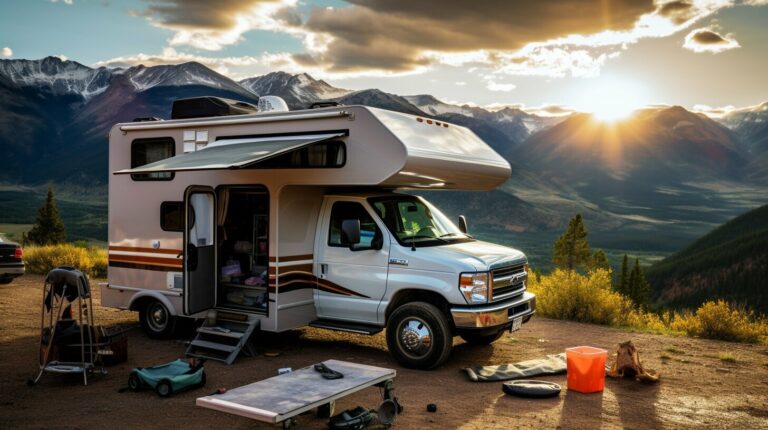
Living on the road can make cooking hard. Limited counter space, small storage, and basic tools make meals a challenge. Many RV fans eat the same old things or spend too much on takeout.
But, there’s a better way. RV cooking gets easier with skillet meals that need only one pan.
Our guide will show you how easy one-pot meals change your RV cooking. These recipes use few dishes but pack a lot of flavor. You’ll clean up less and explore more.
These tips work for weekend trips or full-time RV living. You’ll make tasty meals easily, no matter where you are.
Key Takeaways
- Limited RV kitchen space makes traditional cooking methods challenging and frustrating
- Easy one-pot meals solve storage and cleanup problems while delivering great taste
- Simple techniques work with basic RV cooking equipment and minimal counter space
- These recipes help you spend more time enjoying adventures and less time doing dishes
- Both weekend campers and full-time RVers benefit from streamlined meal preparation
- Practical tips work in any campground setting or roadside stop
The Benefits of One-Pot Cooking in an RV
One-pot cooking is a game-changer in an RV kitchen. It makes cooking easier and changes our camping trips for the better. RV lovers all over are finding that one-pot meals solve many road trip problems.
One-pot cooking is simple and saves time. With limited space and basic gear, every little bit helps. Our simple RV meals in one pot taste great and are easy to make.
Time-Saving Advantages
Time is precious when traveling and making memories. One-pot cooking cuts down on prep time. We can make delicious RV recipes in one step, without juggling pans.
This means we spend less time cooking and more time enjoying nature. Most one-pot meals cook in 30 minutes or less. This gives us more time for hiking, sightseeing, or just relaxing.
Fewer Dishes to Clean
Dirty dishes can ruin a camping trip. One-pot cooking uses only one pot and a few utensils. We usually need just one pot, a spoon, and our plates.
Cleaning up is easy with simple RV meals that need little equipment. We can enjoy the sunset instead of washing dishes. Our fellow campers often comment on how fast we clean up and join in the fun.
- Less water usage for washing dishes
- Reduced soap and cleaning supply consumption
- More time for outdoor activities
- Less stress about kitchen cleanup
Ideal for Small Spaces
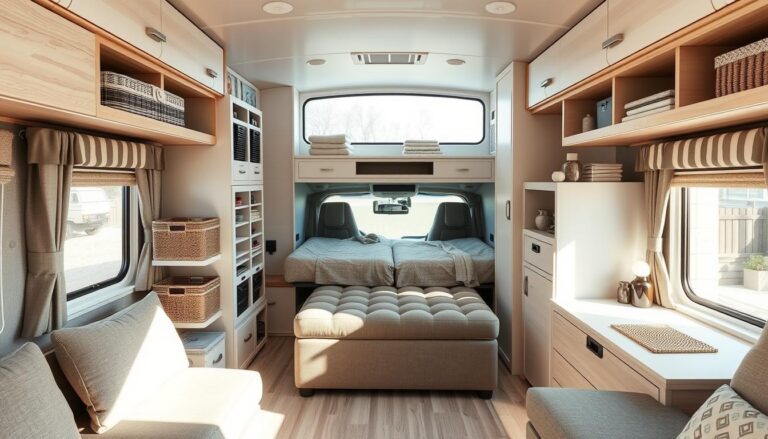
RV kitchens are small and have limited storage. One-pot cooking fits perfectly in these spaces. We can make full meals without taking up too much room.
Using one pot means we don’t need multiple stoves. This is great for RV stoves with only two burners. We can make restaurant-quality results in even the smallest kitchens.
Storage is also easier because we need fewer items. This makes room for other camping gear and ingredients for our favorite simple RV meals.
Essential Cooking Gear for Your RV
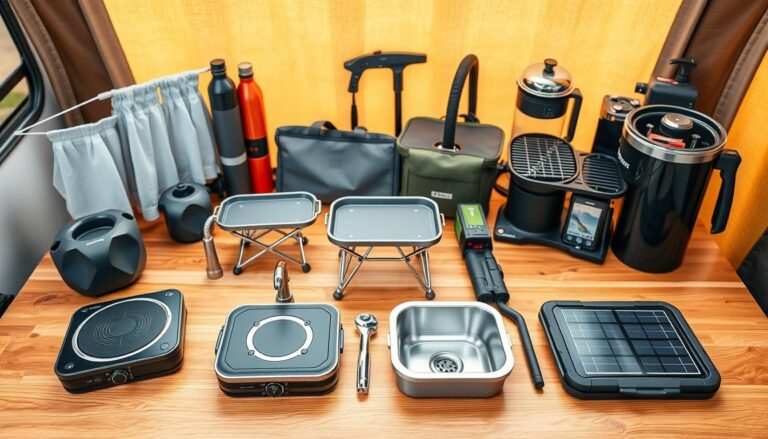
The key to great one-pot RV dishes is the right cooking gear. The right tools turn small spaces into great places to cook. Your choice of gear affects how well you cook, how fast, and how much fun it is.
Choosing the right gear means picking versatile, space-saving items. Each piece should do more than one thing and fit in your RV’s small storage. This way, you can cook anything without cluttering your kitchen.
Recommended Cookware
A big, heavy-bottomed stock pot is your workhorse for many meals. Go for a 6-8 quart pot with a tight lid that’s also good for serving. Stainless steel or hard-anodized aluminum are great for heat and durability.
A cast iron skillet is great for everything from eggs to stir-fries. A 12-inch skillet is big enough for most RV stovetops. Cast iron keeps heat well and gets better with time, perfect for long trips.
Don’t forget a multi-purpose Dutch oven. These pots are perfect for braising, baking, and slow-cooking. They make portable cooking unforgettable.
Must-Have Utensils
Use silicone-tipped utensils to protect your pots and pans. They’re heat-resistant up to 500°F. A slotted spoon, solid spoon, and flexible spatula are all you need for most tasks.
Sharp knives make cooking safer and quicker. Pack a chef’s knife, paring knife, and serrated knife in sheaths. Good knives save time and make food preparation better.
Collapsible measuring cups and spoons save space. They expand when needed and fold up for storage. They’re perfect for RV kitchens.
Storage Solutions
Nesting bowls and containers use vertical space well. They’re great for mixing and serving. Look for sets that stack and have secure lids to prevent spills.
Magnetic spice containers stick to metal surfaces. They keep spices handy without taking up cabinet space. Organization becomes effortless when spices are easy to see and use.
Over-the-sink cutting boards add extra workspace. These boards are stable and let you keep your counter clear for other tasks.
Planning Your One-Pot Meals
Smart meal planning makes even small RV kitchens efficient. It makes cooking on the go fun and stress-free. Planning ahead turns kitchen chaos into organized meals that bring families together.
Understanding your travel style and cooking preferences is key to great RV meal prep. Some like detailed meal schedules, while others prefer flexible plans that adapt to new discoveries.
“Proper planning prevents poor performance, even when your kitchen is on wheels and pantry space is limited.”
Choosing Easy Recipes
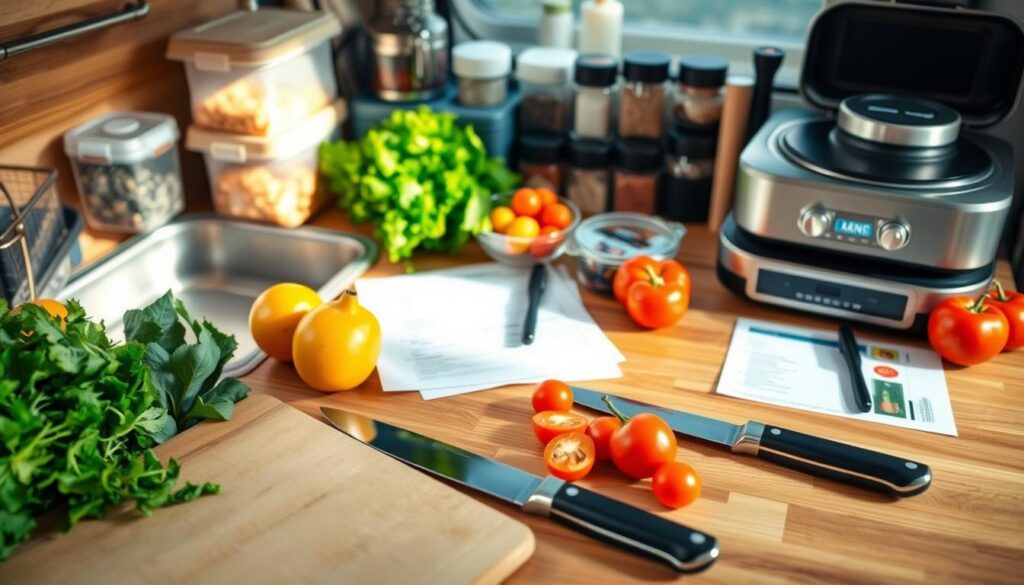
Choose recipes that are flexible and forgiving. The best RV meals use common pantry staples and allow for creative additions. Look for recipes that use ingredients you can find at local markets.
Focus on dishes that need little prep and can cook without you. Slow-cooker recipes, sheet pan meals, and simple stir-fries are great. They use five to seven ingredients and take less than 30 minutes to prepare.
Look for recipes that can be easily scaled up or down. This lets you adjust portions for your group size or for leftovers.
Shopping for Ingredients
Smart shopping makes RV meal prep easier and cheaper. Create a master shopping list by store section. This helps you shop faster and remember all the ingredients you need.
Buy versatile ingredients that work in many recipes. Canned beans, rice, pasta, onions, and garlic are great examples. These multipurpose ingredients save space and offer many meal options.
Shop locally to find fresh, seasonal produce and regional specialties. Local farmers’ markets offer great deals and support the communities you visit.
Meal Prep Tips
Effective meal prep makes RV cooking enjoyable. Set aside one day a week for prep work. This saves time when you’re tired from driving.
Pre-cook proteins like chicken, ground beef, or beans in large batches. Store them in portion-sized containers for quick use in different meals. This cuts cooking time in half.
Create freezer-friendly meal kits by mixing dry ingredients for recipes in labeled bags. Add fresh ingredients and liquid when you’re ready to cook. This is great for soups, stews, and rice dishes.
Keep track of what you have in your pantry and fridge. This prevents buying too much and helps use ingredients before they spoil. Many RV cooks use apps to manage their inventory and meal planning.
Delicious One-Pot Breakfast Ideas
Waking up to a delicious one-pot breakfast in your RV kitchen is amazing. These camper van recipes make mornings special and easy to clean up. They’re perfect for small RV spaces.
One-pot breakfasts are simple and efficient. You can make great meals with just one pan. This saves time and water, and tastes great.
Hearty Breakfast Burritos
Our breakfast burrito recipe starts with a big skillet. We cook diced potatoes until they’re golden. Then, we add bell peppers and onions for a mountain breakfast skillet that’s filling and healthy.
Next, we push the potatoes to one side. We scramble eggs in the empty space, then mix everything together. These camper van recipes work perfectly because you can prep the night before.
“The best camping breakfast is one that brings everyone together around the table, sharing stories and planning the day’s adventures.”
Warm tortillas over the burner for real flavor. Fill them with the skillet mix, cheese, salsa, or avocado. Roll them up and serve for a great start to your day.
Savory Oatmeal Variations
We’ve made breakfast oats savory and packed with protein. Use vegetable or chicken broth instead of water. This makes the oatmeal rich and flavorful.
Our favorite is with sautéed mushrooms, spinach, and a fried egg. Cook everything in one pot, layering flavors. This makes a hearty breakfast that lasts all morning.
These camper van recipes are flexible. Try adding leftover roasted veggies, bacon, or fresh herbs from markets.
Quick Frittatas
Cast iron frittatas are the best one-pot breakfast for RVs. Start by heating oil in your cast iron skillet. Add veggies like bell peppers, onions, and zucchini until they’re tender.
Beat eggs with milk and pour over the veggies. Cook on the stovetop, then bake in the RV oven. This makes a perfectly fluffy texture every time.
Frittatas are great because you can use any veggies and proteins. They’re perfect for using up leftovers in your RV fridge. Add cheese, herbs, and small meats for a tasty breakfast.
Wholesome One-Pot Lunch Options
Lunchtime in your RV is perfect for making tasty meals. These recipes are both nourishing and easy to make. They pack a lot of flavor without a lot of cleanup.
One-pot lunches are great because they’re flexible and quick. You can change them up with what you have and what you like. They give you energy for the rest of your day without feeling too full.
Fresh and Flavorful Stir-Fry
Vegetable stir-fry is a top choice for RV lunches. It’s easy to make with fresh veggies from local markets. The trick is to control the heat and timing.
Heat your biggest skillet or wok on medium-high. Add oil and cook hard veggies like carrots and broccoli first. Cook them for 3-4 minutes before adding softer veggies like zucchini and mushrooms.
Add pre-cooked chicken or tofu for protein in the last minutes. Use soy sauce, garlic, and ginger for an Asian taste. Or try Mediterranean herbs with balsamic vinegar for a different flavor.
Cauliflower rice is a great low-carb choice for stir-fries. Just pulse cauliflower in a food processor until it’s rice-like. Add it in the last 2-3 minutes to keep it crunchy.
Comforting Pasta Creations
Creamy pasta dishes are perfect for comfort. They use pantry staples and are great on cooler days or when you want something hearty.
Our favorite way is to cook pasta right in the sauce. This method makes the pasta taste amazing and saves water and time.
Start by sautéing onions, garlic, and herbs. Then add liquid and uncooked pasta. The pasta absorbs the liquid, making it creamy.
| Pasta Type | Cooking Time | Liquid Ratio | Best Additions |
|---|---|---|---|
| Penne | 12-14 minutes | 3:1 liquid to pasta | Sun-dried tomatoes, spinach |
| Rotini | 10-12 minutes | 2.5:1 liquid to pasta | Mushrooms, bell peppers |
| Orzo | 8-10 minutes | 2:1 liquid to pasta | Lemon, herbs, cheese |
| Shells | 11-13 minutes | 3:1 liquid to pasta | Broccoli, chicken, cream |
Try mushroom and herb, spinach and sun-dried tomato, or chicken and broccoli. Always taste and adjust seasoning during the final minutes of cooking.
Warming Soups and Stews
Hearty soups and stews are great for making ahead. They get better with time, perfect for when you’re out exploring.
Great soup starts with layers of flavor. Brown meat or sauté veggies first. This step adds depth to your soup.
Use root veggies like potatoes and carrots in RV soups. They keep well and are filling. Cut veggies into uniform pieces for even cooking.
Beans and lentils add protein and fiber. They make your meal last longer. Use canned beans for convenience, or soak dried beans for a budget-friendly option.
Mediterranean soups with tomatoes and herbs are bright and satisfying. Add spinach or kale at the end for extra nutrition.
Make concentrated soup bases to save space in your RV. Thin them with water or broth when you serve. This way, you get more meals from less ingredients.
The smell of soup makes your RV feel like home. These meals bring everyone together and create lasting memories of your travels.
Satisfying One-Pot Dinner Recipes
When the sun sets, we look for one-pot dinners to fuel our next adventure. These meals are the highlight of our RV day. They bring everyone together after a day of exploring.
Dinner in your RV kitchen is the perfect time to make memorable meals. Our recipes focus on maximum flavor with minimal cleanup. This means you enjoy your meal more and clean up less.
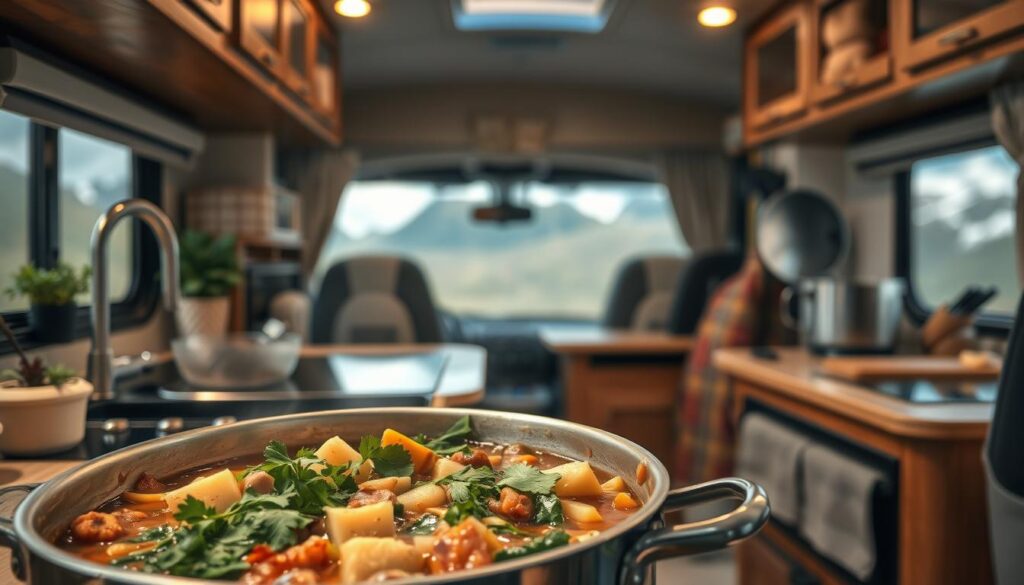
One-pot dinners are simple and versatile. They work for any number of people, from a family of four to a solo traveler. These recipes are easy to adjust to your needs.
Hearty Chili Variations
Nothing beats a warm bowl of chili after a day outdoors. Our foolproof chili recipes offer rich flavors that grow in a single pot.
The classic beef chili starts with browning ground beef in your pot. Then, add onions, bell peppers, and garlic. Crushed tomatoes, kidney beans, and spices come next. Let it simmer for at least 30 minutes.
For something different, try our turkey and white bean chili. It’s a protein-packed meal that’s both satisfying and healthy.
“The best chili is the one that brings people together around the table, sharing stories and creating memories.”
Chicken and Rice Comfort
Our chicken and rice dish combines tender chicken with perfectly cooked rice and veggies. It’s a single dish that’s easy to make.
Start by seasoning chicken thighs with salt, pepper, and herbs. Brown them, then remove them. Sauté onions, carrots, and celery in the same pot.
Add rice, chicken broth, and the chicken back to the pot. The rice soaks up all the flavors. Frozen peas added in the final minutes add color and freshness.
| Ingredient | Quantity | Cooking Time | Prep Notes |
|---|---|---|---|
| Chicken Thighs | 6 pieces | 25 minutes | Season 30 minutes ahead |
| Long-grain Rice | 1.5 cups | 20 minutes | Rinse before adding |
| Mixed Vegetables | 2 cups | 15 minutes | Cut uniformly |
| Chicken Broth | 3 cups | N/A | Use low-sodium variety |
Nutritious Quinoa Bowls
Our vegetarian quinoa bowl is a flavorful, plant-based meal. It’s a nutritional powerhouse with protein-rich quinoa, veggies, and bold seasonings.
Start by toasting quinoa in your pot for a nutty flavor. Add vegetable broth and boil, then simmer until tender. The quinoa absorbs the broth’s flavors.
Add diced tomatoes, black beans, corn, and bell peppers in the final stages. Season with cumin, chili powder, and lime juice for a Mexican-inspired flavor.
Top your quinoa bowl with fresh cilantro, avocado, and Greek yogurt. This adds healthy fats, probiotics, and fresh flavors to the dish.
These dinner recipes turn simple ingredients into amazing meals. Each dish is flexible, making them great for life on the road.
Cooking Techniques for One-Pot Meals
Choosing the right cooking method is key for RV meal prep. Each method has its own benefits for different power sources and schedules. Knowing these helps you make tasty one-pot meals anywhere you go.
Matching your cooking technique to your resources is important. Some methods are better with little electrical power. Others work best with full hookups. We’ll look at the best ways to cook satisfying meals in your RV.
Stovetop vs. Slow Cooker
Stovetop cooking lets you control heat and timing right away. It’s great for short stays or when you need food fast. Your propane burners give steady heat, no matter the power.
Slow cookers are perfect for longer stays with power. They use minimal power to make tender, tasty dishes. We love setting up a slow cooker meal in the morning. By the time we return, it’s perfectly cooked.
Stovetop cooking is fast and flexible. You can change temperatures quickly and watch your food cook. But slow cookers are great for cooking without heating up your RV in hot weather.
Using Instant Pots
Instant Pots change RV cooking by doing many things in one pot. They pressure cook, slow cook, sauté, and steam. We think they’re essential equipment for RV chefs.
Pressure cooking in Instant Pots cuts cooking time for tough meats and beans. What takes hours on the stovetop takes minutes. This saves time and propane.
Most Instant Pots use 1000-1200 watts of power. They’re good for RVs with enough electrical power. The sealed cooking keeps odors out of your living space.
Foil Pack Cooking Method
Foil pack cooking makes meals with virtually no cleanup. It’s perfect for campfires, grills, or RV ovens. Each packet is a complete meal with proteins, veggies, and seasonings sealed together.
Use heavy-duty aluminum foil for durability outdoors. The packets trap steam and flavors, making food tender like braising. This method also stops food from sticking to grates or burning over flames.
Foil pack cooking is simple and customizable. Everyone can have their own ingredients. Cooking times vary, but most packets cook in 15-25 minutes.
| Cooking Method | Power Requirements | Cooking Time | Cleanup Level | Best For |
|---|---|---|---|---|
| Stovetop | Propane only | 15-45 minutes | Moderate | Quick meals, precise control |
| Slow Cooker | Low electrical | 4-8 hours | Minimal | Tender meats, hands-off cooking |
| Instant Pot | High electrical | 20-60 minutes | Easy | Fast pressure cooking, versatility |
| Foil Packs | Fire/grill heat | 15-25 minutes | None | Outdoor cooking, individual portions |
Incorporating Local Ingredients
Every place we visit gives us a chance to make our meals special with local ingredients. This makes cooking a fun way to celebrate where we are. We can change our favorite recipes to use fresh ingredients from around us.
The secret to great RV cooking is being flexible and creative. Using local ingredients makes our meals more than just food. They become memories tied to special places and times.
Seasonal Produce
Knowing what grows when and where helps us plan better meals. Seasonal produce tastes best and is cheaper. In spring, we enjoy tender asparagus and fresh peas in light pasta dishes.
Summer brings lots of tomatoes, corn, and zucchini. These are great in our one-pot stir-fries and stews. Fall gives us apples, squash, and root vegetables for warm meals.
Winter has citrus fruits and hardy greens for bright and nutritious meals. We always check what’s in season before planning our meals.
Farmers Market Finds
Local farmers markets are our favorite places to shop. We find ingredients not found in regular stores. Fresh herbs, heirloom tomatoes, and artisanal cheeses make our meals special.
We visit farmers markets early to get the best selection. Vendors often share cooking tips and offer samples to help us choose.
Getting to know local farmers makes our travels better. They recommend the best ways to use their produce in our RV kitchen.
Regional Specialties
Every place we visit has special ingredients that define its cuisine. Gulf Coast shrimp makes our pasta dishes coastal. New Mexico’s Hatch green chiles add great heat to our breakfasts.
We research regional specialties before we arrive. This helps us know what to look for and how to use new ingredients. Regional specialties often make our meals stand out.
Pacific Northwest salmon, Texas barbecue spices, and Vermont maple syrup all add to our meals. These ingredients tell the story of our journey through food.
| Season | Region | Key Ingredients | Best One-Pot Applications |
|---|---|---|---|
| Spring | Southeast | Vidalia onions, fresh peas, strawberries | Light pasta dishes, fresh salads |
| Summer | Midwest | Sweet corn, tomatoes, zucchini | Vegetable stir-fries, hearty stews |
| Fall | Northeast | Apples, squash, maple syrup | Warm breakfast bowls, roasted dishes |
| Winter | Southwest | Citrus fruits, peppers, avocados | Bright soups, warming chilis |
Dietary Considerations and Customizations
Traveling in an RV brings together people with different dietary needs. We know that successful meal planning needs flexibility and creativity. This way, everyone can enjoy tasty food on the road.
The key to managing different dietary needs is to choose versatile base ingredients. These ingredients work well for many eating plans. Smart substitutions and careful ingredient selection help create satisfying meals for everyone.
Gluten-Free Options
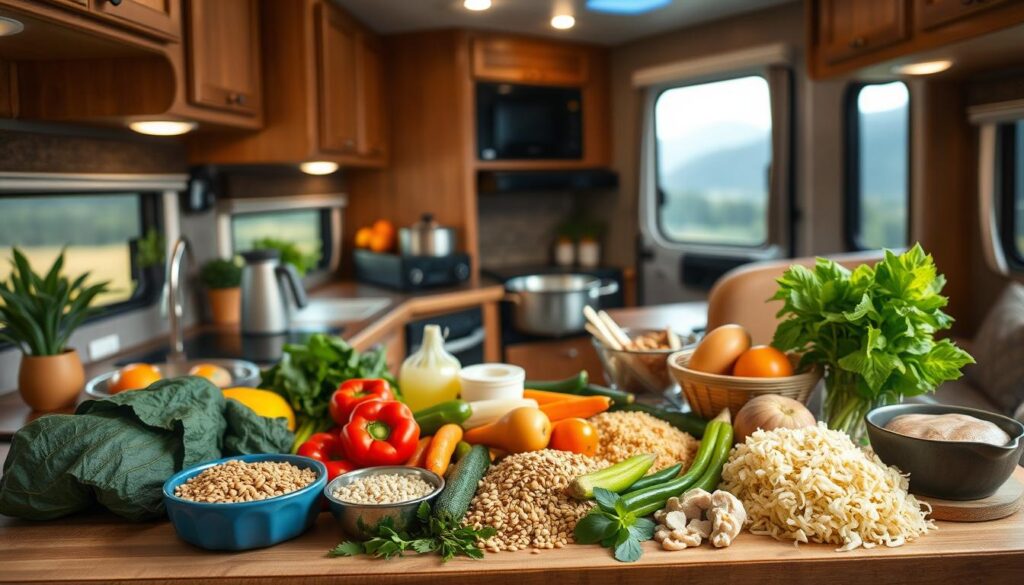
Gluten-free RV cooking focuses on safe ingredients that need little special prep. We suggest using rice, quinoa, potatoes, and corn-based products as your base. These ingredients are great for one-pot meals and store well in RV pantries.
Simple swaps make traditional recipes gluten-free. Use rice noodles or gluten-free pasta instead of regular pasta. Corn tortillas are better than flour tortillas for wraps and quesadillas.
Preventing cross-contamination is key in small RV kitchens. Use separate utensils and cutting boards for gluten-free food. Label storage containers clearly to avoid mixing ingredients by mistake.
“The best gluten-free RV meals use whole, unprocessed ingredients that naturally contain no gluten. This makes cooking simpler and safer for everyone.”
Vegan and Vegetarian Meals
Plant-based RV cooking offers a lot of variety and nutrition while being budget-friendly. We focus on protein-rich legumes, nuts, and seeds for hearty meals. These keep travelers energized on their adventures.
Canned beans and lentils are great for quick vegan meals. They are full of protein and fiber and don’t take up much space. Nutritional yeast adds a cheesy flavor without dairy.
Fresh vegetables from local farmers’ markets make vegetarian and vegan meals better. Choose sturdy veggies like bell peppers, onions, and carrots. They travel well and last longer in RV refrigerators.
Meal prep is great for plant-based eating. Pre-cook grains and legumes in batches to make daily meals quicker. Store cooked ingredients in portion-sized containers for easy access.
Paleo-Friendly Recipes
Paleo RV cooking focuses on whole foods and natural ingredients. It’s perfect for outdoor adventures. We build meals around high-quality proteins, fresh vegetables, and healthy fats for sustained energy.
One-pot paleo meals often mix meat, vegetables, and natural seasonings. Coconut oil and olive oil are great cooking fats that add flavor while following paleo guidelines.
Storing ingredients is important for paleo meals. Keep fresh meats refrigerated and store nuts and seeds in airtight containers. Plan paleo meals based on your RV’s fridge space.
| Dietary Style | Key Ingredients | Storage Tips | Quick Meal Ideas |
|---|---|---|---|
| Gluten-Free | Rice, quinoa, corn products, potatoes | Separate containers, clear labeling | Rice bowls, corn tortilla wraps |
| Vegan | Legumes, nutritional yeast, plant milk | Batch cook grains and beans | Lentil stews, chickpea curries |
| Vegetarian | Eggs, dairy, beans, vegetables | Fresh produce rotation system | Veggie frittatas, cheese pasta |
| Paleo | Meat, fish, vegetables, nuts | Proper meat refrigeration | Meat and veggie skillet |
Flexibility is key in RV cooking for different dietary needs. We encourage trying new ingredient swaps and keeping backup options ready. Communication with your travel companions about food preferences and restrictions helps plan meals that everyone can enjoy.
Dietary accommodations don’t have to make RV cooking hard. Simple, whole-food ingredients often meet many dietary needs. This makes meal planning easier and more fun for all travelers.
Storing Leftovers in Your RV
Living on the road means you need to know how to store leftovers. This is good for your wallet and taste buds. Many meals taste better the next day.
Knowing how to store leftovers is key. Your RV fridge is small, and food must stay fresh. We have tips for RV living.
Food Safety Guidelines
Food safety is very important in an RV. Keeping food at the right temperature is key. Your fridge should be between 35-38°F.
Cool leftovers fast before storing. Don’t leave food out for more than two hours. In hot weather, cut this time to one hour.
Always use the first in, first out rule. Label containers with dates and what’s inside. Leftovers are safe for 3-4 days in the fridge.
Check your RV’s electrical system often. Fluctuations can harm your fridge. A battery monitor helps keep things cool.
Sustainable Storage Options
Choose eco-friendly storage to save space and reduce waste. Glass containers are better than plastic. They don’t hold odors or stains and stack well.
Silicone stretch lids are great for covering bowls and fruits. They seal well and save space.
Vacuum-sealed bags save space in your fridge. A handheld sealer is a good investment. It keeps food fresh longer.
| Storage Method | Space Efficiency | Durability | Cost |
|---|---|---|---|
| Glass Containers | High | Excellent | Medium |
| Silicone Lids | Very High | Good | Low |
| Vacuum Bags | Excellent | Fair | Low |
| Plastic Containers | Medium | Fair | Very Low |
Transforming Yesterday’s Meals
Turn leftovers into new dishes. Leftover chili is great on baked potatoes or in quesadillas. Rice can be stuffed peppers or fried rice.
Soup can be pasta sauce. Add cream or broth to thin it. Breakfast hash is good for leftover veggies and proteins.
Use leftover grains for salads. Mix with veggies, herbs, and vinaigrette. These are perfect for lunches or picnics.
Leftover proteins are great in wraps. Shred chicken or beef and add veggies and condiments. Roll in tortillas for easy meals.
Keep a list of ideas for using leftovers. This helps when you’re unsure what to make. Planning ahead means no waste and every meal is special.
Meal Planning for RV Trips
Planning your RV meals ahead saves time, money, and stress. Unlike home cooking, RV meal planning balances variety with practical limits. It turns your RV kitchen into an efficient space.
The key difference is flexibility and adaptability. Your plans must work in any situation, from campgrounds to wilderness. Weather, delays, and adventures change your cooking plans.
Smart meal planning tackles RV life’s unique challenges. You shop at different stores, face varied kitchens, and manage fridge space. These factors make traditional planning less effective for RVers.
Creating a Grocery List
Your RV grocery list needs a special strategy. Organize it by versatility and storage instead of meal categories. This maximizes space and ensures ingredients for many recipes.
Start with foundation ingredients for many meals. Rice, pasta, canned beans, and frozen veggies are key. They store well and adapt to changing plans.
Group perishables by storage life. Plan meals based on what needs to be used first. This prevents food waste.
Consider what’s available in different areas. Some ingredients might not be found in rural spots. Choose recipes that use common items.
- Protein sources that freeze well (chicken, ground beef, fish fillets)
- Versatile vegetables (onions, bell peppers, carrots, potatoes)
- Pantry staples (olive oil, spices, canned tomatoes, broth)
- Quick-cooking grains (quinoa, couscous, instant rice)
- Backup ingredients for recipe substitutions
Batch Cooking Ideas
Batch cooking in an RV focuses on components, not meals. This method is more practical than cooking full meals ahead. It gives you building blocks for different dishes.
Make large batches of grains, proteins, and chopped veggies when you can. These store well and quickly turn into various meals. Cooked rice, for example, can be used in stir-fries, grain bowls, or stuffed peppers.
Choose ingredients that get better with time. Marinated proteins, seasoned beans, and herb-infused oils improve overnight. These components make weeknight cooking faster and tastier.
Consider your RV’s cooking capacity when batch cooking. Most RV kitchens can handle one or two large pots at once. Plan your cooking around these limits to avoid kitchen overload.
| Component Type | Batch Size | Storage Time | Usage Ideas |
|---|---|---|---|
| Cooked Grains | 4-6 servings | 5-7 days | Stir-fries, grain bowls, stuffed vegetables |
| Seasoned Proteins | 2-3 meals worth | 3-4 days | Tacos, pasta dishes, salad toppings |
| Chopped Vegetables | Week’s supply | 4-5 days | Quick stir-fries, soups, omelets |
| Cooked Beans | Large batch | 6-8 days | Chili, salads, grain bowls, wraps |
Flexible Meal Plans
RV meal plans need to be flexible. Use theme-based meal plans instead of strict schedules. This lets you adapt to changes while keeping meals varied and nutritious.
Assign themes to different days: Pasta Monday, Stir-fry Tuesday, Soup Wednesday. Within each theme, choose recipes based on ingredients, weather, or energy. This system offers structure with room for spontaneity.
Include buffer meals in your plan. These are simple, quick recipes using shelf-stable ingredients. When plans change or you’re tired, these meals save the day without extra shopping.
Consider external factors like weather. Hot weather might make you want cold salads, not stews. Flexible meal plans adapt to these preferences instead of fighting them.
Plan for different cooking scenarios. Some meals are perfect for quick stops, while others are great for relaxed evenings. Having options for various situations reduces meal planning stress.
The best RV meal plan is the one you’ll actually follow. Flexibility beats perfection every time when you’re living on the road.
Remember, meal planning for RV trips is a skill that grows with experience. Start simple and add complexity as you learn more about your RV kitchen.
Tips for Cooking in an RV Kitchen
Mastering your RV kitchen is all about smart strategies. These work within your unique space. Success in compact cooking areas needs creativity and planning.
Managing Limited Space
Use vertical storage like magnetic spice racks and hanging organizers. Collapsible cookware saves cabinet space. Multi-purpose items are best, like cutting boards that fit over sinks.
We keep counters clear by storing appliances in cabinets. This makes room for cooking.
Cooking on a Budget
Budget-friendly RV cooking means buying ingredients for many recipes. Rice, beans, and pasta are great bases for meals. We shop at local stores, not expensive marts.
Buying in bulk and sharing with others cuts costs. This way, we save money.
Staying Organized While Cooking
We use clear containers for dry goods. This lets us see what we have easily. Labeling everything helps in tight spaces.
We prep ingredients before cooking. This saves space on counters. A spot for dirty dishes keeps things functional.
Your RV kitchen can make amazing one-pot meals. With the right approach, cooking on the go becomes fun.