Starting your RV adventure can feel both thrilling and nerve-wracking. It opens up incredible opportunities for freedom and exploration. But, it also brings unique challenges that every beginner needs to address.
Your family’s well-being should always come first when hitting the road. Whether you’re retirees, digital nomads, or families planning vacations, knowing the basics is key. RV camping offers amazing experiences, but you need to prepare to enjoy them safely.
We’ve gathered these essential guidelines from seasoned travelers and experts. They help you build confidence behind the wheel. From understanding your vehicle’s capabilities to handling unexpected situations, these basics will make you a prepared adventurer. Remember, every experienced RVer started exactly where you are now – with curiosity, excitement, and the wisdom to learn proper techniques before embarking on their journey.
Key Takeaways
- Proper pre-trip inspections prevent most roadside emergencies and mechanical failures
- Understanding weight limits and load distribution keeps your RV stable and legal
- Emergency preparedness includes having essential supplies and communication devices
- Practicing driving and parking skills in safe environments builds confidence
- Regular maintenance schedules extend your RV’s lifespan and ensure reliable performance
- Campground etiquette and reservation planning enhance your overall experience
Understanding Your RV
Knowing your RV well is key to safe and fun trips. Whether it’s a small Class B or a big Class A, knowing how it works is important. This is true for all RV types, like travel trailers and pop-up campers.
Each RV type has its own challenges and benefits. Class A motorhomes are big and fancy but need special driving skills. Travel trailers and fifth wheels need you to know about towing. Pop-up campers are light and easy to tow.
Familiarize Yourself with RV Components
Start by learning about your RV’s main parts. Find your electrical panel, water heater, propane tanks, and emergency shut-offs before you go. These are key for your RV’s safety and function.
Read your owner’s manual well and think about a dealer’s tutorial. Many RVers share RVing advice online and in clubs. Knowing where things are helps in emergencies and upkeep.
Focus on your RV’s plumbing, electrical, and propane systems. Learn to shut off water, electricity, and gas for leaks or problems. This simple skill can stop big issues on the road.
Learn About RV Weight Limits
Knowing your RV’s weight limits is critical. Every RV has a max weight for safe driving. Gross Vehicle Weight Rating (GVWR) is the total weight your RV can handle.
Cargo Carrying Capacity (CCC) shows how much extra weight you can add. Many new RVers don’t realize how fast things add up.
For travel trailers and fifth wheels, towing capacity is key. For example, a Subaru Forester can only tow 2,400 pounds. Remember to include the weight of your hitch, cargo, and people in your total towing weight.
It’s smart to weigh your RV at a truck stop or certified station before big trips. This check ensures you’re within safe limits and avoids mechanical issues or unsafe driving.
Pre-Trip Inspection Checklist
Inspecting our RV before we leave is key for safety. A good pre-trip check can spot problems early. This RV safety checklist should be a habit for every trip.
Many RV accidents could be avoided with a good check before leaving. Skipping this step is risky. Let’s look at what we need to check.
Tire Pressure and Condition
Tire blowouts are a big cause of RV accidents. We should check tire pressure when tires are cold. This gives us the most accurate reading.
Use the penny test to check tread depth. If you see Lincoln’s head, it’s time for new tires.
Look for wear, cracks, or bulges in the sidewalls. These signs mean the tire might fail. Using a tire pressure monitoring system (TPMS) helps while driving.
Fluid Levels and Battery Check
Engine fluids keep our RV safe and running well. Check oil, coolant, brake fluid, and transmission fluid before each trip. Low levels can damage the engine or brakes.
Check the battery connections for corrosion or loose terminals. Clean connections help with starting and electrical systems. Test the battery charge with a multimeter or battery tester.
Don’t forget to check propane tank connections and make sure all valves are secure. Propane leaks are serious and need to be fixed right away.
Check Your Emergency Kit
Our emergency kit is vital for unexpected situations. It should have tools, first aid, flashlights, emergency flares or reflectors, jumper cables, and tire repair equipment.
Make sure the fire extinguisher is charged and easy to find. Check the pressure gauge monthly and replace expired units. Fresh batteries in smoke and carbon monoxide detectors are essential.
These first-time RVer tips stress the need for organization. Keep emergency supplies in easy-to-find places, even in the dark.
| Inspection Category | Key Items to Check | Frequency | Warning Signs |
|---|---|---|---|
| Tires | Pressure, tread depth, sidewall condition | Every trip | Cracks, bulges, uneven wear |
| Fluids | Oil, coolant, brake fluid, transmission | Every trip | Low levels, discoloration, leaks |
| Battery | Connections, charge level, corrosion | Monthly | White buildup, loose terminals |
| Emergency Kit | Tools, first aid, flashlights, flares | Seasonally | Missing items, expired supplies |
Doing a full pre-trip inspection might take time at first. But it’s better than dealing with problems on the road. Make a printed checklist to help you remember everything.
Getting into this habit takes practice. Start with short trips to get better at it. Soon, these checks will be second nature, making our trips safer and more enjoyable.
Safe Driving Practices
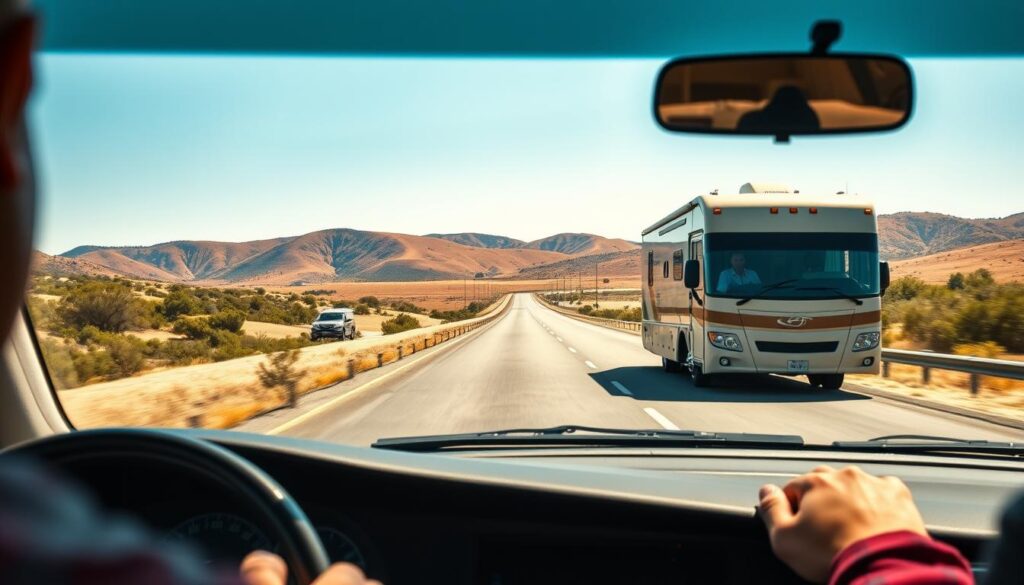
Driving an RV is different from driving a car. RVs are bigger and heavier. This means we need to change how we drive.
Before we start driving, we should practice in an empty parking lot. This helps us get used to the RV’s size and weight. We can practice turning and backing up without worrying about traffic.
Adjusting to RV Size and Weight
Our RV is bigger, so we need to make wider turns. Right turns are tricky because we have to swing wide. Always pull further into intersections before turning.
Our RV takes longer to stop because it’s heavier. We can’t brake as fast as in a car. This is important when stopping at lights or signs.
Crosswinds can affect RVs more than cars. We need to hold the steering wheel tight and make small adjustments. RVs are more likely to catch wind, which is a problem on bridges and highways.
Maintaining a Safe Following Distance
We should follow the “one second per 10 feet of vehicle length” rule. For a 30-foot RV, that’s at least three seconds. Add more time in bad weather or heavy traffic.
Never tailgate or let others pressure you. Our RV can’t stop as fast as smaller cars. Keeping a safe distance is key for everyone’s safety.
In bad weather, double our following distance. Rain, snow, or fog makes stopping harder. It’s better to arrive late than not at all.
Using Turn Signals and Mirrors
We should signal our plans well in advance when driving an RV. This gives other drivers time to react. Early signaling helps avoid accidents and road rage.
Our mirrors are very important in an RV. Adjust them before each trip and check them often. Blind spots are bigger in RVs, so we must be careful when changing lanes.
Avoid sudden lane changes. Plan our moves ahead and make them slow and careful. Other drivers might not understand how RVs handle, so we need to be patient and defensive.
Setting Up Camp
Setting up a campsite safely and well takes time and knowledge. It’s important to arrive with daylight left. This helps us set up without rushing.
Choosing the right campsite and setting it up right are key. These skills get better with practice. But, they need careful attention at first.
Choosing a Safe and Level Campsite
Look for level ground that fits our RV. It should be flat for easy leveling. This makes our stay more comfortable.
Stay away from hazards like:
- Low-hanging branches that could damage our roof or awning
- Steep slopes that make leveling difficult or dangerous
- Areas prone to flooding during rain
- Sites too close to utility connections or other obstacles
Walk around the site before deciding. This helps us find any hidden problems.
Properly Parking Your RV
Many places need us to park by backing in. This can be hard for beginners. It’s best to park towed vehicles first.
Here’s how to park:
- Check for obstacles
- Use a spotter if you have someone with you
- Take your time and adjust as needed
- Leave space for awnings and outdoor areas
After parking, use leveling blocks to keep our RV stable. This is important for comfort and appliance use.
Securing Your RV
Securing our RV is key to safety. Always use wheel chocks on both sides of the wheels. This keeps our RV from moving.
Here’s what to do:
- Engage the parking brake firmly
- Place wheel chocks behind and in front of wheels
- Use stabilizing jacks if our motorhome has them
- Double-check all connections and safety equipment
These beginner RVer safety steps become second nature with practice. They keep our RV safe and our stay worry-free.
Fire Safety Precautions
Fire safety is key when we travel in RVs. We live in a small space with many things that can start fires. Our RV has propane, electrical, and heating systems that need care to avoid fires.
Fires can spread fast in RVs because they are small. We need good RV safety tips to stay safe. It’s better to prevent fires than to fight them.
Installing Smoke and Carbon Monoxide Detectors
Smoke detectors are our first defense against fires. We should put them in sleeping and main living areas. Make sure they work before each trip.
Carbon monoxide detectors are also vital. This gas can come from appliances or cars. Place them near where we sleep to avoid poisoning.
Check these devices every month. Use new batteries at the start of each camping season. These steps can save lives.
Keeping Fire Extinguishers Accessible
Fire extinguishers should be easy to find in our RV. Use ABC-rated ones for most fires. They work on many types of fires.
Put extinguishers near doors and in the kitchen. Everyone should know how to use them. This is important before fires happen.
Keep extinguishers in good shape. Check them monthly and replace if damaged. Get a professional check every few years.
| Safety Device | Recommended Location | Maintenance Schedule | Key Features |
|---|---|---|---|
| Smoke Detector | Sleeping areas, main living space | Test monthly, replace batteries annually | Early fire detection, loud alarm |
| Carbon Monoxide Detector | Near sleeping areas, kitchen | Test monthly, replace every 5-7 years | Detects odorless gas, digital display |
| Fire Extinguisher (ABC-rated) | Exit door, kitchen area | Check pressure monthly, inspect annually | Multi-purpose, easy operation |
| Escape Plan | Posted near exit routes | Practice every trip | Multiple exit routes, meeting point |
Having an evacuation plan is key. Know many ways out and a meeting spot outside. Practice this plan to be ready.
Take care of propane and electrical systems to avoid fires. With good safety gear and care, we can enjoy RV trips safely.
The Importance of Communication
Good communication is key when we’re on the road with our RV. It helps prevent accidents and keeps us calm during tough times. Whether we’re parking or driving through busy areas, talking clearly makes all the difference.
Many RV accidents happen because people don’t talk enough. We need ways to share info fast and clear. This is even more important when it’s hard to hear because of noise or weather.
Establishing Hand Signals
Hand signals are a universal way to talk when we can’t hear each other. We should learn these before we need them, not when we’re stressed. Simple, clear gestures are best because they’re easy to remember and see.
Important signals include “stop” (raised fist), “come back” (beckoning motion), “turn left” (pointing left), “turn right” (pointing right), and “you’re clear” (thumbs up). Practice these in a safe place before our first trip. Consistency is key – everyone should use the same signals every time.
When using hand signals, being seen is important. The spotter should be where the driver can see them in mirrors. Wearing bright clothes helps, too, in low light.
Using Walkie-Talkies for Coordination
Two-way radios help when hand signals aren’t enough. They’re great for when we’re far apart or need to give detailed instructions. Quality walkie-talkies have clear sound even with background noise.
We should pick radios with good range and battery life. Test them before we really need them. Many RVers say walkie-talkies are a must, even for first-time RVer tips.
Walkie-talkies are perfect for navigating campsites and backing up. One person can check clearances while staying in touch with the driver. This RVing advice has saved many from accidents and damage.
| Communication Method | Best Use Cases | Limitations | Cost Range |
|---|---|---|---|
| Hand Signals | Close-range backing, quiet environments | Limited distance, weather dependent | Free |
| Walkie-Talkies | Long-distance coordination, detailed instructions | Battery dependent, possible interference | $30-$150 |
| Cell Phone Apps | Backup communication, group coordination | Needs signal, can drain battery | Free-$10/month |
| CB Radio | Highway communication, emergency contact | Learning curve, needs setup | $50-$200 |
Good communication is not just for our group. We should be ready to explain our RV’s details to others. Knowing our size helps others help us better.
In emergencies, clear communication is critical. We should practice explaining our location and situation calmly. This helps responders find us fast and know what we need.
Emergency Preparedness
Traveling in our RV means being ready for emergencies. Emergency preparedness is key on every RV safety checklist. We often find ourselves in places we don’t know well, far from help.
A good emergency plan has the right contacts and a stocked emergency kit. These steps help keep our safe RV travel fun, even when things go wrong.
Creating an Emergency Contact List
Our emergency contact list is our lifeline. It should have important contacts we can reach fast when we need help.
Key contacts to include:
- Family members and close friends
- Insurance company representatives
- Roadside assistance provider
- RV dealer or service center
- Primary healthcare providers
We should keep this list in many places. Have physical copies in our RV and digital ones on phones and tablets.
Each contact should have phone numbers and email addresses. We never know which will work best in emergencies.
Understanding Local Emergency Services
Before we go to a new place, we should learn about local emergency services. This is part of our RV safety checklist.
Important local services to identify:
- Police department contact information
- Fire department locations and numbers
- Nearest hospitals and urgent care centers
- Local emergency management offices
Some places have special emergency plans or evacuation routes. We should know these, even in areas with natural disasters.
Our emergency kit should always be ready and easy to get to. It should have first aid, emergency meds, flashlights, and food and water.
We also need basic tools, emergency cash, and ways to signal for help like flares. For areas with no cell service, a satellite communicator is a good idea.
It’s important to check and update our emergency plans often. Check the dates on meds and food every few months. Update contact info as needed for safe RV travel.
Staying Connected On the Road
Digital connectivity is key when we explore new places in our RV. RV travel safety relies on navigating well and staying in touch. We have many tools to connect, but picking the right ones is important.
Good navigation and communication systems are our lifeline on RV trips. They help us avoid dangers, find safe paths, and keep in touch with loved ones and emergency services.
Navigating with GPS and Mobile Apps
It’s wise to use an RV-specific GPS unit instead of just our phones. These devices consider our RV’s size and weight. They help us steer clear of low bridges and roads that are too heavy for our vehicle.
But, we should also have backup plans. Paper maps and apps that work offline are great backups. RVing for beginners is safer with more ways to navigate.
Mobile apps give us real-time info that makes our trips better:
- Traffic updates help us dodge busy spots
- Weather alerts warn us of bad weather ahead
- Campground reviews help us find safe places to stay
- Road condition reports tell us about roadwork or dangers
Keeping Charged Devices with You
Keeping our devices powered is key for RV travel safety. We need different ways to charge our tools so they keep working.
Here are some must-haves for charging:
- 12V adapters for charging from the vehicle
- Portable power banks for extra power
- Inverters for charging with AC power
- Solar chargers for charging off the grid
We should have charging cables for all our devices. It’s also good to test our backup power often. Campgrounds may have Wi-Fi, but it’s not always reliable. A cellular signal booster or mobile hotspot can help us stay connected, even when Wi-Fi is poor.
Wildlife Encounters
As RVers, we’re guests in the wilderness. Animals have lived here for generations. Wildlife encounters can be memorable, but we must be careful. Understanding how to live with wildlife keeps us and animals safe.
Most wild animals see us as intruders, food, or threats. Knowing this helps us stay safe. We should learn about the animals we might meet before we go camping.
Understanding Animal Behavior
Different animals behave in unique ways. Knowing these patterns helps us stay safe. Bears, mountain lions, and coyotes are big predators. But raccoons and squirrels can also cause trouble if we’re not careful.
Wildlife is most active at dawn and dusk hours. Planning our activities for these times helps avoid surprises. Making noise when we hike or walk around camp alerts animals to our presence.
Never approach or corner any wild animal, no matter its size. Even small animals can get aggressive when trapped. We should watch wildlife from a safe distance and never feed them. Feeding wildlife creates dangerous situations for everyone.
How to Store Food Safely
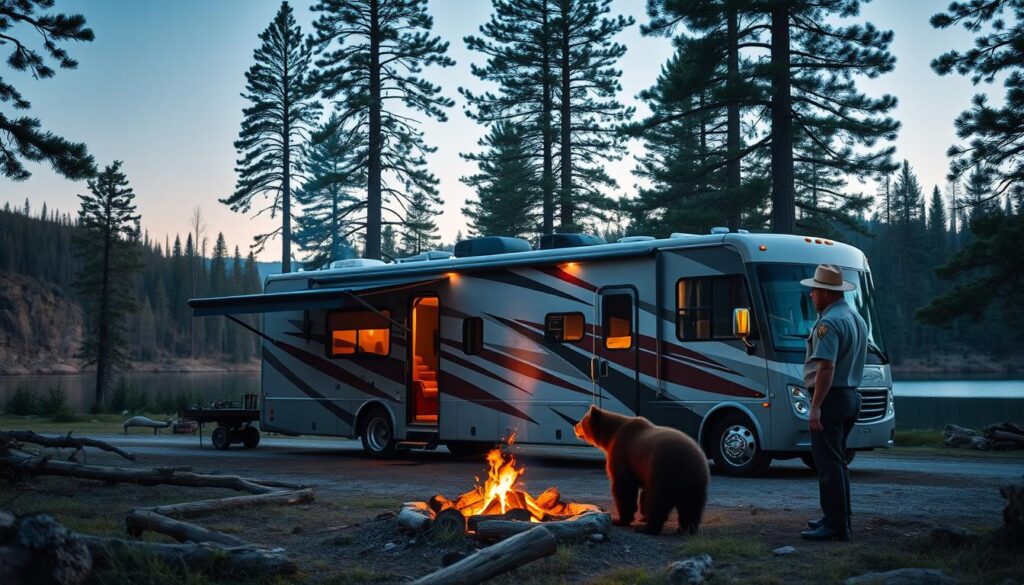
Proper food storage prevents most wildlife conflicts. We must never leave food or scented items outside overnight. These items should be inside our RV or in animal-proof containers.
In bear country, we need extra RVing precautions. We might use bear-proof containers or hang food away from our campsite. Garbage should be stored in secure containers or inside our RV until we can throw it away.
Even non-food items can attract animals. Toothpaste, soap, deodorant, and cooking utensils all have scents that interest wildlife. Everything with a smell needs proper storage as part of our beginner RVer safety routine.
If we encounter wildlife near our RV, we should stay calm. Give animals plenty of space to leave. Most animals prefer to avoid humans and will leave if they can. Carrying bear spray in recommended areas provides extra protection during hikes and outdoor activities.
Maintenance and Repairs
Knowing how to maintain an RV is key to avoiding big problems and staying safe. It’s important to do simple fixes and know when to call experts. This is a basic RV safety tip for new RVers.
Regular checks and quick fixes keep our RV in good shape. We should look after our RV’s systems and fix small issues early. This saves money and keeps us safe on our travels.
Essential Tools for Quick Fixes
Having the right tools is vital for quick fixes. Our toolkit should have screwdrivers, wrenches, pliers, and electrical tape. These tools can solve many common problems.
It’s also smart to carry spare parts like fuses and light bulbs. Duct tape and zip ties are great for temporary fixes. Don’t forget a flashlight and work gloves for emergencies.
We need space for maintenance supplies in our RV. Lubricants, sealants, and cleaning products are must-haves. They help us keep our RV in top shape and prevent big problems.
Professional Help Guidelines
Knowing our limits is important for safety and to avoid costly mistakes. First-time RVer tips remind us to leave complex repairs to the pros. Electrical, propane, and structural work are not DIY jobs.
Brake, transmission, and engine issues need a pro’s help right away. These are critical for our safety and others on the road. Trying to fix them ourselves is not worth the risk.
It’s wise to know RV service centers along our route. Research and save their contact info. This way, help is always available when we need it.
| Repair Type | DIY Appropriate | Professional Required | Safety Risk Level |
|---|---|---|---|
| Light Bulb Replacement | Yes | No | Low |
| Fuse Replacement | Yes | No | Low |
| Electrical Wiring | No | Yes | High |
| Propane System | No | Yes | Very High |
| Brake Repairs | No | Yes | Very High |
Sticking to a maintenance schedule helps avoid emergencies. Follow the manufacturer’s advice and keep service records. This helps pros fix problems fast and keeps our warranty valid.
Understanding RV Regulations
Before we start our RV journey, we need to know the rules of the road. These rules keep us safe and others safe too. Not knowing the rules can cause fines, danger, and detours that spoil our trip.
RV laws change a lot from state to state and even in local areas. What’s okay in one place might be a no-go in another. So, it’s key to do our homework for a great RV trip.
Familiarizing Yourself with Local Laws
Every state has its own RV laws we must learn before we travel. These laws cover important areas that affect our trip and safety.
Licensing requirements are a big deal. Some states need special RV licenses based on size or weight. Others have rules about towing or driving big motorhomes.
Weight limits and vehicle checks also change a lot. We should check these before we go to avoid trouble. Many states have RV weigh stations for inspections.
Knowing about road restrictions is also key. Some roads, historic areas, and highways don’t allow big RVs. Bridges and mountain passes might have weight limits too.
- Research state-specific licensing requirements before travel
- Check weight and size restrictions for your planned route
- Identify prohibited roads and plan alternate routes
- Understand local parking and overnight restrictions
- Review speed limits that may differ for RVs
Knowing Campground Rules
Campground rules are part of our RV safety checklist for a good trip. These rules vary a lot, from national parks to private spots.
Quiet hours are common. Most places have rules about when to be quiet. Generator use is often restricted to certain times.
Pet policies vary a lot too. Some places love pets, while others don’t allow them. Always check pet rules before booking.
Setup and utility connections have their own rules. Campgrounds often have specific hookups and waste disposal rules. Following these rules helps avoid damage and keeps us safe.
Fire safety rules are important too. Campgrounds have rules about campfires, propane, and smoking. These rules can change with weather and fire danger.
Respecting campground rules helps us get along with everyone. This way, RV-friendly places stay welcoming for others.
Enjoying Your RV Experience Safely
Safe RV travel is more fun when we feel confident and connect with others. The skills we’ve learned will help us have many great adventures.
Engaging with Fellow RVers
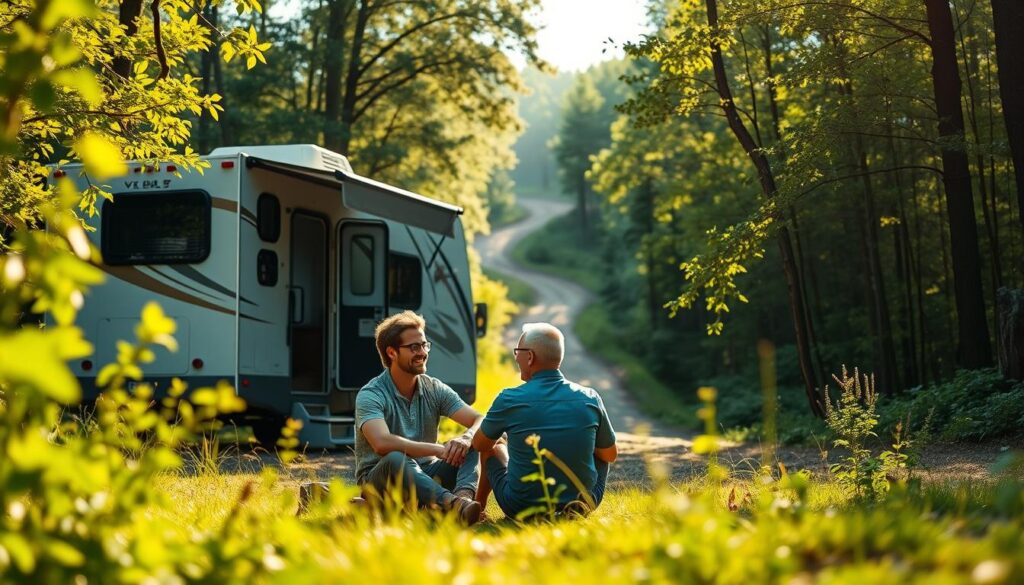
The RV community is a great help for new RVers. Experienced folks love to share tips on camping and road trips. Just talking to them at campgrounds can teach us a lot.
Connecting with others makes us safer. They can help in emergencies, share road info, and suggest good places to visit. Many are also willing to help with setup or small fixes.
We should be polite and respectful at campsites. This means keeping quiet hours, cleaning up, and respecting others’ space. Joining RV clubs and online groups can also give us support and safety tips.
By following safety tips and being part of the RV community, we can travel safely and enjoy our trips. Safe RV travel is about being ready, aware, and making friends on the road.