Welcome to the world of RV camping etiquette! It’s great for both weekend warriors and full-time nomads. Knowing the rules makes your trips better.
Every campground has rules about quiet hours and pets. But the real magic is in the unspoken guidelines that seasoned RVers know. These rules make our community feel warm and welcoming.
RV camping etiquette is like a key to making friends and having great times. When we respect each other and follow these customs, we make lasting connections. These connections can cross state lines and seasons.
In this guide, we’ll cover everything from basic manners to specific rules that veteran campers know. You’ll learn how small actions can make positive camping experiences for everyone. Are you ready to be the best neighbor at the campsite?
Key Takeaways
- Campground etiquette combines official rules with unspoken community guidelines
- Following proper protocols creates lasting friendships and memorable experiences
- Respectful behavior ensures peaceful coexistence among all campers
- Understanding veteran camper customs helps newcomers integrate smoothly
- Simple courtesy gestures make significant impacts on the camping community
- Proper etiquette covers noise levels, space boundaries, and neighborly interactions
Understanding RV Campground Etiquette
RV camping has its own set of rules. These campground code of conduct rules help us all get along. By following RV park guidelines, we make sure everyone has a good time.
RV camping is all about respect and kindness. Every campground is like a small community. Knowing the rules helps us get along and avoid problems.
| Etiquette Area | Key Rules | Time Restrictions | Consequences |
|---|---|---|---|
| Quiet Hours | Minimal noise levels | 10 PM – 7 AM | Complaints, possible removal |
| Waste Disposal | Use only designated stations | During facility hours | Environmental harm, fines |
| Campfire Safety | Use only designated pits, fully extinguish | Follow local burn bans | Fire dangers, legal issues |
| Generator Use | Keep noise down | Usually 8 AM – 8 PM | Disputes with neighbors |
Respecting Quiet Hours
Quiet hours are from 10 PM to 7 AM. This lets everyone rest. We should whisper, not use generators, and keep kids quiet.
Using generators at night breaks the rules. Early mornings and sunrises are key for RV adventures. Respecting quiet hours is kind to families and other campers.
“The best camping experiences happen when everyone feels comfortable and respected in the shared outdoor space.”
Proper Waste Disposal
Good waste management keeps our environment clean. We must use dump stations for gray and black water. Never dump waste on the ground or in water.
Dump station hours and rules are clear. Gray water harms ecosystems. Black water needs special treatment.
Trash disposal is also important. Separate recyclables and keep garbage secure. Proper waste management helps preserve campgrounds for the future.
Campfire Guidelines
Campfire safety is key. Use only designated fire pits. Building fires elsewhere is dangerous and illegal.
Burn bans change with weather. Check for updates before lighting a fire. Always check these updates to avoid fines and legal trouble.
Extinguish fires completely. Pour water on coals, stir, and pour more water until cool. Hot coals can start fires again.
By following these rules, we make RV camping great for everyone. Respect for quiet hours, waste management, and fire safety are essential.
Choosing the Right Spot for Your RV
Finding the right campsite is more than just finding a spot. It’s about making choices that make our RV trip better. We need to think about how our choice affects our comfort and shows proper campground behavior to others. The best spot balances what we need with respect for the campground’s layout and community.
Choosing a smart campsite means looking at many things before we decide. These choices affect our daily life and how well we follow the unspoken rules for RVing. Let’s look at the important things that help experienced RVers and newcomers.

Accessibility Considerations
It’s important to see if our RV can safely get to and from the spot. Class A motorhomes need more space to turn and clear paths than smaller RVs. Look out for low branches, narrow roads, or steep hills that could be hard to navigate.
Think about how easy it is to hook up to services like electricity and water. The connections should be close enough without needing too much hose or cable. Sites that are hard to hook up to can make parking uncomfortable.
The ground is also key for setting up. Soft ground, rocky areas, or steep slopes can make leveling hard and might damage our RV. Also, check if there’s enough room to open slides and awnings without taking up too much space.
Proximity to Amenities
It’s a balance between being close to things and having some peace. Sites near bathhouses, dump stations, or stores get a lot of foot traffic. This can ruin the quiet of our camping trip.
Choosing between convenience and quiet is important. Proper campground behavior means respecting those who want quiet spots. Sites near playgrounds or recreational areas are great for families but might not be for those who want to be alone.
Being close to important services affects our daily life. We don’t want too much noise, but being too far can be a hassle, too. This is true for longer stays or when moving around is hard.
Shade and Sunlight Balance
Shade changes throughout the day, affecting our comfort and how much energy we use. Morning sun helps solar panels, while afternoon shade keeps our RV cool and saves on air conditioning. Watch how shadows move before deciding.
Wind direction affects our comfort and how we use our generator. Knowing the wind direction helps us place our RV to avoid blowing exhaust on neighbors. This is part of unspoken rules for RVing. It also makes our outdoor time better by reducing dust and smoke.
Seasons change what we want in terms of shade. In summer, we want lots of shade to stay cool. In winter, we might want more sun for warmth and solar charging. Trees also affect satellite TV and cell phone signals.
| Site Feature | Advantages | Potential Drawbacks | Best For |
|---|---|---|---|
| Corner Sites | More privacy, fewer neighbors | Often farther from amenities | Long-term stays, quiet seekers |
| Interior Sites | Central location, easy access | More foot traffic, less privacy | Short stays, social campers |
| Waterfront Sites | Scenic views, recreational access | Higher cost, weather exposure | Special occasions, fishing enthusiasts |
| Shaded Sites | Cooler temperatures, energy savings | Limited solar charging, debris | Summer camping, hot climates |
Setting Up Your RV Correctly
How we set up our RV at campgrounds affects everyone. Proper RV setup is more than just comfort. It shows we care about the community and respect others.
When we set up our RV well, we make a better place for all. This makes our outdoor adventures better for everyone.
Good etiquette for RVers starts when we arrive. Our choices affect noise, looks, and safety. Rushing can cause problems that are easy to avoid with planning.
Leveling Your RV
Getting your RV level takes patience and the right method. First, check the site’s slope before placing your RV. Use blocks or ramps for a stable base without disturbing the ground.
Use a bubble level to check your RV’s level. Avoid moving your RV too much to save noise and damage. Plan your adjustments carefully.
Leveling is key for your RV’s systems. It keeps appliances working right. Your fridge, water heater, and tanks need to be level to work safely.
Ensuring Safe Electrical Connections
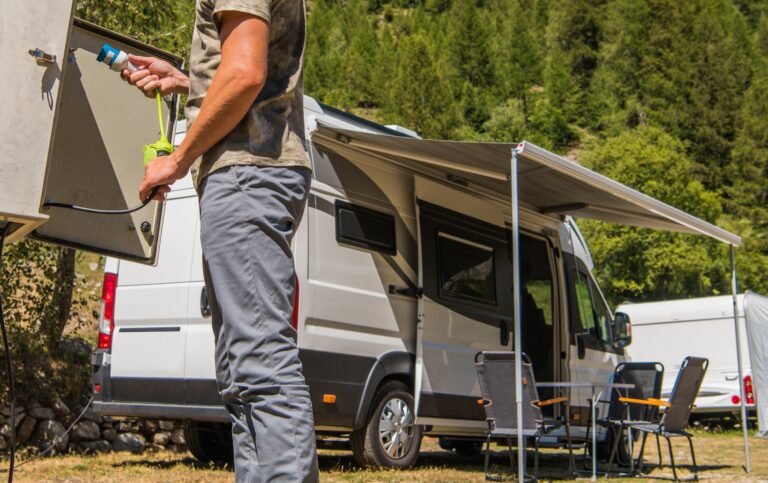
Electrical safety is important for your gear and others. Always test the electrical pedestal before plugging in. Use a multimeter to check voltage and grounding.
Check your power cord for damage before use. Don’t use damaged cords or adapters for RVs. They can cause fires and voltage issues.
Make sure electrical connections are secure. Keep panels closed and avoid tripping hazards for others.
Maintaining Distance from Neighbors
Positioning your RV with thought shows respect for others. Stay in your site and don’t invade others’. This avoids conflicts and keeps everyone’s space private.
Think about where you put your awning, slide-outs, and furniture. Don’t let them cross into other sites or block paths. Create your own space while respecting others.
Be careful with your RV’s exhaust and generator. Keep exhaust away from others and follow generator rules. This shows good RV etiquette and keeps friendships strong.
Engaging with Other Campers
The RV community is all about friendly interactions. Respectful behavior at RV parks makes everyone feel at home. It’s about knowing when to talk and when to keep to yourself.
RVers love to chat, but timing is key. We’ve learned that being friendly yet respecting space is the best way to connect.
Introducing Yourself Politely
A simple wave can break the ice with new neighbors. Timing is everything when saying hello at campgrounds. Try to avoid mornings and evenings when people are relaxing.
Great times to meet are during outdoor activities. Say hello when someone is setting up or enjoying coffee outside. Keep it short unless they want to talk more.
Don’t knock on RV doors unless it’s urgent or you’re friends. Most RVers prefer to meet outside their homes. This shows respect for their space.
Joining Community Activities
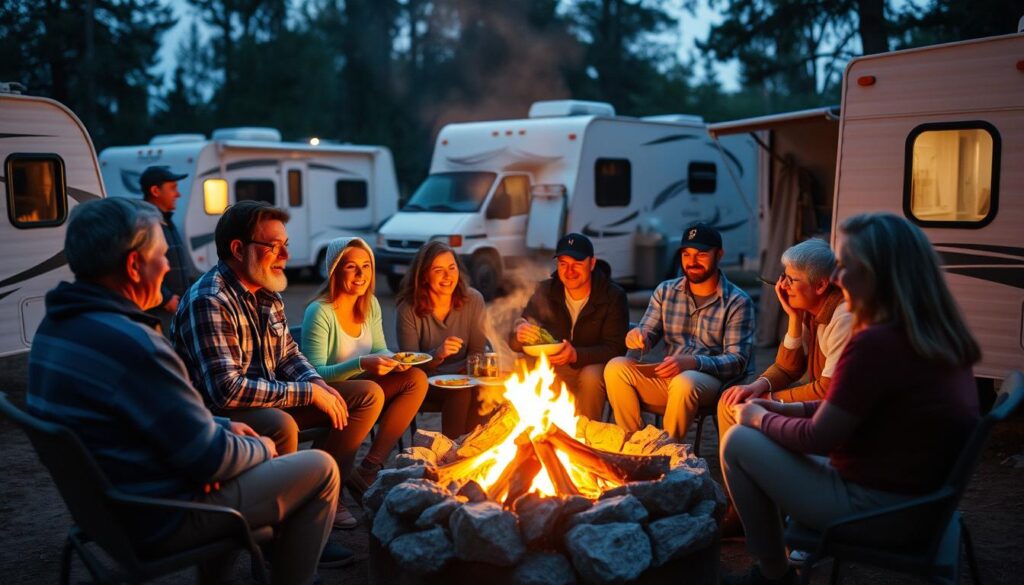
Many campgrounds have community activities for socializing. These include dinners, games, and hikes. Joining in shows you respect the community and meet new people.
Bring something to share at events. This could be food or games. It’s a great way to show you’re part of the group.
It’s okay to pick and choose activities. Quality matters more than quantity. Choose what interests you and you’ll meet like-minded people.
Respecting Privacy
Knowing when to give people space is important. Some RVers need alone time. Look for signs that someone wants privacy.
Watch for closed doors or headphones. Brief answers also mean they’re busy. Say “Enjoy your stay” and leave them alone.
Privacy boundaries also mean respecting campsites. Never cut through someone’s site and don’t look in windows. These simple rules keep everyone comfortable.
| Social Situation | Appropriate Response | Signs to Watch For | Best Timing |
|---|---|---|---|
| New neighbor arrival | Friendly wave or brief greeting | Camper is outside setting up | Mid-morning or afternoon |
| Campground activity invitation | Polite acceptance or decline | Open body language, eye contact | During organized events |
| Request for privacy | Respectful distance and quiet | Closed doors, headphones, brief responses | Early morning or evening |
| Emergency assistance | Immediate helpful response | Obvious distress or equipment problems | Any time necessary |
Being friendly and respecting space makes RV life better for everyone. It keeps the atmosphere peaceful and welcoming. By being considerate, we create a community where everyone feels at home.
Being Mindful of Pets at Campgrounds
Traveling with pets in RVs makes us responsible pet owners in outdoor spaces. RV camping etiquette includes how we care for our pets. They add joy to camping, but we must think of others and follow rules.
Most places welcome pets but have rules for safety and comfort. These rules help keep everyone safe and happy. They protect our pets and keep the peace we love in nature.
Leash Regulations
Keeping pets on leashes in public areas is key. Even friendly dogs can act differently in new places. Wildlife encounters can be dangerous for pets without leashes.
There’s also a risk of accidents with moving RVs. A leashed pet stays close and safe.
Respecting others is part of RV camping etiquette. Some people might be scared of dogs or have allergies. Others might want quiet time or have pets that could react badly.
Cleaning Up After Pets
Proper waste disposal is very important. We must always carry bags and clean up right away. This keeps places clean and shows respect for everyone.
Here are some important cleanup tips:
- Bring extra waste bags, just in case
- Use designated trash bins only
- Don’t leave bags on the ground, even for a moment
- Clean up accidents in your RV quickly to avoid smells
Managing pet behavior, like barking, is critical. Too much noise can ruin the camping experience for others. Keeping pets active, happy, and comfortable helps prevent barking.
Pet-Friendly Areas
Many places have dog parks or areas for pets to exercise. These are safe places for pets to play and get some exercise. Always check the rules and make sure pets are up-to-date on shots.
When using these areas, watch your pets closely. Not all pets get along, and we must prevent fights. RV camping etiquette means taking pets away if they act aggressively or get too excited.
A pet that gets enough exercise is more likely to behave well. Regular exercise in designated areas helps prevent problems that could disturb others.
Some places offer extra pet amenities like washing stations or agility equipment. These make camping better for pets and keep them in the right places. Always clean up after using these facilities so they’re ready for the next person.
Communal Spaces and Shared Facilities
How we treat communal spaces shows our respect for others. These areas are the heart of our temporary community. Keeping them clean makes everyone feel welcome.
Good RV neighbors take care of shared facilities. Our actions in these areas affect many families. Small gestures of cleanliness and courtesy greatly improve everyone’s stay.
Bathroom and Shower Etiquette
Bathroom facilities are busy, so we must clean up after ourselves. This means wiping down surfaces and disposing of personal items properly. We should leave the space cleaner than we found it.
During busy times, short showers are key. Limiting shower time to 10-15 minutes helps others without long waits. Bringing our own toiletries and towels is also important.
Water conservation is vital for the campground. Turning off water while soaping up saves water. Reporting maintenance issues like leaky faucets is also important.
Shared Kitchen Guidelines
Campground kitchens need immediate cleanup after use. We must wash all dishes, utensils, and cookware before leaving. Never leave dirty items for others to clean.
Respecting the fridge and storage means labeling our food. We should only use what we need and avoid taking up too much space. When we leave, we must remove our food to make room for others.
Cooking odors can stay, so using exhaust fans and cleaning surfaces well is important. Grease and food particles attract insects and make conditions unpleasant for others.
Maintaining Common Area Cleanliness
Picnic tables, fire pits, and recreational areas need our attention after use. We should wipe down tables, dispose of trash properly, and make sure fire pits are out. These actions prevent pests and keep the area inviting.
When we see litter or debris, picking it up shows community spirit. Even if we didn’t make the mess, helping keeps the campground beautiful. This positive action often inspires others to do the same.
Playground equipment and recreational facilities need gentle use and supervision. We should report any damaged equipment to prevent injuries. This ensures these amenities stay safe for all families.
Recycling and Trash Protocols
Knowing how to recycle and handle trash keeps our campsites clean. Proper waste management is more than just throwing things away. It means learning each campsite’s rules and following RV park guidelines.
Every campsite has its own way of dealing with waste. Some have detailed recycling programs, while others just collect trash. Knowing these differences before we go helps us pack right and avoid confusion.
Understanding Local Recycling Rules
Recycling rules vary by campsite, based on location and waste services. We should look up recycling options before we get there. Some parks have special bins for glass, plastic, and paper, while others just take basic recyclables.
Many camps post recycling rules near the dumpsters or in check-in materials. Reading these rules helps us avoid messing up recycling. When we sort things right, we help the campsite keep its environmental programs going.
Some remote camps have limited recycling because of distance. In these cases, we can take recyclables to nearby towns to dispose of them properly. This shows we care about the places we visit.
Proper Trash Disposal Techniques
Keeping trash containers secure keeps wildlife away and stops debris from spreading. We should use tight lids and not overfill bins to avoid attracting animals. Disposing of trash during the day helps avoid surprising wildlife at night.
Food waste needs extra care in many camps. Double-bagging smelly items and getting rid of them quickly keeps bears and raccoons away. Following these guidelines protects wildlife and other campers.
We must never leave trash bags out at night or leave waste around our site. Loose trash is a safety risk and extra work for staff. Responsible disposal keeps camping affordable and preserves nature’s beauty.
Winter Campground Considerations
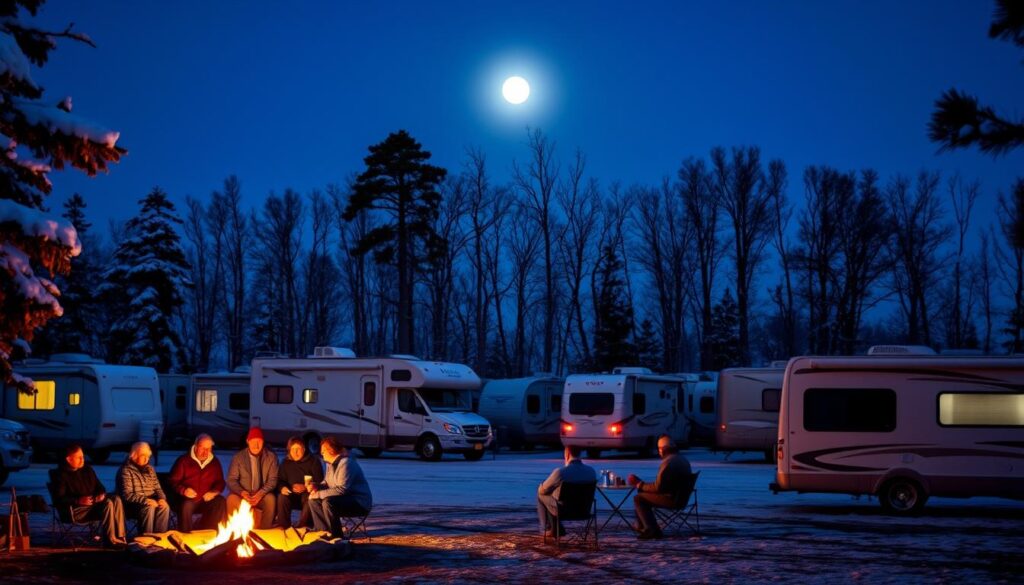
Cold weather camping brings unique challenges. We need to think about safety and proper campground behavior. Winter changes how we interact with our RV, others, and facilities.
Knowing these changes helps us stay polite, like in warmer months. Winter camping creates a sense of shared experience among us, as we face similar challenges together.
Preparing Your RV for Cold Weather
Winterizing our RV is key. It protects our investment and shows respect for the campground. We must insulate water lines and make sure our heating works well.
This stops frozen pipes from bursting. It could damage our RV and others nearby.
Our heating choices affect others. Propane heaters need good ventilation and can’t be used inside. Electric heaters might overload the campground’s power, so we should check with management.
Skirting our RV keeps it warm and quiet. It saves energy and reduces noise that might disturb others during quiet hours.
Ice and Snow Safety Tips
Icy conditions are a big safety issue. We must clear walkways and use ice melt or sand to prevent slips. Maintaining clear paths helps emergency vehicles reach all areas if needed.
Removing snow is a team effort. We should clear our site and help with common areas. This shows respect for the campground during tough weather.
- Keep steps and entry areas free of ice buildup
- Use non-slip mats outside RV doors
- Clear snow from around electrical connections
- Maintain visibility of site markers and fire hydrants
Driving slowly on campground roads is important. Winter conditions make even short distances treacherous, so we need patience when moving our RV or vehicles.
Finding Winter-Friendly Campgrounds
Not all campgrounds stay open in winter. We should find out which ones do and what services they offer. Some may close sections or limit amenities during cold weather.
Calling ahead is a good idea. Winter-friendly campgrounds usually have heated bathhouses, snow removal, and enough power for heating.
Location is key in winter. We want campgrounds with easy road access and close to emergency services. Remote places can be dangerous during winter storms.
Understanding seasonal pricing helps us budget. Many campgrounds have lower rates in winter. But, we should check what services are available at these prices.
Seasonal and Temporary Camping Nuances
Knowing when to camp helps us follow unspoken rules for RVing better. Campgrounds change a lot with the seasons. This affects how we meet people and our daily life.
Summer is for families and weekend trips. Winter is for those who want to escape cold. Knowing these patterns helps us fit in better.
Long-term vs Short-term Stays
Long-term campers are like the welcome team. They know the best spots and tips. They share this info with newbies.
Short-term visitors bring new ideas. We can join in and share our stories. It’s about being part of the group without disturbing others.
How long we stay changes how we set up. Long stays mean we can get creative. Short visits mean we keep it simple to not bother others.
Reservation Tips for Peak Season
Booking early is key in busy times. Places fill up fast, like during holidays. Booking early saves us from missing out.
Busy times mean longer waits and more noise. Being polite and considerate is important. Small actions like shorter showers help everyone.
Being flexible with dates can lead to better spots. Mid-week is often quieter than weekends.
Flexibility in Plans
Things like weather can change our plans quickly. Being flexible shows we’re part of the RV family. Having backup plans helps when things go wrong.
Talking to campground staff helps when plans change. They usually want to help and find solutions.
| Stay Duration | Community Role | Setup Approach | Social Integration |
|---|---|---|---|
| Weekend (1-3 days) | Visitor | Minimal, efficient | Friendly but brief |
| Weekly (4-7 days) | Temporary resident | Moderate comfort | Active participation |
| Monthly (2-4 weeks) | Community member | Full setup | Leadership roles |
| Seasonal (1-6 months) | Local expert | Permanent arrangements | Mentoring newcomers |
Knowing these camping tips helps us be a good part of any campground, no matter how long we stay.
Navigating Conflicts and Issues
When RV neighbors get upset, it’s important to talk things over quickly and nicely. Even the most polite campers might disagree with others. The secret to keeping peace is to be diplomatic and understanding.
Most fights start from not understanding each other, not from being mean. Being kind and trying to see things from another’s point of view can turn arguments into chances to make friends. Good etiquette for RVers means being kind, even when things get tough.
Handling Noise Complaints
Noise problems are the biggest cause of fights in campgrounds. When talking about loud noises, how and when you say it matters a lot. It’s best to talk about it when it’s light outside, when people are more open to listening.
Start by saying hello if you haven’t met your neighbors yet. Saying “Hi, I’m camping next door” sets a good tone. Then, talk about your problem using “I” statements, not blaming them.
For example, say “I’m having trouble sleeping with my windows open” instead of “You’re being too loud.” This way, you talk about your problem, not theirs. Most people are willing to listen and change if asked nicely.
If talking directly doesn’t solve the problem, tell the campground staff. They know how to handle these situations and can deal with repeat problems.
Resolving Parking Disputes
Parking fights often happen because of unclear boundaries or misunderstandings. It’s better to prevent problems than to fight about them. Before setting up, check your site’s edges to know where you are.
If someone is in your space, talk to them calmly with your map or reservation. Many parking fights are just mistakes. Be kind and find a solution that works for both.
When talking about blocked paths or shared areas, pick the right time. Talk to them when they’re not busy, like when they’re relaxing outside. This considerate timing helps get a better response.
Keep records of parking problems with photos and times. This helps the campground staff fix ongoing issues.
Reporting Unsafe Conditions
Any safety concerns need to be told to the campground staff right away. Don’t try to handle safety issues yourself. This includes electrical dangers, broken structures, or aggressive behavior.
When you report a safety issue, give all the details you can. Where it is, what the problem is, and any dangers it poses. Photos help staff see the problem fast.
Don’t try to fix safety problems yourself, even if you can. It’s not safe and could get you in trouble. Your job is to tell the staff and warn others about dangers.
Good etiquette for RVers means caring for everyone’s safety. Most problems can be solved by talking nicely and quickly. This keeps the whole campground happy and safe.
Leaving a Positive Impact
Our journey through RV campground etiquette reaches its most rewarding destination. We move from following rules to creating lasting positive change. The best camping experiences come when we give back to the communities and spaces that welcome us.
Volunteer Opportunities
Many campgrounds offer volunteer programs. We can contribute our skills and time. From maintenance projects to group activities, these opportunities let us connect with others while improving facilities for everyone.
Respectful behavior at RV parks goes beyond basic courtesy. It involves active participation in community building.
Supporting Local Businesses
We become ambassadors for the places we visit by shopping at local stores. We dine at family-owned restaurants and use regional services. This economic support helps preserve the unique character of destinations.
It gives us authentic experiences that chain establishments can’t provide.
Leaving Your Site Better Than You Found It
The golden rule of camping is to leave our site in better condition than we found it. This means picking up litter and reporting maintenance needs. Sometimes, we make small improvements like clearing debris or organizing storage areas.
These simple acts create a positive cycle. Each camper benefits from the care of those who came before.
When we embrace these principles, we become valued community members. We help preserve these special places for future generations.