Road life is full of amazing adventures and freedom. But, it also brings unique mental health challenges. Coping with loneliness or stress is a big part of our journey.
Research shows loneliness is like our body’s alarm. It tells us when something important is missing. We might feel disconnected from friends and support networks we once had.
Many of us face emotional challenges of full-time RVing that surprise us. We miss our old routines, friends, and a sense of belonging. These feelings are normal and happen to many RVers.
Understanding these emotions helps us be kind to ourselves. When we see loneliness and stress as valid responses, we can manage them better. We can enjoy the amazing opportunities of mobile living while taking care of our mental health.
Key Takeaways
- Loneliness and stress are normal parts of transitioning to full-time RV living
- These emotions serve as warning signals that our social connections need attention
- Missing familiar routines and communities is a natural response to major life changes
- Self-compassion is essential when dealing with challenging emotions on the road
- Healthy coping strategies can help us manage stress while enjoying RV adventures
- Recognizing these feelings as valid helps us address them more effectively
Understanding the Emotional Impact of RV Living
RV living brings both joy and stress. It’s a mix of feelings that change fast. Managing emotions on the road is key for RVers.
Our health depends on social connections. RV life means less time with loved ones. This choice affects us in ways we might not see coming.
The Allure of Freedom and Adventure
RV living offers true freedom. We wake up to new views every day. It lets us explore the country at our pace.
Adventure is our daily friend in this lifestyle. We meet new people and discover cultures. We make memories that regular vacations can’t.
Having fewer things helps us see what’s important. We enjoy simple things like a great campsite. This simple life makes us happier and less stressed about stuff.
Challenges of Nomadic Lifestyles
The nomadic life has its own emotional challenges. RV life coping strategies help with constant decisions. Where to go next? How long to stay? These choices can be hard without routines.
Social isolation is a big challenge. We miss family and friends. It’s hard to keep close connections while always moving. For RVers, this stress is real.
Mechanical issues and weather delays add to the stress. Finding campsites and dealing with problems can turn our dream into stress. These challenges don’t lessen the RV lifestyle’s worth. But knowing them helps us cope better.
Common Emotional Challenges Faced by RVers
Traveling in an RV brings special mental health in RV living challenges. The freedom of the road is amazing, but it also has emotional hurdles. These challenges can hit anyone, no matter how long they’ve been traveling or how well they’ve prepared.
Loneliness hits people differently, based on their personality. Shy or shy people face more risks. Young adults feel loneliness the most, which is key for young RVers to know.
Loneliness on the Road
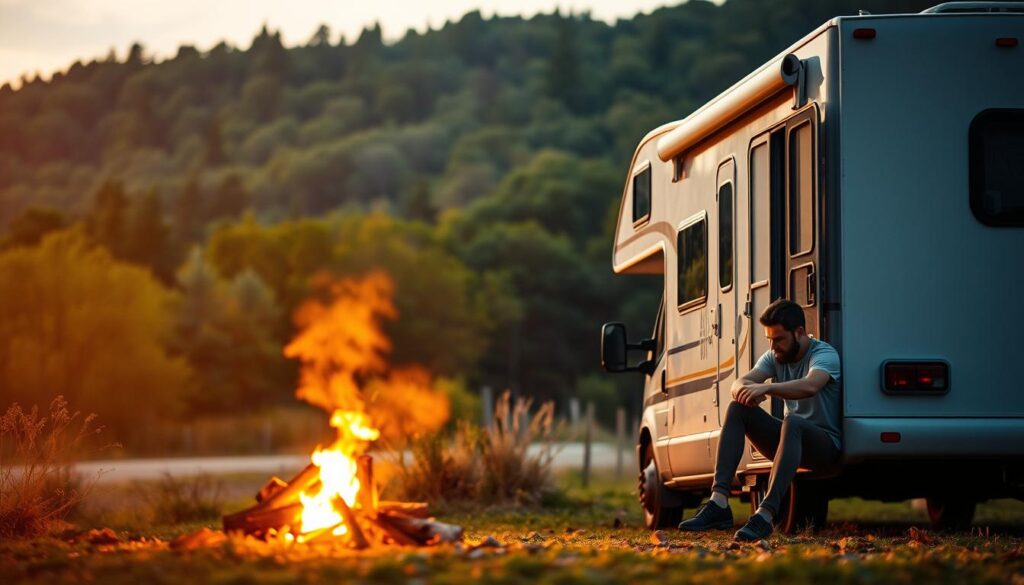
Handling loneliness as a RV traveler is tough. We’re always around people but struggle to connect deeply. We meet others every day, but these connections are shallow.
This loneliness is different from being alone at home. Even in crowded RV parks, we can feel isolated. The challenge isn’t about being around people—it’s about finding genuine connection. We miss having neighbors who know our stories or friends we can call during tough moments.
Our temporary encounters make it hard to open up. We know we’ll leave soon, so we don’t form deep bonds. This makes us feel even more isolated.
Stress from Travel Logistics
Travel logistics stress us out, even for experienced RVers. We make decisions about routes, weather, and campsites. Each choice affects our safety, comfort, and budget.
Mechanical issues add to the anxiety. When our RV breaks down, it’s not just a transportation issue—it’s a housing problem. Finding reliable repair services in unfamiliar areas is very stressful.
The mental load of planning never stops. We research destinations, check road conditions, and watch the weather. This constant planning is exhausting, even when plans change.
Adjusting to Constant Change
Living with constant change is hard. While variety is attractive, it makes us feel ungrounded. We miss the comfort of familiar places and doctors.
The absence of routine affects our mental well-being more than we realize. Our brains need predictability, and constant change triggers anxiety. We’re always adapting to new places, which takes mental energy.
Small spaces make these challenges worse. When we’re feeling overwhelmed, we can’t retreat to separate rooms. Privacy is limited, and we must deal with emotions in small spaces. This makes emotional challenges harder on our mental health in RV living experience.
Building Connections While Traveling
It’s easier to make friends on the road with community events and tech. The nomadic life doesn’t mean being alone. We can make real friends that make our travels better and help with stress management for RVers.
Studies show sharing life on social media makes us feel less lonely. It’s better than just watching others’ posts. This shows how important it is to be active in building our support network.
Joining RV Clubs and Communities
RV clubs connect us with people who get our lifestyle. Groups like Good Sam Club and Escapees RV Club have rallies and meetups. These events often lead to lasting friendships.
Brand-specific groups also offer great connections. Whether we have a Winnebago, Airstream, or other RV, these clubs help. They have networks for support that go beyond just socializing.
RV communities are great for technical advice and emergency assistance. They help with mechanical issues and recommend repair shops. This support system lowers our stress and boosts our confidence on the road.
Utilizing Social Media for Support
Social media has changed how we connect with friends and RV buddies. Facebook groups for RVing offer advice and support anytime. Groups like “RV Life” and “Cheap RV Living” have thousands of members ready to help.
Instagram accounts with travel stories inspire us and show us new places. Apps like Campendium and RV Life help us find community wherever we go. These platforms mix useful info with social connections.
Being active on social media is key. Share your own stories, ask questions, and help others. This way, we fight loneliness and build real connections that make our travels better.
We can also use video calls to stay in touch with loved ones. Set up weekly calls or virtual dinners to keep those bonds strong while we travel.
Tips for Managing Loneliness
Living in an RV can make us feel lonely. But we can fight this by making meaningful social connections. These connections give us warmth and show us we’re valued.
We need to work on keeping our current friends close. And also make new ones as we travel.
“People need intimacy, warmth, a sense of self-worth and frequent confirmation that they are of value to others.”
To beat loneliness, we must plan our social time. Just waiting for chance meetings won’t fill our emotional needs.
Staying Connected with Family and Friends
Regular calls with family and friends are key. They keep our emotional ties strong. These calls give us something to look forward to.
Video calls with family let us share our adventures. Joining virtual book clubs keeps us connected through shared interests. Streaming movies together online also helps us feel close, even when apart.
It’s important to keep our relationships strong. Regular talks show our loved ones we care. It also helps us feel supported on the road.
Getting Involved in Local Communities
Getting involved in local activities helps us meet new people. We don’t need to make lifelong friends everywhere. But, we can make positive connections that show we’re valued.
Volunteering at places like food banks or animal shelters gives us purpose. It connects us with others who share our values. Going to community events like farmers markets or festivals lets us experience local culture and meet people.
Even short-term activities can help us feel connected. They remind us we’re part of a bigger community, not just solo travelers.
By keeping old friends close and making new ones, we build a network of support. This network travels with us, supporting our emotional well-being wherever we are.
Stress Management Techniques for RV Life
Living on the road has its own stressors. Changes in environment, navigation, and social isolation can cause anxiety. It’s important to find ways to manage stress to stay mentally healthy while enjoying RV life.
Stress can raise cortisol levels and weaken our immune system. When we face isolation and anxiety, our body’s stress response is triggered. This can affect our sleep, digestion, and mood. Knowing how our body reacts helps us know when to use stress-reduction methods.
Practicing Mindfulness and Meditation
Mindfulness is a great tool for managing stress and anxiety while traveling. Simple breathing exercises can calm us down when faced with unexpected challenges or new places.
Start with just five minutes of meditation each day using apps like Headspace or Calm. These sessions help us stay focused, even when everything changes. Deep breathing techniques are helpful during stressful driving or RV issues.
Being mindful of our surroundings brings peace and connection with nature. Watching the sunrise or listening to the wind can shift our focus to the present moment.
Maintaining a Healthy Routine
Having a routine gives stability in the freedom of RV life. Consistent routines reduce stress and give our minds and bodies what they need during travel.
Wake up at the same time every day, even when traveling across time zones. This helps our body’s clock and improves sleep. Morning routines like stretching, journaling, or enjoying coffee can be calming.
Exercise is easy to do anywhere and lowers stress hormones. Walking, yoga, or hiking keeps us physically and mentally healthy.
Planning and preparing meals is another routine that helps. Preparing healthy meals gives us control over our health, which is key when coping with isolation and anxiety in RV life. Good nutrition boosts our mood and energy.
Embracing Solitude
Knowing the difference between loneliness and chosen solitude helps us grow. Loneliness is painful and unwanted. Solitude is a choice to spend time alone for personal growth. This is key for RVers who want to enjoy their journey.
Embracing solitude turns tough moments into chances to grow and refresh. Seeing alone time as a gift lets us fully enjoy RV life. Solitude teaches us about ourselves, revealing parts we never knew.
Finding Joy in Alone Time
Finding joy in solitude means seeing it as a chance to be free. We can move at our own pace, without worrying about others. This mindset opens up new ways to find happiness.
Creative activities thrive when we’re alone. Many RVers start new hobbies they never had time for before:
- Writing and journaling to share our adventures
- Photography to capture new sights
- Painting or sketching to express our travel-inspired art
- Reading to explore new worlds
- Learning new skills through online classes
These activities turn alone time into meaningful self-engagement. We discover talents and interests we never knew we had.
Exploring Nature as a Solace
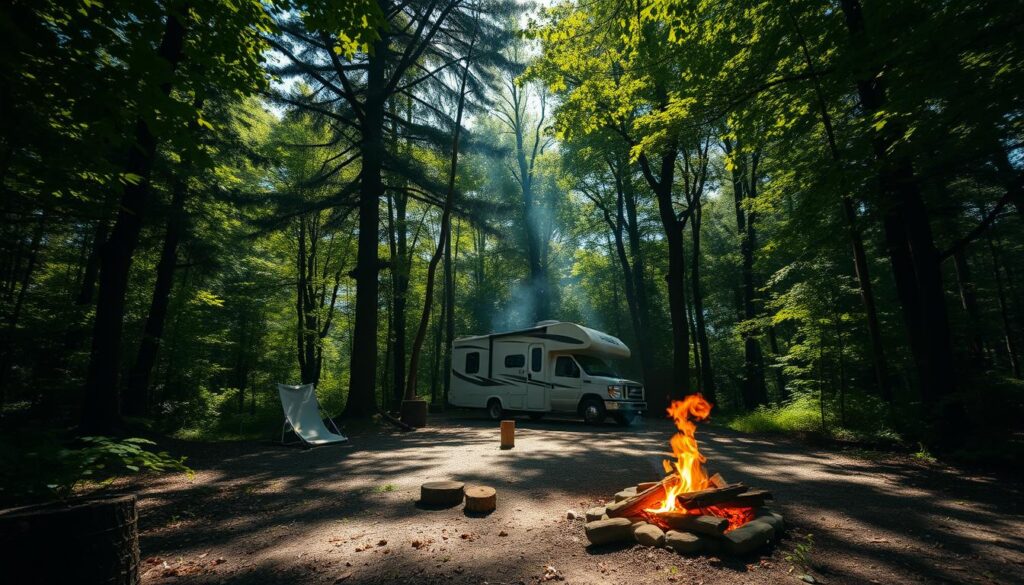
Nature is a great way to fight off loneliness and stress. Being in nature makes us feel connected to something bigger than ourselves. This connection is different from human relationships.
Nature’s healing power is seen in many ways on RV trips. Watching a sunrise reminds us of life’s renewal. Listening to waves or sitting in a forest calms our minds.
These experiences help us see our problems in a new light. Nature doesn’t judge us – it just exists, inviting us to be present.
Spending time in nature also boosts our mood and energy. Fresh air and natural light make us feel better. Physical activities like hiking release stress and boost happiness.
By embracing solitude and nature, we turn RV challenges into opportunities for growth. Solitude is something we seek for self-discovery and peace.
The Role of Pets in RV Living
Many RVers find that pets are key in handling life’s ups and downs on the road. Pets offer comfort and stability that helps us deal with nomadic living’s challenges. The bond between us and our pets is special. It helps us feel less stressed and more rewarded.
Our pets give us love without any judgment. They create a safe space for us to be ourselves. This is very important when we feel disconnected or overwhelmed.
Companionship on the Road
Having pets changes the RV experience. They’re always there for us, whether we’re watching a sunrise or feeling lonely. Dogs and cats help us stay structured with their care needs.
These needs include feeding, walking, grooming, and playing. This routine gives us purpose and grounding when things are uncertain. Caring for our pets is a constant and meaningful task.
Pets also help us meet new people. At dog parks, pet-friendly stores, or campgrounds, we meet fellow pet owners. These interactions help us find our tribe on the road.
“A dog is the only thing on earth that loves you more than he loves himself.”
Caring for Your Pet’s Emotional Needs
While our pets support us, we must remember they have feelings too. Animals can get stressed from travel and new places. It’s important to recognize and address their emotional needs for successful RV living with pets.
We should give our pets familiar items like favorite toys or blankets. These items help them feel secure in new places. Keeping routines consistent also helps reduce their anxiety.
Providing enough exercise and mental stimulation keeps our pets happy and healthy. This might mean longer walks or puzzle toys during travel. We should also watch for signs of stress or behavioral changes in our pets.
Some pets adapt quickly to RV life, while others need more time and patience. Every animal is different, and we must be sensitive to their needs. If our pet shows ongoing stress or behavioral changes, we may need to adjust our travel pace or seek veterinary advice.
The bond we share with our pets while RVing is unique. They depend on us, and we benefit from their companionship and love. This relationship enriches our journey and helps us thrive emotionally on the road.
Creating a Comfortable Home Base
Thriving in RV life starts with a cozy home base. Studies show stable places help us grow well. But chaotic places can hurt our feelings. A comfy RV home base is key for good mental health.
Our RV life doesn’t mean we lose home comfort. We can keep our emotional balance by choosing our space and habits wisely. This way, we enjoy RV freedom while feeling secure.
Personalizing Your RV Space
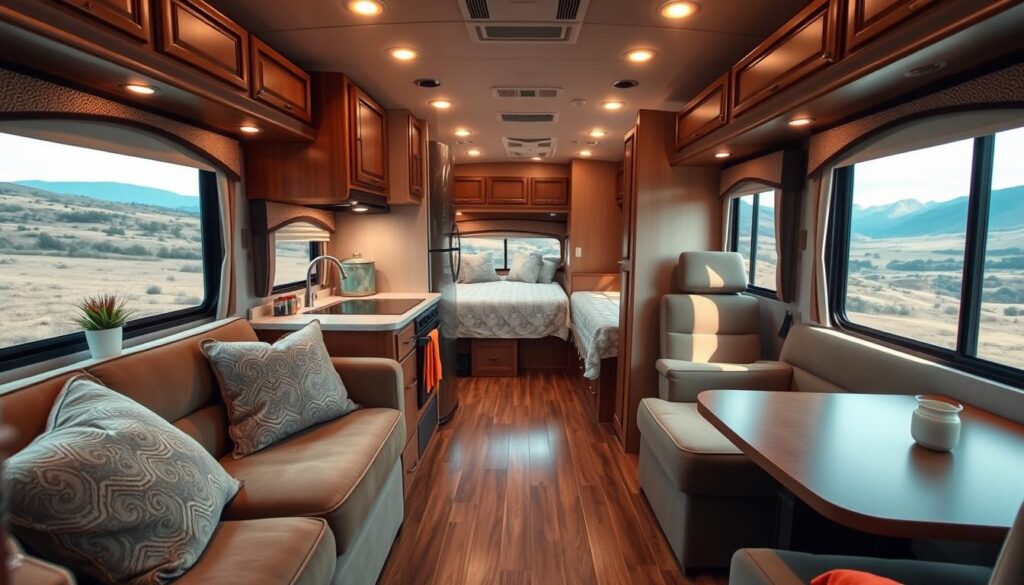
Our RV becomes home with meaningful items. Family photos, favorite artwork, and mementos bring joy and comfort. They remind us of our values, no matter where we are.
Small changes make a big difference. A piece of art, fresh flowers, or favorite blankets and pillows can make our space cozy. These touches help us relax and reflect.
We don’t need to fill our RV with everything. Choosing special items makes our space uniquely ours. A favorite mug, book collection, or travel crafts can make our RV special.
“Home is not where you are born; home is where all your attempts to escape cease.”
Lighting is key for ambiance. String lights, table lamps, or candles warm up our space. Colorful curtains or throw rugs add personality and warmth.
Establishing a Routine
Routines give us a sense of security, even when we move often. Morning and evening rituals bookend our days. They help us feel comfortable and in control.
Morning might include coffee, checking the weather, or journaling. Evening might be tidying up, planning, or reading. These moments bring stability to our fluid lifestyle.
Weekly routines also help. We might set days for laundry, shopping, or cleaning. Some RVers plan trips or connect with family weekly.
Finding the right balance is key. Our routines should support us, not limit us. We can always take breaks for adventures, knowing our routine will be there.
Work and hobby schedules are part of our routine. Regular hours for work, creative time, or exercise ground us. Consistency in these areas supports our emotional health on the road.
Seeking Professional Help When Needed
Living in an RV doesn’t mean we have to face emotional struggles alone. While many challenges can be managed by ourselves and our community, some need a mental health professional’s help. Research shows that loneliness is correlated with depression, anxiety, substance use problems, and other mental health conditions.
Knowing when we need extra support is a sign of strength. Professional help is key when our usual ways of coping don’t work. It’s also needed when emotional challenges start to affect our daily life.
Recognizing Signs of Deeper Emotional Struggles
There are warning signs that tell us when we need professional help. Persistent feelings of sadness or hopelessness that last for weeks or months are a sign. These feelings can cloud our travel experiences.
Anxiety that stops us from doing daily activities or making decisions is a red flag. If worry stops us from enjoying places or making travel plans, we need help. Changes in sleep patterns, appetite, or energy levels that last too long also need attention.
Not caring about activities we used to love is concerning. If we’re no longer excited about exploring or meeting new people, help can bring back our joy.
Thoughts of self-harm need immediate help. Also, using alcohol or other substances to deal with loneliness or stress is a sign we need support.
Resources for Mental Health Support
Mental health resources are now easier to find for RVers. Teletherapy services let us keep in touch with mental health pros as long as we have internet.
Many insurance plans cover online therapy. For those without insurance, there are affordable options online. It’s important to find a provider who gets the challenges of RV living.
Crisis hotlines are always available. The National Suicide Prevention Lifeline (988) offers help anytime. Some groups focus on supporting RVers.
| Resource Type | Accessibility | Cost Range | Best For |
|---|---|---|---|
| Teletherapy Platforms | Internet Required | $60-200/session | Ongoing Support |
| Crisis Hotlines | Phone Access | Free | Immediate Help |
| Insurance-Covered Therapy | Provider Network | Copay Only | Regular Treatment |
| Community Mental Health | Location-Based | Sliding Scale | Local Resources |
Community mental health centers offer services to travelers. They have sliding-scale fees, making help more affordable for RVers.
Online support groups for RVers are also growing. These groups offer peer support and professional advice, a great resource for our community.
Remember, seeking help is a proactive step for our mental health. Professional support can give us tools and strategies to handle the emotional side of RV living better.
Celebrating the Journey
Our RV adventure is more than just traveling. It’s about facing the unknown and finding ourselves. Every roadblock helps us grow stronger and wiser.
Reflecting on Personal Growth
Living in an RV changes us deeply. We learn to solve problems in new ways. Overcoming tough times builds our confidence for the future.
Writing in a travel journal helps us see our growth. Looking back, we see how much we’ve changed inside.
Meeting new people on the road changes how we see ourselves. It shows us we can overcome challenges and make real connections anywhere.
Finding Purpose in the RV Lifestyle
Our journey is about more than seeing sights. It’s about living simply, connecting with others, and proving we can thrive outside the norm. This lifestyle matches our values. It keeps us going through hard times and reminds us why we started.
The RV lifestyle teaches us that home is not just a place. It’s the peace we find within ourselves, no matter where we are.