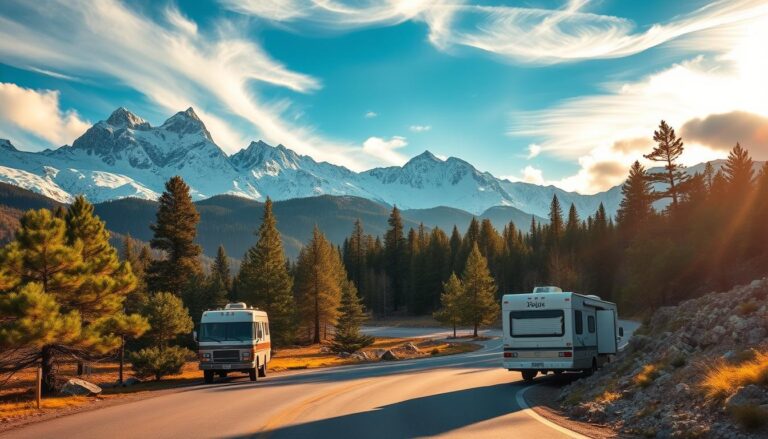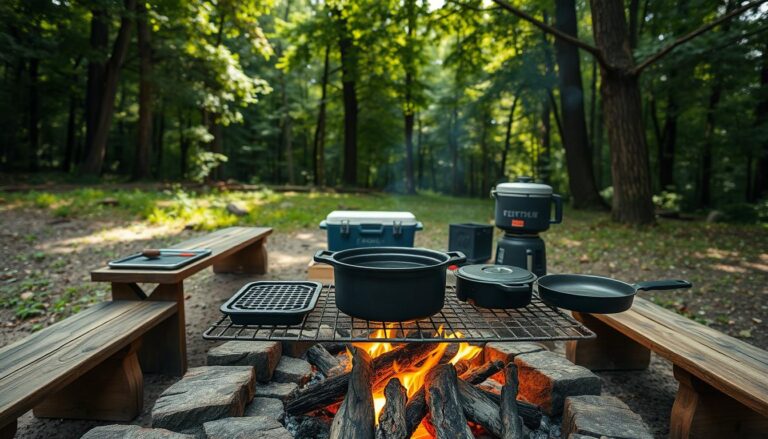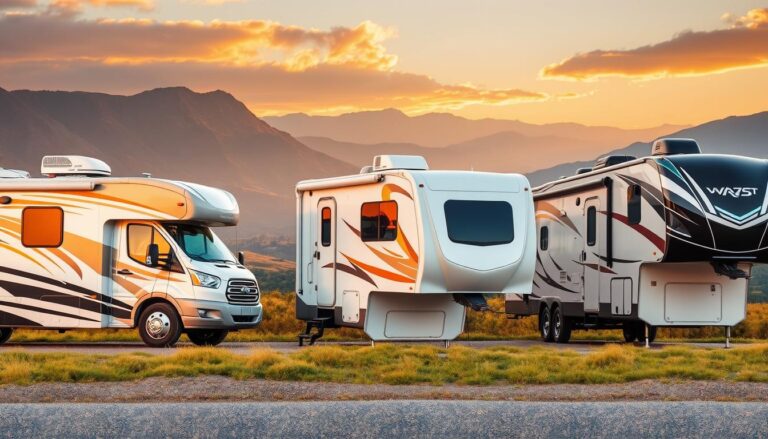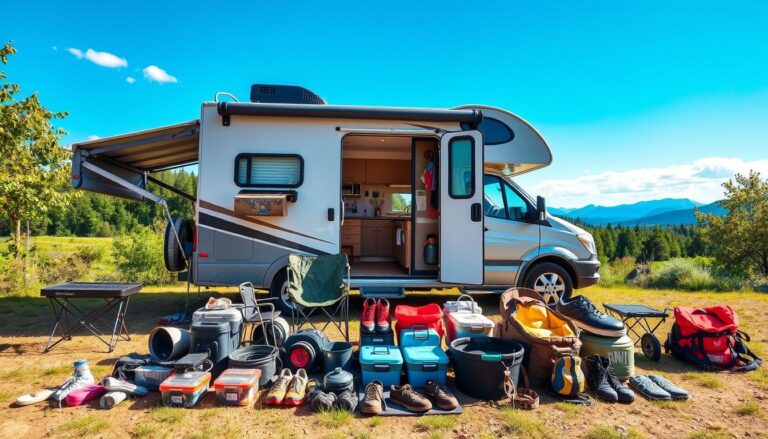
Do you dream of traveling in your motorhome? This life-changing decision brings excitement and questions. The biggest worry is understanding the costs of this lifestyle.
Seasoned travelers share their experiences. Kaylee Techau’s family spends between $2,500 and $6,000 monthly. Solo traveler Carolyn spends about $2,500. Peggy Dent averages $4,500 per month.
These travelers stress the importance of emergency funds and realistic planning. We’ll show you how to make your own RV living budget using their tips.
This guide uses expenses from many full-time travelers. You’ll learn about campground fees, fuel, maintenance, and fun. It helps you plan a budget for your journey.
Key Takeaways
- Monthly expenses for full-time RV living range from $2,500 to $6,000, based on travel style and preferences.
- Solo travelers can manage costs around $2,500 monthly with careful planning and budgeting strategies.
- Emergency funds are essential for unexpected repairs, medical expenses, and seasonal cost fluctuations.
- Realistic budgeting based on actual experiences prevents financial stress and ensures sustainable travel.
- Major expense categories include fuel, campground fees, food, insurance, and vehicle maintenance.
- Travel style significantly impacts monthly costs – slower travel and longer stays reduce expenses.
Understanding the Costs of Full-Time RV Living
Before we make your monthly budget, let’s look at all RV living costs. Many dream of RV life but are surprised by hidden costs. We’ll cover every cost so you can plan well.
RV life costs more than just your monthly payment. You’ll have upfront costs, monthly bills, and variable expenses. Knowing these helps avoid surprises.
“The biggest mistake new RVers make is underestimating the true cost of full-time living. It’s not just about the RV payment – it’s about fuel, maintenance, insurance, and campground fees that add up quickly.”
Initial Investment – RV Purchase and Setup
Your full-time RV expenses start with a big upfront cost. RV prices vary a lot, from $15,000 for a used trailer to over $500,000 for a luxury motorhome.
But buying the RV is just the start. You’ll need to make it ready for full-time living. This includes electrical upgrades, better insulation, and more storage. Setup costs usually range from $5,000 to $15,000.
Don’t forget about the tools and supplies you’ll need. You’ll need kitchen stuff and tools for maintenance. Plan to spend $3,000 to $8,000 on these essentials.
Ongoing Expenses – Fuel, Maintenance, and Insurance
Your monthly RV living costs include fuel, maintenance, and insurance. Fuel costs $375 to $650 monthly, based on how much you travel and your RV’s size. Bigger RVs use more fuel.
Maintenance costs are $135 to $235 monthly. This covers regular care, repairs, and preventive work. Smart RVers save money each month for emergencies.
Insurance costs $100 to $175 monthly. Your rate depends on your RV’s value, coverage, and driving record. Full-time RV insurance is different from recreational policies, so shop for full-timer coverage.
Campground Fees vs. Free Camping Options
Camping costs vary a lot. Free camping (boondocking) costs nothing but limits your amenities. You’ll use your RV’s systems for power, water, and waste.
Campground fees range from $25 to over $100 nightly. State parks cost $20 to $40, and private parks with full hookups are $35 to $65 nightly.
Many full-timers mix free camping with paid spots. They boondock for two weeks, then use a campground for a few days to restock. This keeps costs down while keeping comfort up.
Your camping choices affect your budget. Pure boondockers spend zero on camping, while resort lovers might spend $3,000 monthly. Most find a balance that fits their lifestyle and budget.
Creating a Comprehensive Budget
Creating a budget is key for RV living. It’s different from home budgeting because you move a lot. You need a budget that covers your daily needs and unexpected costs.
The secret to good budgeting tips for RV living is knowing three main parts. These parts help make a budget that works for you and keeps you safe from money worries.
Identifying Fixed and Variable Expenses
Fixed expenses stay the same no matter where you go. These are things like RV loan payments, insurance, and phone bills. Knowing these costs helps us figure out our monthly spending.
Variable expenses change based on where you go and what you do. Fuel costs go up or down with how far you travel. Campground fees also change a lot.
Maintenance and repair costs can surprise you. Some months you might not spend anything, but others might need big repairs. Tracking these costs helps us see our true living costs.
Establishing an Emergency Fund
An emergency fund is a must for RV living. Experts say keep at least $3,000 to $5,000 for emergencies. This money is for sudden breakdowns, medical needs, and urgent repairs.
Carolyn, a full-time RVer, spent over $10,000 on repairs in her first year. She had to fix her transmission, air conditioning, and tires in different states.
Having this fund before you start your trip keeps you from financial trouble. Try to save six months of expenses after your basic emergency fund. This extra money gives you peace of mind and flexibility.
Factoring in Lifestyle Preferences
Your budget should match how you want to live, not just survive. Some RVers like luxury resorts, while others prefer free camping spots.
Think about how you eat when planning your budget. Do you like cooking in your RV or trying new restaurants? Both choices need different budgets.
Entertainment and activities also vary. Things like national park passes and museum tickets affect your spending. Knowing what you like helps make a budget that improves your RV life.
Your preferences might change as you travel. Having a flexible budget helps you adapt without money worries.
Crafting Your Monthly Budget Plan
Creating a good RV lifestyle budget is more than just knowing your expenses. It’s about making a monthly plan that fits your travel style. We’ll show you how to make a budget that works for you. This includes looking at real examples, planning for the seasons, and picking the right tools to keep your money in order.
Your budget is like a compass on the road. It helps you decide where to park and how often to eat out. Let’s get into the details of making a budget that supports your dreams and keeps your money safe.
Sample Budget Breakdown for a Full-Time RV Lifestyle
Real RVers share their spending to help you see what a monthly budget for full-time RVing looks like. Their budgets vary from under $1,000 to over $6,000 a month. This depends on how much you travel, where you stay, and your lifestyle.
Kaylee’s family shows how to organize your expenses into three main areas. These areas cover most of your spending.
| Budget Category | Low-End Range | Mid-Range | High-End Range |
|---|---|---|---|
| Home & Utility | $300 | $1,500 | $3,000 |
| Transportation & Fuel | $400 | $500 | $800 |
| Living Expenses | $300 | $550 | $800 |
| Total Monthly | $1,000 | $2,550 | $4,600 |
The Home & Utility category includes things like campground fees and RV maintenance. This category varies a lot because it depends on your camping style. Boondocking enthusiasts spend less, while those who prefer resorts spend more.
Transportation costs stay pretty consistent. Most RVers spend $400-$800 a month on fuel. Living expenses cover food, entertainment, and personal items.
Adjustments for Seasonal Travel
Your RV lifestyle budget needs to be flexible for seasonal changes. Winter can mean higher heating costs, while summer might increase fuel expenses but lower heating bills.
Many RVers move with the weather, going south in winter and north in summer. This affects your budget in several ways. Seasonal campground pricing can double or triple in peak seasons.
It’s a good idea to have two budgets: one for busy months and another for when you’re staying in one place. In busy months, add 30-50% to your fuel budget. When you’re not moving, cut transportation costs but might spend more on utilities.
Consider these seasonal adjustments:
- Winter heating costs: Add $100-$300 monthly for propane or electric heating
- Summer cooling: Budget extra for air conditioning and campground electrical hookups
- Holiday travel: Increase campground fees by 25-50% during peak seasons
- Weather delays: Keep extra funds for unexpected extended stays
Utilizing Budgeting Tools and Apps
Today’s technology makes tracking your monthly budget for full-time RVing easy. Successful RVers use tools to keep an eye on their spending and stay within their budget.
Mint.com is a favorite among RVers. It’s free, connects to your bank accounts, and categorizes expenses automatically. It also sends real-time spending alerts and helps you spot spending patterns.
Other good tools include:
- YNAB (You Need A Budget): Great for zero-based budgeting
- Personal Capital: Excellent for tracking investments and net worth
- Simple spreadsheets: Google Sheets or Excel for basic tracking
- Envelope method apps: Digital versions of cash envelope budgeting
Pick tools that fit your tech comfort level. Simple solutions often work better than complex ones you won’t use. The key is to track your spending regularly, not to have fancy features.
Set up automatic categorization in your chosen app. This saves time and ensures consistent tracking. Check your budget weekly at first, then monthly once you get into a routine.
Remember, your budget should change as you learn more about your spending. The goal is to create a financial plan that supports your RV dreams.
Tracking Expenses on the Road
When your home moves every week, tracking expenses is key. RV living brings unique money challenges. Saving money while living in an RV means knowing where every dollar goes.
RVers face changing costs like gas and camp fees. Unexpected repairs can also pop up. This makes budgeting tricky.
Importance of Regular Expense Monitoring
Tracking expenses daily is like having a financial compass. Regular tracking helps you spot spending patterns early. This way, you can avoid big spending problems.
Nikki and Richard set a daily spending limit of $100. This helps them stay on budget. Saving money while living in an RV is easier with clear daily targets.
Weekly budget reviews show the big picture. You can see where you’re spending too much. This helps you make changes before it’s too late.
Setting Up a Simple Expense Tracker
Your tracker should work without internet. A notebook and pen can be as good as apps. The key is consistency, not complexity.
Make categories like fuel, groceries, and maintenance. Track every purchase right away. This stops small costs from adding up.
Many RVers use apps like Mint or YNAB. Saving money while living in an RV means using tools that fit your travel life.
Tips for Staying Within Your Budget
Set daily spending alerts on your phone. When you hit 75% of your budget, pause and think. This stops you from buying things you don’t need.
Use the envelope method for fun money. Put cash for dining and souvenirs in envelopes at the start of the week. When it’s gone, you’re done spending.
Check your budget every Sunday night. This weekly ritual helps you prepare for the upcoming week and make needed changes. Celebrate when you stay under budget and learn from when you don’t.
Managing Food Costs While Traveling
Smart food planning can turn a big expense into a budget-friendly category. Food costs can vary from $300 to $800 a month. Your full-time RV budget template needs to be flexible in this area because food expenses change a lot while traveling.
Some RVers, like Carolyn, spend $430 a month on organic vegan food and supplements. Others manage with a basic grocery budget under $300. The key is to find strategies that fit your lifestyle and diet.

Meal Planning and Preparation Tips
Meal planning in an RV is different from home cooking. Space limitations mean every ingredient must be versatile. Plan meals around ingredients like eggs, rice, and canned beans.
Batch cooking saves time and propane. Make big batches of soups, stews, and casseroles that reheat well. One-pot meals are your best friend with limited cookware and cleanup space.
Invest in quality food storage containers that stack well. Vacuum-sealed bags are great for dry goods and leftovers. Label everything with dates to avoid waste in your compact fridge.
Grocery Shopping on the Go
Shopping while traveling needs smart planning. Use apps like GasBuddy or local Facebook groups to find stores. Walmart and Kroger often have the best prices for RVers buying in moderate amounts.
Buy non-perishables in bulk when you find good deals, but think about storage space. Focus on shelf-stable items like pasta, canned goods, and dried fruits. Buy fresh produce in smaller amounts more often.
Consider your full-time RV budget when choosing between convenience and savings. Sometimes, paying a bit more at a nearby store is better than driving far to save $10 on groceries.
Eating Out – Finding Affordable Options
Restaurant meals can add up fast, but they’re part of the travel experience. Set a realistic dining budget that lets you enjoy local specialties without overspending. Aim to spend 20-30% of your food budget on eating out.
Happy hour specials and lunch portions offer restaurant experiences at lower costs. Food trucks and local diners often serve authentic meals at good prices. Avoid tourist trap restaurants near major attractions where prices are high.
Use apps like Groupon, Yelp, and local dining guides to find deals. Many restaurants offer senior discounts or early bird specials that can cut your dining costs.
| Food Category | Budget Range | Money-Saving Tips | RV-Specific Considerations |
|---|---|---|---|
| Groceries | $200-$500 | Shop sales, use coupons, buy generic brands | Limited storage, focus on versatile ingredients |
| Dining Out | $100-$300 | Happy hours, lunch specials, local spots | Research ahead, avoid tourist areas |
| Specialty Items | $50-$150 | Stock up in areas with better selection | Plan for dietary restrictions and preferences |
| Beverages | $30-$100 | Buy in bulk, avoid convenience stores | Consider water filtration systems |
Remember, food costs change based on where you are and the season. Adjust your expectations and budget as needed when traveling through expensive areas or during peak tourist seasons.
The most successful RVers find a balance between enjoying local cuisine and sticking to their financial goals. Your food budget should make your travel better, not limit it too much.
Fuel Costs and Strategies to Save
Smart fuel management can save you hundreds each month. Fuel costs are often the biggest expense in your RV budget. It’s key to know how to estimate, track, and cut these costs.
RV families spend $300 to over $800 monthly on fuel. This depends on their travel and RV size. The goal is to understand your fuel needs and use strategies to save.
Estimating Fuel Expenses for Your Travels
Start by knowing your RV’s fuel use and travel habits. Most Class A motorhomes get 6-10 miles per gallon. Smaller RVs can get 12-18 mpg, depending on size and engine.
Kaylee’s family spends $650 monthly on diesel for 1,800 miles. Carolyn spends $375 monthly for 1,000 miles in a smaller RV.
Don’t forget generator fuel, which adds $15-$25 monthly. Track your mileage and fuel for the first few months. This helps you know your RV’s fuel use.
Use this formula: (Monthly miles ÷ Your RV’s MPG) × Average fuel price = Estimated monthly fuel costs. Add 10-15% for unexpected costs or price changes.
Tips for Fuel Efficiency in RVs
Improving your RV’s fuel efficiency can save money. Driving at 60-65 mph instead of 70+ mph can improve fuel economy by 10-15%. This saves a lot over time.
Weight management is key. Remove unnecessary items and avoid full water tanks unless needed. Every 100 pounds of extra weight can reduce fuel economy by 1-2%.
Regular maintenance is important. Clean air filters, properly inflated tires, and regular oil changes help your RV use less gas. Check tire pressure weekly to avoid losing 3% in fuel efficiency.
Plan your routes to avoid steep grades and heavy traffic. Use cruise control on flat highways and avoid idling. These habits can save a lot over time.
Utilizing Fuel Rewards Programs
Fuel rewards programs can help save money. Popular programs like GasBuddy, GetUpside, and truck stop loyalty programs can save 5-20 cents per gallon with little effort.
Many grocery stores offer fuel rewards tied to shopping. Kroger, Safeway, and others provide discounts that add up quickly when filling RV tanks.
Credit cards with fuel rewards are good for full-time RVers. Cards that offer 2-5% cash back on fuel can save a lot annually. Just pay off balances monthly to avoid interest.
Download apps to find cheap fuel stations. Planning fuel stops around lower-priced stations can save $10-30 per fill-up. This is important when your RV holds 75-150 gallons.
Join warehouse clubs like Costco or Sam’s Club for lower fuel prices. The annual fee often pays for itself in a few months of RV fuel purchases.
Insurance Considerations for Full-Time RVers
Living in an RV full-time means you need special insurance. It’s not just about the cost. The average cost for RV and vehicle coverage is $100 to $175 monthly. But, finding the right insurance is more than just looking at prices.
Traditional RV insurance is for people who have a home base. But, as full-time RVers, we need insurance that sees our RV as our home. This changes how we’re covered for liability and personal items.
Types of Insurance Policies You Need
Full-time RVers need a lot of insurance. Full-Timers Insurance is like homeowner’s insurance for us. It protects our stuff, covers accidents, and helps with living expenses if we can’t stay in our RV.
This special coverage is not offered by all insurance companies. So, it’s key to find providers who get our lifestyle.
We also need RV insurance for the vehicle itself. This includes collision and other damage. Plus, we need auto insurance for our tow vehicle or motorhome. Some full-timers even get umbrella policies for extra liability protection.
“The biggest mistake new full-timers make is assuming their regular RV insurance will cover them as permanent residents. The gap in coverage can be financially devastating.”
For full-time RVers, roadside assistance is very important. We can’t just go home if our RV breaks down. Good roadside coverage should include towing, repairs, and temporary lodging if needed.
Comparing Rates and Coverage
Finding full-time RV insurance is different than comparing regular policies. We need to look at coverage limits, deductibles, and what’s not covered. The cheapest policy is not always the best for us.
Get quotes from insurers that offer full-timers coverage. Look at how much they cover for our stuff. Standard policies might only cover $5,000, but we need $50,000 or more.
Think about whether you want replacement cost or actual cash value coverage. Replacement cost is more expensive but better protects us. Actual cash value policies might not cover enough to replace damaged items.
Where you can travel matters a lot for full-time RVers. Make sure your policy covers the whole U.S. and Canada if you plan to travel there. Some policies only cover certain areas or states.
Understanding Liability and Full Coverage
Liability insurance is key for us. It protects us if we damage someone else’s property or hurt them. Minimum state requirements are often not enough for us. We should have at least $500,000 in liability coverage, and $1 million is even better.
Full coverage includes liability, plus coverage for our RV in accidents or other damage. It also covers theft, vandalism, and weather damage. Collision coverage handles damage from accidents, no matter who’s at fault.
As full-timers, we need protection for more than just car accidents. If someone gets hurt at our campsite or in our RV, we need enough coverage. Full-timers insurance usually includes this, but standard RV policies might not.
Medical payments coverage helps with immediate medical costs for injuries in or around our RV. It doesn’t matter who’s at fault. This can prevent small problems from becoming big financial issues.
It’s also important to know what’s not covered by our policies. Many policies don’t cover business use, so remote workers should check. Some insurers also don’t cover extended stays in one place, usually over 30 days.
Generating Income While Living in an RV
Earning money while living on the road makes RV life sustainable. It turns a temporary adventure into a lasting way of life. Finding income streams that match our travel goals is key.
Today’s tech and work culture offer many ways to make money from the road. Some build careers from their RVs. Others turn their passions into profit while exploring.
Remote Work Options for RVers
Remote work is a big part of many RVers’ lives. We can keep traditional jobs like customer service and writing. Many companies now offer remote jobs that need only internet.
Digital nomad jobs have grown a lot. Freelance platforms like Upwork and Fiverr help us find clients worldwide. We can offer services like web development and virtual assistance.
Remote work is flexible. We can work around travel days and explore new places. Many RVers work part-time and earn extra money.
Seasonal Jobs and Temporary Work Opportunities
Seasonal jobs offer great income and unique experiences. Camp hosting jobs are popular. We can work at parks and campsites for free camping and wages.
Tourism jobs are plentiful in peak seasons. We can work at ski resorts and beaches. These jobs often include housing or camping spots.
Retail giants like Amazon and FedEx hire for holidays. RVers plan routes for these jobs, earning a lot while enjoying warmer climates.
Monetizing Hobbies and Skills
We can turn our talents into money on the road. Crafters and artists sell at markets and online. Photography enthusiasts sell their photos online or to tourism boards.
Affiliate marketing and blogging are good for RVers. We can share our experiences and earn from products we recommend. It’s great for those who love RV life.
Consulting and coaching are good for digital nomads. We can offer our expertise through video calls. Many retired folks find it rewarding.
Diversifying income is key for RVers. We should have multiple sources of income. This keeps us financially secure and open to new opportunities.
Navigating Healthcare and Medical Expenses
Healthcare costs are unpredictable for full-time RVers. Unlike homeowners, we face challenges finding doctors and hospitals on the road. Planning for healthcare expenses is key for our health and finances.
Medical costs average $350 monthly for solo RVers. But, they vary based on health, age, and income. Knowing how to use the healthcare system while traveling is important.
Finding Healthcare While Traveling
Finding quality medical care in new places requires planning. We can’t rely on neighbors’ advice when moving often. We need reliable ways to find healthcare providers.
Online resources are our best friends for finding medical care. Sites like Healthgrades and Zocdoc help us find doctors and urgent care. They also have patient reviews and ratings.
For routine care, we should use national healthcare chains. CVS MinuteClinic and Walmart Care Clinics are good options. They handle basic needs like vaccinations and minor illness treatment.
For chronic conditions, we need to plan ahead. We should get copies of our medical records before traveling. Digital health apps like MyChart let us access our records online.
Understanding Insurance Options for RVers
Traditional health insurance can be tricky for RVers. Many plans limit coverage to certain areas or require specific doctors. Understanding our options is important for finding the right coverage.
Health sharing plans are popular among RVers. These plans, like Medi-Share, share medical costs in a community. They’re often cheaper but may not cover pre-existing conditions.
Short-term medical insurance is for those between jobs or during transitions. It’s cheaper but has limited benefits and may not cover pre-existing conditions.
Medicare is a good option for those eligible. It provides nationwide coverage. Supplemental insurance can cover gaps in Medicare, like prescription drugs.
| Insurance Type | Monthly Cost Range | Coverage Area | Best For |
|---|---|---|---|
| Traditional Health Insurance | $300-$800 | Network-based | Those with employer coverage |
| Health Sharing Plans | $150-$400 | Nationwide | Healthy individuals seeking lower costs |
| Short-term Medical | $100-$300 | State-specific | Temporary coverage needs |
| Medicare + Supplement | $200-$500 | Nationwide | Those 65+ or disabled |
Budgeting for Medical Emergencies
Medical emergencies can quickly blow our budget. They include direct costs and indirect expenses like extended stays. Having a strong emergency fund for medical needs is essential.
Emergency room visits can cost from $1,000 to $10,000 or more. Rural hospitals charge differently than urban ones. We should research costs in areas we plan to visit.
Prescription medications are another challenge. Prices vary by pharmacy and location. Apps like GoodRx help find the cheapest prices. Keeping a 90-day supply of essential medications prevents emergencies when pharmacies are far away.
Recovery from illness or injury may require longer stays. This means extra costs for campgrounds or hotels. We should budget for these by setting aside money for medical-related travel disruptions.
Dental and vision care are often not covered by basic insurance. These services can be very expensive, like emergency dental work. Setting aside $50-$100 monthly for dental and vision helps manage these costs.
Medical transportation is a big challenge for RVers. If we need care not available locally, we might need to pay for flights or ground transport. Some insurance plans cover medical transportation, but we should check before needing it.
Impact of Location on Your Budget
Smart RVers know that where you go matters a lot. It can make a big difference in how much you spend. For example, couples might spend $3,000 a month in coastal areas. But, others can live the same life for less than $1,500 in the Midwest.
Knowing how location affects your RV budget is key. Different places have different costs that can help or hurt your budget. The trick is to plan well and find the best deals.
Choosing Budget-Friendly Travel Destinations
Some places are better for RV travelers without losing out on fun. The American Southwest has beautiful views and cheap camping. The Midwest also has low-cost campsites and fuel.
We suggest looking at public lands and state parks. Utah, Arizona, and New Mexico have great views for under $25 a night. National Forest campgrounds cost between $10-20 per night, which is a good deal compared to private parks.
Here are some places for longer stays:
- Texas Hill Country – Low cost of living and many free camping spots
- Tennessee and Kentucky – Affordable campsites with rich culture
- Montana and Wyoming – Amazing views for reasonable prices
- Alabama and Mississippi – Warm winters and cheap amenities
Understanding Seasonal Cost Variations
Traveling at the right time can save you a lot. Peak season rates can triple your costs in places like Florida in winter or Colorado in summer. We try to go during shoulder seasons.
Winter in the Southwest means higher fees, from $30 to $80 a night. But summer rates are standard, with fewer people. Being flexible with your travel plans is key to saving money.
Seasons also change utility costs at campsites. Some parks charge more for electricity in hot months. Others offer big discounts in slow seasons, cutting costs by 40-50%.
Local Attractions and Activities Cost
Costs for fun vary by location. Planning ahead helps you enjoy local sights without spending too much. National parks are a great deal with an annual pass for $80, giving access to over 400 sites.
City areas often have free museums, festivals, and events. Rural spots might have fewer free things but offer cheaper outdoor fun. We budget $200-400 a month for fun, adjusting based on where we are.
Look up local deals and visitor centers before you go. Many places offer:
- City tourism cards with discounts on attractions
- Senior discounts at museums and parks
- Free walking tours and community events
- Library programs and educational workshops
The secret to managing costs is research and planning. Successful RVers understand regional costs and plan their trips to save money. This turns location planning into a way to save money for long-term RV living.
Building a Flexible Budget
Having a flexible budget is key when you live in an RV full-time. The road teaches us that rigid financial plans often crumble under the weight of real-world adventures. We need budgets that bend and stretch with our experiences, not break when unexpected situations arise.
Successful RVers know that being flexible is not just helpful—it’s essential. Life on the road brings constant surprises that can affect our money in ways we never thought of. Weather delays, mechanical issues, and spontaneous detours all need financial adjustments that a strict budget can’t handle.
Adjusting Your Plan for Unexpected Expenses
Every RVer faces unexpected expenses at some point. Emergency repairs can range from minor fixes to major overhauls that cost thousands of dollars. We must have cushions in our budget to handle these shocks without ruining our travel plans.
Creating multiple budget scenarios is the key. We suggest making three versions of your monthly budget: optimistic, realistic, and conservative. This way, we have options when things change unexpectedly.
Set aside 15-20% of your monthly budget for unexpected expenses. This buffer gives us room when our RV needs repairs or when we want to stay somewhere longer. Think of this fund as your financial safety net instead of money you’re losing.
Learning to Adapt to Changing Circumstances
Adapting to changing circumstances requires mental flexibility and practical systems. Weather patterns, road conditions, and personal preferences all influence our travel decisions and spending. We need budgets that can change as smoothly as we do.
Identify which expenses are fixed and which are flexible. Fuel costs change with distance, but insurance stays the same. Campground fees vary by location, but phone bills are more stable.
Create spending categories that can grow or shrink based on your situation. If you’re staying for repairs, your fuel budget goes down, but maintenance goes up. This dynamic approach keeps your spending balanced even when categories change a lot.
Importance of Flexibility in the RV Lifestyle
Having a flexible budget improves our life on the road. Rigid budgets create stress and limit our ability to embrace spontaneous opportunities. Flexible budgets let us enjoy experiences that make RV living rewarding.
The most successful RVers treat their budgets as living documents. They regularly review and adjust their spending plans, learning from each month. This ongoing process keeps them financially healthy while enjoying the lifestyle more.
Remember, flexibility doesn’t mean giving up financial discipline. It means creating systems that support our adventures, not restrict them. A flexible budget lets us say yes to unexpected opportunities while keeping our finances stable.
Getting a flexible budget takes practice, but the benefits are huge. You’ll feel more secure knowing you can handle any road surprise. And you’ll enjoy your travels more without worrying about money.
Tips for Long-Term Financial Success in RV Living
Living on the road needs more than just tracking daily costs. We must plan for the long term. This ensures our RV lifestyle lasts for years.
Setting Financial Goals and Milestones
Smart RVers set clear financial targets. They aim for both short-term and long-term goals. For example, saving for new tires or upgrading your RV.
Break these goals into smaller, monthly steps. This makes them feel more reachable. Celebrate your progress and small victories.
Encouraging Savings Habits on the Road
Having an emergency fund is key. Aim for $3,000 to $5,000 to cover unexpected costs. Set up automatic transfers to savings.
Think of savings as a must-have expense. Open separate accounts for emergencies, maintenance, and adventures. Even small amounts can grow over time with consistency.
Maintaining a Healthy Financial Mindset
See your budget as a path to freedom, not a limit. Successful RVers regularly check and tweak their finances. Stay open to spending changes but keep saving strong.
Remember, being disciplined with money today opens doors to tomorrow’s adventures.
FAQ
What is a realistic monthly budget for full-time RV living?
How much should we budget for fuel costs when living full-time in an RV?
What types of insurance do we need for full-time RV living?
How can we save money on campground fees while RV living?
What’s the best way to track RV living expenses on the road?
How much should we set aside for an emergency fund when living in an RV?
Can we generate income while living full-time in an RV?
How do we manage healthcare costs while traveling full-time in an RV?
What are the biggest unexpected expenses in full-time RV living?
FAQ
What is a realistic monthly budget for full-time RV living?
Real RVers spend ,000 to ,000 monthly. This depends on your lifestyle and travel. If you camp for free and cook, you might spend ,000-,000. For RV resorts and eating out, it’s ,000-,000 or more.
Start with a low estimate and adjust as you go. This helps you stay on track.
How much should we budget for fuel costs when living full-time in an RV?
Fuel costs vary a lot. They depend on your RV’s fuel use, how much you travel, and gas prices. Most RVers budget 0-0 monthly for fuel.
Calculate your RV’s fuel efficiency and travel plans. Add 20% for unexpected trips. Use apps like GasBuddy to save money.
What types of insurance do we need for full-time RV living?
You need special insurance for RV living. Look for policies that cover your RV, personal stuff, and liability. Also, get health insurance that works everywhere.
Consider roadside help and umbrella insurance for extra protection. Companies like National General and Progressive offer good policies.
How can we save money on campground fees while RV living?
Save on camping costs by boondocking and using apps like Campendium. Join programs like Thousand Trails for discounts. Work camping offers free sites for work.
What’s the best way to track RV living expenses on the road?
Use apps like Mint.com and YNAB for tracking. For no internet, use a notebook or offline apps. Track daily and review weekly to stay on budget.
How much should we set aside for an emergency fund when living in an RV?
Save ,000-,000 for RV emergencies. This covers breakdowns, repairs, and unexpected stays. It’s separate from your general savings.
Can we generate income while living full-time in an RV?
Yes! Many RVers work remotely or find seasonal jobs. Freelance writing and online consulting are popular. Use Workamper News for jobs and free camping.
How do we manage healthcare costs while traveling full-time in an RV?
Plan ahead and choose good insurance. Use urgent care and telemedicine for travel health. Budget 0-0 monthly for health costs.
Consider medical tourism for big procedures. Keep digital copies of medical records.
What are the biggest unexpected expenses in full-time RV living?
Unexpected costs include breakdowns, tire replacements, and appliance failures. Maintenance and repairs can cost
FAQ
What is a realistic monthly budget for full-time RV living?
Real RVers spend $2,000 to $5,000 monthly. This depends on your lifestyle and travel. If you camp for free and cook, you might spend $2,000-$3,000. For RV resorts and eating out, it’s $4,000-$5,000 or more.
Start with a low estimate and adjust as you go. This helps you stay on track.
How much should we budget for fuel costs when living full-time in an RV?
Fuel costs vary a lot. They depend on your RV’s fuel use, how much you travel, and gas prices. Most RVers budget $300-$800 monthly for fuel.
Calculate your RV’s fuel efficiency and travel plans. Add 20% for unexpected trips. Use apps like GasBuddy to save money.
What types of insurance do we need for full-time RV living?
You need special insurance for RV living. Look for policies that cover your RV, personal stuff, and liability. Also, get health insurance that works everywhere.
Consider roadside help and umbrella insurance for extra protection. Companies like National General and Progressive offer good policies.
How can we save money on campground fees while RV living?
Save on camping costs by boondocking and using apps like Campendium. Join programs like Thousand Trails for discounts. Work camping offers free sites for work.
What’s the best way to track RV living expenses on the road?
Use apps like Mint.com and YNAB for tracking. For no internet, use a notebook or offline apps. Track daily and review weekly to stay on budget.
How much should we set aside for an emergency fund when living in an RV?
Save $5,000-$10,000 for RV emergencies. This covers breakdowns, repairs, and unexpected stays. It’s separate from your general savings.
Can we generate income while living full-time in an RV?
Yes! Many RVers work remotely or find seasonal jobs. Freelance writing and online consulting are popular. Use Workamper News for jobs and free camping.
How do we manage healthcare costs while traveling full-time in an RV?
Plan ahead and choose good insurance. Use urgent care and telemedicine for travel health. Budget $200-$500 monthly for health costs.
Consider medical tourism for big procedures. Keep digital copies of medical records.
What are the biggest unexpected expenses in full-time RV living?
Unexpected costs include breakdowns, tire replacements, and appliance failures. Maintenance and repairs can cost $1,000-$5,000 yearly. Keep a big emergency fund.
How do seasonal changes affect our RV living budget?
Seasons change your budget with heating, cooling, and campground costs. Winter increases propane, summer raises electricity. Budget 20-30% more in peak seasons.
What budgeting tools work best for full-time RVers?
Use apps like Mint.com and YNAB for tracking. RV Trip Wizard helps with fuel and routes. Choose a system you’ll use.
How do we balance enjoying our travels with staying within budget?
Balance by being flexible and setting priorities. Spend 10-15% of your budget on fun. Look for free or low-cost activities. Plan ahead and set daily limits.
,000-,000 yearly. Keep a big emergency fund.
How do seasonal changes affect our RV living budget?
Seasons change your budget with heating, cooling, and campground costs. Winter increases propane, summer raises electricity. Budget 20-30% more in peak seasons.
What budgeting tools work best for full-time RVers?
Use apps like Mint.com and YNAB for tracking. RV Trip Wizard helps with fuel and routes. Choose a system you’ll use.
How do we balance enjoying our travels with staying within budget?
Balance by being flexible and setting priorities. Spend 10-15% of your budget on fun. Look for free or low-cost activities. Plan ahead and set daily limits.