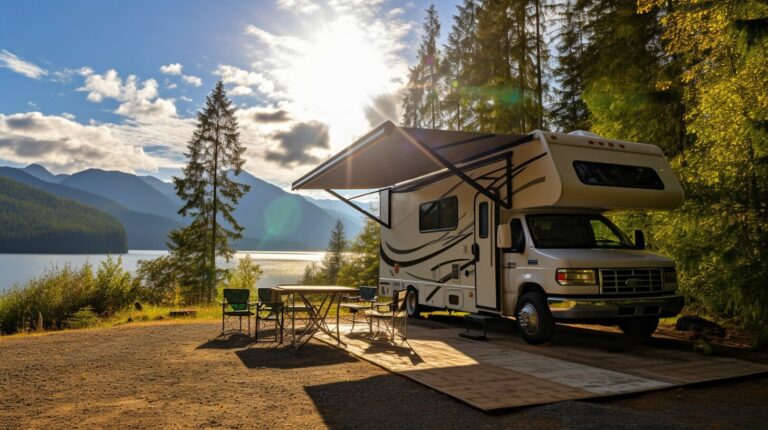
We’re excited to share our mountain camping guide with outdoor lovers. Alpine areas show nature’s most stunning views. But, they also have special challenges that need careful planning.
Mountain terrain needs specialized knowledge and the right gear. Weather can shift fast at high places, turning a clear morning into a stormy afternoon. Knowing this helps keep you safe and happy.
Our mountain camping guide talks about everything from altitude to the best gear. We’ll show you strategies that seasoned hikers use to conquer alpine challenges.
Whether it’s your first time at high altitudes or you want to get better, this guide has useful tips. We aim for real solutions that make mountain trips safe and unforgettable.
Key Takeaways
- Mountain weather changes quickly and needs constant watching
- Choosing the right gear is key for safety and comfort at high altitudes
- Knowing how elevation affects you helps avoid altitude sickness
- Planning and getting ready are key for successful mountain trips
- Specialized knowledge is very different from regular outdoor activities
Benefits of Camping in the Mountains
Mountain camping offers many benefits for our health. The high peaks, clean wilderness, and fresh air make it special. Camping in the Mountains improves our physical, mental, and emotional health.
These places offer unique experiences not found elsewhere. Setting up camp under the stars starts a journey of change. These changes stay with us long after we leave.
Connection to Nature
Mountain camping helps us connect deeply with nature. We hear the sound of streams and breathe clean air. This is different from city life.
The beauty of mountain sunrises and sunsets is a daily treat. The light on the peaks and shadows in valleys are unforgettable. These moments make us appreciate the world more.
Seeing wildlife adds to our connection with nature. Deer, eagles, and chipmunks remind us we’re guests. This teaches us respect and wonder for all living things.
The quiet of the mountains lets us hear nature’s sounds. Wind, birds, and leaves create a calming symphony. This reconnects us with Earth’s rhythms.
Physical and Mental Health Benefits
Mountain camping makes us fitter. Hiking to camp is great exercise for our heart and lungs. It also strengthens our muscles and improves balance.
The mountain air helps us sleep better. Without city lights and noise, we sleep in sync with nature. This makes us feel more awake and alert during the day.
Mountain camping is also good for our minds. The digital detox helps our minds reset. We feel less stressed and more focused.
It also boosts our problem-solving skills. Setting up camp and navigating trails require creative thinking. These challenges build our confidence and self-reliance.
The sense of accomplishment from a mountain camping trip boosts our self-esteem. Overcoming challenges shows us we’re capable of more than we thought.
Studies show natural environments lower stress hormones. Mountain camping combines physical activity, fresh air, and peace. This reduces stress and improves mental clarity.
Choosing the Right Destination
Choosing the right mountain camping spot is key. It depends on your experience and what you want. The place you pick will make your trip special.
Where you go affects what gear you need and what to do. Mountain camping tips say to pick a spot that fits your skill and comfort.
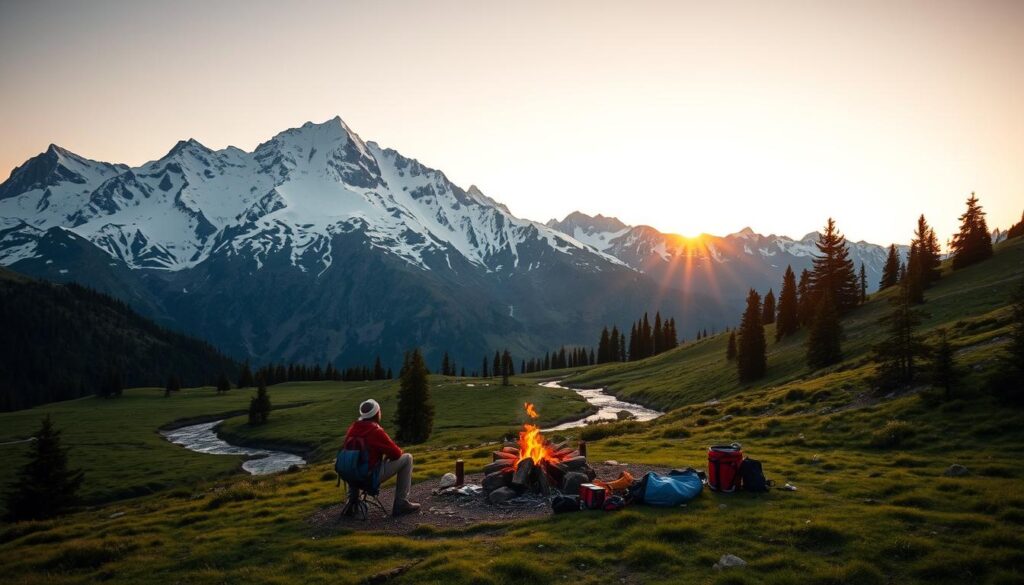
National vs. State Parks
National parks have great campgrounds with lots of facilities. They’re perfect for beginners. Yellowstone and Rocky Mountain National Park are great examples.
State parks have similar things but are less crowded and cheaper. They offer mountain camping tips and are beautiful.
National parks are best for beginners who want reliable facilities. State parks are great for families who want a cozy camping experience.
Hidden Gems Off the Beaten Path
Remote areas offer a pure camping experience for the bold. These spots need careful planning and self-sufficiency. Backcountry camping here means no facilities or cell service.
Always check local rules before going to remote spots. Some places need permits or have limits. Call local offices for details.
Talking to locals and visiting info centers can help find amazing spots. Local knowledge can lead to unforgettable camping adventures.
| Destination Type | Amenities | Cost Range | Best For | Reservation Required |
|---|---|---|---|---|
| National Parks | Full facilities, showers, restrooms | $25-45/night | Beginners, families | Yes, months ahead |
| State Parks | Basic facilities, fire pits | $15-30/night | Intermediate campers | Yes, weeks ahead |
| Backcountry Areas | No facilities, primitive | $5-15/permit | Experienced campers | Sometimes required |
| Hidden Gems | Varies, often none | Free to $10/night | Adventure seekers | Rarely required |
The best mountain camping tips are to match your destination to your level and goals. Start with easy spots and move to harder ones as you get better.
Best Times to Camp in the Mountains
Choosing the right time for your mountain camping trip is key. It can turn a great adventure into a safe one. Mountain camping safety tips stress the importance of timing. It helps avoid risks and makes your trip better.
Each season in the mountains has its own set of challenges and joys. Knowing what to expect and preparing is essential. Weather at high places is very different from lower areas.
Seasonal Considerations
Summer is the best time for camping with warm weather and long days. But, it also means thunderstorms and crowded spots. Start your hikes early to miss the 2-4 PM storm time.
Spring and fall are cooler and less crowded, perfect for experienced campers. These seasons need close weather watch. Snow can pop up at high places even when it’s clear below.
Winter camping is for the bravest with the right gear and skills. It’s not for beginners due to extreme conditions.
Weather Patterns to Watch
Mountain weather changes fast. A beautiful morning can quickly turn bad. We always watch the weather closely with mountain camping safety tips.
Weather apps like Windy give us real-time info on clouds, rain, wind, and more. They help us decide when to camp or find shelter.
High places are very unpredictable. Temperatures can drop 20-30 degrees in hours. Wind and storms can change fast.
Check the weather forecast often and have a backup plan. Always be ready for worse weather. Mountain weather is hard to predict, so be prepared for anything.
Lightning is a big risk in summer. If you hear thunder, count seconds until you see lightning. Then divide by five to find the distance in miles. Seek shelter if storms are close.
Essential Gear for Mountain Camping
Having the right gear makes mountain camping fun. Mountain camping essentials are different because of the weather and high places. You should get good gear that can handle wind, rain, and cold.
Your safety and comfort depend on your gear. Proper preparation means picking the right stuff for the mountains.
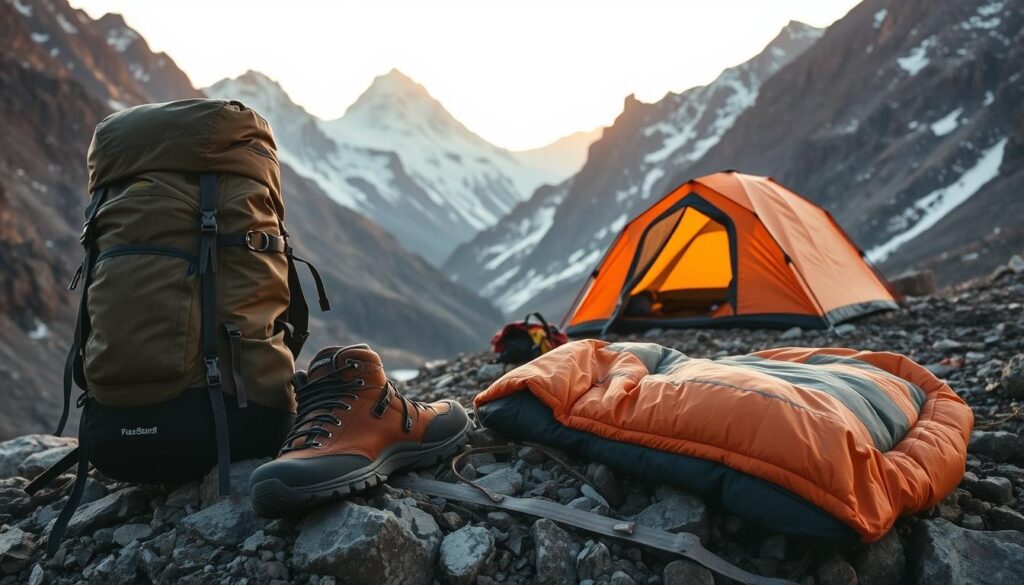
Tent and Sleeping Gear
Your tent is your home in the mountains. Choose a four-season tent that’s strong against wind and rain. It should have sturdy aluminum poles and strong guy-out points.
Choosing the right sleeping bag is key. Comfort temperature ratings are more important than survival ones for a good sleep. Here’s what we suggest:
- Down sleeping bags are warm but lose heat when wet
- Synthetic fill bags stay warm in damp places
- Sleeping pads keep you warm and comfy
Always carry a good sleeping pad with a high R-value. It keeps you warm and comfy.
Cooking Equipment
Good cooking gear means hot meals in the mountains. Best mountain camping gear includes a reliable camp stove and the right fuel.
Make sure you have these things:
- A camp stove that works in wind
- Enough fuel for your trip
- A mess kit with plates, mugs, and bowls
- Durable utensils made from steel or BPA-free plastic
Remember to pack important cooking tools. Don’t forget a spatula, wooden spoon, cutting board, and oven mitts. They help you cook safely and easily.
Choose light materials to avoid heavy packs. Titanium and aluminum cookware are durable and light.
Preparing for High Elevation
High-altitude camping brings unique challenges. High elevation camping requires special attention to altitude effects and hydration needs that differ from sea-level adventures. Adding these to your mountain camping checklist makes your trip safer and more enjoyable.
The air at high elevations has less oxygen. This makes our bodies work harder. It affects our breathing and sleep. We must plan our ascent carefully and give our bodies time to adjust.
Understanding Altitude Sickness
Altitude sickness can hit anyone over 8,000 feet, no matter how fit or experienced. The symptoms often start as mild discomfort but can quickly escalate if ignored. Early signs include:
- Headaches that worsen with physical activity
- Nausea and loss of appetite that makes eating difficult
- Fatigue and weakness beyond normal camping tiredness
- Dizziness and difficulty sleeping that disrupts rest
We recommend ascending gradually. Gaining no more than 2,000 feet of sleeping elevation per day above 8,000 feet helps our bodies adjust naturally. If symptoms worsen or include confusion, difficulty walking, or severe breathing problems, immediate descent becomes necessary.
Listen to your body and don’t let pride override safety. Altitude sickness doesn’t discriminate, and the best cure is always going to lower elevation.
Hydration Tips
Proper hydration is key at altitude where dry air increases moisture loss. We lose water faster at high elevations due to increased respiration and more frequent urination. This makes hydration planning essential for any mountain camping checklist.
When planning routes, find reliable water sources and resupply points. Natural water sources like streams and lakes are common in mountain areas. But they need proper treatment before drinking.
Here are our key hydration strategies for high elevation camping:
- Carry a reliable water filtration system like a filter straw or pump filter
- Drink water regularly instead of waiting until you feel thirsty
- Monitor urine color as a hydration indicator – it should be light yellow
- Avoid excessive alcohol and caffeine which can worsen dehydration
We suggest carrying extra water capacity for high elevation trips. The combination of increased water needs and potentially limited sources makes backup supplies critical for safety and comfort.
Safety Considerations for Mountain Camping
Knowing mountain camping safety tips is key to a great trip. It’s vital to prepare well before going into the mountains. Help might be far away if something goes wrong.
Mountain camping comes with its own set of rules. Always tell someone where you’re going and when you’ll be back. It’s best to camp with a friend, not alone. Carry a way to call for help and know basic first aid.
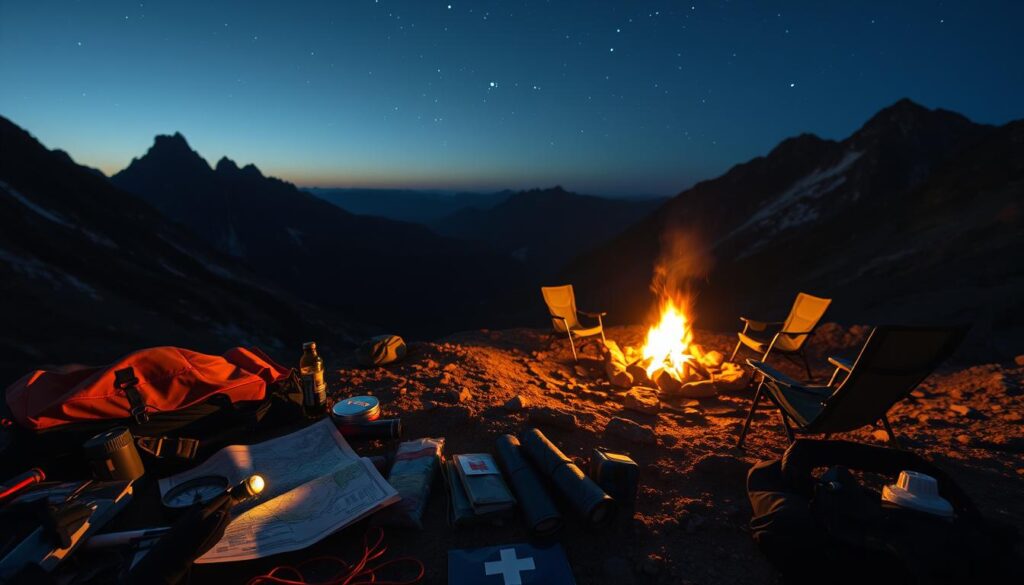
Wildlife Awareness
Knowing about wildlife is the first step in staying safe. Bears and mountain lions are dangers if we’re not careful. Keep food in bear-proof containers or hang it high and far from trees.
Keep your campsite clean and don’t feed animals. Even small creatures can get aggressive when looking for food. Make noise while hiking to avoid surprising animals.
If you see wildlife, stay calm and slowly back away. Never run from animals, as it can make them chase you. Carry bear spray and know how to use it.
Weather Preparedness
Mountain weather can change fast, becoming dangerous. Always check the weather and have a backup plan. We’ve seen sunny days turn into storms quickly.
Wear clothes for all weather, including rain and cold. Hypothermia can happen even in summer at high places. Check the forecast before you go and be ready to change plans if needed.
Lightning is a big risk in the mountains. If you hear thunder, find shelter in a car or building. Avoid open areas and metal during storms.
| Safety Priority | Essential Actions | Emergency Response | Prevention Tips |
|---|---|---|---|
| Wildlife Encounters | Proper food storage, noise making | Back away slowly, use bear spray | Clean campsite, never feed animals |
| Weather Changes | Monitor conditions, pack layers | Seek shelter, activate emergency plan | Check forecasts, have backup routes |
| Getting Lost | Carry map, compass, GPS | Stay put, signal for help | Tell others your plans, mark trail |
| Medical Emergency | First aid knowledge, emergency kit | Stabilize, call for rescue | Know your limits, travel with others |
Remember, your safety is more important than reaching a destination. Always choose caution over adventure when unsure.
Campfire Essentials
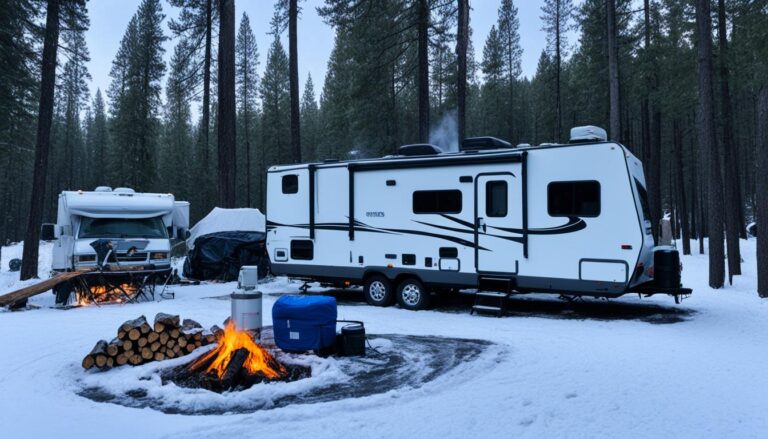
Campfires are the heart of mountain camping. They bring warmth, light, and cooking to our adventures. But, fire safety in mountain environments demands extra attention because of dry conditions and fire restrictions. Knowing how to manage fires is key for a safe trip.
Before lighting a match, we check local fire restrictions. Many places have fire bans during dry times. Always verify current regulations with park services or forest officials before you go.
Building and Maintaining a Safe Fire
Creating a safe campfire needs the right preparation and tools. We always bring these essential fire-starting tools:
- Waterproof matches stored in sealed containers
- Reliable lighters with backup fuel
- Fire starter materials like dry tinder or commercial fire starters
- Small shovel for clearing the fire area
- Water bucket or container for extinguishing
When building our fire, we follow these steps. First, we clear a 10-foot diameter area of all flammable materials. Then, we dig a shallow pit and surround it with rocks to contain the flames.
We start with small, dry kindling and add larger pieces gradually. Never leave a fire unattended, even for a few minutes. Mountain winds can quickly spread embers to surrounding vegetation.
Proper extinguishing needs more than just water. We pour water over the flames, stir the ashes, and pour more water. The ashes should be cool to the touch before we consider the fire out.
Cooking Over a Fire vs. Stove
Choosing between fire cooking and camp stove cooking depends on several factors. Each method has its own advantages for different mountain camping essentials and situations.
Fire cooking gives an authentic outdoor experience and is great for group meals. But, it needs special cookware for direct flame contact. Cast iron pots and pans work best, though they add weight to your pack.
Aluminum foil is invaluable for fire cooking. We use it to wrap vegetables, fish, or meat, creating convenient cooking packets. These foil packets cook evenly and make cleanup simple.
Camp stoves offer controlled cooking conditions regardless of weather. They work in rain, wind, and cold temperatures when fires might be impossible. Stoves also cook faster and more efficiently than open flames.
We recommend bringing both options when possible. Use your stove for quick meals and morning coffee, while saving fire cooking for evening gatherings when you have more time to tend the flames.
Remember, fire cooking needs patience and constant attention. Food burns quickly over open flames, so we always keep a close eye on our meals and have water nearby for emergencies.
Activities for Mountain Campers
Mountain camping is more than just setting up a tent. It’s about exploring nature’s wonders. You can relax and have adventures, all from a cozy campsite.
What you can do on your trip depends on where you are, how fit you are, and the weather. Mix up your activities to enjoy the wilderness fully.
Exploring Trail Networks
Mountain areas have trails for everyone. From easy walks to tough climbs, there’s something for everyone. Check the trails before you go to find the right ones for your group.
Essential tools include maps, GPS, and a compass. They help when you’re lost or it’s hard to see.
Choose trails based on how high they go, how long they are, and how long they’ll take. Start with short hikes to see how your group does at high altitudes.
The mountains are calling and I must go.
| Trail Difficulty | Distance Range | Elevation Gain | Recommended For |
|---|---|---|---|
| Easy | 1-3 miles | 0-500 feet | Families, beginners |
| Moderate | 3-6 miles | 500-1500 feet | Regular hikers |
| Difficult | 6-10 miles | 1500-3000 feet | Experienced hikers |
| Expert | 10+ miles | 3000+ feet | Advanced mountaineers |
Capturing Mountain Moments
Mountain areas offer great photo chances all day. The light changes, making scenes look amazing, from sunrise to stormy skies.
The best photos are during the golden hours, just after sunrise and before sunset. This light makes mountains and valleys look stunning.
Cold weather hurts camera batteries. Bring extra batteries and keep them warm. Cold drains batteries fast, cutting your photo time short.
Wildlife photos are easy in mountains. Use long lenses to stay safe and get close-up shots of animals.
Nighttime in mountains is perfect for star photos. Bring a tripod and learn to take long exposures for amazing star shots.
Tips for a Successful Mountain Camping Trip
Planning is key for a great adventure or a tough trip. We think being prepared and caring for nature are the basics for a great mountain camping trip.
Packing Smart
Make a detailed checklist to avoid missing important items. Test your gear at home before you go. Carry your backpack around your neighborhood to check how it feels and balances.
Put heavy things close to your back and light stuff on the outside. This helps you stay balanced on steep paths. Always carry extra batteries, food, and emergency items. Mountains can change weather fast, so pack clothes for different weather.
Leave No Trace Principles
Keeping mountain areas clean is important for future visitors. We always take everything we bring with us. No trash is left behind.
Use biodegradable soap and throw it away far from water. Stick to designated campsites or areas that can handle foot traffic. When you can, use fire rings to reduce fire impact.
Keep a safe distance from wildlife and never feed them. These actions help keep the natural world intact. Your checklist should include bags for waste and eco-friendly products to help follow these rules.