Recreational vehicle adventures should be fun and memorable. But, keeping yourself and your loved ones safe is very important.
Fire safety in RVs is a big concern in America. From 2018 to 2020, about 4,200 RV fires were reported each year. These fires caused 15 deaths, 125 injuries, and over $60 million in damage.
Our guide will teach you about preventing fires, being ready for emergencies, and protecting yourself. We’ll share tips from experts and steps to lower risks on your trips.
Whether you’re a seasoned traveler or new to RV adventures, this info will give you confidence and peace of mind.
Key Takeaways
- Over 4,200 recreational vehicle blazes occur annually in the United States, causing significant property damage and casualties
- Proper prevention strategies can dramatically reduce the risk of incidents during your camping adventures
- Understanding common hazards helps you identify and avoid dangers
- Emergency preparedness plans are key to protecting your family and investment
- Regular maintenance and inspections are vital to prevent dangerous situations
- Having the right equipment and knowledge can prevent major disasters
Understanding Common RV Fire Hazards
Every RV owner faces three big fire dangers: electrical systems, cooking gear, and propane appliances. Each one has its own set of challenges. Mechanical or electrical failures cause about three-quarters of highway vehicle fires. So, keeping our RVs safe from fire is very important.
RVs are small, so fires can spread fast. We must know what can start fires in our RVs. By understanding these risks, we can take steps to keep our families and RVs safe.
“An ounce of prevention is worth a pound of cure, when it comes to RV fire safety.”
Electrical Systems
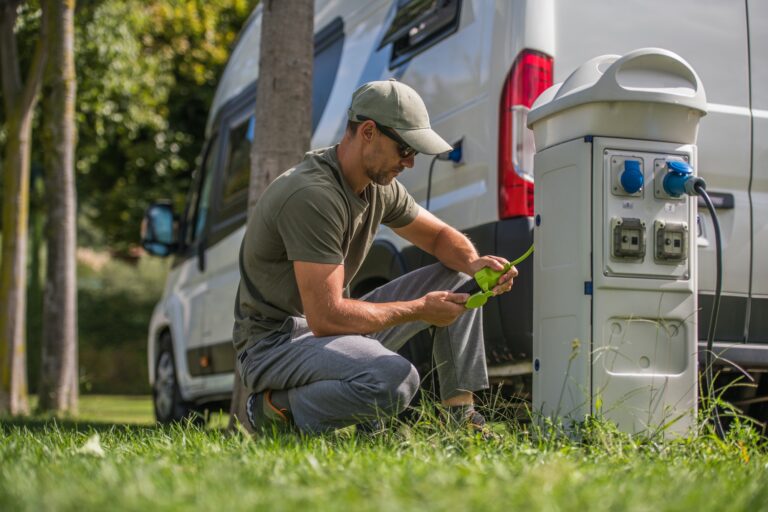
Electrical issues are the top cause of RV fires. Bouncing down the road can loosen electrical connections, leading to heat buildup and fire risks. These vibrations harm every wire and connection in our RV over time.
Many RV fires start with a 12-volt short circuit. These shorts can happen anywhere in the electrical system. Don’t overload electrical outlets because circuit breakers don’t always stop overloads from starting fires.
We should check our electrical connections often. Look for loose wires, burned outlets, or signs of heat damage. Replace damaged parts right away to keep our RVs safe from fire.
Cooking Equipment
RV kitchens are fire risks because they’re small. Cooking equipment is close to flammable things like curtains and paper towels. This makes fires more likely.
Grease fires are very dangerous in RVs. The small space means flames can spread fast. Never leave cooking unattended, even for a short time.
Portable cooking appliances like toasters and coffee makers can get too hot. Check these devices for frayed cords or damaged heating elements. Keeping cooking areas clean and free of clutter is important for safety.
Propane Appliances
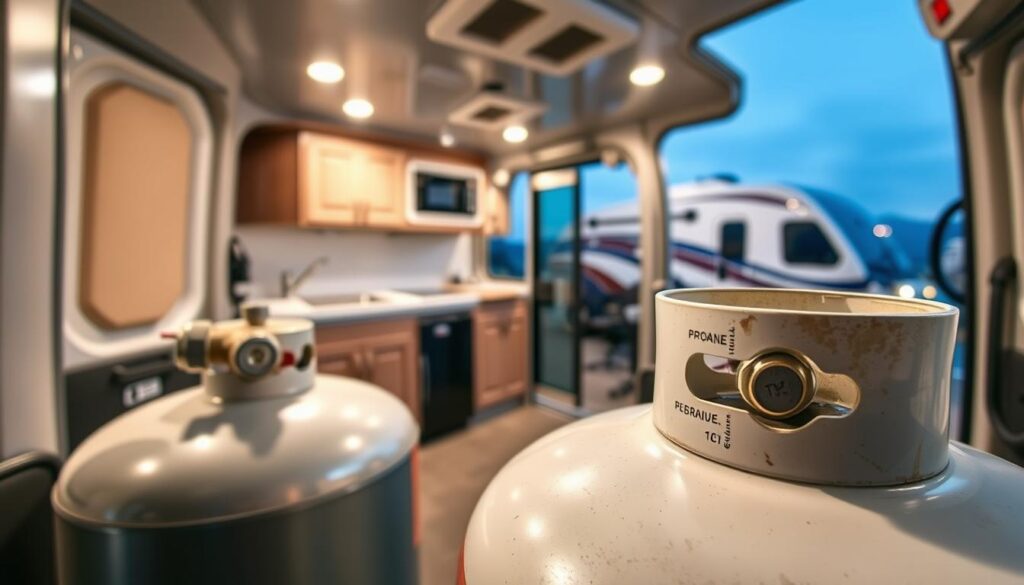
Propane powers many RV systems, like water heaters and refrigerators. While propane is safe, leaks can be very dangerous. Propane is heavier than air, so it settles in low places where it can build up.
We must check propane connections before each trip. Use soapy water to test for leaks around fittings and valves. Any bubbling means a dangerous leak that needs fixing right away.
Good ventilation is key when using propane appliances. Never use propane appliances in enclosed spaces without enough airflow. This simple rule helps prevent carbon monoxide poisoning and lowers fire risks.
Keeping propane systems in good shape is important for safety. Replace old hoses and fittings as recommended by the manufacturer. These steps are essential for preventing RV fires.
Essential Fire Safety Equipment
Having the right fire safety equipment can save your RV and everyone inside. We suggest getting quality devices to protect your RV. Smoke detectors, fire extinguishers, and carbon monoxide detectors are key.
These devices work together to keep you safe. Smoke detectors alert you to fires, fire extinguishers help put them out, and carbon monoxide detectors warn of toxic gas. Each is vital for your safety on the road.
Smoke Detectors
Your RV smoke detectors are your first line of defense against fires. Many RV fires could have been stopped with working smoke detectors. Sadly, many RVs lack these lifesavers or have broken ones.
Check your smoke detectors before every trip. This quick test could save your life. Change batteries twice a year and think about getting detectors with 10-year sealed batteries for better reliability.
Put smoke detectors in sleeping and main living areas. Don’t put them too close to cooking areas to avoid false alarms. Remember, a non-working detector offers zero protection when you need it most.
Fire Extinguishers
Follow the three-extinguisher rule for your RV fire extinguisher. Have one in the kitchen, one in the bedroom, and one outside that’s easy to get to.
Choose ABC-rated extinguishers for fires of all types. Check the pressure gauge monthly and replace damaged or corroded units. Every adult should know the P.A.S.S. technique: Pull the pin, Aim at the base, Squeeze, and Sweep.
Mount extinguishers securely but make sure they’re easy to grab in emergencies. Practice removing them so you can act fast when seconds matter.
Carbon Monoxide Detectors
Carbon monoxide detectors are vital for RV safety. They protect against the deadly gas from propane appliances and generators. This gas is colorless and odorless, making detectors essential.
Put detectors near sleeping areas and near propane appliances. Test them monthly and replace batteries as needed. Never ignore a carbon monoxide alarm – get out and ventilate the RV before checking the source.
Consider detectors with digital displays that show CO levels. These give you important info about possible dangers before they become emergencies.
| Equipment Type | Recommended Quantity | Testing Frequency | Key Features |
|---|---|---|---|
| Smoke Detectors | 2-3 units | Before each trip | 10-year battery, photoelectric sensor |
| Fire Extinguishers | 3 units (ABC-rated) | Monthly pressure check | 2.5-5 lb capacity, easy-grip handle |
| CO Detectors | 2 units minimum | Monthly testing | Digital display, battery backup |
| Propane Detectors | 1-2 units | Monthly testing | Low-level mounting, audible alarm |
Creating a Fire Safety Plan
Creating a good RV emergency planning plan takes time and practice. A solid fire safety plan can save lives. It’s your family’s guide to safety when seconds matter.
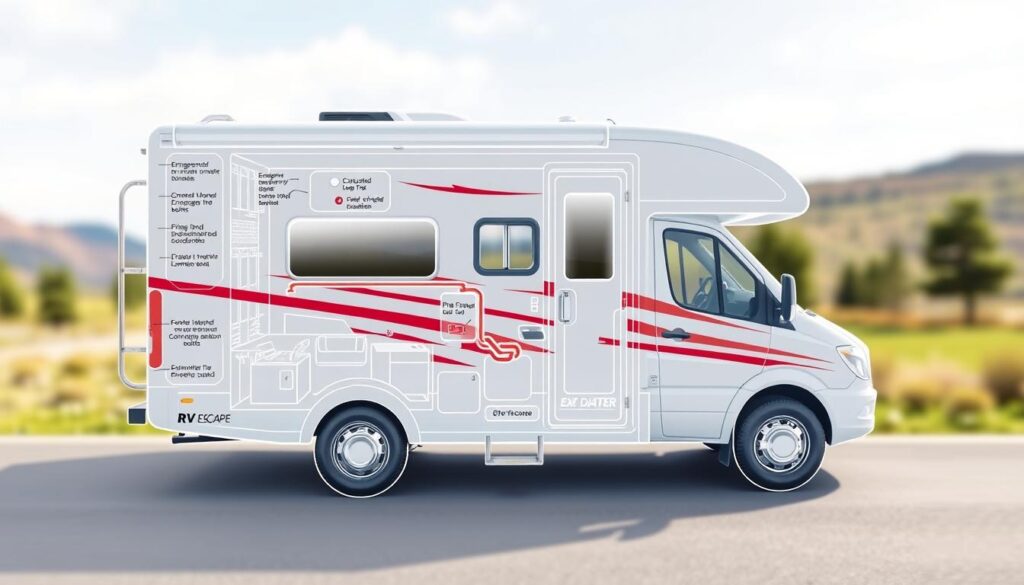
A good RV fire escape plan has many exit paths and clear rules. Everyone who rides in your RV should help make the plan. This way, everyone knows their part and feels ready to act fast.
Multiple Exit Strategies
Your RV fire escape plan needs at least two ways out. Fires can block main exits fast. So, having backup routes is key to staying safe.
Practice opening emergency exits with your family often. These can get stuck or not work right, which is common in older RVs. Make sure everyone can open doors, windows, and hatches on their own.
Always keep doors and windows free of clutter. We’ve seen too many times when stuff blocks the way out. Your exits should be easy to open and always ready.
Regular Safety Discussions
Have safety talks with your RV family often. Do this every month or before big trips. Even kids should know the basic plan.
Use these talks to go over escape routes and practice. Go through different scenarios, like day and night emergencies. This practice makes everyone react faster when it counts.
Try practicing your RV emergency planning with your eyes closed. This mimics the smoke that makes it hard to see. Time how fast you can get out to know your limits.
Safe Assembly Areas
Pick a safe spot away from your RV for everyone to meet. This spot helps you check that everyone is safe. Pick a place that’s far enough away and easy to see.
Your meeting spot should be clear from all sides and easy to reach in any weather. Choose a landmark like a big tree or a building. Make sure everyone knows where it is and can find it in the dark.
In a real emergency, you might have only a few minutes to get out safely. Your RV fire escape plan only works if everyone remembers it and acts fast.
Best Practices for Cooking Safely
Cooking safely in your RV makes mealtime fun and safe for everyone. We love making memories while cooking on the road. But, RV safety tips are key in our small kitchens.
Our RV kitchens are small and need extra care to avoid accidents. We follow important rules to keep our homes and loved ones safe. Let’s look at the key practices for safe cooking adventures.
Monitor Cooking at All Times
It’s very important to never leave cooking unattended. Even a short trip can cause trouble. If we must leave, we turn off all burners.
Using timers helps us keep track of cooking. We use timers for each dish. This simple RV safety tip helps avoid kitchen fires.
If the stove flame goes out, we don’t try to light it again right away. We turn off the gas, open windows, and wait a few minutes before trying again.
Keep Flammable Items Away
We keep a clear zone around heat sources in our RV kitchen. Paper towels, dish towels, and curtains stay far from the stove and oven. This makes cooking safer.
We store flammable materials safely to avoid fires. Cleaning supplies, paper products, and fabric items go in cabinets away from cooking. These RV safety tips lower fire risks a lot.
Grease and oil are dangerous because they can catch fire easily. We clean cooking surfaces often and dispose of grease correctly. Never pour hot grease down drains or store it near heat.
Use Safe Cooking Appliances
Choosing the right cooking equipment makes our RV kitchen safer. We prefer appliances with automatic shut-off and temperature controls. Induction cooktops are safer than traditional gas burners.
Regular maintenance keeps our appliances safe. We check gas connections, clean burner ports, and replace worn parts quickly. Getting professional service ensures they work well.
| Appliance Type | Safety Features | Maintenance Frequency | Fire Risk Level |
|---|---|---|---|
| Gas Stove | Flame failure protection | Monthly inspection | Medium |
| Electric Cooktop | Automatic shut-off | Quarterly cleaning | Low |
| Induction Cooktop | Cool surface technology | Bi-annual check | Very Low |
| Microwave | Door safety locks | Monthly cleaning | Low |
We always have a fire extinguisher near our cooking area. Class K extinguishers are best for kitchen fires. Having the right firefighting equipment ready can save our RV and lives.
Maintaining Your RV’s Electrical System
Keeping your RV’s electrical system in check is key to preventing fires. It’s important to stay ahead of electrical issues. This way, you protect your RV and everyone in it.
Your RV’s electrical system is more demanding than most home systems. It deals with both DC and AC power, facing constant movement and weather. Without regular care, electrical fires can become a serious risk.
Regular Inspections
Before every trip, check all 12-volt connections. Look for corrosion, loose wires, or heat damage. These signs can mean big trouble.
Be extra careful around wires going through walls or floors. These areas often show wear from movement. Dark spots or melted plastic mean you need to act fast.
Inspect your shore power cord before each trip. Look for cracks, exposed wires, or damaged plugs. These can be fire hazards when used with campground power.
Avoid Overloading Outlets
Overloading outlets is a common cause of RV fires. Just because your circuit breaker doesn’t trip doesn’t mean you’re safe. Spread your electrical load across multiple outlets.
Don’t use many high-wattage appliances at once. Hair dryers, space heaters, and microwaves can overload your RV’s electrical system. Plan your power usage to avoid overheating wiring.
Extension cords and power strips can also be fire risks. Use them only when necessary and choose heavy-duty models.
Professional Maintenance Checks
Annual professional inspections are vital for RV fire prevention. Trained technicians can spot problems we might miss. They check wiring, shore power connections, and hard-to-reach areas with special tools.
Technicians can test your electrical system under load. This shows issues that only appear when your RV uses a lot of power. These tests often find problems before they become fire hazards.
If technicians find damage during inspection, replace your shore power cord. A faulty connection at the campground can cause fires.
Safe Use of Propane in Your RV
Knowing how to use propane safely is key for RV travelers. We use it for refrigeration, heating, cooking, and hot water. But, propane can be dangerous if not handled right.
Gasoline and propane can be very dangerous if not used carefully. We must always be careful when using propane. Checking for leaks, storing it right, and having good ventilation are all important.
Identifying and Preventing Gas Leaks
Checking for leaks is the first step in propane safety. Use a gas leak detection device before and during trips. This can stop big problems.
Look for kinks or damage in your propane lines before you go. Even small problems can cause big leaks. Make sure all connections are tight, paying extra attention to areas that shake a lot.
If you smell gas, don’t turn on lights or use fire. Open windows and find the leak first. This can save your life and prevent damage.
Proper Storage and Transportation Methods
Storing propane safely is very important. Keep tanks in special spots, not inside the RV. Always carry tanks upright to avoid damage.
Turn off propane while driving, even if it’s hard. The risk of explosion is too high. Turn off all propane appliances before you leave.
Make sure tanks are secure in their spots. Loose tanks can cause leaks and damage.
Ensuring Adequate Air Circulation
Good air flow is key when using propane. Make sure all appliances have enough air. Check vents for blockages.
Don’t use propane in closed spaces. Fresh air is needed to avoid poisoning or explosions. Clean vents often to keep air flowing well.
Think about adding fans if your RV doesn’t have enough air flow. Good air flow is vital for safety on the road.
Fire Safety While Traveling
When we travel with our RVs, fire safety is very important. Moving vehicles have special dangers that don’t happen when we’re parked. Heat from exhaust, friction from brakes, and tire stress can start fires. Here are some RV safety tips for safe travel.
Road conditions and fire risks change a lot. Weather, terrain, and traffic can make situations dangerous. We must stay alert and ready for these challenges.
Safe Parking Practices
Where you park is very important for safety. Always check the ground under your RV before parking. Dry grass, leaves, and debris can ignite from hot exhaust pipes or catalytic converters.
Your RV’s undercarriage gets very hot and can start fires. Even a brief stop over combustible materials is risky. We suggest walking around your RV to check the parking area well.
Choose parking spots with clear ground whenever you can. Gravel, pavement, or bare dirt are safest. If you must park on grass, make sure it’s green and well-watered.
Avoiding Fire-Sparking Conditions
Mechanical problems can lead to RV fires while traveling. Dragging brakes can ignite tires or brake fluid, turning a simple problem into a fire emergency. Always check your brakes before long trips.
Check your tires at every rest stop. Look for signs of overheating, unusual wear, or damage. Hot tires can blow out and catch fire, which is dangerous when overloaded or under-inflated.
| Fire Risk Factor | Warning Signs | Prevention Method | Check Frequency |
|---|---|---|---|
| Overheated Brakes | Burning smell, excessive heat | Professional inspection | Before each trip |
| Tire Problems | Unusual wear, bulges, cracks | Proper inflation, rotation | Every rest stop |
| Exhaust Issues | Unusual sounds, visible damage | Regular maintenance | Monthly inspection |
| Generator Overheating | Excessive heat, strange odors | Proper ventilation | Before each use |
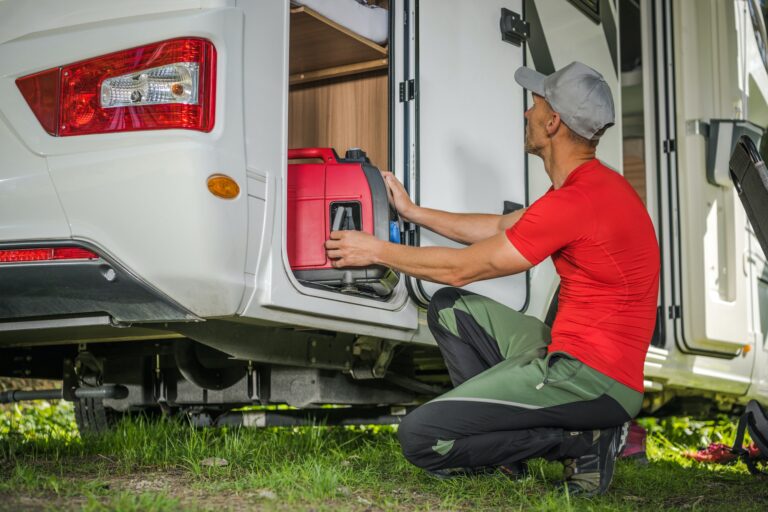
Keep your generator in well-ventilated areas away from your RV and other vehicles. Never use generators in enclosed spaces or too close to flammable materials.
Disaster Planning on the Road
Having a plan for roadside fires is key to saving lives and property. Know how to quickly disconnect from your tow vehicle if you’re pulling a trailer. Practice this so you can do it fast when it matters.
The key to surviving any emergency is preparation and practice. When seconds count, muscle memory takes over.
Keep emergency contact numbers easy to find in your RV. Include local fire departments, your insurance company, and roadside assistance services. Store these numbers in many places and formats.
Important RV safety tips include having a fully charged cell phone and knowing your exact location always. GPS coordinates help emergency responders find you quickly on remote highways.
Plan escape routes from your RV and practice them often. Everyone should know how to exit quickly through windows if doors are blocked. Keep emergency tools like window breakers and flashlights within easy reach.
Understanding Fire Insurance for Your RV
Fire insurance for your RV is a must. It protects your investment and keeps you calm. With RV fire safety being a big worry, having the right coverage is key.
RV fires cause big losses. RV fires result in an estimated $60,300,000 in property loss annually in the U.S. This shows why we can’t skip getting enough insurance.
Coverage Options
Standard auto insurance isn’t enough for RVs. They need special coverage that goes beyond basic.
Comprehensive coverage usually includes fire damage. But, check with your provider to know any limits or exclusions.
Think about replacement cost coverage. It costs more but lets you replace your RV with a similar one, not a cheaper one.
Importance of Insurance
Our RVs are more than just vacation vehicles. They’re homes or temporary homes. So, good RV fire safety insurance is a must.
Don’t forget about personal belongings coverage. Our RVs hold valuable items. From electronics to camping gear, these need protection too.
Insurance also helps with the emotional loss. Our RVs mean freedom and memories. Proper insurance helps us rebuild our RV lifestyle.
Tips for Choosing the Right Policy
Documentation is key when picking coverage. Take photos of your RV and its stuff. Keep receipts for big buys and changes.
Compare policies from different providers. RV fire safety coverage varies a lot. Find the best match for your needs and budget.
Update your coverage when you make changes. Tell your insurance company about new equipment or RV changes. This keeps you protected.
Use agents who know RV insurance. They get the unique risks and needs of RV owners.
Emergency Contact List
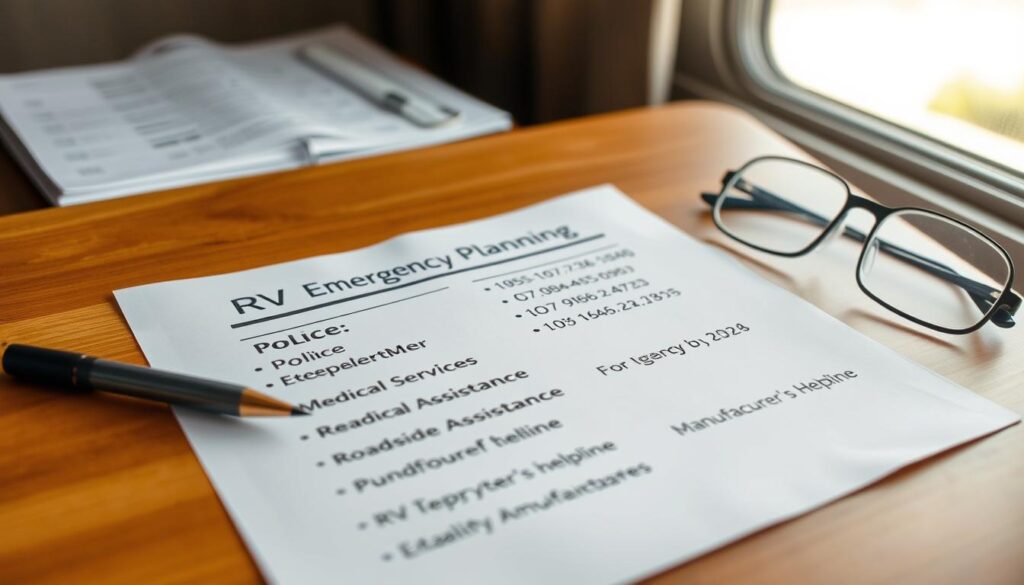
We think that good RV emergency planning starts with a detailed contact list. When fire hits your RV, every second is key. Having the right phone numbers can save you from big troubles.
Make sure everyone in your group knows how to reach these numbers. Keep copies in many places in your RV. Also, save these numbers in your phone and write them down in case your phone gets lost or broken.
Critical Numbers You Must Have
All adults and older kids should know how to call 911. This is your first call in any fire emergency. But, be ready for times when you can’t get cell service.
Include your insurance company’s 24-hour claim number in your list. Keep your policy number and agent’s info handy. Quick access to insurance details can speed up the claims process significantly.
Save poison control center numbers in your phones. Fire emergencies can lead to smoke inhalation or chemical exposure. The national poison control hotline (1-800-222-1222) works from anywhere in the United States.
Local Emergency Services Information
Look up local emergency services before you go to any place. Many remote areas have volunteer fire departments with direct phone numbers. These local contacts can get to you faster than 911.
Find the nearest hospitals and urgent care facilities on your route. Medical emergencies often happen with fires. Having these numbers ready saves time in a crisis.
Remember, knowing where you are helps firefighters find you fast. Use GPS coordinates, mile markers, and landmarks to help responders find your RV quickly.
RV Park and Campground Contacts
Campground staff knows the best routes for emergency vehicles. They know the area well and can guide responders to your site. Keep the main office number and after-hours emergency contact handy.
Many RV parks have their own security or maintenance teams. They can help right away while you wait for professional help to arrive.
| Contact Type | Primary Number | Backup Information | Notes |
|---|---|---|---|
| Emergency Services | 911 | Local fire department direct line | Have GPS coordinates ready |
| Insurance Company | 24-hour claims hotline | Agent direct number | Keep policy number accessible |
| Poison Control | 1-800-222-1222 | Local hospital emergency | Available 24/7 nationwide |
| Current Campground | Main office | After-hours emergency line | Staff knows local emergency routes |
Check your cell phone coverage when you arrive at each new place. Find dead zones around your campsite and plan other ways to communicate if needed.
Preparing for Worst-Case Scenarios
The most critical part of RV emergency planning is getting ready for emergencies where time is everything. If fire hits your RV, panic can come fast. We need to train ourselves and our families to act fast with actions that save lives.
The key to RV fire emergencies is simple: get everyone out right away and stay out. No item is worth risking your life. Remember, once you leave a burning RV, don’t go back in for any reason.
Practice Makes Perfect
Fire drills might seem too much, but they save lives in real emergencies. We suggest doing RV emergency planning drills at different times and weather. This helps everyone react fast, even in bad conditions.
Time your family during drills. Aim to get everyone out and to your meeting spot in two minutes. Practice using different exits, including windows if doors are blocked.
Make drills real by changing the scenarios. Practice evacuating at night, in bad weather, or when someone is asleep. The more we practice, the quicker we react in real emergencies.
Essential Emergency Supplies
Your emergency kit should be easy to grab and ready to go. Keep these supplies in a bag near your main exit:
- First aid supplies for burns
- Flashlights with extra batteries
- Emergency blankets for warmth and shock
- Battery-powered radio for news
- Important documents in waterproof containers
- Essential medications for family members
- Emergency contact information
Update your grab-bag often. Check batteries, replace expired meds, and update documents. Review your emergency kit every three months as part of your RV emergency planning.
Basic Burn Treatment Knowledge
Knowing how to treat burns can be very important until medical help arrives. We should all know these basic steps for burn treatment:
- Cool the burn with clean, cool water for 10-20 minutes
- Cover burns with clean, dry cloth or sterile gauze
- Remove jewelry or tight clothing before swelling begins
- Seek immediate medical attention for serious burns
- Never apply ice, butter, or home remedies to burns
Smoke inhalation can be as dangerous as burns. Getting everyone to fresh air fast is key. Watch for signs of smoke inhalation like coughing, trouble breathing, or confusion.
Good RV emergency planning means being ready for disasters. We hope for the best but prepare for the worst. This approach to fire safety gives us confidence and peace of mind on our RV trips.
Common Myths About RV Fire Safety
Dangerous misconceptions about RV fire safety put travelers at risk every day. These false beliefs lead to tragic consequences. Understanding and debunking these myths can save lives and protect your investment.
Many RV owners have dangerous assumptions that increase their fire risk. These myths persist despite clear evidence showing their dangers. We need to address these misconceptions directly to keep our community safe.
Misconceptions About Detectors
One deadly myth is that smoke detectors aren’t needed in small RV spaces. Investigation reports show many fire victims had no or a non-working smoke detector. This myth has cost lives.
Some RV owners think they’ll smell smoke right away in small spaces. But fires can spread fast in tight areas. We’ve learned that every second counts when escaping an RV fire.
Another dangerous belief is that one detector is enough for the whole RV. Strategic placement of multiple detectors provides better coverage and earlier warning. We recommend detectors in sleeping areas, near the kitchen, and in storage compartments.
Propane Myths
Many RVers believe propane is safe to use while driving. We’ve seen devastating results from accidents with active propane systems. Always turn off propane while traveling.
Some think propane leaks are always detectable by smell. But outdoor conditions can disperse the odor before you notice it. We recommend using electronic leak detectors for reliable monitoring.
Some people think propane appliances are automatically safe because they’re designed for RVs. Regular maintenance and proper ventilation are essential. Complacency with propane safety has led to explosions and fires.
Cooking Safety Myths
The “just a minute” myth is very dangerous when cooking in RVs. Many believe leaving cooking unattended briefly is okay. Fires can start and spread within seconds in the confined RV space.
Another misconception is that RV stoves are safer than home stoves. If your galley stove flame goes out while cooking, gas continues to flow unless you’ve run out of fuel. This situation could result in an explosion.
Some RV owners think circuit breakers will always prevent electrical cooking fires. But overloaded circuits can overheat wires and start fires even when breakers don’t trip. We’ve seen this happen repeatedly in our investigations.
Understanding these myths helps us make better decisions about RV fire safety. Knowledge and preparation are our best defenses against fire hazards on the road.
Resources for Further Learning
Learning about RV fire safety is a lifelong journey. We think it’s key to keep you and your family safe on every trip. There are many great resources to help you learn more and feel confident in emergencies.
Online Safety Courses
Online courses make it easy to learn about fire extinguishers and how to act in emergencies. Adults should take a short course on using an extinguisher right. Look for courses that let you practice with real equipment.
Reading about the P.A.S.S. technique is different from using it in real life. It’s important to get hands-on practice.
Fire Safety Guides
The National Fire Protection Association and fire departments like Windsor Fire Department in Ontario have great guides. These guides give you the latest safety tips. They’re a good addition to what we’ve shared.
Adding an RV fire scenario to your training is a good idea.
RV Clubs and Communities
RVers share real-life experiences that official guides might not cover. Many experienced travelers are happy to share their stories. Local fire departments often offer education programs for RVers.
Some departments even have RV-specific training sessions.
Fire safety technology and best practices keep changing. Staying up-to-date with different sources helps you use the latest RV fire safety tips on your travels.