Keeping your car running smoothly is easier than you think. Vehicle maintenance is simple when you focus on the basics. Every driver can learn to keep their car safe and reliable with simple checks.
Three key parts of your car need regular checks. Your wheels, brakes, and bearings work together every time you drive. When they work right, you save on fuel and stay safer on the road.
Regular checks help find small problems before they cost a lot. Preventive care saves money and keeps you safe. We’ll show you what to look for during your checks.
This guide helps you keep your car’s safety features in top shape. You’ll learn about warning signs, how to inspect, and easy maintenance steps. Tire pressure checks and inspections become easy with our help.
Key Takeaways
- Focus on three essential components: wheels, stopping systems, and rolling parts for optimal safety
- Regular inspection prevents costly repairs and dangerous road situations
- Proper maintenance improves fuel efficiency and extends vehicle lifespan
- Simple warning signs help you identify problems before they become serious
- Preventive care saves money compared to emergency repairs
- Basic inspection techniques can be learned by any driver
The Importance of Regular Vehicle Inspections
Regular vehicle checks keep our families safe and save money. By inspecting regularly, we stop small problems from growing big. These checks find dangers before they can harm us on the road.
Inspections are our first defense against car troubles and accidents. We feel sure our cars are safe and reliable. This safety isn’t just for us, but for everyone on the road.
Understanding the Benefits of Safety Inspections
Car safety checks have many benefits. They keep our loved ones safe by making sure our cars meet safety rules. These checks find big issues like brake and tire problems before they cause accidents.
Professional checks also keep our cars running well. We find and fix problems early, saving money. This way, our cars stay in top shape.
Regular checks make us more responsible car owners. We learn to notice and fix problems early. This habit keeps our cars in good condition.
How Regular Inspections Save You Money
Regular checks can save us a lot of money. Finding problems early saves us from big repairs later. A small fix now avoids a big problem later.
Think about the cost of car troubles. Emergency repairs and rental cars can be very expensive. Regular checks help avoid these costs by finding issues early.
| Inspection Benefit | Potential Savings | Risk Prevention |
|---|---|---|
| Early brake detection | $200-800 | Accident prevention |
| Tire pressure monitoring | $100-400 | Blowout avoidance |
| Bearing maintenance | $150-600 | Wheel failure prevention |
| Fluid level checks | $300-1500 | Engine damage prevention |
Regular maintenance also keeps our cars’ value high. Cars in good shape sell for more. Regular checks show we take care of our cars.
Insurance companies give discounts for cars with recent safety checks. This saves us money and improves our car safety record. It’s a win for our budget and peace of mind.
Tire Pressure: Why It Matters
Tire pressure is key to a smooth drive and safe vehicle. Proper tire maintenance is more than just looking for damage. It affects how much fuel we use and how safe we are on the road.
Keeping tires at the right pressure helps our vehicle and keeps us safe. If tires are too low, they make our car work harder. This means we use more fuel.
But, if tires are too high, they don’t grip the road well. This makes our car harder to control, which is dangerous.
“Proper tire inflation is one of the easiest and most cost-effective ways to improve your vehicle’s performance and safety.”
The Impact of Correct Tire Pressure on Fuel Efficiency
Right tire pressure means better fuel use. If tires are 10 PSI low, fuel use can drop by up to 3%. This might seem small, but it adds up over time.
Low tire pressure makes our car work harder. This means more fuel used and more pollution. It’s a big deal for our planet and our wallets.
The table below shows how tire pressure affects fuel use:
| Tire Pressure Status | Fuel Economy Impact | Rolling Resistance | Annual Cost Increase |
|---|---|---|---|
| Properly Inflated | Optimal Performance | Minimal | $0 |
| 5 PSI Under | 1-2% Decrease | Moderate | $25-50 |
| 10 PSI Under | 3-4% Decrease | High | $75-100 |
| 15+ PSI Under | 5%+ Decrease | Very High | $125+ |
Right tire pressure also makes tires last longer. Even wear means they last longer and save us money.
Signs of Improper Tire Pressure
Knowing when tire pressure is wrong is key. Visual inspection is our first defense.
Low tires wear out faster on the edges. They might look bulged or flat. Our car might pull to one side too.
High tires wear out in the middle. They feel stiff and don’t grip well, making driving harder.
Here are signs to watch for:
- Uneven tread wear patterns across the tire surface
- Decreased fuel economy without other mechanical issues
- Vehicle pulling to one side during normal driving
- Harsh ride quality or excessive road noise
- Frequent need to add air to tires
Temperature changes affect tire pressure a lot. For every 10-degree drop, pressure drops by 1-2 PSI. So, we need to check more often in changing seasons.
Regular checks with a good gauge are key. This simple habit stops most problems and keeps us safe. Tires, like bearings, need regular care to work well.
Checking Your Tire Pressure: A Step-by-Step Guide
Keeping tire pressure right is easy with a simple plan. It keeps our car safe and runs well. Learning how to check and adjust pressure is key. It also helps with other car care, like brake checks.
First, find your car’s tire pressure needs. Look for the placard inside the driver’s side door. It tells you the PSI your tires should have for best performance.
Another place to check is your owner’s manual. It has the right pressure for your car. Don’t use the max pressure on the tire’s sidewall. That’s for when the tire is full, not for driving.
Essential Equipment for Precise Readings
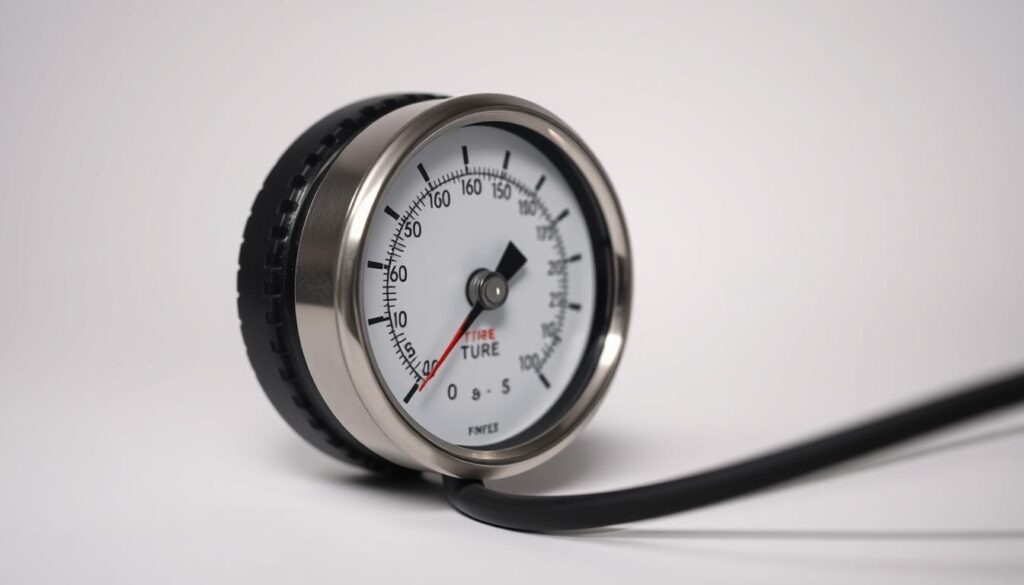
We need good tools to get accurate tire pressure. A quality tire pressure gauge is key. You can pick from digital or analog gauges, both are reliable.
Gas stations have air pumps with gauges. But, it’s better to have your own gauge for consistent readings. Portable tire inflators are handy for adjusting pressure anywhere. And, keep your valve caps tight to avoid air leaks.
Use a small notebook to track your pressure readings. This helps with your brake check schedule too. It lets you check both systems at the same time.
Optimal Timing for Accurate Measurements
For the most accurate readings, check tire pressure on cold tires. Do this before driving more than a mile or after parking for three hours. Driving heats up the tires, making pressure readings too high.
Check tire pressure monthly for most drivers. But, do it more often in extreme weather. And, always check before long trips for safe travel.
Check tire pressure early in the morning. This is when tires are coolest. Doing this with your brake check routine makes maintenance easier and covers more safety areas.
Bearings: What They Do and Why They Matter
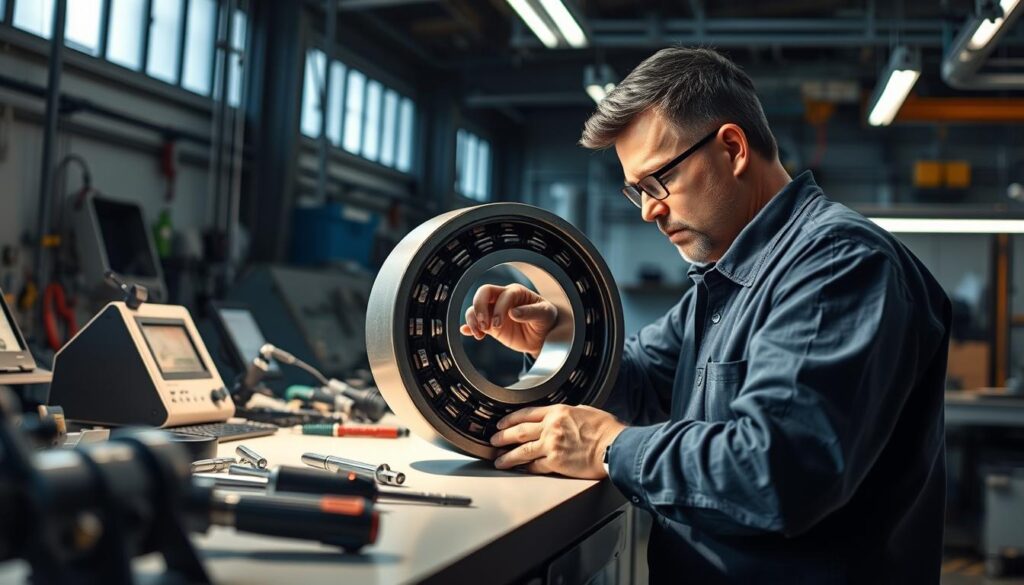
Our vehicle’s bearings are tiny marvels, holding thousands of pounds and making wheels turn easily. They have steel balls or rollers in a metal housing. These parts reduce friction, making our wheels spin smoothly.
When bearings work right, we don’t even notice them. Our wheels move quietly and easily, making driving a breeze. But, they face stress from our car’s weight, road conditions, and weather.
Over time, bearings can rust or wear down. Dirt, water, or debris can contaminate their lubricant. Regular checks help catch problems early.
Common Signs of Bearing Wear
Spotting bearing wear early can save us money and danger. The first sign is noise – like grinding, humming, or growling sounds that get louder with speed.
These sounds often start during acceleration or when turning. The noise gets louder as we go faster. This grinding noise means the bearing’s surfaces are getting rough and damaged.
Other signs include vibration in the steering wheel, felt at high speeds. We might feel a loose or wobbly feeling when turning. Some notice their car pulling to one side, like an alignment problem.
During an inspection, mechanics check for wheel play and heat buildup. These signs show if the bearings are worn.
The Role of Wheel Bearings in Vehicle Safety
Wheel bearings are key to our car’s safety. They hold our car’s weight and let wheels spin smoothly. If they fail, the results can be serious and fast.
Failed bearings can cause wheels to lock up, lose steering control, or even separate. These problems are very dangerous for us and others on the road. A locked wheel can make our car skid or roll. Wheel separation can lead to losing control completely.
Modern cars have sensors for ABS and stability control. Worn bearings can mess with these sensors, making our safety features less effective when we need them.
The cost of bearing failure is more than just the replacement. Emergency repairs, towing, and accident damage add up. Regular checks are a smart move for our safety and wallet.
Maintaining Your Bearings: Best Practices
Keeping bearings in good shape is key. We need to prevent problems and fix them fast. By following vehicle maintenance tips, we can protect these important parts.
Regular checks are vital for bearing care. We should safely lift our car and check each wheel. Little movement means bearings are fine, but too much means we need to act fast.
With the car in neutral, we can turn the wheels by hand. This helps us find any unusual sounds or feels. These simple steps can help us avoid costly repairs.
Regular Lubrication Techniques
Most cars today have sealed bearings that don’t need oil. They come filled with grease and last a long time.
But older cars might need their bearings greased. We should check our owner’s manual to see if ours need it. Getting a pro to do it right is best.
If our car has grease fittings, we can use a grease gun. But we must not overdo it. Too much grease can attract dirt and wear them down faster.
When to Replace Bearings
Don’t wait to replace bearings when you hear strange noises. Sounds like humming or grinding that change with speed mean they’re worn out.
Driving with bad bearings can harm other parts too. Fixing them early saves money and keeps your car safe.
It’s best to have a pro install new bearings. They have the right tools and know the correct torque to use. This ensures they work right and safely.
Replacing bearings in pairs is a good idea. This way, if one wears out, the other won’t cause imbalance. It helps your vehicle maintenance last longer.
Choosing good quality parts is important. Look for brands that match or beat the original ones. This ensures your bearings last longer and work better.
Brake Systems: An Overview
When we press the brake pedal, we count on a complex system. Our vehicle’s brakes are key to our safety every day. Knowing how they work helps us keep them in good shape and spot problems early.
The brakes turn our car’s motion into heat through friction. This happens fast when we press the pedal. Regular checks of brake parts keep us safe and avoid expensive fixes later.
A vehicle’s braking system is only as strong as its weakest part. Every part must work perfectly for safe stops.
Components of a Typical Brake System
Our brake system has many parts that work together. The master cylinder is the system’s heart, making our pedal pressure stronger. When we press down, brake fluid goes through steel lines to each wheel.
At each wheel, we have either disc or drum brakes. Disc brakes use pads that squeeze against rotors. Drum brakes use shoes that press against drums. Both systems stop our vehicle by using friction.
Brake fluid is key in moving pressure through the system. It must stay clean and at the right levels for good braking. We should check brake fluid often as part of our car care.
| Component | Function | Maintenance Frequency | Warning Signs |
|---|---|---|---|
| Brake Pads | Create friction against rotors | Every 25,000-50,000 miles | Squealing, grinding noises |
| Brake Fluid | Transfers hydraulic pressure | Every 2-3 years | Dark color, low levels |
| Rotors | Provide friction surface | Every 50,000-70,000 miles | Vibration, scoring marks |
| Master Cylinder | Amplifies pedal pressure | As needed | Soft pedal, fluid leaks |
How Brakes Work: The Science Behind Stopping
The science of our brakes is based on hydraulic pressure and friction. When we press the pedal, we create pressure in the master cylinder. This pressure grows through the system, reaching each wheel with great force.
Pascal’s Law explains how our brakes work. A little pressure on the pedal makes a lot of pressure at the wheels. This helps us stop big vehicles easily.
The friction between brake pads and rotors turns our motion into heat. This heat must go away fast to avoid brake fade. Good ventilation and quality parts help us stop well, even when it’s hard.
Knowing how brakes work shows why keeping them in check is so important. Any problem in the system, worn parts, or dirty brake fluid can make stopping hard. Regular checks find these issues before they’re a big problem.
Inspecting Your Brakes: Key Indicators
Our brakes tell us when they need help through different signs. By checking our brakes regularly, we keep our car safe and avoid expensive repairs. Paying attention to how our brakes work helps us stop safely.
Checking brakes means using our senses. We listen for odd sounds, feel the brake pedal, and look at the brakes. These steps help find problems that need a pro to fix.
Signs That Your Brakes Need Attention
There are clear signs when our brakes need a check. Squealing, grinding, or scraping noises mean our brake pads are worn out. This happens when the pad material wears down to the metal.
A spongy pedal that goes down too far can mean leaks or air in the system. If the pedal feels harder than usual, it might be worn out or dirty.
Vibration or pulsing in the pedal or steering wheel means warped rotors. This makes braking less effective and uncomfortable. Any burning smells after braking need a quick check by a pro.
How to Assess Brake Pad Wear
Looking at brake pads through the wheel spokes helps us see how they’re doing. Healthy brake pads should have at least a quarter-inch of material left.
When pads get too thin, they can damage rotors and make braking worse. Some pads have wear indicators that squeal when it’s time to replace them.
Checking brake pads regularly helps avoid sudden failures. If pads show uneven wear or are too thin, get them checked by a pro right away.
| Warning Sign | Possible Cause | Action Required | Urgency Level |
|---|---|---|---|
| Squealing noise | Worn brake pads | Replace brake pads | Moderate |
| Grinding sound | Metal-on-metal contact | Immediate repair | High |
| Spongy pedal | Brake fluid leak or air | Professional inspection | High |
| Vibrating pedal | Warped rotors | Rotor replacement | Moderate |
| Burning smell | Overheated brakes | Stop driving, inspect | Critical |
Best Practices for Brake Maintenance
We need a good brake maintenance plan to keep our car stopping well. Car safety is tied to brake care. Regular checks avoid expensive fixes and keep us safe from brake failures.
Our brakes work hard and wear down fast. Every brake press creates friction and heat. Without care, this can cause brakes to fail.
“Brake maintenance is not optional—it’s a matter of life and death. Regular inspections and quality parts are the foundation of safe driving.”
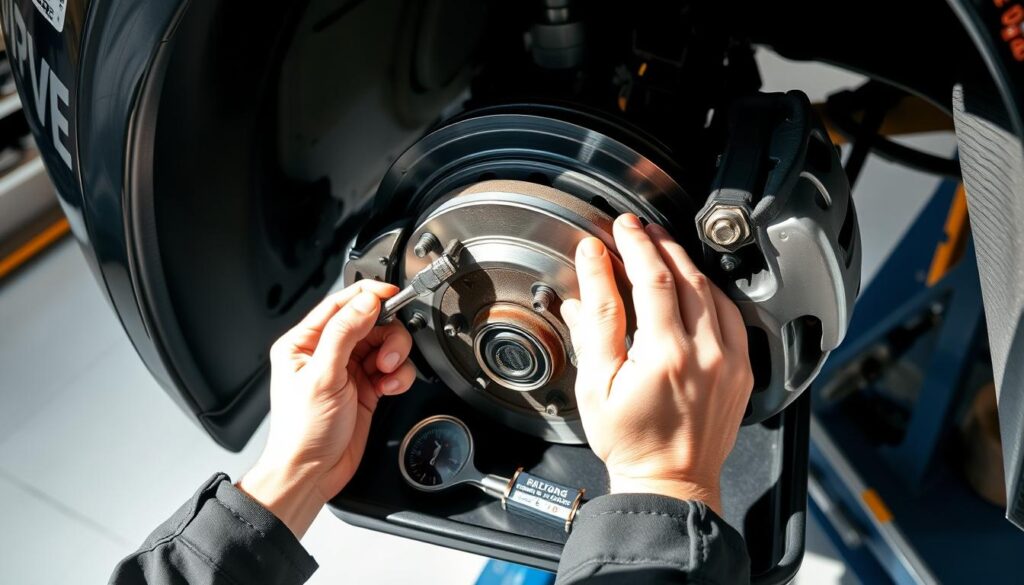
Regular Checks to Ensure Optimal Performance
Check brake fluid monthly to keep the system working right. Low brake fluid levels mean leaks or worn pads. The fluid should be clear or light amber.
Look through the wheel spokes to see brake pads and rotors. Brake pads thinner than a quarter-inch need to be replaced fast.
Get a brake check every year or 12,000 miles. Experts can find problems we miss. They check brake lines, calipers, and more for car safety.
| Maintenance Task | Frequency | Warning Signs | Safety Impact |
|---|---|---|---|
| Brake Fluid Check | Monthly | Low levels, dark color | High |
| Pad Inspection | Every 6 months | Squealing, grinding | Critical |
| Professional Service | Annually | Soft pedal, vibration | Essential |
| Rotor Examination | During pad changes | Scoring, warping | High |
Choosing Quality Replacement Parts
We should always choose the best brake parts. Premium brake pads and rotors cost more but stop better and last longer. Cheap parts fail fast and risk our safety.
OEM or similar parts work best for our car. They meet safety and performance standards. Generic or low-quality parts may not stop well when we need it.
Get parts installed by pros for the best results. They know how to install parts right. They also bed new brake pads to prevent wear and ensure top performance.
Conclusion: Prioritizing Vehicle Safety
Vehicle safety starts with our commitment to our cars and families. Regular inspections create a shield of protection for every journey. The three key areas – tire pressure, bearings, and brakes – are the base of safe travel.
Making Regular Inspections a Habit
Creating a routine takes just a few minutes each month. Start by checking tire pressure when you fill up with gas. Listen for unusual sounds that might signal bearing problems. Feel for changes in your brake pedal response during normal driving.
Mark your calendar for monthly checks. Keep a simple log in your glove compartment. When we inspect regularly, small issues stay small. This approach saves money and prevents dangerous breakdowns on busy highways.
Resources for Further Vehicle Care Education
Your vehicle’s owner manual has specific maintenance schedules. The National Highway Traffic Safety Administration offers free safety guides online. Local community colleges often provide basic automotive courses for car owners.
Professional mechanics are our best resource for complex repairs. Build relationships with trusted shops in your area. Many offer free safety inspections that complement your monthly checks.
Remember, keeping your car in good shape protects everyone on the road. Regular checkups and maintenance ensure vehicle safety and prevent breakdowns that could leave us stranded.