
Nothing ruins a camping trip faster than dead batteries when you need power most. We’ve all been there – trying to start the generator or run basic appliances only to discover our power source has failed us. RV battery maintenance isn’t just about keeping the lights on anymore.
Today’s recreational vehicles rely heavily on complex electrical systems. What once seemed optional has become absolutely essential for modern RV living.
Many RV owners, even experienced ones, overlook proper RV electrical system care. This common mistake leads to unexpected breakdowns and costly replacements. The good news? Preventing these issues doesn’t require extensive technical knowledge.
We’ll walk you through everything you need to know about deep cycle battery maintenance and electrical system care. Our guide covers different battery types, maintenance schedules, and troubleshooting tips. You’ll save money while ensuring reliable power for all your adventures.
Key Takeaways
- Regular battery maintenance prevents unexpected power failures during trips
- Modern RVs require more electrical power than older models
- Proper care extends battery life and saves replacement costs
- Different battery types need specific maintenance approaches
- Simple maintenance schedules prevent major electrical problems
- Understanding your electrical system helps avoid costly repairs
Understanding Your RV Battery Types
Knowing about RV battery types helps you take better care of them. Each type has its own benefits and needs. We’ll look at the main types to help you pick the right one for your trips.
There are three main deep-cycle battery types for RVs. Lead-acid batteries are the most common because they’re cheap. Lithium-ion batteries are the top choice for their great performance.
Lead-Acid vs. Lithium-Ion
Flooded lead-acid batteries need a lot of care. You must check their water level often and let them breathe. This is to avoid dangerous gas buildup in your RV.
Sealed lead-acid batteries, like AGM and gel, are easier to care for. They don’t need water checks and work better than old-style batteries. AGM batteries handle shaking well and charge up faster than gel ones.
Lithium-ion batteries are much lighter than lead-acid ones. They can be used until they’re almost empty, unlike lead-acid batteries. This is great for off-grid adventures where saving power is key.
The biggest challenge is the cost difference. Lead-acid batteries are cheaper but need to be replaced often. Lithium batteries cost more but last longer and need little care.
Maintenance Requirements for Each Type
Flooded lead-acid batteries need a lot of attention. You must check their water level every month and add distilled water when it’s low. You also need to clean their terminals often to stop corrosion.
AGM and gel batteries are much easier to care for. They don’t need water or frequent cleaning. But, they do need the right charging to last a long time.
Lithium-ion batteries need almost no care. They don’t need water, don’t make gas, and resist corrosion better. Most lithium systems have built-in systems to prevent overcharging.
Temperature affects all batteries differently. Lead-acid batteries lose power in cold but handle heat okay. Lithium batteries work better in cold but might need a heater in very cold weather.
When comparing batteries, think about both the cost and care needs. Consider how often you camp, your comfort with tech, and your budget. The best choice balances performance and ease of care.
Key Components of the RV Electrical System
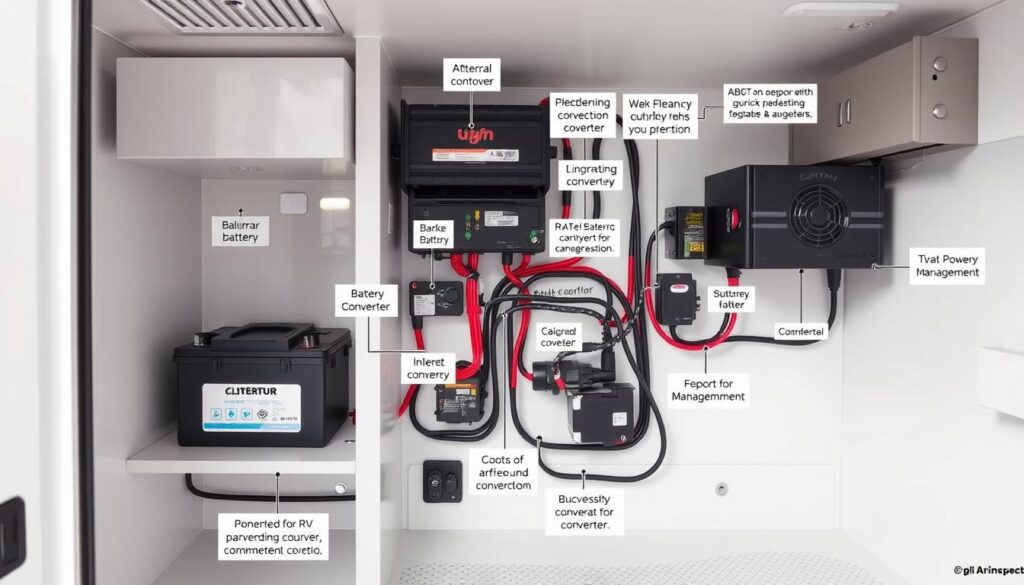
Every RV electrical system has core parts that convert, store, and distribute power. These RV electrical components work together to keep your adventures going. Knowing how they work helps you keep your system running well.
We’ll look at the three main parts of your RV’s electrical system. Each part has a special job to keep your power flowing right.
Power Storage and Conversion Units
Your battery is the heart of your RV’s power system. It stores energy for when you’re not plugged in. It gives 12-volt DC power for lights, water pump, and more.
The converter charger changes AC power from outside sources into DC power. It charges your batteries and powers your 12-volt systems at the same time. Newer chargers are better for your batteries than old ones.
Your inverter does the opposite of the converter. It turns DC battery power into AC electricity for appliances. Good inverter systems give clean, stable power that won’t hurt your electronics.
Protection and Safety Devices
Fuses and circuit breakers keep your system safe. They stop overloads and short circuits that could cause fires or damage. These devices cut power when they find a problem.
Fuses have a thin wire that melts when too much current flows. Circuit breakers trip when overloaded but can be reset. Both protect your system but work differently.
Check these safety devices often. Replace blown fuses right away and find out why they blew. Reset tripped breakers only after fixing the problem.
Wiring and Connection Standards
Good wiring connections are key to electrical safety in your RV. Bad connections can cause voltage drops, reduce efficiency, and lead to fires. These problems can make your system fail.
Use the right wire gauge for each job. The wrong size can overheat and cause fires. Always follow the manufacturer’s specs and local codes when wiring.
Battery compartments need good air flow, even with sealed batteries. VRLA batteries make gases when charging. Make sure your battery compartment has enough air to prevent gas buildup.
Check all connections often to catch problems early. Look for corrosion, loose terminals, or damaged insulation. Clean and tighten connections as needed to keep your power flowing well.
Regular Battery Checks
Monthly checks on our battery help us avoid being stuck. A good battery maintenance schedule stops small problems from getting big. We should check our RV’s battery every month.
Regular checks give us peace of mind on our trips. Looking after our battery saves money and avoids headaches. Let’s look at the key steps for keeping our battery in top shape.
“An ounce of prevention is worth a pound of cure, when it comes to RV electrical systems.”
Inspecting for Corrosion
We start by looking for corrosion signs on the terminals. White, blue, or green means acid is leaking. This can block electrical flow.
Corrosion often shows up first on the positive terminal. We check both terminals for any color changes or buildup. Catching it early makes cleaning easier.
Stopping corrosion begins with regular checks. We look for cracks or damage on the battery case. Swelling or warping means serious issues.
Checking Battery Voltage
Voltage testing shows us how our battery is doing. We use a digital multimeter to check voltage. A fully charged 12-volt battery should read about 12.6 volts.
Below 12.4 volts means it needs charging. For 6-volt batteries, we aim for 6.3 volts when fully charged. Below 6.2 volts means it’s time for a charge.
We test voltage when the RV is not connected to shore power. This gives us the real battery voltage. Testing under load tells us even more about the battery’s health.
Cleaning Battery Terminals
When cleaning terminals, safety is key. We remove the negative cable first, then the positive. This avoids sparks that could ignite gases.
We use a mix of baking soda and water to clean. This solution gets rid of acid without harming the battery. We gently scrub with an old toothbrush to remove corrosion.
After cleaning and rinsing, we reconnect the positive terminal first, then the negative. We use terminal protectant spray to stop corrosion. This simple step helps our connections last longer.
Charging Your RV Battery Properly
The art of battery charging is about timing, technique, and the right tools. We’ve found that charging right can double or triple your battery’s life. Most RV owners make mistakes that cost them hundreds of dollars in early battery replacements.
Knowing about charging cycles helps us make better choices. Modern batteries need specific voltages and stages to work best. Smart charging isn’t just about plugging in your battery—it’s about knowing when, how, and for how long.
When to Charge Your Battery
Charge your RV battery when it hits 50% capacity, not when it’s fully drained. This stops sulfation damage that lowers battery performance. Deep discharge prevention starts with checking your battery’s charge often.
Lead-acid batteries get damaged if discharged below 50%. The voltage should never go below 10.5 volts for long. Lithium batteries are more flexible, but regular charging is best for their performance.
Check your battery’s voltage every day when camping. A fully charged 12-volt battery should read about 12.6 volts. When it drops to 12.0 volts, it’s time to charge.
Using a Smart Charger
Smart chargers offer big advantages over simple chargers. They adjust their output based on your battery’s needs. Smart charger benefits include avoiding overcharging and extending battery life.
The three-stage charging process is systematic. Bulk charging gives maximum current to quickly restore 90% capacity. Absorption charging then fills it to 100%. Float charging keeps it full without harm.
We always pick smart chargers with temperature compensation. These adjust charging voltage for the weather, ensuring the best charging cycles in any condition.
Avoiding Deep Discharges
Stopping deep discharges needs careful watching and charging habits. Sulfation from deep discharges causes permanent loss in lead-acid batteries. Deep discharge prevention saves money and reduces road frustration.
Use a battery monitor to track power use in real-time. These devices show remaining capacity and estimate runtime. We see battery monitors as key for serious RV owners.
| Battery Type | Maximum Discharge | Minimum Voltage | Charging Frequency |
|---|---|---|---|
| Lead-Acid | 50% | 10.5V | Daily when in use |
| AGM | 50% | 10.5V | Every 2-3 days |
| Lithium-Ion | 80% | 9.6V | Weekly |
| Gel Cell | 45% | 10.8V | Daily when in use |
Proper charging cycles are more than just plugging in your charger. Temperature, charging rate, and battery age all matter. Keep detailed records of your charging habits to improve your system’s performance.
Understanding Battery Lifespan
We’ve learned that knowing about battery lifespan helps avoid surprises. Different batteries last for different times. Knowing this helps plan for when you’ll need a new one.
Things like temperature, how you use it, and care can affect how long it lasts.
Expected Service Life for Different Battery Types
Flooded lead-acid batteries last 3 to 5 years with good care. They need regular checks but are cheap upfront.
AGM batteries last 4 to 7 years with normal use. They’re sealed and work well in different temperatures. This makes them popular for RVs.
Lithium-ion batteries last 10 to 15 years or more. They have more charge cycles than lead-acid. This makes them worth the extra cost.
Recognizing When Your Battery Needs Replacement
We look for battery failure signs like slow engine starts. This is common in cold weather.
Dim lights and hard-to-use electronics mean voltage drops. If your battery won’t charge or needs water often, it’s time for a new one.
Swelling, bulging, or corrosion mean damage inside. These signs mean you need a new battery fast to avoid safety risks.
Maximizing Your Battery’s Service Life
Extending battery life means avoiding common problems. Things like sulfation, overcharging, and extreme temperatures can shorten its life.
Temperature affects how well a battery works. It’s best at 80°F but drops at freezing. Keep batteries in cool places when you can.
Regular charging stops sulfation. Smart chargers prevent overcharging. Storing with low drain and keeping flooded batteries’ levels right also helps.
Stick to a maintenance schedule and charge right. These steps can make your battery last twice as long.
Maintaining Proper Voltage Levels
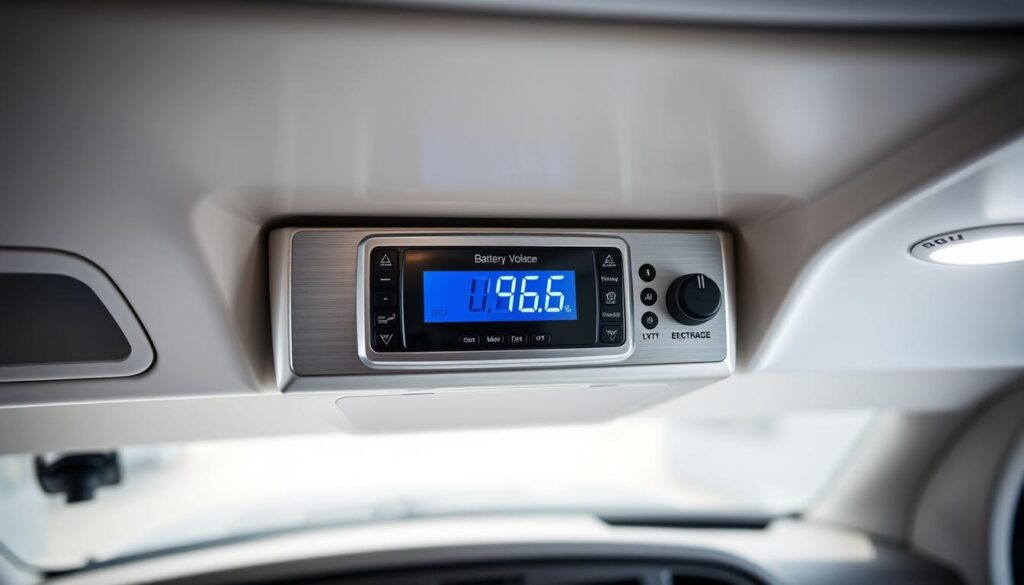
Voltage monitoring is key to managing your RV’s electrical system well. Keeping the right voltage is vital for your system’s performance and battery life. Think of voltage as the lifeblood of your electrical system – when levels drop too low, components struggle to function properly.
A fully charged 12-volt battery should produce 12.6 volts at rest. When voltage drops to 12 volts, your battery is already more than 50% discharged. This knowledge helps us make informed decisions about when to recharge and how to protect our investment.
Why Voltage Matters for Your System
Maintaining proper voltage levels directly impacts your electrical system health. Each cell in a lead-acid battery stores 2.1 volts, and when these cells begin to fail, overall voltage drops significantly. We’ve learned that keeping voltage above 12.4 volts prevents harmful sulfation buildup.
Low voltage conditions force your appliances to work harder, drawing more current to maintain operation. This increased demand creates a dangerous cycle that accelerates battery drain. Your refrigerator, lights, and water pump all depend on stable voltage to function efficiently.
We recommend checking voltage levels regularly, before and after heavy usage periods. Consistent monitoring prevents the deep discharges that can permanently damage your battery bank.
Choosing the Right Monitoring Equipment
Battery monitors provide far more information than simple voltage readings alone. These sophisticated devices track amp-hours consumed and replaced, giving us accurate capacity readings that basic multimeters cannot provide. We consider them essential tools for serious RV power management.
Modern battery monitors alert us to low voltage conditions before damage occurs. They display real-time information about current flow, state of charge, and remaining capacity. This data helps us make smart decisions about energy usage and charging schedules.
A quality battery monitor system pays for itself by extending battery life and preventing unexpected power failures during your travels.
We’ve found that investing in battery monitors with smartphone connectivity adds convenience and peace of mind. These systems send alerts when voltage drops below safe levels, even when we’re away from the RV. The ability to track historical data also helps identify patterns and possible issues before they become expensive problems.
Remember that voltage monitoring works best when combined with regular maintenance practices. Clean terminals, proper charging habits, and appropriate storage all contribute to maintaining optimal voltage levels throughout your RV’s electrical system.
Tips for Winterizing Your Electrical System
Cold weather can hurt your RV battery’s performance and life. We know that getting ready for winter is key. Winterizing batteries and electrical parts keeps your RV running when camping starts again.
Winter slows down battery chemical reactions and raises damage risk. A full battery can handle -92°F. But a nearly empty battery freezes at 19°F, causing lasting damage.
Preparing for Cold Weather
We start by fully charging all batteries before storing them. This step helps protect against freezing and sulfation.
Here’s our checklist for getting ready:
- Clean all battery terminals and connections with a wire brush
- Apply petroleum jelly or terminal protector spray to prevent corrosion
- Check electrolyte levels in lead-acid batteries and top off if needed
- Test battery voltage with a multimeter to ensure full charge
- Inspect wiring for damage or loose connections
We also disconnect the negative battery cable. This stops small drains that can harm batteries over time.
Battery Storage Recommendations
Cold weather storage needs careful planning. We take batteries out of the RV to control their environment better.
The best storage spot is between 32°F and 80°F. A basement or heated garage is ideal. Don’t store batteries on concrete floors, as it speeds up discharge.
Monthly checks are key for battery health:
- Check voltage levels with a digital multimeter
- Recharge batteries if voltage drops below 12.4 volts
- Inspect terminals for corrosion or damage
- Record voltage readings to track performance trends
For RVs plugged in during winter, monthly checks are also needed. Quality multistage chargers help, but watching them ensures they work right.
Even in storage, batteries self-discharge. Regular checks prevent deep discharge damage. This simple routine keeps your electrical system safe and extends battery life.
Troubleshooting Common Electrical Issues
Every RV owner will face electrical challenges. Knowing when to fix it yourself or call a pro is key. We’ve seen every electrical problem in RVs. Early detection stops small issues from becoming big problems.
Understanding your RV’s symptoms and having the right tools is important. Most RV electrical problems follow patterns we can learn.

Recognizing Warning Signs Early
We look for symptoms that show electrical problems are coming. These signs often appear weeks before a big failure.
Battery-related symptoms include batteries that won’t charge overnight. This usually means a parasitic load is draining power when the RV is off.
Lighting issues are another sign. Dimming lights when appliances start up mean voltage drops. These can damage electronics over time.
- Frequent blown fuses or tripped circuit breakers
- Strange burning smells from electrical panels
- Buzzing or crackling sounds from outlets
- Appliances that cycle on and off unexpectedly
- Hot spots on electrical connections
We also watch for intermittent problems. These often mean loose connections that get worse with travel.
When to Handle Repairs Yourself
Many electrical issues are DIY-friendly for basic skills. We do routine maintenance to save money and stay self-sufficient.
Safe DIY repairs include cleaning battery terminals, replacing fuses, and tightening connections. We use a multimeter to test circuits for voltage problems.
Our basic toolkit has what we need for common repairs:
- Digital multimeter for voltage testing
- Wire strippers and electrical tape
- Assorted fuses and spare breakers
- Contact cleaner and dielectric grease
- Insulated screwdrivers and pliers
But we know when to call a pro for complex issues. Professional electrical service is needed for complex wiring, inverter failures, or 120-volt AC systems.
We avoid DIY repairs on converter units, main electrical panels, or shore power connections. These carry serious risks of electrocution or fire.
Safety first – if unsure, it’s better to pay for professional service than risk injury or fire.
When calling a pro, we document symptoms and recent changes. This helps technicians diagnose problems quickly, saving time and money.
Best Practices for Long-Term Care
We think that regular care is key for your RV’s electrical system to work well. A good maintenance plan saves money and avoids breakdowns on the road. RV owners who keep up with maintenance have many happy trips.
Creating Your Maintenance Schedule
Make a monthly plan for checking voltage, inspecting terminals, and watching battery levels. Every three months, do a deeper check of connections and wiring. Seasonal checks should include load tests and detailed notes. This way, you won’t miss anything important.
Prioritizing System Cleanliness
Cleaning your electrical system is very important. We clean out dust, moisture, and dirt from battery areas and connections. A clean system stops corrosion and electrical problems.
Keeping your RV’s electrical system in good shape is all about being consistent and careful. We keep records of our maintenance, including voltage checks and any issues. This helps us spot problems early. A little maintenance each month keeps your RV running smoothly for all your trips.