Imagine teaching your kids while seeing America’s beauty. Thousands of families are making this dream real by mixing learning with travel.
We’ve talked to families who’ve mastered learning on the move. One family has taught their three kids for five years in their RV. Another family did 18 months in Australia and 12 months in the USA.
These stories show that good education doesn’t need classrooms. With good planning and the right attitude, you can teach your kids best while making memories.
This guide is for parents wanting to homeschool on the road. We’ll share useful homeschooling tips for traveling.
Whether you’re going on a short trip or living in an RV full-time, we get your worries. Our aim is to show you that road schooling can be better than you think.
Key Takeaways
- Many families mix full-time travel with quality education.
- Road schooling works for kids of all ages, from preschool to high school.
- Good planning and choosing the right curriculum are key to success.
- Mobile education offers unique learning chances not found in regular classrooms.
- Real-life experiences make learning about geography, history, and science more meaningful.
- Flexible schedules let families fit education into their travel life.
Introduction to Homeschooling on the Road
Imagine turning your family’s travel adventures into the most engaging classroom your children will ever experience. Road schooling lets families learn while they explore. It turns every place into a classroom where learning is real.
We think education should be more than just sitting in a classroom. Travel education offers experiences that regular school can’t. Your family can learn about geology while hiking or study history while walking the Freedom Trail.
Understanding the Concept of Road Schooling
Road schooling, or worldschooling, means learning while traveling. It lets families keep up with schoolwork while seeing new places. Unlike regular homeschooling, it uses travel as part of the learning.
This isn’t just about doing homework in different places. We use museums, parks, and local areas as classrooms. Kids learn by doing, making learning fun and real.
Some families start with short trips to see if they like it. Others go on long trips right away. The best thing about travel education is it fits your family’s needs.
Benefits of Homeschooling While Traveling
Road schooling has many benefits. Flexibility is a big one, letting families learn at their own pace. Kids can spend more time on hard subjects or move faster if they can.
Traveling together means more quality time together. Families grow closer through shared adventures. Kids become more confident, adaptable, and good at solving problems.
Learning about different cultures is a big part of road schooling. Kids see new communities and traditions. This helps them understand and appreciate different cultures in a way books can’t.
| Traditional Schooling | Road Schooling | Key Advantage |
|---|---|---|
| Fixed schedule and location | Flexible timing and destinations | Personalized learning pace |
| Limited field trip opportunities | Daily real-world experiences | Enhanced practical learning |
| Standardized curriculum | Customized educational approach | Interest-driven education |
| Classroom-based learning | Experiential education | Memorable learning experiences |
Key Considerations for Parents
Before starting your road schooling journey, think about a few things. You’ll need internet for online learning and staying in touch. Also, check the laws in your state and where you’ll be traveling.
Legal rules for homeschooling vary a lot. You might need to show proof of learning or follow certain rules. Make sure you know what’s required.
Plan your budget carefully. Think about fuel, campsites, car upkeep, and school stuff. Travel education can save money, but unexpected costs can happen.
Choosing the right vehicle is important. Think about how many people you have, how much stuff you need, and how comfortable you want to be. Some families use RVs, while others like tent camping or staying in budget places.
Planning Your Curriculum
Choosing the right homeschool curriculum for travel is key. It should be flexible and ready for adventure. Your curriculum needs to be easy to carry and adapt to new places.
Many families use different ways to learn on the road. Some like structured workbooks. Others prefer online learning for its flexibility. Educational travel lets you pick what works best for your family.

Choosing the Right Educational Resources
Look for homeschool curriculum that’s easy to take with you. Workbooks like Abeka keep you organized. They have clear plans and help keep learning consistent.
Online learning is also great for families on the move. It’s flexible and has professional teachers. Just make sure you have good internet. Many programs let you download lessons for offline use.
Books and unit studies are perfect for learning on the road. You can use classic books and explore different topics. This way, you can learn a lot while traveling.
Incorporating Local History and Culture
Educational travel lets you learn by doing. Imagine learning about the Civil War in Gettysburg. Or studying geology at the Grand Canyon.
Research your destinations before you go. Look for places that fit your curriculum. Many places have special programs for homeschoolers.
“The world is a book, and those who do not travel read only one page.”
Local libraries are great for learning and meeting other families. They often have special programs and resources.
Setting Realistic Learning Goals
Focus on core subjects like math and reading. But also let travel enrich your learning in science and history. This way, you cover important skills and enjoy the journey.
Set goals for the week, not every day. This helps when you’re on the move or have unexpected adventures. Be flexible so you can learn in new ways.
Keep track of your progress but don’t worry about being perfect. Road schooling is about making lifelong learners. Celebrate the journey and know your kids are getting experiences that classrooms can’t offer.
Legal Considerations for Homeschooling
Before starting your homeschooling journey, it’s important to know the laws in your state. These laws can seem complex, but knowing them helps protect your family. Each state has its own rules, making it important to understand them well.
Following the law is key to successful homeschooling. Families often face stress if they don’t follow these steps. But, with the right preparation, you can handle the legal side while enjoying your family travel adventures.
Understanding State Laws and Requirements
State homeschool laws vary a lot in the U.S. Some states, like Texas, have easy rules for homeschooling. Others have strict rules that might limit your travel.
You need to pick a state to homeschool in. Many families choose states with good homeschool laws. They might use a relative’s address or a mail forwarding service.
The laws you’ll face cover a few main areas. Compulsory attendance ages tell you when your kids must start school. Notification requirements say if you must tell the state you’re homeschooling. Subject requirements list what you must teach in your curriculum.
| State Category | Notification Required | Testing Requirements | Record Keeping | Travel Flexibility |
|---|---|---|---|---|
| Low Regulation | None | None | Minimal | High |
| Moderate Regulation | Annual Notice | Optional | Attendance Records | Medium |
| High Regulation | Detailed Plans | Annual Testing | Comprehensive | Limited |
| Very High Regulation | Approval Required | Multiple Assessments | Professional Review | Very Limited |
Filing the Necessary Paperwork
The first step is to withdraw your kids from their current school. This creates a record of your homeschooling start. Talk to your school’s main office to learn how to do this.
Then, file a notice of intent to homeschool with your state’s education department. This form will have your kids’ info, your plans, and how to reach you. Some states need this every year, others just once.
States also ask for certain homeschool resources and documents. These can include your curriculum, attendance records, and your kids’ work. Keep copies of all paperwork in both hard and digital copies for easy access.
“The key to successful homeschooling compliance is organization and consistency. Families who establish good record-keeping habits from the beginning find the legal requirements much more manageable.”
Keeping Track of Educational Progress
Keeping detailed records is important for more than just following the law. They help you see how your kids are growing and what they need to work on. They’re also useful when you’re traveling and can’t use traditional schools.
Use a portfolio system to keep track of your kids’ work. Many families use digital portfolios that can be accessed from anywhere. Photograph or scan important documents to keep them safe.
Even traveling families need to keep attendance records. Record the days and hours your kids spend learning, including field trips and museum visits. These experiences can be more valuable than classroom learning.
It’s a good idea to check in regularly to see how your kids are doing. This can include tests, portfolio reviews, or written assessments. Some states require specific tests, while others are more flexible. Research your state’s requirements to meet all standards.
Technology can make keeping records easier. There are many apps and online platforms made for homeschooling families. They help with lesson planning, tracking grades, and making reports. These tools are very helpful when you’re traveling and homeschooling at the same time.
Creating a Flexible Learning Environment
The secret to great RV schooling is making learning spaces that move with you. Turning your RV into a classroom needs careful planning and creative ideas. This makes learning fun and helps your family adapt to life on the road.
Worldschooling is more than just books and homework. It’s about learning from the world around you. Every place you visit can teach you something new, linking what you learn to real life.
Utilizing Travel as a Classroom
Traveling makes the world your classroom. National parks are great for learning about science and nature. Historic sites give history lessons that books can’t.
Local communities teach you about different cultures and ways of life. Your kids can learn by talking to people from all walks of life. Plan your stops to match your learning goals.
Here are some great places to learn:
- Museums and cultural centers for hands-on learning
- State and national parks for science and nature
- Local farms and businesses for economics and agriculture
- Historical landmarks for deep history lessons
Designating Learning Areas in Your Vehicle
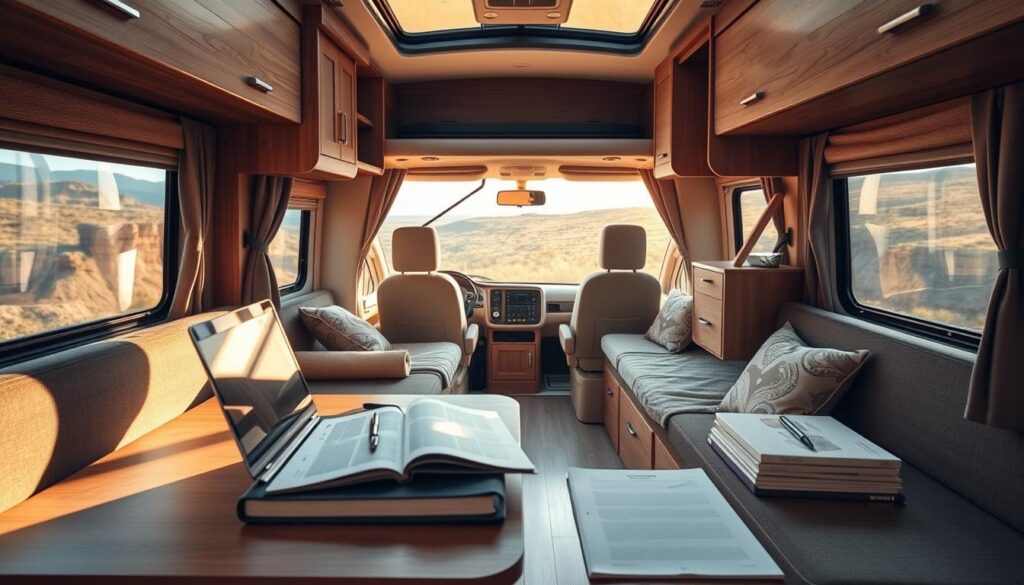
Successful RV schooling families have special learning spots in their RVs. The kitchen table is often the main study area. Some also set up desks in bedrooms or convert dinettes into study areas.
Keeping things organized helps you stay focused. Use bins for school stuff and label everything. This makes it easy for your kids to find what they need.
Outdoor spaces are great too. Picnic tables at campsites are perfect for learning outside. Being in nature helps kids focus better than being indoors.
Incorporating Technology into Your Lessons
Technology makes worldschooling better by connecting you to learning resources everywhere. Laptops and tablets are key for online lessons, videos, and virtual field trips.
Plan your route for good internet. Many educational programs need internet for streaming and assignments. Find campsites with strong Wi-Fi before you go.
Here are some tech tools you’ll need:
- Educational apps for interactive learning
- Online curriculum platforms for structured lessons
- Digital cameras for documenting your learning
- Portable hotspots for backup internet
Balancing Travel and Education
Learning to balance travel and education makes road schooling magical. Families find harmony by setting routines and staying flexible. This balance lets them enjoy both learning and adventure.
Most families spend 1-2 hours daily on lessons. This focused time is better than long school days. Kids learn more when lessons are short and meaningful.
Creating a Dedicated Schedule
Study sessions in the morning work best. Kids are alert and focused before they start exploring. Try to finish lessons by noon.
Your schedule should include:
- Core subjects first – tackle math, reading, and writing when minds are fresh
- Flexible timing – adjust around travel days and special attractions
- Built-in breaks – allow time for physical activity and exploration
- Weekly planning sessions – review upcoming destinations and learning opportunities
Consistency is key, not perfection. Some days will be lighter on learning. That’s okay when you’re making travel education experiences rich.
Making Learning Fun on the Road
Everyday experiences become lessons on the road. Local attractions make learning real and memorable.
Use these homeschooling tips to keep kids engaged:
- Incentive systems – reward completed work with screen time or special activities
- Location-based learning – connect lessons to your current destination
- Hands-on projects – create travel journals, collect specimens, or document experiences
- Educational games – turn car time into learning time with word games and trivia
When kids see learning as an adventure, they become curious and engaged. This makes your job more fun.
Encouraging Independence in Learning
Teaching kids to learn on their own is beneficial. It helps you and builds important life skills.
Have kids set up their own study spaces each morning. This builds ownership and responsibility. Teach them to organize, track progress, and ask for help when needed.
Independent learners solve problems and feel confident. They manage their time well and take pride in their work. These homeschooling tips help kids thrive in any learning setting.
Even young kids can do basic tasks. Older kids can plan their day and research destinations for learning.
Resources for Road Schooling
Quality educational materials are key for successful road schooling. The right homeschool resources can make your car a great learning spot. You can choose from traditional books or digital tools, depending on what works best for your family’s educational travel plans.
Recommended Books and Workbooks
The Abeka curriculum is a top choice for many families. It offers structured lessons and sample calendars to keep you on track. The workbooks are easy to carry and don’t need a lot of setup.
Literature-based learning is also great for road schooling. It uses real books instead of textbooks. This method is perfect for adding local history and culture to your lessons.
Here are some popular workbook options:
- Abeka – Complete curriculum with detailed teacher guides
- Saxon Math – Builds skills gradually
- Trail Guide to Learning – Unit studies for travel themes
- Beautiful Feet Books – Focuses on history through literature
Online Programs and Apps for Learning
Digital homeschool resources offer great flexibility for traveling families. Programs like K-12 offer professional lessons with little parent effort. But, you’ll need internet to use them well.
Educational apps can add fun to your learning. They’re great for travel days. YouTube has free educational videos on almost any subject.
Here are some top online tools:
- Khan Academy – Free courses for all grades
- IXL Learning – Adaptive practice in math and language arts
- Duolingo – Learn languages while traveling
- BrainPOP – Animated educational videos and activities
Connecting with Other Homeschooling Families
Connecting with other homeschooling families is very important. Groups like Full-time Families and Xscapers host great events. These meetups offer socialization for kids and support for parents.
Facebook groups for your RV brand or homeschooling interests are full of helpful tips. They share real experiences and solutions. These groups get the challenges of educational travel.
Here are some popular community resources:
- Full-time Families – Nationwide RV family organization
- Xscapers – Community for younger RV families
- RV Homeschool Facebook Groups – Support communities for RV brands
- Local homeschool co-ops – Temporary participation in various locations
Engaging with Local Communities
Traveling with family can be more than just a trip. It can be a chance to learn and grow together. By exploring new places, we find that every spot is a classroom. This way of worldschooling makes memories and lessons that last forever.
To really connect with local communities, we need to be curious and respectful. Before we go, it’s good to learn about the local customs and culture. This helps us make deeper connections with the people we meet.
Finding Educational Opportunities in Each Destination
Every place has its own special lessons. National parks have Junior Ranger programs for kids to learn about nature. Local museums offer interactive exhibits that bring history to life.
Historic sites give guided tours that make the past feel alive. Many places have festivals and events that show off local traditions. We can find out about these by visiting visitor centers and websites.
Zoos and aquariums offer tours and programs for homeschoolers. These teach kids about animals and science in a way books can’t.
Volunteering as a Learning Experience
Volunteering is a great way to learn and help others. Service learning teaches kids about being a good citizen. Many places welcome families for short volunteer projects.
Beach cleanups teach about the environment. Food banks and animal shelters offer lessons in community service. These experiences show kids how they can help the world.
“The best education happens when children see how their actions can make a real difference in the world around them.”
We suggest looking up volunteer opportunities before we go. Some places need background checks or orientation. Planning ahead makes sure we can help out smoothly.
Networking with Other Homeschoolers
The homeschooling community is very welcoming. Connecting with local groups offers kids a chance to make friends and parents a support network. These connections often lead to group trips and lasting friendships.
Online and social media groups help us find other homeschooling families. Many cities have homeschooling cooperatives that welcome visitors. RV parks and campgrounds are also great places to meet other families.
We should always introduce ourselves to other families. Sharing experiences and resources makes our travels even more special. These connections create a supportive community wherever we go.
Assessing Educational Outcomes
Evaluating learning outcomes on your homeschool journey is exciting. It’s different from traditional classrooms. Road schooling offers unique opportunities to measure growth through real-world experiences.
Meaningful assessment goes beyond standardized tests. Your mobile classroom lets you evaluate learning through hands-on projects. Travel journals and portfolio collections showcase your child’s educational journey.
Creating Assessments and Projects
Developing assessments while traveling needs creativity and flexibility. Mix traditional workbook evaluations with experiential learning projects that match your travel destinations.
Have your child create a science presentation at the Grand Canyon or write a history report at Civil War battlefields. These projects offer authentic assessment opportunities that traditional classrooms can’t match.
Travel journals are great assessment tools. Encourage your children to document their learning experiences. They should write about places they’ve visited and reflect on new discoveries. This helps evaluate their writing skills, critical thinking, and ability to connect learning with real experiences.
Tracking Progress and Growth
Monitoring your child’s educational progress needs systematic documentation. Create a portfolio system with workbooks, project photos, and learning milestone records.
Many road schooling families use digital portfolios. They include photos of project presentations, videos of educational activities, and scanned assignments. This documentation is valuable when communicating with distance education teachers or state education officials.
“The beauty of homeschooling is your ability to see learning happen in real-time and adjust immediately when something isn’t working.”
Regular evaluations sent to distance education teachers help maintain accountability. They provide professional feedback on your homeschool curriculum effectiveness. These check-ins ensure you’re meeting educational standards while keeping the flexibility that makes road schooling appealing.
Adjusting Your Approach as Needed
The greatest advantage of road schooling is adjusting your educational approach as needed. Have regular conversations with your kids about their learning preferences and challenges.
If your current homeschool curriculum isn’t engaging your child, you can try new methods right away. Maybe your visual learner needs more hands-on activities, or your kinesthetic learner requires more movement-based lessons.
Successful road schooling families adjust their strategies based on their children’s learning styles and interests. They take advantage of the unique opportunities each destination provides. This flexibility ensures learning remains positive and productive throughout your journey.
Tips for Staying Organized
The secret to doing well with RV schooling is to have systems that make learning stuff easy to find. We’ve found that families who do well on the road have smart ways to keep things neat. These homeschooling tips will help you stay organized and enjoy learning on the move.
Living in a mobile home means you need to plan smart and find creative ways to store things. The best families at road schooling know that being organized is more than just being tidy. It’s about making a system that helps you learn and uses every bit of space.
Using Tools and Apps for Planning
Digital tools change how we plan RV schooling schedules and homework. We suggest using apps like Trello for organizing projects and Google Calendar for planning lessons. These apps let everyone stay on the same page with learning goals.
Planning apps help us keep track of homework, set reminders, and stay in touch with online classes. Todoist is great for breaking down big tasks into smaller ones. We also use Evernote to save research and make digital notebooks for each subject.
The best thing about digital planning is how flexible it is. When our travel plans change, we can adjust our learning schedule easily. These tools help us keep our homeschooling tips routine going, no matter where we are.
Maintaining a Learning Portfolio
Keeping a detailed learning portfolio is even more important when you’re schooling on the road. We document our kids’ learning journey with photos, worksheets, and project samples. This visual record shows the special opportunities of RV schooling.
Digital portfolios are perfect for families on the move because they don’t take up space. We use cloud storage to organize folders by subject and date. Screenshots of educational apps and photos of field trips add depth to traditional school records.
Regularly reviewing our portfolio helps us see what we’ve learned and what we need to work on. We involve our kids in this, helping them see how far they’ve come and what they can aim for next. This makes their education journey meaningful beyond just grades.
Managing Supplies and Resources
Good supply management turns messy RV spaces into places where learning happens. We use clear bins labeled by subject and child’s name to keep things easy to find. Under-table storage and overhead spots are great for hiding these bins.
The secret to managing supplies well is to check what you have often and get rid of what you don’t use. We sort through our stuff every month, keeping only what we use regularly. This stops our limited space from getting cluttered with things we don’t need.
| Storage Solution | Best For | Space Efficiency | Accessibility |
|---|---|---|---|
| Clear Stackable Bins | Subject-specific materials | High | Excellent |
| Under-table Drawers | Daily supplies | Medium | Very Good |
| Overhead Compartments | Seasonal materials | Very High | Limited |
| Door Organizers | Quick-access items | Medium | Excellent |
We’ve found that multipurpose supplies are best for families schooling on the road. Things like colored pencils, rulers, and calculators can be used for many subjects. This way, we need to store fewer things, making our homeschooling tips more effective.
Troubleshooting Common Challenges
We know that family travel and homeschooling have their own challenges. Road schooling is exciting but also brings unique problems. The key is to spot these issues early and find practical strategies to solve them.
Patience and flexibility are key for families. Some days will go smoothly, while others might be tough. Remember, this adjustment period is normal, and every family faces it differently.
Handling Distractions While Traveling
New places can make it hard for kids to focus on schoolwork. Instead of fighting distractions, see them as chances to learn. Turn a roadside attraction into a geography lesson or use wildlife for science talks.
Set aside learning times to keep education separate from fun. Many families use morning study sessions before starting their day. This helps kids do their work when they’re most focused.
Use tools like noise-canceling headphones or study dividers to focus better. These simple items can help reduce distractions in your mobile classroom.
Dealing with Different Learning Styles
It’s hard to meet different learning needs in small spaces. Some kids do well with structured work, while others need movement-based learning. Knowing these differences early helps avoid frustration.
Kinesthetic learners do well with hands-on activities outside. Visual learners might like educational videos or colorful books. Auditory learners often enjoy storytelling sessions or podcasts during drives.
Being flexible is key when space is tight. Mix up teaching methods and take learning outside when you can. These homeschooling tips add variety to your day.
Keeping Kids Motivated
Keeping kids excited about learning in new places needs creative ideas. Successful families use incentive systems to link learning to fun activities. Doing math might get you more playground time, or reading might earn screen time.
Set achievable daily goals to avoid too much structure. Break big tasks into smaller ones that feel doable. Celebrate small wins to keep the positive vibe going.
Link what you’re learning to your next destination. Learning about the Civil War becomes more interesting when you’re going to Gettysburg. This makes education more meaningful and builds excitement for future trips.
Some days will be harder than others, and that’s okay. The unique experiences and bonding from road schooling are worth it. Trust the process and believe in your family’s ability to adapt and succeed.
Conclusion: The Joy of Road Schooling
Road schooling turns your family’s education into a memorable journey. It builds strong family bonds and opens doors to experiences schools can’t offer.
Making Lifelong Learning a Family Adventure
Embracing educational travel as a family teaches kids that learning never ends. Every mile is a chance to learn, and every place offers new lessons. Families say road schooling was worth it, even with challenges.
Children often do better in school after road schooling. They become more independent and confident.
Encouraging Curiosity and Exploration
Worldschooling sparks curiosity in kids. Each new place offers chances to discover. Your child might learn fractions by calculating distances or explore history at battlefields.
These real-world lessons make learning fun and memorable.
Celebrating Educational Milestones Together
Achievements are more special when they happen in beautiful places. Whether it’s a science project at the Grand Canyon or reading a book in an RV, these moments are unforgettable. They strengthen family bonds and teach resilience and problem-solving skills.
Road schooling prepares kids to face life’s adventures with confidence.