Living in a small RV as a couple might seem tough at first. But, thousands of adventurous couples in America are finding something amazing. Sharing 200 square feet can actually strengthen relationships and create unforgettable memories on the road.
Take Claire and Brandon, for example. This inspiring couple spent two years traveling in their 25-foot travel trailer with their pets. They found that their 250 square feet was “more than enough” for comfortable living. Their story shows that couples RVing together can find true fulfillment in compact spaces.
We’ve gathered insights from experienced RV couples like Claire and Brandon. The secret is understanding each other’s needs and setting clear boundaries. Embracing tiny living opportunities makes all the difference between surviving and thriving on the road.
This guide will walk you through what we’ve learned. We’ll show you how to make RV life enjoyable and harmonious for both partners.
Key Takeaways
- Small RV spaces can strengthen couple relationships instead of straining them
- Successful RV couples establish clear boundaries and respect each other’s needs
- Most couples adapt to compact living much faster than expected
- Communication and compromise are essential skills for peaceful RV coexistence
- Proper planning and organization maximize comfort in limited square footage
- Shared adventures and experiences often outweigh space limitations
Understanding the Unique Challenges of RV Living
RVing is tough for couples in many ways. It’s not just about the small space. The real challenges often run deeper than square footage, affecting daily life and relationships.
Adapting to RV life means more than downsizing. It’s about changing how you interact and keep your identity. This journey tests patience, flexibility, and problem-solving skills in new ways.
Space Limitations and Their Impact on Relationships
Living in 200 square feet changes everything. Every movement, conversation, and activity is shared with your partner. Morning routines need careful planning.
Without separate spaces, conflicts can’t be hidden. Couples must create personal space within shared space. This might mean stepping outside for phone calls or finding quiet spots.
Storage limits mean constant decisions on what to keep or throw away. Decision-making becomes a team sport with no room for impulse buys.
Emotional and Psychological Factors
Being together all the time can be overwhelming. Many couples feel “proximity fatigue” – the need for alone time. Individual identity can feel threatened when personal space disappears.
Brandon said tiny living needs “a high level of determination and perseverance to build new habits.” This adjustment period varies but often includes stress and challenges.
RV life is unpredictable, adding emotional complexity. Claire said “things fall, spill, and/or shatter” when moving. Camping spots can also be unpredictable. These challenges require quick adaptation and teamwork.
Essential Communication Strategies
Communication is key in small spaces. There’s no room for letting issues fester when living close together. Partners must express needs and frustrations clearly and kindly.
Traditional communication patterns often need a complete overhaul. Couples use verbal cues, timing, and even physical positioning for respectful dialogue. The goal is to find systems that work in RV living.
Successful RVing couples have regular check-ins. They discuss what’s working and what’s not. They create safe spaces for honest conversation to prevent small issues from becoming big problems.
Essential RV Features for Couples
The right RV features can make or break your experience as a couple. Choosing a rig designed for two is key. Smart feature selection turns cramped spaces into a cozy home on wheels.
Your RV is your bedroom, kitchen, office, and living room all in one. Every inch counts when two people live there. The features you choose will help your adventure strengthen your bond or test it every day.
Choosing the Right Floor Plan
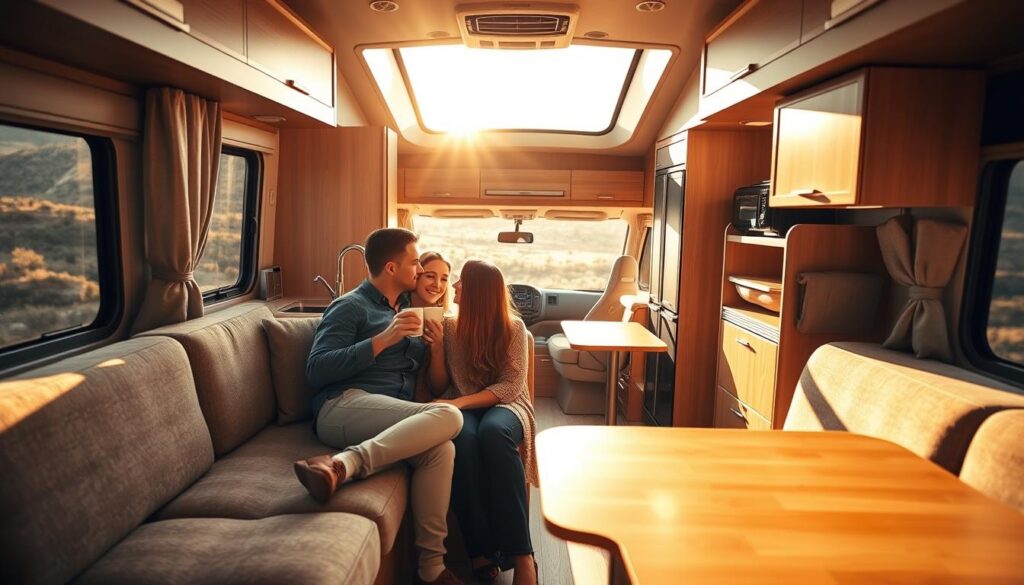
Floor plan selection is the base of RV harmony. We suggest layouts with natural separation zones in small spaces. Look for designs with clear areas for sleeping, cooking, and relaxing.
Claire and Brandon picked a 25-foot Nash trailer with their Ford F-250. They later said they’d choose a smaller rig if they could. Their story shows that bigger isn’t always better in small spaces.
Slide-outs can expand your living area when parked. They offer extra room for daily activities without losing mobility. Having enough counter space is key, as you’ll likely cook together often.
Storage Solutions: Maximizing Every Inch
Clutter can stress relationships in tight spaces. We’ve found that abundant built-in storage prevents fights. Overhead cabinets, under-bed compartments, and creative spots make the most of every inch.
Smart storage includes:
- Multi-purpose furniture with hidden spots
- Vertical storage for walls and doors
- External storage for seasonal items
- Modular organizers that change with your needs
Organization systems keep order in shared spaces. Having designated spots for personal items reduces daily stress and searching.
Comfort Amenities: Making it Feel Like Home
Comfort amenities turn your RV into a home. Quality lighting sets the mood and eases eye strain. Comfortable seating for two ensures you both have places to relax.
Key comfort features include good ventilation and temperature control. These are more important in small spaces and affect your daily comfort. Good airflow prevents stuffiness and moisture buildup.
Claire and Brandon said having a strong tow vehicle is key. It lets you explore nature and get out of tough spots. This advice applies to your whole setup, not just the RV.
We focus on functionality over luxury when picking amenities. Practical comfort is more valuable than fancy features that take up space.
Setting Boundaries: Personal Space in Tight Quarters
Living in a tiny home on wheels means setting personal boundaries is key. It’s not just about living together; it’s about respecting each other’s space. We’ve found that making invisible lines of respect is vital for happiness on the road.
It’s not about building walls. It’s about finding creative ways to respect each other’s space. Successful couples learn to be together while keeping their own identities.
Defining Personal Areas in the RV
Designating personal zones makes your RV feel like home. Start with simple rules that let each person own certain areas.
The dinette can be a sacred workspace at set times. When one person works there, the other respects that. Each side of the bed is a personal space for unwinding.
Storage areas are also personal. We assign specific spots to each person. This stops the hassle of searching through mixed stuff and makes everyone feel they own their space.
Claire, an RVer, loves noise-canceling headphones for personal space. She says: “When I wear them, I feel like I have my own space. It’s very refreshing!” This shows how couples can set boundaries even in small spaces.
Scheduling Alone Time
Time-based boundaries are just as important as physical ones. Scheduling alone time stops feeling like you’re always “on” with your partner. It helps couples keep their own identities.
Morning routines work well for this. One person might go for a walk while the other enjoys coffee. Switching who gets the RV during certain hours gives everyone a break.
We also use “do not disturb” signals. This could be closing the bedroom door or saying “I need thirty minutes.” Respecting these signals strengthens your bond.
| Time Period | Partner A Activity | Partner B Activity | Boundary Type |
|---|---|---|---|
| 7:00-8:00 AM | Morning walk outside | Coffee and reading inside | Physical separation |
| 2:00-4:00 PM | Work at dinette | Outdoor activities | Workspace respect |
| 8:00-9:00 PM | Personal hobby time | Phone calls with family | Activity boundaries |
| Weekend mornings | Sleep in | Early errands | Schedule flexibility |
Conflict Resolution Techniques
Arguments in small spaces need quick solutions. Unlike big homes, you can’t just walk away. We’ve found ways to handle disagreements well.
The “cooling-off walk” is a lifesaver. When things get tense, one person takes a short walk. This helps calm down without giving up on talking.
The “20-minute rule” is also helpful. If a fight gets too heated, we pause for twenty minutes. We focus on something else during this time. It stops arguments from getting worse in tight spaces.
Creating fair fighting rules is key for RV living. We keep voices down for neighbors, avoid past fights, and focus on solutions. These rules protect our relationship and our reputation in the RV world.
Remember, setting boundaries is about creating space to love each other better. When we respect each other’s time and space, we grow closer.
Daily Routines: Creating Harmony in Small Spaces
Living in 200 square feet is easier when you have routines that work for both. Couples find joy in making routines together. Every move is important in such a small space.
Living in an RV means planning every move. Unlike big houses, RVs need teamwork for daily tasks. Couples who get this right make their RVs peaceful and efficient.
Coordinating Morning and Evening Activities
Starting the day right is key in RV life. Talk about who uses the bathroom first and how to share the kitchen. Getting dressed without bumping into each other is also important.
Some couples use the tag-team approach for mornings. One person gets ready before the other. Others prefer the parallel method, doing things at the same time but in different areas.
Evenings need planning too, but it’s more about relaxing. Decide who uses the bathroom first. Choose activities together, like reading or watching TV.
Meal Prep Together vs. Separately
Kitchen management is key in RVs. A good system can prevent fights. The kitchen is the heart of RV life.
The collaborative cooking approach works for those who like to cook together. One person preps, the other cooks. This saves space and brings you closer.
For others, the alternating responsibility system is better. This way, each person cooks on their own day. It’s great for different tastes and cooking styles.
Storage and counter space are critical. Make sure you have enough for both of you. Use collapsible prep tools and multi-functional cookware to save space.
Shared Chores: Finding a Balance
RV chores are simpler but more frequent. One couple cleans in just 30 minutes. This shows how easy it can be.
Make a chore schedule that fits your strengths. Some are better at cleaning, others at maintenance. This way, everyone contributes fairly.
Rotate chores to avoid one person doing all the work. This keeps things fair and enjoyable for both.
| Routine Type | Collaborative Approach | Individual Approach | Best For |
|---|---|---|---|
| Morning Activities | Parallel routines in different areas | Tag-team bathroom and kitchen use | Couples with similar wake times |
| Meal Preparation | One preps, one cooks together | Alternating daily cooking duties | Partners who enjoy cooking |
| Cleaning Chores | Tackle rooms together quickly | Divide by personal strengths | Maintaining fairness and efficiency |
| Evening Wind-down | Shared entertainment and planning | Separate relaxation activities | Couples needing personal time |
Being flexible is key in RV living. Changes in weather or mood might mean adjusting your routines. The best couples adapt while respecting each other.
Harmony in a small home comes from communication, planning, and respect. When both partners help create routines, your RV becomes a well-run home on wheels.
Fun Activities for Couples on the Road
RV organization is key for couples wanting to enjoy their travels. It helps us make the most of every moment together. Successful RV couples have special areas for different activities, making spontaneous or planned trips easy.
RV living turns everyday moments into special memories. Every day brings new chances to connect and discover.
Exploring Nature Together
Nature is our playground on the road. Hiking, outdoor experiences, and exploring landscapes strengthen our bond more than traditional homes can.
Having organized outdoor gear makes spontaneous trips easy. We keep hiking boots and backpacks ready. This lets us quickly start new adventures.
We explore mountains, deserts, oceans, and prairies together. Our free time is filled with new environments and memories. Wildlife watching, stargazing, and photography are regular activities that bring us closer.
- Designate specific storage areas for hiking gear and outdoor equipment
- Create a quick-access system for cameras and binoculars
- Keep weather-appropriate clothing easily accessible
- Organize maps and trail guides in a dedicated compartment
Local Attractions: Adventures for Two
Cultural experiences and local attractions help us learn and grow together. Organized planning systems help us explore new places efficiently.
Research is part of the adventure. We organize guidebooks and maps for quick planning. Museums, historical sites, and festivals spark deep conversations.
Exploring local food scenes is another way to bond. We try farmers markets and regional foods. These culinary adventures create lasting memories.
Evening Relaxation: Bonding Time Inside the RV
Evenings in our RV are special bonding time. Organizing the interior for comfort creates the perfect setting for deep talks.
Good lighting, comfy seating, and entertainment options like books and music make our space cozy. These systems help us relax and connect after exploring.
We spend evenings sharing meals and discussing various topics. The cozy RV space encourages deep conversations, strengthening our bond.
- Create cozy reading nooks with proper lighting
- Organize entertainment options in easily accessible storage
- Set up comfortable seating areas for conversation
- Keep evening snacks and beverages organized for easy access
Building a Supportive RV Community
Connecting with other RVing couples makes living in small spaces fun and supportive. Bonds form quickly when you camp together and spend days or weeks together. These friendships are key for couples living in tight spaces.
Meeting other RVers helps couples feel less cramped. They get to go beyond small talk and learn about each other’s interests. This helps them communicate better and build strong friendships.
Finding Fellow RVing Couples
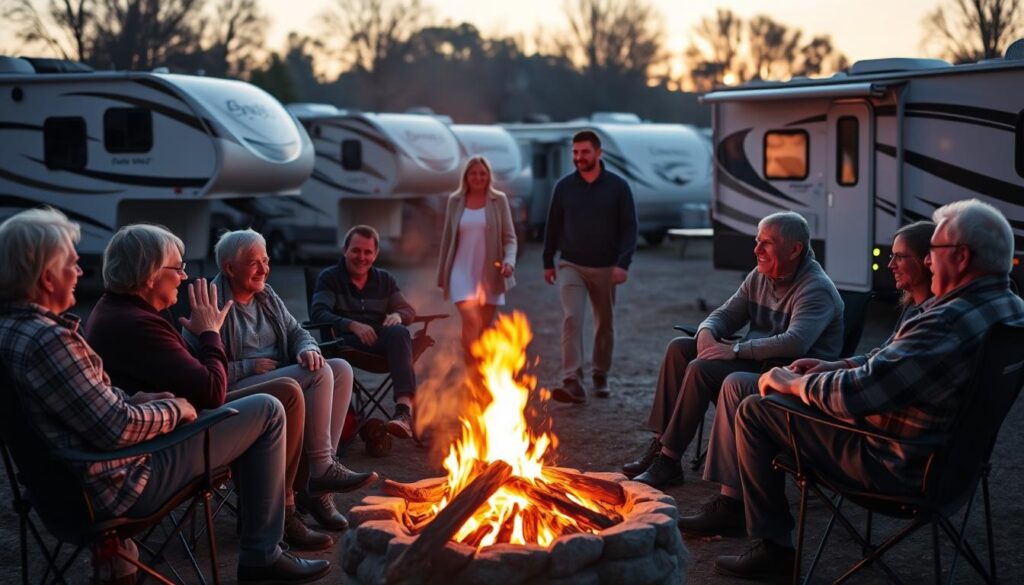
Meeting RVing couples is easy at campgrounds and popular spots. But, you need to be open and friendly to make real friends. The RV community is very welcoming because everyone faces the same challenges and joys.
Sharing a morning coffee or helping with setup can start a lasting friendship. Shared experiences create strong bonds that last long after you meet. Just be friendly and open to new friends.
Places like visitor centers and dog parks are great for meeting people. They offer a chance to start conversations and make friends who share your interests.
Joining Clubs or Online Forums
RV clubs and forums offer support and advice for small space living. They share tips on everything from fixing RVs to relationship advice. These communities help couples communicate better in tight spaces.
Good Sam Club, Escapees RV Club, and brand-specific groups are great options. Online platforms like RV forums and Facebook groups connect you with others who get road life.
These online groups are helpful for planning trips and solving problems. Members share tips on camping, routes, and RV issues that couples face together.
Participating in RV Events Together
RV rallies and meetups give couples goals and activities outside their RV. These events help build friendships and improve communication in small spaces. Doing things together strengthens the couple’s bond and grows their social circle.
Popular events include:
- Regional RV rallies with educational seminars and social activities
- Volunteer opportunities at national parks or disaster relief efforts
- Seasonal gatherings in popular destinations like Quartzsite or the Florida Keys
- Skills workshops covering RV maintenance, cooking, or outdoor activities
These gatherings let couples learn new skills and meet others. They create memories and topics for conversation. These social connections offer ongoing support for couples on the road.
Adapting to Life on the Road
Life on the road teaches couples to trust each other. They become strong teams ready for any challenge. Peaceful RV living comes from being flexible and confident together.
The road shows us to embrace the unknown. Every day brings new experiences and adventures. We find joy and strength in our partnership.
Handling the Unexpected: Flexibility is Key
Mechanical issues and weather changes are less stressful with the right mindset. Flexibility turns disasters into adventures. Adapting quickly strengthens our bond.
Accepting unpredictability is key. Letting go of control leads to spontaneous discoveries and deeper connections. Quick decision-making as a team becomes natural when we trust each other.
We pack emergency supplies and research backup plans. Keeping a sense of humor helps us stay confident in our relationship.
Managing Work and Leisure in a Mobile Lifestyle
Work and travel balance needs planning and communication. We set clear boundaries for work and leisure. Creating efficient workspaces helps us stay focused and present.
When work and travel plans clash, we find compromises. This might mean staying longer in a location or adjusting our route.
We make time for breaks from work to explore and connect. This balance creates a peaceful RV living environment where both partners feel supported.
Embracing Change as a Couple
Change teaches us to grow together. We celebrate our ability to adapt and overcome. Every successful adaptation deepens our trust and bond.
Seeing challenges as growth opportunities changes our view of road life. We see problems as chances to prove our resilience and creativity. This mindset creates a foundation for peaceful RV living built on mutual support and shared accomplishment.
The road shows us we’re more capable than we thought. Each day proves our ability to handle life’s challenges. This confidence in ourselves and each other strengthens our relationship beyond our RV adventures.
Safety and Security While RVing
Traveling in remote places with your partner means you must be ready for emergencies. The RVing lifestyle is full of freedom and adventure. But, it also means you must rely on each other for safety and solving problems. Being prepared for emergencies is a top priority when you’re on the road.
Knowing your surroundings and being ready to act is key when you’re living on wheels. We’ve learned that having contingency plans and redundant systems can make a big difference. It can turn a small problem into a big one.
Vehicle and Personal Safety Tips
Your RV is your home and your lifeline on the road. Keeping up with regular maintenance is a must. Make a checklist for engine, brakes, tires, and RV-specific parts like slide-outs.
Carrying essential tools and spare parts can save you from being stuck in remote areas. Your toolkit should have basic tools, electrical supplies, and RV-specific items. Route planning that considers your vehicle’s limits helps avoid dangers.
Personal safety for couples means being aware of your surroundings. Trust your instincts about places and people. Make plans for when you’re apart or in areas with no cell service.
Emergency Preparedness for Couples
Creating emergency plans means both partners know their roles. Practicing emergency procedures together builds confidence. Your plans should cover medical emergencies, severe weather, mechanical failures, and security threats.
A good first aid kit has more than just bandages and pain relievers. Include prescription meds, emergency contacts, and medical history. Taking a wilderness first aid course together is a good idea.
Communication is key when cell service is poor. Get satellite communicators or two-way radios. Set up check-in times with family or friends when traveling to remote areas.
Insurance Considerations for RV Living
Standard auto insurance doesn’t cover the RVing lifestyle well. Full-time RV policies offer better coverage for your mobile life. They protect your belongings and account for your lifestyle.
Review your insurance to know what’s covered and what’s not. Some policies don’t cover certain activities or places. You might need extra coverage for expensive items.
Your insurance needs can change with your travel and risk level. Couples who travel to remote areas might need different coverage. Regularly reassess your policies to match your lifestyle and travel plans.
| Safety Category | Essential Items | Couple Responsibilities | Maintenance Schedule |
|---|---|---|---|
| Vehicle Safety | Tool kit, spare parts, tire pressure gauge | Both partners learn basic maintenance | Weekly inspections |
| Medical Emergency | First aid kit, medications, emergency contacts | One partner leads medical training | Monthly kit review |
| Communication | Satellite communicator, two-way radios | Both partners know all devices | Test before remote travel |
| Security | Door locks, window covers, alarm system | Shared vigilance and protocols | Daily security checks |
Safety and security in the RVing lifestyle isn’t about fear. It’s about being ready for adventures. When both partners know their roles, you build confidence. This confidence makes every journey better.
Maintaining Your Relationship on the Road
Living in a tiny home on wheels brings couples closer. It’s different from living in a big house. An RV couple said, “living in 200 square feet has made our marriage stronger. When you have so little room, you learn to communicate better, you don’t let things linger.”
Their story shows cramped quarters can make relationships stronger. It all depends on how you look at it.
Prioritizing Date Nights and Quality Time
Date nights are key when you’re always together. Watching sunsets or exploring towns creates special moments. These moments keep romance alive in your relationship.
Emphasizing Open Communication
Open communication is key in RV living. There’s no room for unresolved conflicts in a small space. You must express needs clearly, listen well, and solve problems fast.
This leads to better communication than in big houses.
Celebrating Milestones on the Journey
Marking achievements together strengthens your bond. Celebrating your first month, tenth national park, or overcoming a challenge as a team creates positive memories. These remind you of your adventure and help you grow stronger together.