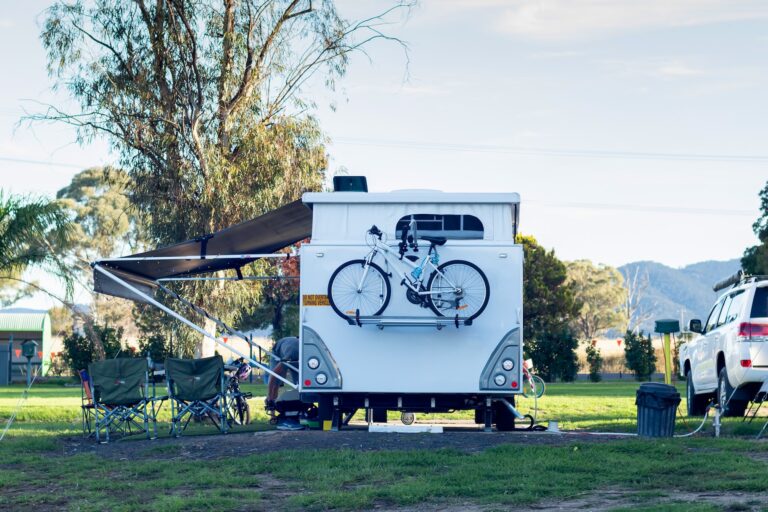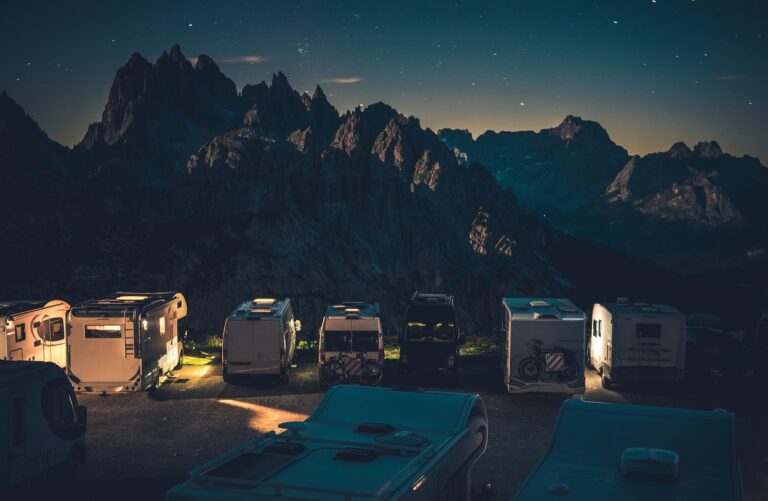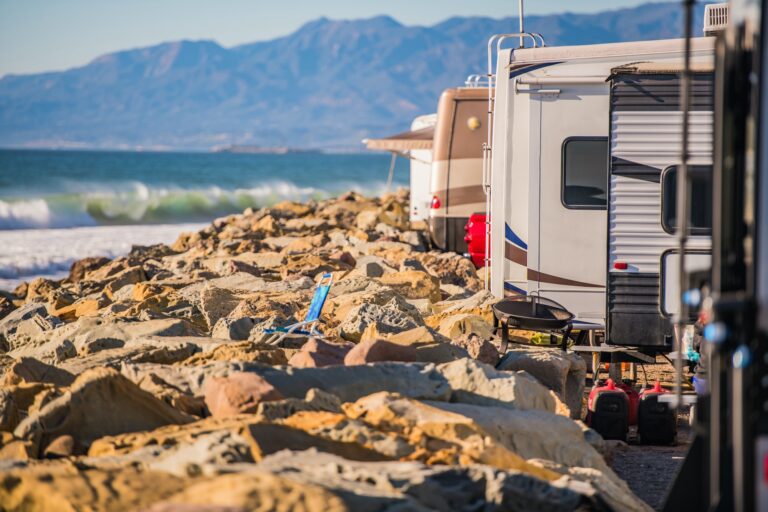
Imagine waking up to the sound of waves and stepping outside onto warm sand. Oceanfront RV adventures mix comfort with nature’s beauty. We’re excited to share our beach RV camping guide to make your coastal dreams come true.
Beachside RV sites offer freedom for families and adventurers. Enjoy sunset barbecues, explore trails, and sleep to ocean sounds. Planning ahead helps you get the best spots.
Our guide covers picking the right spots to setting up your seaside retreat. We’ll show you essential preparation steps for a safe and memorable trip. With the right planning, you’ll love living by the ocean from your RV.
Key Takeaways
- Reserve beachside RV sites well in advance for prime oceanfront locations
- Choose RV-friendly coastal destinations with proper hookups and amenities
- Pack essential gear for sand, salt air, and changing weather conditions
- Research local regulations and restrictions for beach access and activities
- Plan for unique challenges like sand, wind, and saltwater exposure
- Consider seasonal timing for optimal weather and availability
Choose the Right Beach Destination
Finding the best beach campsites for RVs is key for a great trip. It’s not just about being near the water. The best spots have beautiful views and useful amenities for a comfy stay.
Where you go to the beach affects your trip a lot. It changes what you can do and the weather you’ll face. Each beach offers its own special things and challenges.
Popular Beach Campgrounds in the U.S.
The U.S. has many amazing coastal camping spots. Some places are known for being great for RV travelers who love the ocean.
California’s coast has famous spots like Pismo Beach State Park and Half Moon Bay State Beach. They offer direct beach access for RVs up to 40 feet. The Pacific Coast Highway makes it easy to visit these places.
Florida’s long coast is perfect for camping all year. Fort De Soto Park near St. Petersburg and Anastasia State Park in St. Augustine are top picks. They have beautiful beaches and good RV facilities.
The Outer Banks in North Carolina offer a special island experience. Oregon Inlet Campground and Cape Hatteras KOA have spectacular ocean views and easy beach access. They’re great for fishing and seeing wildlife.
| Region | Top Campground | Max RV Length | Best Season | Special Features |
|---|---|---|---|---|
| California Coast | Pismo Beach State Park | 40 feet | Spring-Fall | ATV access, clam digging |
| Florida Gulf Coast | Fort De Soto Park | 35 feet | Year-round | Historic fort, fishing pier |
| North Carolina | Oregon Inlet Campground | 45 feet | Spring-Fall | Fishing, lighthouse tours |
| Pacific Northwest | Cape Lookout State Park | 50 feet | Summer | Whale watching, hiking |
Factors to Consider for Beach Camping
Choosing the right beach for camping needs careful thought. We start by looking at the seasonal weather patterns and when it’s busiest.
How close the beach is matters a lot for RV campers. Some places are a short walk from the beach, while others are a bit further. We like places where we can easily carry our beach gear.
Having hookups for water, electric, and sewer is important for long stays. Many coastal camps offer cable TV and Wi-Fi too, which is handy during bad weather.
Having local amenities nearby makes camping better. We look for places near stores, restaurants, and places to rent gear. These beach camping tips help make sure we have everything we need.
Tide schedules and beach conditions affect what you can do each day. Some beaches have big tidal changes that can change swimming, fishing, and beachcombing. We check local tide charts before we go.
Planning for Accessibility
Checking if an RV can get to a beach campsite is important. Not all places can handle big RVs safely.
The roads to beach campgrounds can be tricky. Narrow roads, low branches, and steep hills can be hard for RVs over 30 feet. We check the road conditions and look for other ways to go before we leave.
Bridge clearances can also be a problem. Many coastal areas have bridges that RVs can’t pass under. We keep a list of bridge heights to avoid surprises.
Some beach camps have narrow gates or weight limits that can stop RVs. We call ahead to make sure our RV can get in.
Booking a spot early is key for popular beaches. Summer months fill up fast, and waterfront spots go first. We book early and have other plans ready.
The ground at beach camps can be tricky, depending on the weather and season. Sandy or soft ground might need special gear. We always bring extra stuff for tough ground.
Preparing Your RV for Beach Camping
Beach camping needs special RV prep steps. Salt air, sand, and moisture can damage your RV. Start your RV beach camping prep two weeks early to ensure everything works well.
Coastal conditions are tough on RVs. Salt air causes corrosion, and sand gets into every nook. Taking the right steps protects your RV and makes camping comfy.
Essential Maintenance Before Departure
First, check your RV’s exterior seals and weatherstripping. Salt air can quickly penetrate weak spots and cause damage. Look for cracks or gaps in window seals, door frames, and roof vents.
Your tire pressure is key before beach trips. Sand and soft surfaces strain tires. Inflate them to the max pressure and check for wear.
Test your brakes well, including the emergency brake. Beach campgrounds have steep roads and tight spaces. Fresh brake fluid and adjusted brakes are key for safety.
| Maintenance Item | Check Frequency | Beach-Specific Concerns | Recommended Action |
|---|---|---|---|
| Exterior Seals | Before Each Trip | Salt Air Penetration | Apply Marine-Grade Sealant |
| Tire Pressure | Weekly | Sand Surface Stress | Inflate to Maximum PSI |
| Brake System | Monthly | Steep Beach Access | Professional Inspection |
| Air Conditioning | Before Summer | High Humidity | Clean Filters, Check Coolant |
Cleaning Tips for Sand and Salt Water
Get high-quality door mats for inside and outside. Beach camping essentials include mats to trap sand. Use one outside and another inside for extra protection.
Put mesh screens on all windows and vents. They keep sand out while letting air in. The ocean breeze carries particles that can clog filters and damage equipment. Clean or replace these screens often.
Rinse your RV’s exterior with fresh water daily. Salt accelerates rust and corrosion on metal. Clean the undercarriage, wheel wells, and metal fittings regularly.
Keep a spray bottle with fresh water inside for quick cleanups. Sand on feet and gear needs fast attention to prevent it from spreading.
Organizing Your RV for Convenience
Make storage areas for sandy and wet items near the entrance. Use hooks, bins, and waterproof containers for beach gear. This keeps sand out of sleeping and cooking areas.
Pack cleaning supplies where you can easily find them. You’ll need them a lot during RV beach camping trips. Have microfiber cloths, all-purpose cleaner, and a handheld vacuum for sand.
Use clear, stackable containers to save space. Label everything so family members can find what they need easily. Beach trips generate more laundry and gear than usual, so plan well.
Install extra towel bars and drying racks inside and outside your RV. Wet swimsuits, towels, and clothes need air to prevent mildew and odors in the humid coastal air.
Packing Essentials for Beach RV Camping
Packing smart for beach RV camping is key to a great trip. We must think about items that handle sand, salt water, and weather. The right beach camping essentials keep us comfortable and safe while having fun.
Coastal areas bring unique challenges. Wind, humidity, and sand affect our cooking and electronics. We need to pack gear that works well in these conditions.
Beach Gear You Shouldn’t Forget
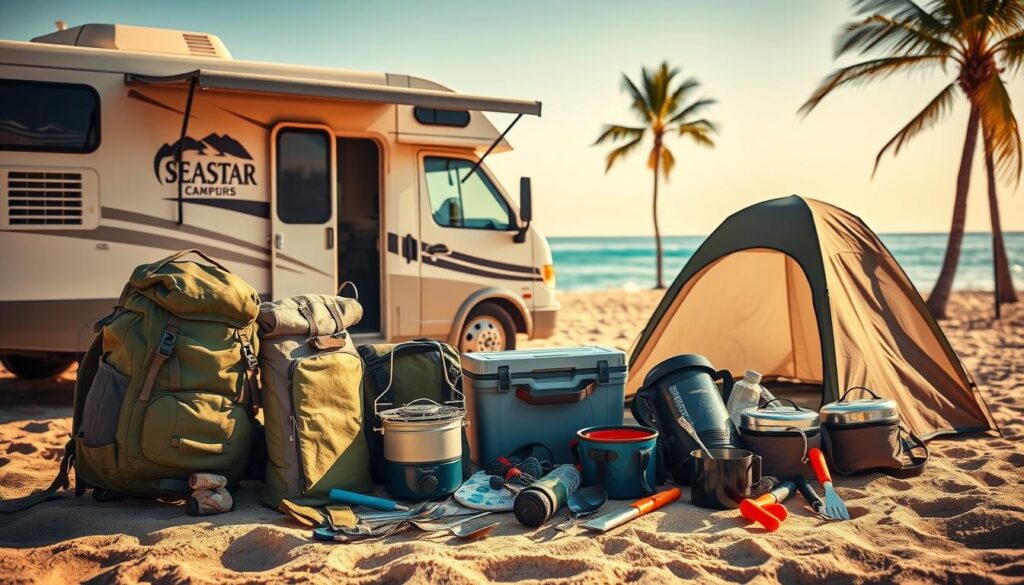
Quality sunscreen is a must for beach trips. We use SPF 30 or higher and reapply often. Beach chairs with sturdy frames are better than lightweight ones that tip over.
Our essential beach gear checklist includes:
- Beach umbrellas or pop-up canopies for shade
- Coolers with tight-sealing lids to keep sand out
- Water shoes to protect feet from hot sand and sharp shells
- Quick-dry towels that pack smaller than cotton ones
- Waterproof bags for phones and electronics
- Beach toys and snorkeling gear for fun
We always bring extra towels because beach activities make more laundry. Sand gets everywhere, so extra towels keep everyone comfortable.
Cooking Supplies for Coastal Cuisine
Coastal cooking offers exciting culinary possibilities. We bring seafood steamers and grilling tools for outdoor use. Fresh catches taste amazing with the right gear and techniques.
Our coastal cooking essentials include:
- Seafood steamers for clams, mussels, and crab
- Heavy-duty grilling tools that resist salt corrosion
- Sharp fillet knives for cleaning fresh fish
- Extra ice and cooler space for seafood storage
- Aluminum foil for easy cleanup and cooking packets
We stock up on ingredients like lemons, herbs, and butter for fresh seafood. Local markets near beaches sell amazing fresh catches for our meals.
Safety Items to Bring Along
Beach environments need extra safety preparation. We pack first aid kits with extra supplies for cuts and jellyfish stings. Emergency communication devices are vital when cell service is spotty.
Critical safety items include:
- Weather radio for storm warnings and tide information
- Emergency flares and signaling devices
- Extra batteries for flashlights and radios
- Tide charts and local emergency contact numbers
- Backup communication devices like satellite messengers
We never forget practical items like extra rope, tarps, and bungee cords. These beach camping tips help secure gear against coastal winds. Proper preparation makes our beach RV camping adventures safe and fun for everyone.
Finding Campsites Near the Beach
Finding the best beach campsites for RVs takes research and timing. It’s important to know about different campgrounds and how to book them. Knowing where to look and when to book is key for a great coastal stay.
National and State Parks with Beach Access
National and state parks have amazing beach spots for RV lovers. They offer beach access and full hookups for long stays. Places like Assateague Island and Gulf Islands have beautiful coastlines and good facilities.
Book these spots six months in advance in peak season. Some sites are first-come, first-served. State parks are cheaper but have great amenities.
These spots are hard to find and have strict booking rules. National parks open reservations five months early. This means you need to plan carefully for beach camping.
Private Campgrounds and Their Benefits
Private beach campgrounds have better amenities and flexible booking. They have pools, laundry, WiFi, and activities for families. They also offer discounts and loyalty programs.
Private campgrounds are easier to book than government sites. You can book up to a year in advance and cancel later. This is great for planning around weather.
Private campgrounds have more sites but better facilities and service. The extra cost gets you access to fun activities for families.
Online Resources for Reservation
Online platforms have changed how we book best beach campsites for RVs. Sites like Recreation.gov and ReserveAmerica handle bookings for federal and state parks. Private sites like Campspot and KOA’s website make booking easier.
Use different platforms to compare prices and amenities. Campgrounds often have their own sites and offer deals. Look for last-minute spots and set up alerts for cancellations.
Read recent reviews to learn about campgrounds. This helps you choose the best spot. Always check multiple sources before booking, even for new places.
Understanding Beach Regulations and Etiquette
Every beach has its own rules and environmental needs. Beach camping tips start with knowing these rules before we go. These rules help protect both us and the coastal ecosystems we love.
Beach RV camping is more than just finding a spot. We must follow complex rules and respect wildlife and safety. This beach RV camping guide will teach you how to camp responsibly by the coast.
Local Laws to Know Before You Go
Beach rules change a lot from state to state and even within campgrounds. We research the rules for our destination before we leave. Alcohol policies are a common rule we find.
Some beaches don’t allow alcohol, while others have special areas for it. Pet rules also vary a lot. Some beaches let dogs all year, while others have restrictions.
RV rules can surprise you. Some places don’t let RVs on certain roads or on the sand. We check the weight and size rules before we go.
Fishing rules are important too. Most states need a saltwater fishing license, different from freshwater ones. We check the rules for our fishing plans.
| Regulation Type | Common Restrictions | Research Sources | Typical Penalties |
|---|---|---|---|
| Alcohol Consumption | Prohibited on public beaches, allowed in campgrounds only | State park websites, local ordinances | $50-$200 fines |
| Pet Policies | Leash requirements, seasonal restrictions, cleanup rules | Campground policies, wildlife protection agencies | $25-$100 fines |
| Fire Restrictions | Designated fire rings only, seasonal bans, permit requirements | Fire department websites, park rangers | $100-$500 fines |
| Fishing Licenses | Saltwater permits, size limits, seasonal closures | State fish and wildlife departments | $75-$300 fines |
Respecting Wildlife and the Environment
Coastal areas are home to many animals that need our care. Beach camping tips tell us to keep a safe distance from wildlife. This helps sea turtles, shorebirds, and marine mammals.
Nesting season is very important. We avoid turtle nests and keep lights off at night. This helps the turtles find their way to the ocean.
Storing food right is key to avoiding wildlife problems. We keep food in sealed containers inside our RV. This stops raccoons and seagulls from getting into trouble.
Leave No Trace principles help us take care of the beach. We take all trash with us, including food waste. This keeps the beach clean for wildlife.
Protecting dunes is also important. We stay on paths and don’t walk on dune plants. These plants help keep the beach safe.
Beach Safety Tips for Campers
Beach safety means always being aware of the surroundings. Our beach RV camping guide teaches us about weather, tides, and water conditions. This helps us stay safe.
Rip currents are a big danger. We watch for churning water and swim parallel to shore if caught. This helps us get out of the current.
Sun protection is critical. We use sunscreen with SPF 30 or higher and stay in the shade. This prevents sunburn.
Being prepared for emergencies is important. We carry waterproof phones and tell others where we are. Cell phones might not work well near the beach.
Watching the weather is key. Coastal weather can change fast. We check forecasts often to stay safe.
First aid kits need special items for beach camping. We add supplies for shell cuts, jellyfish stings, and sunburn. Knowing where to find medical help is also important.
Setting Up Your Camp at the Beach
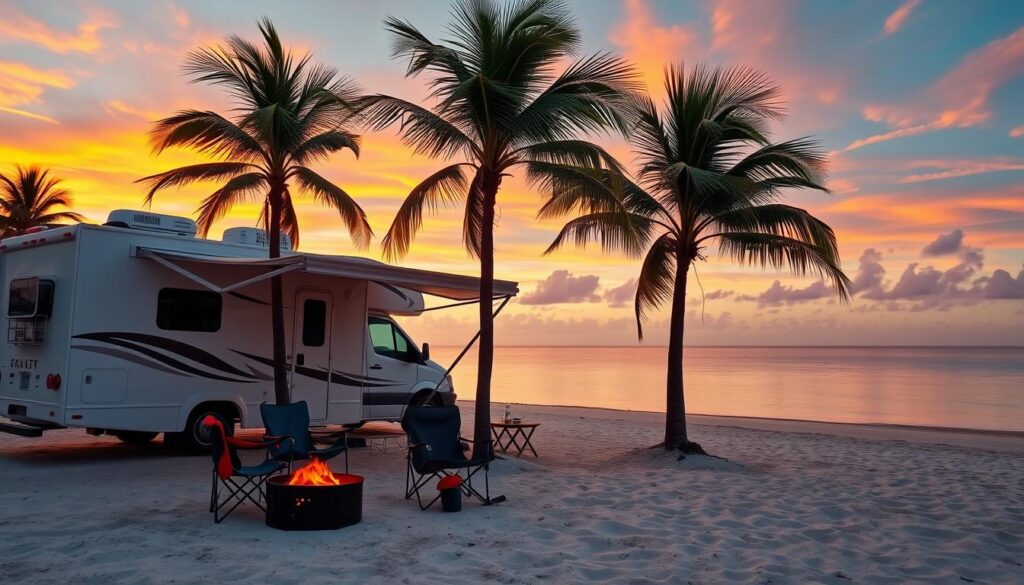
Setting up your campsite right makes your beach RV trip unforgettable. The key is to position your RV well and organize your outdoor space. It’s not just about finding a spot near the water.
Knowing how to camp near the beach in your RV helps you enjoy the views and stay safe. Your setup should handle weather changes, tides, and seaside challenges.
Choosing the Best Spot for Your RV
Finding the right spot is critical. Look for places with elevation and proper drainage to avoid flooding. Choose a spot that’s close to the beach but safe from storm surges.
Think about the wind direction when parking. Parking with your RV’s back to the wind keeps your awning stress-free. Natural windbreaks like dunes offer better protection.
Check the ground before parking. Sandy areas can make your RV unstable. Look for firm, level ground. Carrying leveling blocks is a good idea for uneven terrain.
Shade Options and Wind Protection
The coastal sun can be strong, so shade is key. Your RV’s awning is a start, but add pop-up canopies or beach umbrellas for more shade. These options let you create shade where you need it.
Wind protection is important. Use heavy-duty stakes and guy lines to anchor your setup. Sand anchors work best in loose sand.
Use tarps or portable screens as windbreaks. Place them to block winds but keep air flowing. Proper wind protection makes outdoor activities more enjoyable.
Creating a Beach-Friendly Outdoor Living Space
Your outdoor space should blend beach and camp activities smoothly. Use outdoor rugs to define areas and keep sand out of your RV. Choose rugs that shake out easily and dry fast.
Set up different zones for activities. Have a sandy gear area near your RV for beach stuff. This keeps sand out of your RV.
Choose weather-resistant furniture and storage. Coastal conditions are tough on gear, so pick items that can handle salt air and moisture. Furniture that folds or stacks is best for quick storage.
Make paths clear between your RV and the beach. Use solar lights or reflective markers for safety at night. Well-planned pathways prevent accidents and make your campsite more functional.
Activities to Enjoy While Beach Camping
Beach camping turns your RV trip into a fun playground. You get to enjoy the ocean and comfy RV stays. It’s perfect for exploring the coast’s wonders.
Beach camping offers activities you can’t find inland. Waves sound like music as you play water sports or relax. These tips will help you enjoy every moment of your coastal RV trip.
Water Sports and Recreational Activities
Water sports fans will love beach camping. Your RV is close to the water for all-day fun. Kayaking lets you see marine life in hidden coves.
Paddleboarding is popular for RV beach campers. Morning waters are calm for beginners. Many campgrounds rent equipment for new water sports.
Surfing and boogie boarding add fun to your trip. Check surf reports before you go. Snorkeling shows underwater wonders in clear waters.
Fishing is fun and can give you dinner. Fish at dawn for the best catch. Remember to check local fishing rules and get the right licenses.
Exploring Coastal Trails and Nature
Coastal trails offer amazing hikes. Paths show off ocean views and lighthouses. Early morning hikes are great for photos and cooler weather.
Nature walks are special in coastal areas. Tide pools show marine life at low tide. Bring a field guide to learn about the creatures.
Birdwatching is amazing at the beach. Coastal areas attract many bird species. Binoculars are key for watching birds.
Guided walks and ranger programs teach about the coast. They cover marine conservation and local wildlife. These programs help you understand the environment.
Family-Friendly Activities for Beach Days
Beach camping is great for family fun. Building sandcastles is an art form here. Families create amazing sand sculptures and forts.
Beachcombing is exciting for all ages. Find shells, sea glass, and driftwood. Collect treasures to remember your trip.
Beach games bring laughter and energy. Play volleyball, frisbee, and soccer in the sand. Kite flying is great with coastal breezes.
Evening activities add to the fun. Stargazing is amazing away from city lights. Beach bonfires are magical for stories and roasting marshmallows.
| Activity Type | Best Time | Equipment Needed | Skill Level |
|---|---|---|---|
| Kayaking | Early Morning | Kayak, Paddle, Life Jacket | Beginner to Advanced |
| Tide Pool Exploration | Low Tide | Water Shoes, Field Guide | All Ages |
| Beach Volleyball | Late Afternoon | Volleyball, Net | Intermediate |
| Sunset Photography | Golden Hour | Camera, Tripod | Beginner to Advanced |
These tips will fill your days with fun and relaxation. Beach camping is about adventure and enjoying the coast. Your RV is the perfect place to explore and relax.
Cooking and Dining by the Shore
Preparing meals by the ocean is truly satisfying. The sea air adds flavor to our dishes. Coastal cooking turns simple ingredients into a feast with ocean views.
Beach dining is different from camping meals. The breeze, sand, and humidity pose challenges. Yet, they make even simple foods taste amazing.
Simple Recipes Perfect for Coastal Cooking
We choose recipes that are quick and flavorful. Fresh seafood is a must when camping by the sea. Grilled fish tacos are a hit because they’re easy to make and eat outdoors.
One-pot meals save time and reduce cleanup. Seafood pasta is a favorite because it’s easy to make and tastes great. The trick is adding ingredients in the right order.
- Shrimp and vegetable skewers – Ready in 15 minutes
- Beach-style fish cakes – Use canned salmon for convenience
- Coastal corn chowder – Perfect for cooler evening meals
- Grilled vegetable wraps – Fresh and filling for lunch
Cold soups are great in warm weather. Gazpacho is refreshing and needs no cooking. We make it the night before for better flavors.
Creating Your Seaside Kitchen Space
Setting up an outdoor cooking area needs planning for RV beach camping success. We place our cooking station to block winds. This keeps flames steady and sand out of our food.
Stable surfaces are key against coastal breezes. We use weighted tablecloths and mats to keep things in place. Collapsible prep tables are better than flimsy tables that wobble.
Wind-resistant gear is essential. We use camp stoves with windscreens and portable grills with heavy bases. These stay put even in strong winds.
- Windscreen barriers – Protect cooking flames and prep areas
- Weighted containers – Keep ingredients from blowing away
- Mesh food covers – Prevent sand contamination
- Insulated coolers – Maintain food temperature in coastal heat
Good ventilation keeps smoke out of our RV. We cook downwind from our living area. This keeps our RV fresh and comfy.
Essential Snacks for Beach Adventures
Beach activities burn calories fast, so we need healthy snacks. Our beach RV camping guide includes snacks that won’t spoil in the heat. They give us energy all day.
Fresh fruit is a great snack. Watermelon, grapes, and oranges are refreshing. We cut fruit ahead of time and store it in sealed containers to keep it sand-free.
Trail mix combinations give us protein and quick energy. We mix nuts, dried fruit, and dark chocolate for variety. This keeps snacking interesting all day.
- Energy bars – Homemade or store-bought for sustained fuel
- Cheese and crackers – Protein-rich and satisfying
- Frozen grapes – Natural popsicles that stay cold longer
- Hummus and vegetables – Fresh and nutritious combination
Staying hydrated is key by the coast. We freeze water bottles for ice packs during the day. As they melt, we have cold water.
Salty snacks replace lost electrolytes. We balance them with fresh options for nutrition. Proper food storage in sealed containers keeps food fresh and prevents attracting wildlife.
Building a Campfire and BBQ at the Beach
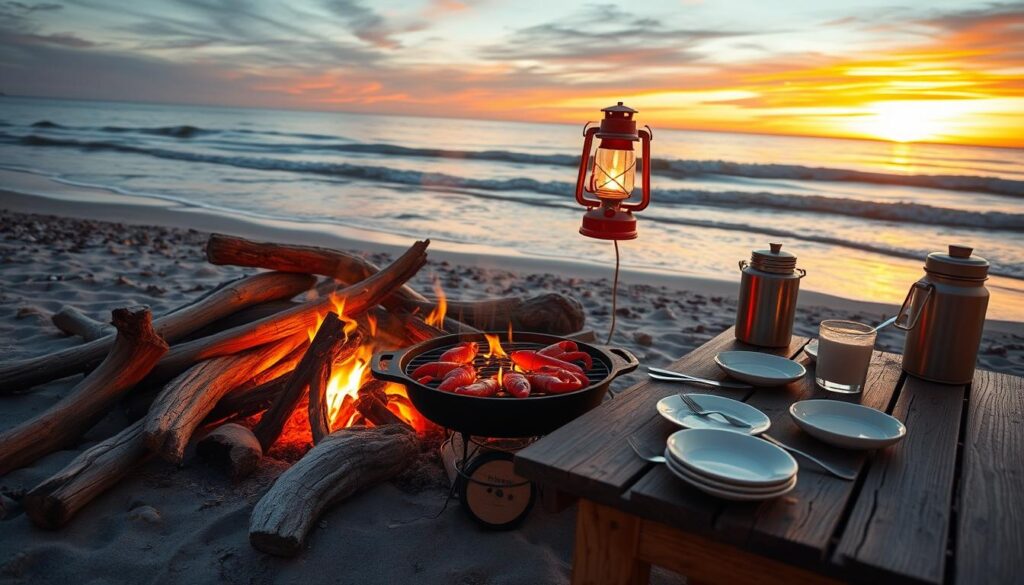
Beach camping is magical with its flickering flames and ocean breezes. But, it needs extra care for fire safety. Coastal areas are different from forest campsites. We check local fire rules and pack the right gear for safe, fun evenings.
Beach fires make memories with family and friends. The sound of waves and wood crackling is perfect for stories and relaxation. But, we must protect the beach and follow safety rules.
Fire Safety Tips for Beach Camping
Fire safety is key when camping by the ocean. Always check local fire restrictions before starting a fire. We talk to park rangers or local authorities to know the rules and get permits.
Wind can change fast by the beach, making fire control hard. We place our fire ring away from dry plants and use rocks or barriers to block wind. Never leave a fire alone, as ocean winds can spread embers quickly.
Here are some tips for safe beach fires:
- Keep fires small and easy to control
- Clear a 10-foot area around the fire
- Have water and sand ready to put out the fire
- Watch the wind direction and speed
- Use fire rings when you can
We make sure to put out fires completely before leaving or sleeping. Pour water on the flames, stir the ashes, and add more water until it’s cool.
Recipes for Campfire Delights
Beach campfire cooking is amazing for fresh, tasty meals. Foil packet dinners are great for beach fires. They keep food from getting sandy and cook evenly. We wrap fish, veggies, and seasonings in foil for easy meals.
Our top beach campfire recipes are:
- Seaside Fish Packets: Fresh fish with lemon, herbs, and veggies in foil
- Coastal S’mores: Classic marshmallows with gourmet chocolate and graham crackers
- Beach Chili: A hearty one-pot meal for cool evenings
- Grilled Corn on the Cob: Sweet corn roasted over the flames
We prep ingredients before and store them in our RV fridge. This makes cooking easier and saves time. Pre-seasoned meats and pre-cut veggies help when we’re hungry.
Gathering Around the Fire: Essential Gear
The right gear makes beach fires safer and more fun. We have wind-resistant matches, waterproof starters, and a portable fire ring. We also pack extra stuff because coastal weather can be unpredictable.
Here’s what you need for beach campfires:
- Portable fire ring or fire-safe container
- Wind-resistant matches and lighters
- Waterproof fire starters
- Long-handled cooking tools
- Heavy-duty aluminum foil
- Fire-resistant gloves
- Folding chairs for wind direction
We arrange seating for wind changes. Lightweight, portable chairs let us move fast if the wind shifts. We bring blankets for warmth when it gets chilly after sunset.
We keep water close at all times. We have many gallons for fire control and cleaning. A shovel helps manage coals and create fire breaks in the sand.
These tips make our fire times safe and memorable. With the right prep and gear, we enjoy magical evenings by the ocean while caring for the beach.
Environmental Responsibility When Camping
When we camp near the beach in our RV, we become temporary stewards of delicate coastal environments. These ecosystems face constant pressure from human activity, climate change, and pollution. Our actions as beach campers can either help preserve them or harm them.
Responsible beach camping means understanding our impact on marine and coastal ecosystems. Every choice we make affects the environment around us. From the products we use to the waste we generate, our camping decisions have lasting consequences.
Sustainable Practices for Beach Campers
We practice sustainable beach camping by making environmentally conscious choices throughout our trip. Using biodegradable soaps prevents harmful chemicals from entering groundwater and ocean systems. These eco-friendly products break down naturally without leaving toxic residues.
Choosing reef-safe sunscreens protects marine life from chemical damage. Traditional sunscreens contain oxybenzone and octinoxate, which harm coral reefs and fish. Mineral-based sunscreens with zinc oxide or titanium dioxide offer effective protection without environmental harm.
Water conservation becomes critical in coastal areas where freshwater resources are limited. We take shorter showers, fix leaks promptly, and use water-saving devices in our RV. Collecting rainwater for non-drinking purposes reduces our overall consumption.
Energy efficiency helps reduce our carbon footprint while beach camping. Solar panels provide clean energy for our RV systems. LED lights consume less power than traditional bulbs. We also minimize generator use during quiet hours to reduce noise pollution.
| Sustainable Practice | Environmental Benefit | Implementation Tip | Cost Impact |
|---|---|---|---|
| Biodegradable Soaps | Prevents water contamination | Look for phosphate-free labels | Slightly higher initial cost |
| Reef-Safe Sunscreen | Protects marine ecosystems | Choose mineral-based formulas | Comparable to regular sunscreen |
| Solar Power Systems | Reduces carbon emissions | Start with portable panels | Higher upfront, long-term savings |
| Water Conservation | Preserves freshwater resources | Install low-flow fixtures | Minimal investment required |
Leave No Trace Principles
Leave No Trace principles become even more critical in fragile coastal environments. We pack out all trash, including food scraps that might attract wildlife or create unsanitary conditions. Proper waste disposal prevents pollution from reaching the ocean through storm drains and runoff.
Staying on designated trails prevents erosion and vegetation damage in sensitive dune systems. Coastal plants have shallow root systems that stabilize sand dunes. Walking off-trail can destroy these natural barriers that protect inland areas from storm surge.
We avoid disturbing wildlife habitats, specially during nesting seasons. Sea turtles, shorebirds, and marine mammals use beaches for critical life activities. Maintaining respectful distances and following local wildlife guidelines protects these vulnerable species.
Campfire restrictions often apply in coastal areas due to fire danger and environmental sensitivity. We follow all fire regulations and use established fire rings when permitted. Cold ashes must be completely extinguished and disposed of properly.
Supporting Local Conservation Efforts
Supporting local conservation efforts enhances our beach camping experience while giving back to communities that maintain these beautiful areas. We participate in organized beach cleanups, removing plastic debris and other pollutants that threaten marine life. These volunteer activities connect us with local environmental groups.
Donating to local environmental organizations helps fund ongoing conservation projects. Many coastal communities have nonprofits working to protect endangered species, restore habitats, and educate visitors. Our contributions support research, monitoring, and protection programs.
Choosing eco-friendly local businesses demonstrates our commitment to sustainable tourism. We patronize restaurants that source seafood responsibly, shops that sell environmentally friendly products, and tour operators who follow sustainable practices. This economic support encourages more businesses to adopt green practices.
Education plays a vital role in our environmental responsibility as beach campers. We learn about local ecosystems, endangered species, and conservation challenges facing coastal areas. Visitor centers, nature programs, and interpretive trails provide valuable information about protecting these environments.
Following this beach RV camping guide helps us minimize our environmental impact while maximizing our enjoyment of coastal destinations. When we understand how to camp near the beach in your RV responsibly, we ensure these precious ecosystems remain healthy for future generations to explore and appreciate.
Connecting with Fellow Campers
Beach camping lets us meet others who love the coast as much as we do. The calm of seaside campgrounds makes it easy to make friends. We’ve made some of our best memories with the people we’ve met.
The camping world is all about helping each other. We share stories by the campfire and help with RV setup. These moments make our beach trips even better.
Building Friendships by the Shore
Making friends starts with simple kindness. Helping with RV setup or sharing fishing spots leads to great talks. A smile and wave can start a conversation.
Sharing tips with newcomers creates strong bonds. Helping with awnings in the wind can lead to meals together. These small acts can turn into lasting friendships.
Walking dogs on the beach is a great way to meet people. Pet owners quickly bond over their pets and favorite beaches.
Participating in Campground Events
Beach campgrounds have many group activities. We join potluck dinners, volleyball, and nature walks. These events help us meet others with similar interests.
Morning walks often turn into group chats. We’ve joined yoga and beach cleanup events. These activities help us bond with others.
Evening campfires are perfect for sharing stories. We bring marshmallows and hot chocolate to make everyone feel welcome. It’s a great way to meet new people.
Digital Communities for Beach Enthuasiasts
Online groups have changed how we connect. We join RV forums and social media groups for coastal camping. These places let us share, ask, and plan meetups.
Camping apps help us find other RVers. We use them to plan group trips and share updates. It’s a great way to stay connected.
Facebook groups for beach camping areas are full of tips. Members share secrets and warn about road issues. These online friendships often turn into real-life connections.
Making the Most of Your Beach Camping Experience
Your beach RV camping trip will be unforgettable if you capture, plan, and reflect on every moment. These steps turn a simple trip into lasting memories. They inspire you to plan more coastal journeys in the future.
Documenting Your Adventure: Tips and Ideas
Keep a travel journal to write down daily highlights, weather, and special moments. Take photos during golden hour for stunning beach lighting. Video clips of waves, wildlife, and campfire talks capture sounds and atmosphere that photos can’t.
Create a photo album or digital scrapbook to share with family and friends. It’s a great way to relive your trip.
Planning for Future Beach Camping Trips
Use this trip to learn for future adventures. Note the best campgrounds and beach access. Track weather and crowd levels for better timing.
Make a list of new coastal places to visit. You can find them through other campers or online.
Reflecting on Your Experience and Learning Lessons
Think about what worked well and what you’d change next time. Consider upgrading your gear for more comfort. Reflect on how to camp near the beach better.
These insights make you a better coastal camper. They deepen your love for America’s shores and RV travel freedom.