We’ve all felt that dread when we see the perfect parking spot but need to back in. The pressure grows as others wait behind us. Suddenly, what should be easy feels too hard.
But here’s the truth: confident parking isn’t about aggression or confrontation. It’s about learning smart techniques to make parking smooth and easy.
Using conflict resolution, we can tackle parking with preparation and confidence instead of frustration. The right mindset and back in parking tips can stop anxiety and mistakes.
This guide will teach you to park with ease and precision. We’ll cover safety, preparation, and step-by-step methods. You’ll park like a pro in no time.
Key Takeaways
- Confident reverse parking starts with proper preparation and mindset, not aggressive driving
- Strategic positioning and mirror adjustments are essential before attempting any parking maneuver
- Slow, controlled movements prevent conflicts with other drivers and ensure safety
- Understanding reference points and spatial awareness eliminates guesswork during parking
- Practice in low-pressure environments builds the skills needed for challenging situations
- Clear communication with other drivers through signals reduces tension and misunderstandings
Understanding the Importance of Backing In
Let’s look at why mastering backing in is important. It’s like choosing the high road in work conflicts. It leads to better results. Learning assertive parking techniques boosts our confidence, not just in parking.
Backing into parking spots has many benefits. It makes our trips safer and more efficient. That’s why expert parking advice always suggests learning this skill.
Safety Considerations
Safety is the main reason to learn backing in. It lets us pull forward when leaving. This makes spotting dangers easier.
Children often run between cars without warning. Facing forward helps us see them sooner. We also see other cars coming from both sides better.
Emergency exits are safer too. Pulling forward lets us leave quickly and safely. We avoid backing into traffic or pedestrians when it’s stressful.
Improved Visibility
Our view is better when we face forward. Windshields are usually bigger than rear windows. This gives us a clearer view.
Modern cars have thick rear pillars that hide pedestrians and cars when backing out. Facing forward solves this problem.
We can judge traffic flow better. We see when it’s safe to merge into traffic clearly. This makes our driving smoother.
Potential Parking Challenges
Backing in needs more skill and awareness than pulling forward. It requires precision and attention to our surroundings. But, mastering it is rewarding.
Learning to back in can be hard at first. It might take a few tries to get it right. Some drivers feel awkward taking extra time, even in busy lots.
Weather can also make backing in harder. Rain, snow, or fog reduce our visibility. We must adjust our approach for these conditions.
| Backing In Benefits | Forward Parking Benefits | Key Difference |
|---|---|---|
| Enhanced exit visibility | Easier initial parking | Long-term vs. short-term ease |
| Faster emergency exits | Less skill required | Safety vs. convenience |
| Better pedestrian awareness | Quicker parking process | Safety vs. speed |
| Professional appearance | Lower stress initially | Confidence vs. comfort |
Despite the challenges, the safety and confidence gains make backing in worth it. With practice, it becomes easier. We become more skilled and precise drivers.
Assessing Your Parking Space
Mastering strategic parking maneuvers means reading our environment well. We need to look at our parking spot carefully before we start. This careful look helps us park confidently.
Before we start, we check our parking spot. We use a special way to look at the space. This helps us park smoothly or avoid stress.

Measuring Space Dimensions
First, we measure the space we want to park in. We don’t just look quickly. We make sure we have enough room to move.
We look for spaces that are at least one and a half times the length of our vehicle. This extra space helps us move smoothly. For most cars, this means finding spaces 24 to 30 feet long.
We also check the space’s width. Narrow spots need more skill. Wider spaces are easier to adjust in.
Evaluating Surrounding Traffic
The traffic around us affects our parking success. We look at a few important things before we park.
Is there a car waiting behind us? Busy traffic can make us rush and make mistakes. We wait for calm moments to park.
We also think about how fast cars are moving. Busy streets need different timing than quiet areas. Knowing this helps us pick the best time to park.
Peak hours and school zones are tricky. We might look for other parking instead of trying to park there.
Identifying Obstacles
Spotting obstacles helps us park safely. We look for things that could make parking hard.
Things like shopping carts and light poles can be problems. We also watch for cars or bikes that look closer than they are. Motorcycles and bikes are hard to see.
We also watch for people walking. Busy places mean more people might walk by. School zones and shopping areas need extra care for kids and people who are distracted.
| Assessment Factor | Ideal Conditions | Challenging Conditions | Action Required |
|---|---|---|---|
| Space Length | 1.5x vehicle length | Less than 1.3x vehicle length | Find larger space |
| Traffic Density | Light to moderate | Heavy rush hour traffic | Wait for better timing |
| Obstacle Presence | Clear space with good visibility | Multiple obstacles or blind spots | Choose alternative location |
| Pedestrian Activity | Minimal foot traffic | High pedestrian density | Exercise extra caution |
Remember, parking well sometimes means knowing when to choose our battles. A thorough assessment helps us decide if we should try to park or find an easier spot. With practice, this becomes easier, and we can park confidently in many situations.
Preparing Your Vehicle for Backing In
Success in conflict-free parking methods starts with getting our vehicle ready before we back in. Just like how we prepare for tough work situations, getting our car ready helps us park better. This step makes us confident drivers, not those who struggle.
Spending a little extra time getting ready makes a big difference. It turns parking into a smooth experience instead of a stressful one. We do this to avoid problems later.
Checking Mirrors and Cameras
Our mirrors are key when we back up. We adjust them to see our car’s corners and the area around us clearly. This helps us avoid blind spots and see better.
If our car has a backup camera, we clean the lens and know its limits. Cameras help, but we can’t forget about using our mirrors and staying alert.
“Proper mirror adjustment is like having extra eyes – it transforms our backing experience from guesswork into precision.”
Adjusting Your Seat Position
Our seat position affects how well we park. We sit up straight to see over our shoulders and through windows. This gives us a great view of what’s around us.
We adjust our seat height to see the parking space better. The right seat lets us turn easily and control the car while backing.
Ensuring Passenger Safety
With passengers, we tell them our parking plan and ask for help spotting things. Clear talk helps us work together to park.
We also learn about our car’s turning radius and how it steers when reversing. This prep might take a minute, but it saves us time and stress. It makes sure we park smoothly every time.
Step-by-Step Guide to Backing In
Our vehicle is ready, and we’ve checked the space. Now, we can start backing in like a boss. This method makes a tough task easy to follow. We’ll go through each step carefully.
Being patient and precise is key. We don’t rush because fast moves can lead to errors. Instead, we take our time and follow each step carefully.
Aligning Your Vehicle
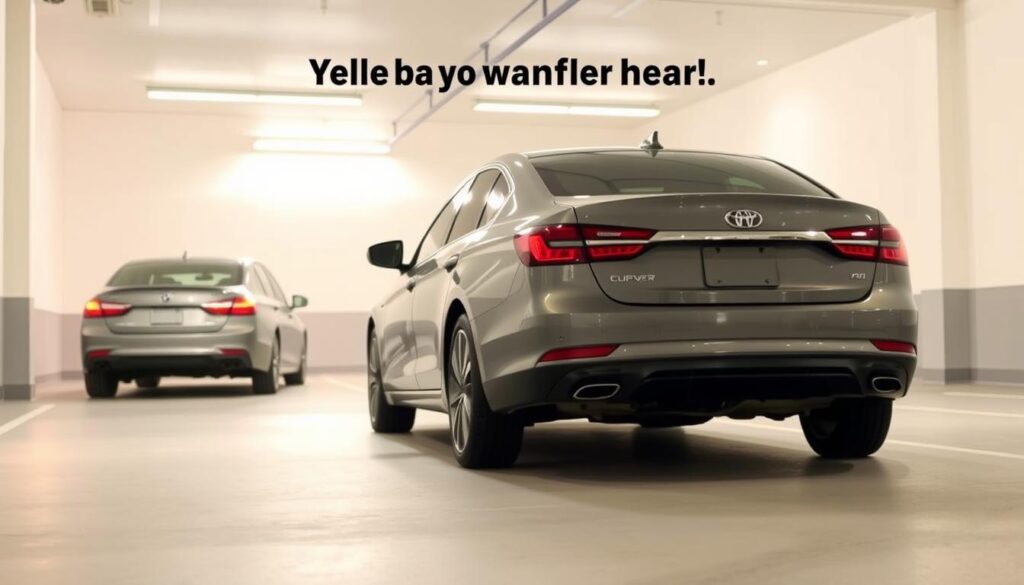
Getting our vehicle in the right spot is the first step. We line up our side mirrors with the rear bumper of the car next to our target. This is the best way to start.
We keep about three to four feet away from parked cars. Getting too close makes the turn harder and increases the chance of hitting something. Having space lets us move and correct our path if needed.
Our car should be parallel to the parking spaces before we start backing. We check that our front wheels are straight and our car is at the right angle for the turn.
Using Your Mirrors Effectively
Our mirrors are our guides when backing up. They help us see where we are in relation to the parking space lines and other cars. Keeping an eye on our mirrors stops us from going into other spaces.
The passenger side mirror shows us the parking space lines. When these lines appear in our mirror, we know we’re ready to turn.
The driver’s side mirror helps us stay away from other cars. We watch the gap between our car and the next one to avoid getting too close.
| Mirror Position | What to Watch | Action Required |
|---|---|---|
| Driver’s Side | Distance from adjacent vehicle | Maintain 2-3 foot clearance |
| Passenger Side | Parking space lines | Begin turn when lines appear |
| Rear View | Overall positioning | Monitor for obstacles |
| Backup Camera | Immediate rear area | Watch for pedestrians or objects |
Making the Turn
We start our turn with small steering moves. Small adjustments help us control better and avoid big mistakes. We turn the wheel slowly as we back up.
Our goal is to get our vehicle straight into the space. We keep an eye on our mirrors and make small steering changes as needed. If we’re moving too far to one side, we make a small correction in the other direction.
We keep a slow, steady speed during the turn. This lets us react to any changes and make the necessary adjustments. Controlling our speed is key for keeping precision.
Once we’re mostly in the space, we straighten the steering wheel and back up some more. We make sure we have enough room in front for easy exit and don’t stick out into the driving lane.
Mastering the Art of Reverse
Learning to reverse drive is easier when we focus on how we do it, not how fast. Successful backing needs patience, precision, and practice. This builds muscle memory, making it feel easy.
Every driver can get better at reversing. The key is how we approach and prepare for it.
Techniques for Smooth Backing
For smooth backing, use gentle, deliberate movements. Follow these tips for better parking:
- Use minimal accelerator pressure – Light touches prevent jerky movements
- Make small steering adjustments – Overcorrecting creates more problems
- Keep your head on a swivel – Constant awareness prevents surprises
- Trust your mirrors and cameras – Technology supports your natural vision
Remember, less input often produces better results. Avoid sudden turns or acceleration.
Controlling Speed and Direction
Understanding how our vehicle moves in reverse is key. Steering in reverse feels counterintuitive because the rear wheels follow the front.
Here’s a simple rule: turn the steering wheel toward where we want the rear of our vehicle to go. For example, when backing left, turn left, but the front swings right.
Speed control is also important. Keep slow speeds for quick corrections. Assertive parking techniques mean confident, controlled movements, not fast ones.
Practicing in Different Environments
Practice in various places to improve your skills. Each setting teaches us something new about controlling our vehicle and spatial awareness.
Ideal practice locations include:
- Empty parking lots – Perfect for learning basic techniques without pressure
- Quiet residential streets – Introduces real-world obstacles and constraints
- Your own driveway – Familiar space for daily skill reinforcement
- Different weather conditions – Builds confidence in various driving situations
Start with easy places and gradually get harder. Starting with low-pressure environments helps us focus on technique.
Practice different scenarios like tight spaces, angled parking, and parallel parking. This variety prepares us for any situation on the road.
Enhanced Communication with Other Drivers
Mastering communication with other drivers makes backing maneuvers better. Clear communication is key to parallel parking confidently. It’s not just about the skill, but how we talk to others while parking.
We use conflict resolution to avoid misunderstandings. We’re not alone when we back up. Our actions affect traffic around us. This advice helps us connect with other drivers.
Clear Hand Signals
Hand signals are a universal way to communicate. A wave before we back tells others what we plan. This helps avoid confusion and makes everyone feel safer.
We use different hand gestures for different messages. A raised hand means we need a moment. A thumbs up shows thanks for patience.
When to signal is important. We signal before we start, so we can focus on driving.
Meaningful Eye Contact
Eye contact helps us connect with others. It shows we understand each other. This simple act makes our interactions more personal.
We use mirrors or quick turns to make eye contact. Timing is key. It often gets others to give us space or wait.
Professional Road Etiquette
Good road manners show we respect everyone’s space. We know our actions affect traffic. Professional drivers try to minimize this with careful planning.
We pick the right time to back up, avoiding busy times. This shows we care about traffic. It often gets us better treatment from others.
| Communication Method | Best Use Case | Effectiveness Level | Timing Required |
|---|---|---|---|
| Hand Signals | Busy parking lots | High | Before maneuver |
| Eye Contact | Close-proximity situations | Very High | Initial positioning |
| Hazard Lights | Street parking | Medium | During approach |
| Turn Signals | All backing scenarios | High | Continuous use |
This way of communicating makes parking better for everyone. When we mix skill with kindness, parking becomes a positive experience.
Troubleshooting Common Backing Fails
Mastering parking means learning to handle unexpected problems. Just like we need strategies for tough work situations, we need them for parking too. Even with good planning, we’ll face moments that test our skills and patience.
Staying calm and methodical is key. We can’t control everything, but we can control how we react to challenges.
Overcoming Blind Spots
Blind spots are our biggest challenge when backing into spaces. We beat them by systematic checking and using all tools available. Our mirrors, backup cameras, and direct vision work together as a system.
We also look over our shoulders to fill in gaps our tech can’t cover. Sometimes, we need to pull forward and reposition for a better angle. This isn’t failure – it’s smart driving.
Remember: taking an extra moment to check is always better than rushing into an accident. We use the “sweep and check” method, scanning each mirror and blind spot before moving on.
Dealing with Distracted Drivers
Distracted drivers test our patience and defensive driving skills. We can’t control their behavior, but we can control how we react. When we meet impatient, distracted, or inconsiderate drivers, we focus on safety.
We don’t let their behavior pressure us into making mistakes or rushing. Conflict-free parking methods mean staying focused on our own driving, not theirs.
“The best drivers are those who remain calm under pressure and never let others dictate their safety decisions.”
If someone honks or gestures impatiently, we acknowledge them with a brief wave and continue carefully. Their urgency doesn’t become our emergency.
Handling Difficult Situations
In tough situations – when someone is honking, gesturing, or being aggressive – our goal is to park safely, not prove a point. Sometimes, this means giving up our current attempt and finding another space.
This isn’t giving up; it’s making a strategic decision to avoid conflict and stay safe. When situations get tense, we have several options:
- Pull forward and try again with better positioning
- Find an alternative parking space
- Wait for the aggressive driver to pass
- Ask a passenger to help guide us
The most important thing is keeping our cool and prioritizing safety over speed. We practice these conflict-free parking methods until they become second nature, ensuring we can handle any situation that comes our way.
Utilizing Technology in Backing In
Technology gives us tools to master backing in. Modern cars have systems that make parking precise. These tools help us park safely and confidently.
We now have parking tech as our helper. But, we must not forget our basic driving skills.
Rear View Cameras
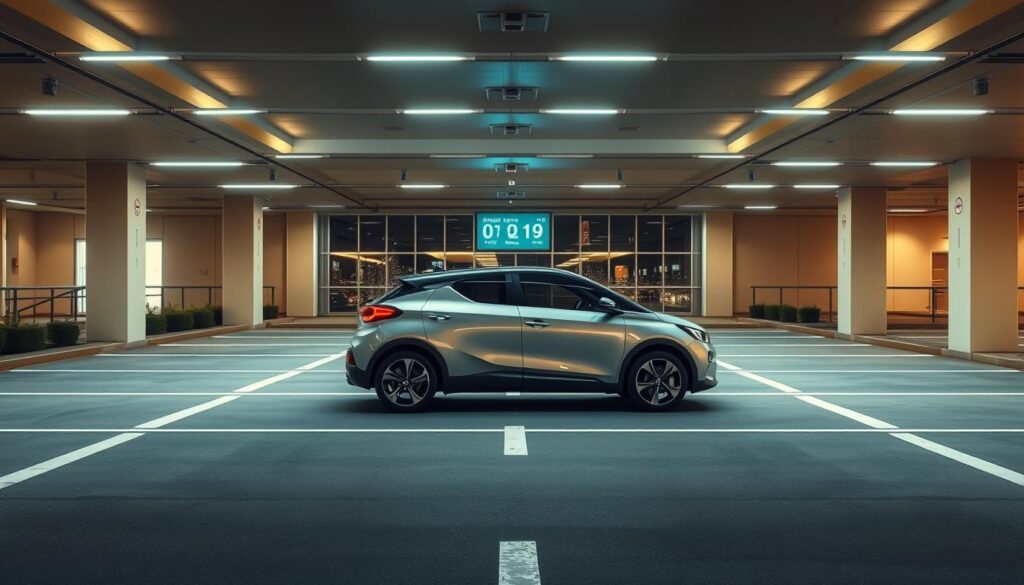
Rear view cameras change how we back in. They show us what’s behind our car clearly. The camera shows real-time video on our screen, with lines to guide us.
These cameras are great for seeing obstacles. But, they don’t show everything. Smart drivers use cameras and mirrors together for better awareness.
The lines on camera screens help us judge distance. They guide us to park smoothly. But, we should not rely only on these lines.
Parking Sensors
Parking sensors add sound to our backing strategy. They beep faster as we get closer to things. The beeps tell us how much space we have.
We learn to understand these beeps like music. Slow beeps mean we have room, fast beeps mean we’re close. A solid tone means stop right away.
“The key to using parking sensors is knowing their range. They’re good for solid objects but might miss thin poles or low barriers.”
Some systems show visual info on our screen. This mix of sound and sight helps us back in confidently.
Mobile Apps for Parking Assistance
Mobile apps change how we find parking. They help us find spots, compare prices, and reserve spaces. Apps like ParkWhiz and SpotHero make parking easier.
Apps let us check spots before we go. This helps us back in confidently.
Some apps give details on space size and features. This info helps us plan our parking before we get there.
These tech tools help us drive better. But, we must keep our basic skills sharp too.
Practicing Backing In Like a Pro
Starting your journey to become a backing expert is easy. First, pick the right places to practice and build your skills slowly. Consistent practice turns nervous drivers into confident ones. It helps us make backing in second nature.
Safe Training Locations
Choosing the right place to practice is key. Empty parking lots are perfect because they’re safe. We can practice without fear of hitting other cars or blocking traffic.
Shopping centers early in the morning are great for practice. School parking lots on weekends have lots of space. Large retail stores during off-peak hours are also good.
- Community college parking lots after hours
- Church parking areas during weekdays
- Business parks on weekends
- Recreational vehicle lots with marked spaces
We create our own practice areas with traffic cones or boxes. This lets us focus on our technique without stress.
Scenario-Based Training
Practicing in real-world scenarios is important. We practice backing into tight spaces and in different weather. Different weather conditions affect how we see and handle our cars.
Each practice session focuses on a specific skill. One day we work on alignment. Another day, we focus on controlling our speed. We also practice being confident and making quick decisions.
Practicing on slopes and uneven surfaces is also key. We learn how gravity changes our car’s movement and adjust our technique.
Progressive Confidence Building
Building confidence comes from success and learning from mistakes. We celebrate small wins like perfect alignment. Each successful backing maneuver boosts our skills and confidence.
Practicing mental skills is also important. We stay calm and focused, even when it’s hard. Good decision-making means knowing when to try a tough space and when to look for another one.
Building skills step by step is the best way. We start with easy tasks and move to harder ones. This way, we build a strong foundation for advanced skills.
Conclusion: Backing In with Confidence
Learning to back in is a skill that makes parking easier. We’ve shown you how to do it smoothly and confidently. This skill is key for all drivers.
Key Principles for Success
First, you need to prepare and check your space. Look in your mirrors and get into position. These steps help avoid mistakes.
Moving smoothly is better than rushing. Use your mirrors, keep a steady speed, and talk to other drivers. This makes parking safer.
Building Safe Driving Habits
Always put safety first when parking. Be patient and prepared, not quick and scared. These habits help you drive better everywhere.
Practice in safe places to get better. Each time you park well, you feel more confident. This helps you face new challenges.
Your Path to Parking Mastery
With practice, parking becomes easy. Start with simple spots and get better at harder ones. This is how you become a pro.
Every good driver was once new. Use what we’ve taught you to park like a pro. You’ll be safe and polite on the road.