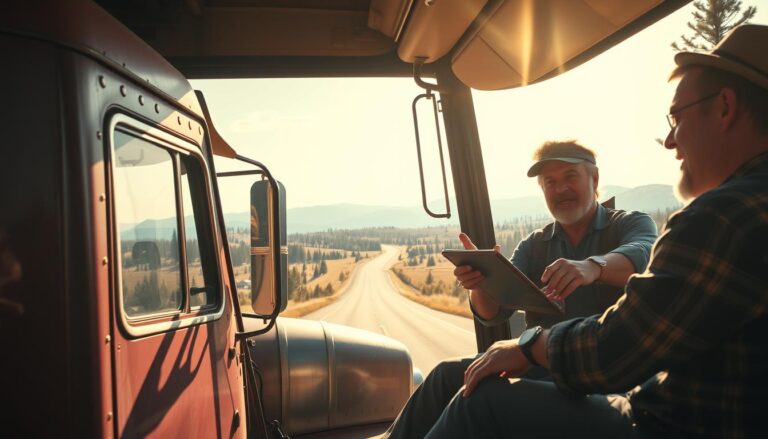
RV adventures are no longer just for retirees. Today, families are exploring America’s beauty together. RVing with children is a growing trend among young families.
Being in a small space with kids can feel tough. But, the secret to keeping calm is simple: organization is key. Every item must have its spot.
For a successful RV trip, stick to routines. Regular meals and bedtimes stop tantrums. Planning ahead makes your trip smooth.
Family RV trips are definitely doable. Many parents have found that being prepared leads to great bonding. The memories you make will last forever.
Key Takeaways
- Family RV travel has grown significantly beyond traditional retiree demographics
- Organization is critical due to limited storage space in recreational vehicles
- Maintaining regular meal and bedtime routines prevents children’s meltdowns
- Proper planning transforms potentially stressful situations into enjoyable family bonding time
- Thousands of families successfully enjoy motorhome adventures with proper preparation
- The key to sanity is keeping everything and everyone organized during travel
Planning Your RV Trip: The Basics
Before you hit the road with your kids, we need to cover the basics. Good planning turns chaos into memories. The key is choosing the right RV, planning a flexible schedule, and managing your budget.
Many families start RV adventures without thinking about these basics. This can lead to cramped spaces, too-tight schedules, and budget surprises. We’ll help you make the right choices for a great road trip with kids.
Choosing the Right RV for Your Family
The right RV depends on your travel style and family size. A small travel trailer might be perfect for a family of four. But a Class A motorhome is better for a family of six.
If you’ll be exploring a lot, a smaller RV is good for sleeping. But if you like to relax at campgrounds, get an RV with more space. Extra room reduces stress and gives everyone their own space.
Remember, safety laws vary by state. Some require special seats for kids. Check the laws of your destination before you go. Many families forget this, leading to trouble on their trip.
| RV Type | Best Family Size | Key Benefits | Considerations |
|---|---|---|---|
| Class A Motorhome | 6+ people | Maximum space, full amenities, easy movement while driving | Higher fuel costs, requires experience driving large vehicles |
| Class C Motorhome | 4-6 people | Good balance of space and maneuverability, over-cab sleeping | Moderate fuel efficiency, limited storage compared to Class A |
| Travel Trailer | 2-5 people | Use your own vehicle, unhook for local exploration | Requires towing experience, backing up challenges |
| Fifth Wheel | 4-8 people | Spacious living areas, stable towing, residential feel | Requires pickup truck, higher initial investment |
Setting Up a Flexible Itinerary
Successful family RV tips mean being flexible. Kids like routine but also need time to adjust and explore. Plan your route with buffer days and shorter drives than adult trips.
Include rest days every few days. These breaks let kids relax, do laundry, and explore without rushing. Spontaneous discoveries are often the best memories.
Think about your kids’ ages and attention spans when planning drives. Young kids do better with 3-4 hours of travel. Older kids might handle longer drives with the right entertainment and breaks.
Look up family-friendly stops before you go. Find parks, museums, and attractions that interest your kids. Having backup plans is key when weather or plans change.
Budgeting for an RV Adventure
Family RV budgeting is different from adult trips. Kids need entertainment, extra food, and sometimes medical care. Plan for these extra costs from the start.
Your road trip with kids budget should include fuel, campsite fees, attraction fees, emergency funds, and entertainment for rainy days. Many families underestimate food costs, which can add up when eating out.
Save money by using camping clubs like Passport America. They offer up to 50% off at participating campgrounds. These memberships can pay for themselves in just a few nights.
Consider the cost of peak seasons when planning your trip. Summer months are more expensive for campgrounds and attractions. Flexible timing can save hundreds on longer trips.
Give each family member their own spending money. This teaches them about money while preventing constant requests. Set clear rules about what the family budget covers and what each person can spend.
The key to successful family RV travel isn’t having the perfect plan—it’s having the flexibility to adapt when your kids discover something amazing you never expected to find.
Don’t forget to budget for emergencies. Mechanical issues, medical needs, or weather delays can quickly blow your budget. Set aside 15-20% of your total budget for unexpected costs.
Keep track of your spending during the trip. This helps you see where you can cut costs for future trips. Many families find they spend more on some things and less on others than they thought.
Preparing Kids for the RV Experience
Getting your kids ready for RV travel is key. Talking about it before you go helps avoid fights and tantrums. We’ve found that getting ready early makes the trip much better.
There are three main steps: talk about what to expect, pack the right stuff, and plan fun activities. Each step helps make the transition to RV life smoother.
Setting Clear Expectations Through Family Conversations
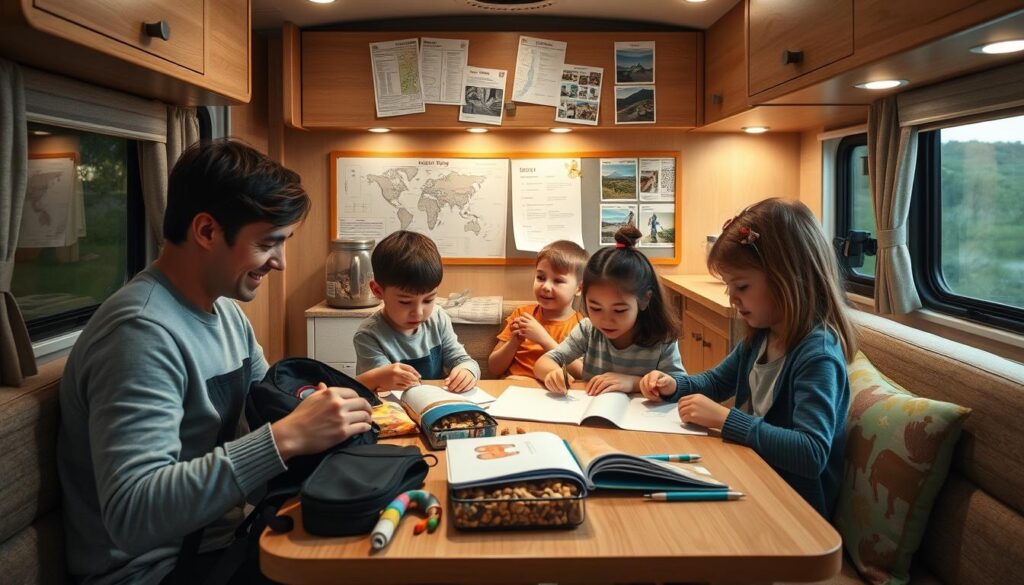
We have honest talks with our kids before we leave. We explain RV life in a way that fits their age. Young kids get simple answers, while teens get more details about their roles.
Explain how RV travel is different from regular trips. Talk about the small space, shared bathrooms, and everyone helping out. Making a family charter helps set clear rules for:
- Using electronics and screen time limits
- Helping with setting up and taking down
- Doing daily chores and personal tasks
- Being quiet and respectful in small spaces
Let kids ask questions and share their worries. Answer them honestly and highlight the fun parts of RV travel. This builds trust and makes them feel ready for the adventure.
Smart Packing Strategies for Young Travelers
Letting kids help with packing teaches them responsibility. Make sure they have everything they need for comfort and safety. Make packing lists for kids that they can follow on their own.
Important things to remember include:
- Clothes for all weather
- Blankets and favorite toys
- Sunscreen, hats, and protective gear
- Medicines and medical supplies
- Hygiene items and comfort objects
Keep extra clothes, blankets, and toiletries in your bag. This avoids last-minute stress and keeps everyone comfortable.
Planning Engaging Activities for Quiet Moments
Choosing the right activities for downtime is important. We pick fun activities that work indoors or outdoors and don’t take up too much space. The goal is to have fun together, not alone.
Our favorite activities include:
- Creative projects: Art, journals, and craft kits
- Brain games: Puzzles, card games, and brain teasers
- Active options: Outdoor games, sports, and nature tools
- Learning activities: Books, science experiments, and geography games
Change activities often to keep things interesting. Use clear containers so kids can see what they have. Think about the noise level of activities for quiet days or places.
Some of the best memories come from simple things like telling stories or playing cards. These moments of togetherness are often what kids remember most.
RV Living: Comfort and Safety
Keeping kids happy in an RV starts with a safe, organized space. When kids feel safe and comfy, they’re ready for fun RV trips. We plan our RV to be safe and cozy, even though it’s small.
Traveling with kids means thinking differently about our space. Every choice we make affects our family. We balance safety with comfort and keep things organized for everyone.
Safety First: RV Safety Features
Safety is key when we travel with kids in an RV. We focus on important safety features for our family’s safety on the road and at camp. Proper car seat installation is critical, as RVs have different mounting points than cars.
Baby gates are essential for young kids. We put them at the RV entrance and between areas to stop falls and create safe zones. These gates let kids move around while staying safe.
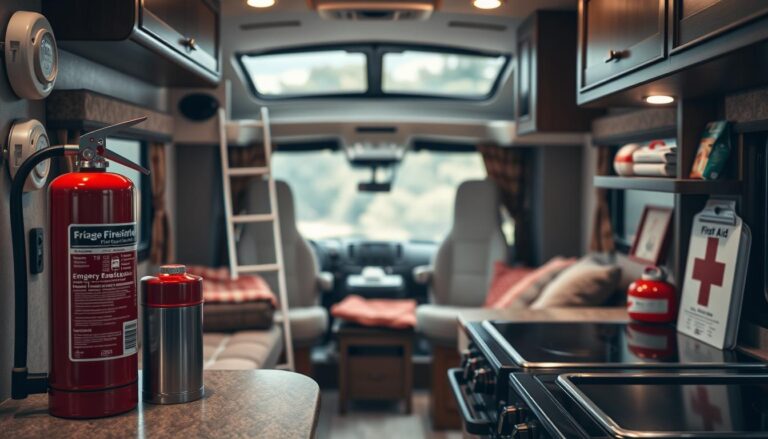
We test carbon monoxide and smoke detectors before every trip. We replace batteries as needed. Our family’s safety depends on these early warning systems working properly.
RV safety isn’t just about equipment—it’s about creating habits that protect your family every day on the road.
We teach clear safety rules that kids can follow. These include staying seated while driving and never opening doors without permission. We also teach them about propane and electrical safety.
| Safety Feature | Purpose | Maintenance Required | Child Safety Benefit |
|---|---|---|---|
| Baby Gates | Block dangerous areas | Check latches weekly | Prevents falls and wandering |
| Window Locks | Secure openings | Test before each trip | Stops unsupervised window opening |
| Cabinet Latches | Secure storage areas | Tighten as needed | Keeps hazardous items away |
| Step Covers | Prevent slips | Clean regularly | Reduces fall risk |
Creating a Comfortable Sleeping Space
Good sleep is key for everyone’s mood and energy during RV trips. We make sure each family member has their own sleeping area. Privacy is important in such close quarters.
Bunk beds are great for kids, but we add special touches to make each space unique. We use curtains or fabric panels for privacy. Small reading lights and personal storage cubbies make each space special.
Keeping the temperature right is important for sleep. We use fans and sometimes portable air conditioning for hot weather. Comfortable sleeping temperatures help everyone rest better and wake up ready for adventures.
Good mattresses are essential for RV sleep. We upgrade RV mattresses with memory foam toppers or replace them with better ones. Familiar bedding from home helps kids adjust to the RV.
Quiet hours are important for rest. We use white noise machines or fans to block out outside sounds. Quiet time rules help everyone respect each other’s need for rest.
Organizing Your RV for Family Life
Everything must have its place in our RV because of the limited space. We use hanging closet organizers, shoe racks, and drawer separators to keep things organized. A doormat and designated shoe area help keep the RV clean.
Pack and play or baby gates are key for little ones’ safety. These create safe play areas where toddlers can move freely. We place these areas away from the driver’s seat and cooking areas.
Storage systems must work for kids too. We give each child their own bins for toys, clothes, and personal items. Color-coding or labeling helps kids find their belongings and put things away properly. Teaching organization skills early makes RV life smoother for everyone.
Kitchen organization is critical with kids around. We secure sharp objects and breakable items in locked cabinets. Plastic dishes and cups prevent injuries from broken glass. Child-proof latches on cabinets containing cleaning supplies or medications keep dangerous items away from curious hands.
We establish daily routines for keeping organized. Morning and evening cleanup times help prevent clutter from taking over our small space. When everyone helps keep the RV tidy, we have more room for fun and relaxation.
Bathroom organization is key with multiple family members. We assign each person their own toiletry bag and towel hook. A small step stool helps younger children reach the sink safely. Keeping the bathroom organized prevents accidents and makes daily routines easier.
Keeping Kids Engaged on the Road
Keeping kids entertained on the road is key to a great RV trip. Mix old-school games with new tech for fun. This combo makes your journey memorable.
Plan ahead for fun. Weather, traffic, and tired kids can change your mood. Have many games ready for all ages.
Classic Games That Never Get Old
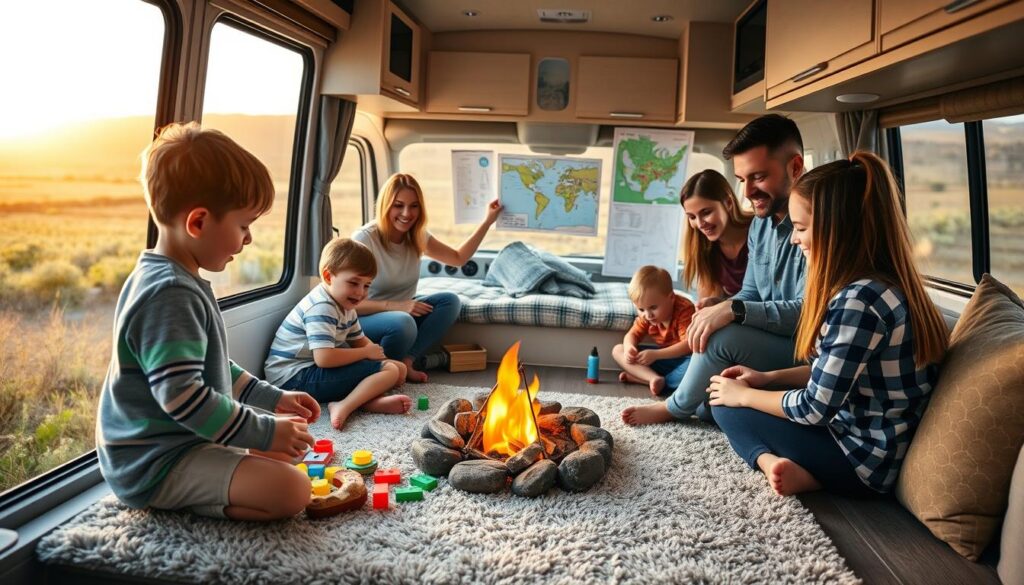
Games are essential for RV trips. Twenty Questions boosts creativity and passes time. The License Plate Game turns driving into a fun challenge.
I Spy is great for young kids. It makes everyday sights exciting. Would You Rther sparks funny talks and teaches about each other.
Storytelling games are special. Everyone adds to the story. These tales become family jokes for years.
Board Games for Rainy Day Fun
Board games are perfect for RV days indoors. Monopoly teaches money skills and is fun. Scrabble improves vocabulary without feeling like homework.
Speak Out makes everyone laugh with mouth guards. Candy Land is perfect for little ones. Sorry is great for all ages.
Choose games that are quick. This keeps everyone happy without getting bored.
Smart Technology Solutions
Modern tech is great for RV trips. Nintendo Wii consoles are perfect for RVs. They make rainy days fun and active.
Educational apps turn tablets into learning tools. Geography apps teach about places you visit. Star-gazing apps make campfires into astronomy lessons.
Audio books are great for driving. Pick stories that keep everyone guessing. Good narrators make story time exciting.
Learning Adventures Along the Way
The RV lifestyle is full of learning chances. Use physical maps for navigation. This teaches geography and problem-solving.
State fact research makes trips educational. Kids learn about new states before visiting. They feel proud sharing their knowledge.
Nature journaling is a great activity. Give each child a notebook for sketches and observations. These journals capture memories beyond photos.
Visiting historical sites is educational. Living history demonstrations show how people lived before. Hands-on learning is more effective than books.
The goal is to connect as a family. The best RVing hacks for families mix structured fun with free time. This allows for spontaneous fun and deep conversations.
Food on the Go: Meal Planning
Learning how to RV with kids without losing your mind is tough. It’s hard to keep everyone fed and happy in a small kitchen. But, with smart planning, RV cooking can be fun for the whole family.
Keeping to a meal schedule helps kids feel secure. It stops meltdowns. Consistency is key when living in a small space.
Simple Recipes That Work
Choosing simple recipes is the secret to RV cooking. One-pot meals are perfect for feeding families without kitchen chaos.
Here are our favorite kid-approved RV recipes:
- Breakfast scramble with eggs, cheese, and pre-cooked sausage
- Pasta with jarred sauce and frozen vegetables
- Quesadillas using tortillas, cheese, and leftover meat
- Foil packet dinners with chicken, potatoes, and vegetables
- Slow cooker chili that cooks while we drive
Teaching kids to crack eggs and scramble them is great. It might get messy, but they learn important skills.
The best family meals happen when everyone contributes something, no matter how small.
Maximizing Your Kitchen Space
Organization is key to cooking success in an RV. We need systems that work for everyone.
Smart storage solutions include:
- Stackable containers for dry goods
- Magnetic spice jars on the refrigerator
- Over-the-sink cutting boards for extra counter space
- Collapsible bowls and measuring cups
- Drawer organizers for utensils
Keep things kids can reach within their grasp. This makes them feel involved and reduces requests for help.
Use pictures for labels. This helps everyone find what they need fast and puts things back right.
Smart Snacking Strategies
Snacks are key on long drives to prevent hunger meltdowns. Choose foods that travel well and won’t make a mess.
Our top travel-friendly snacks:
- Individual trail mix portions in small containers
- Apple slices with peanut butter packets
- String cheese and whole grain crackers
- Homemade granola bars
- Veggie sticks with hummus cups
Prepare snack bags the night before. This saves time and reduces morning stress.
Let each child choose a snack for the day. This gives them control and variety in their diet.
Use water bottles with straws to prevent spills. Freeze half-full bottles for cold drinks that stay cold.
RV meal planning isn’t about fancy food. It’s about keeping our families happy and connected on the road. Simple meals shared around the RV table create lasting memories.
Managing Family Dynamics
The small space of an RV makes family talks intense. RVing with children means parents must be good at solving problems and setting rules. It’s hard to keep family life normal in such a small area.
Being good at parenting is even more important when living in an RV. RV life makes good times better and bad times worse. With the right mindset, we can turn tough moments into chances to grow closer.
Navigating Conflicts in Close Quarters
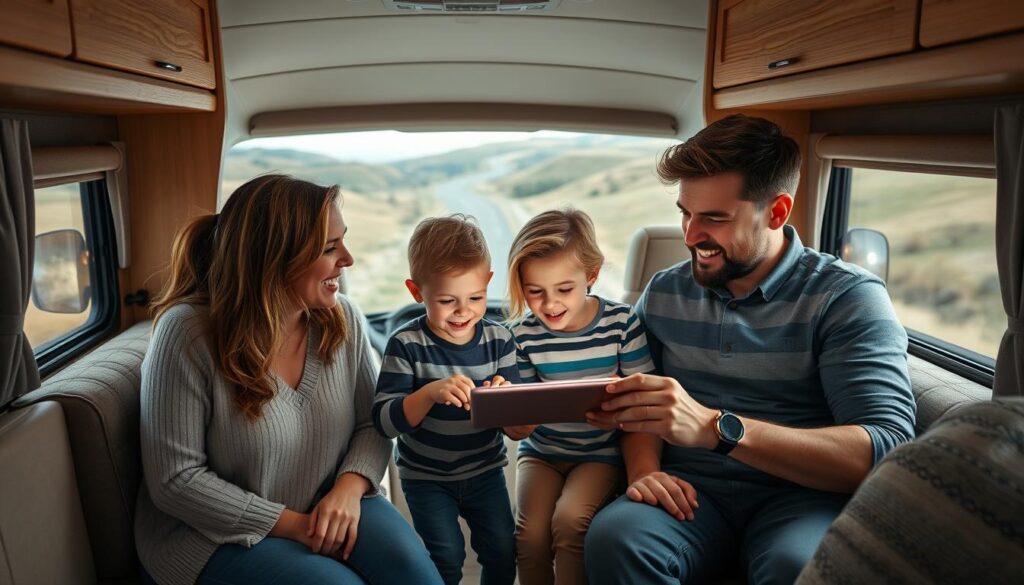
Problems can get worse fast in a small space. We need to spot trouble signs early. Prevention is key to avoid fights and short tempers.
Having quiet spots helps everyone relax. A simple curtain can give kids privacy. We should have rules for when to calm down in our small space.
When fights happen, we must solve them fast and calmly. Listening well is very important. Each person needs to feel heard and understood. Often, the real problem is the stress of always being together.
Encouraging Teamwork Among Siblings
Siblings might fight more in an RV, but we can turn that into teamwork. Giving everyone tasks makes daily life a team effort. Kids can help with cleaning while parents set up camp.
Letting kids do small jobs makes them feel important. Younger kids can organize shoes, while older ones help with setup. This builds confidence and stops fights between siblings.
We should celebrate when we all work together well. Success in setting up camp is a win for everyone. These moments create happy memories and show the value of working together.
Setting Boundaries and Rules
Setting clear rules is more important in an RV. We need rules for RV life, like quiet times and where to eat. These rules should be made before problems start.
It’s important for kids to have a say in family decisions. Kids who feel involved are more likely to follow rules. We can have family meetings to talk about plans and schedules.
Consequences must fit our RV life. Punishments like “go to your room” don’t work here. Instead, we might use chores or losing privileges that make sense in our mobile world.
Being flexible is key to good rules in an RV. What works at one place might not at another. We should be ready to change our rules while keeping our family values strong on the road.
Exploring the Great Outdoors
Discovering amazing places makes RV trips special for families. Choosing the right spots helps kids feel confident and adults relax. It’s all about picking places that everyone will love.
Planning ahead is key. Look up campgrounds and attractions before you leave. Family RV tips say to mix fun activities with free time. This keeps everyone happy without too much planning.
Family-Friendly Campgrounds to Consider
Jellystone Parks are great for families. They have pools, slides, and bounce houses for hours of fun. Activities and character visits make memories that last.
Other good campgrounds have playgrounds, trails, and group activities. Look for places with stores and laundry. This makes life easier on the road.
KOA campgrounds are also a good choice. They have pools, game rooms, and activities for all ages. This makes planning easier.
“The best family campgrounds are those where parents can relax while children safely explore and make new friends.”
State parks are perfect for nature and fun. They’re cheaper than private spots but have great trails and programs. Check their websites for events and activities.
Nature Activities for Kids
Outdoor adventures help kids grow strong and learn about nature. Nature scavenger hunts are fun and educational. Make lists of things to find like rocks or bird sounds.
Seeing amazing natural sights is unforgettable. Visit the tallest trees or darkest skies. It sparks kids’ interest in science and geography.
Family RV tips for nature say to bring the right tools. Magnifying glasses and field guides make kids feel like explorers. Binoculars for small hands let them watch wildlife safely.
| Activity Type | Age Group | Equipment Needed | Learning Benefits |
|---|---|---|---|
| Nature Scavenger Hunt | 5-12 years | Printed lists, collection bags | Observation skills, following directions |
| Wildlife Photography | 8-16 years | Camera or smartphone | Patience, artistic expression |
| Rock Collecting | 6-14 years | Collection containers, field guides | Geology basics, classification skills |
| Star Gazing | All ages | Blankets, star charts | Astronomy, wonder about universe |
Water activities are great for bonding and learning. Teach kids to skip stones or spot water birds. Always keep them safe near water.
Educational Parks and Museums
National parks have Junior Ranger programs for learning. Kids learn about nature and get badges. It’s a fun way to learn.
Plan visits to museums and cultural sites. Look for interactive exhibits and hands-on activities. Many museums have special family programs.
Living history museums bring the past to life. Kids can touch artifacts and watch demonstrations. Costumed interpreters share stories and answer questions.
Science centers and children’s museums make learning fun. Family RV tips suggest visiting weekdays for less crowds. This way, kids get more attention and see more exhibits.
Outdoor education centers offer learning in nature. They have trails, wildlife areas, and programs. Kids learn about nature and conservation.
Buy annual passes for parks or museums if you visit often. They save money and offer flexibility. Many family RV tips recommend them.
Building RV Skills Together
RV trips turn kids into active family members. When kids help with RV tasks, they gain confidence and independence. These experiences teach them valuable life skills, not just for road trips with kids.
Every part of RV travel is a chance to learn. Kids can do simple tasks like cleaning and navigation. This makes them feel valued and capable.
Age-Appropriate Maintenance Tasks
Teaching kids about RV care is easy. We start with simple tasks to build their confidence. Young kids can clean and organize, while older ones learn more.
Younger children (ages 4-8) can do simple cleaning. They can wipe surfaces, organize, and wash the outside. These tasks teach them responsibility and keep them busy.
Older kids and teens can learn more. They can check tire pressure, fluids, and basic electrical systems. We explain how each system works and why it’s important.
Always keep safety first when teaching maintenance. We supervise and use the right tools. Starting with simple tasks helps build confidence for more complex tasks.
| Age Group | Maintenance Tasks | Skills Developed | Safety Considerations |
|---|---|---|---|
| 4-8 years | Interior cleaning, organizing storage, exterior washing | Responsibility, attention to detail, following instructions | Non-toxic cleaners, adult supervision, proper lifting |
| 9-12 years | Checking fluids, basic tool use, system monitoring | Problem-solving, mechanical understanding, measurement | Tool safety, protective equipment, guided instruction |
| 13+ years | Tire maintenance, electrical basics, troubleshooting | Critical thinking, independence, technical skills | Proper procedures, emergency protocols, adult guidance |
Map Reading and Navigation Skills
GPS makes navigation easy, but map reading is valuable. It teaches spatial awareness, geography, and problem-solving. These skills are useful all life long, not just on road trips with kids.
We start by teaching kids to orient a map. They learn to find north, south, east, and west. We point out landmarks and explain scale and distance. They can trace our route to make it fun.
Geography lessons come naturally from navigation. Kids learn about states, cities, and features. They see how regions connect and what makes each area special.
Planning routes together teaches decision-making. We discuss options and let kids choose. This makes them feel important and teaches them to think about distance, time, and interesting stops.
When technology fails, map skills are key. Teaching kids to navigate without GPS builds confidence and independence. They learn to think critically and solve problems.
Building Independence Through Responsibilities
Assigning real tasks to kids builds self-esteem and competence. We give them tasks that help the family succeed. This turns kids into active participants.
Daily responsibilities include meal prep, setting up camp, and managing equipment. Young kids can set tables and organize. Older kids can cook and handle technical tasks.
We let kids make mistakes and learn from them. When they struggle, we guide but don’t take over. This builds resilience and problem-solving skills.
Rotating tasks keeps everyone involved and prevents boredom. One day, a child might navigate, and another might plan meals. This way, everyone learns different skills on our road trip with kids.
Celebrating successes boosts confidence and motivation. When kids do well, we acknowledge their efforts. This encourages them to keep participating.
Teaching flexibility helps kids adapt to changes. RV travel often doesn’t go as planned. We model positive responses and teach them to cope.
These experiences give kids lasting benefits. They become more confident and independent at home. The skills they learn on the road are valuable for life.
Creating Lasting Memories
Every mile in your RV is a chance to make memories your family will love forever. It’s important to capture both big and small moments. This makes RV life special.
Being with your kids without distractions shows them how much they matter. This makes them feel safe and loved. It helps them try new things. These sanity-saving RVing tips will make your travels unforgettable.
Documenting Your Journey with Photos
Photography is more meaningful when kids help take pictures. Give each child their own camera or phone. You’ll see the world through their eyes.
Try photo challenges to keep everyone excited. Look for unusual things like license plates or wildflowers. These games make every moment special.
Don’t miss the small moments that become the most precious memories. Take pictures of kids helping with camp or cooking together. These photos tell great stories years later.
- Morning routine photos showing kids brushing teeth or making breakfast
- Sunset silhouettes of your family at different campgrounds
- Hands-on learning moments like kids helping with RV setup
- Silly faces and candid laughter during road trip games
Keeping a Family Travel Journal
A family travel journal is a shared treasure that grows more valuable over time. Find a way to work for all ages and writing levels. Young kids can draw, while older ones write about their adventures.
Make journaling a daily habit. Set aside time each evening for everyone to write. Ask questions like “What surprised you today?” or “What made you laugh?” These questions help kids think deeply about their experiences.
Include both the big and small details in your journal. Write about the weather, places you visited, and foods you tried. These details bring back the full experience when you read the journal later.
Let each family member decorate their own pages. Use stickers, drawings, or flowers from hikes. This makes the journal special and encourages everyone to participate.
Planning Special Family Adventures
Plan some adventures, but also leave room for spontaneity. Research unique experiences and let kids choose what they want to do. This makes everyone excited and invested.
Create family traditions that you can do at different places. Watch the sunrise together or have a special dinner under the stars. These rituals are memorable and kids will want to keep them going.
Surprise your family with special treats or detours. These surprises create stories that your family will tell for years.
- Geocaching adventures that turn exploration into treasure hunts
- Stargazing sessions with constellation identification apps
- Local festival participation to experience regional culture
- Junior ranger programs at national parks and monuments
- Cooking challenges using local ingredients from farmers markets
The best adventures often happen when you slow down and connect with each other. Sometimes the best memories come from unexpected moments. Stay open to these moments for connection and joy.
Unplugging and Bonding
Traveling in an RV with kids lets us unplug and bond. We leave digital distractions behind and enjoy nature. RV travel helps us connect deeply, something we often miss at home.
Campgrounds offer a safe space for kids to explore. Parents can watch over them while they have fun. This mix of freedom and safety helps families bond in special ways.
Setting Tech-Free Times
Setting tech-free times can be fun, not a punishment. We make these moments special adventures. It’s all about making them exciting, not restrictive.
Use natural times like meals or bedtime for device-free talks. Morning coffee and exploring the campground are great for quiet bonding. These moments are peaceful and connect us.
Involve kids in planning tech-free times. When they help decide, they feel more involved. Use a visual schedule to show screen and family time.
Plan fun activities for tech-free times. Campfire cooking, nature crafts, and games are great. They replace screens with more fun.
Outdoor Activities for Family Connection
Nature offers endless ways to bond without needing much. Simple activities create lasting memories.
Stargazing is magical away from city lights. Use a star chart to find constellations. It encourages deep talks and wonder.
Nature scavenger hunts are fun for all ages. Make lists of items to find, like rocks and leaves. It builds teamwork and exploration.
Outdoor projects like building a campfire or creating art unite families. Everyone contributes their skills and ideas. It’s a shared goal.
- Morning nature walks before breakfast
- Evening campfire circles with stories and songs
- Geocaching adventures using GPS coordinates
- Photography challenges focusing on nature details
- Outdoor cooking projects everyone can help with
Encouraging Conversations on the Road
Travel time is perfect for deep talks. Start with questions that really interest your kids.
Ask observation-based questions about what you see. “What do you notice about the landscape?” or “How did people live here 100 years ago?” It encourages kids to think deeply.
Share your travel memories and ask kids to dream about theirs. It makes them feel part of a family story and sparks their imagination.
Play conversation games that everyone can join. “Would you prefer” questions and storytelling keep everyone engaged. It’s fun during long drives.
Some of the best talks happen quietly. Puzzles, snacks, or organizing the RV are great for sharing thoughts. It’s about being present and listening.
We don’t need constant talk. Just create a space for meaningful communication to happen naturally. Being fully present with our kids reveals new sides of their personalities.
Post-Trip: Reflecting and Learning
The journey home starts a new chapter in our family’s story. RV adventures with kids leave lasting impacts. These effects go beyond the miles we traveled.
Discussing What Went Well
We sit down at dinner to talk about our favorite moments. Each family member shares their best memories and achievements. This helps us see how much we did together.
Every challenge makes kids aim higher for themselves.
Planning for Future Adventures
Our RV trip sets the stage for our next family vacation. We talk about places we want to visit and activities we want to try again. Kids feel safe and loved, ready to try new things.
Bringing RV Life Lessons Home
The skills and confidence kids gained on our RV trip help them in everyday life. We encourage them to use their problem-solving and teamwork skills at home and school. Giving kids new experiences helps them grow strong and confident.
Our RV adventures are an investment in our family’s future. They create bonds and memories that will last forever.