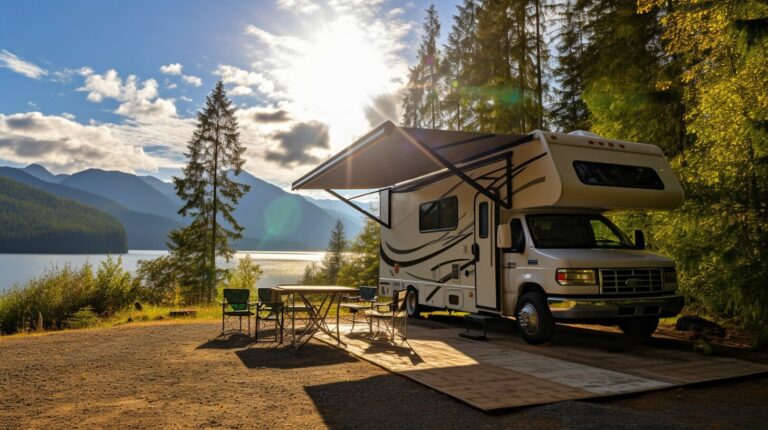
Imagine finding the perfect campsite after driving for hours. The view is amazing, but the ground is like a ski hill. That’s when RV leveling fundamentals become your best friend.
A well-leveled RV is not just about feeling comfy. It’s about safety, working well, and feeling at ease. If your RV is not level, your fridge and sleep will suffer.
Learning why it matters and how to do it makes camping fun again. We’ll show you key skills every RV owner should know.
Whether you camp for the weekend or live on the road, these tips are vital. No more waking up off-balance or watching your coffee slide.
Key Takeaways
- Proper leveling ensures appliance functionality and prevents damage to your recreational vehicle
- An unlevel setup affects sleep quality, cooking, and overall comfort during your stay
- Safety hazards increase significantly when your vehicle isn’t properly positioned
- Basic leveling tools and techniques can transform any uneven campsite into a comfortable home base
- Understanding the fundamentals saves time, money, and frustration on every camping trip
- Both side-to-side and front-to-back positioning are equally important for optimal results
What Does It Mean to Level Your RV?
Knowing how to level your RV starts with understanding the difference between parking and proper positioning. Many new RV owners think finding a flat-looking spot is enough. But, RV leveling basics are more complex than that.
RV leveling means making sure your RV sits even in all directions. This creates a stable foundation for your home on wheels. We use special tools to check side-to-side and front-to-back positioning.
Understanding RV Leveling Concepts
The main idea behind RV leveling is about two planes of movement. Side-to-side leveling fixes any tilt from left to right. Front-to-back leveling corrects any slope from nose to tail.
We use bubble levels to measure these angles accurately. These tools show us where adjustments are needed. Most RVs need to be leveled within one-quarter inch per foot to work right.
The importance of leveling your motorhome is clear when we think about how small angles affect daily life. A small slope can make sleeping hard and cause appliances to break.
| Leveling Aspect | Measurement Tool | Acceptable Range | Impact if Ignored |
|---|---|---|---|
| Side-to-Side | Bubble Level | Within 1/4 inch per foot | Refrigerator issues, uncomfortable sleep |
| Front-to-Back | Bubble Level | Within 1/4 inch per foot | Water system problems, door alignment |
| Overall Stability | Visual inspection | No rocking motion | Structural stress, safety concerns |
| Foundation Contact | Physical check | All stabilizers engaged | Uneven weight distribution |
Common Misconceptions About RV Leveling
One big mistake is thinking expensive automatic systems mean you don’t need to know the basics. While they help, knowing when and how to use them is key.
Another mistake is trusting what looks level to our eyes over actual measurements. What looks level isn’t always level, which is why RV leveling basics include using the right tools.
Many RVers think “close enough” is okay for leveling. But, even small deviations can cause big problems over time. The importance of leveling your motorhome correctly is huge for comfort and equipment life.
Some people think leveling only matters for comfort. But, it really affects appliance function, structure, and safety. We should see leveling as a must-do maintenance task, not just a comfort feature.
Why Leveling Your RV Is Important
Leveling your RV is more than just about comfort. It’s about safety, functionality, and keeping your investment safe. When we understand the benefits of leveling your RV, we see why seasoned campers always do it. A level RV is key for everything to work right.
Your RV is like a mobile home that needs to sit just right. Without leveling, you’ll face many problems. These can ruin your vacation. Let’s see how leveling makes a big difference in your camping trip.
Comfort and Sleep Quality
Nothing ruins a camping trip like a bad night’s sleep. An unlevel RV makes sleeping hard. You’ll slide to one side of the bed.
A level RV means you sleep in the middle of your bed. You wake up feeling refreshed. No more waking up sore and cranky.
When your RV is level, daily tasks are easier. Walking feels normal. Cooking is safer. Even getting dressed is easier.
Proper Functionality of Appliances
RV appliance functionality depends on leveling. Your fridge is a big example. It needs to be level to cool properly. If it’s not, it won’t work well or might get damaged.
Water systems also need to be level. Your toilet and hot water heater work better when level. Even your holding tank monitors work better.
“A level RV is like a well-tuned instrument – everything works in harmony when the foundation is right.”
Slide-outs are another area where leveling is key. They’re made to work on level ground. If not, they can bind or wear out unevenly, costing a lot to fix.
Safety on the Road
Safety is more than just appliance function. An unlevel RV can rock and sway, making it unstable. This is worse in windy weather.
Proper drainage is also important. An unlevel RV can pool water, leading to leaks and mold. Gray and black water tanks drain better when level.
Uneven weight distribution can damage your RV. It puts too much stress on some parts and not enough on others. This can cause expensive repairs later on.
Tools You Need for Leveling
Building your RV leveling toolkit is easy. Knowing what you need is key. The right tools make setting up your RV quick and easy. Whether it’s a travel trailer or a motorhome, having leveling equipment essentials saves time and stress.
Your choice of leveling tools depends on your RV and what you like. Some like manual systems for control, while others prefer automatic for ease. We’ll look at both to help you choose.
Manual Leveling Tools: A Quick Guide
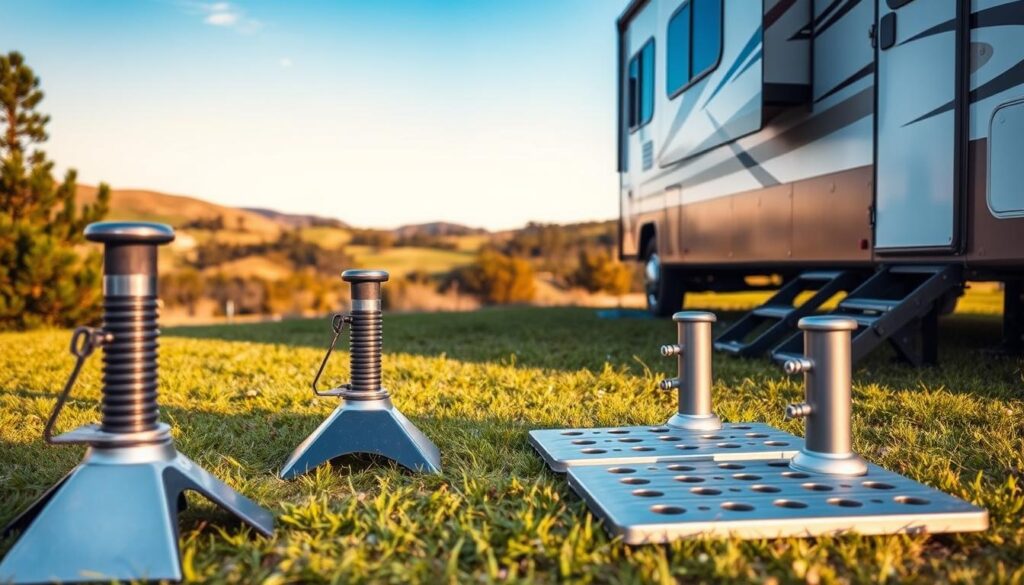
Manual leveling is popular for its reliability and cost. It starts with quality leveling blocks. These blocks are made of different materials, from plastic to composite.
A bubble level is key for checking levels. Digital levels give precise readings, while traditional bubble levels are reliable backups. Many RVers use both.
Wheel chocks are important for safety once you’ve leveled. Stabilizing jacks prevent bounce and movement. A cordless drill with the right attachments makes adjusting jacks easier.
Automatic Leveling Systems: Pros and Cons
Automatic leveling systems are the high-end choice. They level your RV quickly with just a button. They’re great for frequent travelers.
The benefits include speed, consistency, and ease of use. You can level your RV fast without lifting or getting dirty. Class A motorhomes often come with these systems.
But, there are downsides. They cost a lot to buy and maintain. Repairs can be expensive and complex. You’ll need to know how to level manually if the system fails.
“The best leveling system is the one you’ll use often. It depends on your budget, RV type, and how often you camp.”
Additional Accessories to Consider
There are extra accessories to make leveling better. Jack pads help distribute weight and prevent sinking. They’re key for heavy RVs.
Smartphone leveling apps give digital readings on your phone. They’re not a full replacement but handy for quick checks.
Think about a leveling ramp system for when blocks aren’t enough. These ramps are good for small adjustments. A flashlight or headlamp is essential for evening setups when it’s dark.
How to Level Your RV: Step-by-Step Guide
Learning to level an RV is easier with a clear plan. The step-by-step leveling process we share makes it simple. Soon, you’ll level your RV quickly and confidently at every campsite.
Take your time at first. Rushing can lead to mistakes. Patience and attention to detail are key to mastering this skill.
Preparing Your RV for Leveling
Get your RV ready before parking. Gather a bubble level, leveling blocks, and wheel chocks. Keep them in your RV’s storage.
Next, organize your RV’s interior. Loose items can move during leveling. Also, retract your awning and secure external accessories.
Check your tire pressure before starting. Properly inflated tires help with leveling and stability. This step avoids many problems.
Finding the Right Spot to Park
Choose a good parking spot for easier leveling. Look for the most level ground around your campsite. Even a small difference can save time and effort.
Avoid parking under trees or near obstacles. Look for firm, stable ground. Soft or muddy areas can cause problems.
Notice the campsite’s slope before parking. Sometimes, parking at an angle helps with leveling.
Adjusting Your RV Level with Blocks
Now, it’s time to level your RV. Start by checking the front-to-back level inside your RV. Use the refrigerator top or a counter for this.
If your RV slopes, use leveling blocks. Add blocks slowly and check your level each time. Use thin blocks for better stability.
Once front-to-back is level, check the side-to-side level. Use stabilizer jacks or blocks for any side slope. Always use your parking brake and wheel chocks before final adjustments.
Finish by checking your RV’s stability. Walk around to make sure it feels solid. This confirms your RV is ready for a comfortable stay.
Tips for Leveling on Uneven Ground
When we face slopes, soft ground, or rocky terrain, we must adjust our leveling ways. These tough spots need special RV leveling techniques. Knowing what we’re up against helps us adjust our methods.
Recognizing Different Terrain Types
It’s key to know the terrain to pick the right method. Hard-packed dirt is stable but might need more blocks. Sandy or loose soil shifts under weight, so use wider blocks or boards.
Rocky terrain is tricky. We must clear debris and find stable spots for our leveling tools. Grass and soft ground can compress, making our RV settle unevenly.
Sloped campsites are common, mainly in mountains. We must plan carefully to lift the right end and adjust enough.
Techniques for Using Leveling Blocks
Modern leveling blocks snap together for the exact height needed. They’re versatile for different uneven ground solutions. Start with the first block under your tire, then add more as needed.
For steep slopes, use a gradual approach. Place the first block, then add more in front before moving forward. This avoids damage to blocks and our RV’s suspension.
Safety tip: Always use wheel chocks on the opposite end when leveling. This stops unexpected movement during setup.
| Terrain Type | Best Block Configuration | Special Considerations | Stability Rating |
|---|---|---|---|
| Hard-packed dirt | Standard stacking | Minimal settling expected | Excellent |
| Sandy/loose soil | Wide base with boards | Use weight distribution pads | Good |
| Rocky terrain | Custom fit around rocks | Clear debris first | Very Good |
| Grass/soft ground | Large contact area | Monitor for settling | Fair |
Using a Leveling App: A Digital Solution
Smartphone apps have changed RV leveling. They connect with devices in our RV to show how far off level we are. Popular apps give real-time feedback, making leveling easier.
Many apps have bubble level displays, degree measurements, and step-by-step guides. Some even save our favorite settings for different camps.
Using both traditional blocks and modern apps gives the best uneven ground solutions. We get digital precision with the reliability of physical tools.
The Impact of Weight Distribution
Proper weight distribution is key for RV stability and leveling. It keeps your RV in good shape for a long time. If your RV is loaded unevenly, it can wear out faster and even get damaged.
How we pack our RV affects how easy it is to level. Weight distribution effects can make a big difference. If weight is off balance, leveling becomes harder.
Understanding RV Weight Distribution
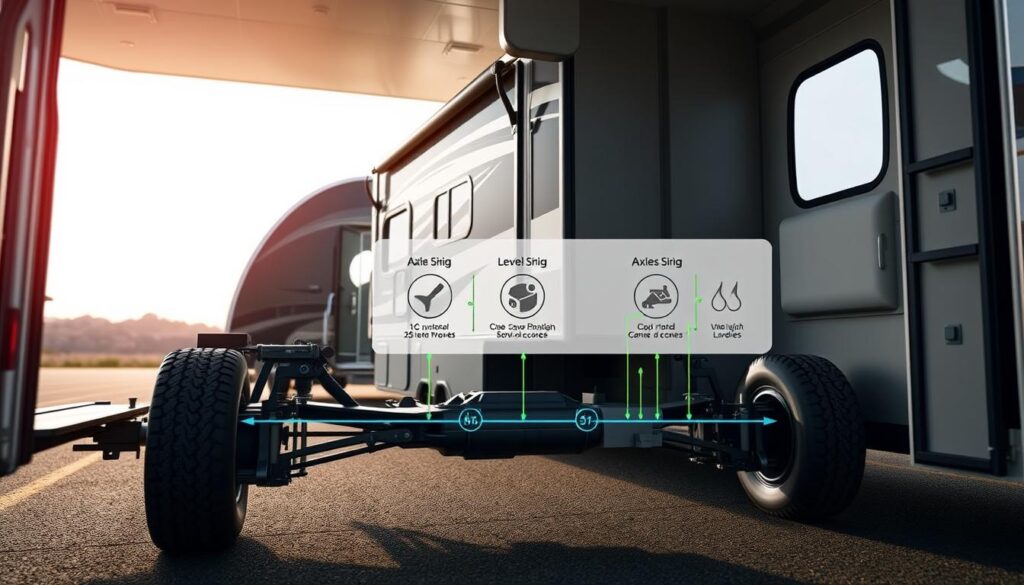
Weight distribution in an RV is more than just spreading things out. We must think about the center of gravity. Heavy items placed wrong can make leveling hard.
Water tanks are important for weight distribution. A full freshwater tank is over 400 pounds. Knowing where these tanks are helps us predict leveling issues.
The frame and suspension of our RV can only handle so much weight. If we put too much weight in the wrong places, we risk damaging parts. This damage can be slow to show up but is expensive to fix.
Balancing Your Gear Inside the RV
Putting heavy items in the right places makes leveling easier. We should keep heavy gear like generators and tools near the floor and center. This keeps the RV stable and easy to level.
Kitchen appliances and canned goods should be spread out. The same goes for clothes and books. Even distribution stops one corner from getting too heavy.
We can use storage compartments wisely by putting heavy items near the axles. This reduces the effect of weight far from support points. External storage should not add to weight problems.
Checking the weight regularly helps us see how our packing affects leveling. Many RV owners find that overloading one side causes problems. Making small changes in how we pack can make leveling much easier.
Leveling Your RV During Different Seasons
Every season brings its own challenges for RV leveling. Weather changes ground stability and how our equipment works. Knowing these seasonal leveling tips helps us get ready for any camping trip all year.
Ground conditions change a lot with the weather. Soft ground after rain makes leveling blocks sink. Hot asphalt in summer also makes it hard to stabilize our RV.
Different strategies are needed for each season. Spring has muddy ground from snowmelt and rain. Summer heat makes asphalt soft under our RV’s weight.
Summer vs. Winter Leveling Considerations
Summer leveling has its own set of challenges. Hot asphalt can be so soft that jacks and blocks sink. We use plywood pads under all leveling equipment in extreme heat.
Temperature changes how our leveling tools work. Metal parts expand in heat, which can mess up our measurements. We need to check our bubble levels more often in hot weather.
Winter leveling is very different. Frozen ground is hard to work with, and ice makes everything slippery. This makes the whole process more dangerous.
Cold weather slows down our equipment. We need to warm up automatic leveling systems before using them.
Batteries lose power faster in cold. Manual tools are our backup when electronic systems fail in winter.
| Season | Main Challenge | Recommended Solution | Equipment Consideration |
|---|---|---|---|
| Summer | Soft hot asphalt | Use plywood pads | Check levels frequently |
| Winter | Frozen ground and ice | Warm up hydraulics | Have manual backup ready |
| Spring | Muddy soft ground | Larger support surfaces | Clean equipment after use |
| Fall | Wet leaves and debris | Clear parking area first | Protect from moisture |
Dealing with Snow or Mud
Muddy conditions need special care for safe leveling. We must make stable surfaces before placing any leveling equipment. Large plywood sheets work better than small blocks in soft ground.
Snow is a big challenge for RV leveling. We must clear snow from our parking area before leveling. Hidden obstacles under snow can damage our equipment or RV.
Wet snow is very slippery. It can freeze around our leveling blocks. We should remove all snow and ice before positioning our RV.
Seasonal leveling tips for muddy conditions include using wider support surfaces. Larger plywood sheets distribute weight better than narrow blocks. We can stack multiple sheets for extra stability.
Mud sticks to everything, making cleanup essential. We should clean our leveling equipment right after use. Dried mud can mess with how our equipment works.
Snow and ice need different solutions. We use ice melt products to make better traction around our RV. Sand or kitty litter gives extra grip on slippery surfaces.
Prevention is better than reaction in tough conditions. We check weather forecasts before traveling. Planning our route around bad weather saves time and prevents damage.
Emergency supplies are key in harsh weather. We carry extra plywood, traction aids, and backup manual tools. These RV leveling hacks help us deal with unexpected situations.
Regular maintenance prevents many weather-related issues. We check our equipment before each camping season. Keeping everything clean and well-lubricated helps it work right when we need it most.
Maintaining Your Leveling Equipment
Keeping your leveling tools in good shape makes camping smooth and fun. It stops you from getting stuck on uneven ground. Equipment maintenance keeps your camping trips great.
Your leveling setup is a big part of your RV life. It doesn’t matter if you use simple tools or advanced systems. Taking care of them makes them last longer and work better.
An ounce of prevention is worth a pound of cure, when you’re far from RV service.
Regular Checks for Manual Tools
Manual leveling tools need simple but regular care. Before each camping trip, check your bubble levels, blocks, and tools. Best practices for RV leveling start with reliable equipment.
Test your bubble levels on a flat surface. If the bubble is off, your level needs to be replaced. Also, if your level’s vial is cracked or cloudy, it’s time for a new one.
Look for cracks, chips, or wear on your leveling blocks. Damaged blocks can’t handle your RV’s weight safely. Store them in a dry place to avoid damage.
After each use, clean your tools with water and mild soap. This keeps them working well. Proper storage in organized spots helps prevent damage.
Cleaning and Care for Automatic Systems
Automatic leveling systems need more care than manual tools. They have sensors, motors, and electronics that need regular checks. Keeping the battery in good shape is key for them to work right.
Check your system’s battery connections every month for corrosion. Clean off any corrosion with baking soda and water, then spray with protective spray. Equipment maintenance for these systems includes checking battery voltage often.
Recalibrate your system when you level manually or notice it’s not working right. Most systems need recalibration after big temperature changes or long storage. Always follow the manufacturer’s instructions for the best results.
Keep sensors clean to avoid bad readings. Use a damp cloth to clean them, but avoid harsh chemicals. Also, lubricate moving parts as recommended by the manufacturer.
| Maintenance Task | Manual Tools | Automatic Systems | Frequency |
|---|---|---|---|
| Visual Inspection | Check for cracks, wear | Examine sensors, connections | Before each trip |
| Cleaning | Soap and water rinse | Gentle sensor cleaning | After each use |
| Calibration | Verify level accuracy | System recalibration | Monthly |
| Battery Care | Not applicable | Check connections, voltage | Monthly |
| Storage Prep | Dry, organized storage | Disconnect batteries | End of season |
Keep a simple log of your maintenance work. This helps you spot patterns or problems. It’s also useful for fixing issues or getting professional help.
Fix worn-out parts quickly instead of waiting for them to break. Best practices for RV leveling include having spare parts for important parts. Your preparation today means smooth leveling tomorrow.
Troubleshooting Common Leveling Issues
Even the most experienced RVers face leveling challenges. These can ruin a camping trip. RV leveling troubleshooting needs patience and the right approach. We’ll cover common problems and solutions that work.
Knowing why leveling fails is key. Common leveling problems come from many sources. Stay calm and tackle each cause one by one.
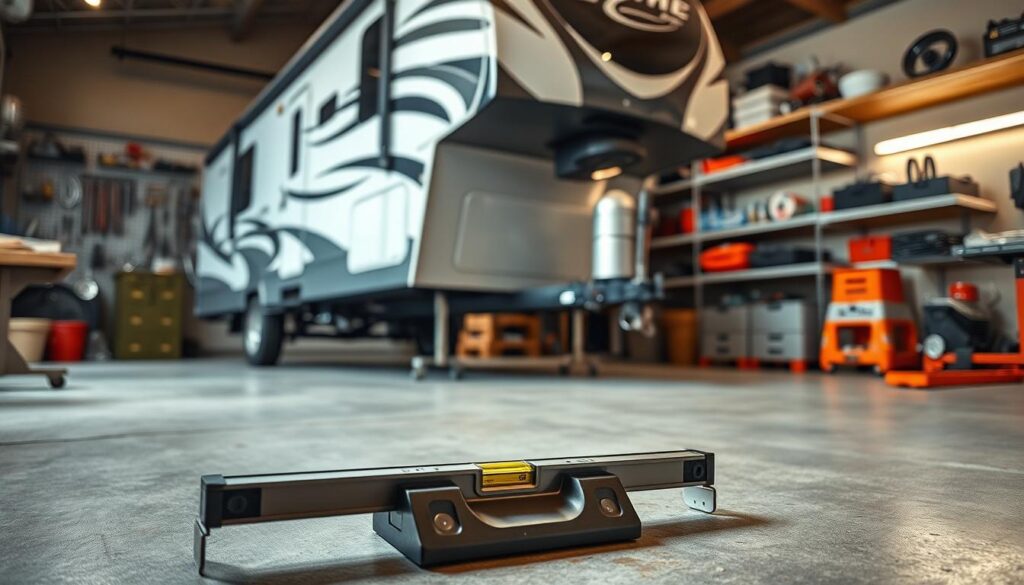
Dealing with Sloped Parking Spots
Sloped parking spots are tough to level. Safe angles are generally 3-5% grade. This means about 2-3 degrees of slope. Steeper slopes need extra care.
For grades between 5-10%, you’ll need more blocks. You’ll have to build up the low side a lot. Always check your blocks for slipping on moderate slopes.
Avoid slopes over 10% as they’re very risky. These steep grades can cause stability issues. If you’re on such terrain, it’s safer to move than risk an accident.
Here are tips for managing sloped sites:
- Use your smartphone’s level app to measure the actual grade before committing to a spot
- Position your RV so the slope runs from side to side when possible
- Stack blocks in a pyramid formation for maximum stability on moderate slopes
- Consider using wheel chocks on both the high and low sides for added security
When Your RV Won’t Level Properly
Sometimes your RV won’t level, no matter what. This can be frustrating. Automatic leveling systems may give error codes, while manual systems might not work right.
First, check the obvious things. Make sure your RV is on solid ground. Soft soil, sand, or loose gravel can make blocks sink or shift.
Weight inside your RV affects leveling. Heavy items on one side can prevent balance. Redistribute weight by moving heavy objects to the center or opposite side.
The following table helps identify and solve common leveling problems:
| Problem | Likely Cause | Solution | Prevention |
|---|---|---|---|
| Blocks keep slipping | Soft or uneven ground | Use larger base blocks or plywood pads | Check ground firmness before parking |
| Can’t get front-to-back level | Uneven weight distribution | Move heavy items or adjust tongue weight | Load RV with balanced weight distribution |
| Automatic system error | Sensor malfunction or obstruction | Clean sensors and check for damage | Regular sensor maintenance and inspection |
| Excessive rocking after leveling | Insufficient stabilization | Deploy all stabilizer jacks and add blocks | Always use all available stabilization points |
When automatic systems fail, don’t panic. Most units have manual override options. Consult your owner’s manual for specific override procedures, as these vary significantly between manufacturers.
Sometimes, the problem isn’t mechanical but environmental. High winds can mess with leveling sensors. Extreme temperatures can affect hydraulic fluid viscosity in automatic systems. Wait for calmer conditions or warmer temperatures when possible.
If your RV won’t level despite trying everything, consider these backup strategies. Use manual leveling blocks even if you have an automatic system. Place blocks under the low corners and drive onto them slowly until you get close to level.
Remember, perfect level isn’t always necessary for a good stay. Getting close to level is often enough for comfort. Focus on achieving the best level possible with your tools and conditions.
Leveling Techniques for Different RV Types
Leveling your RV depends on its design and setup. Each RV type has its own challenges. Knowing these helps us pick the right tools and methods.
Weight, built-in systems, and structure are key when leveling RVs. It’s important to match our leveling strategy to our RV’s specific characteristics instead of using a one-size-fits-all approach.
Travel Trailers vs. Motorhomes
Travel trailer leveling is different from motorhome leveling. We can separate the trailer from the tow vehicle. This gives us more options for adjustment.
We start by unhitching the trailer. Then, we use the tongue jack for front-to-back level. For side-to-side leveling, we place blocks under the low-side wheels. Wheel chocks are essential to keep the trailer from rolling once it’s level.
Motorhomes need different motorhome leveling techniques because everything stays connected. We can’t separate the living area from the driving parts. This makes leveling the entire unit as one piece more challenging on uneven terrain.
But, many newer motorhomes have built-in leveling systems. These systems make leveling faster and more precise than manual methods used with most travel trailers.
Class A, B, and C Considerations
Class A motorhomes often have automatic leveling systems. We should always park with the front wheels pointing toward the downhill side when possible. This helps the automatic system work better and reduces strain on the jacks.
These large motorhomes have multiple leveling points, usually four to six jacks. The automatic system extends each jack independently to achieve level. We just press a button and wait for it to finish.
Class B and Class C motorhomes need manual leveling techniques. These smaller units don’t have space or weight for full automatic systems. We use blocks and manual jacks for proper positioning.
Class B vans are easy to level because of their small size and low profile. We can usually achieve level with just a few blocks under the right wheels. Class C motorhomes, being larger, may need more extensive blocking and adjustment.
Fifth Wheels and Toy Haulers
Fifth wheels have unique challenges because of their pin-box connection system. We need to level the trailer while it’s connected to the truck, then make fine adjustments after unhitching. The high center of gravity requires extra care during leveling.
We start by using the truck to position the fifth wheel on relatively level ground. Then we extend the front landing gear to achieve front-to-back level. Side-to-side leveling follows the same block-and-chock method used with travel trailers.
Toy haulers need special attention because of their heavy rear cargo areas. The weight distribution changes dramatically depending on what we’re carrying in the garage space. We need to account for this variable weight when leveling.
When the toy hauler is loaded with ATVs, motorcycles, or other heavy equipment, the rear becomes much heavier. This affects how we approach the leveling process and may require additional blocking under the rear axles.
| RV Type | Leveling Method | Key Considerations | Time Required |
|---|---|---|---|
| Class A Motorhome | Automatic System | Front wheels downhill, multiple jacks | 5-10 minutes |
| Class B/C Motorhome | Manual Blocks | Compact size, limited jack points | 15-20 minutes |
| Travel Trailer | Blocks and Chocks | Unhitch capability, tongue jack | 10-15 minutes |
| Fifth Wheel | Landing Gear + Blocks | High center of gravity, pin connection | 15-25 minutes |
| Toy Hauler | Variable Weight Method | Cargo load affects balance | 20-30 minutes |
Each RV type has its own optimal leveling sequence and requirements. Understanding these differences helps us level more efficiently and avoid common mistakes that can damage our equipment or create unsafe conditions.
We recommend practicing these techniques in a controlled environment before heading out on extended trips. This preparation helps us become familiar with our specific RV’s leveling requirements and builds confidence for challenging camping situations.
Expert Tips for New RV Owners
Every seasoned RVer remembers their first attempts at leveling. It was full of uncertainty and multiple tries. But with practice, leveling becomes second nature.
Even experienced RV full-timers may need a couple of tries to get their rig level. It requires patience. We’ve gathered the most valuable new RV owner advice to help you succeed from day one.
Recommended Practices for Beginners
Starting with the right approach is key. Practice in your driveway before your first camping trip. This lets you get familiar with your equipment without the stress of others waiting.
Always check your RV’s level from side to side first, then front to back. This helps you know which adjustments matter most. Take your time – rushing can lead to mistakes and frustration.
Keep a leveling checklist handy during your first few trips. Write down the steps that work best for your RV. This creates a guide that builds your confidence over time.
The best advice I can give new RVers is to be patient with yourself. I’ve been RVing for 15 years, and I sometimes need two or three attempts to get it right.
Consider using a good bubble level app on your smartphone. These digital tools give instant feedback and show how small adjustments affect your RV. Many beginner RV leveling tips suggest using technology to make leveling easier.
| Beginner Approach | Experienced RVer Approach | Key Difference |
|---|---|---|
| Multiple small adjustments | Fewer, larger adjustments | Experience teaches efficiency |
| Relies heavily on apps and tools | Uses visual cues and feel | Developed intuition over time |
| Takes 15-30 minutes | Takes 5-10 minutes | Practice reduces setup time |
| Checks level multiple times | Trusts initial assessment | Confidence in technique |
Avoiding Common Pitfalls
New RV owners often make the same mistakes we all did when starting out. The most common error is trying to level perfectly on the first try. This creates unnecessary stress and often leads to over-correction.
Don’t ignore the importance of proper weight distribution inside your RV. Heavy items placed incorrectly can throw off your leveling efforts. Always secure loose items before making adjustments to avoid shifting during the process.
Another frequent mistake is using inadequate blocking materials. Avoid using random pieces of wood or unstable objects. Invest in proper leveling blocks designed for RV use. Your safety depends on stable, reliable equipment.
Weather conditions can significantly impact your leveling success. Wet or muddy ground requires different techniques than dry, solid surfaces. Always assess your campsite conditions before beginning the leveling process.
Remember that learning proper leveling techniques takes time and practice. We encourage you to connect with other RVers at campgrounds. Most are happy to share their beginner RV leveling tips and offer hands-on assistance.
Don’t get discouraged if your first few attempts don’t go smoothly. Every expert RVer started exactly where you are now. The key is maintaining patience with yourself and celebrating small improvements along the way.
Always double-check your work before settling in for the night. A quick walk around your RV to ensure stability can prevent problems later. This simple habit becomes automatic with experience and ensures your comfort and safety.
Conclusion: Ensuring a Comfortable RV Experience
Learning to level your RV makes camping trips much better. We’ve shared key techniques, tools, and strategies. These help every RV owner, no matter their skill level.
Key Takeaways for Success
Leveling is key for safety, appliance work, and good sleep. It’s not just about being comfortable. Use manual blocks or automatic systems, but always follow the same rules.
Start by picking the right campsite. Use good tools and take your time. Different RVs need different methods, and the weather can change things.
Making Level Checks Your Routine
Make leveling a part of your setup routine. Even pros should check their RV’s level often. Use bubble levels or apps to do this.
See tough terrain as a chance to get better. Each campsite teaches you something new. Proper leveling lets you enjoy beautiful places you might not have thought possible.