Living in an RV is full of freedom and adventure. But, it also has its own set of challenges. One big one is making sure we have clean, safe drinking water. We can’t always count on the water from campsite faucets or city water sources.
The truth is, water quality changes a lot all over America. Some places have great water, while others might have dirt, chlorine, or even bad stuff. This makes it very important to have good RV Water Filters to keep us healthy and our RV’s plumbing safe.
This guide will look at the different Types of RV Water Filters out there. We’ll show you which ones are best for different kinds of trips. Whether you’re camping off-grid or at a campsite with all the hookups, finding the right filter means you can enjoy your travels without worry.
Key Takeaways
- Water quality varies a lot between campgrounds and places all over the United States
- Good filtration keeps you healthy and your RV’s plumbing in good shape
- There are many filters to choose from, from simple inline ones to more complex multi-stage ones
- What kind of travel you do affects the kind of filter you need
- Getting a good filter saves money on bottled water and keeps repair costs down
- Keeping your filter clean and replacing it often keeps it working well and safe
Understanding the Importance of RV Water Filters
The importance of RV water filtration goes beyond just better-tasting water. When we travel, we use water from many sources. These can include wells at campsites or city water that’s not well-maintained.
Good water filters keep us healthy and make camping better. They get rid of harmful bacteria, cysts, and heavy metals. This can prevent serious sickness. Also, they help our RV’s plumbing and appliances last longer by stopping sediment and corrosion.
Benefits of Clean Water for Campers
The benefits of using RV water filters change our camping trips for the better. Clean water makes our coffee taste great and gets rid of the bad taste from chlorine. Our food tastes better when cooked with clean water.
Filtered water also makes our hygiene routines better. Showers feel refreshing without harsh chemicals. Our skin and hair feel softer. Washing dishes doesn’t leave bad tastes or smells in our food.
Clean water also gives us peace of mind. We can fill our water bottles, brush our teeth, and make baby formula without fear. This lets us enjoy our trips more, without worrying about water safety.
Health Risks of Contaminated Water
Dirty water can ruin our camping trips. Bacteria like E. coli and Salmonella can make us very sick. Symptoms include stomach pain, vomiting, and diarrhea.
Heavy metals like lead and mercury can harm us over time. Chemicals from farms or factories might not show symptoms right away. But they can cause serious health problems later.
Viruses and parasites are another big risk. Giardia and Cryptosporidium can cause long-lasting stomach problems. These tiny threats can hide in water that looks clean, making filters very important.
The importance of RV water filtration is clear when we think about these dangers. A good filter system protects us from waterborne illnesses. It makes sure every drop we drink is safe.
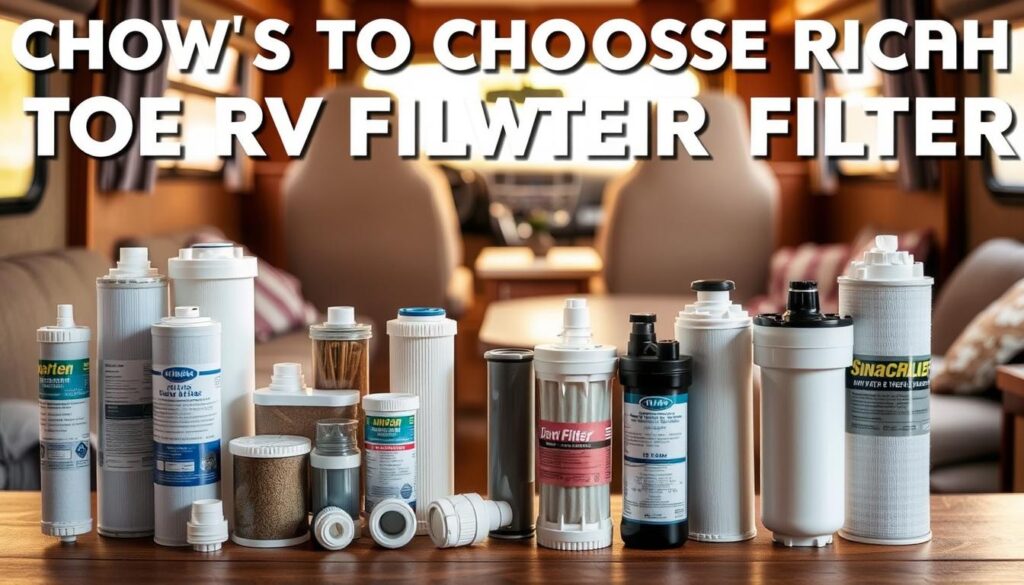
Types of RV Water Filters Available
The market offers three main types of RV water filter systems. Each has its own benefits for different camping needs and budgets. Knowing these options helps us pick the right one for our water needs on the road.
Each type has its own purpose in keeping our water clean and safe. Some are easy to use, while others offer more thorough filtration. Let’s look at what makes each special.

Inline Water Filters
Inline filters are the most popular choice among RV fans. They connect directly to our water hose. This way, all water coming in gets filtered before it reaches our RV’s tank.
The Camco Taste Pure is a top pick in this category. It removes sediment and chlorine well, and it’s affordable. Most inline filters cost between $20 to $100, making them a good choice for all campers.
These filters work automatically once we install them. We just connect them between our water source and RV hose. They’re great for removing basic contaminants and improving taste.
“Inline filters are the backbone of RV water filtration – simple, effective, and affordable for every camping budget.”
Portable Water Filters
Portable systems offer flexibility when we need clean drinking water without filtering our whole supply. They work on their own, without needing our RV’s plumbing system.
Berkey gravity filters are favorites among full-time RVers. They use gravity to filter water through multiple stages. No electricity needed – just fill the top chamber and wait.
UV purifiers like Acuva systems are another portable option. They kill bacteria and viruses with ultraviolet light. These are perfect for treating water from questionable sources.
Portable filters are best when we’re boondocking or in areas with bad water quality. We can treat just what we need for drinking and cooking.
Under-Sink Water Filters
Under-sink systems offer the most RV water purification available. They install permanently inside our RV, usually under the kitchen sink.
These systems range from simple carbon filters to complex multi-stage setups. Some include reverse osmosis technology for removing more contaminants. Others add UV sterilization for complete protection.
Installing them takes more effort than other options. But, they deliver water as good as restaurants. Many RVers find this investment worth it for long trips.
| Filter Type | Installation Difficulty | Price Range | Best For |
|---|---|---|---|
| Inline Filters | Easy | $20-$100 | Basic filtration needs |
| Portable Filters | None required | $50-$300 | Flexible water treatment |
| Under-Sink Systems | Moderate to difficult | $150-$800 | Comprehensive purification |
Many seasoned travelers use more than one filter type for extra protection. They might use an inline filter for basic treatment and a portable system for drinking water. This way, they get the best RV water filter systems coverage.
The key is to choose a filter that fits our needs, budget, and camping style. Each type has its own reasons for being popular in the RV community.
Comparing RV Water Filter Brands
Top RV water filtration brands are known for their reliable performance and innovation. They deliver quality products that meet RV travelers’ needs. Knowing these brands helps us choose the right water filtration.
Popular Brands to Consider
Camco is a trusted name in RV accessories. Their HL-180 model is a great value for most camping needs. It’s a practical solution for everyday RV use.
Culligan brings decades of water treatment expertise to RVs. Their RV-800 model is durable and removes harmful bacteria. It keeps water flowing well.
Flow-Pur specializes in filtration solutions. The P12GE-RV reduces chemicals well. Their MAXVOC-975RV removes more contaminants for tough water sources.
Clear2O has the CFE1001 model for well water with iron. Berkey and Acuva offer premium purification. Valterra has budget-friendly options like the AquaFRESH series.
Features to Look For
When choosing RV water filters, look at certain features. Contaminant removal should match your water sources. Different filters handle different pollutants.
Flow rate is key for water pressure. A low flow rate can be frustrating. We need enough pressure for showers and cooking.
Filter lifespan affects convenience and costs. Longer-lasting filters mean less maintenance. Durability ensures the system lasts through RV travel.
Ease of installation is important for DIY fans. Systems that are easy to install save time and reduce stress.
Price Ranges and Budget Options
RV water filter prices vary. Budget options start under $50, like Valterra and Camco units. They’re good for occasional use.
Mid-range systems cost $75-$150. Culligan and Flow-Pur models fall here. They offer better performance and durability.
Premium systems cost over $200. Berkey and Acuva models are worth it for their top performance and long filter life. Quality filters taste better and need less maintenance.
| Brand | Popular Model | Price Range | Key Strength |
|---|---|---|---|
| Camco | HL-180 | $40-$60 | Reliable value |
| Culligan | RV-800 | $80-$120 | Bacteriostatic filtration |
| Flow-Pur | MAXVOC-975RV | $100-$150 | Chemical reduction |
| Clear2O | CFE1001 | $90-$130 | Iron removal |
How to Choose the Right RV Water Filter
The key to choosing the right RV water filter is to think about where we travel and the water we drink. We need to look at a few key things to make a good choice. Our lifestyle, how much water we use, and where we go all matter a lot.
Not all RV water filters are the same. Some are great at removing dirt and chlorine from city water. Others handle well water better, with lots of minerals.
Assessing Your Water Source
Knowing the water sources we use helps pick the best filter. Municipal water from campsites has chlorine and might taste bad. But it’s safer than untreated water.
Well water has iron, sulfur, and minerals that can taste bad and stain. If we often stay in old camps or remote places, we need special filters.
Keep a log of water quality at different places. This helps us find patterns and pick the right filters. Some RVers even test water with strips to see if it’s safe.
Size and Capacity Considerations
Our RV’s space and how much water we use affect filter size and capacity. Filter capacity shows how much water we can filter before we need to replace it.
Bigger families or those who like long showers need bigger filters or replace them more often. Solo travelers or couples might do fine with smaller filters.
Flow rate is also key. If we use many water fixtures at once or like strong water, we need filters that keep up. Some big filters can slow down water pressure if they’re too big.
| RV Size | Recommended Filter Capacity | Typical Flow Rate | Replacement Frequency |
|---|---|---|---|
| Class A Motorhome | 10,000-20,000 gallons | 4-6 GPM | Every 3-6 months |
| Travel Trailer | 5,000-10,000 gallons | 2-4 GPM | Every 2-4 months |
| Pop-up Camper | 2,000-5,000 gallons | 1-2 GPM | Every 1-3 months |
| Van Conversion | 1,000-3,000 gallons | 1-2 GPM | Every 1-2 months |
Think about how much upkeep you’re okay with when picking a filter. Some need little care, while others perform better but require more checks. Choose based on how clean you want your water and how much effort you’re willing to put in.
Installation and Maintenance Tips
Setting up your RV water filter is easy. You don’t need a pro or special tools. Most systems have simple connections that make it quick.
Choosing good parts and following steps right is key. Smart installation and regular care keep water clean and systems working well for years.
Step-by-Step Installation Guide
First, pick a good spot for your filter. It should be near the water but safe from harm. This makes it easy to get to and keeps it safe.
Then, connect it between the water source and your RV’s inlet. Use your hands to tighten – don’t overdo it. Proper connection technique helps avoid leaks and saves money.
Today’s RV water filters have cool features. They have flexible hoses and easy-to-grip handles. These make setup easier, even for those with limited strength.
They also have clear parts for easy checks without taking them apart. And they have seals to keep water in. These make installation easy.
Regular Maintenance Practices
Keeping your RV water filters in top shape is key. Check them weekly with the clear parts. This shows if they need a change.
Keep track of how much water you use. This tells you when to replace the filter. Most filters last 2,000 to 5,000 gallons. Proactive replacement means always having clean water.
Store them right in cold weather to avoid damage. Drain the system and keep parts warm. Having extra filters ready helps avoid shortages.
Make a plan to replace filters based on use. Regular care keeps your water safe and your investment sound.
| Installation Feature | Benefit | Maintenance Impact | User Experience |
|---|---|---|---|
| Flexible Hose Protectors | Prevents kinking damage | Reduces replacement frequency | Easier setup process |
| Clear Housing Design | Visual filter inspection | Early problem detection | No disassembly needed |
| Ergonomic Grip Surfaces | Comfortable handling | Simpler maintenance tasks | Accessible for all users |
| Leak-Proof Seals | Reliable connections | Minimal seal replacement | Worry-free operation |
Common Contaminants in RV Water Systems
Our RV water systems often have hidden dangers. RV water purification can remove these threats. Contaminants come from old campgrounds and natural water sources. Knowing what’s in our water helps us pick the right filters.
Each contamin needs a different filter. Some just need basic filters, while others need special media like KDF for metals. It’s key to choose the right RV water purification system.
Bacteria and Viruses
Small organisms like bacteria and viruses are big health risks. They can cause mild to severe illnesses. These dangers come from bad water sources and contamination.
Common bacteria include E. coli, Salmonella, and Campylobacter. They grow fast in warm places, making RV tanks perfect for them. Viruses like Norovirus and Hepatitis A are tough and can’t be killed by just chlorination.
To fight these, we need UV sterilization or special filters. We also need to remove parasite cysts like Giardia and Cryptosporidium. Filters need to be able to catch particles as small as 0.1 microns.
Sediment and Chemicals
Physical and chemical contaminants are big problems too. Sediment like sand and rust makes water cloudy and harms our plumbing. It also clogs faucets and lowers water pressure.
Chemicals like chlorine taste bad and smell worse. Volatile organic compounds (VOCs) from factories can get into our water. Heavy metals like lead and mercury are harmful over time, so we must remove them.
Iron and sulfur are special problems. Iron stains and tastes bad. Hydrogen sulfide smells like rotten eggs. We need special RV water purification media to get rid of these.
Pesticides and herbicides from farms are another danger. They can harm us over time and need activated carbon filters to remove. Knowing about these contaminants helps us choose the best filters for our travels.
The Benefits of Using a Multi-Stage Filter
Advanced RV water filtration needs a layered approach. Only multi-stage systems can provide this. They are the top choice for mobile water treatment.
These systems combine different technologies in sequence. Each stage targets specific contaminants. This creates a strong synergy for exceptional water quality on our RV adventures.
The layered approach means each stage can focus on what it does best. This results in cleaner water than any single filter could achieve alone.
Enhanced Filtration Efficiency
The power of multi-stage filtration is in its complete approach to water purification. A typical three-stage system includes a sediment pre-filter, activated carbon stage, and a final filter. Each part has a specific job.
The first stage removes dirt and rust. The second stage gets rid of chlorine, chemicals, and bad tastes. The final stage targets bacteria, heavy metals, and other tiny contaminants. This ensures nothing gets through the filtration barrier.
Systems like Blu Tech’s NSF-certified three-stage setup with UV sterilization offer water quality like our home systems. The UV component adds extra protection against harmful microorganisms. We can drink directly from our RV tanks with complete confidence.
| Filter Type | Contaminants Removed | Water Quality | Maintenance Frequency |
|---|---|---|---|
| Single-Stage | Basic sediment, some chlorine | Good | Every 2-3 months |
| Two-Stage | Sediment, chlorine, odors | Better | Every 3-4 months |
| Three-Stage | Sediment, chemicals, bacteria, metals | Excellent | Every 4-6 months |
| Multi-Stage with UV | All contaminants plus viruses | Superior | Every 6-8 months |
Longer Filter Lifespan
Multi-stage systems actually extend the life of individual filter components. This might seem surprising. But the protective effect of upstream filtration makes downstream filters last longer.
When the first stage removes sediment and larger particles, subsequent stages don’t get overwhelmed. The carbon filter can focus on chemical removal instead of getting clogged with dirt. The final stage maintains its effectiveness for specialized contaminant removal.
This protection means we replace filters less frequently overall. The staggered replacement schedule also spreads out maintenance costs. We’re not replacing everything at once, making the best RV water filter systems more economical in the long run.
The result is consistent water quality throughout the filter’s lifespan. We don’t experience the gradual decline in performance that single-stage filters often show. Our water stays clean and tasty from the first glass to the last.
Understanding Filter Replacement
Knowing when to replace filters helps avoid bad water surprises on the road. Proper timing keeps our RV water filters working well. This way, we get clean, fresh water on our adventures.
We can’t just follow what the maker says or how much water it can hold. Real life is different from lab tests.
Warning Signs Your Filter Needs Attention
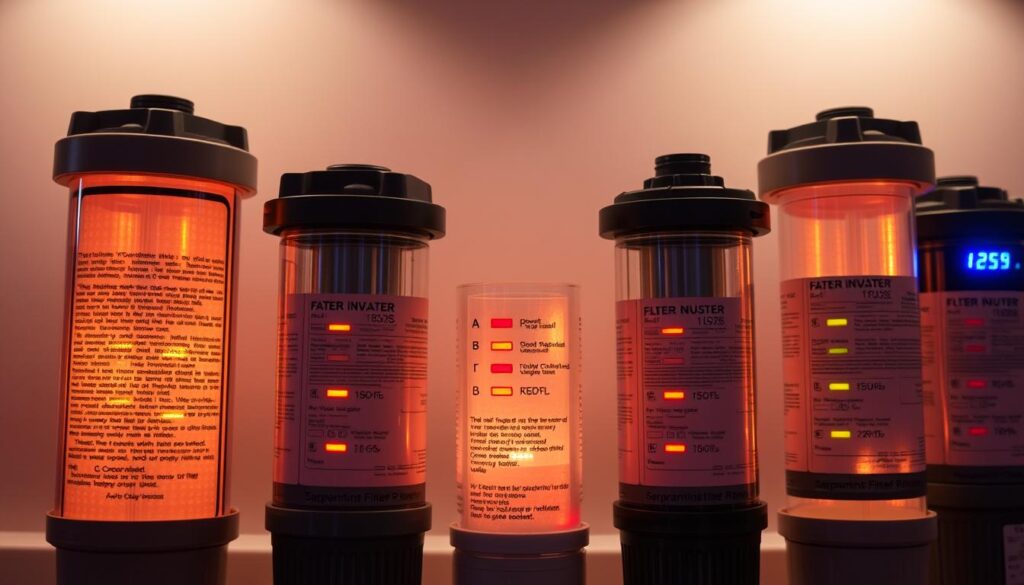
Looking at the filter tells us a lot. Clear housings mean sediment buildup. This shows how dirty the filter is and if it’s full.
Changes in how water flows are a sign. A slower flow means the filter is getting clogged. It’s working harder to push water through.
Changes in taste, smell, or look mean it’s time for a new filter. These signs show the filter can’t clean water well anymore. We need to replace it fast.
A good filter should be invisible to your senses – if you can taste, smell, or see problems with your water, it’s time for a new filter.
Replacement Frequency Guidelines
What makers say filters can hold is often too much for RV life. We usually use 70-80% of what’s stated before it starts to fail.
How often you use your RV affects how often you need new filters. Full-time RVers might need new ones every 2-3 months. Weekend users might get a year out of one.
| RV Usage Type | Manufacturer Rating | Real-World Performance | Recommended Schedule |
|---|---|---|---|
| Full-Time Living | 500 gallons (3 months) | 350-400 gallons | Every 2-3 months |
| Weekend Camping | 1,500 gallons (6 months) | 1,000-1,200 gallons | Once per season |
| Extended Trips | 2,000 gallons (4-6 months) | 1,400-1,600 gallons | Every 3-4 months |
We should keep track of how much water we use. Set replacement times based on how much you use. Always have extra filters ready for when you’re far from home.
Good RV water filter care means watching both time and use. This keeps our water clean, no matter where we go.
Eco-Friendly Options in RV Water Filtration
Eco-friendly RV water filters are great for those who care about the planet. They help us keep our water clean while being kind to the environment. Environmental responsibility doesn’t mean we have to settle for dirty water.
Today’s eco-friendly filters are both good for the planet and effective. They often have replaceable parts, not the whole filter. This cuts down on plastic waste and keeps our water clean.
Reusable Filters vs. Disposable
Choosing between reusable and disposable filters is important. Reusable systems like Berkey gravity filters last a long time. They need cleaning but can last for years.
Berkey filters use ceramic and carbon that can be cleaned many times. They can last several years with care. This makes them a smart choice for RVers who live on the road.
Disposable filters are easy to use and remove many contaminants. But, they create more waste. The key is finding the right balance between ease and being green.
Many RVers use both types of filters. They use reusable ones for drinking water and disposable ones for other uses. This way, they get the best of both worlds.
Sustainable Choices for Campers
There are many green choices when picking RV water filters. Manufacturing footprint is as important as how long the filter lasts. Look for filters made with sustainable materials and processes.
Properly disposing of old filters is key. Check if the manufacturer has recycling programs. Many do.
Choose filters with little packaging and local materials. This reduces carbon emissions and supports local businesses. Every small decision contributes to our planet.
Water-saving features are also important. Look for filters that use less water during cleaning. This helps save water and is better for the environment.
The best choice is often to invest in quality filters that last. They might cost more upfront but save money and the planet in the long run.
Final Thoughts on RV Water Safety
Clean water is key for great RV trips. Good filtration systems make our travels better. It changes our morning coffee and evening meals.
Investing in Quality Filters
Quality RV water filters are a smart buy. They keep us healthy and our RV in good shape. The cost is worth it to avoid big repair bills or health issues.
Smart RVers use many filters for the best protection. This keeps our water clean from many dangers.
Enjoying Clean Water on the Road
Knowing we have safe drinking water is great. It means no buying bottled water or worrying about water quality. This lets us enjoy our travels more.
Good water filtration is a daily benefit for RV lovers. It’s a must-have for anyone who loves the RV life.