Driving a big RV can be scary for newbies. It’s a big change from driving a car. Reversing is one of the most stressful parts of any trip.
Many RV fans feel the same way. Poor visibility and big blind spots make parking hard. Now, backup cameras are seen as a must-have for safety.
Today’s RV backup cameras change how we park. They give clear views of the rear. The tech has grown a lot, adding new features.
These cameras bring peace of mind to all RV owners. They add safety and confidence to driving. We’ll see why they’re loved by all.
Key Takeaways
- Reversing large recreational vehicles creates significant stress for new owners
- Modern camera systems eliminate dangerous blind spots and improve visibility
- Technology has evolved from luxury accessories to essential safety equipment
- Enhanced confidence while maneuvering reduces anxiety during camping trips
- Investment in camera systems provides long-term peace of mind
- Both newcomers and experienced travelers benefit from improved rear visibility
Understanding RV Backup Cameras
RV backup cameras use advanced technology. They help us drive safely and confidently. These systems offer many benefits, not just convenience.
These cameras act as our eyes in blind spots. They are key for RV owners. Most systems fit easily with our RV’s electrical setup.
What Are RV Backup Cameras?
RV backup cameras are real-time video systems. They show what’s behind our RVs. Weatherproof cameras are mounted outside and connect to screens inside.
They work with dash displays, monitors, or apps. RVs with these systems have special mounts. These mounts show if the RV is ready for a backup camera.
The cameras handle tough weather. They have wide lenses for a big view. Many also have night vision and turn on when we reverse.
How Do They Work?
RV backup cameras use simple video tech. When we reverse, the camera turns on. It sends live video to our screen.
The video signals are instant. This means we see what’s behind us right away. Many systems also give audio and visual cues to help us judge distance.
Installing these cameras involves a few steps. We connect the camera to our RV’s reverse light circuit. Then, we run a video cable to the display inside.
Types of RV Backup Cameras
There are different types of RV backup cameras. Single rear-view cameras are simple and affordable. They’re good for smaller RVs.
Multi-camera systems give a full view. They watch the rear, sides, and even front. Some let us switch views or see multiple feeds at once.
Wireless cameras don’t need cables. They send signals wirelessly. Wired systems are more reliable but need more setup.
The Benefits of Using RV Backup Cameras
Backup camera systems make RV driving safer and more comfortable. They are RV safety accessories that change how we park and drive. The benefits of RV backup cameras go beyond just making things easier. They make driving safer for everyone.
These cameras take away the guesswork of driving big vehicles. They give us real-time views to help us drive with confidence. RV fans love them for their safety and ease of use.
Enhanced Safety While Driving
Installing backup cameras is a smart move for RV safety. They help us see things that mirrors can’t, like people and pets. This makes driving much safer.
Campgrounds can be tricky, but backup cameras help us avoid accidents. They let us see kids, other campers, and pets. This is better than relying on mirrors alone.
In emergencies, backup cameras are a lifesaver. They let us know if it’s safe to stop or turn quickly. This helps us react fast and avoid trouble.
Improved Parking Accuracy
Backup cameras make parking easier. They let us fit into tight spots without a spotter. We can see how much space we have.
Places like fuel stations and storage spots are hard to maneuver. Backup cameras help us avoid damage. This saves us money on repairs.
Hooking up trailers is easier with backup cameras. We can line up the hitch by ourselves. This is great when we’re alone.
Reduced Blind Spots
Big RVs have blind spots that mirrors can’t cover. Backup cameras show us what’s behind and beside our RV. This makes us feel more confident while driving.
The back of most RVs is invisible to mirrors. This makes it hard to change lanes or back up safely. Cameras show us what’s there, helping us make better decisions.
Side cameras work with rear ones to show blind spots along the RV’s sides. This lets us drive safely on narrow roads and avoid accidents. These RV safety accessories make driving much better.
Factors to Consider Before Upgrading
Before we upgrade to an RV backup camera system, we need to think about a few things. We should look at our needs, budget, and technical needs. These help us pick the right system for our RV.
Knowing these key points before we buy is important. It helps us choose a system that fits our RV and how we travel. Let’s look at the main things to think about when picking a backup camera.
Size and Type of RV
The size and shape of our RV matter a lot when choosing a backup camera system. Larger motorhomes and fifth wheels need multi-camera setups to see all around.
Class A motorhomes need advanced systems because of their size and weight. They might need cameras at different spots for the best view. Travel trailers and smaller RVs might do well with just one camera for the back.
The height and length of our RV affect where we can put cameras. Taller RVs might need cameras higher up to see the ground. Longer RVs need wider lenses to see more.
Budget Considerations
Our budget should include more than just the camera cost. We should think about installation, wiring, and any extra parts. Basic systems start at $100-200, but top-of-the-line ones can cost over $1,000.
How much installation costs depends on our RV’s setup. RVs already wired for cameras are easier and cheaper to install. Custom setups can cost $300-800 more.
Think about the long-term when setting a budget. Better systems last longer and work better, saving money in the long run.
Installation Requirements
Knowing our RV’s electrical setup is key for installation. Pre-wired systems are the easiest to install, needing little skill and tools. They usually take 1-2 hours for most people.
Custom setups need more planning and skill. We’ll have to check our RV’s wiring, power, and where to mount things. Some setups might need drilling, running cables, or changing electrical connections.
| RV Type | Recommended Camera Setup | Installation Complexity | Typical Cost Range |
|---|---|---|---|
| Travel Trailer | Single rear camera | Low to Medium | $150-400 |
| Fifth Wheel | Dual camera system | Medium | $300-700 |
| Class C Motorhome | Multi-camera setup | Medium to High | $400-900 |
| Class A Motorhome | Professional multi-camera | High | $600-1,500 |
For complex setups or if we’re not sure, we might need a pro. Professional installation ensures the system works right and comes with a warranty.
Comparing RV Backup Cameras to Standard Mirrors
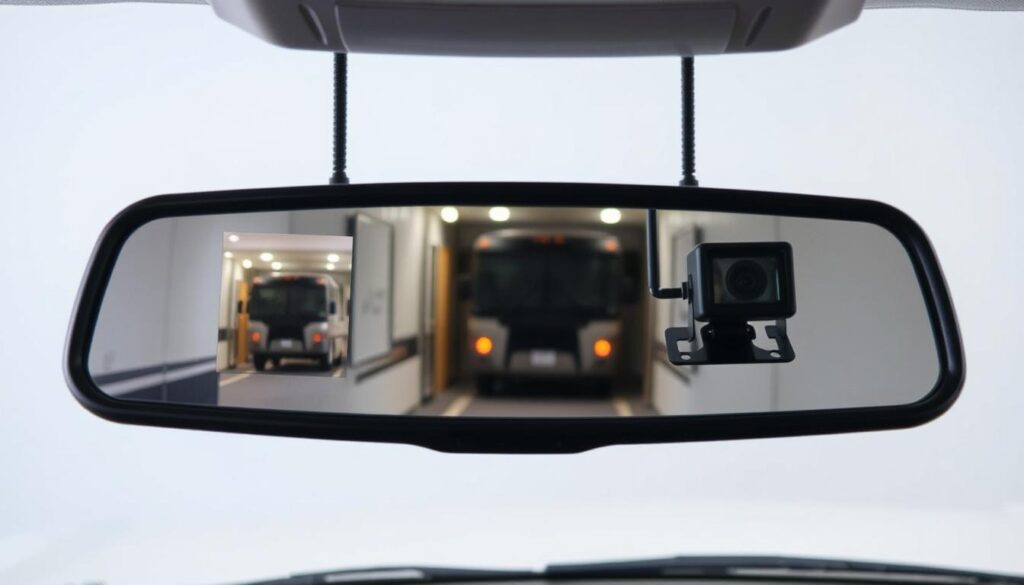
RV owners must choose between mirrors and camera systems. This choice affects safety and ease. Wireless backup camera systems have made big strides, making cameras a top choice for many.
Mirrors have limited views and can be affected by weather. Cameras, on the other hand, offer wider views and work well in all conditions.
Advantages of Camera Systems
Camera systems beat mirrors in many ways. They have night vision for clear views in the dark. They also use infrared to light up the area behind the RV.
Grid lines and distance markers help us park better. These tools make it easier to avoid hitting things or other cars.
A good wireless backup camera system turns on when we reverse. It’s always ready to help us see what’s behind. It works well with our RV’s electrical system.
Cameras also win in bad weather. Rain, snow, and fog don’t stop them. Heated camera lenses keep ice off and views clear in cold weather.
Limitations of Traditional Mirrors
Mirrors have blind spots that cameras don’t. The area behind the RV is often hidden in mirrors. This can be dangerous.
Mirrors also shake in rough travel. This makes it hard to see. Big RVs and long trips make this problem worse.
Lighting affects mirrors a lot. Bright sunlight causes glare and darkness makes them useless. We need other ways to stay safe.
Adjusting mirrors is a hassle. They can get knocked out of place. Cameras stay in the right spot automatically.
While mirrors are useful, they have big downsides. Cameras offer better safety and ease. They’re a great choice for many RV owners.
Popular RV Backup Camera Brands
Three major brands lead the RV backup camera market. They offer unique benefits for various RV types. These brands are known for their top-rated backup cameras for RVs and reliable performance.
Each brand has its own strengths. Some are great for wireless connections, while others shine in night vision. Knowing these differences helps RV owners pick the right system for their needs and budget.
Furrion Vision S
Furrion Vision S is a top choice for RV owners with pre-wired systems. It offers exceptional wireless signal reliability. This makes it easy to install with existing RV wiring.
Furrion cameras are known for their night vision. Crystal-clear images are shown even in complete darkness. This is very useful at night or early morning.
Furrion has monitors in 7-inch and 10-inch sizes. These fit well in most RV dashboards without taking up too much space.
Rear View Safety
Rear View Safety is known for durable and dependable backup camera systems. Their products can handle harsh weather and road vibrations. They focus on lasting quality over fancy features.
RV owners praise Rear View Safety’s customer support. They offer help and warranty coverage. This gives peace of mind when upgrading RV technology.
Rear View Safety cameras have wide-angle lenses. They show more of the area behind RVs. This helps drivers see obstacles and people they might miss.
Voyager Observation Systems
Voyager is the go-to choice for travel trailer and fifth wheel owners. Their systems work well with pre-wired brackets in most RVs. This makes Voyager popular among manufacturers and dealers.
Voyager offers different camera setups for various RV layouts. They have single-camera systems for smaller trailers and multi-camera setups for larger RVs. Their systems can be expanded over time.
Voyager’s plug-and-play design makes installation easy for DIY fans. Most systems connect directly to existing wiring without extra work or professional help.
| Brand | Best For | Key Strength | Price Range |
|---|---|---|---|
| Furrion Vision S | Pre-wired RVs | Wireless reliability & night vision | $300-$600 |
| Rear View Safety | Harsh conditions | Durability & customer support | $250-$500 |
| Voyager | Travel trailers & fifth wheels | Pre-wired compatibility | $200-$450 |
These top-rated backup cameras for RVs are the most trusted in the industry. Each brand is known for its quality and customer satisfaction. Choosing between them often depends on the RV’s needs and personal preferences.
User Experiences: What RV Owners Say
RV backup cameras really shine when we hear from those who use them every day. People all over the country have shared their stories. They say these systems are improving RV driving experience in big ways.
We’ve collected feedback from both new and seasoned RVers. Their stories show the good and the bad. This helps others know what to expect from these systems.

Positive Feedback from Users
Most RV owners feel more confident right away after getting backup cameras. Sarah from Colorado says, “I was scared to back into campsites before. Now, I can park easily, even in tight spots.”
Many talk about how these systems reduce stress while traveling. Mike from Texas says, “The camera took away my biggest fear of RV travel. I no longer need my wife to guide me when parking.”
Solo travelers love the freedom these systems give. They don’t have to ask strangers for help anymore. This peace of mind goes beyond just parking.
Parents traveling with kids also see big safety benefits. They can see when kids are near the RV. This is something mirrors can’t do.
Common Concerns and Issues
Even with lots of good feedback, some users face challenges. The biggest issue is wireless signal reliability. Some say the signal drops during bad weather.
Installing these systems can be tricky. Some DIY fans find it harder than expected. Poor installation can cause problems later on.
Some users are not happy with the image quality in the dark. Different cameras handle night vision differently. Cheaper systems often struggle in low light.
Screen glare in the sun is another problem. Some find it hard to see the screen when driving towards the sun. This is a big issue for dashboard-mounted monitors.
Real-Life Scenarios
Emergency situations show how valuable backup cameras are. Tom from Florida says, “A child ran behind my RV in a crowded campground. Without my camera, I never would have seen him in time.”
Hooking up trailers is also easier with these systems. Many say they can hitch up faster and more accurately. This means no more struggling or needing help from others.
Using backup cameras makes navigating tight spaces easier. RV owners can now go through narrow gas stations and drive-throughs. Before, they had to avoid these places.
Challenges in bad weather also highlight the benefits of backup cameras. In heavy rain or snow, mirrors are hard to see through. But cameras often give a clearer view.
Most users find the investment worth it after just a few trips. They feel more confident to explore new places. This confidence makes their RV trips better and opens up new travel possibilities.
Installation Guide: DIY vs. Professional
Installing a rearview camera for RV can be easy or hard, depending on your RV. Many modern RVs are already set up for backup cameras. This makes it simple for most owners to install.
Choosing between DIY and a pro depends on several things. These include your RV’s wiring, your electrical skills, and how much time you have.
DIY Installation Steps
If your RV is pre-wired, adding a rearview camera is a weekend job. You’ll need basic tools and patience.
Essential tools you’ll need:
- Screwdriver set
- Ladder or step stool
- Wire strippers (for non-pre-wired units)
- Drill with bits (if mounting brackets aren’t pre-installed)
For pre-wired RVs, the steps are simple. First, find the camera bracket and wiring at the back. Second, connect the camera to the wiring. Third, mount the camera and test it.
Wireless systems are even easier. They don’t need wiring and run on batteries and Wi-Fi.
“The biggest mistake DIY installers make is rushing the process. Take your time to ensure all connections are secure and weatherproof.”
Non-pre-wired RVs need more work. You’ll have to run cables inside, drill holes, and connect to power. This job needs electrical skills and special tools.
Hiring a Professional: What to Expect
Professional installation costs $200 to $500, based on your RV and local prices. It saves time and gives peace of mind.
Advantages of professional installation include:
- Warranty protection on both parts and labor
- Proper integration with existing RV systems
- Clean, weatherproof installation
- Troubleshooting of compatibility issues
Professional installation takes 2-4 hours for most RVs. Qualified technicians will check connections, position the camera right, and teach you how to use it.
Choose installers with RV experience, not just car techs. RV electrical systems are unique and need special knowledge.
Cost Analysis: Is It Worth the Investment?
When we look at RV backup camera systems, we must see the whole picture. The cost isn’t just the price we pay at first. It also depends on the system type, how it’s installed, and extra features.
It’s important to think about both the costs right now and the savings later. This helps us decide which system is the best value for our money.
Initial Costs vs. Long-Term Benefits
The cost to start with an RV backup camera system can be $150 for simple wireless ones to $800 for top-notch multi-camera setups. Wired systems cost more because they have better parts and need more to install them.
Getting a pro to install it can add $200 to $500 to the bill. But many think it’s worth it for the peace of mind and how well it works.
Over time, the benefits of having a backup camera can be huge. We might save thousands by avoiding accidents that cost a lot to fix. Claims for small accidents can be $3,000 to $5,000.
We also save on RV upkeep. Fewer scratches and dents mean less money for repairs. Plus, we avoid towing costs and emergency fixes in far-off places.
Resale Value Impact
Adding a backup camera system can boost our RV’s resale value by $500 to $1,200. Today’s buyers want RVs with safety features, making these systems a big plus.
The value boost depends on the system’s quality and how it’s installed. Systems that look like they came with the RV are more valuable than ones that look like they were added later.
Thinking of a backup camera as a safety and financial investment is smart. High-quality cameras hold their value better than cheap ones. This makes spending more on a premium system worth it for resale.
The benefits of a backup camera are clear. They help prevent accidents, lower insurance costs, and increase resale value. Most RV owners get their money back in two to three years from these savings.
Regulatory Requirements and Guidelines
Backup cameras aren’t a must for all RVs, but knowing the rules is key. The rules change a lot between federal and state laws. We must think about our RV’s type and how we use it to follow the rules.
Federal laws mainly cover big trucks and cars made after 2018. The National Highway Traffic Safety Administration says all new cars under 10,000 pounds must have backup cameras. But, most RVs are heavier and don’t need to follow this rule.
Are Backup Cameras Required by Law?
No federal law makes RV backup cameras a must for fun use. State laws also don’t usually require them for most RV owners. But, commercial RV drivers might have to follow different rules based on their state and vehicle type.
Some states have their own rules for big RVs. For example, California has stricter rules for very heavy vehicles. We should check our state’s Department of Motor Vehicles for rules on our RV type.
Insurance companies see backup cameras as a good safety feature. Many give discounts for RVs with these systems. This can be a good reason to get one even if the law doesn’t require it.
Safety Standards for RVs
The Recreation Vehicle Industry Association sets safety standards for RV makers. They suggest backup cameras for big motorhomes and travel trailers. These standards are not laws but shape what we expect and what the industry does.
Federal Motor Vehicle Safety Standards cover RV chassis and parts. These rules make sure RVs are safe when they’re made. Backup cameras must meet certain standards if they come with the RV.
Aftermarket systems need to follow safety rules to stay safe. Installers usually follow the National Electric Code for wiring and mounting. This keeps our backup camera system safe and working right.
Some states might check if backup cameras work during inspections. We should know what our state requires to avoid problems. Keeping our system in good shape helps it meet safety standards.
It’s smart to check our system every year and keep records of it. This helps us avoid legal trouble and keeps our system working well. Keeping records of installation and maintenance shows we care about safety.
Maintenance and Upkeep of Backup Cameras
Keeping your RV backup camera system in good shape is easy. With a little care and regular checks, it will work well for years. Just follow simple steps to avoid problems.
Most issues come from not taking care of the system. Moisture, dirt, and loose connections are common problems. By staying on top of these, we keep our system safe and working right.
Routine Checks and Cleaning
Cleaning your camera regularly is key. Check the lens every month and clean it if it’s not clear. Clear lenses are essential for good images.
To clean, gently remove dirt with a soft brush or air. Don’t use harsh chemicals or rough materials. Instead, use a microfiber cloth with distilled water or a special lens cleaner.
The camera’s housing also needs attention. Look for cracks, loose screws, or moisture. Weatherproof seals must be tight to keep water out.
Don’t forget to check connections often. Look for corrosion, looseness, or damage. Good connections mean no signal problems. Use dielectric grease to protect against moisture and corrosion.
For RVs stored outside, extra care is needed. Clean the system well before winter and check seals. Cover the lens with a cap during long storage.
Troubleshooting Common Problems
When issues pop up, we can solve them by following a plan. Most problems have simple fixes that we can do ourselves.
Signal interference shows as static or flickering. It usually means loose connections or other RV system interference. First, check all connections. Then, move the camera cables away from power lines and other devices.
Foggy images are often due to moisture inside the camera. If cleaning the lens doesn’t help, it might need a pro or a new camera. Sealing well is better than fixing a wet camera.
| Problem | Likely Cause | Solution | Prevention |
|---|---|---|---|
| No image display | Loose connections or power issues | Check all connections and fuses | Regular connection inspections |
| Fuzzy or static image | Signal interference or damaged cables | Relocate cables away from interference sources | Proper cable routing during installation |
| Dark or dim image | Dirty lens or failing camera | Clean lens thoroughly or replace camera | Monthly lens cleaning routine |
| Intermittent operation | Corroded connections or loose wiring | Clean connections and apply dielectric grease | Weatherproof all connection points |
Power issues can shut down the system. Check the power supply, fuses, and connections if it won’t turn on. Stable power is key to avoid damage to the camera’s electronics.
Some problems need a pro. If you can’t fix it yourself, or if you find damaged parts, get expert help. They have the right tools and parts for the job.
Keep a record of all maintenance and problems. This helps spot patterns and is useful for warranty claims or service visits. Good maintenance records also help when selling your RV, possibly increasing its value.
Final Thoughts: Making the Right Decision
Choosing an RV backup camera upgrade depends on your needs and how you travel. We’ve looked at the tech, costs, and benefits in this guide. This should help you make a smart choice.
Weighing the Pros and Cons
Backup cameras are safer than they are expensive for most RV owners. They make parking easier and lower accident risks. The downsides are the cost and possible installation issues.
Think about your budget and how safe you want to be. Prices start at $200 for basic systems and can go over $1,000 for top models. They help you feel more confident and less stressed when driving your RV.
Personalizing Your Upgrade Choice
Consider your RV’s size and how often you use it. Weekend users might prefer simpler wireless systems. Full-time travelers might need more advanced, hardwired setups.
Look at your current visibility problems and how comfortable you are driving your RV. Check out the brands we mentioned and read what others say. If needed, get help from RV experts for installation. Investing in a backup camera will make your travels safer and more relaxing.