Welcome to the world of RV adventures! Protecting your investment is key. Electrical protection is a big decision for new RV owners.
Campground power can be unpredictable and dangerous. Voltage spikes, lightning strikes, and faulty wiring can harm your appliances and electronics. RV surge protectors protect your electrical system, saving you thousands in repair costs.
Users love the Hughes Autoformers PWD30-EPO and Progressive Industries EMS-PT30X. They prevent disasters like fried air conditioners and damaged refrigerators. Truck camper owners say these surge protectors give them peace of mind at every campsite.
We’ll help you pick the right protection for your needs. Your RV is your freedom and adventure. Let’s keep it safe for years.
Key Takeaways
- Surge protectors prevent expensive damage from unpredictable campground electrical issues
- Hughes Autoformers PWD30-EPO and Progressive Industries EMS-PT30X lead user satisfaction surveys
- Real users report protection from voltage spikes, lightning strikes, and faulty wiring
- These devices function as insurance policies for your RV’s electrical system
- Choosing quality protection saves thousands in possible appliance replacement costs
- Proper electrical protection extends the lifespan of your RV investment
Why Surge Protection is Essential for RV Owners
When we travel in our RVs, our electrical systems face unpredictable power issues. These can harm expensive appliances in seconds. Unlike homes with stable power, RVs need protection when plugged into campgrounds with possible faulty wiring or power surges.
Essential electrical equipment for RV beginners must include a good surge protector. Many RVers have learned this the hard way. For example, a lightning strike caused a huge voltage spike that damaged an air conditioner and microwave.
What is a Surge Protector?
A surge protector is your RV’s defense against electrical issues. It acts as a smart guard between the power pedestal and your RV’s system. These devices watch the power and cut it off when it’s dangerous.
Today’s RV surge protectors do more than just stop surges. They also guard against low and high voltage, reverse polarity, and open ground. These issues are common at campgrounds, often in older places with old wiring.
The device plugs into the pedestal, and your RV’s cord connects to it. This setup keeps all your RV’s electrical parts safe and clean.
How Do Surge Protectors Work?
Knowing how surge protectors work shows their importance. They check three things: voltage, frequency, and wiring.
When voltage is too low, they turn off power. This helps your air conditioner not work too hard. If voltage is too high, they cut power fast. This prevents damage that could cost a lot to fix.
Their response time is very quick—usually in milliseconds. This quick action stops damage that could cost thousands. The device also checks for proper grounding and correct hot/neutral wire connections before allowing power to your RV.
Many modern units have LED displays for real-time voltage readings and error codes. This helps us spot problems with campground electrical systems before they cause damage.
The Risks of Skipping Surge Protection
Many RVers skip surge protectors, only to face costly problems later. Air conditioner failures due to low voltage can cost $1,500 to $3,000 to replace.
Reverse polarity is dangerous because it can cause shocks and damage electronics. One RVer had to pay $800 to fix their refrigerator’s control board after a reverse polarity issue.
Lightning-related power surges are another big threat. Even distant lightning can send voltage spikes through campgrounds. Without protection, these surges can destroy many appliances at once.
Electrical problems can ruin camping trips. Imagine arriving at a beautiful campground only to find your air conditioning is out during a hot weekend. The inconvenience and safety risks make surge protection essential.
Insurance companies are also paying attention. Some RV insurance policies now require surge protectors for coverage of electrical damage claims. This shows the industry sees these devices as necessary safety equipment, not just accessories.
Key Features to Look for in RV Surge Protectors
At first, technical specs might seem hard to understand. But, we’ll make it simple. When looking for top-rated surge protectors for RVs, focus on key features. This ensures you get good protection without spending too much on things you don’t need.
The surge protection market has many options. From simple to advanced systems with lots of monitoring features. Knowing these features helps you find the right protection for your needs.
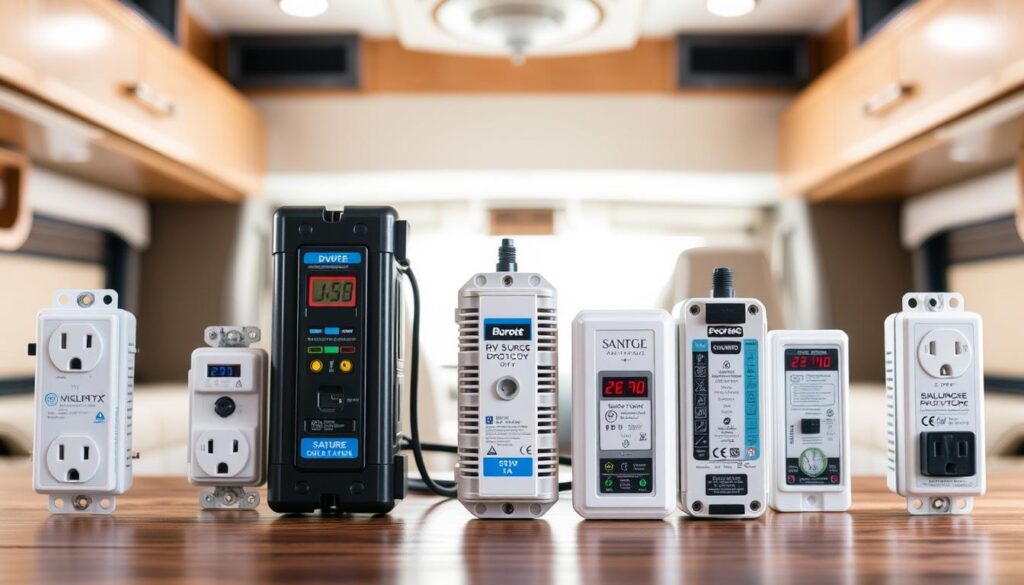
Voltage Ratings and Amperage
Choosing the right surge protector is very important. Amperage compatibility is key to ensure it works safely with your RV.
Most RVs have either 30-amp or 50-amp systems. Using the wrong amperage can harm your RV or be unsafe. Here’s what you need to know:
- 30-amp systems: Common in smaller RVs and travel trailers, good for basic needs
- 50-amp systems: In larger motorhomes and fifth wheels, supports many appliances
- Voltage requirements: Both systems use 120V, but 50-amp also uses 240V for big appliances
Don’t use a 30-amp protector on a 50-amp RV. It won’t handle the power right and might fail when you need it most.
Response Time and Protection Level
Response time shows how fast a protector reacts to electrical dangers. Faster response times mean better protection for your electronics.
Joule ratings show how much energy a protector can handle before failing. Ratings range from 1650 to 6100 joules in popular models. Higher ratings mean longer protection against surges.
Advanced models have monitoring capabilities. They can check electrical conditions for 136 seconds at a time. These systems can spot problems before they damage your gear.
Key protection features include:
- Automatic reset to restore power after issues are fixed
- LED indicators for real-time electrical status
- Audible alarms for quick problem alerts
- Surge event counters to track protection history
Portability and Design
RV surge protectors need to be tough for outdoor use. They should also be easy to carry and use. Weather resistance keeps them safe from rain, dust, and extreme temperatures.
Look for these design elements:
- Weatherproof housing: NEMA-rated enclosures keep out moisture and debris
- Compact size: Fits easily in RV spaces without taking up too much room
- Clear displays: Large, backlit screens are easy to read in any light
- Secure connections: Locks prevent accidental disconnections
Portable models usually weigh 3-8 pounds. This makes them easy to carry around. Some come with handles or bags for extra convenience.
Features like intuitive button layouts and simple displays make it easy to check your RV’s electrical health. The best surge protectors offer great protection and are easy to use for any RV owner.
Top Surge Protectors for New RV Owners
New RV owners need reliable protection that’s easy to use. We’ve picked three top surge guard for recreational vehicles models. They offer great benefits without being too complicated.
We tested many models to find these top ones. They are affordable, reliable, and easy to use. They’re perfect for first-time RV owners.
Progressive Industries SSP-30XL
The Progressive Industries SSP-30XL is our top pick for new RV owners. It’s known for its long-lasting performance.
This surge protector is easy to use. Just plug it in and it works. The bright LED display shows your electrical status easily.
Key features include:
- 50-amp capacity with strong surge protection
- Clear diagnostic display for easy monitoring
- Weather-resistant housing for outdoor use
- Automatic shutoff when danger is near
This model is a favorite because it gives reliable protection. You don’t need to be a tech expert to use it.
Camco 55301
The Camco 55301 is great for RV owners on a budget. It offers full protection without costing too much.
Camco made this model for beginners. It’s easy to use, with no complicated setup.
Notable features include:
- 30-amp protection for most RVs
- Compact design for easy storage
- LED indicators for power status
- Durable construction at a good price
This surge protector shows you can get quality protection without spending a lot. It’s ideal for new owners who want good value.
Southwire SurgeGuard 44280
The Southwire SurgeGuard 44280 offers top-notch protection for RVs. It’s great for tough weather and electrical needs.
This surge protector is built to last. Its heavy-duty housing can handle years of outdoor use.
Premium features include:
- Advanced surge suppression technology
- Multiple protection modes for full coverage
- Extra-long cord for flexible placement
- Superior build quality for long-term reliability
This model is the best choice for serious RV fans. They want the best protection and are willing to pay for it.
| Model | Amperage | Key Strength | Best For | Price Range |
|---|---|---|---|---|
| Progressive Industries SSP-30XL | 50-amp | Proven reliability | Most RV owners | Mid-range |
| Camco 55301 | 30-amp | Budget-friendly | Cost-conscious buyers | Budget |
| Southwire SurgeGuard 44280 | 30-amp | Heavy-duty construction | Demanding conditions | Premium |
Each surge protector has unique benefits for new RV owners. Your choice depends on your needs, budget, and protection level for your adventures.
How to Properly Install Your Surge Protector
We’ll show you how to install your surge protector safely. Doing it right is key to avoiding damage. Whether it’s for a camper van or RV, follow the steps to keep your electrical system safe.
Installation depends on the type of surge protector. Portable ones are easy to switch out. Hardwired ones need a pro to install.
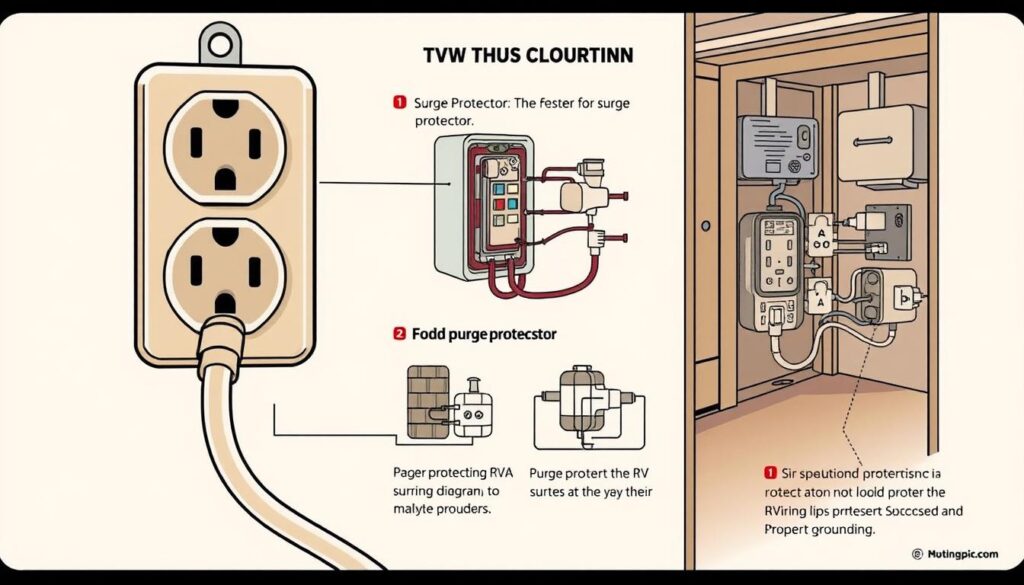
Step-by-Step Installation Guide
First, never plug in your RV without checking the power pedestal. Use a multimeter to check the voltage and grounding.
Here are the key steps for protection:
- Test the power pedestal with an electrical tester before connecting
- Make sure your RV’s main breaker is off
- Plug in the surge protector first
- Wait for the lights to show it’s working
- Then plug in your RV’s power cord
- Only turn on your RV’s main breaker after everything is connected
Keep your surge protector dry if it’s outside. Use a weather shield or cover to protect it from moisture.
For hardwired setups, get a pro. They’ll make sure it’s installed right inside your RV.
| Installation Type | Difficulty Level | Time Required | Professional Help Needed |
|---|---|---|---|
| Portable Unit | Easy | 5-10 minutes | No |
| Hardwired Basic | Moderate | 2-3 hours | Recommended |
| Hardwired Advanced | Difficult | 4-6 hours | Required |
| Transfer Switch Integration | Expert | 6-8 hours | Required |
Common Mistakes to Avoid
New RV owners often make big mistakes. These can harm your equipment or make it less effective. We’ll tell you what to watch out for.
Never skip the testing phase. This is the biggest mistake. Faulty pedestals can harm your RV and surge protector.
Here are some common errors to avoid:
- Connecting the RV power cord before the surge protector stabilizes
- Forgetting to turn off the surge protector before disconnecting
- Using extension cords between the surge protector and RV
- Ignoring weather protection for outdoor connections
- Failing to secure connections properly
Many forget that surge protectors need time to check the power. Wait for all lights to show it’s working before connecting your RV. This ensures your best power surge protection for camper vans works right.
Properly disconnecting is also key. Always turn off your RV’s main breaker first, then disconnect from the surge protector. Then, turn off the surge protector before unplugging it. This prevents damage and extends its life.
Remember, surge protectors are not extension cords. Never use extra cords between your surge protector and RV. If you need more length, get a longer RV power cord instead.
Maintenance Tips for Your RV Surge Protector
Keeping your RV surge protector in good shape is key for safe travels. Quality surge protection is just the start. Proper care ensures it works well when you need it.
Simple maintenance keeps your investment safe and your RV’s electrical system sound. Most problems come from neglect, not bad design. Follow these tips to avoid expensive fixes and electrical dangers.
Regular Inspections
Check your surge protector before each trip and monthly if you’re staying long. Look for visible damage like cracks or burns. Make sure all lights are working right.
Check the power cord for damage. Any damage means you need to fix it right away. Many RV owners keep spare surge fuses handy for emergencies.
Use the test button if your surge protector has one. This checks if it’s working. If it fails, get a new one right away.
Keep a maintenance log of your checks. This helps you see how your device is doing over time. It can show you if there are any problems coming.
Keeping Connections Clean
Clean connections are key to avoiding power loss and fires. Clean your surge protector’s plug and receptacle every three months. Do this after it’s been exposed to dust, moisture, or bad weather.
Use a dry cloth to clean the outside. For tough dirt, use a damp cloth but make sure it’s dry before using power again.
Use sandpaper or a wire brush to clean metal prongs. Clean metal means better electrical contact and less risk of overheating. Apply a thin layer of dielectric grease to fight corrosion in damp places.
Keep portable surge protectors in a dry, clean spot when not in use. Don’t leave them on the ground where they can get dirty and wet. A good storage spot or case can make them last longer.
Before plugging in, check the campground pedestals for damage or loose connections. Tell the campground staff if you find any problems. Bad pedestals can harm even the best surge protectors.
Understanding Warranty and Support Options
Warranty and support vary a lot among RV surge protector makers. It’s smart to check what’s covered if your device breaks or needs parts. Quality makers back their products with good warranties and help.
Buying surge protection means you need the company’s support. Some offer basic coverage, while others give great long-term help. This can save you a lot of money.
What to Expect from Warranty Coverage
Most surge protectors have warranties from one to five years. Standard coverage usually includes defects and failures under normal use. But, warranty terms can really differ between brands.
Progressive Industries is a top choice here. They offer lifetime technical support and replace units even after years. One customer got a free weather cover years later, showing their dedication to customers.
When looking at warranties, check these things:
- How long the coverage lasts
- What parts are covered
- If they replace or fix things
- Who pays for shipping
Always register your product right after buying. Many makers need you to register within 30 days for full warranty. Keep your receipt and confirmation safe.
Customer Support Availability
Good customer support can turn a small issue into a big problem. Top RV surge protector makers offer many ways to get help, like phone, email, and chat.
Progressive Industries leads with skilled techs who know RV electrical systems. They can help you fix problems and decide if you need a new unit.
When you call for help, have this ready:
- Model and serial number
- When you bought it and where
- What the problem is
- Photos of any damage
How fast they respond is key with electrical issues. Look for companies that answer quickly, like the same day. Some also have online guides for fixing problems.
Remember, good service is more than just fixing things. The best companies help with setup, compatibility, and learning about products. This support is very helpful for new RV owners.
Comparison of Surge Protector Brands
Looking at surge protector brands shows big differences in what they offer. These differences affect your RV electrical protection. Each brand has its own special features that attract different RV owners. For example, Progressive Industries is very popular, while Hughes Autoformers is known for their cool Bluetooth tech.
Knowing these differences helps you find the right brand for you. Some brands are cheaper and offer basic protection. Others have more features and advanced monitoring.
Progressive Industries vs. Camco
Progressive Industries is known for being reliable and working well for all RVs. Their surge protectors are built strong and have great diagnostic tools. This makes them a top choice for many RVers. They cost more, but they last a long time and have good customer service.
Camco is more about being affordable and easy to get for those on a budget. Their surge protectors give good basic protection at lower prices. They’re great for new RVers who want something reliable but don’t need all the fancy features.
Camco is for RVers who want solid protection without spending a lot. Progressive Industries is for those who want the best protection and extra features.
Southwire vs. Other Brands
Southwire SurgeGuard is known for being well-made and having lots of protection features. Their surge protectors are weather-resistant and have easy-to-read displays. This makes them popular with RVers who live in their RVs full-time. Southwire’s background in electrical engineering adds to their credibility.
Hughes Autoformers is all about innovation with Bluetooth connectivity and app control. This lets RVers check their electrical system from their phone. It’s perfect for tech lovers who want to keep an eye on their RV’s electrical health.
Other brands like Surge Guard and Technology Research focus on specific needs. They offer good prices and protection, making them good choices for RVers with certain needs or budgets.
Frequently Asked Questions About RV Surge Protectors
Many first-time RV buyers wonder if surge protection is worth it. They’re already spending a lot on their RV and camping gear. This is a big concern.
They often ask about cost and if they can use household surge protectors. They also want to know how much to budget for the right protection.
We’ll give you clear answers to these common questions. We aim to help you decide on this essential electrical equipment for RV beginners.
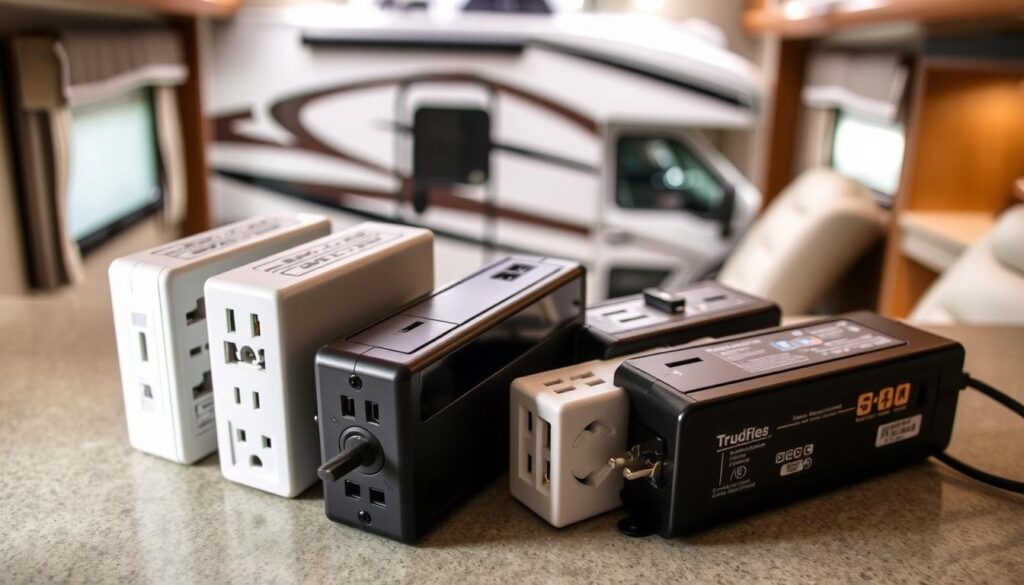
How Much Should You Spend?
RV surge protectors vary in price based on features and protection levels. Basic models start at $85 to $120. These are good for occasional RV users.
Mid-range options cost $150 to $250. They have better build quality and extra features. These are great for weekend campers and seasonal travelers.
Advanced EMS (Electrical Management Systems) cost $300 to $400 or more. They offer full electrical monitoring and protection. These are best for full-time RVers and those with expensive electronics.
Think about this: replacing an RV air conditioner costs $800 to $1,500. Damaging a converter or inverter can cost $300 to $800. Compared to these costs, surge protectors are a smart investment.
| Price Range | Protection Level | Best For | Key Features |
|---|---|---|---|
| $85-$120 | Basic Surge Protection | Occasional Users | Voltage monitoring, LED indicators |
| $150-$250 | Enhanced Protection | Regular Campers | Weather resistance, faster response |
| $300-$400+ | Complete EMS | Full-time RVers | Comprehensive monitoring, auto-shutoff |
Can You Use a Standard Surge Protector?
No, standard household surge protectors are not good for RVs. We strongly advise against using them. Here’s why.
RVs need 30-amp or 50-amp connections with specific plugs. Standard surge protectors use 15-amp household plugs. The electrical needs are different.
Outdoor conditions also pose a challenge. RV surge protectors must handle rain, dust, and extreme temperatures. Household units aren’t built for these harsh environments.
RV electrical systems face unique problems like reverse polarity and open grounds. These issues are common at campgrounds but rare at home. Only top-rated surge protectors for RVs can detect and protect against these problems.
The voltage requirements are also different. RVs need protection for both 120V and 240V systems. Standard surge protectors handle only 120V household current.
We recommend investing in proper RV surge protection from the start. It’s not worth risking thousands of dollars in RV appliances to save a few hundred on protection equipment.
Conclusion: Choosing the Right Surge Protector for Your RV
Choosing the best surge protector for camper vans is easier than you think. We’ve covered the key features, top picks, and things to consider. This will help you make a smart choice.
Our Top Picks for New RV Owners
The Progressive Industries SSP-30XL is great for its full protection and easy-to-use LED display. The Camco 55301 is a good choice if you’re watching your budget. The Southwire SurgeGuard 44280 is weatherproof and reliable.
Every surge guard we looked at works well. Your choice depends on what you need, your budget, and your RV’s electrical setup.
Smart Shopping Tips
Buy from authorized dealers to get warranty coverage. Make sure your RV’s amperage matches the surge protector’s. Read what other RV owners say about these products.
Think about how you camp. If you boondock a lot, look for something portable. If you mostly use full hookups, focus on protection features.
Good surge protection saves you money by avoiding appliance damage. With the right one, you can enjoy your RV trips without worrying about electrical issues. Your adventures are waiting, and the right surge protection keeps your systems safe.