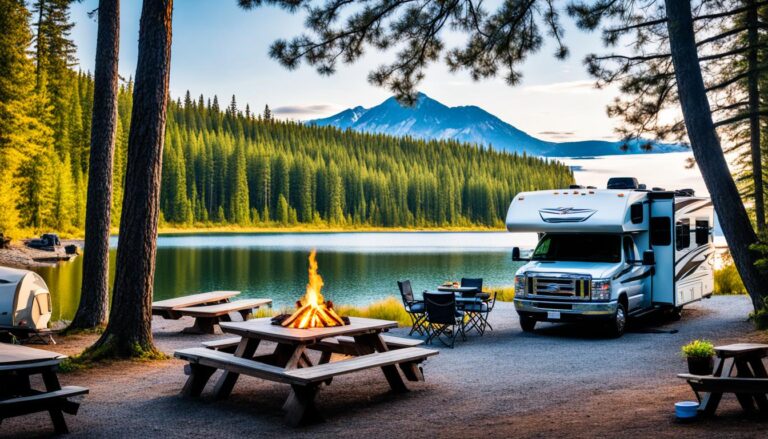
Adventure is waiting around every corner when you travel in your motorhome. Exploring North America by RV gives you experiences you can’t find elsewhere. Each trip creates memories that last forever.
Our continent is full of diversity, from Alaska’s rugged Alcan Highway to Florida’s tropical Keys. These places offer unique adventures that show the true spirit of road travel. You can find everything from wilderness solitude to vibrant coastal communities, making unforgettable experiences.
We’ve made this guide to help plan your next big adventure. Our RV travel bucket list includes amazing scenic routes, must-see national parks, and hidden gems in the U.S. and Canada. It’s perfect for both weekend trips and long cross-country journeys, inspiring you to explore new places.
Key Takeaways
- North America offers diverse RV destinations from Alaska to Florida Keys
- Scenic routes provide unique experiences unavailable elsewhere in the world
- This guide covers spectacular destinations and practical travel tips
- Perfect for both weekend trips and extended cross-country journeys
- Features hidden gems alongside popular national parks and attractions
- Designed to inspire memorable adventures on the open road
1. Planning Your RV Adventure
Planning your RV trip is key to a great journey across America. It’s easy to get excited and skip the details. But, good planning turns trips into extraordinary experiences with amazing sights.
The 3-3-3 rule is a great guide: drive 300 miles a day, stop every three hours, and be off the road by 3 p.m. This rule helps you enjoy each place more. Start planning three months early to get the best spots and check out seasonal attractions.
Choosing the Right RV
Choosing the right RV is all about your travel style and what you need. Compact travel trailers are great for couples who want to save fuel and easily move around. They fit in tight spots and small campsites.
For families or long trips, big motorhomes are better. They have lots of room and nice features like full kitchens. Class C motorhomes are good for beginners because they’re easy to drive and comfortable.
If you’re getting a travel trailer, make sure your vehicle can tow it safely. You need to consider the trailer’s weight plus your cargo. Visit RV dealerships to see different models and get a feel for them.
Creating an Ideal Itinerary
Creating the perfect itinerary means finding the right balance. Start with your priority destinations and work backward. This way, you have enough time for your favorite stops.
Check the weather and traffic for each route. Winter can close mountain passes, and summer heat makes deserts hard to travel. Have backup plans for bad weather or road issues.
Don’t forget to include rest days between long drives. These breaks help you avoid getting tired and let you find new places. Local visitor centers can show you hidden spots that are unforgettable.
Budgeting for Your Trip
Good budgeting keeps your trip fun, not stressful. Start with big costs like fuel, campsite fees, food, activities, and maintenance. Fuel costs are usually the biggest expense, with motorhomes using 6-10 miles per gallon.
Campground fees vary a lot. State parks cost $20-40 a night, while private resorts can be $50-100. National park campsites are $25-50 a night. An annual national park pass is $80 if you visit many parks.
| Expense Category | Daily Budget Range | Money-Saving Tips | Priority Level |
|---|---|---|---|
| Fuel Costs | $75-150 | Plan shorter driving days | High |
| Campground Fees | $25-75 | Use state parks and membership programs | High |
| Food & Groceries | $40-80 | Cook meals in RV kitchen | Medium |
| Activities & Attractions | $20-60 | Look for free outdoor activities | Medium |
| Emergency Fund | $25-50 | Set aside 15% of total budget | High |
Save 15-20% of your budget for surprises and fun finds. This fund helps with unexpected costs or cool stops. Smart budgeting lets you enjoy the journey without worrying about money.
2. Must-See National Parks
Exploring our national parks is the best RV travel experience. These places are full of beauty, wildlife, and great facilities. They’re perfect for long RV stays and offer unique adventures.
Millions of RV travelers visit our national parks every year. They find great campgrounds with hookups, dump stations, and ranger programs. These parks mix nature with modern comforts, great for all RV fans.
Yellowstone National Park
Yellowstone is America’s first national park. It offers amazing RV travel adventures. You’ll see over 300 geysers, like Old Faithful, which goes off every 90 minutes.
Stay at Grant Village or Bridge Bay campgrounds for the best RV spots. They have full hookups and are close to big attractions. You might see bison, elk, bears, and wolves.
The Grand Loop Road is great for RVs to see attractions. But, some spots have size limits for big RVs. Plan your trip and check road conditions before you go.
Grand Canyon National Park
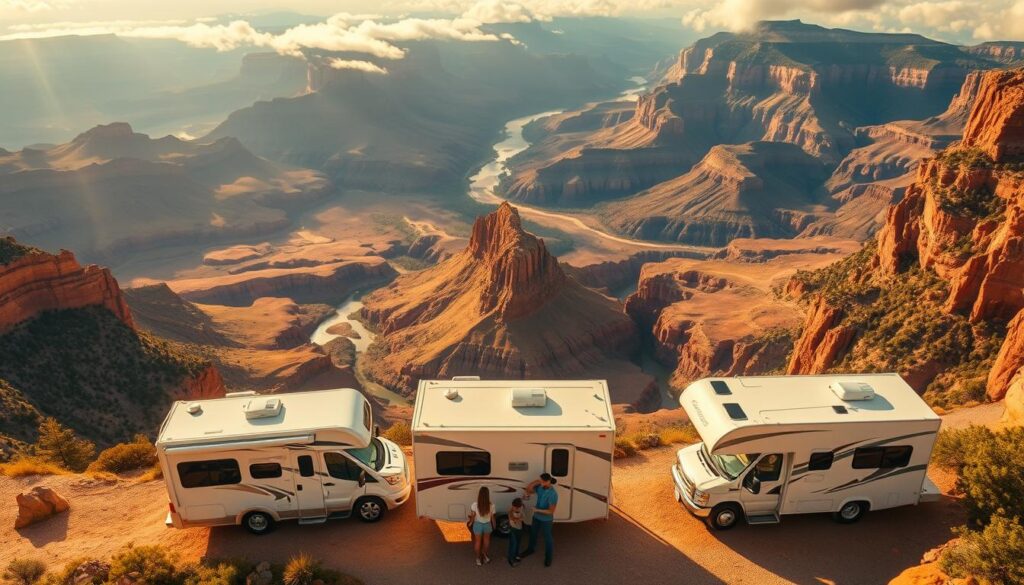
The Grand Canyon has views that photos can’t show. It’s 277 miles long and over a mile deep. RVs can go to the South Rim or North Rim, but the South Rim is open all year.
Mather Campground on the South Rim takes RVs up to 30 feet. It fills up fast, so book early. Desert View Drive has amazing views for RV travelers.
Watching sunrise and sunset from your RV is magical. The canyon’s colors change all day, giving new views every hour.
Yosemite National Park
Yosemite has granite cliffs, waterfalls, and ancient trees. El Capitan and Half Dome are huge, and Yosemite Falls is 2,425 feet tall.
Upper Pines and Lower Pines campgrounds are good for RVs, but book early. The valley floor is easy for most RVs. But, Tioga Pass and Glacier Point Road have size limits.
Visit in late spring or early fall for the best weather and fewer people. Don’t miss hiking to Tunnel View, exploring Mariposa Grove, and seeing the granite formations.
| National Park | Best RV Campgrounds | RV Length Limit | Peak Season | Must-See Attractions |
|---|---|---|---|---|
| Yellowstone | Grant Village, Bridge Bay | 40 feet | June-September | Old Faithful, Grand Prismatic Spring |
| Grand Canyon | Mather Campground | 30 feet | March-October | South Rim viewpoints, Desert View |
| Yosemite | Upper Pines, Lower Pines | 40 feet | May-September | Half Dome, Yosemite Falls |
3. Scenic Byways and Routes
From coast to coast, legendary highways make RV trips special. These iconic routes are the top dream RV destinations for travelers. Each byway offers unique landscapes, cultural experiences, and memories that last a lifetime.
We’ve picked three amazing routes that show America’s beauty. These highways have stunning scenery, RV-friendly facilities, and unforgettable stops.
The Mother Road Experience
Route 66 is America’s most famous highway, over 2,400 miles from Chicago to Santa Monica. It captures the spirit of adventure of the American road trip.
The highway goes through eight states, with vintage diners, classic motels, and roadside attractions. Small towns like Williams, Arizona, and Seligman keep the nostalgic charm alive.
RV travelers find many campgrounds and RV parks along the way. Many places cater to travelers on this legendary path. Planning stops at iconic landmarks like Cadillac Ranch in Texas and the Wigwam Motel in California makes the trip special.
California’s Coastal Masterpiece
The Pacific Coast Highway offers stunning ocean views along California’s coastline. It’s a must-see on every RV travel wishlist for its natural beauty.
Travelers see towering redwood forests, rugged cliffs, and charming seaside communities. The highway has pullouts and scenic overlooks perfect for RV parking and photos.
Popular stops include Monterey Bay, Big Sur, and Hearst Castle. Each place offers unique experiences, from wildlife watching to exploring historic mansions. Coastal campgrounds have stunning sunset views and the sounds of crashing waves.
Appalachian Mountain Glory
The Blue Ridge Parkway is 469 miles through North Carolina and Virginia, showing off mountain scenery. It’s a top dream RV destination for nature lovers.
Fall foliage season turns the parkway into a canvas of colors. Spring brings wildflower blooms, while summer offers cool temperatures and clear trails.
The parkway has RV-accessible campgrounds and visitor centers. Mabry Mill, Grandfather Mountain, and Mount Mitchell are great stops. Wildlife viewing opportunities include black bears, deer, and diverse birds.
These scenic routes are the best of American road travel. Adding them to your RV travel wishlist ensures unforgettable experiences and stunning photos that capture each region’s unique character.
4. Unique Camping Experiences
RV travelers have many camping options to choose from. Each one offers something special for your bucket list for RV road trips. Trying different camping styles helps you find what you love most on the road.
Staying at State Parks
State parks are great for RV camping. They offer affordable rates and great amenities. Plus, they’re near nature’s best spots.
State parks have clean restrooms and reliable hookups. They also have educational programs and nature walks. These add to your travel fun.
Here’s what makes state park camping special:
- They’re near beaches, mountains, and historical sites.
- They have educational programs and ranger-led activities.
- They have well-maintained hiking trails and facilities.
- They’re more affordable than private campgrounds.
- They have advance reservation systems for busy spots.
John Pennekamp State Park in the Florida Keys is a great example. You can snorkel over coral reefs and enjoy campfires at night.
RV Resorts vs. Boondocking
Choosing between RV resorts and boondocking depends on what you want. Both are great for your RV road trip bucket list.
RV resorts offer luxury and convenience. They have pools, fitness centers, and Wi-Fi. Biloxi Bay RV Resort shows how it can feel like home.
Boondocking gives you solitude and nature. It’s the best way to experience the outdoors.
“The stars you see while boondocking in Montana or Alaska will remind you why you chose the RV lifestyle in the first place.”
Here’s what sets these camping styles apart:
- Cost: Resorts cost $40-100+ per night; boondocking is free.
- Amenities: Resorts have full hookups; boondocking requires self-sufficiency.
- Social interaction: Resorts are social; boondocking is private.
- Planning required: Resorts need reservations; boondocking is spontaneous.
National Forests: Camping Among Nature
National forest camping is our favorite. It combines natural beauty with easy access. You can camp in the wilderness.
National forests have campgrounds and primitive areas. You can choose your comfort level. You’ll be surrounded by trees and wildlife.
National forest camping offers:
- Extended stay limits (often 14 days) for deeper exploration.
- Direct access to hiking trails and outdoor recreation.
- Minimal light pollution for great stargazing.
- Opportunities for wildlife viewing and photography.
- Campfire-friendly environments in designated areas.
Waking up to mountain vistas or forest sounds is unforgettable. National forests remind us why RV travel is rewarding.
5. Essential RV Gear and Supplies
Your RV travel bucket list adventure needs the right gear and supplies. We’ve learned that being prepared makes trips successful. It keeps them from being stressful and filled with problems.
Smart packing is more than just throwing things in storage. Choosing the right gear means you have what you need without clutter. Places like the Trail of the Ancients Scenic Byway need extra prep because services are scarce.
Kitchen Essentials for Road Trips
Cooking tasty meals while seeing beautiful views needs the right kitchen. Invest in space-saving cookware that fits together well. Use collapsible bowls, stackable pots, and magnetic spice containers to save space.
A good spice rack makes simple ingredients taste great. Versatile appliances like instant pots or air fryers cook many ways without taking up space. Don’t forget sharp knives, cutting boards, and good storage for leftovers.
Water filters keep your water safe no matter where you are. Portable coffee makers and compact blenders keep your morning routine going. Non-slip mats keep dishes from sliding, protecting your cookware.
Safety Equipment
Safety gear is the most important. First aid supplies include bandages, antiseptics, pain relievers, and meds. Tools like multi-tools, flashlights, and emergency radios are key in emergencies.
Fire extinguishers for RVs handle different fires well. Smoke and carbon monoxide detectors need battery checks. Communication devices are vital when cell service is poor.
Emergency roadside kits have tire repair stuff, jumper cables, and basic tools. Reflective triangles and emergency flares warn others if you break down. Backup power sources like portable generators or solar panels keep systems running when you’re not plugged in.
Entertainment Options on the Road
Entertainment keeps everyone happy on long trips and at night. Portable games are great for family fun without needing power or internet. Books, magazines, and e-readers offer quiet fun for different tastes.
Streaming devices and mobile hotspots make movie nights under the stars possible. Outdoor equipment like bikes, kayaks, or hiking gear makes trips better. Board games and card games create fun memories at the dinette table.
Musical instruments, art supplies, and craft kits are for creative travelers. Binoculars and field guides help spot wildlife and plants. Portable speakers add music to outdoor cooking or campfires.
| Gear Category | Essential Items | Storage Tips | Budget Range |
|---|---|---|---|
| Kitchen | Collapsible cookware, spice rack, water filter | Use magnetic strips, nest items together | $200-500 |
| Safety | First aid kit, fire extinguisher, emergency radio | Easy access locations, check expiration dates | $150-400 |
| Entertainment | Games, books, outdoor gear, streaming device | Dedicate specific compartments, protect electronics | $100-300 |
| Tools | Multi-tool, flashlights, basic repair kit | Tool organizers, duplicate essentials | $75-250 |
Make detailed checklists for each category to avoid forgetting things. Organize gear by how often you use it, keeping daily items easy to find. Regular checks keep supplies fresh and working well on your adventures.
Quality gear might cost more upfront but lasts longer and works better. Multipurpose items save space while staying useful. Smart packing turns your RV into a cozy, well-equipped home for any trip.
6. Engaging with Local Culture
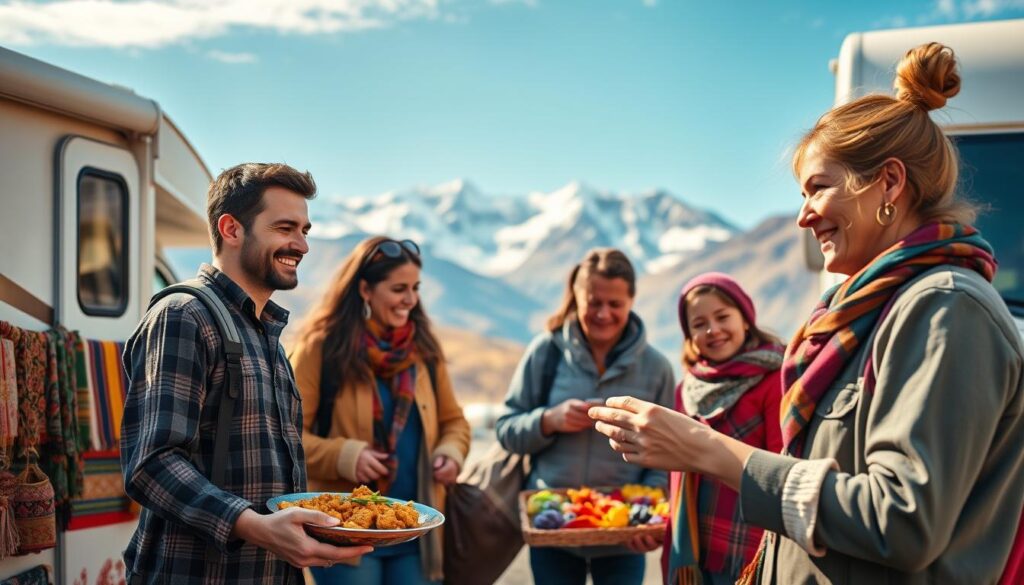
Traveling is more than seeing pretty views. It’s about diving into local culture. Cultural immersion turns simple stops into deep experiences. We connect with the heart of each place by exploring landmarks, trying local food, and joining festivals.
The must-see destinations for RV travelers are not just about nature. They’re about the vibrant cultures we find. Each place offers a chance to learn about traditions, taste unique foods, and see celebrations that have shaped communities for years.
Visiting Historical Landmarks
Historical sites show us our nation’s rich past. Quebec’s old stone walls and streets take us back to colonial times. The buildings tell stories of French settlers who built a new world while keeping old traditions alive.
New Orleans’ French Quarter is alive with history. Walking its streets, we see how Spanish, French, African, and American cultures mixed to create something new. The iron balconies and Creole cottages show architectural styles found nowhere else in America.
Mesa Verde National Park has ancient cliff dwellings. These remarkable structures show how Ancestral Puebloans lived over 700 years ago. Walking through these sites, we learn about the ingenuity of early American civilizations.
Exploring Local Cuisine
Food connects us to local culture in a tasty way. Each region’s food reflects its history, geography, and culture. Louisiana’s Cajun and Creole dishes mix French, African, and Spanish influences in perfect harmony.
The Florida Keys offer seafood that tastes like sunshine and salt. Key lime pie, conch fritters, and stone crab show the island lifestyle and maritime heritage. Local restaurants share family recipes passed down through generations of fishermen and chefs.
Wine country lets us taste local wines and learn about winemaking. Many vineyards welcome RV travelers with tastings and tours. They show off regional grape varieties and how wine is made.
| Region | Signature Dishes | Cultural Influence | Best RV-Friendly Spots |
|---|---|---|---|
| Louisiana | Gumbo, Jambalaya, Beignets | French, African, Spanish | French Quarter, Bayou Country |
| Florida Keys | Key Lime Pie, Conch Fritters | Caribbean, Maritime | Key West, Islamorada |
| Southwest | Green Chile, Sopapillas | Native American, Mexican | Santa Fe, Taos |
| Pacific Northwest | Salmon, Craft Beer | Native American, European | Portland, Seattle |
Joining Festivals and Events
Local festivals give us authentic glimpses into community life. Bluegrass music festivals in the Blue Ridge Mountains celebrate Appalachian heritage. These events welcome visitors with open arms and genuine hospitality.
Harvest celebrations in wine country mark seasonal rhythms. Grape stomping, wine tastings, and folk music create festive atmospheres. We can participate in these traditions.
State fairs and county festivals show local pride and creativity. From pie-eating contests to livestock shows, these events reveal the character of rural America. Participating in these celebrations helps us understand what makes each region special and creates lasting memories of genuine American hospitality.
Planning our travels around local events adds excitement. Many festivals welcome RV travelers with special parking and accommodations. It’s easy to join the celebration.
7. RV Maintenance Tips
We think well-kept RVs make the best memories. When your RV works well, you can enjoy amazing places. This is key for trips on remote routes where help might be far away.
Being ready for small issues can save a lot of money. It keeps your trip on schedule. Here are the top ways to keep your RV ready for adventure.
Regular Maintenance Checks
Start with a pre-trip inspection routine for all important systems. Always check your tire pressure and tread. Make sure your brakes, lights, and turn signals work right.
Don’t forget about your fluids. Check engine oil, coolant, brake fluid, and transmission fluid often. Also, test your water pump, electrical connections, and propane system before you go.
These checks can stop big problems before they start. Keep a maintenance log to track when you last serviced each system. This is super helpful for long trips, like the Alcan Highway, where repairs are common in summer.
Roadside Repair Kits
Every RV needs a good repair kit for small emergencies. Include basic tools like screwdrivers, wrenches, and pliers. Also, have spare fuses, electrical tape, and wire nuts for electrical issues.
Tire problems are common on long trips. Carry a tire pressure gauge, tire repair kit, and portable air compressor. Remember to include spare parts for your RV model, like water pump fuses or propane regulator parts.
A good repair kit lets you tackle RV trip ideas with confidence. Don’t forget emergency supplies like reflective triangles, flashlights, and basic first aid materials.
Finding RV Service Centers
Do your research for routes through new places. Find RV service centers along your route before you go. This is very important in remote areas where services are scarce.
Make a list with phone numbers and addresses of service centers. Many RV makers have dealer networks for special service. Join RV clubs for roadside help too.
Online tools and RV apps can help find service centers when you need them. Having this info ready can turn big problems into small ones. This keeps your RV trip ideas on track for success.
8. RV Travel with Family
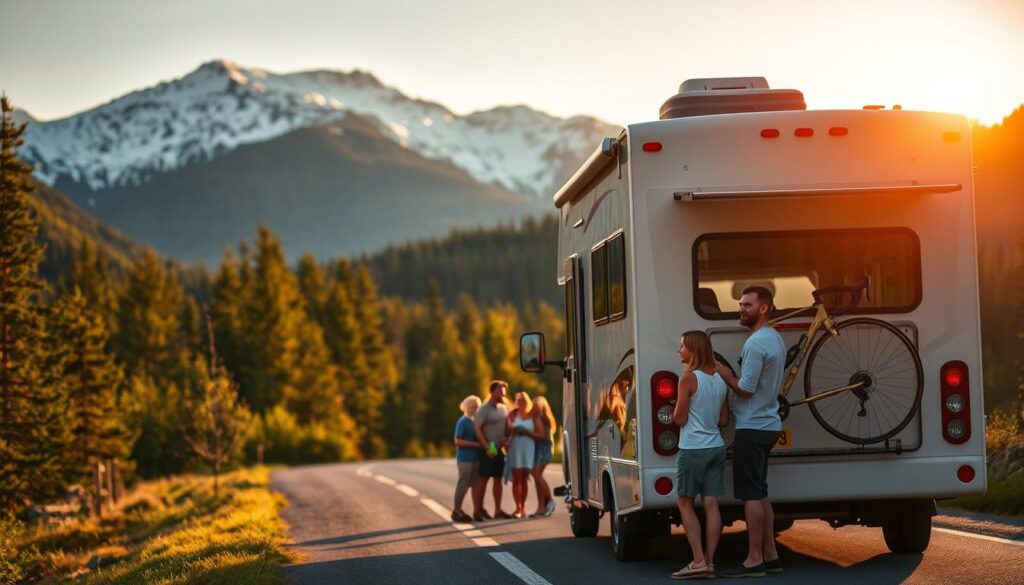
RV travel lets families break free from daily life and bond closer. The small space of an RV makes everyone talk more. It’s a chance for families to share experiences and grow closer.
Planning a family RV trip means finding fun for everyone. From little kids to teens, there’s something exciting for all. These top RV travel experiences make memories that last forever.
Kid-Friendly Activities
RV travel is fun for kids of all ages. A great spot is Dollywood near the Blue Ridge Parkway. It has rides and shows that are perfect after a drive through the mountains.
Learning on the go is also fun. Junior ranger programs at national parks teach kids about history and nature. They get badges for exploring caves and learning about wildlife.
Coastal areas are great for kids too. Tide pool exploration on the Pacific Coast is fascinating. Kids love discovering sea creatures. These experiences are among the top RV travel experiences for curious kids.
Pet-Friendly RV Trips
Don’t forget about pets when planning RV trips. We find places that love pets as much as we do. Dog-friendly beaches let pets run free and play in the waves.
Many campgrounds have pet amenities now. They have places for pets to exercise and even dog washing stations. This makes RV life better for pets and their owners.
Hiking trails that allow pets are great for family walks. National forests have pet-friendly paths for morning walks. These walks are some of the best top RV travel experiences for pet lovers.
Creating Family Memories
Simple things can make the best family memories. Campfire stories and stargazing are special. They bring families together and start deep conversations.
Cooking together in your RV teaches kids important skills. They learn to cook while helping with meals. Working together in a small space builds teamwork and responsibility.
| Activity Type | Age Group | Best Locations | Memory Value |
|---|---|---|---|
| Campfire Stories | All Ages | State Parks | High |
| Junior Ranger Programs | 6-12 Years | National Parks | Very High |
| Pet Beach Days | All Ages | Coastal Areas | High |
| RV Cooking Classes | 8+ Years | Any Location | Medium |
Enjoying these moments makes family bonds strong. The top RV travel experiences happen when families travel together. These adventures become family stories told for years.
9. Navigating Challenges on the Road
Every RV trip has surprises that test our readiness and flexibility. These moments often become our favorite stories from traveling across America.
Handling Mechanical Problems
Mechanical issues can pop up anywhere. We keep a basic toolkit and learn simple fixes before we go. Having roadside help contacts also helps us relax on long trips.
Stay calm when problems happen. Most can be fixed easily or wait until we get to a service center. Being prepared turns big problems into small ones.
Weather Considerations
Weather changes a lot on RV trips. We pack for different weather and adjust our plans if it’s too bad.
Check the weather before you go. Mountains can change weather fast, and deserts are different from coastal areas.
Communication Solutions
Staying in touch is key for safety and comfort on long trips. We choose reliable devices and check cell service on our route.
In remote places, cell service is limited. Having other ways to communicate and telling people where we are keeps us safe on unique trips.
These challenges make our RV trips memorable. We see them as chances to learn and explore America’s roads.