The RV industry grew a lot in 2021, with over 49,000 units shipped in November. More families are loving the RV life. But, they wonder: is it worth it for your RV to have solar energy?
Starting out, this choice can feel too much. The costs seem high, and the tech might confuse you.
The solar power benefits are more than just saving money. A good system lets you explore far-off places without needing power. Imagine waking up to mountains or lakes instead of RV parks.
This guide will help you decide if solar energy fits your camping dreams and budget. We’ll look at real costs, benefits, and what beginners need to know before choosing.
Key Takeaways
- Solar systems provide freedom to camp in remote locations without electrical hookups
- Initial investment costs vary widely based on energy needs and system size
- Boondocking capabilities can significantly reduce campground expenses over time
- Installation complexity ranges from simple plug-and-play to professional setup
- Energy independence enhances the overall RV experience and travel flexibility
- Return on investment depends on camping frequency and style preferences
Understanding Solar Power Basics
Many RV owners get confused by solar power terms. But, the basics are easy to grasp. Before buying RV solar panels, let’s clear up some myths. We’ll explain how solar energy works in your RV.
Solar panels don’t power your RV directly. They charge your battery bank. Then, your devices get power from the battery. This is key for planning your solar power setup for RV trips.
What is Solar Power?
Solar power is energy from sunlight turned into electricity. Sunlight hitting solar cells creates an electrical current. This is called the photovoltaic effect.
For RVs, solar power is a clean, renewable way to make electricity while camping off-grid. RV solar panels are made to handle road vibrations and weather.
Solar energy is simple. As long as the sun is out, your panels can power your RV. They keep your batteries charged and systems running.
How Does Solar Energy Work?
Solar energy turns sunlight into electricity for your RV. Sunlight hitting solar cells knocks electrons loose. This creates direct current (DC) electricity.
This DC power goes to a charge controller. It controls the voltage and current for your batteries. Your solar power setup for RV stores energy in deep-cycle batteries for when it’s dark.
When you need AC power, an inverter changes the DC power to alternating current (AC). This way, you have power for lights and laptops.
Key Components of a Solar System
A solar system for RVs needs several parts working together. Each part has a role in capturing, storing, and using solar energy.
Knowing these parts helps you choose the right system size and setup. Here’s a list of the main parts you’ll need:
| Component | Function | Typical Lifespan | Maintenance Level |
|---|---|---|---|
| Solar Panels | Convert sunlight to DC electricity | 25+ years | Low |
| Charge Controller | Regulates power flow to batteries | 10-15 years | Low |
| Batteries | Store electrical energy | 3-10 years | Medium |
| Inverter | Converts DC to AC power | 10-15 years | Low |
Each part must be the right size for efficient use. Solar panels make the power, but batteries store it for later.
Remember, your solar power setup for RV is only as good as its weakest part. Buying quality parts from the start saves money and trouble later.
Benefits of Solar Power for RVs
RV solar power offers many benefits. It saves money, improves your lifestyle, and helps the environment. Quality solar panels can last up to 25 years. This makes them a great long-term choice for RVers.
Switching to solar changes how you travel. You become less dependent on traditional power and harm the environment less. Let’s look at the top three benefits of solar power for RV owners.
Environmental Impact
Solar power cuts down your carbon footprint while camping. Generators burn fossil fuels and make noise. Solar systems operate silently and don’t pollute.
Choosing solar means no noisy, polluting generators. This choice keeps camping spots beautiful for others. Off-grid solar power lets you enjoy nature without harming it.
The benefits of solar go beyond camping. It helps reduce fossil fuel use and supports renewable energy in America.
Freedom and Flexibility
Solar power opens up new boondocking spots. You can camp in remote places without needing power hookups. This freedom lets you explore national forests and wilderness areas.
Solar energy means you don’t have to stick to crowded RV parks. You can stay longer in beautiful spots without needing power sources. This independence changes your travel from planned stops to spontaneous adventures.
Weather allowing, solar panels work well during the day. This reliability lets you explore remote places with confidence.
Cost Savings Over Time
Solar systems cost money upfront but save a lot later. You’ll save on generator fuel and campground fees. Choosing free camping spots also saves money.
Adding a solar panel to your RV keeps batteries healthy. This can triples their lifespan. Saving hundreds on battery replacements over time.
The savings grow as you use your system more. Here’s how solar power compares to traditional sources:
| Power Source | Daily Cost | Monthly Cost | Annual Cost |
|---|---|---|---|
| Generator Fuel | $8-12 | $240-360 | $2,880-4,320 |
| Campground Hookups | $35-50 | $1,050-1,500 | $12,600-18,000 |
| Solar Power | $0 | $0 | $0 |
| Solar System ROI | 6-24 months | Varies by usage | Significant savings |
Solar power offers many benefits for RVers. It saves money, helps the environment, and improves your lifestyle. The initial cost is worth it for the long-term savings and clean energy.
Assessing Your RV Power Needs
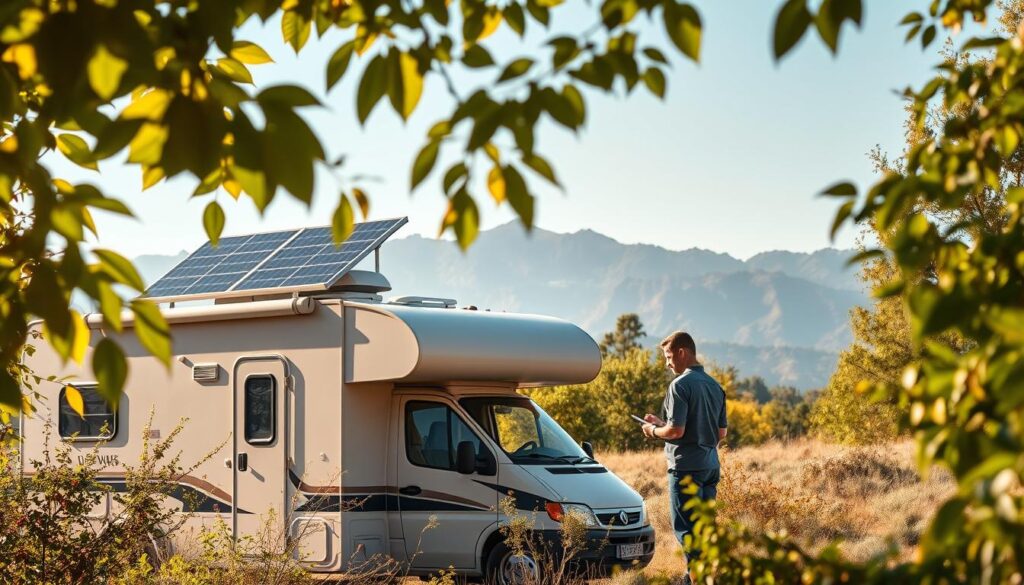
Before getting solar power for camping, we must know how much energy our RV uses daily. This step is key to ensure we have enough power for fun adventures. It also saves money and avoids frustration.
Many RV owners guess their power needs. This often leads to systems that can’t meet daily demands. We’ll show you how to calculate your exact needs.
Determining Daily Energy Consumption
Start by understanding watts and watt-hours. Watts measure power use at any moment. Watt-hours show total energy over time.
To convert amps to watts, multiply voltage by amperage. For example, a 120-volt rice cooker using 3 amps is 360 watts. Running it for 30 minutes uses 180 watt-hours.
Look at labels or manuals for appliance power use. Document every device you plan to use on camping trips.
“The biggest mistake is forgetting about phantom loads. Devices that draw power even when off can drain your battery fast.”
Make a chart with each appliance, its wattage, and daily hours. Multiply watts by hours for each item. Add all watt-hours for your daily total.
Identifying Essential Appliances
Not all RV devices need solar power for camping. We suggest grouping appliances into three categories: essential, important, and luxury.
Essential appliances include refrigerators, lights, water pumps, and phone chargers. These keep you safe and comfy. Your solar system must handle these loads.
Important appliances like laptops, fans, coffee makers, and TV systems enhance comfort but aren’t critical for safety. Size your system to handle most of these items during peak sun hours.
Luxury items include hair dryers, microwaves, air conditioners, and electric heaters. These high-power devices often need generator backup or shore power. Consider if you really need these items for your camping style.
- Refrigerator: 40-60 watts continuous (960-1440 watt-hours daily)
- LED lights: 10-15 watts each (varies by usage)
- Water pump: 35-50 watts when running
- Phone charger: 5-10 watts (20-40 watt-hours daily)
- Laptop: 45-65 watts (180-260 watt-hours for 4 hours use)
Focus on devices you use every day. Occasional-use items don’t need to factor heavily into your calculations. This approach prevents oversizing your system unnecessarily.
Choosing the Right Solar System Size
Once you know your daily watt-hour needs, we can determine the right solar system size. A good rule of thumb is that each 100-watt solar panel generates about 350 watt-hours per day in good conditions.
Let’s say your daily consumption totals 1,400 watt-hours. Divide this by 350 to get 4 panels (1,400 ÷ 350 = 4). This means you’d need approximately 400 watts of solar panels for your solar power for camping setup.
Always add a 20-30% buffer to your calculations. Weather, panel efficiency, and battery losses reduce actual power generation. This buffer ensures reliable power even on partly cloudy days.
Consider your camping style when sizing your system. Weekend warriors might get by with smaller systems and generator backup. Full-time RVers need robust systems that handle extended cloudy periods.
| Daily Usage | Recommended Solar Watts | Typical User | Battery Bank Size |
|---|---|---|---|
| 500-800 watt-hours | 200-300 watts | Weekend camper | 200-300 amp-hours |
| 800-1,500 watt-hours | 300-500 watts | Extended trips | 300-400 amp-hours |
| 1,500-2,500 watt-hours | 500-800 watts | Full-time RVer | 400-600 amp-hours |
| 2,500+ watt-hours | 800+ watts | High-power user | 600+ amp-hours |
Remember, battery capacity is as important as solar panel size. Your batteries store power for nighttime and cloudy days. Plan for at least two days of power storage without solar input.
Getting your power assessment right is key to a successful solar installation. Take time to measure actual usage instead of guessing. This planning pays off in system performance and satisfaction.
Types of Solar Panels for RVs
The solar panel market has many options for RV owners. Each type meets different power needs and installation styles. Knowing the differences helps you choose the best for your RV adventures.
There are two main ways to install panels. Portable solar panels are flexible and cost less upfront. They use 100-watt panels that plug into your RV. Permanent setups cost more but are more convenient and valuable in the long run.
Monocrystalline vs. Polycrystalline
Monocrystalline panels are the top choice for RVs. They use single-crystal silicon for high efficiency. They look dark and work well in small spaces.
Monocrystalline panels are great for saving space. They make more power per square foot than other types. This is perfect for small RVs or when you need to use every inch of roof space.
Polycrystalline panels are a good value. They use many silicon crystals for a blue look with grain patterns. They cost less than monocrystalline but make slightly less power.
Polycrystalline panels are for those watching their budget. They work well when you have enough roof space and want to save money. Many portable panels use this tech for a balance of price and performance.
Flexible vs. Rigid Panels
Flexible panels fit curved RV surfaces. They bend up to 30 degrees and are light. This makes them great for RVs with odd shapes or for easy storage.
Flexible panels are easy to install and light. You can stick them on with adhesive, no need for hardware. They’re good for temporary setups or when drilling is hard.
But, flexible panels don’t last as long as rigid ones. They’re thin and can get damaged by weather or stress. They also get hotter, which can lower their efficiency over time.
Rigid panels are durable and efficient for permanent setups. They have aluminum frames and glass surfaces that last through harsh weather. They work well for 20-25 years with care.
Rigid panels last longer and handle weather better. They keep their efficiency longer than flexible panels. Most RVs use rigid panels for their reliability.
Choosing the Right Wattage
Choosing the right wattage depends on your power needs and space. First, figure out how much power you use daily. Then pick panels that can handle that during peak sun hours.
RV solar panels range from 100 to 400 watts. Small panels are good for lights and charging phones. Big panels can power air conditioning and more.
Think about your RV’s roof space when picking wattage. Higher wattage panels need more space. Sometimes, using several smaller panels is better than one big one.
| Panel Type | Efficiency Rate | Cost Range | Best Application | Lifespan |
|---|---|---|---|---|
| Monocrystalline Rigid | 18-22% | $200-400 | Limited roof space | 25+ years |
| Polycrystalline Rigid | 15-18% | $150-300 | Budget-friendly permanent | 20-25 years |
| Monocrystalline Flexible | 16-20% | $180-350 | Curved surfaces | 10-15 years |
| Polycrystalline Flexible | 14-17% | $120-250 | Portable applications | 8-12 years |
The right panel choice depends on your power needs, budget, and preferences. Start with your daily energy use, then pick the most cost-effective option. Quality panels are worth the investment for reliable service and better performance over time.
Essential Solar Power Equipment
Setting up an RV solar power system is more than just putting panels on your roof. It’s about how all parts work together. This creates a reliable power system for your travels.
Your solar setup is like a team. It starts with panels catching sunlight and ends with power for your RV. Knowing each part helps you choose the right size and quality.
Solar Panels
Solar panels are the base of your RV solar system. They turn sunlight into direct current (DC) electricity. The power they make depends on their size, how well they work, and the sunlight they get.
First, figure out how much power you need each day. Most RVs need 200 to 800 watts of panels. Higher wattage panels make more power but take up more space.
Good panels come with 20-25 year warranties. They stay efficient over time. Look for panels with strong frames and tempered glass to handle road and weather.
Charge Controllers
Charge controllers manage the flow of electricity from panels to batteries. They keep batteries safe from too much charge or voltage changes.
There are two types: PWM and MPPT. MPPT controllers are more efficient but cost more. They’re great when you have little space for panels.
Choose a charge controller that can handle your panel wattage plus 25% more. This extra space protects against power spikes and lets you grow your system later.
Inverters and Batteries
Inverters change DC power from batteries to alternating current (AC) for your appliances. Pure sine wave inverters give clean power safe for electronics like laptops.
Your battery bank stores energy for when the sun isn’t out. Lithium batteries last longer and charge faster than lead-acid batteries. They’re also lighter and take up less space.
To find the right battery size, figure out your daily power use and how many days you want to go without solar. This tells you how big your battery bank should be.
| Component | Primary Function | Sizing Consideration | Typical Lifespan |
|---|---|---|---|
| Solar Panels | Convert sunlight to DC electricity | Daily energy needs ÷ peak sun hours | 20-25 years |
| Charge Controller | Regulate power flow to batteries | Total panel watts + 25% buffer | 10-15 years |
| Inverter | Convert DC to AC power | Peak AC load requirements | 10-15 years |
| Battery Bank | Store energy for later use | Daily consumption × backup days | 5-15 years |
Good equipment costs more but works better and lasts longer. Choosing reliable parts means less trouble and steady power on your trips. Look at warranties and read what other RV owners say before you decide.
Installation Options
Setting up a solar power system for your RV is a big decision. You might choose to do it yourself or hire a pro. Luckily, many RVs are pre-wired for solar panels, making it easier either way.
What you decide depends on your skills, time, budget, and comfort with roof work. Let’s look at each option to help you choose the best one for you.
Do-It-Yourself Installation
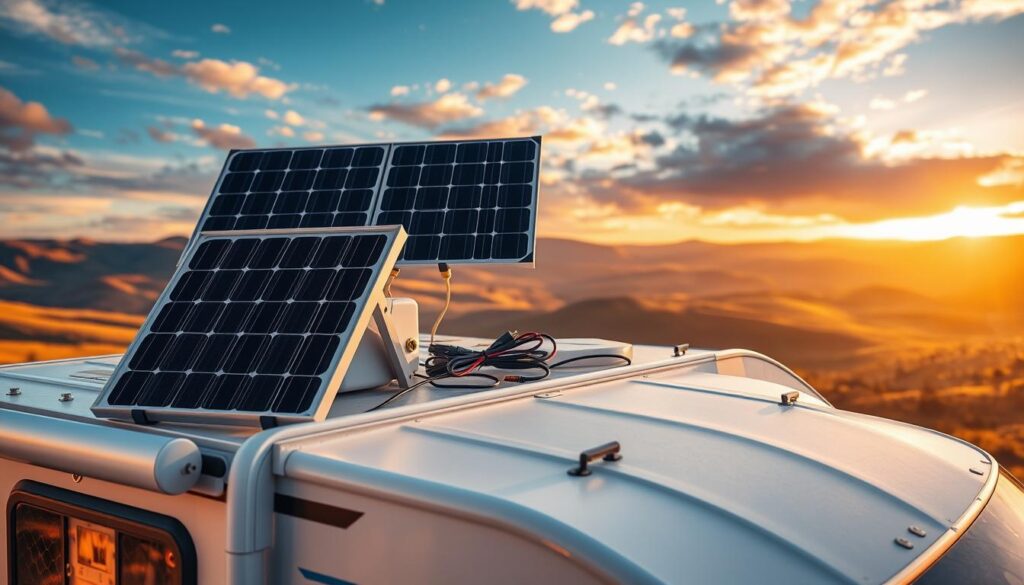
DIY installation is great for those who love hands-on projects. It can save you hundreds of dollars in labor costs. Plus, you’ll learn a lot about your system.
But, DIY needs the right tools and skills. You’ll need a drill, wire strippers, and a multimeter. You’ll also need safety gear for the roof.
Working on RV roofs is dangerous. The surface is slippery, and you’re dealing with electricity. Always use proper safety harnesses and avoid windy or extreme weather.
If your RV is pre-wired, DIY is even easier. You’ll just need to mount panels and connect them.
Professional Installation
Professional installation gives you peace of mind and expertise. Certified techs use special tools and follow safety standards. They know local codes and can handle complex jobs.
The biggest plus is the warranty protection you get. Most installers offer a one to three year warranty. This can save you a lot of money if problems come up later.
Professionals work faster than DIY. They can finish in hours what might take you a weekend. They also handle permits and ensure your system is right for warranty coverage.
RV dealers and solar companies offer professional services. Many have mobile units that come to you, making it easy for busy RV owners.
Cost Comparisons
DIY costs range from $1,500 to $3,000 for a full system. This includes panels, batteries, and more. You’ll save $500 to $1,500 in labor costs.
Professional installation costs $800 to $2,000 more. But, you get warranty coverage and expert work. DIY costs can include tools, mistakes, and time.
| Installation Type | Equipment Cost | Labor Cost | Total Investment |
|---|---|---|---|
| DIY Installation | $1,500-$3,000 | $0 | $1,500-$3,000 |
| Professional Installation | $1,500-$3,000 | $800-$2,000 | $2,300-$5,000 |
| Dealer Installation | $1,800-$3,500 | $1,000-$2,500 | $2,800-$6,000 |
Think about the long-term value when deciding. Professional installation often includes system optimization and guarantees. DIY mistakes can be costly to fix and may void warranties.
Your choice depends on your confidence, time, and budget. Both DIY and professional installation can work well if done right.
Solar Power Maintenance and Care
One of the greatest solar power benefits is the little maintenance needed. Unlike gas generators, solar systems run quietly and on their own. With the right care, your solar panels can last up to 25 years.
We’ll show you how to keep your system in top shape. Simple steps can help your panels work better and last longer. Solar tech is known for being reliable and easy to care for.
Keeping Your Panels Clean
Clean panels make more electricity than dirty ones. Dust, bird droppings, and road grime can cut efficiency by up to 25%. Check your panels weekly, more often in travel seasons.
Use a soft brush or squeegee with mild soap and water for cleaning. Avoid harsh chemicals or abrasive materials that might scratch the surface. Clean in the early morning or late evening to prevent water evaporation and thermal shock.
Rinse well with clean water after washing. Look for loose connections or damaged wiring while you’re up there. Safety first – always use proper ladder techniques and have someone spot you.
Battery Care Essentials
Your batteries store the energy your panels collect, making proper maintenance key. Different battery types need different care. Lead-acid batteries need regular water level checks, while lithium batteries require less hands-on maintenance.
Check your battery voltage often with a multimeter or battery monitor. Keep terminals clean and tight to prevent power loss. Apply a thin layer of petroleum jelly to terminals to prevent corrosion.
Temperature affects battery performance a lot. Park in shade when it’s hot. In cold weather, use battery blankets or heated compartments to keep performance up.
Solving Common Problems
Most solar system issues have simple fixes. We’ve listed common problems RVers face and how to solve them. Troubleshooting skills save time and money on the road.
Low power output often means dirty panels or loose connections. Check wiring connections first, then clean your panels. Inverter problems usually show error codes – check your manual for meanings.
Battery issues show as shortened runtime or failure to hold charge. Test individual battery cells if you can. Replace batteries with big voltage differences from others in your bank.
| Problem | Likely Cause | Quick Fix | Prevention |
|---|---|---|---|
| Low Power Output | Dirty panels or loose connections | Clean panels, tighten connections | Weekly visual inspections |
| Battery Won’t Charge | Faulty charge controller or wiring | Check fuses and connections | Monthly system monitoring |
| Inverter Shutdown | Overload or overheating | Reduce load, improve ventilation | Proper sizing and ventilation |
| Shortened Battery Life | Deep discharge or overcharging | Adjust charge controller settings | Regular voltage monitoring |
Regular maintenance keeps your solar system working well for years. Simple tasks protect your investment and let you enjoy solar power benefits on RV adventures. Remember, prevention is easier than repair.
Budgeting for Solar Power in Your RV
Smart budgeting for solar power makes your RV life better and saves money. It’s key to plan well and know the costs. The good news is that solar power savings start right away and keep growing.
Many RV owners find that solar systems pay off faster than they thought. It’s all about knowing the upfront costs and the ongoing savings. Let’s look at how to finance your solar power journey.
Initial Costs Breakdown
Your solar power investment includes key parts that work well together. Knowing each cost helps you choose the right system size and features.
A full solar setup includes panels, batteries, charge controllers, inverters, and installation materials. For example, a 190-watt solar kit like the Go Power! Overlander costs about the same as a small generator. This system lets a family of four use lights, fans, slide-outs, and a 3-way fridge for 4+ days without shore power.
Professional installation adds 20-30% to the total cost. But many RV owners choose DIY to save money. Your choice depends on your electrical skills and available time.
| Component | Budget Range | Mid-Range | Premium |
|---|---|---|---|
| Solar Panels (400W) | $400-600 | $800-1,200 | $1,500-2,000 |
| Batteries (400Ah) | $800-1,200 | $1,500-2,500 | $3,000-4,000 |
| Charge Controller | $150-250 | $300-500 | $600-800 |
| Inverter (2000W) | $200-400 | $500-800 | $1,000-1,500 |
| Installation Materials | $200-300 | $400-600 | $800-1,200 |
Long-Term Savings Considerations
The real magic is in the ongoing solar power savings. RV owners cut their camping costs a lot and gain freedom.
Traditional camping with generators means constant fuel buys and limits where you can camp. Fuel costs $15-25 a day for moderate use. This adds up to $1,500-3,000 a year.
Solar power cuts out fuel costs. You also save on campground fees by boondocking in free spots. Many RVers save $2,000-5,000 a year on camping alone.
Battery life goes up with solar charging, not generator. This means fewer replacements and more savings. Most see solar as a smart investment.
Financing Options Available
There are many financing options for solar power. We suggest looking at all to find the best for you.
Many solar retailers offer zero-interest financing for qualified buyers. These programs need good credit but spread costs over 12-24 months. Some manufacturers have seasonal deals with longer payment terms.
RV loans can include solar upgrades in your vehicle financing. This often has lower interest rates than personal loans. Credit unions often offer good rates for RV upgrades.
Personal savings are the cheapest option when you can. But don’t wait for perfection. Starting small and growing later works for many. The key is to start your solar journey and enjoy the benefits right away.
Solar Power Travel Tips for RVers
Getting the most from your off-grid solar power setup is key. It’s not just about installing panels. Smart planning and energy management are vital. They help you avoid running out of power and enjoy freedom on the road.
Understanding how to optimize your solar power system for travel is important. Permanent systems collect sunlight while driving. This means you build power reserves as you travel.
Planning for Sunny Days
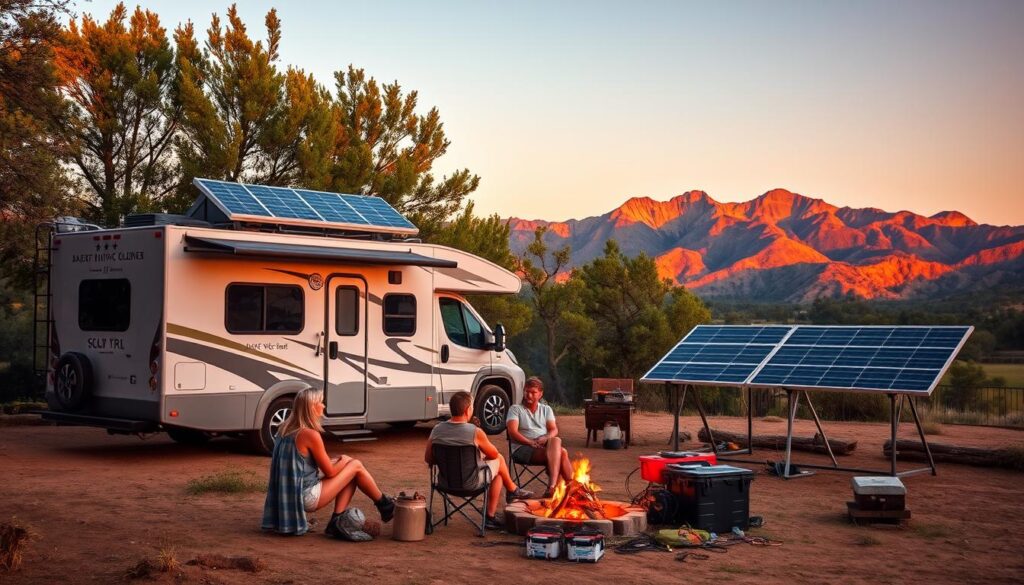
Plan your route around weather and sun patterns. Southern routes in winter get more sun than northern paths. Always check the weather forecast before you go and adjust your plans if needed.
Where you park is critical. Park with your solar panels facing south to get more power. Even a small change can make a big difference.
Choose campsites based on how long you’ll stay. Sunny spots for longer stays help recharge your batteries. This is great for systems with limited battery capacity.
Managing Battery Usage
Managing your batteries wisely is key. Check your levels all day, not just at night. This helps you use power wisely.
Prioritize essential systems first. Things like refrigeration and lighting are more important than entertainment. Make a list of what you need before you use it.
Avoid letting your batteries get too low. Most systems work best when batteries are above 50% full. This keeps your power steady and your batteries lasting longer.
Staying Powered While Traveling
Driving can charge your panels. Plan your drives during the sunniest times, like between 10 AM and 4 PM.
Use 12-volt appliances while driving. This saves battery power for when you’re parked. It’s better for your system.
Keep an eye on your system’s performance while driving. Most RV solar setups have displays for this. Knowing how your system is doing helps you use power better.
Using these tips and keeping your system in good shape makes for a reliable solar power experience. You’ll feel more confident as you learn to use your system well.
Real-Life Experiences from RV Owners
RVers who use solar power share their stories. They talk about RV solar panels. Their experiences are real and helpful.
Solar power changes RV life. People from all walks of life share their stories. They talk about the good and the lessons they’ve learned.
Stories from the Road
Jesse and Lauren Stuart love their solar power. They started three years ago. They wanted to camp in remote places.
“Having our own power source changed everything,” Jesse says. “We can now camp anywhere we want without worrying about finding hookups or running our generator constantly.”
Lauren says their solar panels let them camp in beautiful spots. They don’t rush to find campsites with power.
Being off-grid and fully powered adds a level of freedom we’ve never experienced before. We can wake up to sunrise over a mountain lake instead of the sound of generators in a crowded campground.
Sarah from Colorado loves her RV solar panels. They paid for themselves in two years. She now camps in national forests.
Mike and Janet from Texas say solar power reduced their worry about battery levels. Their system keeps everything running without constant checks.
Success Stories Across Different RV Types
Solar power works for all RVs. We’ve seen it in travel trailers and motorhomes. It’s for everyone.
Here are some real stories:
| RV Type | Solar System Size | Travel Style | Key Benefits Reported | Payback Period |
|---|---|---|---|---|
| Class A Motorhome | 800W with 400Ah batteries | Full-time living | Complete energy independence | 18 months |
| Travel Trailer (25ft) | 400W with 200Ah batteries | Weekend camping | Extended boondocking capability | 24 months |
| Class B Van | 600W with 300Ah batteries | Adventure travel | Unlimited remote camping | 20 months |
| Fifth Wheel | 1000W with 600Ah batteries | Seasonal travel | Reduced campground costs | 15 months |
Tom and Maria from Arizona have a 600-watt system. It meets all their needs, even running a small air conditioner.
“We were skeptical at first,” Tom says. “But after six months of use, we can’t imagine RVing without solar power.”
They say the right size system is key. They worked with an installer to get it just right.
David, a solo traveler, has a 200-watt system. It powers his lights, laptop, and phone. “It’s perfect for my needs,” he says. “I don’t need a massive system to enjoy the benefits.”
These stories show solar panels work for many RVers. It’s all about finding the right size for your needs.
Every story tells the same thing: solar power changes RVing. It gives you freedom and lets you camp anywhere. Whether you’re on a weekend trip or traveling full-time, solar power is a great choice.
Common Misconceptions About Solar Power
Many people think solar energy is hard for RVs. This stops them from trying solar power for camping. We’ll clear up these myths so you can make smart choices.
Some RVers don’t try solar because of old rumors. Knowing the truth helps you pick solar wisely.
Debunking Myths
One big myth is that a 100-watt solar panel makes a lot of power. But it doesn’t.
A 100-watt panel really makes about 350 watts per day. This is because of weather, sun angle, and panel quality.
Another myth is that solar panels don’t work in cloudy weather. But they do, making 20-25% of their rated power even on cloudy days.
Some think solar is too hard for beginners. But today’s systems are easy to use. They come with simple instructions.
People also think solar only works in sunny places. But it works well in cooler places too. Northern states have great solar conditions in summer.
Understanding Return on Investment
Many worry about the cost of solar systems. They think it takes a long time to pay off. But it’s not that long.
Most RV solar systems pay for themselves in 3-7 years. Your usage and system size affect this time.
The benefits of solar go beyond saving money. It also makes your RV more valuable and flexible. Many find it worth the cost for the convenience and peace of mind.
First-time buyers often overlook hidden costs. These include battery replacements and occasional upgrades. But these costs are much less than generator fuel.
Solar Power vs. Traditional Generators
Solar systems and generators have big differences. These differences are important for RVers to know.
Noise levels are a big difference. Solar is quiet, while generators are loud. This is important for quiet campsites or areas with wildlife.
| Feature | Solar Power | Gas Generator | Diesel Generator |
|---|---|---|---|
| Noise Level | Silent operation | 65-75 decibels | 60-70 decibels |
| Fuel Costs | Free sunlight | $3-5 per hour | $2-4 per hour |
| Maintenance | Minimal cleaning | Regular oil changes | Scheduled service |
| Environmental Impact | Zero emissions | High emissions | Moderate emissions |
Solar power is cheaper to run than generators. Generators need fuel and maintenance. Solar needs some upkeep but is cheaper over time.
Weather affects both systems differently. Generators work all the time but use fuel. Solar makes less power in the clouds but stores energy for later.
Many RVers use both systems. Solar for daily needs and a small generator for cloudy days or high demand.
The cost of solar vs. generators is not always clear. Solar is more cost-effective after 2-3 years. Consider fuel, maintenance, and parts when deciding.
Taking the Next Steps
Now that we’ve looked at RV solar power, you’re ready to take action. The question “is it worth it for your RV” depends on your camping style and energy needs.
Researching Brands and Models
Begin by comparing brands like Go Power!. They offer solar solutions for every RV and budget. Look for companies with strong warranties and good reputations.
Many modern RVs are pre-wired for easy solar installation. This makes setting up your system simpler than you might think.
Finding Local Resources and Forums
Join online forums and local RV clubs to meet experienced RV solar users. These groups share real-world tips and insights. Local RV dealers can also suggest qualified installers near you.
Making Your Solar Power Decision
Choose between a small portable system or a full installation based on your needs. Start small and add more as needed. Solar power is about freedom to camp anywhere, not just saving money.
Today’s solar options make it easy to decide if solar is right for your RV lifestyle.