Looking for a safe spot to park at night can be tough. It’s even harder when the sun goes down and you need a place to stay. This is a big problem for many travelers in America every day.
But, there’s good news. Legitimate options exist everywhere if you know where to look. We’ve found many places that are free and safe. With the right planning, your travels can be stress-free.
If you’re living in your car or going on a big trip, we’ve got you covered. We’ll share tips that experienced travelers use. These free overnight parking tips will save you money and keep you out of trouble. You’ll sleep well knowing you’re in a safe and legal spot.
Key Takeaways
- Legal overnight parking spots are available nationwide with proper research and planning
- Walmart, truck stops, and rest areas offer reliable options for travelers
- Mobile apps and websites can help locate verified parking locations quickly
- Understanding local regulations prevents costly tickets and towing fees
- Building relationships with property owners can create long-term parking solutions
- Safety should always be your top priority when selecting overnight spots
Understanding Free Overnight Parking Options
Before you start your trip, let’s talk about where you can park for free. Free overnight parking means finding legal overnight parking locations where you don’t have to pay. This is key for budget travel and staying legal.
Knowing your options and the rules is important. Each place has its own rules and time limits. We must follow these rules.
Why Use Overnight Parking?
Free overnight parking has many benefits. Cost savings is the biggest one. It can save you hundreds of dollars on trips.
Traveling becomes more flexible without hotel reservations. You can change your plans or stay longer in places you like. This freedom makes travel more real.
Being close to attractions is another plus. Many overnight parking laws let you park near places you want to see. This saves time and money.
Types of Free Parking Available
We’ve found different types of free overnight parking. Knowing these options helps you pick the right one for you.
Public lands are a reliable choice. They include:
- National forests with dispersed camping areas
- Bureau of Land Management (BLM) lands
- State parks with designated overnight zones
- Rest areas along interstate highways
Commercial establishments also offer free parking. Good choices are:
- Walmart parking lots (with store permission)
- Casino parking areas
- Truck stops and travel centers
- 24-hour grocery stores
Community and recreational facilities offer more chances:
- Churches with community outreach programs
- Trailhead parking areas
- Visitor centers at parks and monuments
- Municipal parking lots with extended hours
Each type has its own perks and rules. Public lands are quiet but lack facilities. Commercial spots are convenient but might be noisy. Community places offer a good mix of safety and amenities.
Remember, legal overnight parking locations need research and respect. What works in one place might not in another. So, always prepare for successful overnight parking.
Utilizing Mobile Apps for Parking
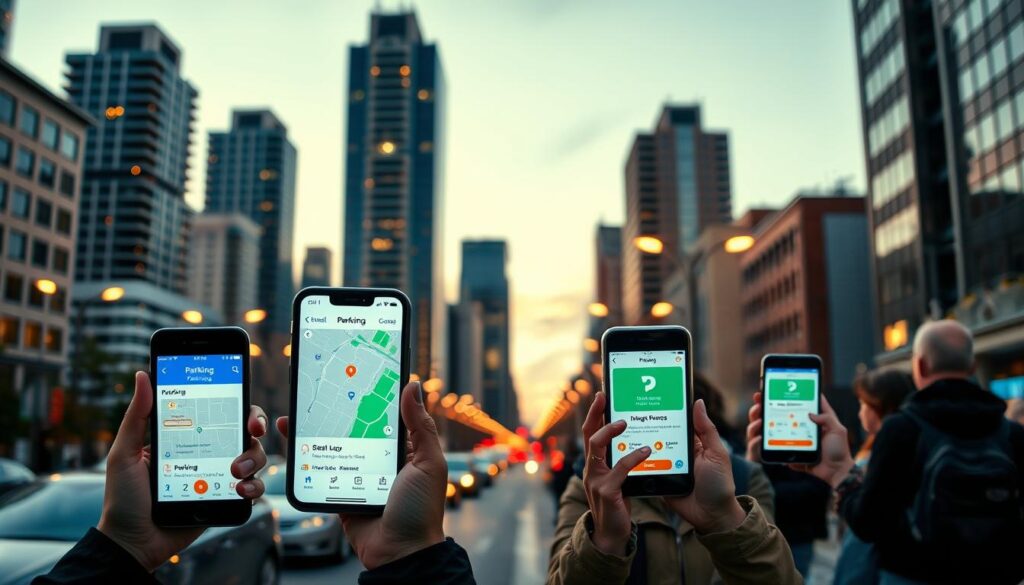
Smartphone apps make finding free parking easy. They turn parking into a simple search. We can find thousands of spots with just a few taps.
These apps work because people share their experiences. We get real info on parking spots and safety.
Top-Rated Apps for Overnight Parking
iOverlander is our top pick for parking spots. It has thousands of spots worldwide. It also lists free campsites and services like showers.
The app’s user reviews and photos are detailed. Each spot has GPS, amenities, and visitor feedback. This helps us choose where to stay.
The Dyrt focuses on campgrounds and public lands. It’s great for BLM lands and national forests. The app also lets us download maps offline.
FreeRoam and Seeker are for wild camping. They help us find legal parking spots in remote areas.
RV Parky is for RVs, with info on vehicle restrictions. Freecampsites.net is a web-based alternative with community content.
Maximizing App Effectiveness
Download many apps to cover all bases. No app is perfect for every location. Having options means we always have backup info.
Cross-check info from different apps. If three apps agree on a spot, we can trust it.
Always read recent reviews. Conditions change, so what worked before might not now. Look for reviews from the past few weeks.
Download offline maps for remote areas. Cell service can be bad in many spots. Offline maps help us navigate without internet.
The key to using apps well is to prepare and verify. Never trust just one source.
Look at user ratings and photos when choosing spots. Photos show what to expect. Choose spots with recent photos.
Set up notifications for new spots in areas you visit often. Many apps let you follow regions and get updates on new spots.
Exploring Residential Areas for Parking
Residential neighborhoods can be great for overnight parking if you know the rules. These areas are often safer than busy commercial spots. But, it’s important to know the free parking overnight regulations in each place.
Residential areas can be very peaceful for parking overnight. The trick is to pick the right spots and be polite. Dead-end roads in the country are often safe for a night’s parking.
Most people in neighborhoods are okay with parking if you’re polite. They like it when you explain why you need to park there. Showing respect for their community helps a lot.
Benefits of Parking in Neighborhoods
Neighborhood parking has big advantages over commercial spots. Lower crime rates mean safer parking. These areas are also quieter at night.
Residential streets often have easier parking rules at night. Parking enforcement usually focuses on business areas, not quiet streets. This makes it easier to park legally in some neighborhoods.
Neighborhoods are also better for getting a good night’s sleep. They are quieter than busy commercial areas. Street lights are just right for safety, not too bright.
Tips for Finding Residential Parking
Look for dead-end streets in suburbs or the country. These spots are often okay for parking overnight. Always check for posted signs about parking rules.
Drive through neighborhoods at night to see where people park. Look for places where cars park overnight often. This means parking is usually okay there.
Don’t block driveways, fire hydrants, or mailboxes. Park in a way that doesn’t disturb people. Think about how your car might affect morning traffic or garbage pickup.
| Residential Area Type | Parking Availability | Safety Level | Regulation Enforcement |
|---|---|---|---|
| Suburban Neighborhoods | Moderate to High | High | Low to Moderate |
| Rural Dead-End Roads | High | Moderate | Very Low |
| Urban Residential Streets | Low to Moderate | Moderate | High |
| Gated Communities | Very Low | Very High | Very High |
Check local laws before parking overnight. Some cities don’t allow big vehicles or RVs on residential streets. Knowing these free parking overnight regulations can save you from fines or towing.
If someone talks to you, be friendly and polite. Tell them why you’re parking there. Most people are okay if you’re respectful and follow the rules.
Leveraging Local Business Parking Lots
Local businesses can help you find safe parking spots. Many welcome travelers who are respectful and follow their rules. Their lots are often well-lit and have security.
Building these relationships takes effort but is worth it. You get reliable parking and support local businesses. The key is knowing which types of establishments are most likely to say yes and how to approach them professionally.
Establishments That Offer Free Parking
Some businesses let travelers park overnight. Walmart stores lead the pack, welcoming RVs and cars. But always check with store management as rules can vary.
Big-box retailers like Home Depot, Costco, and Sam’s Club also allow overnight parking. Their lots are big, well-lit, and secure. Target sometimes lets you stay overnight, but their rules change more often than Walmart’s.
Outdoor stores like Cabela’s and Bass Pro Shops often welcome RVs. These businesses understand their customers’ travel needs and usually let you park overnight.
Casinos are another good option for free parking. Many casinos offer free parking to encourage longer stays. Sign up for a player’s card and follow safety guidelines.
Truck stops like Pilot, Flying J, and Love’s also welcome travelers. They offer restrooms, food, and fuel, making them great stops.
How to Approach Businesses for Permission
When asking for parking permission, timing is key. Visit during business hours and talk to a manager. Avoid asking during busy times like lunch or closing.
Be clear about your needs and that you’re traveling. Most managers will appreciate your honesty and give a clear answer.
Have your contact info and vehicle details ready. Some may ask for your license plate or phone number. This shows you’re a responsible traveler who respects their policies.
Always follow any rules they give you. This might mean parking in a certain spot or making a purchase. Respecting these rules helps everyone.
Avoid small local businesses unless you know them. They might worry about liability or security. Focus on bigger chains with clear policies for better results.
Researching Municipal Parking Facilities
Municipal parking spots are great for travelers looking for affordable parking. These spots are run by the government and have clear rules. This makes them safer and more reliable than random parking spots.
There are many types of city parking, like garages and rest stops. Each place has its own rules. It’s important to know these rules before parking for the night.
Free Overnight Options in City Parking Lots
Many cities have parking lots for overnight parking. Highway rest stops are the easiest to find. They are made for travelers and usually let cars park overnight.
But, rest stops have rules too. Some are only for daytime use. Always check the signs before parking overnight.
Downtown parking garages also offer cheap overnight parking. These spots are often safer with cameras and lights. They are much cheaper than hotel parking.
Rules and Regulations Associated with Municipal Parking
Overnight parking laws change a lot from city to city. What’s okay in one place might not be in another. It’s smart to look up local parking rules online before you go.
Time limits are a big rule in city lots. Some lots let you park for hours, others for days. Size matters too, with bigger vehicles facing stricter rules.
Some cities need you to get a permit for overnight parking. You can buy these online or at city offices. They let you park legally for longer periods.
| Parking Type | Typical Time Limit | Common Restrictions | Permit Required |
|---|---|---|---|
| Highway Rest Stops | 8-12 hours | Passenger vehicles only | No |
| City Parking Structures | 24-72 hours | Size and height limits | Sometimes |
| Municipal Street Parking | 2-24 hours | Varies by borough | Often required |
| Public Park Lots | Sunrise to sunset | No overnight parking | Not applicable |
Look for signs with enforcement hours and contact info. Different vehicles have different rules. Always follow the signs to avoid fines.
Knowing these rules helps us park safely and legally at night.
Investigating Campgrounds and RV Parks
Exploring campgrounds and RV parks can reveal hidden gems for overnight parking. These spots offer legal certainty and stunning views. Unlike city parking, they provide peace of mind and often cost nothing.
Free recreation sites are perfect for those on a budget. They offer basic amenities without the high costs of commercial campgrounds.
How Campgrounds Offer Overnight Parking
Recreation sites have picnic tables and outhouses and keep their natural beauty. They are often near lakes, rivers, or forests. This gives you a beautiful view for your stay.
Places like British Columbia have interactive maps for finding these sites. Alberta has zones for wild camping and parking.
Campgrounds let you set up outside your vehicle. This makes your stay more comfortable than city parking. You can stretch, enjoy fresh air, and even cook meals at picnic areas.
Pros and Cons of Using RV Parks for Free Parking
Using campgrounds for free parking has its pros and cons:
- Pros: Legal certainty, basic facilities, beautiful settings, and space to set up outside your vehicle
- Pros: Often free or very low cost, peaceful environment away from city noise
- Cons: Limited availability during peak seasons and crowds on weekends
- Cons: Far from urban amenities and cell phone coverage can be poor
Before your trip, research state and provincial recreation databases. Download offline maps for areas with poor cell service. Popular spots fill up fast, so have backup plans ready.
These sites are first-come, first-served. Arrive early to secure a spot. Many travelers prefer campgrounds for their reliability and natural beauty.
Networking with Locals
Connecting with locals can show you the best ways to find free parking. They know the area better than anyone. They tell you where it’s safe to park overnight and where to avoid.
Locals also share up-to-date info on parking rules and free parking overnight regulations. This info helps you avoid fines and danger. Many travelers say local tips are key to finding good parking spots.
Join Online Groups and Forums
Online groups have changed how we meet locals before we arrive. Facebook groups for cities offer great parking tips. Van life and travel forums also have members ready to share their local knowledge.
Reddit sites like r/vandwellers and city subreddits are full of parking tips. You can ask about neighborhoods, safety, and parking rules. Join these groups early to get the most out of them.
It’s better to engage honestly than just ask for help. Share your own stories and help others. This way, you build real connections that go beyond just parking advice.
Building Connections for Parking Tips
Building real connections takes time and a true interest in their community. Start by talking about local spots, food, or events. This can lead to better help and lasting friendships.
Locals might offer private parking spots or driveways for the night. These deals usually come from people you’ve built trust with.
Travelers often have networks across many cities. These networks give parking tips, local advice, and help in emergencies. Networking is about respect and giving back – always be ready to help others.
Offer something in return for parking help. Share your travel stories, suggest places in other cities, or help with small tasks. These mutual exchanges create a network that helps everyone.
Utilizing Social Media for Parking Advice
Social media has changed how we find free overnight parking. It connects us with real-time parking info and local rules. Thousands of travelers share their tips every day.
Social media gives us instant updates on parking changes. It’s often faster than official sources. This helps us avoid tickets and find new spots.
Top Platforms for Parking Information
Facebook groups are the best for parking tips. Join groups for your area to find parking spots and avoid fines. Members share where to park and where not to.
Instagram is great for finding scenic spots with hashtags. But, always check if parking is allowed. Many spots may not be legal for overnight parking.
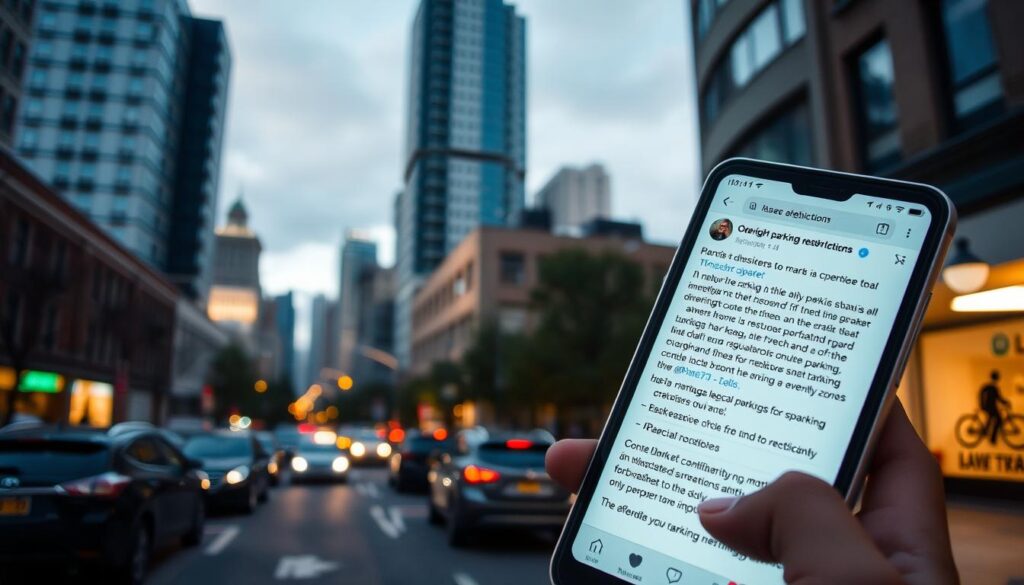
Twitter and Reddit give updates on parking rules. Local news and city accounts post about parking changes. Reddit has tips on neighborhoods and enforcement.
TikTok is a new source for parking tips. Travel creators share quick tips on parking spots. These videos often find spots missed by others.
Building Connections with Local Communities
Engage with online communities with respect and genuine interest. Follow local news and city accounts. This helps us understand parking rules better.
Be clear about your parking needs when asking for advice. Community members help more with specific questions. Always thank them and share your own tips.
Being active in these communities helps us get better advice. Regular contributors get priority and exclusive tips. It builds strong community support.
Always check official sources for parking info. Rules can change fast. Verify tips with local websites to stay legal and find great spots.
The Importance of Read Local Signs
Reading signs correctly can make or break your overnight parking experience. We’ve seen many drivers get tickets or have their cars towed because they didn’t understand the signs. Local parking signs contain important information that tells you if a spot is legal for overnight parking.
Every place has its own parking rules and how they enforce them. What’s okay in one city might be illegal in another. Signs tell you about time limits, if you need a permit, and what kind of vehicle can park there.
Spending a little time to read signs can save you a lot of money in fines. It’s a good idea to take photos of signs if they’re unclear or if you’re in a new area.
Understanding Parking Restrictions
There are many types of parking restrictions, and each one needs your attention. Time-based restrictions are common, like no parking between 2 AM and 6 AM. But these hours can change a lot from one place to another.
Street cleaning restrictions are also common. They might say “No Parking Tuesday 8 AM – 10 AM.” Holiday restrictions can be tricky because they’re not always clearly posted but are enforced.
For RV owners and commercial drivers, vehicle type restrictions are key. A sign that lets cars might not let bigger vehicles. We’ve seen people think “no sign means it’s okay” and end up with big fines.
Pay close attention to what signs say. “No Parking” means you can’t stop at all. “No Stopping” is even stricter. Time limits are strict, and going over them by just a few minutes can get you a ticket.
Identifying Legal Parking Areas
Finding legal overnight parking means knowing what signs say no and what they say yes. Green zones or signs with “Parking Permitted” usually mean it’s okay to park. But always check for any time limits or if you need a permit.
Look for signs that clearly say “Overnight Parking Allowed” or “No Time Limit.” These spots are great for long stays. But they’re often in high demand.
In residential areas without signs, parking might be okay at night. But local laws might apply. It’s a good idea to check with local authorities or parking apps to be sure.
If signs seem confusing or different, pick the most strict rule. It’s better to find another place to park than risk a fine. Parking lots in cities might have clearer rules than street parking.
Remember, how strictly parking is enforced can change by location and time. Some places are strict at night, while others are stricter during the day. Knowing this helps you park safely and legally.
Tips for Staying Safe While Parking Overnight
When you park overnight, your safety is key. We always put safety first, not just to save money. Following overnight parking safety guidelines ensures a safe night for you and your vehicle.
Being prepared and doing your research is important. Always check the area and have a safety plan ready before parking.
Choosing Safe Locations
Use online tools like Niche.com to find safe parking spots. Look at crime rates and safety stats. Websites that map local crimes are also helpful.
Google Street View is great for scouting parking spots. You can see the area during the day. This helps you judge the lighting and feel of the neighborhood.
Choose spots that are lit but not too bright. Good visibility is key for quick exits. Areas with people around are safer than empty ones.
Drive around your chosen spot before parking. This lets you feel the area and spot any issues. If it doesn’t feel right, find another place.
Best Practices for Vehicle Security
Protect your vehicle with several layers. Use window coverings to keep things private and out of sight from thieves.
Keep valuable items hidden. Even small things can attract thieves. Store them in your trunk or a locked area.
Park in a spot where you can drive out easily. This helps you leave quickly if needed. Keep your keys close all night.
Think about when you arrive and leave. Some places are safer during the day. Check them at the same times you plan to use them.
Stay aware of your surroundings after parking. Listen for odd noises or see if anyone is acting strange. Having plans for different situations keeps you safe.
Planning Ahead for Your Trip
Success with free overnight parking starts with smart planning. Don’t wait until you’re tired and out of daylight. Map your route and find parking spots for each stop ahead of time.
Creating a Parking Strategy
Have at least three backup parking spots for each overnight stop. Your first choice might be full or not available. Keep a digital folder with screenshots of parking spots, phone numbers, and backup plans.
Think about how close parking is to restrooms, food, and fuel. Check if your phone works there. Also, plan when you’ll leave and watch the weather. This way, you can find indoor parking if it’s raining.
Researching Areas Before You Arrive
Google Maps satellite view is key for research. Switch to satellite mode to see real images of parking spots. Look for dirt roads and follow them to find hidden spots.
Check parking app reviews and local website rules. Look out for seasonal or event restrictions. With good planning, finding free overnight parking becomes a fun part of your trip. You’ll know how to park legally wherever you go.