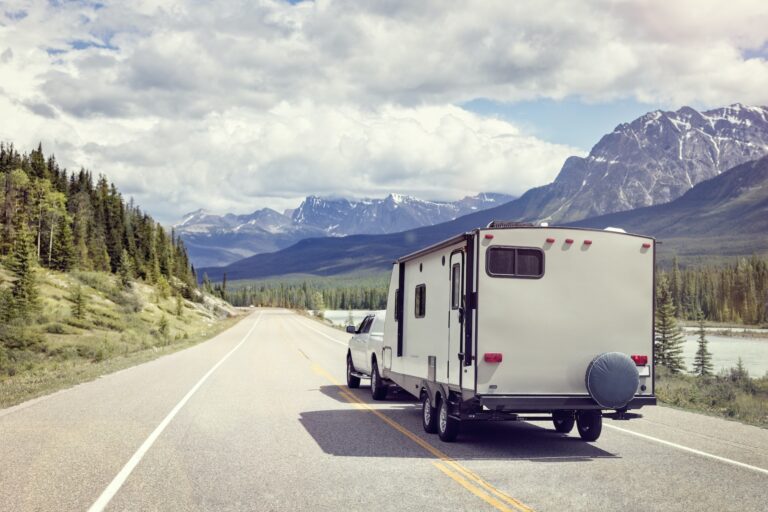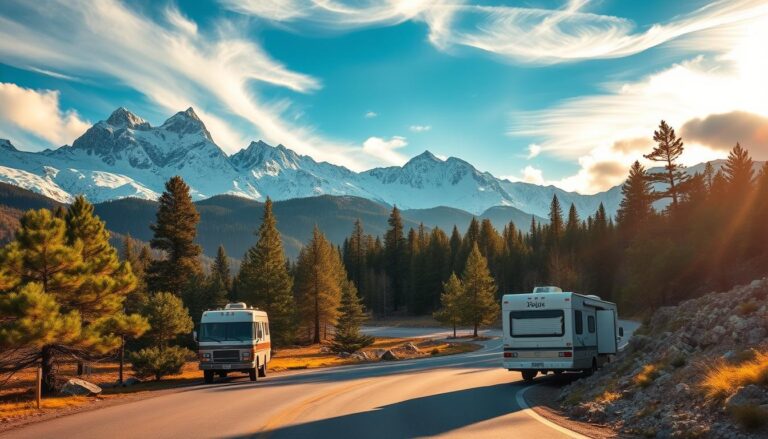
Nothing captures the American spirit like hitting the open road in your RV. America has endless highways through breathtaking landscapes. From coast to coast, our country offers incredible routes that show nature’s finest work.
Most folks buy their first RV for freedom and adventure. They dream of exploring hidden gems and famous landmarks. The appeal is simple: your home travels with you, making every destination comfortable and familiar.
These road trips aren’t just about reaching your final stop. The real magic happens during the journey itself. Every mile brings new views, unexpected discoveries, and memories that last a lifetime.
We’ve gathered the most spectacular routes across our nation. Each one offers something unique – whether you crave coastal views, mountain vistas, or desert sunsets. These drives let you experience America’s diverse beauty at your own pace.
Key Takeaways
- RV road trips embody the quintessential American travel experience
- America offers diverse landscapes perfect for recreational vehicle exploration
- The journey itself creates more memorable experiences than just reaching destinations
- RV travel provides comfort and flexibility while exploring remote locations
- Cross-country routes showcase the nation’s natural beauty and cultural diversity
- Planning scenic routes enhances the overall RV adventure experience
Introduction to Scenic Drives for RV Enthuisiasts
RV road trips let us see America’s beauty in a special way. There’s nothing like hitting the open road in an RV. It’s a unique experience.
Our home is where we park it. We step out and connect with our destination right away. This freedom changes how we see the world.
Why Scenic Drives are Perfect for RVers
Scenic drives and RVs are a great team for adventure lovers. Our RVs are the ideal platform for exploring America’s stunning routes. We can stop wherever we want, without finding hotels.
Our RVs offer comfort and convenience. We wake up to beautiful views every day. We can easily move to new places whenever we want.
RV travel lets us become temporary residents of the places we visit. We’re not just tourists. We can spend more time in places we love and leave quickly from others.
Benefits of Exploring by RV
RV travel has many benefits beyond just convenience. It makes our adventures more fun and memorable:
- Freedom to travel at our own pace – No rush or time limits
- Bring all our comforts with us – Our own bedding, kitchen, and items
- Cost-effectiveness for extended trips – Save on hotels and food
- Access to remote locations – Reach places hard to get to by other means
- Flexibility in itinerary changes – Change plans easily based on weather or preference
Top RV routes across America have something for everyone. Whether we love the coast, mountains, or deserts, our RV unlocks these experiences.
We can cook our own meals in our RV, saving money on food. This lets us see more places and enjoy longer trips.
RV travel also creates lasting memories with loved ones. We share adventures in our RV, making strong bonds that last long after we’re back home.
Pacific Coast Highway: California’s Coastal Gem
Few RV travel destinations match California’s Pacific Coast Highway. It stretches over 600 miles from Dana Point to Leggett. The highway follows the Pacific coastline all the way.
State Route 1 is a mix of ocean views, cliffs, and seaside towns. It goes through California’s most beautiful coastal areas. Every turn shows us new, amazing views.
The Pacific Coast Highway is a top picturesque route in the U.S. We see beaches, redwood forests, and more. Its varied landscapes make the drive special.
Key Stops Along the Pacific Coast
Big Sur is the highlight of our trip. It has tall redwoods and cliffs that meet the ocean. The views are stunning.
The Bixby Creek Bridge is famous for its photos. It spans a canyon with views in all directions. We can stop to take pictures.
Hearst Castle near San Simeon shows California’s past. It has tours all year. The castle’s gardens and architecture are beautiful.
Must-See Attractions on Route 1
Seaside towns like Carmel-by-the-Sea are full of charm. Mendocino is on cliffs with great views. These towns are like gems.
Lighthouses guide ships and offer great photos. Point Sur and Pigeon Point Lighthouses have tours. They’ve helped mariners for over a century.
State parks have RV-friendly camping with ocean views. McArthur-Burney Falls and Julia Pfeiffer Burns State Parks are great. We can wake up to waves.
Scenic overlooks are perfect for parking and enjoying views. They fit RVs of all sizes. Spring and fall are the best times to visit.
Blue Ridge Parkway: A Journey Through the Smokies
Known as “America’s Favorite Drive,” the Blue Ridge Parkway is a top pick for RVers. It spans 469 miles through the Appalachian Mountains. It links Virginia’s Shenandoah National Park to North Carolina’s Great Smoky Mountains National Park.
This route is among the best RV scenic routes in the U.S. It’s known for its natural beauty and cultural heritage. You’ll see ancient mountains, historic sites, and charming towns.
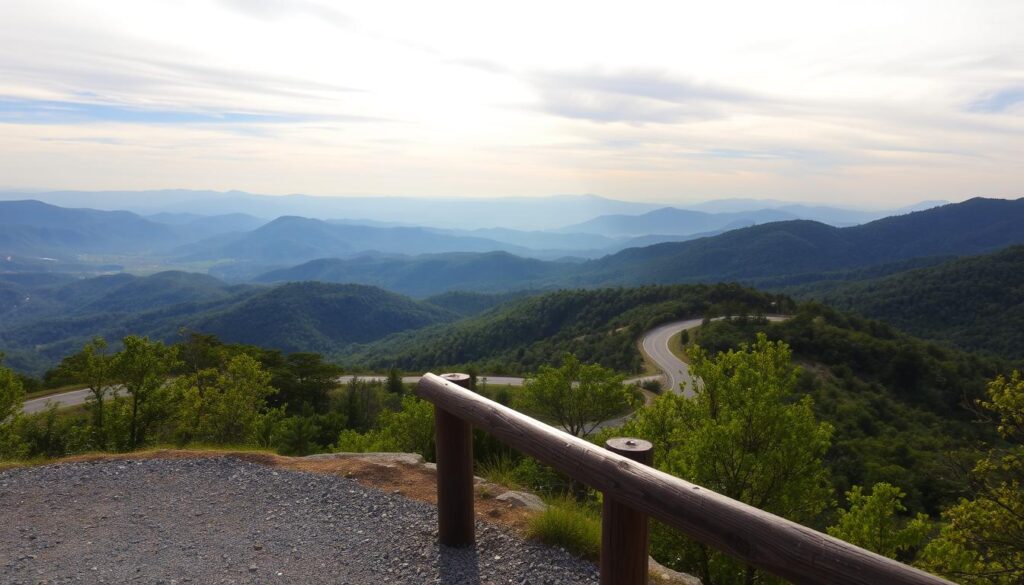
RV travelers love this route for its gentle grades and well-kept roads. It was made for slow travel. You can take your time and enjoy every mile.
“The Blue Ridge Parkway is more than a road – it’s a journey through time and nature that captures the soul of the Appalachian Mountains.”
Best Overlooks and Viewpoints
The Blue Ridge Parkway has dozens of amazing overlooks and viewpoints. Each spot offers unique views of the mountains and valleys. Make sure to plan extra time for these must-see scenic drives for RVers spots.
Mabry Mill is one of the most photographed spots. This historic gristmill sits by a peaceful pond at milepost 176. The mill dates back to 1910 and works during demo days. RVers can park and explore the area.
The Linn Cove Viaduct is an engineering wonder. It spans 1,243 feet around Grandfather Mountain. It took four years to build without harming the ecosystem below. The visitor center offers great views and educational displays.
Craggy Gardens has some of the best views on the route. Located at milepost 364, it has hiking trails and stunning views. The gardens bloom with rhododendrons in late spring and early summer. Visit in early morning or late afternoon for the best light.
| Viewpoint | Milepost | Best Features | RV Accessibility |
|---|---|---|---|
| Mabry Mill | 176 | Historic mill, pond, demonstrations | Large parking area |
| Linn Cove Viaduct | 304 | Engineering marvel, visitor center | Paved parking, easy access |
| Craggy Gardens | 364 | Mountain views, hiking trails | Spacious lot, restrooms |
| Rough Ridge | 302 | 360-degree views, boardwalk | Moderate parking |
Seasonal Highlights: Fall Foliage and Wildflowers
The Blue Ridge Parkway changes with each season. Fall is the most stunning, with mountains turning brilliant colors. Peak foliage is from mid-September to mid-October, depending on elevation.
Plan your fall visit carefully. Higher elevations change color first, usually in late September. Lower elevations peak in mid-October. The parkway’s website has weekly foliage reports in autumn.
Spring and summer wildflowers also create stunning displays. Mountain laurel blooms in May and June, covering hillsides in white and pink. Rhododendrons bloom in late June and July. These seasonal shows make the parkway a top best RV scenic routes for nature lovers.
Summer offers comfortable temperatures and long days. It’s great for hiking and outdoor activities. Many RV campgrounds along the route are busy in summer, so book early.
Winter brings a different beauty to the mountains. Snow-covered peaks and bare trees reveal distant vistas. But, some sections may close in severe weather, so check before you go.
Route 66: America’s Historic Highway
No list of America’s best scenic drives is complete without Route 66. It’s called the “Main Street of America.” This famous road goes from Chicago, Illinois, to Santa Monica, California, for 2,448 miles. For RVers, it’s a unique way to see America’s heartland.
This historic road is the ultimate road trip. Even though some parts are now interstates, many sections are just like they were back then. The Mother Road lets RVers feel America’s car culture and see real roadside life.
Route 66 goes through eight states, showing off different landscapes and sights. It starts in Chicago and ends in California. RVers see everything from farmland to deserts on this trip.
Iconic Landmarks to Visit Along the Route
The Mother Road has many famous stops. These places are great for RVers to take breaks and take photos.
Cadillac Ranch in Amarillo, Texas, is a must-see. It has ten Cadillacs buried nose-first in the ground. Visitors can spray paint them, adding their own art.
In Arizona, Petrified Forest National Park is a natural wonder. It has ancient trees and colorful badlands. RVers can hike and learn at the visitor centers. The park’s colors make for great photos.
The trip ends at Santa Monica Pier. It’s full of rides, street performers, and ocean views. The pier is a lively place to end your trip.
Tips for Driving the Mother Road
Driving Route 66 needs planning and patience. Modern GPS often takes you on interstates. Look up the old route before you go. The original road is the best way to see the real America.
There are many RV-friendly places to stay along Route 66. But book ahead, as it gets busy. The old motor courts are charming and add to the trip.
Travel slowly on the historic parts of Route 66. The road goes through small towns with slower speeds. This lets you enjoy the sights and local culture.
Fuel and supplies are easy to find, but they’re far apart in the desert. Keep enough fuel and water, mainly in Arizona and New Mexico.
The Natchez Trace Parkway: A Historic Adventure
We explore America’s history on the Natchez Trace Parkway. This 444-mile road connects stories from centuries past. It links Nashville, Tennessee, and Natchez, Mississippi, following paths of Native Americans, settlers, and traders.
For RVers, the Natchez Trace is a top choice. It blends history with natural beauty in a unique way.
The parkway is a calm alternative to busy highways. It has well-kept roads, scenic stops, and few crowds. The National Park Service keeps it safe for all RVs.
Historical Landmarks to Explore
The Natchez Trace is home to many historical sites. We see Native American mounds and learn about ancient cultures. Pharr Mounds is a key archaeological site.
Civil War history comes alive here too. The Meriwether Lewis Monument marks the explorer’s final resting place. Historic inns and stands offer a glimpse into the past.
Each site tells a piece of the Old Southwest’s story. We learn about American expansion and cultural exchange. Interpretive centers share more about Native American heritage and pioneer life.
RV-Friendly Campgrounds Along the Trace
The Natchez Trace has great camping spots for RVers. National Park Service campgrounds have clean restrooms and picnic areas. They’re perfect for all RV sizes.
Private campgrounds near the Trace offer more amenities. They have full hookups, laundry, and fun activities. These are great for longer RV road trips.
| Campground Name | Location | RV Length Limit | Hookups Available |
|---|---|---|---|
| Meriwether Lewis | Hohenwald, TN | 40 feet | Electric only |
| Jeff Busby | Ackerman, MS | 35 feet | Electric only |
| Rocky Springs | Port Gibson, MS | 30 feet | None |
| Natchez State Park | Natchez, MS | 45 feet | Full hookups |
The parkway is easy to navigate for RVs. It has wide shoulders and gentle curves. There are many rest areas and scenic spots for photos and breaks.
Planning is easy with the parkway’s consistent facilities and clear signs. Book ahead, esp. in spring and fall for the best weather.
Going-to-the-Sun Road: Glacier National Park
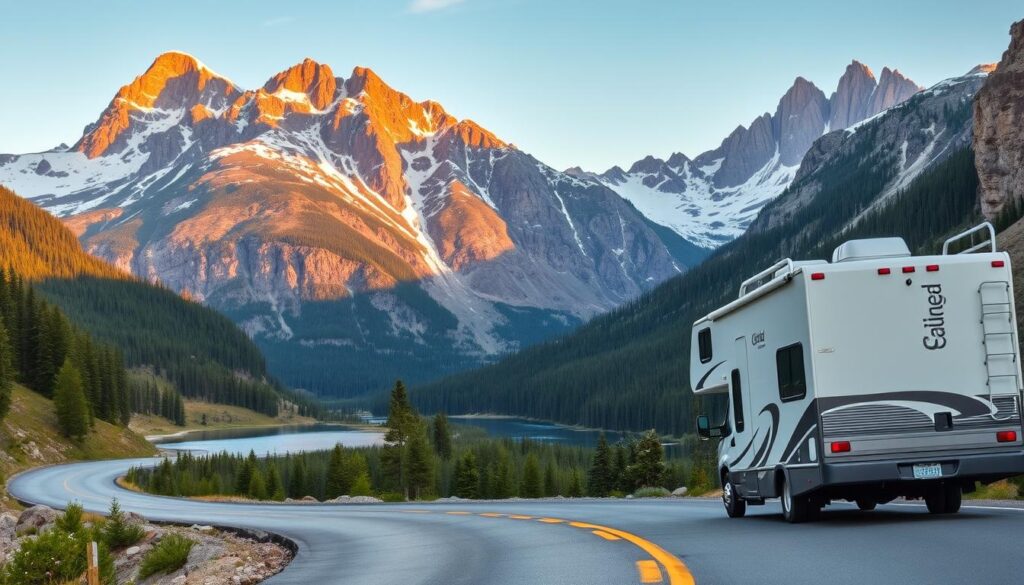
Glacier National Park is home to Going-to-the-Sun Road, a 50-mile marvel. It’s a top picturesque route for RVers looking for adventure. The drive goes from east to west, showing off stunning Rocky Mountain views.
The road goes through valleys, past peaks, and by alpine lakes. It’s built into the mountains with amazing precision. Every turn shows nature’s beauty.
We’ll see forests, cliffs, and wide views. This makes it a celebrated RV travel destination. The road’s construction is a human achievement.
Spectacular Views and Wildlife Sightings
The views on Going-to-the-Sun Road are incredible. Logan Pass is the highest point, with views and trails. From here, we see valleys for miles.
Lake McDonald is a peaceful stop. Its clear water reflects the mountains, perfect for photos. It’s a great place to relax.
The Weeping Wall is a natural wonder. Waterfalls fall down cliffs onto the road. In snowmelt season, it’s even more dramatic.
Wildlife is everywhere. We might see mountain goats, bighorn sheep, grizzly bears, and black bears. Golden eagles fly above, and marmots sun on rocks.
Important Tips for RVers
Size restrictions are strict on this road. No vehicles over 21 feet long or 8 feet wide can go. This means big RVs can’t do the whole trip.
But, there are other ways to see the views. We can drive parts of the road from both sides. There are overlooks for big RVs.
Seasonal accessibility is key. The road opens late June to early October, depending on snow. Weather can change fast at high elevations.
Be careful on the road, as it’s narrow and winding. Slow down and watch out for pullouts and scenic stops.
The Florida Keys: A Tropical Paradise Drive
The Overseas Highway is a magical drive through tropical islands. It’s a 113-mile stretch of U.S. Highway 1. It’s one of the best RV scenic routes in America, from Key Largo to Key West. We drive over the ocean, with the Atlantic and Gulf of Mexico on both sides.
This route connects over 40 coral islands. Each mile shows us turquoise waters, palm trees, and beaches. This isn’t just a drive—it’s a voyage through paradise.
The Overseas Highway Experience
The Overseas Highway is called “The Highway that Goes to Sea.” We open our windows to feel the sea breeze. The famous Seven Mile Bridge is a highlight, stretching over the ocean for seven miles.
We see small islands and keys from our RV. Each island has its own story. Pelicans and dolphins add to the beauty.
There are many places to stop and take photos. These spots are perfect for wildlife watching. The thin line between sea and sky creates an almost surreal driving experience.
“The Florida Keys are a place apart—a string of pearls at the end of America’s highway system, where the journey becomes the destination.”
Fun Activities at Key West
Key West is the perfect end to this journey. It’s full of activities and attractions. We can visit the Ernest Hemingway House and Museum and see six-toed cats.
Mallory Square has a famous sunset celebration. Street performers and artists add to the fun. It’s a place where visitors from all over come to watch the sunset.
Duval Street is lively day and night. There are great seafood, shops, and bars. You can also snorkel, fish, or take a glass-bottom boat tour.
There are RV parks in the Keys with full hookups. Boyd’s Key West Campground and Bluewater Key RV Resort are close to attractions. These must-see scenic drives for RVers need reservations, so book early.
New Hampshire’s Kancamagus Highway
The Kancamagus Highway winds through the White Mountain National Forest. It’s a 34.5-mile scenic byway that cuts through New Hampshire’s mountains. It offers RVers a journey through dense forests, rivers, and mountain views.
This route connects Lincoln and Conway. It lets us explore New England’s beauty without leaving our RVs. There are pullouts and overlooks for larger vehicles.
Scenic Stops and Hiking Trails
The Kancamagus Highway has many natural attractions. Lower Falls is a great spot for families. We can swim in natural pools and park easily.
Sabbaday Falls is a short hike to a stunning waterfall. The trail is 0.6 miles each way. It’s perfect for a quick walk.
There are overlooks along the way with amazing views. Rocky Gorge and Diana’s Baths are great stops. They have RV parking, restrooms, picnic tables, and hiking trails.
- Designated RV parking areas
- Restroom facilities
- Picnic tables for roadside meals
- Easy access to hiking trails
- Photography opportunities
The highway leads to RV-friendly campgrounds in the White Mountain National Forest. Blackberry Crossing Campground and Covered Bridge Campground are great places to stay.
Fall Foliage: The Best Time to Visit
The Kancamagus Highway is famous for fall colors. Late September through early October is the best time. The forests turn into a colorful spectacle.
Planning is key for fall foliage trips. Book campsites early, as they fill up fast. The road gets busy, so travel slowly.
The weather affects the colors. Cool nights and warm days make the colors pop. Check foliage reports on New Hampshire’s tourism websites before you go.
Peak foliage season is rewarding but needs planning:
- Book accommodations 3-6 months ahead
- Plan for weekend traffic delays
- Bring extra supplies for weather changes
- Check road conditions before departure
- Consider weekday travel for fewer crowds
The Kancamagus Highway is a hidden gem. It offers stunning mountain scenery without long travel. It’s a top spot for RV enthusiasts looking for beauty and adventure.
The Great Alaskan Highway: A Route Less Traveled
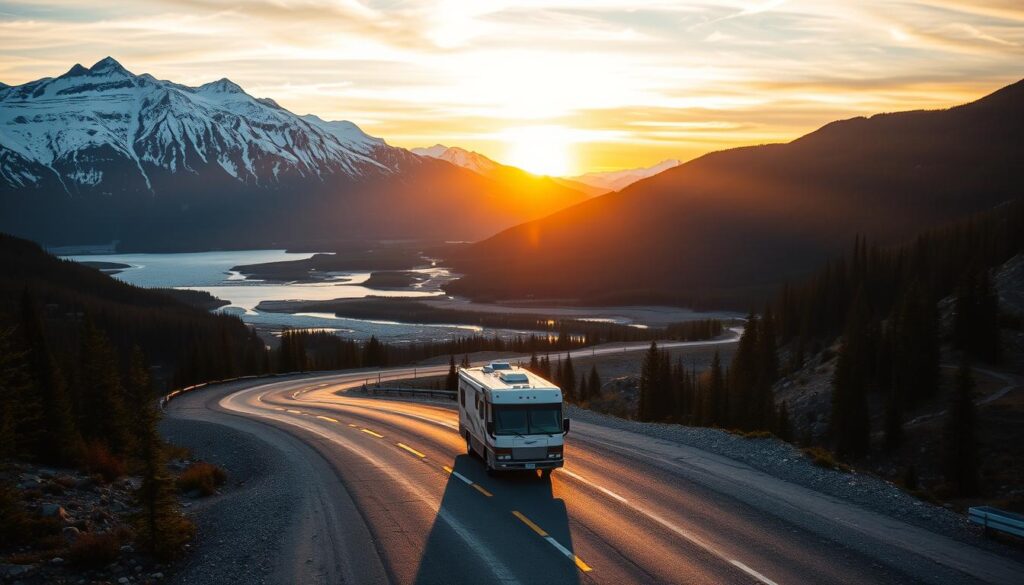
The Great Alaskan Highway is a top RV route known for its adventure and stunning views. It’s a 1,387-mile journey from the U.S. to Alaska through pristine wilderness. RVers get to see untamed landscapes along the way.
This historic route was built in just eight months during World War II. It’s now a top choice for RV trips. The road goes through dense forests, crosses rivers, and climbs mountains, showing off the northern wilderness.
Planning Your Trip to Alaska
Getting ready for this trip is key. Travel between May and September for better weather and services. Winter travel is tough due to harsh weather and limited services.
Your RV must be ready for this remote trip. You’ll need:
- Multiple spare tires and tire repair kit
- Emergency communication device (satellite phone or GPS messenger)
- Extra fuel containers and emergency supplies
- First aid kit and basic tools
- Flexible itinerary allowing for weather delays
When crossing borders, you’ll need valid passports. Carry vehicle registration, insurance, and permits. Patience is important, as border crossings can be slow.
Must-See Stops Along the Highway
The trip starts at Dawson Creek, British Columbia, Mile 0 of the Alaska Highway. This town has museums and supplies for your journey. The visitor center has info on road conditions.
Liard River Hot Springs is a great place to relax. The natural thermal pools stay around 108°F all year. It’s a welcome break after driving.
Muncho Lake is known for its stunning scenery. The turquoise waters and mountains make for breathtaking photos. There are good RV facilities nearby.
The Dalton Highway extension from Fairbanks to Deadhorse is a must for Arctic adventures. It’s 414 miles long and follows the Alaska Pipeline. But, it’s very remote and needs careful planning.
The Great Alaskan Highway offers an unparalleled wilderness experience. With the right planning, it’s a lifetime adventure for RV travelers.
The Enchanted Circle: New Mexico’s Scenic Loop
Explore New Mexico’s high desert and alpine forests on the Enchanted Circle. This 84-mile scenic loop starts and ends in Taos. It’s a top pick for RVers, with diverse landscapes and easy access.
The drive is special because of its incredible variety. You’ll see amazing views, rich culture, and Southwest charm in one day. It’s great for all RVers, thanks to easy roads and good RV spots.
Wandering Through Taos and Beyond
Your trip starts in Taos, a town full of Southwest spirit. The historic plaza is the heart of the town, with adobe buildings and galleries. Don’t miss the Taos Pueblo, a UNESCO site that’s been home for over 1,000 years.
As you go around the loop, you’ll see Questa, Red River, and Eagle Nest. Each place has its own charm and mountain views. You’ll pass by Wheeler Peak, New Mexico’s highest point, adding drama to your trip.
Alpine lakes along the way are perfect for rest. Eagle Nest Lake is great for fishing, and the forests offer cool relief. These elevation changes support diverse wildlife and plants.
“The Enchanted Circle isn’t just a drive; it’s a journey through time, culture, and some of the most beautiful landscapes in America.”
There are RV-friendly campgrounds all around the loop. This makes it easy to stay longer and explore. The roads are good for RVs, but watch out for weather on mountain parts.
Cultural Highlights and Local Cuisine
The Enchanted Circle is rich in culture, showing Native American, Hispanic, and Anglo influences. Native American heritage sites tell stories of ancient times and ongoing traditions. You can learn about crafts, pottery, and spiritual practices at many pueblos.
Hispanic colonial history is alive in historic churches, architecture, and family businesses. The area’s arts and crafts traditions are celebrated in galleries and studios. Here, you can meet artists and buy authentic Southwest art.
Local food is a big highlight. Traditional New Mexican dishes, like green and red chile dishes, are a must-try. Family restaurants serve up delicious sopapillas, enchiladas, and posole.
Try Native American fry bread and Southwestern fusion food too. Many places use local ingredients for fresh, seasonal menus. These spots offer great food that matches the beauty of your journey.
Visit during cultural festivals and events to fully experience the area. The Enchanted Circle is a top choice for RVers, with its stunning views, friendly communities, and rich culture.
Driving the Cabot Trail in Nova Scotia
Canada’s Maritime provinces welcome RV fans with the Cabot Trail. This 185-mile loop shows off ocean views and Celtic culture. It’s one of the best RV scenic routes in North America.
The trail goes around Cape Breton Island. It offers travelers a memorable journey. You’ll see dramatic coastlines and untouched wilderness.
A Brief Overview of This Iconic Drive
The Cabot Trail is a perfect loop through Cape Breton Highlands National Park. It follows the rugged coast where the Atlantic Ocean meets cliffs. The drive shows landscapes untouched by time.
Roads on the trail are good for most RVs. They have gentle curves and easy grades. But, some parts have steep hills that need careful driving.
When to go is key for your Cabot Trail trip. May to October is best. The weather is good, and all attractions are open.
“The Cabot Trail offers one of the most spectacular coastal drives in the world, where every turn reveals a new vista more breathtaking than the last.”
For U.S. citizens, crossing the border is easy. You need a valid passport. Canadian dollars are used in Nova Scotia.
| Travel Consideration | Requirement | Best Practice | Season Impact |
|---|---|---|---|
| Border Crossing | Valid Passport | Carry vehicle registration | Year-round access |
| Currency | Canadian Dollars | Exchange before arrival | No seasonal variation |
| RV Facilities | Campground reservations | Book early for summer | Limited winter options |
| Road Conditions | Standard RV clearance | Check weather updates | Best May-October |
Key Stops for Scenic Views
The Skyline Trail lookout has the best views. It’s a must-see scenic drive for RVers. The lookout has paved parking for big RVs.
Peggy’s Cove is famous for its photos. It’s a fishing village with traditional buildings. The lighthouse is iconic.
There are many lookoffs on the Cabot Trail. They offer safe parking and great views. Each lookoff shows a different side of the coastline and wilderness.
Ingonish Beach is where mountains meet the sea. It has great camping for RVers. There are hiking trails and swimming in summer.
The Celtic Music Hall of Fame celebrates Scottish heritage. The region’s culture welcomes visitors. It adds to the scenic drive.
RV facilities include campgrounds and dump stations. Many have electrical hookups and water. Book ahead in summer for a popular drive.
Conclusion: Embrace the Adventure of RV Scenic Drives
We’ve looked at some amazing routes across America. From California’s rugged coast to Alaska’s wild areas. These drives show the amazing variety our country has for RV fans looking for great experiences.
Tips for a Safe and Enjoyable Journey
Before you start, check the weather and road rules for your path. Make sure your RV is in good shape. Carry emergency items like water, food, and tools.
Plan your fuel stops well, like on the Alaskan Highway. Drive safely and slow on mountain roads. Use pullouts for slower traffic. Be kind to other drivers and nature.
Hit the Road and Create Memories
The Best Scenic Drives in the U.S. for RVers are more than just ways to get from A to B. They’re paths to new discoveries and fun. Whether it’s the Pacific Coast Highway or the Blue Ridge Parkway, each offers something special.
Your RV lets you travel at your own speed. Stop whenever you want. The trip itself is the main attraction. Pick a route and start planning your next big adventure today.