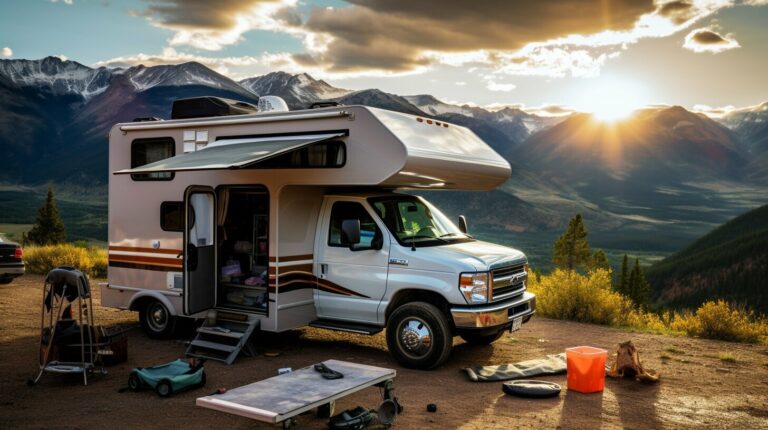
The open road offers us more than just breathtaking landscapes and new places. It gives us chances to meet others who love to explore and enjoy freedom.
RV life brings us together at campgrounds, rest stops, and scenic spots. These meetings often lead to meaningful conversations about our travels.
Creating lasting friendships on the road takes intentional effort and real interest in others. The RV community grows through shared stories, advice, and support.
History shows us that distance doesn’t break strong bonds. Rachel Carson and Dorothy Freeman kept their friendship strong over long distances. We can do the same with RV friends we meet.
Key Takeaways
- RV communities naturally foster connections through shared interests and experiences
- Intentional effort is essential for building meaningful friendships on the road
- Campgrounds and RV gatherings provide excellent opportunities to meet like-minded travelers
- Distance doesn’t prevent strong friendships when maintained through regular communication
- Sharing travel stories and advice helps create bonds with fellow RVers
- Being genuinely interested in others’ journeys opens doors to lasting connections
Embrace the RV Lifestyle: A Beginner’s Guide
Starting with RVing means joining a friendly community. They love freedom, exploring, and making real connections. Understanding this culture helps us feel at ease and open.
RVers love adventure and helping each other. We fix mechanical problems, share travel tips, and celebrate life on the road. This makes RV socializing tips easier than usual.
Understanding the RV Community
The RV community is all about kindness and shared experiences. Veteran RVers help newcomers a lot. They share tips and local spots.
People of all ages and backgrounds join. There are retirees, young families, and digital nomads. This diversity leads to deep connections.
Benefits of RV Living
RV living has social perks that homes don’t. We meet new people often because we change neighbors. Each campground brings new stories.
Living outside encourages us to meet others. Campfire conversations start easily. Outdoor spaces are perfect for spontaneous gatherings.
- Shared experiences create instant conversation starters
- Outdoor living promotes natural social interaction
- Common challenges build supportive relationships
- Flexible schedules allow for spontaneous gatherings
Choosing the Right RV for Social Interaction
The RV we choose affects our social life. Outdoor living space is key for meeting neighbors. RVs with awnings or outdoor kitchens are great for gatherings.
Look for these social features in your RV:
- Adequate outdoor seating and shade options
- Easy-access entry doors for welcoming visitors
- Outdoor cooking capabilities for shared meals
- Storage for games, chairs, and entertainment supplies
The size and layout of our RV matter for hosting. Smaller RVs push us to socialize outside. Larger ones are good for indoor gatherings when it’s bad outside. Both ways help us make friends.
Our RV is our social center on the road. Choosing wisely means picking a unit that shows our personality and helps us connect with others.
Finding Campgrounds with a Social Vibe
Finding campgrounds with a lively vibe changes our RV trips. It turns solo travel into a community adventure. The right spot becomes our entry to lasting friendships and unforgettable moments. When we seek social connections, meeting people on the road feels as easy as setting up camp.
Choosing the right campground is more than just looking at amenities and prices. We need to find places that encourage guests to interact. These spots are perfect for making friends with other travelers.
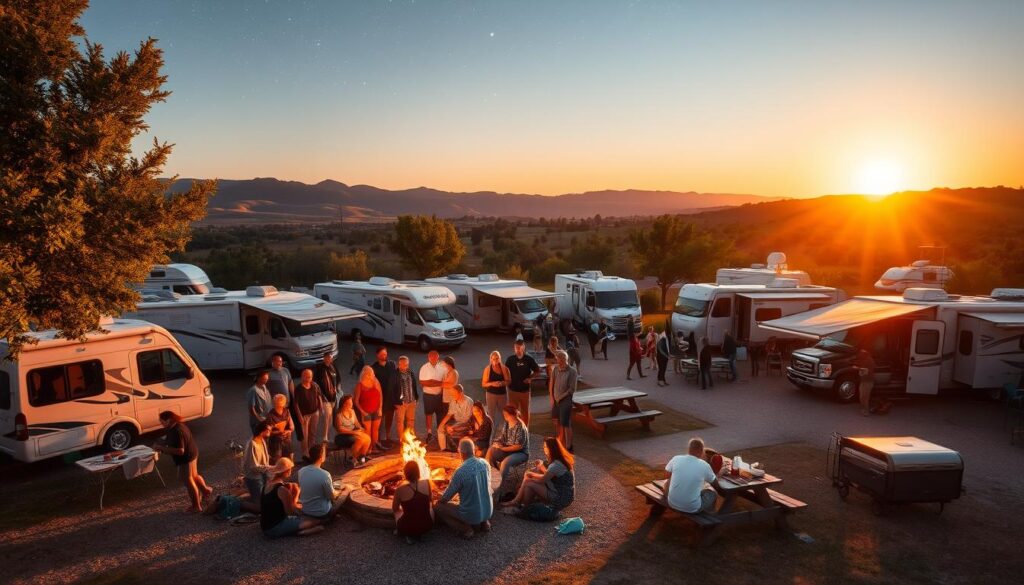
Researching Campgrounds with Community Events
Many campgrounds now list their social events online, making our search easier. We can plan our stays around potluck dinners, game nights, and group activities. These events help us meet others easily because everyone is there for the same reason.
Look for campgrounds that talk about community activities. Words like “family-friendly,” “social atmosphere,” or “group activities” mean connections are made. Some even have activity directors for daily events.
Reading recent reviews gives us a real feel for the social vibe. Guests often share if they met others and how welcoming it was. This info is key for planning our social RV trips.
Utilizing Apps for RV Enthuisiasts
Modern tech has changed how we find social campgrounds. RV-specific apps and websites help us connect with travelers before we arrive. They let us read reviews about social vibes and events.
Popular apps let us filter campgrounds by social activities. We can see which ones have regular gatherings and attract social RVers. Some apps even show who else is staying at the same campground.
| App Feature | Social Benefit | Best For |
|---|---|---|
| Event Calendars | Plan stays around activities | Meeting people at organized events |
| Traveler Reviews | Learn about social atmosphere | Finding genuinely friendly campgrounds |
| Fellow Camper Lists | See who else is staying | Connecting before arrival |
| Activity Filters | Find campgrounds with specific events | Matching interests with activities |
Tips for Conversations at Campground Gatherings
Starting conversations at events is easier when we’re genuinely curious. Ask about their travel experiences instead of sharing our own. People love talking about their adventures.
Complimenting someone’s RV or gear is a great way to start. Ask about their setup or gear they recommend. These chats often lead to deeper talks about travel and plans.
Offering help with camp tasks shows we’re friendly and opens doors to connections. Whether it’s helping with parking or sharing tools, these acts make a big impression. The key is to be genuinely interested in others’ journeys, not just our own.
Getting Involved in RV Clubs and Organizations
Joining RV clubs and organizations makes it easy to make friends. These groups are everywhere we go. They connect people who love adventure and the open road.
RV clubs help us meet new people. They welcome us with open arms and lots of advice. We learn about great places to visit and camp from those who know.
National and Regional RV Clubs to Consider
Good Sam Club is huge in North America. It offers discounts, help when we break down, and events all over. Thousands of RVers meet at their rallies.
FMCA (Family Motor Coach Association) is for motorhome owners. They have conventions, tech support, and local chapters. Clubs like Airstream Club International or Winnebago-Itasca Travelers focus on specific brands.
Regional clubs are smaller and more personal. We see the same people at many events. These groups plan trips and gatherings that make us closer.
Online Forums and Social Media Groups
Online spaces like RV.net and iRV2 are great for talking about RVs. We can share tips and meet others before we meet in person.
Facebook groups for RVs or travel are also great. They help us find people to meet up with. Being active online helps us make friends in real life.
“The RV community is like a big extended family. Once you’re part of it, you’ll find help and friendship wherever you go.”
Participating in Local Meetups
Meetups are perfect for meeting people face-to-face. They have fun activities like:
- Group dinners at local restaurants or potluck events
- Sightseeing tours led by members familiar with the area
- Educational workshops on RV maintenance, travel planning, or local history
- Outdoor activities like hiking, fishing, or group photography walks
Arrive early to meetups to introduce yourself. Helping out shows you care. These moments help us make friends on the road.
Attending RV Rallies and Festivals
RV rallies turn strangers into friends through shared fun and interests. They are the best place to meet people from all over. We meet others who love traveling and freedom as much as we do.
Major Events Worth Attending
Many premier RV rallies happen in the U.S. The Quartzsite RV Show in Arizona is huge, with over 100,000 visitors. The Hershey RV Show in Pennsylvania is fun, with new RVs and chocolate.
Regional Escapees rallies are cozy but full of community spirit. Good Sam rallies have fun activities and learning. State RV shows, like the Florida RV SuperShow, help us meet locals and learn about places.
- Quartzsite RV Show (Arizona) – January through February
- Hershey RV Show (Pennsylvania) – September
- Escapees Regional Rallies – Various locations year-round
- Good Sam Rallies – Multiple states and seasons
- State RV shows – Check local calendars
Festival Atmosphere and Activities
RV festivals mix learning with fun. They have educational seminars and vendor areas. These places are great for starting conversations.
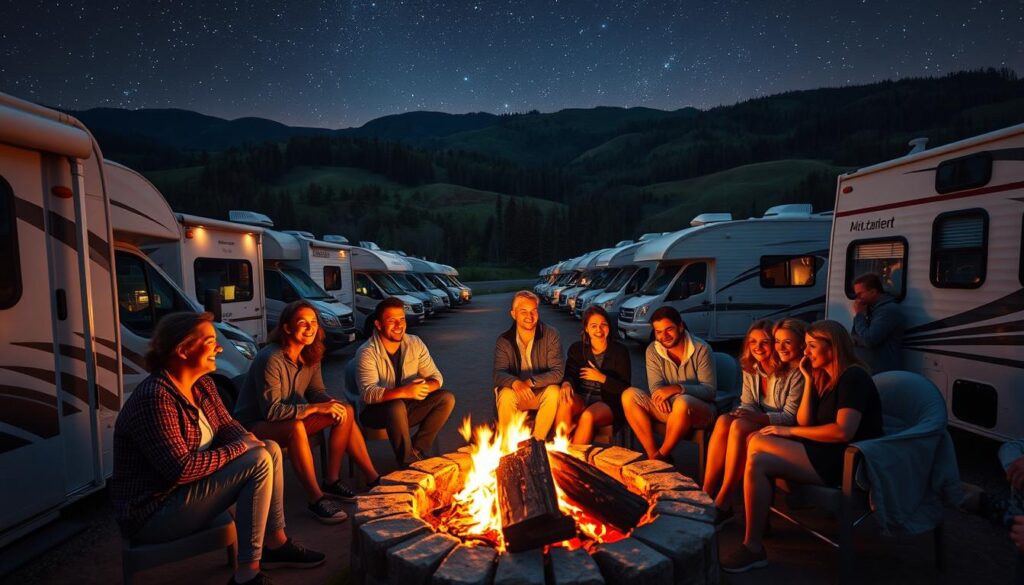
Evenings are for music, dancing, and campfires. These settings help us make friends easily. Festivals also have group activities like dinners and crafts.
Building Connections That Last
Networking at these events works best when we’re active and open. We should join activities and chat informally. Bringing business cards helps keep in touch with new friends.
Many friendships start with simple talks about RVs or travel. We find travel buddies or get tips on places to go. RV living gives us common ground for easy conversations.
These events often start travel partnerships and friendships that last long after we leave.
Utilizing Social Media to Make Connections
Online connections are key in the RV lifestyle today. Social media lets us meet other RVers before we travel. We can share our trips, get advice, and find new places to go.
These digital tools keep our friendships alive, even when we’re far apart. Just like old times with letters, we now use posts and photos to stay in touch.
Best Platforms for RVers
Many social media sites are great for RVers. Facebook is the top choice, with lots of RV groups for advice and tips.
Instagram is perfect for sharing photos of our travels. Using hashtags like #RVLife helps us find other travelers.
Don’t forget these special platforms:
- RV Life – Trip planning and social features
- iOverlander – Find camping spots and meet locals
- Campendium – Real RV reviews and tips
- Reddit – Active RV communities
Crafting Engaging Posts and Updates
Real stories attract real connections. Share your true experiences, not just perfect photos. People love honest tales of challenges and discoveries.
Good posts include:
- Location details and tips
- Helpful advice on campgrounds and routes
- Questions to start conversations
- Peeks into RV life
Ask questions in your posts to get people talking. Asking about favorite campgrounds or tips for places like Yellowstone starts interesting chats.
Finding Local RV Groups on Social Media
Local groups make our travels better. Search for groups by typing in your location and “RV” or “camping.” Many cities have RV groups for local tips.
Facebook’s location search finds groups for places you’re going. Join these groups for insider tips and to meet people.
Building RV friendships online needs regular effort. Comment on posts, share useful info, and be open with your knowledge. Reaching out to like-minded travelers often leads to real friendships.
Adopting a Friendly Attitude on the Road
Being friendly turns simple campground chats into deep friendships. When we’re warm and open, we find ways to connect. Our friendly attitude helps us make friends and makes trips unforgettable.
The RV world values kindness and respect. People can tell if we’re being real right away. So, we should be genuinely interested in talking to others, not just polite.
Approaching Others with Kindness
Being kind opens doors for us. We can start chats by complimenting someone’s RV or gear. Saying “I love your awning setup” or “That’s a beautiful rig” can lead to great conversations.
Helping out with camping tasks makes friends fast. Helping with leveling jacks or setting up satellite dishes shows we care. These acts of kindness can lead to coffee or dinner invites.
“Kindness is a language which the deaf can hear and the blind can see.”
Our body language is key in campgrounds. We should stand open, make eye contact, and smile when we meet neighbors. These signs show we’re friendly and want to connect.
Sharing Your Stories and Listening
Good conversations build lasting friendships. We should share our travel tales and listen to others’ stories. It’s good to have a few interesting stories ready.
Listening means more than waiting to talk. Ask questions about their trips and challenges. Ask “What was your favorite part?” or “How did you handle that?” to show you’re really listening.
Sharing personal stories makes us relatable. When we share our wins and losses, people connect with us. Authenticity and vulnerability win over perfect stories.
| Effective Sharing | Poor Sharing | Listening Skills |
|---|---|---|
| Tell specific stories with details | Give vague, general statements | Ask follow-up questions |
| Include both successes and challenges | Only brag about achievements | Remember details from previous conversations |
| Show genuine emotion and enthusiasm | Speak in monotone or seem disinterested | Put away phones and distractions |
| Connect stories to shared experiences | Make everything about yourself | Reflect back what you heard |
The Importance of Being Open to New Experiences
Saying yes to invites can lead to new friendships. When we join campfires or group activities, we open up to new connections. These shared moments often form lasting bonds.
Trying new things helps us bond with others. Whether it’s playing cornhole or going on a hike, new experiences create common ground. We might discover new talents or interests.
Being open means being flexible with plans. Sometimes, the best friendships come from unplanned moments. These spontaneous connections can be more valuable than any trip.
Being curious about others’ lives enriches our RV community experience. We should be interested in everyone’s story, no matter their background. This openness helps us make friends by valuing everyone’s unique perspective.
Building Relationships with Neighbors
Our campground neighbors are great for practicing RV socializing tips. They share our space and love adventure. Making friends with them makes our RV trip better.
Building friendships with neighbors is easy. We don’t need big plans or formal introductions. Just let conversations happen naturally.
Simple Icebreakers to Start Conversations
Starting talks with neighbors is simple. Genuine compliments about their RV or campsite are great starters. RVers love when others notice their hard work.
Asking about travel routes is a good way to connect. We might say, “We noticed your license plates – how was the drive from Colorado?” This question can lead to sharing favorite stops and tips.
Sharing helpful info is another good icebreaker. If we find a great local spot, telling others shows we care. Here are some good conversation starters:
- Equipment questions: “How do you like that solar panel setup?”
- Local recommendations: “Have you tried the hiking trail behind the campground?”
- Travel experiences: “What’s been your favorite stop so far?”
- Practical help: “Need any assistance with that awning?”
Inviting Neighbors for a Meal
Food brings people together, and inviting neighbors for a meal is a great way to bond. Starting small is best – maybe offer morning coffee or join for an evening campfire.
Barbecue dinners are perfect for casual chats. The relaxed vibe of outdoor cooking makes talking easy. We can say, “We’re grilling burgers tonight – would you like to join us?” It’s a friendly invite.
Potluck dinners are great when many neighbors join in. We can pick a theme like “comfort foods” to get everyone involved. These events often become the highlight of our stay.
Here are some meal-sharing ideas:
- Coffee mornings: A low-key way to start the day together
- Happy hour gatherings: Casual drinks and snacks before dinner
- Collaborative cooking: Cooking meals together as a group activity
- Dessert sharing: Bringing homemade treats to neighbors
Creating Shared Experiences
Doing things together with neighbors strengthens our bonds. Group adventures create memories that last long after we leave the campground. These experiences help us make lasting friendships as we travel.
Organizing group hikes is a hit with RVers who love nature. We can pick easy trails for everyone to enjoy. The challenge and beauty of nature help us bond.
Campfire gatherings are another way to bring neighbors together. We can plan evening fires for sharing stories, playing music, or just enjoying the stars.
Visiting local attractions is also a great way to create shared experiences. Whether it’s a historic site, farmers market, or festival, these outings give us topics to talk about later.
Here are some fun activities to do together:
- Nature walks: Exploring trails together
- Game nights: Playing cards or board games in someone’s RV
- Photography tours: Taking photos of scenic spots as a group
- Skill sharing: Teaching each other RV maintenance or cooking
- Exercise groups: Morning yoga or evening walks
Being genuinely interested in others is key to good neighbor relationships. Not everyone will become a close friend, and that’s okay. But the friendships we do make are often some of our most cherished RV memories.
Planning Group Activities in Campgrounds
RV friendships often start with planned activities. We can be community catalysts by bringing people together. This makes our camping trips more fun and shared.
Organizing activities makes us more than just travelers. It helps us build strong bonds with others. Start simple and include everyone to make it work.
Organizing Potlucks and Game Nights
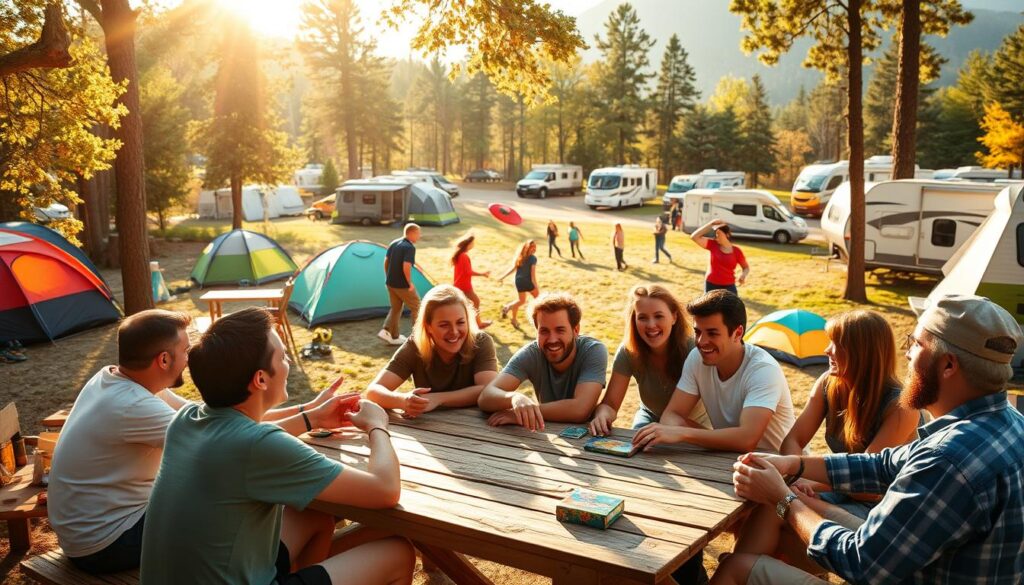
Potluck dinners are great for meeting new people. Just post a notice or talk to your neighbors. Everyone brings something, and it’s a great way to start conversations.
Game nights are also great for building connections. Bring games that everyone can enjoy. Focus on having fun, not winning.
For potlucks and game nights, keep it simple and welcoming. Avoid making it too complicated. We want everyone to feel comfortable joining in.
Planning Outdoor Adventures Together
Outdoor adventures are perfect for RV lovers. Plan hikes, fishing trips, or tours. These activities create lasting memories and bonds.
Make sure everyone can join in. Offer different activities for all skill levels. This way, everyone feels included.
Planning is a social activity too. Discuss routes and share equipment. This helps build friendships before the adventure starts.
Volunteering for Community Projects
Volunteering helps us bond while doing good. Help with campground maintenance or local projects. It’s a great way to meet others while making a difference.
Many campgrounds need volunteers. Talk to management to find out how you can help. It’s good for the campground and our social lives.
Local service projects are also great. Join beach cleanups or help at food banks. These attract people who share our values.
Choose volunteer projects that interest you. This makes the work fun and builds real connections. It’s about shared values and goals.
Navigating Socializing in Busy Areas
When we’re in crowded RV parks, socializing needs a careful plan. Popular spots during peak times can be too much, with lots of RVs and noise. Making connections in the RV community is tough with all the distractions.
Being smart about when and where we socialize helps. We need to understand the mood around us. Some people love the buzz, while others prefer quieter spots.
Finding Quiet Spots for Conversations
Good talks don’t happen in the chaos. We should look for quiet spots in busy places. The best conversations often occur away from the main hub of activity.
Here are ways to find quiet spots:
- Early morning walks around the campground perimeter when most people are sleeping
- Late afternoon strolls to nearby parks or nature trails away from RV traffic
- Quiet corners near campground amenities like laundry facilities or dog parks
- Picnic areas that are slightly removed from the main camping loops
- Community fire pits during off-peak hours when crowds have dispersed
If a spot gets too loud, suggest moving. Most people will appreciate the effort to find a better place.
Dealing with Different Social Dynamics
Busy campgrounds have their own social rules. The lively atmosphere can make some people more outgoing. Others might feel too much and want to be alone.
Reading social cues becomes critical here. Watch body language and how people talk to see if they’re up for a chat. If they seem busy, it’s best to wait.
The art of conversation is not about talking at people, but about creating space for genuine connection to happen naturally.
Different places need different social styles:
- Festival-style campgrounds with events are for group fun
- Transit-heavy areas near highways are for quick chats
- Popular tourist spots need patience as people see sights
- Rally gatherings work best with planned activities
Respecting Personal Boundaries
Personal space is key in crowded places. We must respect others’ privacy, even when it’s hard. Respecting personal boundaries builds trust for future chats.
Signs someone needs space include avoiding eye contact or giving short answers. If they say they’re busy, it’s okay to try again later.
Practical ways to respect boundaries include:
- Keeping conversations at a good volume
- Not staying too long at someone’s site
- Following quiet hours more strictly
- Asking before joining group activities
- Being kind to families who need routine
It’s also important to know our own limits. It’s okay to step away when we need some time. Telling others about our needs helps them respect our space too.
Being friendly but not overwhelming is key. With the right approach, even the busiest places can help us make friends.
Communicating While On the Move
When your home is an RV, staying in touch with friends is key. RVing opens up chances for friendship on the go. But, we must make an effort to keep in touch. Unlike regular friendships, RV friendships need us to plan to stay in touch.
Today, we have many ways to stay connected thanks to technology. But, the old ways of keeping in touch are just as good. It’s all about being consistent and caring.
Staying Connected with Temporary Friends
Every time you stop at a campground, you might make new friends. But, these friendships can fade if we don’t follow up. The secret to keeping these friendships alive is to act fast.
Get their contact info right away if you click with someone. Don’t wait until you’re leaving. Get their phone number, email, and social media.
Plan to meet up again when you’re talking. Talk about where you’ll go next and rallies you might attend. Having plans makes it easier to stay in touch.
The most beautiful discovery true friends make is that they can grow separately without growing apart.
Keep track of your new friends. Use a notebook or digital file for names, contact info, and what you have in common. This helps you remember who to reach out to later.
Using Tech to Keep in Touch
Today, we have many ways to stay in touch with friendship on the go. The hard part is picking the right method for each friend. And using it regularly.
Texting is great for quick updates and sharing photos. It’s easy and doesn’t take up much time. Most RVers like texting better than calling.
Video calls are better for real talks. They let you see each other’s faces. This makes your friendship feel closer.
| Communication Method | Best For | Frequency | Personal Connection Level |
|---|---|---|---|
| Text Messages | Quick updates, photo sharing | Weekly | Medium |
| Video Calls | Meaningful conversations | Monthly | High |
| Social Media | Staying updated on travels | Daily viewing | Low to Medium |
| Detailed updates, planning | Bi-weekly | Medium to High |
Social media helps you keep up with friends’ travels. Liking and commenting on posts shows you care. It keeps you connected to their adventures.
Strategies for Maintaining Long-Distance Friendships
History shows us that distance doesn’t have to end friendships. Rachel Carson and Dorothy Freeman kept their friendship alive with letters and calls. This shows that making an effort can keep friendships strong, even when you’re far apart.
Make plans to talk regularly. Set reminders to reach out to friends. Being consistent is more important than how often you talk.
Share your travels with your friends. They love hearing about your adventures. Sharing your life with them keeps your friendship exciting.
Plan to meet up at rallies or festivals. Having something to look forward to keeps your friendship exciting. It gives you a goal to work towards.
Always be the one to reach out first. Don’t wait for others to contact you. Many friendships fade because no one makes the first move. Be proactive and enjoy the positive responses you get.
Remember important dates and events in your friends’ lives. Send birthday wishes and ask about their family. These personal touches show you value the friendship.
The effort we put into keeping in touch can turn a brief meeting into a lasting friendship. Every message and call you make is an investment in your RV community. It makes RV life even more rewarding.
Reflecting on Your RV Friendship Journey
Our travels on the road make lasting memories with the people we meet. Taking time to think about these connections helps us grow. It makes our friendships more meaningful when we appreciate what we’ve learned.
Documenting Your Experiences
Keep a travel journal or photo album of the friends we make. Write down names, where we met, and special moments. These records help us remember our friends’ lives and interests.
Digital apps can store contact info and photos in one place. Our documentation is a treasure of memories we can look back on years later.
Learning from Friendships Made on the Road
Each friendship teaches us something new about connecting with others. We learn which activities create strong bonds and which conversation starters work best. Some approaches succeed, while others don’t meet our hopes.
This honest assessment helps us improve our social skills for the future. Building relationships in RV lifestyle gets better with practice and effort.
Setting Goals for Future Connections
Plan ways to make our social experiences better. We might attend more rallies or organize activities at the campground. Setting reunion dates with friends keeps those connections alive.
Our friendship goals give direction to our future travels. They create excitement for new adventures with both old and new friends.