We love the freedom of RV adventures. But, there’s a hidden danger we must face. Carbon monoxide is called the “silent killer” because it has no color, smell, or taste. It can cause serious illness, unconsciousness, and even death without warning.
The recent tragic case of Gerry Kennedy shows how real these risks are. This father of five died from suspected carbon monoxide poisoning while sleeping in his campervan in January 2025. His story reminds us to not ignore these dangers in our mobile homes.
Our RV experiences should be filled with wonderful memories, not risks. The small space of RVs makes us more vulnerable to gas buildup. But, we can stay safe with the right knowledge and safety steps.
This guide will teach us about the risks and how to spot warning signs. We’ll learn how to prevent and what to do in emergencies. With the right steps, we can travel safely and keep our loved ones safe.
Key Takeaways
- Carbon monoxide is a colorless, odorless gas that can be deadly in confined RV spaces
- Recent tragic cases highlight the real dangers RV travelers face from gas poisoning
- Proper detector placement and regular maintenance are essential for safety
- Understanding warning signs can save lives during RV adventures
- Emergency procedures and prevention strategies significantly reduce risks
- Regular ventilation and appliance checks help prevent dangerous gas buildup
Understanding Carbon Monoxide and Its Risks
Carbon monoxide is a big threat to RV travelers. We can’t see, smell, or taste it. This silent killer can build up in our RVs without warning. Learning about carbon monoxide is key to keeping our families safe on every trip.
Our small living spaces make us more at risk. Poor air flow and many fuel-burning appliances can lead to gas buildup. It’s important to know that RVs have many sources of this deadly gas.
What is Carbon Monoxide?
Carbon monoxide happens when fuels burn without enough oxygen. It’s a colorless, odorless gas from burning propane, gasoline, wood, or charcoal. We can’t smell carbon monoxide, unlike propane, which smells like rotten eggs for safety.
The gas is the same density as air. It spreads evenly in our RVs. This means it can reach dangerous levels anywhere, from floor to ceiling.
Why is Carbon Monoxide Dangerous?
Carbon monoxide kills by taking the place of oxygen in our blood. It binds to hemoglobin better than oxygen. Our body tissues stop getting the oxygen they need, leading to organ failure and death.
The danger grows fast in places like RVs. Even a little can be deadly over time. We’re most at risk when we’re sleeping because we don’t notice symptoms.
Children and the elderly are more at risk. Their bodies react differently to the gas, making them more likely to get poisoned at lower levels.
Common Sources of Carbon Monoxide in RVs
Knowing every source of carbon monoxide is key to safety in RVs. Our propane stoves, ovens, and heaters are big culprits. They can be dangerous if they don’t work right or if there’s no air flow.
Generators are another big risk, mainly if we put them too close to our RV or use them inside. Car engines also produce carbon monoxide, which is a problem when we idle near our living area.
Water heaters, furnaces, and refrigerators that use propane can also be sources. Even portable camping gear like charcoal grills or camp stoves inside during bad weather are dangers.
Blocked exhaust vents are a big danger. Snow, debris, or even bird nests can block these vents. This lets carbon monoxide build up in our living space.
Recognizing Symptoms of Carbon Monoxide Poisoning
We need to watch for signs of dangerous carbon monoxide in our RV. It’s hard to spot symptoms because they can look like normal sicknesses. Many RV users ignore these signs, not knowing they could be in danger.
Knowing how fast symptoms can get worse is key. A small problem can quickly turn into a big health issue, even when we’re asleep.
Early Warning Signs
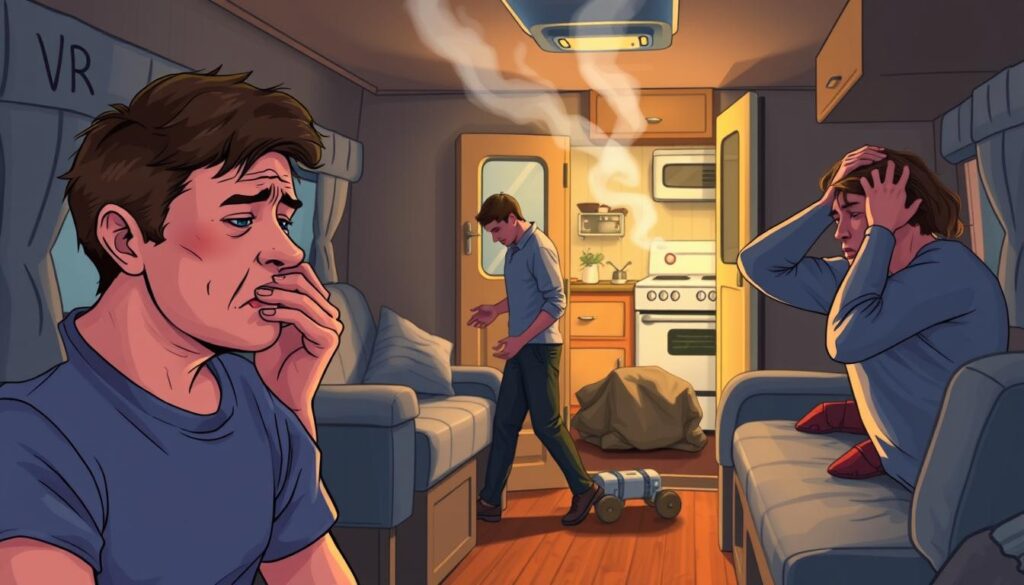
The first signs of carbon monoxide poisoning feel like usual sicknesses. We might get a persistent headache that doesn’t go away with usual treatments. This headache is different, feeling more intense and constant.
Other early signs include:
- Weakness and fatigue that doesn’t make sense
- Dizziness or feeling like we’re going to pass out
- Nausea without a clear reason
- Shallow breathing or feeling like we can’t catch our breath
- Disorientation or feeling confused
If many people in our group start showing these signs at once, it’s a big warning. This is a sign of poisoning, not something contagious.
Advanced Warning Signals
As carbon monoxide levels get higher, symptoms get worse. We might see blurry vision or trouble focusing. Vomiting and fainting can also happen.
At higher levels, people might seem drunk. They could have loss of coordination and slurred speech. These signs mean we need to act fast.
“Children and babies are often more at risk of carbon monoxide poisoning. This is because they are smaller and breathe faster.”
We need to watch out for kids and babies more. They might show symptoms sooner and worse than adults.
Emergency Medical Situations
Get help right away if someone has severe symptoms like losing consciousness, chest pain, or trouble breathing. Don’t wait to see if they get better on their own.
Call emergency services if you see:
- Someone becoming unconscious or unresponsive
- Severe confusion or trouble thinking
- Chest pain or an irregular heartbeat
- Seizures or convulsions
Trust our instincts – if something feels off and we’re showing these symptoms in our RV, get out and get help. Taking symptoms seriously is key to preventing carbon monoxide poisoning.
Remember, fresh air is the first step for carbon monoxide exposure. Get everyone outside and call for help.
Importance of Carbon Monoxide Detectors
Quality carbon monoxide detectors protect our families from danger. They are key for RV safety. These devices are our first line of defense against a silent killer we can’t see, smell, or taste.
Many RVs have detectors installed, but they might not work. Some owners might have turned off sensitive units due to false alarms. We must take care of our detectors as we do our brakes or tires.
“A working carbon monoxide detector is not just a choice—it’s life insurance for your family on wheels.”
Types of Detectors for RVs
We have many choices for a CO detector for RV. Battery-powered units are flexible and work during power outages. They are easy to install and keep up.
Hardwired detectors connect to our RV’s electrical system. They keep working but might fail in electrical issues. Some models use both power sources for better reliability.
Digital display detectors show CO levels in parts per million. This helps us know when levels are getting dangerous. Smart detectors can send alerts to our phones when we’re away.
How to Choose the Right Detector
The Kidde Carbon Monoxide Detector is a top pick for RV owners. Look for units with UL certification and long battery life. The detector should have a loud alarm to wake sleeping passengers.
Choose detectors with peak level memory. This shows the highest CO reading. It helps us spot problems even after levels drop.
Go for RV carbon monoxide alarms made for mobile use. These handle vibration and temperature changes better. Look for detectors with test buttons and low battery warnings.
Placement and Maintenance Tips
Put detectors at knee height, about 15 inches from the floor. CO spreads evenly, so detectors work well in any spot. Avoid areas with vents, fans, or cooking to prevent false alarms.
We need at least one detector in the sleeping area and another near fuel-burning appliances. Larger RVs need more units. Never install detectors in bathrooms or storage compartments where humidity might cause problems.
Always have fresh batteries for detectors. Replace them every six months, even if the low battery warning hasn’t sounded. Test detectors monthly and replace the whole unit every seven years, no matter the condition.
Keep a log of when you test and replace batteries. This simple step ensures we never forget this life-saving maintenance task. Clean detectors with a soft brush to remove dust that might affect sensors.
Best Practices for RV Operation
Managing an RV well means focusing on three key areas. These help keep our living space safe from harmful carbon monoxide. By following these steps, we add layers of protection against carbon monoxide.
Understanding how carbon monoxide forms and spreads is key. Fresh air circulation is our strongest tool against dangerous gas levels. We must also make sure our heating systems and generators work right all the time.
Proper Ventilation Techniques
Our RV’s ventilation system needs constant care for safe air. We should keep roof vents open, even in cold weather. This lets fresh air in and pushes stale air out.
Opening windows helps air move better. Even a small crack in opposing windows helps keep carbon monoxide out. We should open windows on both sides of our RV for best airflow.
Exhaust fans are key in removing bad air from our RV. We should run bathroom and kitchen fans when using gas appliances. These fans help get dangerous gases out before they harm us.
We must never block air vents or intake openings around our RV. Blocked vents stop air from moving and can cause carbon monoxide to build up fast. We should check these openings often to make sure they’re clear.
Safe Use of Heating Appliances
Our heating appliances need careful use to avoid making carbon monoxide. We should have all gas appliances checked yearly by experts. This check makes sure they burn fuel right and finds problems early.
Furnace filters need to be changed often to keep air flowing. Dirty filters block air and can cause fuel to burn badly. We should check filters every month and change them as the maker says.
For extra heat, we should use indoor space heaters. Never use outdoor heaters, grills, or camp stoves inside our RV for warmth. These can make a lot of carbon monoxide in a closed space.
We must keep heating appliance exhaust systems clear. Bird nests, spider webs, or debris can block pipes and let carbon monoxide back into our RV. Regular checks help us find and remove these dangers.
Guidelines for Generators and Fuel Use
Where we place our generator is very important to avoid carbon monoxide danger. We should put our generator at least 20 feet away from our RV and other campers. Wind direction affects where exhaust gases go, so we must place it right.
Never let our RV’s engine run all night for heat. This has caused many deaths from carbon monoxide in RVs. Our engine exhaust can get into our living space through many openings, making it deadly while we sleep.
Fuel-burning appliances need good air to work safely. We should never use portable generators inside our RV or in tight spaces like storage areas. Even “quiet” generators can make a lot of carbon monoxide.
Keeping our generator in good shape is key. We should follow the maker’s service schedule and change air filters as needed. A well-maintained generator burns fuel better and makes fewer harmful gases.
| Safety Practice | Frequency | Key Benefits | Warning Signs |
|---|---|---|---|
| Open roof vents and windows | Always when occupied | Prevents gas accumulation | Stuffy air, condensation |
| Inspect heating appliances | Annually | Ensures proper combustion | Yellow flames, soot buildup |
| Check exhaust systems | Monthly | Prevents blockages | Visible obstructions, rust |
| Position generator properly | Every use | Keeps exhaust away from RV | Exhaust smell inside RV |
We can’t skip these safety steps, no matter the weather or how easy it is. Good ventilation and using appliances right save lives by stopping carbon monoxide poisoning. Sticking to these rules keeps everyone in our RV safe and makes camping better for all.
Regular Maintenance and Safety Checks
Setting up a good maintenance plan is key to safe camping practices in your RV. We need to make schedules for all fuel systems and safety gear. This helps avoid carbon monoxide issues and keeps our RV running well on trips.
Regular checks keep our families and others safe. We can’t skip maintenance or delay it. Regular checks save lives and avoid expensive fixes later.
Inspecting Appliances and Equipment
It’s important to check our propane tanks and appliances often. Visual checks spot problems early. Look for damage on tanks, valves, hoses, and regulators.
Flame colors tell us if appliances are working right. Blue flames mean they’re good. Yellow or red flames mean trouble. We should test each appliance and note any issues.
Make sure connections are tight to avoid leaks. Loose spots are risky. A soap solution shows leaks by bubbling at connections.
Regular Exhaust System Checks
Getting our exhaust system checked by pros gives us peace of mind. We should get annual checks from RV techs who know what they’re doing. They catch things we might miss.
Clean exhaust pipes and vents to keep air flowing. Debris or corrosion can block airflow and cause backflow. Clear these out right away if you find them.
Don’t ignore strange smells or sounds from our heating. These signs often mean carbon monoxide is a problem. Getting it checked by a pro can prevent big issues.
Keeping Combustion Areas Clean
Clean combustion areas help fuel burn better and cut down on carbon monoxide. Remove dust, debris, and spider webs from burners often. These things mess with air and fuel mix.
Keep air intakes around appliances clear. Blocked air makes appliances work harder and burn fuel badly. Simple cleaning stops big problems that are unsafe.
Keep storage areas near appliances tidy and organized. Don’t store flammable things near heat. Keep it clean to stay safe and make your RV last longer.
Safe Cooking Practices in Your RV
Our RV’s small space makes cooking safety very important. Kitchen appliances work harder here. We spend a lot of time cooking in this tight space. Knowing gas appliance safety in RV settings helps us cook safely and enjoy our meals.
Our RV kitchens are very active. Every time we cook, we have a chance to practice safe habits. It’s important to know the risks and take steps to avoid them.
Risks Associated with Cooking Appliances
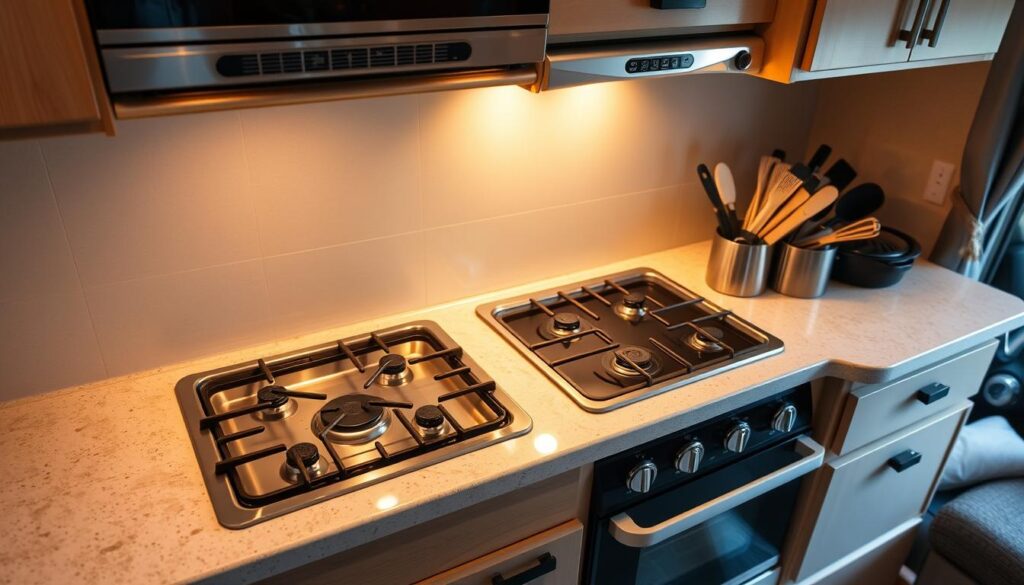
Propane stoves and ovens can be risky if not used right. Incomplete combustion happens when they don’t get enough oxygen. This leads to dangerous carbon monoxide instead of safe carbon dioxide.
Dirty burners and blocked air intakes are common problems. Food spills, grease, and dust can block airflow. This makes our stoves burn poorly, producing more carbon monoxide.
We also face risks from:
- Worn or damaged gas connections that create incomplete seals
- Improper flame adjustment leading to yellow or orange flames
- Using outdoor cooking equipment inside our RV
- Operating appliances in poorly ventilated conditions
Recommendations for Ventilation While Cooking
Proper ventilation is key to avoiding carbon monoxide buildup. Always turn on the range hood fan before cooking. This creates air circulation that removes harmful byproducts.
Opening windows and roof vents helps air flow. Even a little bit of fresh air makes a big difference. We should open at least two vents or windows for good airflow.
Consider these ventilation strategies:
- Run exhaust fans for at least 15 minutes after cooking
- Open opposing windows to create air circulation
- Use ceiling fans to help move air throughout the RV
- Cook outside when weather permits to eliminate indoor risks entirely
Cooking outside reduces moisture, odors, and carbon monoxide risks. It also keeps our RV cooler in warm weather.
Tips for Safe Use of Gas Stoves
Watching the flame color tells us if we’re cooking safely. Blue flames mean we’re burning gas right. Yellow or orange flames mean we’re not and could be producing carbon monoxide.
Check your burners often for the right flame. Each burner should have steady, blue flames. Cleaning the burner ports with a small wire or toothpick helps keep flames good.
Essential safety practices include:
- Never leave cooking appliances unattended while in use
- Keep flammable materials away from open flames
- Turn off gas valves completely when finished cooking
- Check gas connections periodically for leaks using soapy water
- Replace worn or damaged components immediately
We must never use charcoal grills, portable camp stoves, or other outdoor cooking equipment inside our RV. These devices lack proper ventilation systems and can quickly create lethal carbon monoxide levels in our confined space.
Remember that even properly functioning gas appliances produce some carbon monoxide, making adequate ventilation essential for safe RV cooking.
Regular maintenance keeps our cooking appliances safe and efficient. Clean burner grates, drip pans, and surfaces often to prevent grease buildup that can affect proper combustion.
Camping and Carbon Monoxide Safety
When we camp, we need to watch out for things outside our RV that can affect carbon monoxide levels. The place we camp is very important for keeping us safe from this deadly gas. We must think about more than just our RV’s systems. We need to look at the whole campsite for risks.
Weather, other vehicles, and how the campsite is set up all affect carbon monoxide levels. Snow can block exhaust outlets, leading to dangerous fumes in our RV. Strong winds can blow carbon monoxide back towards us instead of away.
Choosing Safe Campsite Locations
We should pick our campsites carefully before nightfall. Wind patterns are key in how exhaust fumes spread. We want to park our RV where winds carry fumes away from us.
Stay away from low-lying areas where carbon monoxide can get trapped. These spots don’t let gases out well. Instead, look for higher places with better air flow.
Think about how close other RVs and their generators are. Vehicle fumes from nearby campers can get into our space if we’re too close. Keep a safe distance from other vehicles’ exhaust and generators.
Avoiding Idling Vehicles
We should never let our vehicle or generators run in tight or semi-tight spaces. This includes covered areas, under awnings, or spots with bad air flow. Even outside, poor air flow can be dangerous.
Be careful about how long we run our generator and where we put it. Place generators downwind from our RV and others. Talking to other campers about when you’re running your generator helps keep everyone safe.
Winter camping is extra careful because snow can trap exhaust fumes. Clear snow from exhaust outlets often and make sure air flows well around our RV.
Group Campfire Safety Considerations
Campfires can make carbon monoxide, more so if they burn wrong. Keep our RV far from any fires. Poor air flow around campfires can lead to dangerous gas buildup.
Make sure campfires burn clean with dry, seasoned wood. Wet or green wood makes more carbon monoxide. Never burn trash, plastic, or treated materials because they make toxic fumes.
Try to park our RV upwind from campfires. This keeps smoke and carbon monoxide away from us. Watch for wind direction changes in the evening.
| Campsite Factor | Safety Risk | Prevention Strategy | Action Required |
|---|---|---|---|
| Snow Buildup | Blocked exhaust outlets | Regular clearing | Check outlets daily |
| Strong Winds | Fume redirection | Strategic positioning | Monitor wind patterns |
| Nearby Vehicles | Exhaust contamination | Maintain distance | Communicate with neighbors |
| Low-lying Areas | Gas accumulation | Choose elevated spots | Select proper campsite |
Safe camping is more than just our RV. We must watch out for things outside that could be dangerous. By picking the right campsite, managing our vehicles well, and staying alert, we make camping safer for everyone.
Educating Passengers and Guests
Teaching others about carbon monoxide safety makes them part of our safety team. Sharing what we know helps keep everyone safe in our RV. It’s key because poisoning symptoms can look like other illnesses.
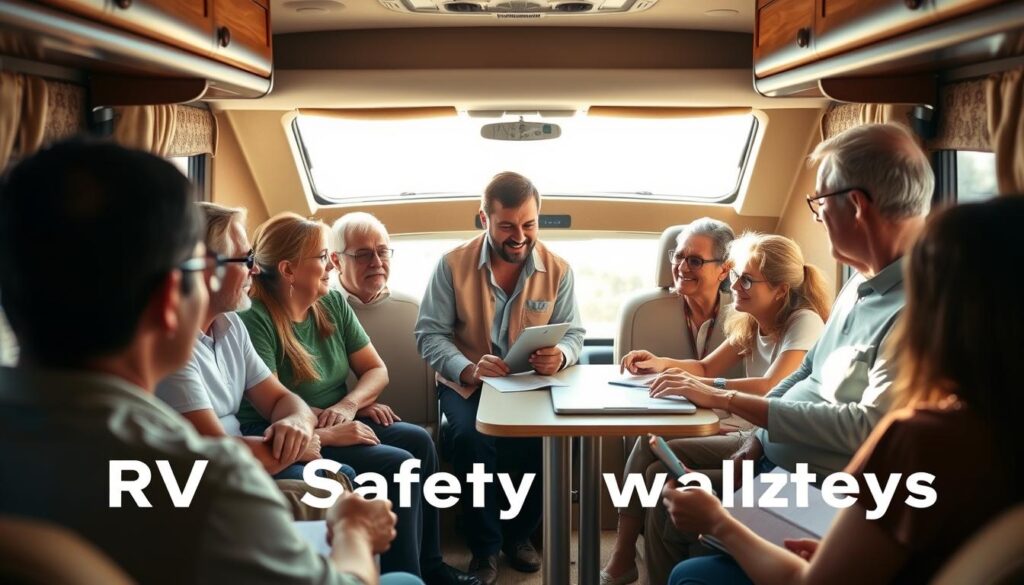
Discussing Carbon Monoxide Risks
We should talk about carbon monoxide dangers before we travel. Not during an emergency. Early signs of poisoning can look like food poisoning or the flu.
Children and babies are more at risk than adults. Their bodies can’t handle toxins as well. We must tell families with young kids about this.
We need to explain that carbon monoxide is invisible. It doesn’t smell or show up like smoke. This makes learning about it our best defense.
Sharing Safety Procedures
Everyone should know where our carbon monoxide detectors are. We should show them how to test them. This helps them remember in stressful times.
We should plan evacuation routes and meeting spots outside the RV. Quick action is key when poisoning happens.
Assigning safety tasks to each person helps. This way, we all play a part in staying safe. RV safety tips work best when everyone knows their role.
| Safety Role | Responsibility | Frequency | Who Should Do It |
|---|---|---|---|
| Detector Testing | Press test button and verify alarm sound | Weekly | Designated adult |
| Ventilation Check | Ensure vents are clear and functioning | Daily | All passengers |
| Symptom Monitoring | Watch for signs of CO poisoning in group | Continuous | Everyone |
| Emergency Response | Lead evacuation if detector sounds | As needed | Trip leader |
Encouraging Immediate Action on Symptoms
We must tell everyone not to ignore symptoms of carbon monoxide poisoning. Quick action is needed if anyone feels headaches, dizziness, or nausea. These signs mean we need fresh air and medical help.
It’s important to feel okay about reporting symptoms. It’s better to be safe than sorry with carbon monoxide.
Teaching people to spot poisoning symptoms helps us stay alert. If symptoms get worse fast, we need to get out and see a doctor right away.
By following these RV safety tips, we make our RV a safer place for everyone. Sharing knowledge and setting clear rules helps us all stay safe.
Emergency Preparedness
Being ready for emergencies can save lives when carbon monoxide hits our RV. We must plan ahead and have a solid plan ready. Every second counts when carbon monoxide poisoning prevention becomes urgent.
Having the right supplies and knowing what to do helps us stay calm in a crisis. We should prepare before an emergency, not after. Our family’s safety depends on being ready and practicing.
Creating a Carbon Monoxide Emergency Plan
Our emergency plan should be simple and easy to remember. We need to write it down and go over it with everyone. Practice makes perfect, when lives are at stake.
The plan should include:
- Immediate shutdown procedures for all gas appliances
- Quick ventilation steps to clear the air
- Evacuation routes from the RV
- Emergency contact numbers and nearest medical facilities
- Meeting points outside the RV
We should practice our emergency procedures often, like fire drills. This makes our response automatic, not something we panic about.
Essential Supplies to Have on Hand
Our emergency supply kit should be easy to find and well-stocked. We should check these supplies before every trip and replace items as needed. Being prepared with the right tools can save precious time during an emergency.
Essential emergency supplies include:
- Battery-powered radio for emergency communications
- Flashlights with extra batteries
- First aid kit with basic medical supplies
- Emergency contact list with medical facility locations
- Backup carbon monoxide detector
We should also keep emergency numbers in our phones. This includes poison control, local emergency services, and our family doctor’s contact information.
Steps to Take in Case of Exposure
If we suspect carbon monoxide exposure, we must act fast. The situation can become dangerous in just a few minutes, so speed is critical. Our response needs to be quick and decisive.
“If carbon monoxide poisoning is suspected, turn off all gas appliances, open windows and doors immediately, get outside as quickly as possible, and get prompt medical advice.”
Here are the exact steps we should follow:
- Turn off all gas appliances immediately
- Open all windows and doors for maximum ventilation
- Get everyone outside to fresh air right away
- Call for medical help if anyone shows symptoms
- Do not re-enter the RV until it’s been properly ventilated
We should never ignore symptoms or assume they’ll go away on their own. Carbon monoxide poisoning prevention requires taking every warning sign seriously. Getting medical attention quickly can prevent serious health problems or save lives.
After an incident, we need to find and fix the carbon monoxide source before using the RV again. This might mean calling a professional technician to inspect our appliances and ventilation systems.
Resources and Further Reading
Learning about carbon monoxide dangers is key to keeping our families safe while RVing. We always look for the latest RV safety tips and best practices. This helps us make smart choices for our safety on the road.
Connecting with experts and using reliable resources is important for safe RV trips. We suggest that other RVers check out these helpful sources of info and advice.
Government Guidelines and Official Resources
Government agencies give us the most up-to-date info on carbon monoxide safety. The Centers for Disease Control and Prevention (CDC) has great guidelines on preventing carbon monoxide poisoning. These guidelines are perfect for our RV lifestyle.
The Environmental Protection Agency (EPA) has safety standards and recommendations for carbon monoxide detectors and systems. Their advice helps us know how to install and maintain them right.
The Mayo Clinic is a top medical resource for carbon monoxide poisoning symptoms and treatments. We recommend saving their carbon monoxide info page for easy access during our travels.
“Carbon monoxide poisoning can be very dangerous. The gas is odorless and colorless, so it’s hard to spot without the right tools.”
Professional Organizations and Online Communities
The Recreation Vehicle Industry Association (RVIA) is our go-to for safety guidelines and maintenance tips. Their certification programs and safety standards help us know what to look for in quality RV equipment and services.
Online RV communities like iRV2 offer great learning chances. These forums let experienced RVers share RV safety tips and advice based on their travels.
Local RV service centers and certified technicians give us hands-on help. We should build relationships with these experts for personalized advice for our RVs.
Professional RV technicians are key for complex maintenance tasks. They can spot carbon monoxide risks we might miss during checks.
Educational Publications and Safety Guides
There are many books and publications on RV safety and maintenance. “The Complete Guide to RV Safety” covers safety protocols, including carbon monoxide prevention.
RV magazines like Motorhome Magazine and Trailer Life publish safety articles and reviews. They keep us updated on the latest safety equipment and techniques.
The National Institute for Occupational Safety and Health (NIOSH) has technical guides on carbon monoxide detection and prevention. These guides offer scientific support for our safety practices.
We also suggest subscribing to RV safety newsletters and following RV safety blogs. These sources give us the latest RV safety tips and advice.
Conclusion: Making Safety a Priority in Your RV
Our journey shows us safety is key in every RV adventure. We can keep ourselves and our families safe with smart choices and planning.
Essential Safety Reminders
Carbon monoxide detectors are lifesavers if used right. Check your heating, generators, and cooking gear often. Good air flow is our best shield against this silent danger.
Staying Informed and Alert
Learning about RV safety grows with time and education. Keep up with new safety tips and share them with others. Even experienced RVers can learn more about carbon monoxide risks.
Your Next Steps for Safe Travels
First, check your carbon monoxide detector batteries today. Make sure to get regular checks for all fuel-burning appliances in your RV. Also, have a plan for emergencies with your travel friends. Always listen to your body and don’t skip safety checks.
Our RV trips should be filled with great memories, not danger. By following these steps, we can travel safely. Tell other RVers about these tips and let’s all stay safe together. Safe travels are ahead when we put safety first.