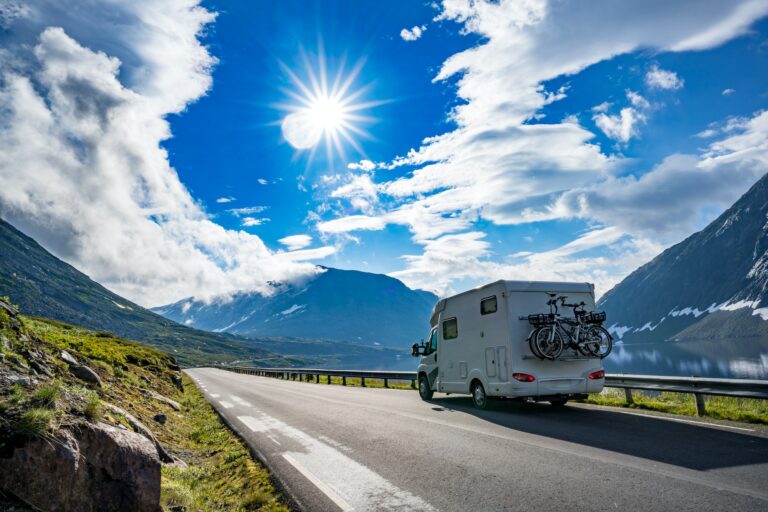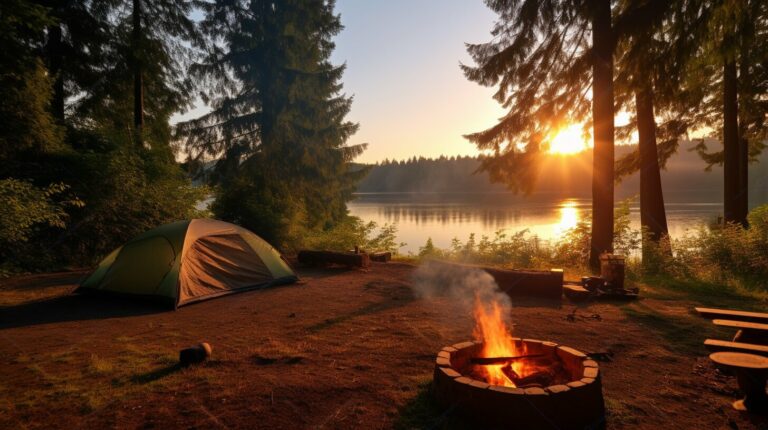
RV fans all over America love the freedom of off-grid camping in the wild. This trend lets people enjoy nature alone. But, solo trips in the wilderness need careful planning.
Going to places without hookups is thrilling but also a bit scary. The beauty of these spots comes with its own set of dangers for solo travelers. Proper preparation helps turn these dangers into things you can handle.
In this guide, we’ll share top boondocking safety tips from seasoned solo campers. You’ll learn about getting ready before you go and what to do in emergencies. Our aim is to help you enjoy the wild while staying safe and calm.
Key Takeaways
- Solo boondocking needs good planning and a way to stay in touch
- Remote camping is free but you must be extra careful
- Must-have gear includes ways to talk to others and emergency stuff
- Planning ahead makes off-grid trips safer
- Getting ready helps turn big challenges into smaller ones
- Knowing what to do in emergencies is key for solo travelers
Understand the Boondocking Environment
The wilderness calls to many adventurous souls. But, to boondock safely, we need to know what we’re getting into. This knowledge helps us make smart choices for our camping trips.
Boondocking is different from staying in campgrounds. It’s free but requires careful planning. Knowing how to stay safe is key.
What is Boondocking?
Boondocking means camping without hookups or amenities. We use our vehicle and supplies for everything. This way, we don’t need electricity, water, or sewer like campgrounds do.
It can be as simple as parking in a Walmart lot or as wild as camping in the wilderness. We make our own power, manage our water, and handle waste on our own. It’s a challenge but also very rewarding.
Many choose boondocking for the savings and freedom. We can go places big RVs can’t. It connects us with nature and tests our skills.
Types of Boondocking Locations
There are many boondocking places, each with its own rules and beauty. Knowing these helps us prepare for our adventures.
- Bureau of Land Management (BLM) lands – Offer 14-day stays with minimal restrictions
- National Forest dispersed camping – Provide scenic wilderness experiences with basic regulations
- State trust lands – Require permits but offer excellent remote camping opportunities
- Private property – Include farms, ranches, and businesses allowing overnight parking
- Urban boondocking – Encompasses parking lots, rest areas, and city-approved locations
Each place needs its own plan. BLM lands might need high-clearance vehicles, while city spots need safety tips. Always check the rules before you go.
Potential Risks to Consider
Knowing the risks helps us stay safe. Camping in remote areas can be tough without help nearby.
Isolation and communication challenges are big risks. Cell phones often don’t work in these areas. We might be far from help.
Preparation is key to safe boondocking, not fear. Knowing the risks helps us avoid them.
Weather is another big risk. Storms, cold, or heat can be dangerous. Always watch the weather forecast and be ready for changes.
Wildlife can also be a problem. Animals like bears and mountain lions might visit. Keeping food safe and being aware helps avoid trouble.
Car troubles are serious in remote areas. A small problem can leave us stranded. Regular car checks and emergency kits are essential.
Security is important too. While most boondockers are friendly, some areas can be risky. We need to be careful but also friendly when meeting strangers.
Preparing Your Vehicle for Boondocking
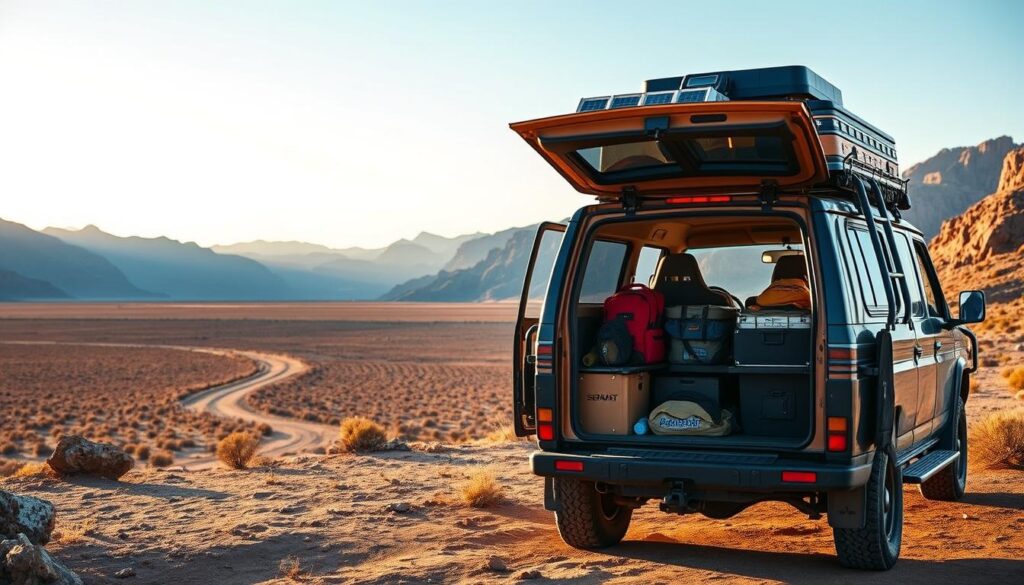
Before you head into remote areas alone, make sure your vehicle is ready. It needs to be safe and self-sufficient. Your vehicle is like a mobile fortress, a communication hub, and an emergency shelter all in one.
For solo boondocking, having backup plans is key. You need extra power, water, communication, and safety. This way, you can face unexpected challenges with confidence.
Essential Maintenance Checks
Start with a thorough pre-trip maintenance check. Check your battery system, including starter and house batteries. Also, test your solar panels and charging systems.
Look over your water and waste tank systems. Check for leaks and test pumps. Make sure all connections are secure. A water system failure can be a big safety problem in remote areas.
Don’t forget to check your tires and suspension. Look at tire tread depth and sidewall condition. Check tire pressure and make sure your spare tire is good. Remote areas have rough roads that can damage tires.
Test your brakes and steering before you leave. Make sure your generator starts easily and runs well. These systems are important for moving and staying safe in isolated places.
Safety Gear to Pack
Security systems like SimpliSafe can make you feel safer when camping alone. These systems alert you to movement around your campsite. Motion sensors and door alarms create a safe area around your vehicle.
Carrying personal protection items is also important. Pepper spray should be easy to get to. Consider a personal alarm to scare off threats and get attention.
Communication devices are key safety tools. Satellite phones work where cell phones don’t. Two-way radios help you talk to others or emergency services. Emergency GPS beacons like PLBs can call for help when other ways fail.
Tracking devices add an extra layer of safety. GPS trackers let family members track your location. Some devices send messages at set times.
Camping Essentials for Safety
Having backup power solutions is important. Portable solar panels and battery banks keep your systems running. They help during cloudy days or system failures.
Water purification systems are vital for long stays. Bring water filters for backcountry use. Water purification tablets are a backup. Having different ways to treat water prevents sickness.
Emergency cooking equipment is also key. Portable camp stoves with extra fuel can cook when main systems fail. A small cookset lets you prepare meals without relying on built-in appliances.
First aid supplies should be complete and easy to find. Include prescription meds, wound care, and pain relievers. Add emergency meds like antihistamines and anti-diarrheal drugs to your kit.
Vehicle recovery equipment helps you get out of tough spots. Traction mats work in sand, mud, and snow. A portable air compressor lets you adjust tire pressure. Recovery straps and shackles help you recover or get help from others.
Fire safety equipment protects you and the environment. Bring a fire extinguisher for different fires. Include a shovel for campfires and emergencies. Fire blankets can smother small fires safely.
Tools and spare parts help with basic repairs in remote areas. Carry a basic tool kit with screwdrivers, wrenches, and pliers. Include electrical supplies like fuses, wire, and tape. Duct tape and zip ties can fix many problems temporarily.
Choosing the Right Location
Finding the perfect spot for boondocking is more than just a pretty view. We must think about safety and experience. The right location can make our trip great or risky.
Choosing wisely means doing research and thinking about safety. We need to check terrain, weather, and emergency services. These safe camping practices help us stay safe.
Best Practices for Selecting a Site
Look for sites with easy escape routes. Avoid places with only one way in, as they can be dangerous. Choose flat ground that drains well and protects from wind.
Cell phone signal is key for emergencies. Test your signal and find the nearest good spot. Stay close to main roads for safety but enjoy quiet too.
Think about local wildlife and seasons. Learn about animal behavior and recent sightings. This is part of wilderness safety tips for boondockers.
Utilizing Apps and Resources
Today’s tech helps us find great spots. Apps like iOverlander, AllStays, and Sekr give info on boondocking sites. They include user reviews and safety scores.
Read app reviews for safety tips. Look for warnings about crime, wildlife, and bad roads. Check cell service and emergency access too.
| App Name | Key Features | Safety Information | Cost |
|---|---|---|---|
| iOverlander | Global coverage, offline maps, user photos | Security ratings, recent incident reports | Free |
| AllStays | Detailed amenities, filtering options | Safety reviews, law enforcement proximity | $9.99 |
| Sekr | Hidden gems, community-driven | Member safety ratings, local insights | $4.99/month |
| Campendium | Comprehensive reviews, photos | Detailed safety assessments, tips | Free basic |
Listen to experienced boondockers for tips. Join forums and groups for safety updates.
Staying Within Regulations
Know the rules to avoid legal issues. Different places have different rules for camping. Always check before you go.
National Forests allow 14-day stays. BLM areas have different rules. Some places need permits or close for wildlife. We must follow these rules for safe camping practices.
Have backup plans for unexpected changes. Weather, closures, or safety issues might force a move. Having a plan reduces stress and keeps us safe.
Establishing Communication Plans
Creating solid communication plans is key for personal safety while boondocking. When camping alone in remote spots, having reliable ways to call for help is vital. We suggest having several ways to stay connected, even when main systems fail.
Your plan should include regular updates and emergency steps. This way, your loved ones know you’re safe while you enjoy your solo trip. It’s all about finding the right balance between safety and freedom.
Keeping in Touch with Family or Friends
Share your location and plans with trusted people to create a safety net. Give GPS coordinates, not just where you are, to help find you fast. Tell them your route, when you’ll arrive, and any other places you might go.
Pick two to three reliable contacts who know how important it is to check in. They should have your trip details, vehicle info, and emergency numbers. Teach them when to worry and what to do if you don’t check in.
Use different carriers like Verizon and T-Mobile to get better coverage. Signals can vary in remote areas. Having more than one option helps keep you connected.
Using Satellite Phones or Radios
Satellite devices are a must when cell phones don’t work. They let you communicate anywhere, making them critical for personal safety while boondocking in remote places. Look into different satellite options before you go.
Emergency GPS beacons send your location to help with a button press. They don’t allow two-way talk, but they’re lifesaving in emergencies.
Two-way radios are great for talking to others nearby. They’re also a backup when you have repeaters. Think about getting a good radio system with weather alerts and emergency channels.
| Communication Device | Coverage Area | Best Use Case | Approximate Cost |
|---|---|---|---|
| Cellular Signal Booster | Extends existing coverage | Weak signal areas | $200-$500 |
| Satellite Communicator | Global coverage | Remote locations | $300-$600 |
| Emergency GPS Beacon | Global coverage | Life-threatening emergencies | $250-$400 |
| Two-Way Radio | 5-50 mile range | Local communication | $50-$200 |
Setting a Check-In Schedule
Make a check-in plan that works for you and your contacts. Daily check-ins are good for most solo trips. But adjust based on how remote and risky your location is.
Have specific times and backup windows for check-ins. If you miss your time, have a second chance before they call for help. This saves on unnecessary rescues while keeping you safe.
Write down your plan and share it with your contacts. Include what to do in different situations, like if your gear fails or you change plans. Clear protocols eliminate confusion and keep everyone on the same page.
Always tell your contacts about any trip changes. Being flexible is key in boondocking, but safety means keeping your support network in the loop.
Staying Aware of Your Surroundings
We need to be more aware to spot dangers early. Learning how to stay safe when boondocking alone means being alert. This alertness lets us react fast to any situation.
Being a good observer is key when solo boondocking. We must notice things others miss. Every sound, movement, and change in our surroundings tells us about our safety.
Building Strong Situational Awareness
Start by checking your campsite’s perimeter often. Walk around every few hours to see if anything has changed. This keeps you in tune with your area.
Make mental maps of escape routes. Find at least two paths to leave quickly if needed. These paths should lead to main roads or places with cell phone signal.
Watching your neighbors is important for safety. Note any suspicious vehicles and unusual behavior. Trust your gut if something seems off.
Recognizing Safe Versus Unsafe Areas
Safe spots have signs of regular use by campers. Look for fire rings, well-kept roads, and responsible camping signs. These signs mean the area is safe.
Unsafe areas might be too isolated or show signs of trouble. Scattered trash, abandoned vehicles, or drug signs are big warnings. Also, be wary of places that seem too perfect but are empty during busy times.
Local wildlife can show if a place is safe or not. Normal animal activity is good. But aggressive or odd behavior might mean trouble.
Learning to Trust Your Instincts
Our instincts can warn us of danger before we realize it. If we feel uneasy, listen to that feeling. These instincts come from our brain’s quick observations.
It’s okay to leave if you feel uncomfortable. No view or campsite is worth risking your safety. Always choose safety over convenience.
Trusting your instincts means acting on your gut feelings. If something feels wrong, leave. This approach keeps solo campers safe from danger.
Safety Protocols While Settled
Setting up safety rules is key to a good solo camping trip. These boondocking safety tips help us stay safe. We need to protect ourselves in many ways.
Right when we park, we should think about safety. Every choice we make affects our safety and peace of mind.
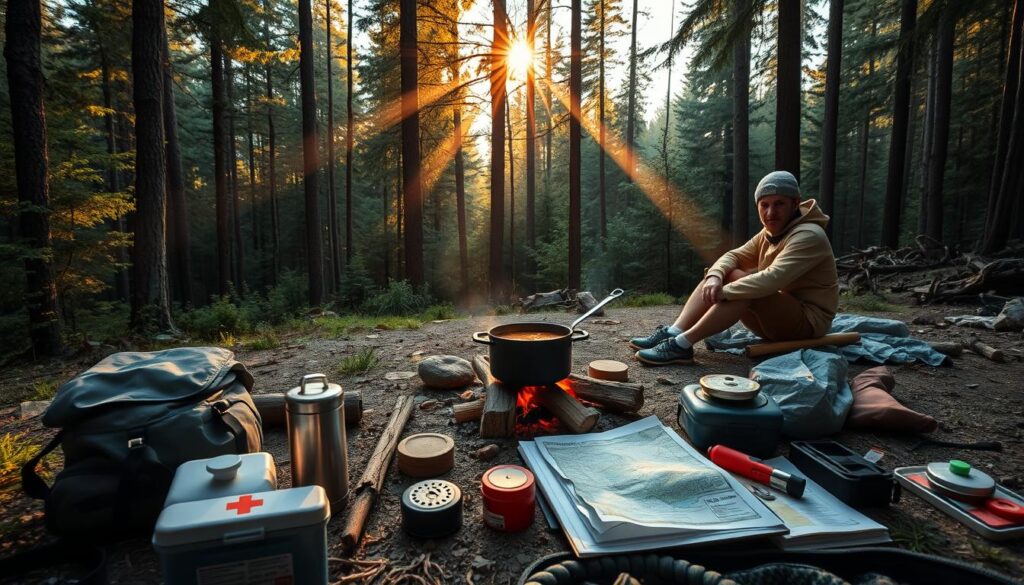
Securing Your Mobile Home
Locking up is more than just turning a key. We must lock all doors, windows, and storage. Never assume a place is safe just because it’s far away.
Keeping curtains and blinds closed is smart. It keeps us private and safe from unwanted eyes. We should close them, too, when it gets dark.
Acting like we’re not alone can keep trouble away. We can leave men’s boots outside or play radio softly. These tricks make it seem like we’re not alone without being obvious.
“The best security system is the one that prevents problems before they start. In remote camping, that means thinking like a threat and closing those gaps.”
Fire Prevention and Management
Fire safety is critical when we’re far from help. We must know local fire rules before starting a fire. These rules change with the weather and season.
Keeping an eye on our propane system is important. We should check for leaks and never ignore gas smells. Turn off propane tanks when not in use and keep areas well-ventilated.
Being careful with electricity can prevent fires. We should avoid overloading circuits and check cords for damage. Never leave charging devices alone. Keeping batteries clean and well-ventilated is also key.
| Fire Risk Source | Prevention Method | Emergency Response | Daily Check Required |
|---|---|---|---|
| Propane Leaks | Soap test connections | Shut off tank immediately | Yes |
| Electrical Overload | Monitor amp usage | Disconnect power source | Yes |
| Campfire Spread | Clear 10-foot radius | Smother with dirt/water | Before lighting |
| Cooking Accidents | Never leave unattended | Remove heat source | During use |
We should have emergency fire tools ready and in good shape. We need fire extinguishers for different fires and backup like sand for campfires.
Wildlife Safety Strategies
Knowing about wildlife is important. Prevention is better than confrontation with wild animals. Knowing their behavior helps us stay safe.
Bear safety means keeping food and scented items safe. We should use bear-proof containers or hang food high. Never leave food in the car at night in bear country.
Mountain lion safety is about being aware and ready. These cats usually avoid us but might check out our camp. We should make noise, avoid hiking alone, and never run if we see one. Maintain eye contact and look big by raising arms or a jacket.
Coyote safety is important as they get more common. We should keep food away from them and never feed wildlife. If coyotes come near, make loud noises and throw things to scare them off.
Knowing about venomous snakes is vital. We should wear closed shoes, use flashlights at night, and check before stepping. Most snake bites happen when people try to handle them, so it’s best to give them space.
Properly managing waste keeps wildlife away. We should take out all trash, bury waste far from water, and clean up after meals. A clean campsite means fewer wildlife visits.
These boondocking safety tips help us stay safe while camping. Following these rules becomes natural with practice. It greatly lowers our risk of danger during solo trips.
Emergency Preparedness
Being ready for emergencies is key when camping alone. It can make a big difference if something unexpected happens. Whether it’s a medical issue, bad weather, or car trouble, being prepared helps a lot.
When you’re far from help, you must be ready to handle emergencies on your own. Your preparation today can help you face tomorrow’s challenges better.
Building Your Complete Emergency Kit
A good emergency kit is your lifeline in remote areas. It’s smart to organize it into different sections. This way, you’re ready for any emergency.
Communication and Navigation Equipment is a must:
- Satellite communicator or GPS beacon for emergency alerts
- Two-way radios with extra batteries
- Backup GPS device and paper maps
- Emergency whistle for signaling
- Signal mirror and bright colored fabric
Survival and Shelter Supplies are vital for long emergencies:
- Emergency blankets and sleeping bags
- Waterproof matches and fire starters
- Multi-tool with knife, pliers, and screwdrivers
- Rope and duct tape for repairs
- Emergency shelter or tarp
Your Vehicle Recovery Kit helps you get back on track. Include tow straps, shovel, tire repair kit, jumper cables, and basic tools. Also, carry extra fluids like oil, coolant, and brake fluid.
Don’t forget Food and Water Supplies for at least 72 hours. Pack non-perishable foods, water purification tablets, and a portable water filter. Store extra water in multiple containers to avoid total loss if one breaks.
Essential First Aid Skills and Supplies
Medical emergencies are serious when help is far away. Knowing how to handle injuries and medical situations is important.
Your First Aid Kit should have more than basic bandages. Include prescription medications, pain relievers, antihistamines, and anti-diarrheal medicine. Add antiseptic wipes, gauze pads, medical tape, and elastic bandages for sprains.
Pack thermometer, tweezers, scissors, and instant cold packs. Include emergency medications like epinephrine auto-injectors if you have severe allergies. We recommend adding a first aid manual for reference during stressful situations.
Common Wilderness Injuries need specific treatment:
- Cuts and Scrapes: Clean thoroughly, apply antibiotic ointment, and bandage properly
- Burns: Cool with water, cover with sterile gauze, avoid ice or butter
- Sprains: Follow RICE protocol (Rest, Ice, Compression, Elevation)
- Dehydration: Drink small amounts frequently, add electrolytes if available
- Hypothermia: Warm gradually, change wet clothes, seek shelter
Learn when injuries need professional help. Severe bleeding, suspected fractures, chest pain, or trouble breathing mean you need to get help fast. Trust your instincts about serious medical situations.
Connecting with Local Emergency Services
Before you go, research local emergency services and their contact info. This saves time during emergencies when you’re stressed.
Research Before You Go by finding the nearest hospital, urgent care center, and sheriff’s department. Write down their addresses, phone numbers, and GPS coordinates. Many remote areas have limited cell service, so knowing exact locations helps emergency responders find you faster.
Contact local ranger stations or visitor centers for area-specific emergency information. They often know about seasonal hazards, recent incidents, and the best ways to get help in their region. Some areas have volunteer search and rescue teams with special knowledge of local terrain.
Emergency Contact Protocol should follow a clear sequence:
- Call 911 if you have cell service
- Use satellite communicator to send emergency alert
- Contact local sheriff or ranger station directly
- Notify your emergency contact person
- Stay put unless immediate danger requires movement
Program important numbers into your phone and write them down separately. Include poison control (1-800-222-1222), your insurance company, and roadside assistance. We suggest laminating this information to protect it from weather.
Location Information helps emergency responders reach you quickly. Know your exact GPS coordinates, nearest mile markers, and distinctive landmarks. Take photos of your campsite from different angles to help describe your location over the phone.
Practice using your emergency communication devices before you need them. Test satellite communicators, learn radio protocols, and ensure all devices are fully charged. Regular practice builds confidence and reduces response time during real emergencies.
Remember that staying safe in remote areas depends on preparation, knowledge, and quick thinking. Your emergency kit and skills are investments in your safety and peace of mind during solo boondocking adventures.
Joining Boondocking Communities
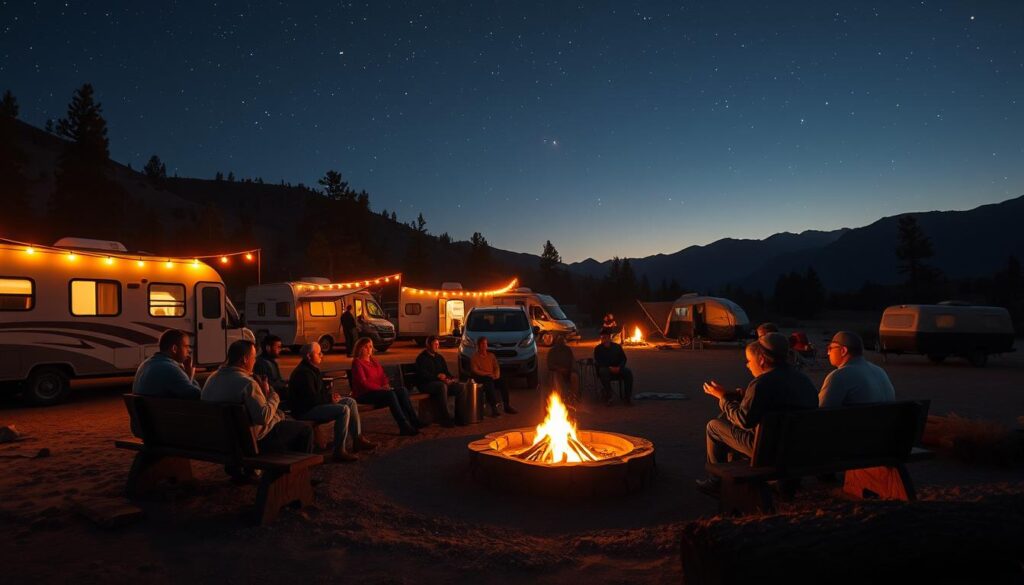
The boondocking community is more than just friends. It’s a place to find safety tips and support. When we connect with others, we get wisdom on safe camping practices. This helps us stay safe in remote places.
Benefits of Online Forums
Online forums are full of wilderness safety tips from seasoned campers. Sites like Cheaprvliving.com and Boondockers Welcome are always open. We can find out about dangers and weather before we go.
These forums also give us real-time updates. Members post about road closures and wildlife. This helps us choose safer places to camp.
“The boondocking community saved my trip when forum members warned me about flash flood risks in an area I was planning to visit. Their local knowledge prevented a dangerous situation.”
Local Meetups and Groups
Boondocking groups have meetups for safety and fun. These events are great for learning safe camping practices from others. Newcomers get tips from those who know the ropes.
Local groups also help in emergencies. They know the area well and can help in a pinch. Many use apps to stay in touch.
To find meetups, search Facebook or Meetup.com. Many groups welcome visitors, making it easy to join in.
Utilizing Social Media for Safety Tips
Social media is full of wilderness safety tips. Facebook groups and Instagram accounts share important info. But, we should be careful about what we share.
Don’t post where you are or your plans. Share your experiences later, so you stay safe. This way, you help others without risking your own safety.
YouTube channels also have great safety tips. They show us how to use solar panels and keep wildlife away. These videos help us learn safe camping practices.
- Join region-specific Facebook groups for local safety updates
- Follow experienced boondockers on Instagram for visual safety tips
- Subscribe to YouTube channels focused on boondocking safety
- Use private messaging for specific location questions
- Share safety experiences after leaving locations
Reflecting on Your Experiences
Every boondocking trip teaches us valuable lessons about staying safe. We get stronger and smarter with each trip. Thinking about what worked well helps us improve.
Evaluating Safety Practices
Review your safety choices after each trip. Keep a simple journal of what worked and what didn’t. Note which gear was most helpful and safest spots.
This practice builds our confidence for future adventures.
Sharing Your Journey with Others
Our experiences can help others stay safe. Share stories in online forums and local groups. Talk about self-defense strategies that worked for you.
Be honest about challenges you faced. Other travelers learn from our wins and mistakes.
Continuous Learning and Improvement
Safety skills need regular practice. Read new articles about boondocking safety. Attend workshops when possible.
Practice using emergency gear before you need it. Stay updated on new safety tools and apps. The boondocking community keeps growing, and we can all learn from each other.
Solo boondocking offers amazing freedom and peace. With proper preparation and ongoing learning, we can enjoy these adventures safely. Start your journey with confidence, knowing that every trip makes you a more skilled and aware traveler.