Traveling in your RV is all about freedom and adventure. But, being ready for surprises is key to a great trip. When you’re in remote places, the right safety gear is vital.
Roadside issues can pop up when you least expect them. A flat tire or a power outage in bad weather can be tough. RV essentials are more than camping stuff. They include survival tools you really need.
This guide comes from seasoned RVers’ real experiences. We cover basic safety to advanced survival tools. Whether you’re out for the weekend or always on the move, we’ve got you covered.
Key Takeaways
- Proper safety equipment prevents minor roadside issues from becoming major crises
- Remote area travel requires specialized tools like flares, tire repair kits, and tow straps
- Power backup systems keep you connected during unexpected outages
- Navigation tools ensure you stay oriented even when GPS fails
- Survival supplies provide sustenance during extended emergency situations
- Regular equipment checks and maintenance prevent gear failure when you need it most
1. Roadside Safety Essentials
When your RV breaks down, the right safety gear is key. It can turn a small problem into a big danger. Always make sure you’re seen when stranded on busy roads. Your essential RV emergency gear must have warning devices and visibility tools.
Emergencies can happen fast. Engine trouble, tire issues, or electrical problems can pop up without warning. Other drivers need to see your RV from far away. This lets them slow down and avoid you safely.
“The most important thing in any roadside emergency is visibility. If other drivers can’t see you, they can’t avoid you.”
Warning Triangles and Flares
Warning triangles are your go-to for daytime safety. Place them at least 100 feet behind your RV on highways. This lets drivers react in time. Add more triangles 50 feet and 200 feet behind for extra safety.
Road flares are key at night or in bad weather. Their bright red light shines through fog and rain better than triangles. Always light flares away from your RV to avoid fire risks.
LED flares are a safer choice than old-style flares. They’re reusable, weatherproof, and don’t burn. Many RVers like them because they last longer and work in all weather.
Reflective Vests for Visibility
Reflective vests keep you safe when you step out of your RV. They make you visible to drivers from far away. We always have several vests in our essential safety gear for RVers collection.
Choose vests that meet ANSI Class 2 or Class 3 standards. These have the brightest reflective strips and colors. Class 3 vests are the most visible and worth it for highway use.
| Safety Equipment | Best Use Time | Placement Distance | Duration |
|---|---|---|---|
| Warning Triangles | Daylight Hours | 100-200 feet | Permanent until removed |
| Road Flares | Night/Low Visibility | 50-100 feet | 15-30 minutes |
| LED Flares | All Conditions | 50-200 feet | 8-12 hours |
| Reflective Vests | When Outside RV | Worn on body | Continuous wear |
Keep your safety gear in easy spots. You need to use it fast in emergencies. We store ours in a special spot near the driver’s seat.
2. First Aid Kit Basics
Medical emergencies can happen anywhere. A good first aid kit is key for top emergency gear for RV owners. It’s vital when you’re in remote areas or traveling far.
Every RV should have a first aid kit with more than just bandages. It keeps your family safe and calm on adventures.
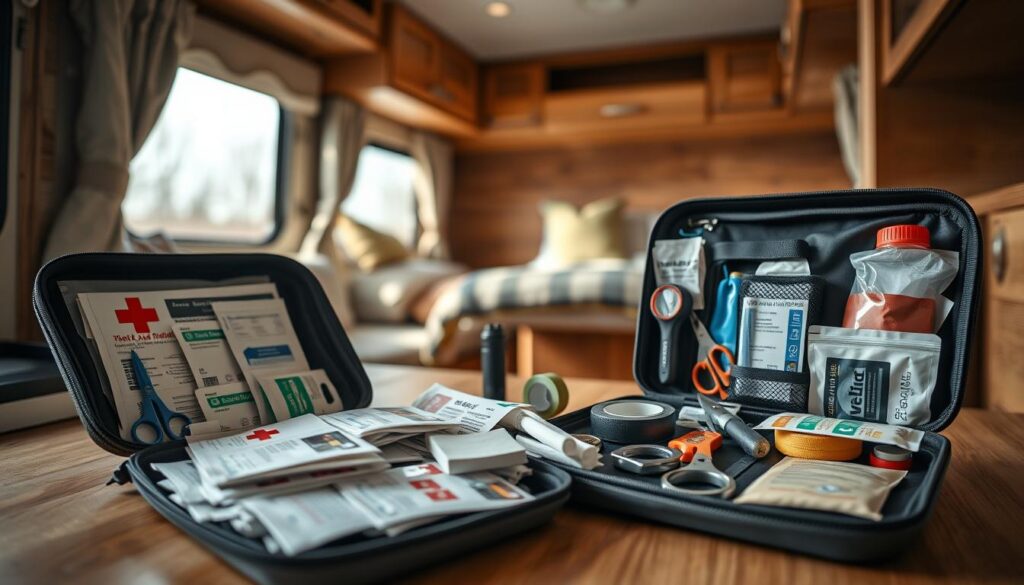
Essential Medical Supplies
A good first aid kit has basic supplies for injuries and medical issues. Start with these essential items for common RV injuries:
- Wound care supplies: Sterile gauze pads, medical tape, adhesive bandages in multiple sizes, and antiseptic wipes
- Treatment tools: Tweezers for splinter removal, scissors for cutting tape and gauze, and a digital thermometer
- Emergency items: Instant cold packs for sprains and bruises, burn gel for cooking accidents, and elastic bandages for support
- Protective gear: Disposable gloves and face masks for safe treatment
Put these supplies in a clear, waterproof container. This makes them easy to find in emergencies. Label each part clearly.
Remember to include any prescription medications. Store them in their original containers with clear labels and expiration dates.
Over-the-Counter Medications
Your RV’s medicine cabinet should have common over-the-counter medications. Include these essential medications in your emergency kit:
- Pain relief: Ibuprofen and acetaminophen for headaches, muscle aches, and fever reduction
- Digestive aids: Anti-diarrheal medication and antacids for stomach upset from new foods or water
- Allergy treatment: Antihistamines for seasonal allergies and insect bites
- Topical treatments: Hydrocortisone cream for skin irritation and antibiotic ointment for cuts
If someone has severe allergies, an epinephrine auto-injector is a must. Make sure everyone knows where it is. Always check expiration dates and replace expired medications.
Think about the weather and activities you’ll do. Hot weather might need electrolyte supplements. Cold weather might need more pain relievers for stiff joints.
Having the right medical supplies is important. But knowing how to use them is even more critical. Take a basic first aid course to be ready for emergencies.
3. Fire Safety Equipment
Fire safety gear is a top must-have item for RV emergencies. Fires spread fast in RVs, so quick action is key. Every RV needs the right fire safety tools that are easy to find and kept in good shape.
RVs face special fire dangers. Cooking, electrical, and heating systems can all be risky. Proper preparation with the right tools can stop big fires before they start.
Fire Extinguisher Types
Every RV should have at least one ABC-type fire extinguisher. It can handle three common fire types: Class A (wood and paper), Class B (gasoline and propane), and Class C (electrical fires).
Choose the right size extinguisher for your RV. Smaller RVs need a 2.5-pound unit, while bigger ones need a 5-pound one. Strategic placement is key – keep one near the kitchen and another near sleeping areas or exit doors.
Keep your fire extinguisher in top shape. Check the pressure gauge monthly and look for damage or corrosion. Replace it if it’s worn out or past its expiration date.
Smoke and CO Detectors
Smoke detectors are lifesavers, giving early warnings, even when you’re asleep. Upgrade to dual-sensor models for better protection against different fire types.
Carbon monoxide detectors are also vital for RV safety. They detect CO from appliances and exhausts. Install them near sleeping areas and test them every month.
Keep these devices working with regular battery checks. Replace batteries yearly or when the low-battery signal starts. Some people mark the battery replacement date on their calendars for consistent upkeep.
| Equipment Type | Recommended Size/Model | Placement Location | Maintenance Schedule |
|---|---|---|---|
| ABC Fire Extinguisher | 2.5-5 pound capacity | Kitchen area, bedroom exit | Monthly pressure check |
| Smoke Detector | Dual-sensor photoelectric | Hallways, sleeping areas | Monthly testing, annual battery |
| CO Detector | Digital display model | Near sleeping quarters | Monthly testing, annual battery |
| Fire Blanket | Fiberglass 40″ x 60″ | Kitchen storage area | Annual inspection |
More fire safety items can boost your protection. Fire blankets can smother grease fires or wrap around someone whose clothes catch fire. Escape ladders are also good for upper-level RVs. These tools add to your fire safety plan.
Fire safety equipment only works if it’s maintained and easy to find. Store items in places everyone knows. Regular drills help everyone act fast in real emergencies.
4. Tools for Quick Repairs
When your RV breaks down, the right tools can save the day. Basic repair tools are key for quick fixes. They help avoid big problems.
Choose tools that are versatile and don’t take up too much space. You’ll need adjustable wrenches, screwdrivers, pliers, and a tire pressure gauge. These tools can fix most common issues.
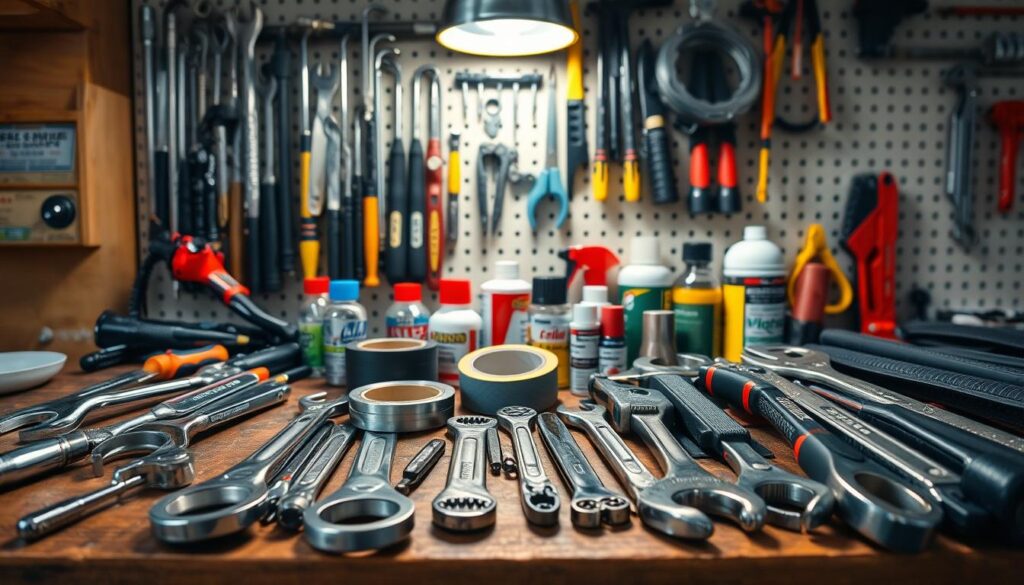
Simple items can solve big problems. Electrical tape, zip ties, and fuses fix many electrical issues. They’re cheap but very useful.
Multi-Tool vs. Dedicated Tools
Should you use a multi-tool or dedicated tools? It depends on space and what you need. Multi-tools are great because they’re small and do many things.
But, dedicated tools are better for specific tasks. They offer more power and precision. It’s good to have both, depending on your needs.
| Tool Type | Advantages | Best For | Storage Space |
|---|---|---|---|
| Multi-Tool | Compact, versatile, always accessible | Quick fixes, emergency situations | Minimal |
| Dedicated Tools | Better leverage, precision, durability | Serious repairs, regular maintenance | Moderate |
| Hybrid Approach | Maximum flexibility, complete coverage | All situations, for experienced users | Moderate to High |
Tire Repair Kits
Tire problems are common, and can be serious. Tire repair kits are vital for getting back on the road fast.
Modern sealants can fix small punctures. Choose non-combustible products like Slime for safety. They give you time to get to a repair shop.
“A good tire repair kit has saved us more times than we can count, when we’re far from a tire shop.”
Your kit should have sealant, a compressor, and a gauge. Some kits also have plugs and tools for bigger repairs. Remember, sealant is just a temporary fix – get a professional repair as soon as you can.
For emergency repairs, pick tools that are both useful and don’t take up too much space. Focus on tools that solve many problems at once.
5. Food and Water Supplies
Smart RV owners know that emergency food and water are more than just camping supplies. When unexpected situations happen, having enough to eat and drink is key. It’s important to have enough for your group for at least three days without help.
These RV essentials need careful planning and the right storage. Unlike regular camping food, emergency supplies must stay good in different temperatures. Quality emergency food is worth it when you really need it.
Non-Perishable Food Items
Protein-rich snacks are the heart of any emergency food supply. Stock up on energy bars, mixed nuts, and dried fruits. They give you energy without needing to cook.
Canned goods with easy-open lids are great for emergencies. Canned tuna, chicken, and beans are good protein sources that keep well. Choose cans that don’t need special tools to open.
Jerky and dehydrated meals are also key. They’re light, nutritious, and take up little space. Vacuum-sealed packages are better at keeping out moisture and pests.
Keep all emergency food in rodent-proof containers. Metal or hard plastic containers with tight lids keep out pests and damage.
Water Filtration Solutions
Water purification systems are vital essential RV emergency gear. It’s good to have more than one way to purify water, just in case.
Portable water filters are great for making water from natural sources safe. Gravity-fed systems and pump filters can handle a lot of water. Make sure they can remove bacteria, protozoa, and sediment.
Water purification tablets are a light backup. They kill harmful germs in water. Carry enough to treat several gallons of water for each person.
Straw filters are good for personal use. They let you drink directly from water sources while filtering out bad stuff. They’re very useful for quick water in emergencies.
Keep extra water in portable containers. Collapsible water jugs and rigid containers should be easy to get to from outside your RV. Aim for at least one gallon of water per person per day for drinking, cooking, and hygiene.
6. Emergency Communication Devices
Emergency communication gear is key when you’re far from help. Many places don’t have good cell service. This makes your phone useless when you need it most. Having many ways to communicate can save lives.
Your top emergency gear for RV owners should include devices that don’t need cell towers or power. These backup systems let you call for help and get weather alerts. It’s smart to have tools that work on different frequencies and power sources.
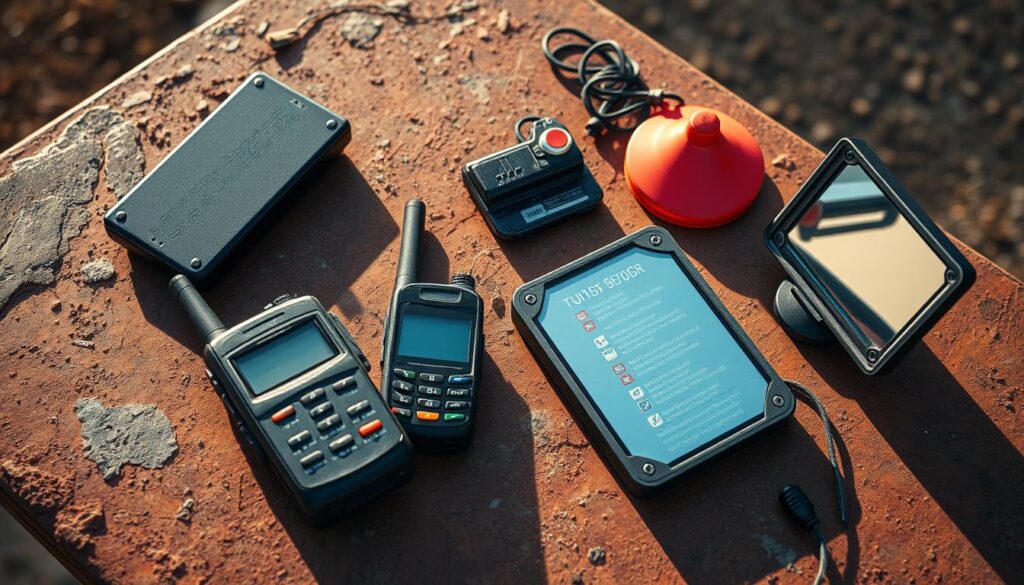
Battery-Powered Radios
A battery-powered or hand-crank emergency radio keeps you connected when all else fails. Choose radios that get NOAA weather radio frequencies for important weather warnings. These frequencies work 24/7 and give alerts for severe weather and emergencies.
Look for radios with many power options like batteries, hand-crank, and solar panels. Models with flashlights and phone charging are extra useful. Being able to charge your phone can help a lot.
Modern radios also have AM/FM bands for local news and emergency info. Test your radio often and keep spare batteries for your essential safety gear for RVers.
Cell Phone Signal Boosters
Cell phone signal boosters make weak signals strong. They turn one-bar signals into strong connections for calls and data. We’ve seen them make a big difference.
Boosters work by catching weak signals and making them stronger. You need to mount an antenna on your RV’s roof and connect it to an amplifier inside. Choose boosters that work with many carriers and frequency bands.
In very remote areas, satellite communicators are the best choice. They cost more but can send messages and GPS coordinates to emergency services. They’re a must for RVers who go to very isolated places.
Remember to carry portable power banks and solar chargers. Phones lose power fast in cold weather. You’ll need to save your RV’s battery for other important systems. Always have extra ways to charge your devices.
7. Navigation and Lighting Gear
Good navigation and lighting gear makes tough situations easier. When our RV breaks down, we need tools to see and navigate safely. These must-have items for RV emergencies help us stay on track, even in the dark.
Using modern tech with backup options is key. GPS can fail, batteries can die, and devices can stop working when we need them most. So, we always have several navigation and lighting options ready.
GPS Units for RVs
RV-specific GPS units are a big help for safe travel and finding our way in emergencies. They consider our RV’s size and weight. This helps us avoid low bridges and roads that are too narrow for our vehicle.
We also carry paper maps as a backup. GPS can lose signal in remote areas or fail when we need it most. Physical maps never run out of battery power and give us a clear view of where we are.
The best RV GPS units give real-time traffic updates and find the best route. They help us avoid traffic jams and road closures, which is super helpful in emergencies. We look for units with big screens that are easy to read, even in sunlight.
Portable LED Lanterns
LED flashlights and headlamps are key for working in the dark. We carry different lights for different emergencies. Rechargeable headlamps let us keep our hands free, while LED flashlights give a strong beam for detailed work.
Hand-crank flashlights are great when all else fails. They make their own electricity, which is super useful in long emergencies. We always have one in our emergency kit as a last resort.
Portable LED lanterns light up big areas around our RV. They make emergency situations less scary and safer to handle. Area lighting helps us see dangers and work better during repairs.
Solar-powered lights are also good for emergencies. They charge during the day and light up at night without using our RV’s power. They’re great for staying in remote places for a long time.
| Lighting Type | Best Use | Power Source | Runtime |
|---|---|---|---|
| LED Flashlight | Focused beam work | Batteries/Rechargeable | 8-12 hours |
| Headlamp | Hands-free repairs | Batteries/USB charging | 6-10 hours |
| Hand-crank Light | Emergency backup | Manual generation | 30 minutes per minute of cranking |
| LED Lantern | Area illumination | Batteries/Solar/USB | 12-24 hours |
We test our navigation and lighting gear often to make sure it works when we need it. Fresh batteries, updated maps, and working devices can mean the difference between a small problem and a big safety issue. These tools help us stay safe and independent during RV emergencies.
8. Warmth and Shelter Gear
Emergency situations often mean cold weather. That’s why warmth and shelter gear are key for RV preparedness. When your RV’s heater breaks or you’re stuck outside, staying warm is vital. The right gear can stop hypothermia and keep you cozy in cold weather.
Cold weather emergencies can sneak up on you. Weather can change fast, like in mountains or during seasonal shifts. Always carry warmth and shelter gear in your emergency kit.
Emergency Blankets
Mylar emergency blankets help keep you warm and prevent hypothermia. They’re light, small, and reflect 90% of your body heat. Carry one for each person, plus extras for others.
Mylar blankets are great because they’re waterproof and windproof. They’re also small enough to fit in your emergency kit. You can use them for warmth, as a ground cover, or even as a makeshift shelter.
Also, keep a waterproof bag with a change of clothes. Include warm layers, rain gear, extra socks, and underwear. Having fresh, dry clothes can really boost your mood in emergencies. Don’t forget warm hats, gloves, and waterproof boots to keep your hands and feet warm.
Portable Heaters
For really cold situations, get a portable, safe heating source for indoors. The Mr. Buddy heater series is good for RVs because they have safety features like automatic shut-off.
Choose a portable heater that’s safe, not just how much heat it makes. Look for ones that use small propane canisters. These are easier to store and replace than big tanks. Keep extra canisters, but follow the maker’s storage tips.
Never use outdoor heaters inside your RV because of carbon monoxide danger. We’ve seen too many bad situations from using the wrong heaters. Use only heaters made for indoor use and make sure there’s good air flow.
9. Storage Solutions for Gear
The best emergency equipment is useless if you can’t find it when you need it. Smart storage solutions for your RV essentials ensure quick access during stressful situations. We’ve learned that proper organization can cut emergency response time in half.
Space and weight limitations in RVs require careful planning. Overpacking beyond weight ratings actually increases emergency risks. We recommend focusing on essential items stored in accessible locations.
Organizing Your Emergency Kit
We suggest creating distinct zones for different types of essential RV emergency gear. Medical supplies belong in one easily accessible area. Tools should occupy a separate, secure location. Food and water supplies need their own designated space.
Clear, waterproof containers make identification quick and easy. We avoid opening multiple boxes during emergencies by choosing transparent storage options. Tackle boxes and marine-grade containers work exceptionally well for this purpose.
“In emergency situations, every second counts. The difference between life and death can be measured in minutes, not hours.”
Weight distribution plays a key role in RV safety. We store heavier emergency items low and toward the center. This maintains proper balance and prevents dangerous swaying while driving.
A master inventory list proves invaluable during emergencies. We keep copies both inside storage containers and with our RV documentation. Regular updates ensure accuracy when adding or removing items.
Recommended Storage Containers
Different storage solutions serve specific purposes in emergency preparedness. We’ve tested various options and identified the most effective containers for RV use.
| Container Type | Best For | Key Features | Price Range |
|---|---|---|---|
| Marine Storage Boxes | Outdoor gear, tools | Waterproof, UV resistant | $30-80 |
| Clear Tackle Boxes | Small medical supplies | Compartments, visibility | $15-40 |
| Tool Organizers | Repair equipment | Secure latches, portability | $25-60 |
| Dry Bags | Documents, electronics | Completely waterproof | $10-35 |
Color-coded containers speed up identification during emergencies. We use red for medical supplies, blue for tools, and green for food items. Labels provide additional clarity when lighting conditions are poor.
A smaller grab-and-go emergency kit contains the most critical items. We prepare this portable kit for situations requiring quick RV evacuation. Essential medications, important documents, and basic survival items fit in a compact backpack.
Regular maintenance of storage systems prevents deterioration. We inspect containers monthly for cracks or seal failures. Replacing damaged storage before emergencies occur saves precious time when every moment counts.
10. Planning Your Emergency Gear Checklist
Creating your emergency kit needs ongoing effort and smart planning. It starts with knowing your travel needs and keeping up with what you have.
Regular Maintenance Insights
Check your emergency supplies before big trips. Test all batteries and radios. Check food and medicine expiration dates every few months.
Make sure your fire extinguisher is charged and easy to find. Create a maintenance schedule that fits your life. Spring cleaning before camping season is good for many.
Fall reviews help get your gear ready for winter.
Tips for Additions Based on Your Trip
Your destination affects what emergency gear you need. Desert trips need more water and sun protection. Mountain trips might need tire chains and cold-weather clothes.
Keep a kit for each trip. Add items based on your destination and challenges. Research your places before you go.
Talk to other RVers online and in clubs. They share what emergency gear saved their trips. Learning from them helps you make a better kit for your adventures.