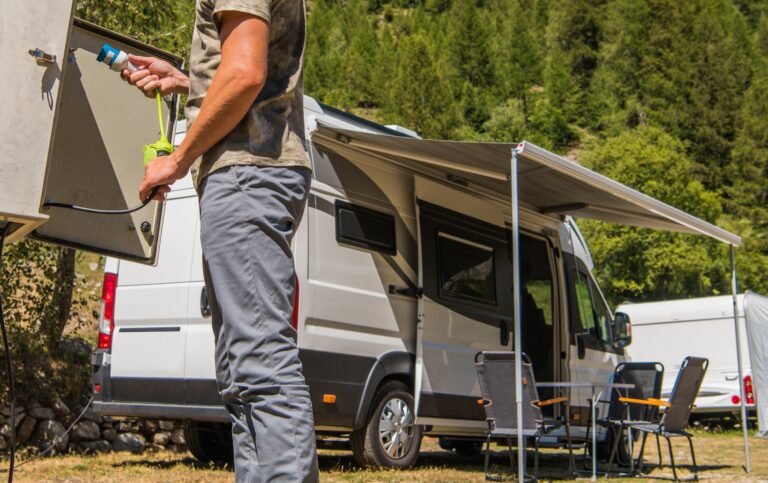
Planning our next outdoor adventure means we need to know about campground charges. Camping offers a wide range, from free spots to luxury resorts over $300 a night.
These prices aren’t just random. They show the services, amenities, and costs that campsite owners face. Basic tent sites at state parks cost $10-$50 a night. National park sites are $15-$35.
Private spots charge more, from $25-$60 a night. This tells us where our money goes. It pays for restrooms, fire rings, security, and utilities. All these things make our camping experience better and safer.
Knowing these costs helps us choose wisely. It helps us find the best value for our adventures, whether we’re weekend campers or always on the move.
Key Takeaways
- Camping costs range from free dispersed sites to luxury resorts over $300 per night
- National park sites typically cost $15-$35 nightly, while private locations charge $25-$60
- Pricing reflects operational costs including utilities, maintenance, security, and amenities
- Understanding rate structures helps campers make informed booking decisions
- Basic state park tent sites offer affordable options at $10-$50 per night
- Each price point corresponds to different service levels and facility quality
Understanding Campground Fees: An Overview
Campground fees are more than just a cost for a night. They reflect the value and services we get. These fees cover land use, amenities, and more. They make our camping trips better.
The camping industry has different pricing. Some places charge nothing, while others cost $10 to $50 per night. Knowing this helps us choose where to camp.
What Are Campground Fees?
Campground fees let us use a camping space for a time. They pay for upkeep, utilities, and safety. The cost depends on the campground and its services.
Our average camping expenses include:
- Site rental – Basic land use and space allocation
- Utility access – Water, electricity, and sewer connections
- Facility maintenance – Restrooms, showers, and common areas
- Security services – Staff presence and emergency response
- Amenity provision – Fire pits, picnic tables, and recreational facilities
Different campgrounds have different fees. National park campgrounds cost $15 to $35 per night. State parks are $10 to $30. Private campgrounds are $20 to $50, and KOA locations are $30 to $60.
Why Do Fees Vary by Location?
Location affects campground prices a lot. Demand patterns and real estate costs play big roles. Campgrounds near attractions or in scenic spots charge more.
Factors that affect our camping costs include:
- Proximity to attractions – National parks, beaches, and tourist spots raise demand
- Regional cost of living – Higher local wages and expenses mean higher fees
- Seasonal accessibility – Year-round spots charge more than seasonal ones
- Local regulations – Permit rules and taxes vary by area
Remote spots usually cost less because of lower demand and costs. But they might not have as many amenities. Campgrounds near cities face higher costs for land and rules, leading to higher prices.
The level of development also affects prices. Simple sites cost less than ones with many amenities. Knowing this helps us decide if a campground’s fees are worth it.
Types of Campground Fees
Most campgrounds have a tiered pricing system with different fee categories. Knowing these helps us avoid surprises and plan our trips better. Let’s look at the main types of fees we’ll find when booking our outdoor adventures.

Daily vs. Weekly Rates
Daily rates are the base cost of camping, but they vary a lot. Budget-friendly parks charge $20 to $40 per night. Luxury campgrounds can start at $100 per night or more.
Weekly rates save money for longer stays. Most places offer discounts for seven nights. These rates are great for vacation weeks or long weekends.
Monthly rates are the best for long-term campers. Snowbirds, full-time RVers, and those staying longer get the biggest savings. Monthly rates can cut daily costs by 30-50%.
Reservation and Cancellation Fees
Booking fees are common across most campgrounds. We usually pay $5 to $15 to book, no matter how long we stay.
Cancellation policies vary a lot. Some charge flat fees, while others use scales based on when we cancel. Last-minute cancellations can be very expensive, sometimes costing the whole first night’s fee.
Change fees apply when we change our reservation. These fees can add up quickly if we’re not careful with our initial booking.
Additional Services or Amenities
Base rates rarely cover everything we need. Many parks charge extra for important services that we might think are included.
- Electrical hookups: 30-amp and 50-amp connections often cost extra
- Water and sewer connections: Full hookup sites command premium prices
- Wi-Fi access: Internet service frequently requires additional fees
- Cable TV: Entertainment options typically cost extra
- Laundry facilities: Washer and dryer access may require tokens or fees
Recreational amenities also come with extra charges. Swimming pools, game rooms, and fitness centers often need separate fees or day passes. Pet fees are common, with many campgrounds charging $5-10 per night for pets.
Knowing these fees ahead of time helps avoid surprises at check-in. We can decide which amenities we really need versus those we can skip during our camping trip.
Amenities That Drive Fees
Knowing how different amenities affect campground fees helps us make smart choices. The facilities and services at any campground affect the price. Each amenity costs a lot to maintain, so owners charge more for them.
The cost of camping amenities changes a lot. Basic sites cost less, while full-service ones cost more. Knowing what we need versus what’s nice to have helps us find the best value.
Access to Bathrooms and Showers
Clean bathrooms and hot showers are very important for many campers. They need a lot of investment in plumbing and maintenance. This is even more true in remote areas where bringing in utilities is hard.
Campgrounds with modern bathrooms charge $10 to $20 more per night than basic sites. This extra cost covers cleaning, utilities, and upkeep. Private campgrounds might have private bathrooms for premium sites, raising the price even more.
“A hot shower after a long day of hiking is worth every penny we pay for it. The convenience and comfort make the extra cost worthwhile for our family camping trips.”
Wi-Fi and Electrical Hookups
Today, campers want to stay connected and have power. Wi-Fi and electrical hookups are key. These add $5 to $15 per night to the cost.
Good Wi-Fi is key for remote workers and families. Setting up internet in the wild costs a lot. Quality Wi-Fi can add $3 to $10 daily to the fee.
With Wi-Fi and power, a campsite becomes a comfortable place. These amenities make camping more accessible to many people.
Fire Pits and Picnic Tables
Fire pits and picnic tables need regular care and replacement. They cost money to maintain and replace. Safety rules also add to the cost.
Picnic tables also need upkeep, with wooden ones needing stain or replacement often. Metal tables last longer but cost more upfront. These amenities can add $2 to $5 per night to the fee, but are often included at most camps.
| Amenity Type | Average Cost Addition | Maintenance Requirements | Camper Value Rating |
|---|---|---|---|
| Bathrooms & Showers | $10-$20 per night | Daily cleaning, plumbing repairs | High |
| Electrical Hookups | $5-$15 per night | Electrical inspections, repairs | High |
| Wi-Fi Service | $3-$10 per night | Network maintenance, upgrades | Medium |
| Fire Pits & Tables | $2-$5 per night | Regular cleaning, replacement | High |
Premium amenities like pools and playgrounds can double the cost. But they also add a lot of fun. Many families find them worth the extra cost.
Understanding the cost of camping amenities helps us value what we get. The key is matching our needs with the amenities offered to get the best value for our adventures.
Seasonal Pricing: What to Expect
Knowing when to camp can save a lot of money. Campground prices change with the seasons. By planning our trips right, we can find great deals.
Campgrounds have set prices for different times of the year. Off-season rates are the lowest. Summer is the most expensive time. Spring and fall are the best middle ground.
Off-Season vs. Peak Season Rates
Camping in the off-season is very cheap. Prices can drop by 30-50% in slow months, like late fall to early spring. For example, a campsite might cost $80 in July but just $35 in February.
Peak season prices go up a lot. They can be 50-100% higher than off-season. Places that cost $80 in the off-season can go up to $200+ in summer.
Shoulder seasons are the best middle ground. They happen right before and after the busy summer months. The weather is good, but prices are lower than summer.
Holiday Pricing Trends
Holiday weekends are the most expensive times to camp. Holidays like Memorial Day and Labor Day have special pricing that’s even higher than peak season. Many places require you to stay for a few days during these times.
Popular spots often need you to pay in advance for holidays. Booking 6-12 months early can help avoid high prices. Some places double their prices on major holidays.
Planning around holidays can save a lot of money. Staying a few days before or after the holiday can be cheaper. You’ll also avoid the crowds and enjoy good weather.
| Season Type | Typical Months | Rate Comparison | Savings |
|---|---|---|---|
| Off-Season | November – March | $25-$45 per night | 30-50% savings |
| Shoulder Season | April-May, September-October | $40-$70 per night | 20-30% savings |
| Peak Season | June – August | $60-$120 per night | Base pricing |
| Holiday Weekends | Memorial Day, July 4th, Labor Day | $100-$200+ per night | 50-100% premium |
Hidden Fees: What to Watch Out For
What seems like affordable camping options can turn expensive with hidden fees. Campgrounds often have low base rates but hide extra costs. Knowing these fees helps us plan better and avoid surprises.
Common hidden fees include charges for pets, extra vehicles, and more guests. Some also have cleaning fees and security deposits. These can cost $50 to $200 or more, depending on our needs and the campground’s rules.
Cleaning Fees and Deposits
Cleaning fees are now common at private campgrounds and RV resorts. They cost $25 to $75 per stay, covering site maintenance and trash removal.
Security deposits are another cost. Campgrounds usually ask for $50 to $200, which they hold during our stay. While refundable, some keep part of it for damages or extra cleanup.
The problem is these fees are often not clear at first. Campgrounds might not mention them until we’re ready to check in. This can make affordable camping options expensive surprises.
Always ask about cleaning fees and deposit policies when making reservations. Some campgrounds waive cleaning fees for longer stays or return deposits immediately if the site is clean.
Extra Charges for Pets
Pet fees are a big hidden cost for camping families. Campgrounds charge $5 to $20 per night per pet, plus deposits for damage coverage. This can add up for families with many pets.
Some campgrounds also have unclear pet rules. These can include:
- Maximum number of pets allowed per site
- Breed restrictions for certain dog types
- Size limits for pets
- Required vaccination documentation
- Leash requirements and designated pet areas
Some campgrounds charge extra for pet amenities like dog runs or pet washing stations. Others may require more insurance or higher deposits for pet owners.
We should always check pet policies and costs before booking. Some offer pet-friendly packages, while others charge for each service. Knowing this helps us find affordable camping options for our pets.
Other hidden fees include charges for extra vehicles, more guests, early or late check-in, and amenities like firewood or ice. The best strategy is to ask about all possible extra charges when booking and read all terms before confirming.
Membership Programs and Discounts
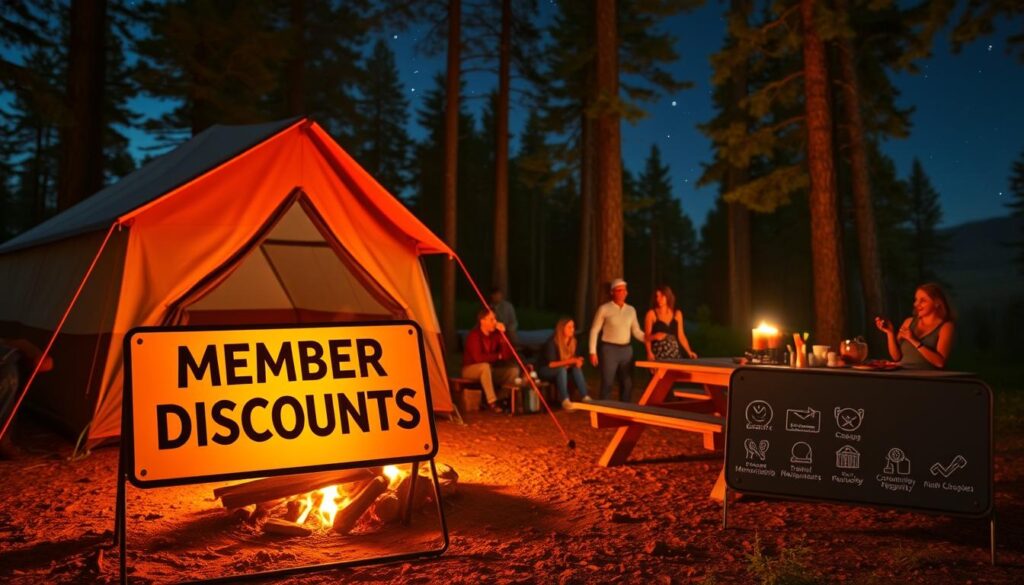
Frequent campers can save a lot with different membership programs and discounts. These plans make camping costs easier to handle. Smart campers save hundreds of dollars each year with these deals.
Using camping memberships wisely can cut costs by 20-50%. It’s all about finding the right programs for your camping style and places.
Benefits of Joining Camping Clubs
Camping clubs offer great value for those who love the outdoors. KOA Value Kard Rewards gives 10% off nightly rates for $33 a year. Families who camp a lot can save money quickly with this membership.
Thousand Trails membership offers big savings. It lets you access many campgrounds for a yearly fee. Full-time RVers and long travelers save a lot with this deal, camping for months without extra costs.
Good Sam Club membership has more than just camping discounts:
- 10% discounts at many campgrounds
- Priority reservations during busy times
- Access to special campgrounds and amenities
- Discounts on RV supplies and services
- Emergency RV roadside help
Private campground chains have loyalty programs for regular visitors. These programs give points for each stay, free nights after a certain number, and special member rates during busy times.
Senior and Military Discounts
Senior discounts are a big help for older campers. The America the Beautiful Senior Pass costs $80 for life access to national parks and often halves camping fees. This pass quickly pays for itself through savings.
State park systems also offer senior discounts. Many states give big discounts to seniors aged 62 and older, with some even giving free or very cheap camping during off-peak times.
Military families get great discounts at many campsites. These discounts are a big thank you for their service.
Active military and veterans can camp for free or cheap at MWR facilities on bases. These camps have all the amenities. Military families often find these spots better than commercial campsites.
Many private camps offer military discounts all year, with 10-15% off regular rates. Some camps near bases give even bigger discounts to support local service members and their families.
Always check for discounts before booking a camping trip. Using membership benefits with senior or military discounts can save a lot and make camping more affordable for everyone.
The Cost of Campsite Types
Choosing your campsite is a big budget decision for outdoor adventures. Different sites offer different comforts and prices. Knowing these options helps us pick the right one for our budget and style.
The site you pick can change your camping cost from $15 to $80 a night. This big price difference shows the different amenities each site offers. Let’s look at how different sites affect our camping costs.
Primitive vs. Full Hookup Sites
Primitive sites are the cheapest for those who love the outdoors. They have a fire ring and picnic table but no utilities. Tent camping here costs $10 to $30 a night at state and national parks.
These sites are great for those who don’t mind shared restrooms. They offer a basic camping experience without extra utility costs. Plus, they’re often in the most beautiful parts of campgrounds.
Full hookup sites have electricity, water, and sewer right at your site. They cost $35 to $80 a night at private places and $25 to $45 at public ones. The ease of using appliances and having water anytime makes them worth the extra cost for RVers.
Partial hookup sites are a middle choice. They have electricity and water but no sewer, costing $25 to $50 a night. They’re good for RVers who want some comforts but can handle dump station visits.
Group Campsites and Their Pricing
Group campsites have special prices for big groups. They cost $75 to $300 a night and can hold 15 to 100+ people. They’re often cheaper per person than booking many individual sites.
These sites have big fire rings, many picnic tables, and sometimes pavilions. They’re great for family reunions, scout groups, or corporate retreats. Splitting the cost makes them affordable for many.
Many group sites need reservations and have minimum stay rules in busy times. Some charge per person, which can be cheaper for small groups.
| Campsite Type | Typical Cost Range | Best For | Key Features |
|---|---|---|---|
| Primitive Sites | $10-$30/night | Tent campers | Fire ring, picnic table, shared facilities |
| Partial Hookup | $25-$50/night | RV campers | Electricity, water, no sewer |
| Full Hookup | $35-$80/night | RV campers | Electricity, water, sewer connections |
| Group Sites | $75-$300/night | Large parties | Multiple tables, large fire rings, pavilions |
Budgeting for Your Camping Trip
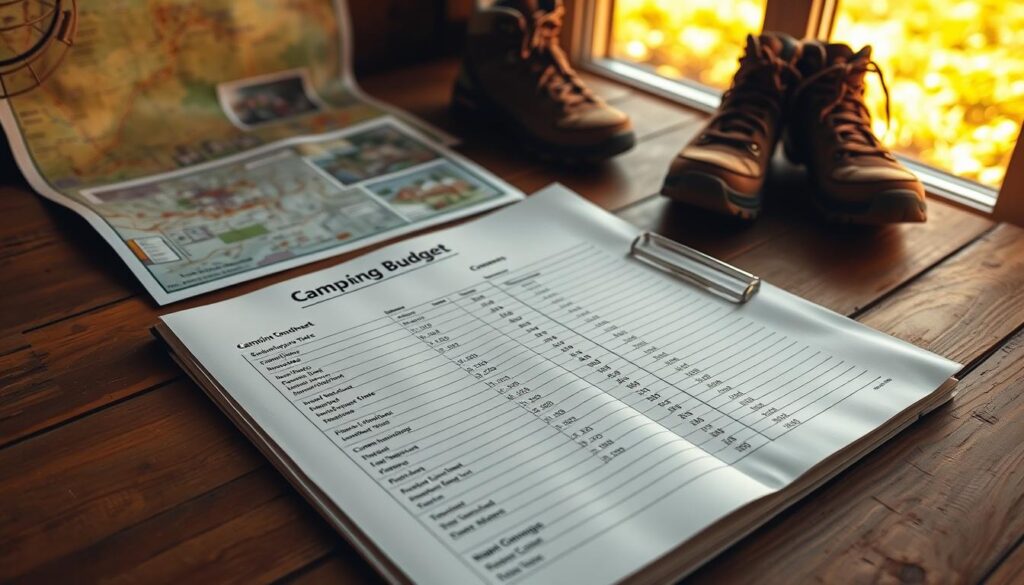
Creating a camping budget helps us avoid surprises and enjoy our trip more. It turns a stressful situation into a relaxing adventure. We can then focus on enjoying nature.
A good camping budget includes more than just campsite fees. We must think about all parts of our trip to know what we’ll spend.
How to Calculate Total Costs
First, we calculate the basic campsite fee times the number of nights. But, this is just the start of our expenses.
Transportation costs often surprise us. We need to think about fuel, tolls, and wear on our vehicle. These can cost $50 for nearby places or over $500 for long trips.
Food costs change a lot based on how we plan our meals. Cooking at camp costs $20-$50 per person per day. Eating out can double or triple that.
Other things to add to our camping budget:
- Gear costs for buying or renting equipment
- Park entrance fees and activity permits
- Firewood, ice, and camping supplies
- An emergency fund for unexpected costs
A weekend camping trip for a family of four costs $200-$500. A week-long trip can be $500-$1,500, depending on where we go and where we stay.
Tips for Saving on Fees
To save money on our trip, we need to plan smartly and make wise choices. The best way is to use many cost-saving strategies together.
Timing is key for saving on campsite fees. Booking during off-peak seasons can save us 30-50% compared to summer rates. Spring and fall are often the best times for good weather and lower prices.
Here are some tips to save money:
- Choose state parks over private campgrounds for lower fees
- Use membership discounts from camping clubs
- Book longer stays for weekly rates
- Use borrowed or used gear instead of new
Group camping is a great way to share costs. We can split the cost of campsites, food, and travel, making it easier to afford nice places.
Preparing our own meals saves a lot of money. Simple, one-pot meals are cheaper and easier to clean up.
Smart campers also look for free activities in their area. Many places have hiking trails, swimming areas, and scenic views without extra fees.
By using these tips, we can have amazing camping trips without breaking the bank. The key is to plan well and be flexible with our choices.
Comparing Campground Options
Knowing the differences between campgrounds helps us choose better. Each type has its own good and bad points. This affects our budget and how much we enjoy our trip. Let’s look at public and private campgrounds side by side.
Public vs. Private Campgrounds
Public campgrounds are the cheapest way to camp. They cost between $10 and $35 per night. They offer basic things like restrooms, picnic tables, and fire rings.
These places focus on nature, not luxury. They’re great for those who want to get away from city life. Activities like hiking, fishing, and stargazing are perfect here.
Private campgrounds are pricier but offer more comfort. Prices range from $25 to $80 or more per night. They have swimming pools, playgrounds, camp stores, and laundry.
Private campgrounds are perfect for families. They have lots of activities and comforts. They’re great for those who want a bit more luxury during their camping trip.
| Feature | Public Campgrounds | Private Campgrounds |
|---|---|---|
| Nightly Cost | $10-$35 | $25-$80+ |
| Primary Focus | Natural access | Amenities & comfort |
| Best For | Budget-conscious campers | Families & RV travelers |
| Typical Amenities | Basic facilities | Pools, stores, activities |
State Parks and National Forests
State parks are a good middle ground. They offer good value for the price. Most charge $10 to $35 per night.
State parks are a great deal. They have clean facilities and beautiful views. But, they can get busy, so book early.
National forests are the cheapest option for adventure seekers. They offer free or low-cost camping. You get amazing nature with little facilities.
These spots are best for those who like to camp the old-fashioned way. National forests have great hiking, wildlife, and wilderness.
Final Thoughts on Campground Fees
Understanding campground fees helps us make smart choices about our outdoor adventures. When we know what drives pricing, we can find the best value for our specific needs and budget.
The Value of a Great Camping Experience
A great camping trip offers more than just a place to sleep. We gain access to natural beauty, create lasting family memories, and find relief from daily stress. A $50 campsite that puts us near hiking trails and clean facilities often provides better value than expensive hotel stays.
The memories we make around campfires and under starry skies are priceless. These experiences strengthen our connections with loved ones and nature itself.
Making the Most of Your Camping Budget
Smart camping budget management starts with choosing the right campground for each trip. We might splurge on luxury amenities for special occasions while picking budget-friendly state parks for regular getaways.
Planning ahead saves money through early booking discounts and avoiding peak season rates. We can stretch our camping budget by choosing longer stays, using membership programs, and focusing on free activities like hiking and wildlife watching.
The goal is finding the best value that lets us enjoy outdoor experiences within our means. With proper planning, camping remains an affordable way to explore nature and create wonderful memories.
FAQ
What are the typical campground fees we can expect to pay?
Why do campground fees vary so much between different locations?
What hidden fees should we watch out for when booking campsites?
How much can we save by choosing off-season camping dates?
Are camping club memberships worth the cost?
What’s the difference in cost between primitive and full hookup sites?
How can we calculate our total camping expenses beyond just site fees?
FAQ
What are the typical campground fees we can expect to pay?
Campground fees vary a lot. They depend on where you are and what you get. For basic sites at state and national parks, expect to pay – per night. Sites with partial hookup cost -, and full hookup sites cost – at private places.
Luxury RV resorts can charge 0-0+ per night. But, you can find free camping on some public lands.
Why do campground fees vary so much between different locations?
Fees change because of many things. Local real estate costs and demand are big factors. Also, being close to popular spots or cities can raise prices.
Places near national parks, beaches, or big cities usually cost more. This is because they are more in demand and cost more to run.
What hidden fees should we watch out for when booking campsites?
There are hidden fees to watch out for. These include cleaning fees (-) and security deposits (-0). Pet fees (- per night) and extra vehicle charges (- per night) are also common.
There might be fees for extra guests (- per person) and early or late check-in (-). Always ask about these when you book.
How much can we save by choosing off-season camping dates?
Camping off-season can save a lot. A campsite that costs in summer might be – in late fall or early spring. Holiday rates can be 50-100% higher than regular prices.
Are camping club memberships worth the cost?
Camping memberships can be a good deal. A KOA membership costs a year and gives 10% discounts. This can save hundreds for frequent campers.
Thousand Trails memberships offer access to many campgrounds for a flat fee. They are great for full-time RVers or long trips.
What’s the difference in cost between primitive and full hookup sites?
Primitive sites cost – per night. They have basic things like fire rings and picnic tables. Full hookup sites with more amenities cost – per night at private places.
At public places, full hookup sites cost -. The extra cost is worth it for RV campers.
How can we calculate our total camping expenses beyond just site fees?
Total camping costs include more than just site fees. You need to think about transportation, food, and gear. A weekend trip for a family of four might cost 0-0. A week-long trip could be 0-
FAQ
What are the typical campground fees we can expect to pay?
Campground fees vary a lot. They depend on where you are and what you get. For basic sites at state and national parks, expect to pay $10-$25 per night. Sites with partial hookup cost $25-$50, and full hookup sites cost $35-$80 at private places.
Luxury RV resorts can charge $100-$300+ per night. But, you can find free camping on some public lands.
Why do campground fees vary so much between different locations?
Fees change because of many things. Local real estate costs and demand are big factors. Also, being close to popular spots or cities can raise prices.
Places near national parks, beaches, or big cities usually cost more. This is because they are more in demand and cost more to run.
What hidden fees should we watch out for when booking campsites?
There are hidden fees to watch out for. These include cleaning fees ($25-$75) and security deposits ($50-$200). Pet fees ($5-$20 per night) and extra vehicle charges ($5-$15 per night) are also common.
There might be fees for extra guests ($3-$10 per person) and early or late check-in ($10-$25). Always ask about these when you book.
How much can we save by choosing off-season camping dates?
Camping off-season can save a lot. A campsite that costs $80 in summer might be $40-$50 in late fall or early spring. Holiday rates can be 50-100% higher than regular prices.
Are camping club memberships worth the cost?
Camping memberships can be a good deal. A KOA membership costs $33 a year and gives 10% discounts. This can save hundreds for frequent campers.
Thousand Trails memberships offer access to many campgrounds for a flat fee. They are great for full-time RVers or long trips.
What’s the difference in cost between primitive and full hookup sites?
Primitive sites cost $10-$25 per night. They have basic things like fire rings and picnic tables. Full hookup sites with more amenities cost $35-$80 per night at private places.
At public places, full hookup sites cost $25-$45. The extra cost is worth it for RV campers.
How can we calculate our total camping expenses beyond just site fees?
Total camping costs include more than just site fees. You need to think about transportation, food, and gear. A weekend trip for a family of four might cost $200-$500. A week-long trip could be $500-$1,500.
What discounts are available for seniors and military personnel?
Seniors can get a lifetime pass for $80. It gives 50% off camping fees at national parks. Many state parks offer similar deals for seniors.
Military personnel can camp for free or cheap at MWR facilities on bases. This is a great deal for service members and their families.
Are private campgrounds worth the extra cost compared to public ones?
Public campgrounds are often cheaper ($10-$35 per night). They have basic but nice facilities. Private campgrounds cost more ($25-$80+ per night).
They offer more amenities like pools and Wi-Fi. It depends on what you want: natural beauty or resort-style fun.
How do group campsites compare in pricing to individual sites?
Group sites cost $75-$300 per night for 15-100+ people. Split among many, it’s cheaper than booking many individual sites. They’re great for big groups like family reunions or scout groups.
What’s the best strategy for saving money on campground fees?
To save, book off-peak (30-50% savings). Choose state parks over private ones. Use membership discounts and look for weekly/monthly rates.
Also, pick sites with included amenities instead of paying extra for things you’ll use.
How do reservation and cancellation fees impact our total camping costs?
Reservation fees are $5-$15. There might be penalties for canceling last minute. These fees add up, so plan carefully to avoid extra charges.
,500.
What discounts are available for seniors and military personnel?
Seniors can get a lifetime pass for . It gives 50% off camping fees at national parks. Many state parks offer similar deals for seniors.
Military personnel can camp for free or cheap at MWR facilities on bases. This is a great deal for service members and their families.
Are private campgrounds worth the extra cost compared to public ones?
Public campgrounds are often cheaper (- per night). They have basic but nice facilities. Private campgrounds cost more (-+ per night).
They offer more amenities like pools and Wi-Fi. It depends on what you want: natural beauty or resort-style fun.
How do group campsites compare in pricing to individual sites?
Group sites cost -0 per night for 15-100+ people. Split among many, it’s cheaper than booking many individual sites. They’re great for big groups like family reunions or scout groups.
What’s the best strategy for saving money on campground fees?
To save, book off-peak (30-50% savings). Choose state parks over private ones. Use membership discounts and look for weekly/monthly rates.
Also, pick sites with included amenities instead of paying extra for things you’ll use.
How do reservation and cancellation fees impact our total camping costs?
Reservation fees are -. There might be penalties for canceling last minute. These fees add up, so plan carefully to avoid extra charges.