Starting your RV journey can feel overwhelming. It’s hard to understand protection options. You might feel lost when planning your first adventure.
The Johnson family from Texas learned this the hard way. A severe hailstorm damaged their new Jayco travel trailer just eight months after buying it. Their basic policy didn’t cover the full cost, leaving them with thousands to pay out of pocket.
This RV Insurance Guide will help you understand everything. We’ll cover basic coverage types and how to find the right provider. You’ll get real experiences and practical advice to protect your investment.
Whether you’re planning weekend trips or full-time living on the road, we’ve got you covered. Peace of mind starts with the right coverage from the beginning.
Key Takeaways
- Comprehensive coverage protects against weather damage, theft, and accidents
- Basic liability coverage alone isn’t sufficient for most recreational vehicles
- Full-timer policies differ significantly from occasional-use coverage
- Personal belongings inside your RV require separate coverage consideration
- Shopping around can save hundreds of dollars annually on premiums
- Proper documentation and photos help streamline claims processes
Understanding RV Insurance Basics
RV insurance is like a safety net for your money and peace of mind. It’s different from car insurance because RV insurance coverage deals with special RV problems. We’ll explain the key things every RV owner needs to know before driving.
At first, RV insurance might seem hard to understand. But knowing the main differences between RV and car insurance shows why you need special coverage for fun trips.
What is RV Insurance?
RV insurance is made just for recreational vehicles. Your RV insurance policy protects your vehicle and what’s inside. It helps with accidents, theft, vandalism, fire, and weather damage.
This insurance is different from car insurance for a few big reasons:
- Size and weight: RVs are bigger and heavier than cars
- Higher value: RVs cost a lot more than cars
- Specialized equipment: RVs have special features like slide-outs and awnings
- Living space: Many RVs are like homes on wheels
Your RV insurance also covers your stuff inside. This means your camping gear, electronics, and personal items are safe. Auto insurance doesn’t offer this kind of protection.
Why It’s Important for RV Owners
RV insurance is key because owning an RV comes with big financial risks. One accident or theft could cost you tens of thousands of dollars.
Here’s why you should get full coverage:
- Legal requirements: Most states need you to have RV insurance
- Lender requirements: If you got a loan for your RV, you must have full coverage
- Asset protection: Your RV is a big investment that needs protection
- Liability protection: RV accidents can hurt people and property a lot
Auto insurance can’t handle the special risks of RVs. You need an RV insurance policy that gets these risks. It should protect your lifestyle and investment.
Types of RV Insurance Coverage
When looking for the best RV insurance, knowing your options is key. Each type of coverage has its own role in protecting your RV and your money. We’ll look at the main types that work together to keep your RV safe.
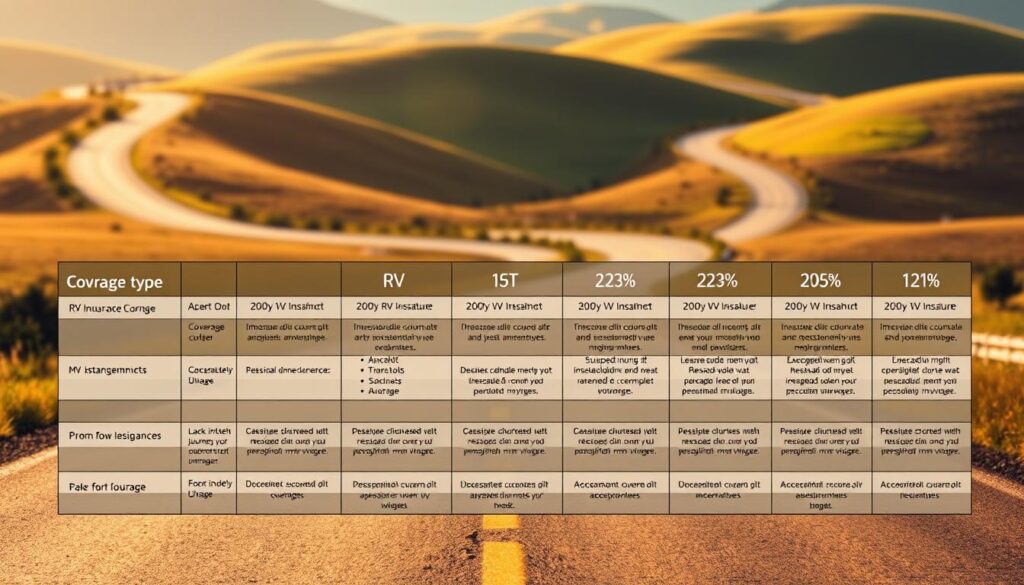
Knowing about these options helps you choose the right policy. Let’s dive into each type and see how they help protect your RV.
Liability Coverage
Liability coverage helps if you hurt someone or damage property while driving your RV. It covers legal fees, medical bills, and repair costs from accidents you cause.
Most states require a basic liability coverage for RVs. But, it’s wise to get more than the minimum. A single accident can cost much more than basic coverage, leaving you with big bills.
Collision Coverage
Collision coverage pays for your RV’s repairs if it hits something or gets hit by another vehicle. This includes crashes with cars, trees, or buildings.
This coverage is very important for newer or pricey RVs. It helps you fix or replace your RV without a huge financial hit. It works whether you’re at fault or not.
Comprehensive Coverage
Comprehensive coverage covers damage from non-collision events like fire, theft, or weather damage. This includes hail, windstorms, floods, and animal hits.
Weather damage is a big risk for RV owners. Hailstorms alone cause millions in damage each year. This coverage is key for protecting your RV from weather and theft.
One of our top RV insurance tips is to never skip this coverage. It’s vital if you travel a lot or park outside.
Personal Property Coverage
Personal property coverage protects your stuff inside the RV, like clothes, electronics, and furniture. It covers more than your homeowner’s insurance might for RV items.
Full-time RVers need strong personal property coverage. Your RV is your home, with all your belongings inside. Standard limits might not cover expensive items well, so think about extra coverage for valuable things.
These four types of coverage are the basics for protecting your RV. Each one plays a key role in keeping your RV safe and your mind at ease while traveling.
Determining Your Insurance Needs
Finding affordable RV insurance is easier when you know what you need. Every RV owner is different, and your insurance should match your life. It’s important to think about three key factors that affect your coverage and cost.
Your insurance needs depend on many personal factors. These include the type of RV you own, how often you travel, and if you use it as a home or just for fun.
Evaluating Your RV Type
The type of RV you own greatly affects your insurance needs and cost. Class A motorhomes are the biggest and most like a home. They need full coverage, like a home and car policy together.
Class B motorhomes are the smallest and most like a car. They need less coverage than bigger RVs. Class C motorhomes offer a mix of home and car features.
Towable trailers have their own needs. They don’t need liability coverage when not moving. But, they do need protection against theft, damage, and accidents while being towed.
Assessing How Often You Travel
How often you travel affects your insurance needs. Weekend warriors have different needs than those who travel a lot. If you only go out a few times a year, you might just need basic protection.
Frequent travelers need more. They need coverage for long trips, roadside help, and higher liability. Snowbirds need coverage for long trips and different weather.
Think about these when planning your trips:
- Number of trips per year
- Average trip length
- Distance from home
- Types of places you visit
Considering Full-Time vs. Part-Time Use
Using your RV full-time or part-time changes your insurance needs. Full-time RVers need insurance like homeowners. They need more personal property coverage, extended travel, and more liability protection.
Part-time users focus on basic protection and storage. They need coverage for when the RV is not in use and for fun trips. Full-timers need constant, full coverage because their RV is their home.
Full-time RV living means special insurance needs. These include:
- Higher personal property coverage limits
- Extended travel territory coverage
- More liability protection
- Coverage for personal items and valuables
State Requirements for RV Insurance
Every state has its own rules for RV insurance. These rules affect how much you pay for RV insurance cost. It’s important to know these rules to avoid legal problems and extra costs later.
The type of RV you have matters a lot. Motorized RVs like Class A, B, and C motorhomes need insurance like cars. But, towable RVs like travel trailers and fifth wheels have different rules.

Knowing these differences helps you stay legal and protect your RV. Always check your state’s laws before you travel.
Minimum Coverage Requirements
Most states say motorhomes must have a certain amount of insurance. This includes coverage for injuries and damage to property. The exact amount needed varies by state, just like car insurance.
For example, some states want $25,000 for injury coverage per person. Others ask for $50,000 or more. Property damage coverage can range from $10,000 to $25,000.
Towable RVs have different rules. Many states don’t need separate insurance for trailers and fifth wheels. But, your car’s insurance might not cover your trailer enough.
Check with your state’s Department of Motor Vehicles or insurance office for exact rules. Don’t think your car insurance covers everything you need.
Understanding Optional Coverage
While states only require basic insurance, extra coverage can be very important. These extra protections can be very helpful when accidents happen.
Comprehensive and collision coverage protects your RV from damage, theft, and weather. Personal property coverage keeps your stuff safe inside the RV. Emergency expense coverage helps with temporary housing if your RV is not safe.
Even if your state doesn’t require insurance for towable RVs, getting coverage is a good idea. The cost of fixing or replacing a damaged RV is much higher than insurance. Extra coverage is a must when you think about the financial risks.
Just meeting the minimum state requirements might not be enough. We suggest looking at what you really need and choosing the right coverage. This way, you can protect your investment and lifestyle.
Factors That Affect Your RV Insurance Premium
Many things can change how much you pay for RV insurance. RV insurance companies look at certain things to figure out your premium. Knowing these can help you save money.
Your premium isn’t random. Insurance companies look at many things to decide how much you’ll pay. Some things you can change, and some you can’t. But, many insurers offer big discounts that can really lower your costs.
The Value of Your RV
The value of your RV is a big factor in your premium. A new, fancy RV costs more to insure than an older one. Insurance companies look at how much it would cost to replace it.
The size and type of your RV also matter. Bigger RVs cost more to insure because they’re pricier to fix or replace. The age of your RV also affects your premium. Newer RVs cost more but might have better coverage.
Your RV’s features and extras also play a part. Things like fancy appliances and custom touches raise your RV’s value. This means higher premiums but also better protection for your investment.
Your Driving History
Your driving record is very important for your RV insurance premium. Safe drivers pay less because they’re seen as less risky. Insurance companies check your driving history for the last three to five years.
Traffic tickets, accidents, and claims all raise your rates. Even one speeding ticket can increase your premium. DUIs have the biggest impact and can make it hard to get coverage.
Your credit score also matters in most states. RV insurance companies use your credit score to guess your claim risk. Keeping good credit can save you a lot of money each year.
Where you live also affects your rates. Places with more crime and accidents have higher premiums. But, rural areas often have lower rates because they’re safer.
Safety Features and Discounts
Many safety features can lower your premium a lot. Things like anti-theft systems, GPS, and alarms can get you discounts. Some insurers offer up to 10% off for these features.
How you use your RV also changes your costs. Part-time RVers usually pay less than full-time users. How often you travel and where you store your RV when not in use both affect your premium.
There are many discounts available to lower your costs:
- Multi-policy bundling – Combine RV insurance with auto or home insurance
- Safe driving courses – Complete RV-specific safety training
- RV club memberships – Join organizations like Good Sam or FMCA
- Low mileage discounts – Drive fewer miles annually
- Paid-in-full discounts – Pay your annual premium upfront
Your deductible choice also affects your premium. Higher deductibles mean lower monthly payments but more costs if you file a claim. Most RV owners choose deductibles between $500 and $1,000 to balance costs and claim expenses.
Shopping around is smart because different RV insurance companies look at things differently. What one insurer sees as high-risk, another might not. Getting quotes from several providers helps you find the best rates for you.
Finding the Right Insurance Provider
Choosing the right insurance provider is key for every adventure. Not all insurance companies get the unique challenges RV owners face. We think a provider that specializes in RVs makes a big difference in coverage and claims.
Looking for RV insurance is more than just finding the cheapest price. You need a company that offers great coverage and customer service. The right provider will help you choose the best policy for your needs.

Researching Insurance Companies
Start by checking each company’s financial stability and reputation. Look for strong ratings from A.M. Best or Standard & Poor’s. These ratings show if the company can pay claims.
Choose insurance companies that focus on RVs, not just cars. RV specialists know about risks like roof damage and personal property needs. They offer better claims handling and coverage.
See how long each company has been working with RV owners. Long-time providers know RV claims better. Ask about their repair facilities and if they use RV-certified technicians.
Reading Customer Reviews
Customer reviews from RV owners are very helpful. Look for feedback on claims, service, and overall satisfaction.
Reviews can tell you how companies handle emergencies. Look for 24/7 claim reporting and quick roadside help. These are important when you’re far from home.
Don’t just look at company websites for reviews. Check independent sites, RV forums, and social media. Look for common themes in feedback.
Comparing Quotes
Get quotes from at least three providers to find the best price. Make sure the coverage and deductibles are the same for fair comparisons.
Ask each provider about their RV coverage, claims, and discounts. Get detailed policy summaries to understand each quote’s value.
| Comparison Factor | Provider A | Provider B | Provider C |
|---|---|---|---|
| Annual Premium | $1,200 | $1,450 | $1,100 |
| Liability Coverage | $300,000 | $500,000 | $250,000 |
| Comprehensive Deductible | $500 | $250 | $1,000 |
| Personal Property Coverage | $5,000 | $10,000 | $3,000 |
| Emergency Expense Coverage | $1,000 | $2,500 | $500 |
The cheapest option isn’t always the best. Consider coverage, deductibles, service, and claims handling when choosing.
Customizing Your RV Insurance Policy
We think every RV owner needs insurance that fits them, not a one-size-fits-all plan. Your RV insurance policy should match your travel style, budget, and protection needs.
Customizing your policy is like packing for a trip. You wouldn’t pack the same for a weekend camping trip as for a long road trip. Your insurance should be the same.
Adding Optional Coverages
Optional coverages can make a basic policy into a full-coverage plan that fits your lifestyle. These add-ons cover risks that basic coverage might miss.
Gap insurance is key if you’re financing your RV and owe more than it’s worth. It covers the gap if your RV is totaled. Without it, you could lose thousands.
Vacation liability coverage is important when your RV is parked at campgrounds or RV parks. It protects you from incidents around your campsite.
Emergency accommodation coverage gives you a place to stay if your RV is damaged. It covers hotel costs, meals, and travel while repairs are done.
Roadside assistance for RVs offers more than regular auto coverage. It includes towing, repairs, and even pet care if you’re stuck. Personal effects coverage protects your stuff inside the RV, like electronics and clothes.
Adjusting Deductibles
Your deductible choice affects your premium costs and what you pay when you file a claim. Higher deductibles lower your monthly payments but raise what you pay out-of-pocket during a claim.
Choose a deductible you can afford in an emergency. Saving money on premiums isn’t worth it if you can’t afford the deductible when you need to file a claim.
Many insurers offer diminishing deductibles for safe driving. These programs lower your deductible each year you don’t file a claim. Some policies can cut your deductible by $50 to $100 each year, reaching zero after a few years.
Think about separate deductibles for different coverage types. You might want a higher deductible for collision but a lower one for comp coverage. This depends on your comfort level and the chances of different claims.
The goal is to find the right balance between saving money and being protected. We help you figure out your budget, travel habits, and risk level to find the best deductible for you.
Common RV Insurance Myths
Many people believe false things about RV insurance. These beliefs can cost thousands of dollars. Knowing the truth can help you make better choices about your RV insurance.
Two big myths are hurting RV owners. These myths can leave you without protection when you need it most. Let’s look at each myth and why it’s so dangerous.
Auto Insurance Doesn’t Cover Your RV
Some think their auto insurance covers their RV. But this is a big mistake. Your car insurance usually doesn’t cover RVs well.
Auto insurance has limits on size and weight. It often doesn’t cover RVs that are too big or used for living. Even if it does, the coverage is usually too low.
Many owners find out they’re not covered when it’s too late. The shock of learning you have no coverage during an emergency is devastating. Your RV is a big investment that needs its own insurance.
RV insurance covers things auto policies don’t. It includes awnings, slide-outs, and personal items inside. Make sure your coverage really covers your RV.
Full-Time RVers Need More Protection, Not Less
Some think full-time RVers don’t need much insurance. But this is wrong. Full-timers actually need more insurance than others.
Living in your RV full-time means different risks. You need more coverage for your stuff and travel. You also need special coverage for emergencies.
Full-time RVers need special insurance options. This includes coverage for temporary housing if your RV isn’t safe. You also need liability insurance that fits your lifestyle.
Full-time RVers should talk to insurance companies that get their needs. Standard policies often aren’t enough. Don’t let this myth leave you without coverage when you need it.
Filing an Insurance Claim
No one likes RV damage, but being ready for claims can save time and stress. Quick action and good documentation can help settle claims smoothly. We’ll show you how to handle your RV insurance claim well.
Knowing what your insurance wants makes claims easier. Insurers have rules and times for claims. Knowing these can avoid mistakes that slow down your claim.
Immediate Actions Following an Incident
First, make sure everyone is safe. Check for injuries and move to safety if needed. Then, start the claims process.
Call the police if there’s damage, injuries, or other vehicles involved. Many states need a police report for claims. Even small accidents should be documented.
Call your insurance right away. Most have 24-hour hotlines. Reporting fast helps process your claim quicker. Have your policy number ready.
Get info from other people involved. Take names, phone numbers, insurance, and driver’s licenses. Don’t talk about who was at fault.
Comprehensive Damage Documentation
Good damage documentation is key for your claim. Take photos from all sides to show damage. Include wide shots and close-ups.
Take photos of the place with street signs and landmarks. This helps adjusters understand your claim.
Keep records of talks with your insurance. Write down dates, times, and names. Note what was talked about and any instructions.
Get witness info if they saw the accident. Witnesses can support your story. Ask for names and phone numbers while they’re there.
| Documentation Type | What to Include | When to Collect | Why It Matters |
|---|---|---|---|
| Photos | Multiple angles, close-ups, wide shots | Immediately after incident | Visual proof of damage extent |
| Police Report | Officer name, report number, incident details | At scene or within 24 hours | Official incident documentation |
| Witness Information | Names, phone numbers, statements | Before witnesses leave scene | Independent verification of events |
| Insurance Details | Other party’s policy info, claim numbers | During information exchange | Facilitates claim processing |
Save all receipts from the incident. This includes towing, repairs, and any extra costs. Your policy coverage might cover these.
Work well with your adjuster. Give them what they need fast and ask questions. Good communication helps get fair treatment.
Filing a claim is your right. Don’t be scared by the process. With the right prep and docs, you can handle it well and enjoy your RV again.
Tips for Saving on RV Insurance
Finding ways to lower your RV insurance costs is easier than you think. We help RV owners find money-saving strategies to cut hundreds from their annual premiums. Knowing which discounts are available and how to get them is key.
Smart RV owners know that saving on insurance means more money for fun on the road. Let’s look at proven methods that experienced RVers use to manage their insurance costs.
Bundling Insurance Policies
One great way to save on RV insurance is through multi-policy bundling. Combining your RV coverage with home and auto insurance can lead to big discounts.
Many families save 10% to 25% a year by bundling. This not only lowers your premiums but also makes managing your insurance easier. You’ll have one contact for all your needs and often get better service.
It’s wise to get quotes from providers that offer good bundling options. Some companies give extra discounts for adding multiple RVs to your policy.
Taking Safety Courses
Completing RV safety courses is good for you and can save you money. Many providers give 5% to 15% off for drivers who take approved safety training.
Popular courses teach you about proper backing techniques, weight distribution, and emergency procedures. These are essential skills for safe driving.
Investing in safety education usually pays off in the first year through lower premiums. Plus, you’ll feel more confident on the road.
Other ways to save include:
- Installing safety features like backup cameras and anti-theft devices
- Maintaining a good driving record for discounts
- Joining RV clubs for group discounts
- Adjusting coverage seasonally, like suspending collision during storage
- Choosing higher deductibles for lower monthly premiums
Always shop around annually and compare quotes. Insurance rates change often, and you might find better deals by switching or adjusting your coverage.
The goal is to find the right balance between cost and coverage. Don’t cut out essential protection to save a little, but do use every discount you can.
Conclusion: Ready to Hit the Road with Confidence
We’ve talked about RV insurance from the basics to saving money. Now you know how to protect your RV and feel safe on trips.
Getting the right RV insurance is more than just following the law. It helps avoid unexpected costs that could ruin your trip. Whether you’re going on short trips or living in your RV, good insurance keeps you safe.
Think about what you need based on your RV and how you travel. Look at different insurance companies and compare prices. Ask about discounts for safety features or taking RV safety courses.
Check your RV insurance every year. Your needs might change with new equipment, travel plans, or an RV upgrade. This keeps your insurance up to date with your lifestyle.
The open road is waiting for you. With the right insurance, you can enjoy your trips without worry. Safe travels and happy adventures in your RV!