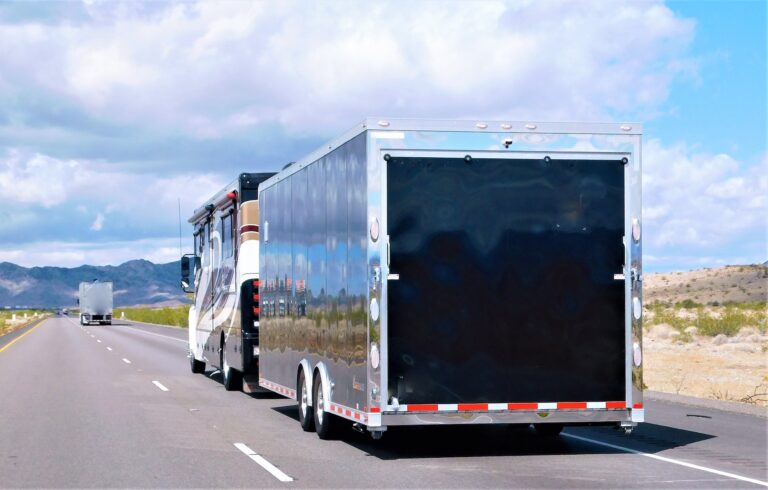
When our RV needs repairs, we must make a big choice. Should we fix it ourselves or go to a professional?
Real owners share surprising cost differences. A 2012 Tiffin cost $17,981 in repairs over 45 months. A 1999 Country Coach needed $23,268 in just 27 months. These numbers show how repair expenses can impact our travel budgets.
Looking at real spending helps us make smarter choices. Warranty coverage saved $5,721 on the Tiffin repairs. Independent shops often cost less than authorized centers. But certified technicians have skills we might not have.
We look at when DIY saves money and when pros are better. These insights help us find the most cost-effective approach for our needs.
Key Takeaways
- Real-world repair expenses can exceed $20,000 over just a few years of ownership
- Warranty coverage significantly reduces out-of-pocket costs for newer units
- Independent repair shops typically offer lower rates than authorized service centers
- Self-repair saves labor costs but requires proper tools and expertise
- Professional technicians provide certified work and access to original equipment parts
- Tracking all repair expenses helps identify the most cost-effective maintenance strategy
Understanding RV Maintenance Basics
To make smart choices about RV maintenance expenses, we need to know the basics. RV maintenance covers simple tasks and complex repairs. Knowing this helps us decide if we can do it ourselves or go to the dealership.
Common RV Maintenance Tasks
Our RVs need care in several areas all year. Engine maintenance includes oil changes, filter swaps, and coolant checks. These steps keep our engines running well and avoid big repair costs.
Tire care is also key. We should check tire pressure every month, rotate tires, and look for wear. Real RV owners spend $3,200 for a full set of six tires when it’s time to replace.
Electrical systems need regular checks too. We must test batteries, clean connections, and check charging systems. Plumbing tasks include winterizing water lines, replacing filters, and keeping holding tanks in good shape.
- Engine oil changes every 3,000-5,000 miles
- Tire pressure checks monthly
- Battery maintenance quarterly
- Roof inspections twice yearly
- Brake system checks annually
Average Lifespan of RV Components
Different RV parts last different lengths of time. Knowing these lifespans helps us plan for future RV maintenance costs.
Tires usually last 3-6 years, depending on use and storage. Batteries need to be replaced every 2-4 years. Air conditioning units can last 10-15 years with proper care.
More expensive parts last longer but cost more to replace. Diesel fuel pumps can cost $8,500 to replace on older models. But, upgrades like Sumo Springs might cost $1,450 and improve ride quality for years.
| Component | Average Lifespan | Replacement Cost Range |
|---|---|---|
| Tires | 3-6 years | $1,800-$3,200 |
| Batteries | 2-4 years | $200-$800 |
| Air Conditioning | 10-15 years | $1,200-$3,000 |
| Water Heater | 8-12 years | $800-$1,500 |
Importance of Regular Maintenance
Regular maintenance keeps our RVs safe and in good shape. Preventive care is cheaper than fixing big problems on the road. Neglecting simple tasks can lead to expensive failures.
Safety is the biggest reason for regular maintenance. Brake failures, tire blowouts, and electrical issues can be dangerous. Regular checks catch problems before they become hazards.
Keeping our RVs in good shape also helps their resale value. Proper maintenance records can add thousands to resale value when we’re ready to sell.
Regular maintenance stops small problems from becoming big ones. A $50 belt replacement can save us from a $2,000 engine repair. This approach keeps our RV maintenance expenses steady and affordable over time.
The Benefits of DIY Maintenance
DIY RV maintenance is very rewarding. It’s not just about saving money. It also improves our RV experience in many ways.
As we get better at fixing our RVs, we learn more. Each fix builds our skills and knowledge. This helps us a lot on our RV adventures.
Financial Benefits
DIY RV maintenance can save a lot of money. RV owners can save thousands by doing repairs themselves. One RVer fixed their 1999 Country Coach for much less than dealerships.
Dealerships charge $100 to $150 an hour for labor. Doing repairs ourselves saves us this money. Even big repairs cost less when we only pay for parts.
Independent shops are cheaper because they have lower costs. But doing it ourselves saves the most money. We can use this money for upgrades, travel, or an emergency fund.
Knowledge and Confidence Building
Every DIY task is a chance to learn. We learn about our RV’s systems. This helps us fix problems faster and make better choices.
Learning these skills makes us more confident. We don’t need to rely on service centers as much. Each successful repair boosts our confidence and prepares us for more challenges.
Learning also helps us talk better with professionals. We can explain problems clearly and understand their advice.
Schedule Freedom
DIY maintenance lets us work on our own schedule. We don’t have to rush to meet shop deadlines. This means we can do things right the first time.
We can order parts whenever it’s convenient. No more waiting weeks for service appointments. This is very helpful during busy travel times.
Fixing problems right away stops them from getting worse. We can do routine maintenance when we need to, not just when the shop is free.
The Downsides of DIY Maintenance
Before we start doing our own RV repairs, we must face the challenges. DIY can save money but also has big downsides. These can turn our savings into big expenses.
Knowing these challenges helps us decide when to do repairs ourselves. Let’s look at the main problems RV owners face.
Time Commitment for DIY Tasks
Many new DIY fans are surprised by how much time repairs take. What a pro can do in two hours might take us all weekend.
Learning to do repairs takes a lot of time. Reading manuals and watching videos adds hours to each task. Even simple jobs like changing air filters can take all day.
RV owners often spend weeks trying to fix things that pros can solve in minutes. This can mess up our schedules and delay trips.
Potential for Mistakes
Even with good RV maintenance tips, mistakes can happen. Our repairs might even make things worse.
Electrical issues are very risky. One wrong move can damage expensive parts or be dangerous. Plumbing mistakes can cause water damage that costs a lot to fix.
Fixing our mistakes can cost more than hiring a pro. Some owners have spent more fixing their errors than the original repair would have been.
Access to Specialized Tools
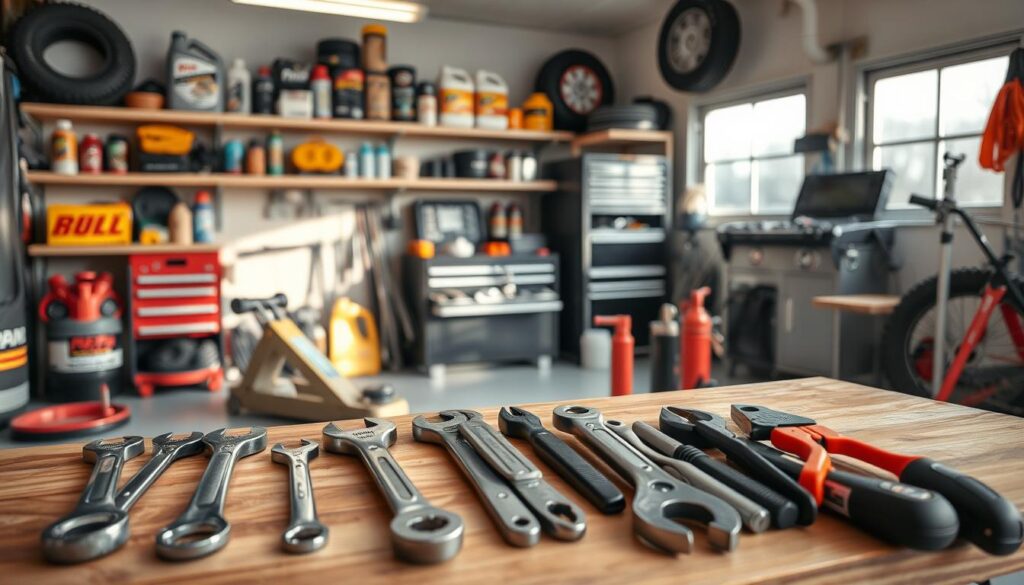
Modern RVs need special tools that most of us don’t have. These tools are expensive and can strain our RV maintenance budget.
Here are some tools needed for different tasks:
| Maintenance Area | Required Tools | Typical Cost Range | Usage Frequency |
|---|---|---|---|
| Engine Diagnostics | OBD scanners, multimeters | $200-$2,000 | Occasional |
| Suspension Work | Hydraulic jacks, alignment tools | $500-$3,000 | Rare |
| Electrical Systems | Oscilloscopes, wire crimpers | $300-$1,500 | Moderate |
| Appliance Repair | Refrigerant gauges, specialty wrenches | $400-$2,500 | Infrequent |
Many tools cost a lot but are used only sometimes. Things like hydraulic lifts and special diagnostic tools are expensive and not used often.
Storage is also a problem. RVs don’t have enough space for big tools. This makes it hard to keep them when not in use.
While DIY is good for simple tasks, complex repairs need a pro. Smart RV maintenance tips include knowing when to call a professional.
An Overview of Dealership Services
RV dealership maintenance offers certified techs, brand-specific knowledge, and warranty protection. These service centers have the expertise and equipment we can’t match at home. Knowing what dealerships offer helps us decide how to care for our RVs.
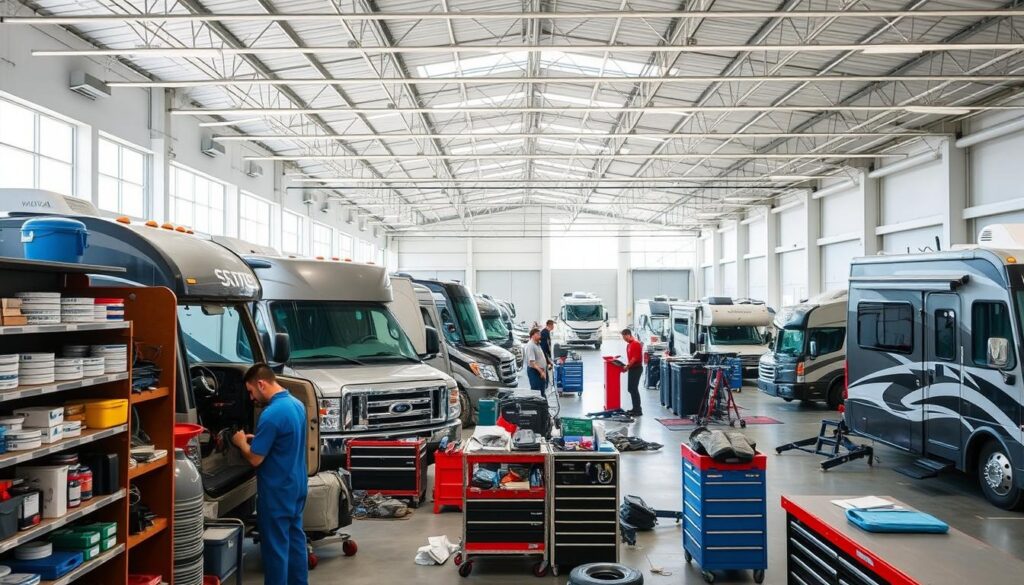
Dealerships do more than just basic repairs. They have direct ties to manufacturers and keep up with the latest tech for our RV models.
What Dealerships Typically Offer
RV maintenance dealerships provide a range of services to keep our RVs in top shape. They handle everything from oil changes to complex electrical system checks. They also offer maintenance packages that follow the manufacturer’s guidelines.
Dealerships can fix engine and transmission issues, repair appliances, and maintain the exterior. They can also handle warranty repairs, recall work, and technical service bulletins that others might not know about.
| Service Category | Typical Services | Average Time | Warranty Coverage |
|---|---|---|---|
| Routine Maintenance | Oil changes, filter replacements, fluid checks | 2-4 hours | Yes, if under warranty |
| System Diagnostics | Engine codes, electrical troubleshooting | 1-3 hours | Diagnostic fees may apply |
| Appliance Service | HVAC, refrigeration, water systems | 4-8 hours | Depends on component warranty |
| Structural Repairs | Slide-outs, awnings, exterior panels | 1-5 days | Usually covered if defect-related |
Specialized Knowledge of RV Models
Dealership techs get brand-specific training for our RV make and model. They know the quirks, common issues, and best repair methods for our RV.
This knowledge is key for complex systems like slide-outs. Dealership techs have access to manufacturer bulletins and recall info that others might miss.
“The difference between a dealership technician and a general mechanic is like the difference between a specialist and a general practitioner – both are skilled, but one knows your specific ‘patient’ inside and out.”
Warranty Considerations
Warranty coverage is a big reason to choose dealership service. Using authorized service centers is often essential to keep warranty coverage. Many warranties require repairs by certified techs using OEM parts.
Using dealership services can save us thousands of dollars. For example, one Tiffin motorhome owner got $5,721 in warranty repairs that would have cost more at an independent shop. The peace of mind from warranty-backed repairs is worth the extra cost.
Dealerships keep detailed service records that manufacturers recognize for warranty claims. This is key for proving maintenance was done right.
The Financial Aspect of Dealership Maintenance
Dealership RV maintenance costs have many layers that affect our RV maintenance budget. Dealership services are often pricier than DIY. But knowing the full cost helps us make better choices.
Dealerships charge more due to overhead costs. Yet, warranty coverage can greatly reduce costs. One RV owner saw their monthly costs fall from $400 to $272 with a good warranty.
Breakdown of Typical Costs
Understanding RV maintenance expenses at dealerships means looking at each cost part. Labor rates vary from $120 to $180 per hour, based on location and dealership size.
Here’s what affects dealership prices:
- Specialized technician training – Certified mechanics get paid more
- Facility overhead – Modern service bays and tools raise costs
- Parts markup – Dealerships add 20-40% to part prices
- Diagnostic fees – Testing with computers costs extra
Big repairs like engine work or transmission replacement can cost $5,000 to $15,000. Routine visits usually cost $200 to $800, based on services.
Financing Options Available
Many dealerships offer financing to help with RV maintenance expenses. These options can make big repairs more affordable.
Common financing choices include:
- Extended payment plans – Pay over 6-24 months
- Credit partnerships – Special financing through third-party lenders
- Service contracts – Pre-paid maintenance packages
- Warranty extensions – More coverage for future repairs
Interest rates vary, from 0% promotional offers to 15-25% for standard credit. We should compare these rates with personal loans or credit cards before deciding.
Potential Hidden Fees
Smart RV owners watch for extra charges that can increase their RV maintenance budget. These fees often show up on final invoices.
Common hidden costs include:
- Shop supplies – Cleaning materials, fluids, and consumables ($15-50)
- Environmental fees – Waste disposal and recycling charges ($10-25)
- Diagnostic time – Troubleshooting beyond initial estimates
- Storage fees – Daily charges if repairs take longer than expected
Always ask for detailed estimates upfront. Ask about extra fees and get written confirmation of total costs before starting work. This way, we avoid budget surprises and keep control over our maintenance costs.
Comparing Costs: DIY vs. Dealership
Looking at the cost difference between DIY and dealership maintenance is more than just prices. We must think about the initial cost, long-term savings, and the value of expert advice. Making smart choices is key to saving money on RV maintenance.
Real-world data shows big differences in RV maintenance costs based on our choice. Some save thousands by doing it themselves. Others find great value in dealership services, thanks to warranty coverage.
Initial Investment in Tools and Supplies
Starting DIY maintenance means spending money on tools and supplies first. The cost is between $500 to $2,000 for a good set. This includes basic tools, diagnostic gear, and RV-specific items.
Must-haves are socket sets, wrenches, multimeters, and hydraulic jacks. Advanced DIY folks might get oscilloscopes or engine scanners. These tools last a long time, spreading the cost over many maintenance sessions.
Dealerships have top-notch equipment worth a lot. We pay more for their tools but don’t have to worry about storage or upkeep.

Long-Term Savings Analysis
The numbers show big savings with DIY maintenance over time. DIY saves 60-70% on labor for simple tasks. An oil change that costs $150 at a dealership can be $40 DIY.
Some DIY owners save over $3,000 a year. These savings add up fast, often covering the cost of tools in the first year.
“I spent $1,200 on tools my first year but saved $2,800 in labor costs. Now I’m saving even more each year.”
But dealership maintenance has its own benefits. It offers warranty protection and expert advice. Complex repairs need special knowledge to avoid big mistakes.
When It Makes Sense to Go with a Dealer
Dealership services are better for some situations, like warranty work. One owner had $5,721 in covered repairs through their warranty.
Complex electrical issues, engine problems, and structural repairs are best left to pros. The risk of mistakes is too high for DIY in these cases.
Busy owners might choose dealership services for quick, professional help. This is better than spending weekends on DIY tasks.
New RV owners get a lot from dealership expertise. They can learn as they go and start DIY maintenance later.
Understanding Your RV Warranty
Knowing your RV warranty is key to smart maintenance. It helps protect your investment and saves money. Your warranty tells you when to fix things yourself and when to go to a service center.
Warranties and maintenance costs are linked in complex ways. Some warranties cover big repair costs, but limit your maintenance choices. This can affect your long-term plans.
How Warranties Affect Maintenance Choices
Your warranty decides if you can do RV maintenance DIY or need a pro. Most warranties need authorized repairs for covered parts. Even if you’re good at DIY, you might need a dealership for warranty coverage.
Extended warranties can save a lot of money. We’ve seen owners get $5,721 in repairs covered. But, they had to pay $500 for each claim. This made them think twice about when to fix things.
Some warranties let you do simple tasks like oil changes yourself. Others need a pro for everything. Reading your warranty terms carefully helps you know what you can do yourself.
When to Use Authorized Service Centers
Authorized service centers are needed when your warranty is at risk. Big problems like electrical issues or structural damage need a pro. RV maintenance dealership services are a must, even if you like DIY.
Use authorized centers for any repair that might be covered. The savings from warranty coverage can be worth the higher dealership prices. Plus, authorized techs have the right tools and info.
Emergency repairs are tricky. Some warranties let you use non-authorized places, but others need approval first. Knowing this helps you make the right choice in stressful times.
Importance of Keeping Records
Keeping detailed maintenance records is vital. They protect your warranty and increase your RV’s value. We keep files with service dates, parts, and work done. This proves you’ve taken good care of your RV.
Digital records are best for most people. Photos and logs of maintenance and repairs are easy to keep. Cloud storage keeps them safe, even if physical copies get lost or damaged.
Professional service records are more convincing for warranty claims. But, detailed DIY records are valuable for non-warranty repairs and selling your RV. Consistency in record-keeping is more important than the format.
Seasonal Maintenance Considerations
Seasonal maintenance is key to keeping your RV in good shape. It stops expensive damage from weather. Each season has its own challenges that need special care.
Knowing what each season needs is important. Weather can damage your RV if you’re not ready. By following seasonal routines, you keep your RV running well all year.
Preparing Your RV for Winter
Winter prep is all about protecting against freeze damage. We drain all water systems to avoid pipe bursts. This is key when it gets cold.
We add RV antifreeze to all drain traps and the toilet bowl. We also store the battery in a warm place and check its charge monthly. Proper battery care during winter storage extends its life significantly.
Protecting the outside is also important in winter. We wax the RV before storing it and cover it if we can. We check tire pressure monthly and move the RV to avoid flat spots.
These RV maintenance tips for winter include sealing gaps and using moisture absorbers. This stops pests and mold.
Tips for Spring Maintenance
Spring is for getting your RV ready for camping. We inspect all systems that were dormant in winter. This includes testing the water pump and flushing the water system.
Our spring checklist also includes testing appliances and inspecting the roof. Early detection of seal problems prevents expensive water damage.
Battery care is key for active use. We clean terminals, check electrolyte levels, and test the charging system. We also change oil and filters for a smooth season.
These RV maintenance tips help catch small issues before they get big.
Year-Round Care Strategies
Year-round care stops many seasonal problems. We do a monthly check on basic systems, even when not using the RV. This includes tire pressure and smoke detector tests.
Our RV maintenance plan includes keeping service records. This helps us plan for replacements and avoid failures. Regular cleaning and waxing protect the exterior from damage.
Fixing small issues right away saves money. Preventive care costs far less than emergency repairs on the road.
| Season | Key Tasks | Estimated Time | Cost Range |
|---|---|---|---|
| Winter Prep | Winterization, battery storage, exterior protection | 4-6 hours | $50-150 |
| Spring Startup | System testing, de-winterization, safety checks | 3-5 hours | $75-200 |
| Summer Care | AC service, cooling system checks, tire rotation | 2-3 hours | $100-300 |
| Fall Maintenance | Heating system prep, seal inspection, storage prep | 3-4 hours | $60-180 |
Following these RV maintenance tips creates a reliable routine. It protects your investment all year. The time and money spent on preventive care saves on repairs and extends component life.
Factors Influencing Maintenance Decisions
Our RV maintenance choices are influenced by many factors. These vary from person to person. Understanding these factors helps us make a maintenance plan that fits our needs, skills, and budget.
Deciding between DIY and dealership service depends on our situation. This choice affects our RV maintenance costs and whether we save money or spend it on professional help.
Type of RV and Usage Patterns
The type of RV we have impacts our maintenance needs and costs. Diesel pushers need special knowledge and parts, making dealership service a better choice. Gas motorhomes and travel trailers are easier to maintain ourselves.
How often we use our RV also matters. Full-time RVers spread their RV maintenance expenses over many nights, lowering costs. Weekend users pay more per trip but have more time for DIY projects.
Using our RV a lot wears out parts faster. Frequent travelers need quick, reliable service from dealerships. Occasional users might save money by doing maintenance themselves.
Experience Level of the Owner
Our mechanical skills and RV knowledge affect what we can do ourselves. Experienced owners can handle complex repairs and save on labor costs. Beginners should start with simple tasks like checking fluids and cleaning filters.
Knowing our limits prevents costly mistakes. Some owners start with simple tasks and learn more as they go.
“The biggest mistake new RV owners make is attempting repairs beyond their skill level, which often leads to more expensive professional fixes.”
Learning takes time and patience. But, dedicated DIY enthusiasts can save a lot of money in the long run.
Availability of Resources
Our resources include money, time, workspace, and tools. Adequate workspace and proper tools are essential for safe DIY maintenance. Urban RV owners might not have enough space, making dealership service better.
Busy people might choose dealership service to save time. Retired owners often have more time for DIY projects.
Access to parts and tools also matters. Rural owners face longer waits for parts. Urban areas offer better access to DIY supplies and professional services. These factors help us choose the most cost-effective maintenance approach.
Real-Life Case Studies
Learning from RV owners who chose DIY or dealership maintenance is priceless. We’ve gathered stories from those who went each way. Their experiences show the costs and benefits of each choice.
These stories teach us what works and what doesn’t. They also show common mistakes to avoid. The best RV maintenance often mixes both DIY and dealership services.
Successful DIY Maintenance Stories
Sarah owns a 1999 Country Coach. She spent $23,268 on maintenance in 27 months. She did most repairs herself, saving thousands on labor.
Her biggest challenge was a fuel pump failure. The part cost $8,500, but she saved $2,000 by installing it herself. She spent two weekends learning from YouTube and forums.
“I was scared of the fuel pump job, but the dealership wanted $10,500. I figured I could mess it up twice and save money. Taking my time and following the manual worked perfectly.”
Sarah knew her limits. She did electrical, plumbing, and mechanical repairs with confidence. But for complex issues, she sought professional help.
Dealership Maintenance Experiences
Tom’s 2012 Tiffin had $17,981 in repairs over 45 months. He mostly used dealership services. His warranty covered $5,721 in repairs, but he paid $2,000 in deductibles.
Tom chose dealership services for his full-time travel and lack of storage. His warranty required authorized service centers for major repairs.
The dealership caught problems early. They found a slide-out motor failure before it stranded Tom. This cost more upfront but saved him from emergency repairs.
| Owner | RV Model | Total Maintenance Cost | Time Period | Primary Approach |
|---|---|---|---|---|
| Sarah | 1999 Country Coach | $23,268 | 27 months | DIY with professional consultation |
| Tom | 2012 Tiffin | $17,981 | 45 months | Dealership with warranty coverage |
| Maria | 2015 Winnebago | $8,450 | 36 months | Hybrid DIY/dealership |
| James | 2008 Forest River | $12,200 | 48 months | Mostly DIY |
Lessons Learned from Both Approaches
These stories teach us about RV maintenance choices. The most successful owners mix DIY and dealership services. They do routine tasks themselves but get help for complex issues.
Sarah learned DIY maintenance works with time and learning. She joined online communities and got advice from experienced RVers. This helped her with unfamiliar problems.
Tom found dealership maintenance good for frequent travelers. He could get help anywhere and had warranty peace of mind during expensive repairs.
Both owners stress the value of keeping records. Sarah logged every repair and maintenance task. Tom kept all warranty paperwork and service receipts. These records helped with warranty claims and resale value.
“Don’t be afraid to ask questions at the dealership. I learned more about my RV by watching their technicians work than I did from any manual.”
The key lesson is flexibility. Successful RV owners adjust their maintenance based on the situation. They use dealership services for warranty work and complex issues. They do routine tasks themselves to save money and stay connected to their RV.
Most importantly, these owners never let pride or stubbornness guide their decisions. They know when to ask for help. This balanced approach leads to better outcomes and lower costs.
Conclusion: Your RV, Your Choice
Choosing between DIY and dealership maintenance depends on your situation. We’ve looked at both options. Each has benefits for different RV owners.
Finding Your Balance
Smart RV owners mix both DIY and dealership maintenance. You can do simple tasks like checking tire pressure. But, leave complex electrical work to pros.
This way, you get the best value. Think about your skills, time, and budget when deciding.
Creating Your Plan
First, list what your RV needs for maintenance. Separate routine tasks from big repairs. Keeping records is key, no matter who does the work.
Your warranty also plays a role in your choices. Be ready to adjust as your needs change.
Moving Forward
Make a maintenance plan that fits your life. Find reliable service providers for tough repairs. Learn from RV forums, manuals, and by doing things yourself.
The best maintenance plan is one you’ll stick to. Your RV needs care that matches your skills and situation.