Starting with recreational vehicle camping can be scary for beginners. Many worry about making mistakes that cost a lot or look silly. This fear stops some from traveling.
But, most RV park mistakes to avoid can be stopped with the right prep and knowledge. We’ve listed the top mistakes new campers make. Our tips will make your first camping trips smooth and fun.
We’ll cover everything from basic rules to setting up your RV. These tips will keep you from those awkward moments that ruin trips. Remember, every pro was once a newbie.
The RV community is very welcoming and helpful to newbies who are respectful and eager to learn. Most experienced travelers love to share their knowledge with beginners.
Key Takeaways
- Most beginner camping errors are easily preventable with proper preparation and research
- Understanding basic campground etiquette helps you blend in seamlessly with experienced campers
- Technical setup knowledge prevents costly damage and embarrassing situations
- The camping community is supportive and willing to help respectful newcomers
- Learning from common pitfalls saves time, money, and stress during your adventures
- Confidence comes from preparation, not talent or experience
1. Understand RV Park Etiquette
Following basic RV park etiquette makes your stay better. It’s key to know and follow the rules from the start. These simple steps help everyone enjoy their outdoor adventure more.
Knowing the RV park do’s and don’ts is more than just following rules. It’s about respecting others, keeping your area clean, and making the place welcoming. When we all follow these basics, we make memories and friends.
Respect Quiet Hours
RV parks have quiet times from 10 PM to 6 AM. Try to keep it quiet during these hours. Turn off generators, speak softly, and avoid loud activities.
Don’t play music too loud, even during the day. Keep TV volumes down and tell kids to be quiet when playing near others. Respecting quiet hours helps everyone get rest and keeps peace.
Proper Waste Disposal
Proper waste disposal is more than just using dump stations. Always throw trash in the right bins and recycle when you can. Never dump gray water on the ground – it harms the environment and breaks rules.
Keep your area clean by picking up after yourself and pets. Secure trash bags to keep wildlife out. Try to leave your site cleaner than you found it, showing respect for others.
Sharing Amenities
When using shared spaces like laundry or bathhouses, be considerate of others. Clean up after yourself, don’t hog equipment, and follow posted rules.
Don’t walk through other RVers’ sites – use the paths. Let kids have fun but teach them about rules. Drive slowly and don’t idle for too long.
Small acts like saying hello, helping out, and keeping your site tidy are important. These actions show respect and make your trip special.
2. Make Reservations in Advance
Booking your RV site early saves you from a lot of trouble. After hours of driving, finding every campground full is a nightmare. This beginner RV park advice can turn a good trip into a bad one.
Many campgrounds have rules that surprise first-timers. They might limit RV age or size, charge extra for kids, or only accept seniors. They also fill up fast during busy times.
Reserving early lets you check these rules. You can read reviews, see what amenities they offer, and make sure they meet your needs. This is key for any RV park first-timer guide.
Know Peak Seasons
Knowing when campgrounds are busiest helps you plan better. Peak times vary by location but follow similar patterns. Summer, holidays, and special events are the busiest times.
Book three to six months ahead for popular spots during peak times. National parks and coastal areas fill up quickly. Mountain areas get crowded during fall foliage.
Weather affects camping too. Places like Arizona and Florida are busy in winter. Beach camps get full in summer.
| Season | Booking Timeline | Popular Destinations | Average Occupancy |
|---|---|---|---|
| Summer (June-August) | 4-6 months ahead | National Parks, Lakes, Mountains | 85-95% |
| Fall (September-November) | 3-4 months ahead | New England, Mountain Regions | 70-85% |
| Winter (December-February) | 2-3 months ahead | Arizona, Florida, Texas | 80-90% |
| Spring (March-May) | 2-3 months ahead | Desert Southwest, Southeast | 65-80% |
Avoid Last-Minute Stress
Scrambling for places to stay at the end of a long drive is stressful. We’ve seen families driving around, only to find every spot taken. This is your worst nightmare during busy times.
Last-minute bookings often mean you get a bad spot. You might get a small site near the bathhouse or between big rigs. Advanced planning helps you choose better spots.
Emergency situations can happen, and being flexible helps. Keep a list of backup campgrounds. Many parks save a few spots for walk-ins, but don’t count on it during busy times.
Booking early also lets you get cancellation-friendly reservations. Most parks have good cancellation policies if your plans change. This gives you peace of mind and protects your money.
3. Choose the Right RV Park for Your Needs
Choosing the right RV park is key before you go. The wrong choice can ruin your trip. Parks vary in what they offer and who they’re for.
Some parks have rules that might surprise you. Upscale resorts only take motorhomes and trailers under 10 years old. Others might not fit big Class A vehicles. Always check these before booking to avoid surprises.
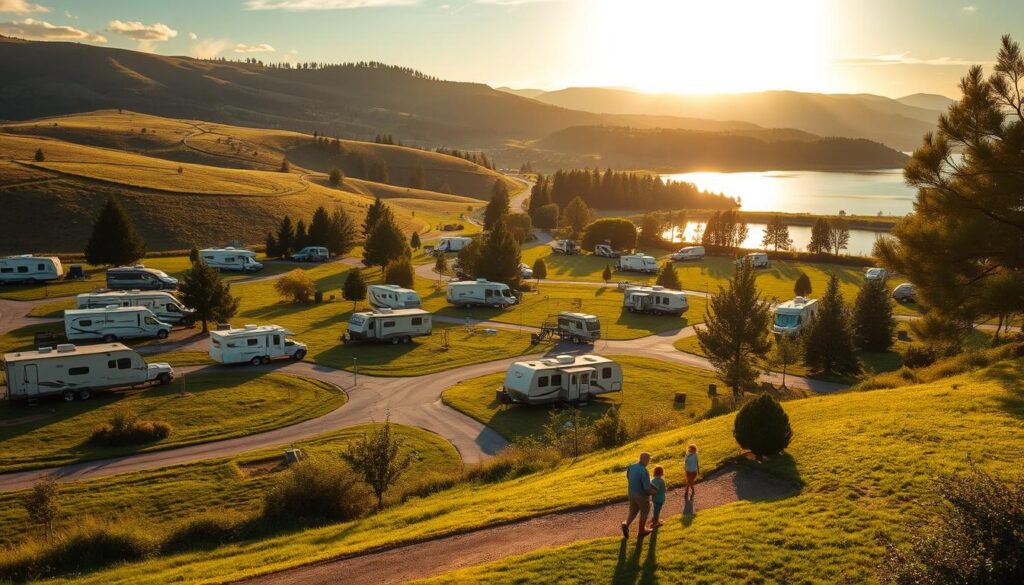
Knowing what you want helps you choose faster. Do you want quiet or fun? Do you need special features? These questions help find the perfect park.
Family-Friendly vs. Adult-Only
Family-friendly parks are great for kids. They have playgrounds, pools, and fun activities. The vibe is lively and social, with kids everywhere.
But, these parks might charge extra for kids. This can add up for big families. Always ask about child policies when booking. Some parks also have age limits for certain areas.
Adult-only parks are for those seeking peace. They attract retirees and couples. Many have age-restricted communities with golf, fitness, and social events.
Choosing depends on who you’re traveling with. Best RV park practices mean checking the park’s focus before booking.
Accessibility Features
Accessible parks welcome everyone, not just those with special needs. Look for paved sites, accessible bathhouses, and easy terrain. These benefits everyone, not just those with needs.
Level sites make setup easy for all. Paved paths are safe, even when it’s wet. Accessible bathhouses have grab bars and roll-in showers.
Some parks offer more than basic access. They have golf cart rentals and shuttle services. These RV park tips help find inclusive parks.
Call parks directly to talk about accessibility needs. Online info might not be enough. Talking to staff ensures they can meet your needs.
| Park Type | Best For | Common Amenities | Typical Restrictions |
|---|---|---|---|
| Family-Friendly | Families with children, social travelers | Playgrounds, pools, organized activities | Child fees, noise during day hours |
| Adult-Only | Couples, retirees, quiet seekers | Golf courses, fitness centers, social clubs | Age minimums (usually 55+) |
| Luxury Resorts | Upscale travelers, newer RVs | Concierge services, spas, fine dining | RV age limits (under 10 years) |
| Accessible Parks | Mobility-challenged travelers | Paved sites, accessible facilities | Limited availability, advance booking required |
Choosing the right RV park means knowing what you need. Research each option well. This way, your trip will be great and memorable.
4. Familiarize Yourself with RV Park Rules
Many new RV campers make mistakes because they don’t learn the park rules first. This can ruin a fun trip. Each RV park has its own rules that affect your stay.
Learning the rules shows respect for the park and others. It also helps you avoid trouble and extra costs.
- Pet policies – leash rules, where to go, and cleaning up after pets
- Visitor restrictions – when guests can come and where to park
- Generator usage – when you can use it and how loud it can be
- Campfire regulations – how to stay safe and where to have fires
- Vehicle parking – where to park extra cars
Review Policies Before Arrival
Always ask for park rules when you book. This helps avoid mistakes. Reading them early helps you pack right and know what to expect.
Look closely at rules about equipment. Some parks have rules about satellite dishes or awnings. They might also limit outdoor furniture or decorations.
Knowing these rules early helps you prepare. You’ll know what to bring and how to set up your site right away.
Know Check-In and Check-Out Times
Check-in and check-out times vary by park. Most have specific windows for these times. Following them helps avoid trouble or extra fees.
Check-in is usually between 1:00 PM and 6:00 PM. Check-out is before 11:00 AM or noon. But, these times can change, so always check with the park.
Arriving late can cause problems. The office might not be open to help you. Late arrivals often have trouble setting up in the dark, which can be unsafe.
If you’ll arrive late, tell the park ahead of time. Many parks have plans for late arrivals or can make special arrangements if you let them know.
5. Arrive During Daylight Hours
Arriving at an RV park during the day can make a big difference. It can turn a stressful experience into a smooth one. This is one of the most important RV park newbie tips we can share.
Planning your route ahead of time is key. Getting lost in an RV is much more stressful than in a car. You need to watch out for low bridges, legal turns, and safe spots to turn around.
Daylight arrivals help you see your way. We recommend arriving during the day whenever you can.
Easier Navigation
Seeing your surroundings clearly makes navigating easier. Site numbers, road layouts, and facility locations are easier to spot in the daylight. You can avoid obstacles like low-hanging branches and narrow turns.
The check-in process is smoother during the day. Park staff can give better directions. You can also find your campsite without struggling to read signs in the dark.
These RV park newbie tips help avoid the frustration of circling the park. Daylight navigation lets you make confident decisions about your route.
Safety Considerations
Safety is a big concern when setting up your RV in a new place. Daylight hours provide better visibility to check your campsite. You can spot hazards like uneven ground and drainage issues.
Setting up your RV needs good lighting. Electrical hookups, water connections, and sewer attachments are easier to handle in the daylight. This avoids mistakes that could damage your RV or create safety hazards.
Daylight arrivals also let you meet neighbors and find park facilities. You can locate restrooms, laundry, and emergency exits before dark. This is very helpful for your comfort and safety.
| Arrival Time | Navigation Benefits | Safety Advantages | Setup Ease |
|---|---|---|---|
| Daylight Hours | Clear visibility of signs, obstacles, and site numbers | Better hazard identification and safe maneuvering | Proper connections without rushing or straining |
| After Dark | Difficult to read signs and spot obstacles | Increased risk of accidents and setup errors | Challenging connections requiring flashlights |
| Emergency Night Arrival | Call park for specific directions and guidance | Request assistance from park staff if available | Focus on basic hookups, complete setup in morning |
If you must arrive after dark, call the park first. Get directions and ask about obstacles. Park staff can provide valuable guidance for nighttime arrivals and help ensure your safety.
Remember, these basic RV park newbie tips can make your camping experience better. Planning your arrival time well sets the stage for a great stay.
6. Set Up Camp Correctly
How you set up your RV is key to comfort and appliance work. It’s a critical skill for RV success. Doing it right prevents damage and keeps your stay smooth.
New RVers often rush setup without realizing its importance. Your RV’s functionality depends heavily on correct positioning and leveling. Taking time to do this properly saves you from costly repairs and uncomfortable nights.
Leveling Your RV
Your RV refrigerator needs to be level to work right. RV refrigerators use absorption cooling systems that require level positioning to function properly. Running them while tilted can cause permanent damage and expensive repairs.
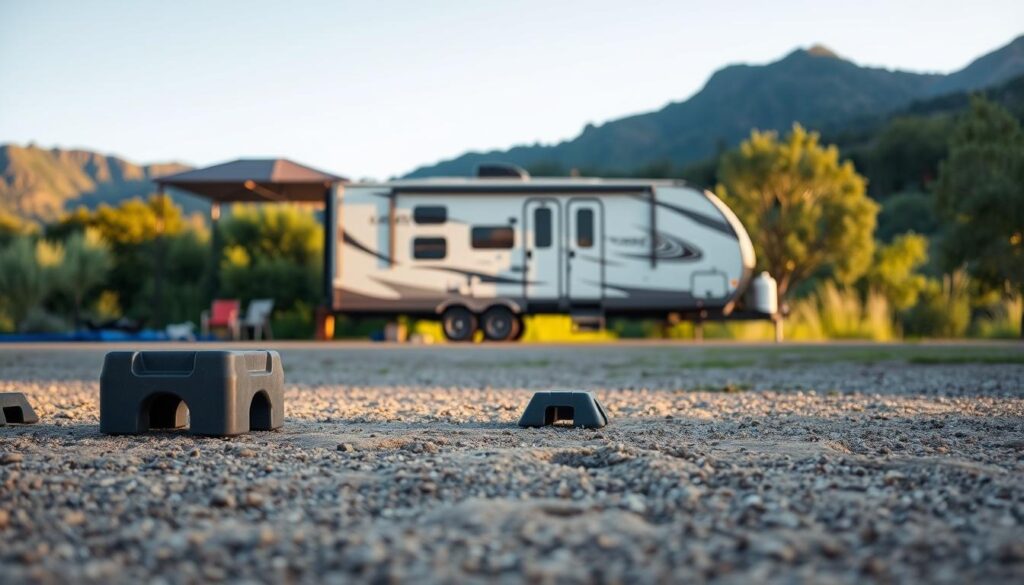
Invest in quality leveling blocks and a reliable bubble level. These tools help you achieve proper positioning before extending slides or connecting utilities. Check your level from front to back and side to side before settling in.
Start by placing leveling blocks under the low side of your RV. Drive slowly onto the blocks until your bubble level shows you’re even. Some RVers prefer hydraulic leveling systems, but manual blocks work just as well with practice.
Positioning for Privacy
Smart positioning makes your campsite more enjoyable. Think about where your windows, doors, and outdoor living spaces face. Natural barriers like trees or bushes provide excellent privacy screens.
Consider traffic patterns in the park when choosing your spot. Avoid positioning your main door or patio area facing high-traffic walkways. This simple consideration makes your space feel more private and peaceful.
Sun exposure affects your comfort and energy usage. Position your RV to take advantage of morning sun while avoiding harsh afternoon heat. Also, think about prevailing winds, as they impact both comfort and awning stability.
Access to utilities is important for convenience. Position your RV so water, electric, and sewer connections reach easily without stretching hoses or cords. Proper utility positioning prevents tripping hazards and equipment strain.
Walk around your chosen spot before committing. Check sight lines from your windows and outdoor areas. A few extra minutes of planning creates a much more comfortable campsite setup.
7. Be Mindful of Your RV Size
Many new RVers don’t realize how important it is to match their RV size with campsite space. We’ve seen many campers get upset when they find their RV is too big for the site. This mistake can ruin your trip and leave you looking for new places to stay.
Your RV’s size matters a lot. Weight distribution and size awareness are key for safe driving and comfort at the campsite. Knowing these before you go helps avoid problems and keeps everyone safe.
Checking Site Dimensions
We always measure our RV’s total length before booking a campsite. This includes bike racks, spare tire carriers, and any other extensions. Don’t just measure the RV body itself – those extra accessories add a lot of feet to your length.
Most campgrounds list site dimensions in their booking systems. But we always call ahead to check these measurements. Some parks haven’t updated their listings in years, and things like trees or picnic tables might make the space smaller.
Book sites that are at least three feet longer than your RV’s total length. This extra space helps you move around and position your rig right. We learned this the hard way after getting stuck in tight spots.
Understanding Weight Limits
Your RV’s Gross Vehicle Weight Rating (GVWR) is the maximum safe weight it can handle. Going over this limit can affect braking, steering, and stability. We check our weight often to stay safe.
Where you put the weight matters as much as the total weight. Heavy items should go low and in the middle of your RV. This keeps your center of gravity stable and prevents dangerous swaying while driving.
We recommend weighing your loaded RV at truck stops or RV service centers. Many campers are surprised to find they’re overweight, after loading up with supplies and gear.
| RV Class | Typical Length Range | Average GVWR | Common Site Requirements |
|---|---|---|---|
| Class A | 26-45 feet | 22,000-36,000 lbs | 50+ foot sites with full hookups |
| Class B | 17-24 feet | 8,500-11,000 lbs | 30+ foot sites, basic hookups |
| Class C | 20-35 feet | 12,500-18,000 lbs | 40+ foot sites with utilities |
| Travel Trailer | 12-40 feet | 3,000-12,000 lbs | Varies by trailer size |
Payload capacity is how much weight you can add to your empty RV. This includes passengers, cargo, water, and fuel. Never exceed your payload limits – doing so can harm your vehicle’s structure and safety systems.
We keep track of our gear and supplies. This helps us stay within weight limits and avoid overpacking. Remember, water alone weighs over eight pounds per gallon, so full tanks add a lot of weight to your rig.
8. Learn About Local Wildlife
Many RV campers don’t realize how important it is to prepare for wildlife. Every place has its own animals. From raccoons to bears, knowing about local wildlife keeps us safe and lets us enjoy the outdoors.
We research the animals at our destination before we go. This helps us change our habits and pack the right things. Knowing about local wildlife helps avoid dangerous meetings and keeps our family and the animals safe.
Protecting Your Food
Storing food is more than just closing doors. Even small crumbs can attract animals like ants and big mammals. We use tight containers for all food, including pet food and snacks.
Outdoor cooking areas need extra care. We put away cooking stuff right after using it. Never leave food outside your RV at night, as it can attract animals and is dangerous.
Throwing away food scraps right is key to keeping wildlife away. We use special containers for them. Grease and oils are handled carefully because their smell can travel far.
Keeping Your Pets Safe
Pets face special challenges in new places. They meet new smells, sounds, and dangers that can make them act strangely. Keeping pets on a leash at all times keeps them safe from harm.
Most RV parks have rules for pets on leashes. We follow these rules to keep our pets safe. We also make sure their shots are up to date before we travel.
Dangers for pets vary by place and season. We watch out for poisonous plants, aggressive animals, and extreme weather. Knowing these dangers helps us decide when and where our pets can safely explore.
We carry a pet first aid kit and find vet clinics near our destination. This makes us feel better and ensures we can get help fast if our pets get hurt.
9. Engage with Fellow Campers
Talking to other RVers can lead to new friends, learning, and fun adventures. The RV community is known for being friendly and helpful. They love to guide newcomers through the world of RV travel.
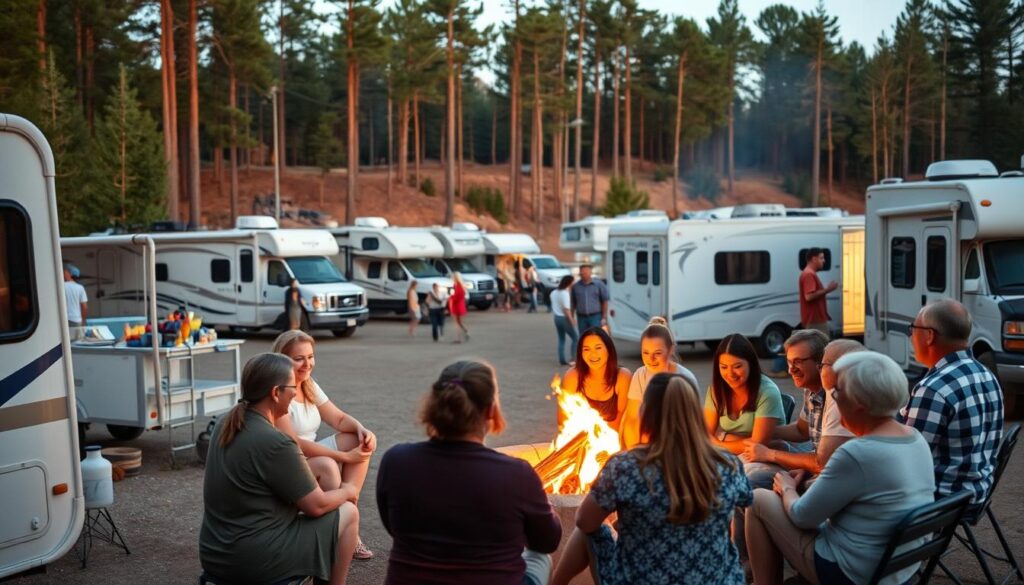
Most RVers know the challenges of RV life. They share their own mistakes to help others avoid them. This makes it easy for strangers to become friends over campfires and coffee.
Building Community
Start by saying hello to your neighbors when you arrive. A simple wave or chat can start a lasting friendship.
Joining in community activities is a great way to meet people. RV parks often have potluck dinners, game nights, and group activities. These are perfect chances to meet others with similar interests.
Helping others with their RV can show your community spirit. Whether it’s helping with parking or lending a tool, these acts build connections.
Sharing Useful Tips
The knowledge of fellow campers is very valuable. They often know the best places to eat and see, and how to solve common problems.
Feel free to ask for advice on anything. Most RVers are eager to share their experiences and tips. This exchange helps everyone and makes RV travel special.
Keep a notebook for tips and contacts from people you meet. These connections can lead to future meetups and lasting friendships.
| Community Building Activity | Benefits | Best Time to Engage | Difficulty Level |
|---|---|---|---|
| Introducing yourself to neighbors | Creates initial connections | Upon arrival | Easy |
| Joining campfire gatherings | Builds deeper relationships | Evening hours | Easy |
| Participating in park activities | Meets multiple people quickly | Scheduled event times | Moderate |
| Offering assistance to others | Demonstrates community spirit | When help is needed | Easy |
Building community takes time and interest in others. The camping experience gets better when you invest in these relationships. Stay open to the wisdom and friendship that fellow travelers offer.
10. Pack Smart for Your Stay
Knowing what to pack is key for a great RV trip. Many people pack too much, making their trip messy. Think of your RV as a home on wheels.
Too much stuff can be a big problem. It makes your RV heavy, which uses more fuel. We’ve seen RVs have trouble on hills or even blow a tire because they’re too heavy.
Start by asking if you use something every day. If not, maybe you don’t need it. This helps you pack only what you really need.
Essential Items to Bring
Your list should include things that can be used in many ways. Choose clothes that can be worn in different weather. A rain jacket can also keep you warm.
Don’t forget about your kitchen. Choose items that can be used for more than one thing. Collapsible containers save space but are useful.
Always pack safety items. This includes a first aid kit, tools, and flashlights. These are important for safe travel.
Comfort items make your RV feel like home. But pick wisely. A favorite pillow or blanket can make you happy without taking up too much space.
Checking Off Essentials
Make a detailed checklist to avoid forgetting things. Start with categories like safety and clothes. Only list things you’ve used before or really need.
Update your checklist after each trip. Note what you used and what you didn’t. Things you never use probably don’t need to come along.
Beginners should pack light and learn as they go. Start with the basics and add more as you need it. This way, you can pack better without feeling overwhelmed.
Use apps to help with packing. Many RVers use apps to keep track of their list. It helps avoid packing the same thing twice and makes sure you don’t forget anything important.
Remember, you can buy things you forget at your destination. It’s better to buy locally than to pack too much. This helps new RVers avoid the stress of overpacking.
11. Stay Hydrated and Nourished
Staying well-fed and hydrated is key for a great RV park experience. Some people pack too little food and struggle to find meals. Others pack too much and it spoils before they can use it. Smart nutrition planning helps avoid these problems and keeps your energy up.
RV camping is physically demanding. Setting up camp, exploring, and adapting to new climates all use a lot of energy. We tell campers that proper preparation prevents poor performance when it comes to staying nourished on the road.
Importance of Hydration
Staying hydrated is even more important when RV camping. Active outdoor activities and new climates can lead to dehydration quickly. We drink water all day, not just when we’re thirsty.
Different places need different amounts of water. Desert camping needs more water than lakeside stays. Higher altitudes also increase your water needs. We always carry more water than we think we’ll need and keep it in our RV.
Dehydration can sneak up on you. Headaches, fatigue, and irritability are signs you need more water. Prevention is always easier than treatment, so we drink water regularly.
Planning Easy Meals
Meal planning for RV camping is different from cooking at home. Simple, one-pot recipes are great for limited space and equipment. We choose meals that are easy to clean up and quick to make after a long day.
Make a detailed grocery list before your trip. This ensures you have enough food without waste. Prepare some ingredients ahead and have canned goods as backups. Easy-to-prepare items save the day when you’re tired or busy.
Think about storage and cooking equipment when planning meals. Choose recipes that fit your RV’s kitchen and don’t need special tools. We include healthy snacks and water to keep energy up during active days.
Plan for different scenarios during your stay. Weather changes or unexpected activities might change your meal plans. Having flexible options keeps you nourished no matter what happens.
12. Keep an Eye on Your RV Maintenance
Proper RV maintenance is key for a great camping trip. Regular upkeep stops embarrassing breakdowns at RV parks. It keeps our adventures smooth.
Essential Pre-Trip Inspections
Before we leave, we do a full walk-around check. We look at our antenna, lights, storage doors, and electrical connections. We also test our turn signals and brake lights.
Tire pressure is very important. Low tire pressure can cause blowouts on the way to our favorite spots. We check fluid levels, make sure our hitch is secure, and check safety chains.
Ongoing Maintenance Routines
Regular maintenance is more than just pre-trip checks. We do oil changes, filter replacements, and brake inspections as needed. We also check our roof, seals, and clean the wastewater tank.
Being proactive with maintenance boosts our confidence on the road. It helps us avoid expensive repairs that can ruin our trips. A clean, well-maintained RV also makes a good impression at fancy RV parks.
By keeping up with maintenance, our RV stays reliable for many adventures. A well-maintained RV lets us explore new places without worry.