Imagine you’ve just arrived at your dream campground, ready to relax and enjoy nature. But then, you face a maze of connections, outlets, and hoses that seem confusing. You’re not alone in feeling overwhelmed by these essential camping amenities.
Learning about Understanding RV Hookups can feel like learning a foreign language. These connections to electricity, fresh water, and waste disposal systems are key to comfortable camping. Without proper knowledge, even experienced campers can struggle with these systems.
We’re here to guide you through the RV hook up essentials that every camper needs to master. Our goal is simple: make the mystery of campground utilities clear and easy to follow. We’ll break down each system step by step, making these connections as easy as plugging in your phone at home.
Whether you’re planning your first adventure or looking to expand your camping expertise, we’ll help you embrace the freedom of the RV lifestyle with complete confidence. Let’s dive into the world of campground amenities and unlock the secrets to seamless camping.
Key Takeaways
- RV hookups provide essential utilities including electricity, fresh water, and waste disposal at campgrounds
- These connections are available at most established campgrounds, RV parks, and designated camping facilities
- Proper hookup knowledge ensures comfort, safety, and functionality during your camping adventures
- Each utility system has specific connection procedures and safety requirements to follow
- Mastering these basics allows you to camp confidently at any equipped facility
- Understanding hookup types helps you choose the right campgrounds for your needs
The Basics of RV Hookups Explained
RV hookups are key to making your RV a home away from home. They connect you to modern conveniences while camping. This lets you enjoy comforts of home, even in remote spots.
RV hookups give you access to important utilities. Without them, camping trips would be less comfortable. You’d rely more on your RV’s systems, which need regular upkeep.
What Are RV Hookups?
RV hookups are external utility connections to campground infrastructure. They include electricity, water, sewage, and sometimes cable TV or internet.
You can find these hookups at campgrounds, RV parks, dump stations, and city facilities. A full hookup site offers water, electricity, and sewer. This is the most complete setup.
Partial hookup sites give you one or two services, like electricity and water. This guide shows that campgrounds vary in service and price.
| Hookup Type | Services Included | Typical Cost Range | Best For |
|---|---|---|---|
| Full Hookup | Water, Electric, Sewer | $35-$80/night | Extended stays, luxury camping |
| Partial Hookup | Electric + Water | $25-$50/night | Weekend trips, moderate comfort |
| Electric Only | 30/50 amp power | $20-$35/night | Short stays, basic needs |
| Dry Camping | No hookups | $10-$25/night | Self-sufficient RVers, budget camping |
Why Are They Important?
RV hookups are key because they extend your camping capabilities. They give you access to fresh water for cooking, cleaning, and drinking. This way, you don’t run out of water fast.
Electric hookups power your appliances, air conditioning, and charging devices. This means you don’t have to use generators all the time. It saves fuel and reduces noise in campgrounds.
Sewer connections make waste disposal easy. This is great for long stays, as your tanks won’t fill up quickly.
These connections also offer peace of mind and comfort. They attract many to the RV lifestyle. You can enjoy outdoor adventures with modern conveniences, making your journey better and less stressful.
Types of RV Hookups Overview
RV hookups are divided into three main types. They make your RV feel like home while you’re traveling. Knowing about them helps you pick the best campgrounds and get ready for different trips.
Each type has its own role. Water hookups give you fresh water. Electrical connections power your stuff. Sewer systems take care of waste, keeping your RV clean.
Water Hookups
Water hookups give you constant access to clean water. This is from city water or private wells. Most campgrounds have water that’s safe to drink, but quality can change.
The water hookup uses a threaded connection. Pressure regulators are key because campground water can be too strong. Without them, you might damage your RV’s pipes and appliances.
Water hookups usually have 40-80 PSI pressure. Your RV likes 45-55 PSI. So, a good pressure regulator is a must for every trip.
Electric Hookups
An RV electric hookup gives you power for your appliances and lights. Campgrounds offer 30-amp or 50-amp service. Some have both at the same site.
30-amp service gives 3,600 watts, good for smaller RVs and simple needs. It’s for lighting, small appliances, and one air conditioner. Most travel trailers and smaller motorhomes use 30-amp.
50-amp service offers 12,000 watts, for bigger RVs with more appliances. Bigger motorhomes and luxury fifth wheels need 50-amp for everything to work.
Sewer Hookups
RV sewer hookups handle waste from your tanks. They let you empty your tanks without going to a dump station. This makes your stay more convenient and longer.
Full hookup sites have sewer connections right at your site. These connections are 3-inch pipes that connect to your RV’s waste valve. Make sure the hose is right for good drainage.
Some places have dump stations instead of sewer hookups. You drive to a spot to dump your waste. It’s less convenient but good for short stays or saving money.
Knowing about these hookups helps you choose better campgrounds and plan your trips. Each system adds to your comfort and convenience, making your RV feel like home.
Water Hookup Essentials
Knowing the basics of water hookups makes RV camping better. Good water access is key to a great trip. The right tools and knowledge help avoid common issues.
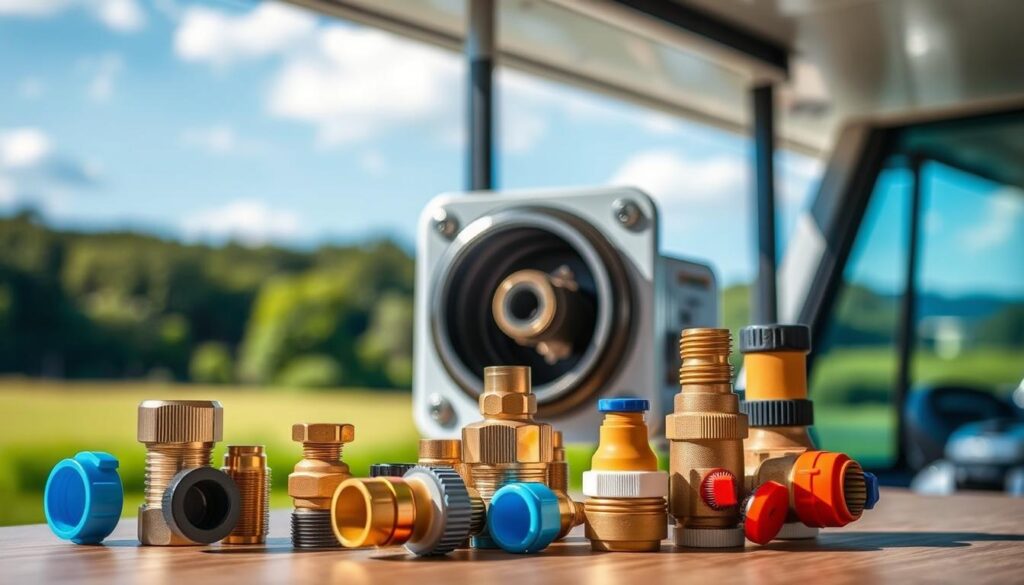
RVs need special water connection gear. BPA-free hoses keep your water safe. A 25-foot hose is usually enough, but extra length is good for tricky spots.
Don’t forget water filters and pressure regulators. They protect your RV’s pipes. Quality gear is a smart investment.
Connection Types
Campgrounds have different water connections. Standard spigots fit most hoses. But, older places might need adapters.
Group water stations serve many sites. They need longer hoses and might have special connections. Knowing how to use them saves time.
Frost-free spigots are for cold places. They’re deeper and need special care. Always check the type before hooking up.
| Connection Type | Common Locations | Required Equipment | Special Considerations |
|---|---|---|---|
| Standard Threaded Spigot | Most modern campgrounds | Standard RV hose | Check thread compatibility |
| Group Water Station | Older or budget campgrounds | Extended hose length | May require 50+ feet of hose |
| Frost-Free Connection | Cold climate areas | Standard hose with adapters | Deeper ground installation |
| Well Water Systems | Rural or primitive sites | Pressure regulator essential | Test water quality first |
Common Issues and Solutions
Low water pressure is a big problem. It can come from the campground or clogged filters. First, check your filter, then the source pressure.
Bad water is a health risk. Sulfur smells, discoloration, or unusual tastes mean the water is bad. Always use filters and test new water sources.
Leaks waste water and damage your RV. Cracks or worn parts cause these issues. Carry spare parts and check connections before each trip.
Frozen lines are a winter problem. Proper insulation and heating prevent this. Know how to keep your lines from freezing.
Understanding RV Electrical Systems
RV electrical systems might seem hard, but learning the basics is key for fun trips. It’s important to manage power well for lights, appliances, and climate control. Knowing your RV’s electrical needs helps avoid damage and keeps you comfy on the move.
Most RVs use either 30-amp or 50-amp electrical systems. The type affects which appliances you can use at once. It’s not just about the number of prongs on your cord.
Voltage Requirements
RVs run on 120 volts AC for most things. But, it’s the amperage that really matters for your trip.
A 30-amp system gives you about 3,600 watts of power. This is enough for:
- LED lights in your RV
- Small kitchen appliances like microwaves and coffee makers
- One air conditioning unit
- Water heater and refrigerator
- Charging your phone and laptop
On the other hand, 50-amp systems offer around 12,000 watts of power. This lets you use more powerful appliances like:
- Multiple air conditioning units
- Electric space heaters
- Washer and dryer combos
- Large refrigerators
- Electric water heaters
Knowing these limits helps avoid overloading your system. Too many appliances at once can cause problems.
Types of Power Sources
RVers have many power options based on their camping style. Each option has its own benefits and challenges.
Campground pedestals are the most reliable. They offer 30-amp or 50-amp connections with steady voltage. Always check the pedestal before plugging in.
Generators offer freedom from campground hookups. Portable ones usually give 30-amp power, while built-in ones can do 50-amp. Use generators quietly during quiet hours.
Solar power is great for boondocking. It charges your batteries during the day. But, it’s not enough for big appliances like air conditioning.
Your RV’s 12-volt system powers essentials like lights and water pumps. Most RVs have a converter for charging batteries from shore power.
Knowing your RV hook up diagram helps choose the best power source. Good electrical knowledge means safe connections and avoids costly fixes.
How to Connect to Electric Hookups
Learning about RV Hookups starts with knowing how to connect electricity safely. This is key for a good camping trip. It powers your lights, fridge, air conditioning, and more.
Remember, electricity is serious. A wrong move can hurt your gear or be dangerous. We’ll guide you safely through each step.
Step-by-Step Connection Process
First, turn off all electronics in your RV before connecting. This step stops damage from power spikes or bad wiring. Also, turn off your main breaker and unplug things like computers and TVs.
Then, check the campground’s electrical pedestal well. Look for damage, burn marks, or loose wires. Make sure the outlet fits your RV’s plug, which is usually 30-amp or 50-amp.
Use a polarity tester to check the wiring before plugging in. This tool ensures the wires are right. Wrong wiring can harm your RV or start fires.
If your RV’s plug doesn’t fit, use the right adapter. 30-amp to 50-amp adapters are common. But remember, an adapter limits power to 30 amps, even if it’s a 50-amp outlet.
Next, plug in your surge protector before your RV’s power cord. This device guards against power spikes and surges. Good surge protectors also watch voltage and cut power if it’s too high.
Plug in your RV’s power cord firmly last. Turn on the pedestal’s breaker, then your RV’s. Make sure everything works before you relax for the night.
Essential Safety Practices
Never touch electrical connections with wet hands or in the rain. Water and electricity are deadly together. Wait for it to dry or use the right gear.
Always use surge protectors made for RVs. They’re cheaper than fixing damaged appliances. They’re key RV hook up essentials.
Keep your electrical connections dry and clean. Moisture can cause corrosion and bad connections. Store your power cord right to avoid damage from UV rays and weather.
If you smell burning, see sparks, or lights flicker, stop right away. These signs mean serious electrical issues. They need a pro to fix. Your safety is more important than convenience.
Regular checks of your electrical system prevent most issues. Get your RV’s electrical system checked yearly by experts. This keeps you safe and your gear working longer.
Sewer Connection Basics
Managing waste systems is key to enjoying RV adventures. Sewer connections are vital for a clean and comfortable camping experience. They work alongside your RV water hookup and RV electric hookup to keep everything running smoothly.
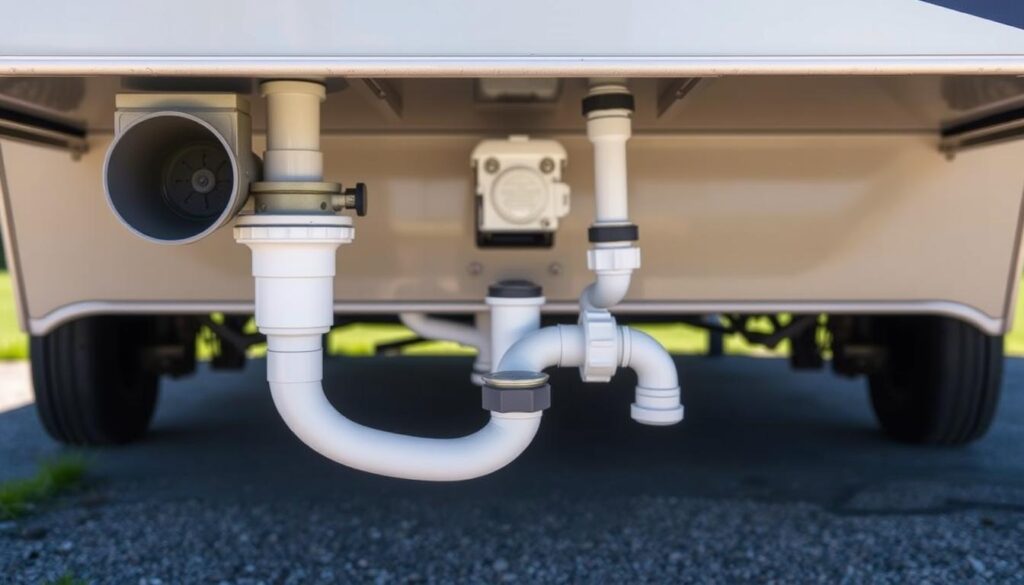
Campgrounds usually have sewer hookups as white PVC pipes. These pipes handle black water from toilets and gray water from sinks and showers. Quality equipment makes all the difference in waste management.
How to Hook Up Properly
Hooking up to sewer systems needs attention and the right technique. Here are the essential steps for safe and effective hookups.
Start with the right equipment. Good sewer hoses are key. Cheap hoses can leak or break, causing problems. Look for hoses with secure fittings and durable construction.
- Attach the hose to your RV’s waste outlet first
- Connect the other end to the campground’s sewer inlet
- Ensure all connections are tight and secure
- Keep the hose sloped downward for proper drainage
- Support the hose with proper brackets or supports
Some campsites have hookups that let you keep valves open all the time. Others need you to visit dump stations often. Always check campground policies before leaving valves open.
Waste Management Best Practices
Good waste management keeps your RV systems and the environment safe. These practices help your equipment last longer and avoid expensive repairs.
Follow the golden rule: dump black water before gray water. Gray water helps clean your hose after black water disposal. This keeps odors away and keeps your system clean.
Use the right chemicals in your black water tank. These products break down waste and control odors. Never use regular household cleaners that can harm your tank or the environment.
- Add water to your black tank before and after each use
- Use RV-specific toilet paper that dissolves easily
- Avoid putting grease or food scraps down drains
- Rinse your hose thoroughly after each use
- Store hoses in designated compartments when traveling
Regular maintenance is key to avoiding big problems. Flush your tanks with clean water and the right cleaning solutions. This removes buildup and keeps sensors working right.
Being responsible with waste management helps protect campgrounds and nature for the future. Proper sewer connections are more than just convenience. They show we care about the places we visit.
Importance of Water Quality in RVs
We often take water quality for granted until it affects our health or damages our RV systems. Campground water sources vary a lot across the country. What seems fine in one place might have harmful bacteria or chemicals in another.
Every RV hook up guide stresses water quality. It affects your morning coffee to your evening shower. Poor water quality can make you sick, damage your plumbing, and make your RV taste and smell bad.
Knowing about water contamination helps you choose the right filtration systems. When you connect to any water source, you might face various contaminants. These can be found in both municipal and well water systems.
Common Contaminants
Campground water has many contaminants that can harm your health and RV systems. Chlorine is common, added to kill bacteria but can taste and smell bad.
Sediment and dirt particles often show up in older plumbing. They can clog your faucets, damage your water pump, and make water murky.
Bacteria and microorganisms are serious health risks, more so in areas with poor water treatment. E. coli, giardia, and other harmful organisms can cause severe stomach problems.
Agricultural runoff adds pesticides and herbicides to water, mainly in farming areas. These chemicals can cause long-term health problems, even in small amounts.
Treating RV Water
There are many water treatment options, from simple to complex systems. Your choice depends on your budget, space, and the water quality you usually find on the road.
Basic inline hose filters are the cheapest way to protect against chlorine and sediment. They connect to your water hose and remove common contaminants without needing installation or maintenance.
Multi-stage filtration systems offer better protection by combining different filters. They include sediment filters, carbon filters, and sometimes UV sterilization to get rid of bacteria and viruses that simpler filters miss.
Reverse osmosis systems are the best for RV water treatment. They are more expensive and complex but remove almost all contaminants, including dissolved minerals, chemicals, and microorganisms that other filters can’t.
Pressure regulators work with any filtration system to protect your RV’s plumbing. Campground water pressure is often too high, and a good regulator keeps it safe.
| Filter Type | Contaminants Removed | Cost Range | Maintenance Required |
|---|---|---|---|
| Inline Hose Filter | Chlorine, sediment, basic chemicals | $20-$50 | Replace every 3-6 months |
| Multi-Stage System | Chlorine, sediment, chemicals, some bacteria | $150-$400 | Replace filters annually |
| Reverse Osmosis | All contaminants, minerals, bacteria, viruses | $300-$800 | Replace membranes every 2-3 years |
| UV Sterilizer | Bacteria, viruses, microorganisms | $200-$500 | Replace UV bulb annually |
Remember, water quality also affects your RV sewer hookup experience. Clean water reduces buildup in your gray water tank and keeps your plumbing system working well.
Investing in proper water treatment protects your health and RV. Clean water makes your appliances last longer, saves you money on repairs, and keeps your RV hook up guide experience positive and worry-free.
Troubleshooting RV Hookups
RV hookup issues are common, but knowing how to fix them keeps your trip smooth. We’ve got the best RV hook up tips to solve problems fast and safely. Knowing these common issues saves you time, money, and stress on the road.
Most problems fall into a few categories. We can solve them with simple tools and techniques. Prevention is key, but knowing how to fix issues is also important.
Water System Malfunctions
Low water pressure is a big complaint from RV owners. Often, it’s the campground’s supply, not your RV’s plumbing. First, check the water pressure at other sites in the campground.
Use a pressure regulator to protect your plumbing. These cost under $30 and prevent costly damage. Set it between 40-50 PSI for best results.
Clogged water filters reduce flow. Replace them every three months or sooner if pressure drops. Always carry spare filters because campground stores rarely have your model.
“A good pressure regulator is like insurance for your RV’s plumbing system – you don’t appreciate it until you need it.”
Frozen pipes are a big problem in cold weather. Disconnect and drain your hose when it gets cold. Use heated hoses or wrap standard hoses with heat tape for winter camping.
Power Connection Problems
Electrical issues need careful attention. Improper connections can damage your RV’s expensive parts. Always test the campground’s power before connecting your RV with a polarity tester.
Surge protectors are key against power fluctuations at old campgrounds. Choose progressive surge protectors that watch voltage and disconnect when it’s dangerous.
When learning how to hook up RV utilities, remember 30-amp and 50-amp connections are different. Never use adapters without knowing their limits. A 30-amp to 50-amp adapter just changes the plug, not the power.
Tripped breakers mean overloaded circuits. Turn off non-essential appliances before resetting breakers. Repeated tripping suggests a serious problem that needs a pro.
Waste System Blockages
Sewer blockages are the worst RV problem, but good maintenance prevents most. Always use enough water when flushing toilets and avoid flushing wrong things like feminine products or too much toilet paper.
Tank sensors can give false readings with waste buildup. Clean sensors monthly with tank cleaners or the ice cube method. Fill your fresh water tank, add ice to the black tank, then drive around to clean the sensors.
Use a sewer hose support system to keep hoses straight. Sagging hoses trap waste and cause blockages. Your hose should slope down at least one inch per ten feet.
For emergency blockage removal, be patient and use the right tools. Use a tank wand to break up clogs from above, or try enzyme-based treatments. Never use harsh chemicals that can damage seals and valves.
If blockages keep happening, get professional help. Don’t risk damaging expensive parts by forcing solutions that aren’t working.
RV Hookup Etiquette
Campground etiquette is more than just hooking up. It’s about being kind and taking care of the place. Good manners at RV sites make everyone happy and help keep things nice.
Knowing how to behave starts before we get to the campsite. Most RVers follow rules that make camping fun for all. These rules cover how to arrive and leave.
Best Practices at Campgrounds
Arriving at a campground needs patience and thought for others. We should check in during the right times and drive slow. Respect for quiet hours means keeping it down after 10 PM and before 8 AM.
Setting up our RV hookups should be done carefully. Following the RV hook up instructions helps avoid problems. Campgrounds often have specific rules for hookups.
- Keep our campsite clean and organized
- Respect boundaries of neighboring sites
- Use shared facilities considerately
- Control pets and children appropriately
- Dispose of waste properly at designated areas
Dump stations need us to be clean and quick. Always wear gloves, rinse well, and don’t block others. Proper waste management keeps the environment safe and clean.
Respecting Site Rules
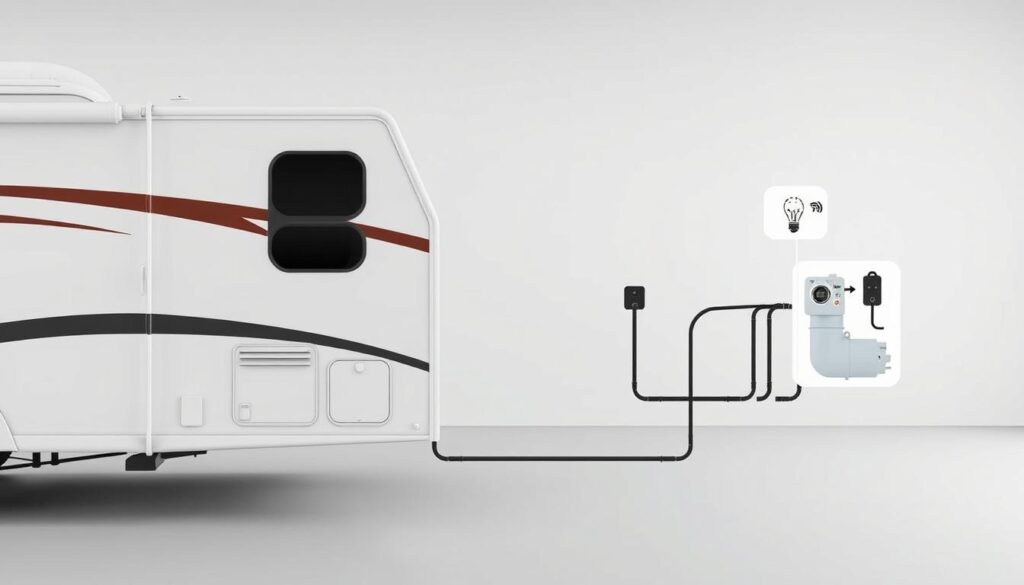
Every campground has its own rules to keep things nice. These rules might cover generator use, fire safety, and how to hook up. Reading the RV hook up diagram helps us know what’s needed.
Site rules might limit vehicles, certain activities, or how to hook up. If we’re unsure, we should ask staff. Following posted guidelines avoids problems and keeps facilities safe.
How long we can stay varies by campground. Some let us stay longer, while others have shorter stays. We respect these limits to let others enjoy the campsite. Advance reservations help the campground plan and serve us better.
When we leave, we should clean up and disconnect properly. Leaving the site better than we found it is important. This makes future visits better for everyone and keeps the campground’s good name.
Being friendly with staff and other campers makes our RV trips better. We can share tips, recommend places, and make friends. Respectful behavior makes us welcome everywhere we go.
The Benefits of Full Hookup Campsites
Choosing a campsite with full hookups makes your RV feel like home. You get water, electricity, and sewer connections all in one. This might seem expensive at first, but many RV travelers find it worth it.
Full hookup sites make camping easy. You don’t have to worry about running out of water or electricity. This peace of mind is great for both new and experienced RVers.
Why Choose Full Hookups?
Understanding RV hookups means knowing when convenience is more important than cost. Full hookups have many benefits that make them a good choice.
Unlimited utility access is a big plus. You can use your air conditioner all day, take long showers, and run appliances without worry. This makes camping more comfortable.
The convenience factor is huge. You don’t have to look for dump stations or water fill-ups. Everything you need is right at your RV site.
- Continuous water supply for cooking, cleaning, and bathing
- Reliable electricity for all appliances and devices
- Direct sewer connection eliminates tank monitoring
- Extended stay capability without utility interruptions
- Reduced wear on RV systems from constant cycling
Full hookups also protect you from the weather. In extreme temperatures, you can stay comfortable without using up all your resources.
Savings on Resources
Full hookup sites might cost more at first, but they can save you money in the long run. These sites can help you save on travel expenses in several ways.
Reduced fuel costs are a big savings. You won’t have to drive to dump stations or water sources. This saves time and gas, which is great for longer trips.
Your RV systems will also last longer with full hookups. Water pumps, holding tanks, and batteries don’t have to work as hard. This means less maintenance costs over time.
Membership programs like Passport America offer big discounts at nearly 1,900 RV parks. With 50% off, the high nightly rate becomes more affordable.
Think about these ways you can save money:
- Extended stays are cheaper with unlimited utilities
- No extra fees for dump station usage or water refills
- Less generator use saves fuel and maintenance costs
- Less propane for heating and hot water
The key is to choose the right hookup level for your camping style. Full hookups are best for longer stays, bad weather, or when you want the most comfort and convenience.
Frequently Asked Questions about RV Hookups
We’ve collected the most common questions about RV hookups. These questions come from real RV travelers. Our answers offer practical solutions and clear guidance for all RVers.
Whether you’re new to RVing or want to improve your skills, these questions will help. We cover everything from basic equipment needs to preparation tips.
What Do I Need to Start?
Essential equipment is key for successful RV connections. For your RV water hookup, you’ll need a drinking water hose, water pressure regulator, and proper fittings. Never use a regular garden hose for drinking water connections.
Your RV electric hookup needs a surge protector, electrical adapter, and extension cord rated for RV use. A 30-amp to 15-amp adapter is useful when pedestals don’t match your RV’s needs.
For sewer connections, gather a sewer hose, elbow fittings, and disposable gloves. Quality equipment prevents messy situations and ensures reliable connections throughout your trip.
Invest in good equipment from the start. Cheap hoses and adapters often fail when you need them most, leaving you stranded without essential services.
Additional items include a multimeter for electrical testing, Teflon tape for water connections, and a basic tool kit. These extras solve common problems quickly and keep your trip on track.
How to Prepare for a Hookup?
Preparation starts before you leave home. Check your RV’s electrical requirements, water system capacity, and waste tank levels. Know whether your RV uses 30-amp or 50-amp electrical service.
Research your destination campground’s amenities and hookup types. Some parks offer full hookups while others provide only partial services. This information helps you pack the right equipment and set proper expectations.
Test all your equipment at home first. Run water through hoses, check electrical connections, and inspect sewer components for damage. Prevention beats emergency repairs on the road.
Create a hookup checklist that covers each step of the connection process. This systematic approach reduces mistakes and ensures you don’t forget critical safety steps like turning off power before making electrical connections.
Pack your equipment in an organized manner with frequently used items easily accessible. Label storage compartments and keep instruction manuals handy for reference during setup.
Lastly, arrive at your campsite with plenty of daylight remaining. Hookup procedures become much more challenging in darkness, and you’ll appreciate having time to troubleshoot any unexpected issues that arise.
Final Thoughts on RV Hookups
Learning RV hookups opens doors to many adventures across America’s beautiful landscapes. We think this guide has given you the key to travel safely and confidently.
Embracing the RV Lifestyle
The skills you’ve learned are the start of successful RV camping. Begin with simple connections and grow your skills over time. Each RV sewer hookup and electrical connection gets easier with practice.
The RV community welcomes newcomers with open arms. Fellow travelers share tips and help when needed. Don’t be shy to ask questions at campgrounds or join online forums for RV wisdom.
Enhancing Your Road Trip Experience
Knowing how to hook up properly makes your travels fun. You can now explore national parks, find hidden gems, and make memories with family and friends.
These basic skills help you beyond just camping. They’re useful for weekend trips or long journeys across the country. Knowing how to connect water, electric, and sewer ensures comfortable adventures.
The open road is full of possibilities. With this knowledge, you’re ready to enjoy the freedom and flexibility of RV life. Safe travels and happy camping!