Starting with a recreational vehicle can be a big step. But, learning about your motorhome’s water system is easy. We’re here to help you understand the basics.
Your RV’s water system is similar to your home’s. The big difference is independence from city water lines. Your RV has its own water tanks and waste containers.
This system includes pumps, heaters, and tanks. Everything works together for hot showers, clean water, and working toilets. You’ll have all the comforts of home on the road.
We’ll show you each part of your water system. You’ll learn about water flow and waste management. Good maintenance keeps your RV running smoothly on every trip.
Key Takeaways
- Recreational vehicle water systems operate independently from city water supplies using onboard tanks
- Your motorhome includes fresh water storage, waste holding tanks, water pumps, and heating systems
- The system provides hot showers, clean drinking water, and functional toilets anywhere you travel
- Understanding basic components helps you maintain reliable performance during trips
- Self-contained water systems give you freedom to camp in remote locations
- Regular maintenance prevents costly repairs and ensures consistent water pressure
Understanding the Basics of RV Plumbing
We’ll explain the key parts of your RV plumbing systems. Your RV has two main systems that work well together. These systems let you enjoy modern comforts on the go.
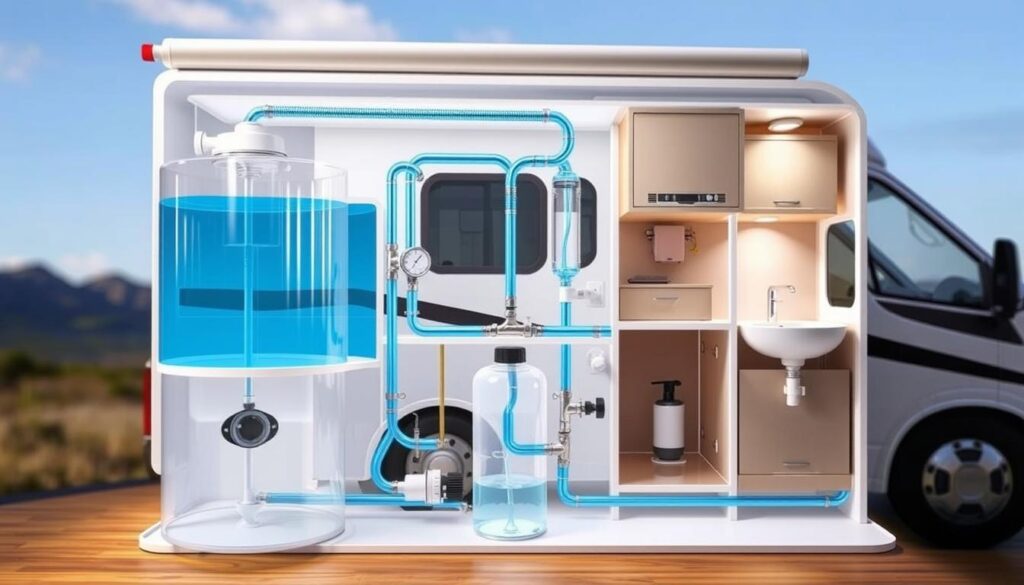
The fresh water system brings clean water to your taps, shower, and toilet. Your water pump is the heart of this system. It creates pressure for water wherever you need it.
The waste water system collects and stores used water until disposal. It has separate tanks for keeping things clean. Your RV is like a self-contained home with all it needs.
Your water heater makes sure you have hot water for showers and dishes. It works on its own, giving you hot water anywhere. The best part of your RV water system is its freedom from external hookups.
Unlike home plumbing, RVs use storage tanks for water. Waste goes into separate tanks, not sewers. This setup offers camping freedom with home comforts.
Common RV Plumbing Systems to Know
Your RV has three plumbing systems. Each one has its own job and needs care. Knowing about these systems helps keep your RV running well and avoids big problems on the road. We’ll explain each system so you can take care of your RV’s water needs.
These three systems are key to your RV’s water setup. A good RV plumbing diagram shows how they work together. Learning about each system helps you do routine upkeep and catch problems early.

Freshwater System
Your freshwater system gives you clean drinking water. It includes the tank, pump, water heater, and pipes to your faucets and shower. The tank size depends on your RV’s type and size.
Class A motorhomes have 75 to 100 gallons of fresh water. Fifth wheels hold 50 to 90 gallons. Class C RVs have 35 to 60 gallons. Class B vans have the least, with 15 to 40 gallons.
The water pump keeps the system pressurized when you’re not hooked up to city water. The water heater makes sure you have hot water for showers and dishes. Keep the tank clean and check the pump regularly.
Wastewater System
The wastewater system, or black water system, handles waste from your RV toilet. It needs careful attention and proper disposal. Black water is a health risk if not handled right.
Only dump black water at designated stations or approved places. Never dump it on the ground or in storm drains. The system has sensors to tell you when it’s full.
Important RV plumbing tips for black water include using RV toilet paper and tank treatments. Always wear gloves when handling dump hoses and connections.
Greywater System
The greywater system collects wastewater from kitchen and bathroom sinks, and showers. It’s cleaner than black water but has contaminants like soap and food particles.
Greywater can be used for plants, but check local rules first. Some places let you dump greywater on the ground, while others require dump stations.
The greywater tank fills up faster than the black water tank. Keep an eye on both tanks and plan your dumping schedule.
| RV Class | Freshwater Capacity | Typical Black Water Tank | Typical Greywater Tank |
|---|---|---|---|
| Class A | 75-100 gallons | 40-50 gallons | 60-80 gallons |
| Fifth Wheel | 50-90 gallons | 30-40 gallons | 40-60 gallons |
| Class C | 35-60 gallons | 25-35 gallons | 30-45 gallons |
| Class B | 15-40 gallons | 15-25 gallons | 20-30 gallons |
Essential Tools for RV Plumbing Maintenance
Investing in the right RV plumbing tools saves time and money. It also prevents frustration on the road. The right tools ensure your safety and keep your RV’s plumbing systems working well.
Building a good toolkit takes time. Start with the basics and add more as you learn. This way, you know which tools you use most.
Must-Have Tools for Every RV Owner
Your toolkit should start with protective gear. High-quality nitrile gloves protect your hands from harmful chemicals. Keep several pairs handy because they can tear easily.
Hand sanitizer is also key for staying clean. Choose one with at least 60% alcohol. It keeps bacteria away and keeps you healthy.
A reliable sewer hose system is essential. The RhinoFLEX sewer hose is durable and flexible. Its bayonet fitting system ensures connections are secure and leak-free.
Clear elbow connections help you see waste flow. This lets you know when tanks are empty. It also warns you of blockages before they become big problems.
Hose supports prevent sagging and backups. Use adjustable supports for different setups. They extend hose life and improve drainage.
“A good pressure regulator is like insurance for your RV’s plumbing system. It protects against high-pressure water supplies found at many campgrounds.”
Pressure regulators protect your plumbing from high water pressure. Many campgrounds have water pressure over 100 PSI. A quality regulator keeps pressure safe between 40-60 PSI.
Various adapters ensure compatibility with different connections. Carry threaded adapters, reducers, and couplings. These solve big problems with unusual hookups.
Trusted Brands for RV Plumbing
Valterra makes reliable RV plumbing tools. Their products are tested for RV use. We recommend their valve systems and waste management accessories.
Camco offers great value in RV plumbing tools. Their pressure regulators and water filters are dependable and affordable. Many RV owners choose Camco.
For basic supplies like nitrile gloves, Harbor Freight is a good choice. Their gloves are good for routine tasks. Buy them in bulk to always have some on hand.
Organize your RV plumbing tools in a dedicated container. Choose one with compartments for small items. Label everything clearly for quick access during emergencies.
Quality tools are a smart investment for RV life. They last longer, perform better, and give you confidence. Start with essentials and add more based on your needs and travel.
Identifying and Diagnosing Common RV Plumbing Problems
Smart RV owners know how to spot plumbing trouble early. This way, small problems don’t turn into big headaches. It’s all about knowing what to look for and when to act fast.
Most RV plumbing problems show signs before they get worse. If your water pump runs non-stop when you’re not using water, there’s likely a leak. This can drain your battery and harm your pump.
Cold weather brings its own set of challenges, with frozen tanks being a common concern for winter travelers. Tank level gauges often become unreliable due to buildup from waste and soap residue, making it difficult to monitor your system accurately.
Leaks and Drips
Water leaks are serious issues in your RV’s plumbing system. Check all visible connections often, as leaks often happen at fittings where pipes meet fixtures or appliances.
Look for these telltale signs of leaks:
- Water stains on walls, ceilings, or floors
- Musty odors that suggest hidden moisture
- Soft spots in flooring or walls
- Continuous pump cycling when no water is being used
Tank leaks can be hard to find because they often happen under your RV. Look for wet spots or puddles around your RV. Fresh water leaks are clear, while gray water leaks may look soapy.
Spotting leaks early can save you from expensive RV plumbing repairs and damage to your vehicle. Make it a habit to check all plumbing connections during your regular maintenance.
Clogged Pipes
Drain clogs are common but preventable RV plumbing problems. Most clogs come from using regular toilet paper instead of RV-specific types that break down easier.
Common causes of pipe clogs include:
- Excessive toilet paper use
- Food particles in kitchen sinks
- Hair and soap buildup in shower drains
- Foreign objects accidentally dropped down drains
Prevention is better than cure for clogs. Use RV-friendly toilet paper and avoid putting grease, coffee grounds, or large food particles down your drains.
When clogs happen, try gentle methods like hot water flushes or RV drain cleaners first. Avoid harsh chemicals that can harm your pipes or tanks.
Low Water Pressure
Poor water pressure can make simple tasks like showering or washing dishes hard. This problem often comes from several sources that need careful checking.
Check these common pressure reducers:
- Clogged water filters that need replacement
- Kinked or damaged hoses restricting flow
- Inadequate campground water pressure
- Partially closed valves in your system
Start by looking at your water filter, as it’s often the main problem. A dirty filter can cut down pressure a lot and should be changed regularly.
Campground water supplies vary a lot in pressure and quality. Carry a water pressure regulator to protect your system from both high and low pressure.
If pressure problems keep happening after checking filters and hoses, the problem might be inside your RV. These situations often need a professional RV plumbing repairs to fix right.
Routine RV Plumbing Maintenance Tips
Good maintenance habits make your RV plumbing reliable. Regular RV plumbing maintenance stops expensive repairs. It keeps your water systems working well for years. Make a simple schedule for both seasonal and ongoing tasks.
Your water pump can last up to ten years with care. This long life comes from regular checks and care. Annual sanitization of your fresh water system keeps your drinking water safe.
Winterizing Your RV
Winterization keeps your plumbing safe from freezing damage. We start by draining all water from the system. This includes the fresh water tank and water heater. Proper winterization stops burst pipes and saves money.
Use RV antifreeze to fill your water lines and traps. Run the antifreeze through every faucet, shower, and toilet until it flows out. Don’t forget to pour antifreeze into floor drains and the toilet bowl.
Your water heater needs special care in winter. Drain it completely and remove the drain plug for a thorough empty. Never put antifreeze in your water heater as it can harm the tank.
Regular Inspections
Monthly inspections find small problems before they grow. We check all visible plumbing connections for leaks or corrosion. Look under sinks, around the toilet base, and near the water heater for moisture.
Test your water pump monthly by turning it on and listening. A healthy pump is quiet and builds pressure fast. Check that all faucets have steady water flow without sputtering or low pressure.
Keep water in your P-traps and toilet bowl to block sewer gases. These water barriers keep your RV smelling good. They make your living space comfortable.
Check your water heater’s anode rod every year. This rod protects your tank from corrosion but needs replacement when worn out. A new anode rod makes your water heater last longer.
RVers who maintain their plumbing well rarely face big system failures. Spending a few minutes each month on inspections saves a lot of repair work. Your effort leads to worry-free camping and reliable water systems.
Managing Your RV’s Freshwater Supply
Knowing how to manage your RV freshwater supply is key to a great camping trip. Your water system is vital for comfort, providing drinking water and showers. Keeping it clean and safe is essential.
Managing your water involves three main steps: filling your tank, using city water safely, and keeping water quality high. We’ll dive into each step’s benefits and what to consider.
Filling the Freshwater Tank
When filling your freshwater tank, use a food-grade hose to avoid contamination. Regular hoses can harm your water. A good food-grade hose is a must for clean water.
You can fill your tank at several places:
- Campgrounds with water hookups
- City water sources and public facilities
- Truck stops with RV services
- Rest areas with potable water stations
Plan your water stops ahead, more so in remote areas. Check your tank levels often. Most tanks hold 20 to 100 gallons, depending on your RV’s size.
Before filling, flush the hose to remove stagnant water. Connect it securely to avoid leaks. Watch the filling to prevent overfilling, which can damage your tank.
Using City Water Connection
When using a city water connection, use a pressure regulator. This protects your RV’s plumbing from high pressure. Some water supplies can be too strong for your RV.
Here’s how to set it up:
- Connect the pressure regulator to the campground’s water spigot
- Attach your food-grade hose to the regulator
- Connect the other end to your RV’s city water inlet
- Turn on the water slowly and check for leaks
Connected to city water, you don’t need to run your pump. You get unlimited water as long as you’re connected.
Remember to disconnect and drain your hose in cold weather. Frozen hoses can burst, causing damage.
Water Filtration Options
Water filtration removes harmful stuff like bacteria and chemicals. A good filter is key, even for city water. It keeps your water safe and tasting good.
Popular filters include:
- Inline filters that connect to your hose
- Canister systems inside your RV
- Portable pitcher filters for drinking water
- UV sterilization systems for bacteria
Carbon filters get rid of chlorine taste and odors. Sediment filters catch particles. A multi-stage system offers the best protection.
Change filter cartridges as needed, usually every 3-6 months. Keep spare filters for long trips. This ensures you always have a clean supply.
Test your water quality with test strips. This helps you pick the right filter for your needs.
Understanding Wastewater Management in RVs
Keeping your RV clean and ready for adventures is key. Managing wastewater might seem hard at first. But, it’s easy once you get the hang of it. Your RV’s system handles waste well if you follow the right steps.
RVs have different systems for different waste. This makes managing waste easier and keeps things clean on the road.
Holding Tank Basics
Your RV has two holding tanks for different types of waste. The gray water tank holds water from sinks and showers. It’s cleaner than the black water tank.
The black water tank is for toilet waste. It’s the harder tank to manage. Knowing the difference is key for proper care.
Both tanks have sensors to show when they’re full. But, these sensors can fail over time. It’s better to guess when to dump based on how much you use.
Dumping the Tanks
Always dump the black water tank first, then the gray. This keeps your hose clean. Dumping in the wrong order can cause bad smells and clogs.
Keep dump valves closed when hooked up. This helps fill tanks properly. Opening them too soon can cause problems.
Make sure your sewer hose is connected well. It should slope slightly to drain properly. This prevents backflow.
Hygiene Tips for Dumping
Stay clean when dumping to protect your health. Wear nitrile gloves to handle connections. They’re better than latex and won’t tear easily.
Use hand sanitizer right after taking off gloves. Then, wash your hands with soap and water as soon as you can.
Leave some fresh water in the black tank after dumping. Add odor-control chemicals too. This keeps odors away and makes future dumps easier.
Keep your dumping gear in a special place. Clean and sanitize your hose and connections often. This stops contamination and makes them last longer.
Selecting the Right RV Fixtures and Appliances
Your RV’s plumbing faces special challenges. It’s not like home plumbing. You need durable, space-saving, and water-saving gear. We’ll guide you to make the best choices for your adventures.
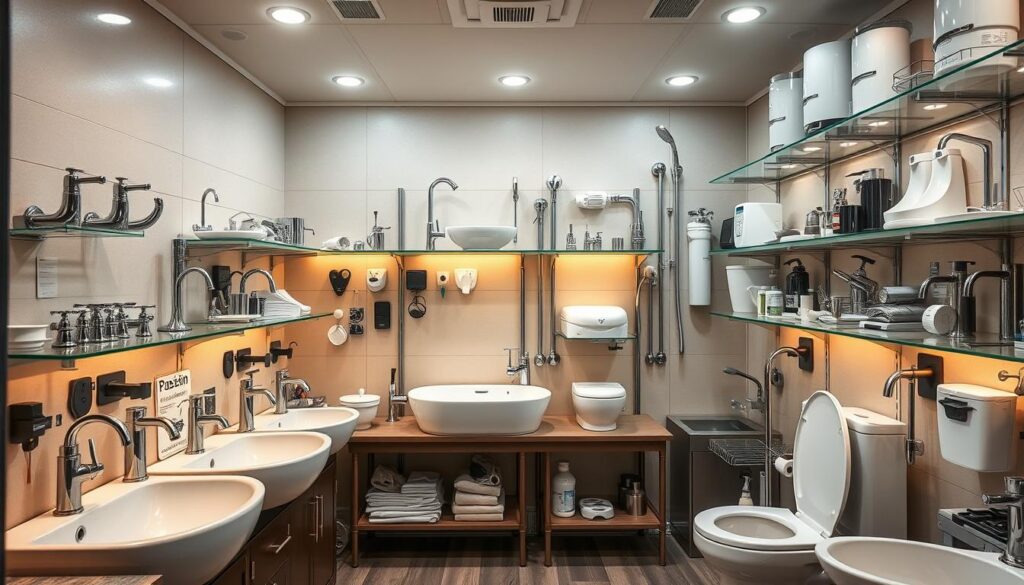
When picking RV fixtures and appliances, durability is key. Look for items made for mobile use. They’re built to handle road travel and keep working well.
Choosing Faucets and Showers
RV faucets must handle more than daily use. They need to resist constant movement and vibration. Choose fixtures with ceramic disc valves instead of rubber washers.
Ceramic disc valves have big advantages:
- They last longer under vibration
- They control water flow smoothly
- They need less maintenance
- They resist mineral buildup well
For showers, pick low-flow showerheads made for RVs. They save water and give good pressure. Many RV showerheads have shut-off valves for easy water pause.
RV water heaters are smaller than home units. They have 6-12 gallon tanks and use both electric and propane. Using both heating methods makes showers faster for everyone.
RV-Specific Toilets and Supplies
RV toilets come in different styles. Each has its own benefits. Traditional gravity-flush models use less water and drain into your black water tank.
Other toilet options include:
- Cassette toilets with removable tanks
- Composting toilets that eliminate black water
- Macerating toilets that grind waste for easy pumping
Always use RV-specific toilet paper. Household toilet paper can clog your RV’s system. It doesn’t break down fast enough.
Try different RV toilet paper brands to find one that works well. Some dissolve quickly, while others are stronger but take longer.
Remember, your RV plumbing system is different from home plumbing. Every choice affects water use, tank size, and maintenance. Make smart choices for reliable RV plumbing for years.
Troubleshooting Your RV Plumbing Issues
Every RV owner will face plumbing challenges. But, with systematic troubleshooting, you can solve most problems quickly. Knowing how to diagnose common issues saves time, money, and frustration.
When plumbing problems arise, staying calm is key. Most RV plumbing issues have simple solutions once you find the root cause.
Step-by-Step Troubleshooting Guide
Start by checking the most common culprits first. If your water pump runs continuously when nobody is using water, there’s likely a leak. Look for drips in all visible connections, faucets, and fixtures.
Even small leaks can cause your water pump to cycle constantly. Check under sinks, around toilet connections, and near your water heater for any signs of moisture.
For water pressure issues, start with your water filter. A clogged filter is often the simplest explanation for reduced flow. Next, inspect all hoses for kinks or blockages that might restrict water movement.
When dealing with hot water problems, always verify that your water heater has water in it before turning it on. Running a water heater dry can cause serious and expensive damage. Check that both propane and electric systems are functioning properly if you have a combination unit.
We recommend turning off pumps and water when you’re away from your RV. This simple step prevents surprises and prevents water damage while you’re gone.
When to Call a Professional
While many RV plumbing issues are manageable for beginners, some situations require professional expertise. Don’t hesitate to seek expert help when dealing with major leaks that you can’t locate or stop quickly.
Electrical issues with your water heater also warrant professional attention. These systems combine water and electricity, making them potentially dangerous for inexperienced hands.
If you’ve followed basic troubleshooting steps and can’t identify the problem, it’s time to call a professional. Sometimes the cost of expert repair is much less than the damage from attempting repairs beyond your skill level. We always recommend knowing your limits and prioritizing safety over saving money.
Conclusion: Mastering RV Plumbing for a Smooth Journey
We’ve covered everything you need to know about RV plumbing systems. This includes basic components and advanced troubleshooting techniques. Your journey from beginner to confident RV owner starts here.
Keeping your RV plumbing system in good working order is key. Regular maintenance and proper tank management are essential. They prevent costly repairs and unexpected breakdowns on the road.
Start small with simple tasks like monitoring tank levels and performing routine inspections. Build your confidence gradually as you gain hands-on experience. Keep essential tools organized and accessible for quick fixes when needed.
Remember, successful RV plumbing management comes down to good habits. Follow proper dumping procedures and maintain your freshwater system. Never skip winterization in freezing climates. These practices will extend your system’s lifespan significantly.
Don’t let plumbing concerns limit your RV adventures. With the knowledge we’ve shared and regular practice, managing your RV plumbing will become second nature. Every experienced RVer started exactly where you are now – ready to explore the open road with confidence in their mobile home’s systems.