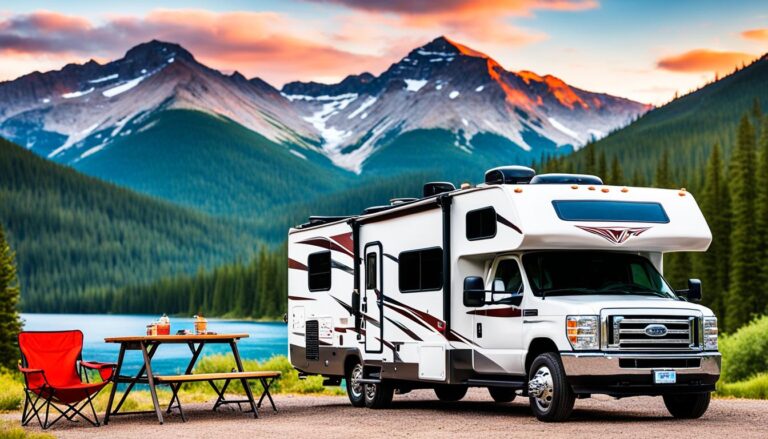
Starting your RV adventure can feel overwhelming. It’s hard to decide what to bring. We remember feeling excited and unsure when we first started camping.
At first, we took too many household items on trips. This made traveling tiring and not efficient. We learned that RV camping essentials should stay in your motorhome. Other items can stay at home.
The goal is to have what you need and nothing extra. Through experience, we found that first-time RV travel works best with essentials first. This way, you avoid overpacking and stay comfortable on the road.
Our guide will show you what to bring and what to leave out. This makes your first RV trip comfortable and easy to handle.
Key Takeaways
- Start with essential items and build your RV inventory gradually based on actual usage
- Keep dedicated RV supplies in your motorhome to avoid constant packing and unpacking
- Focus on multi-purpose items that serve several functions to save space
- Avoid bringing regular household items that have RV-specific alternatives
- Prioritize safety equipment and basic maintenance tools for peace of mind
- Consider weight distribution and storage capacity when selecting camping gear
Essential Gear for New RVers
Before you start your RV journey, having the right essential RV gear is key. It makes your trip smooth or stressful. Shopping for camping decor is fun, but tools and safety gear are vital.
The right gear gives you peace of mind. It helps you deal with surprises confidently. Here are the must-have items for new RVers.
Choosing the Right RV for Your Needs
Your RV choice is the start of your adventures. Think about your travel style and group size. Your comfort preferences are also important.
Consider how often you’ll travel and where. Weekend trips need smaller RVs. Full-time travel requires more space.
Don’t forget about budget. Think about purchase price, maintenance, and fuel. Research to find the best RV for you.
Must-Have Accessories
Camping needs specific RV essentials for comfort and safety. We always carry wheel chocks to keep our RV steady. Leveling boards ensure a stable surface.
Electrical setup is also key. A surge protector protects your RV’s electrical system. Electrical adapters let you connect to various power sources.
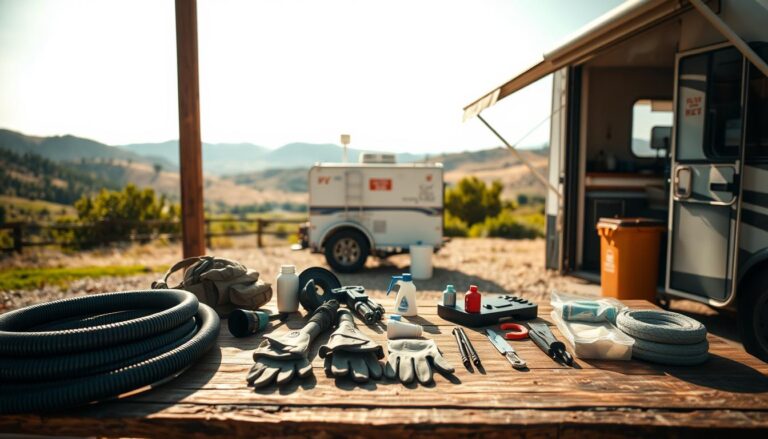
Water connections need special gear. A potable water hose brings fresh water. A water pressure regulator and sewer hose are also necessary.
Safety Equipment
RV safety equipment is vital for safe travel. A basic toolbox and tire pressure gauge are must-haves. A fuse replacement kit and replacement bulbs are also important.
An air compressor keeps tires at the right pressure. Jumper cables are for dead batteries. These items help avoid big problems.
Being prepared is key. Smart preparation stops small issues from becoming big headaches.
Packing the Kitchen: What to Include
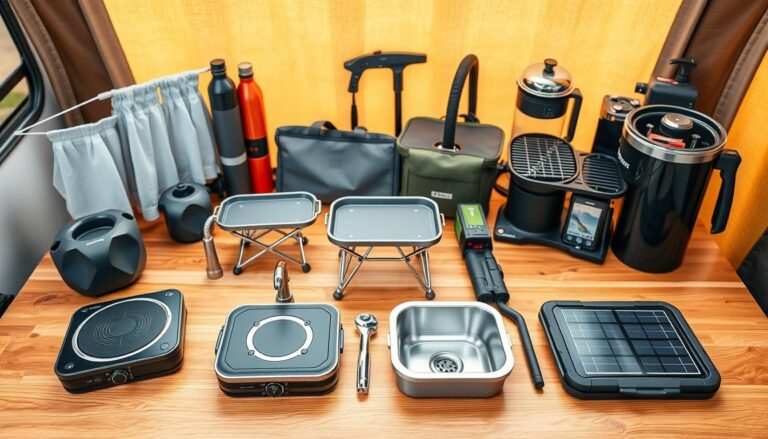
A well-equipped RV kitchen lets you cook amazing meals outdoors. Smart packing is key to enjoying home-cooked meals instead of takeout. Choose items that are versatile and save space.
Your RV kitchen essentials need to be tough and useful. Start with dishes and cookware that won’t break easily. Every item must have a reason to be in your small space.
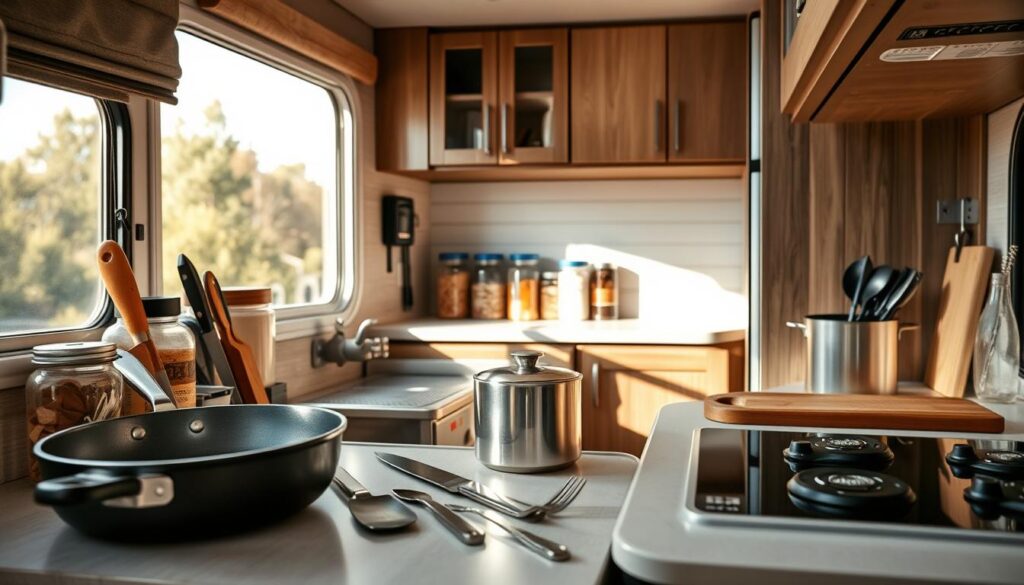
Essential Cookware and Utensils
Begin with unbreakable dishes for everyone and a few extras. Use melamine or bamboo plates and bowls that won’t break if dropped. Your basic utensil set should include forks, knives, spoons, and serving pieces.
For cookware, pick nesting bowls that save space. A good knife set with a cutting board does most food prep. Choose stainless steel or ceramic knives for sharpness.
Don’t forget measuring cups and spoons, a collapsible colander, and basic cooking utensils. Have at least one large skillet and a medium saucepan for various cooking methods.
Food Storage Solutions
Good food storage prevents waste and keeps your RV tidy. Airtight containers keep dry goods fresh and pest-free. Use clear containers for easy access without opening everything.
Collapsible storage containers are great for RV life. They expand when needed and fold flat when empty. Vacuum-sealed bags for clothes and linens also save kitchen space.
These must-have RV gear items include stackable containers, resealable bags, and a cooler or portable fridge. Don’t forget dish towels, sponges, and basic cleaning supplies for daily use.
Pantry Staples
Stock your RV pantry with versatile ingredients for many recipes. Basic seasonings like salt, pepper, and garlic powder make simple ingredients tasty. Keep these RV cooking supplies in sealed containers to avoid spills.
Include olive oil for cooking and vinegar for cleaning and cooking. Non-stick cooking spray makes cleanup easier and prevents food from sticking. Coffee lovers should pack their favorite grounds or instant coffee for mornings.
| Category | Essential Items | Storage Tips | Space-Saving Benefits |
|---|---|---|---|
| Dishes | Melamine plates, bowls, cups | Nest inside each other | Unbreakable and lightweight |
| Cookware | Nesting pots, non-stick skillet | Stack with lids underneath | Multiple sizes in one set |
| Storage | Airtight containers, vacuum bags | Label everything clearly | Collapsible when empty |
| Pantry | Spices, oils, coffee | Small sealed containers | Concentrated flavor additions |
Remember to pack dish soap, paper towels, and aluminum foil for easy cleanup and food storage. These basic supplies keep your kitchen functional and meals enjoyable on your RV adventures.
Clothing and Personal Items to Bring
Start your RV packing list with versatile clothes and must-have personal care items. RV travel is different from regular vacations. You need to pack smart to save space and stay comfy.
Choosing the right clothes is key for a stress-free trip. Every item in your RV should have a purpose. Pick quality over quantity and go for pieces that match well.
Weather-Appropriate Attire
Good RV clothing essentials are about layering and being versatile. Weather can change fast, so pack clothes that can adapt. Start with lightweight base layers to keep you dry.
Have a mix of short and long-sleeved shirts in breathable fabrics. Cotton blends are good for everyday wear. Synthetic materials are better for outdoor activities. Always bring a warm sweater or fleece for cooler nights.
Rain gear is a must for RV trips. A good rain jacket and pants can save your day when it rains. Don’t forget a wide-brimmed hat for sun protection and a warm beanie for cold mornings.
Footwear is important in your RV clothes. Pack comfy shoes for walking, sandals for relaxing, and waterproof boots for wet days. Always have an extra pair of shoes and spare clothes in your RV. You’ll be glad you did.
Toiletries and Personal Care
Your personal care items should be about daily needs and space. Use specific toiletries for your RV to avoid forgetting things. This makes leaving and coming back easier.
Stock your RV bathroom with travel-sized or full-size versions of your daily needs. Use pump bottles for shampoo, conditioner, and body wash to avoid spills. Don’t forget toothpaste, toothbrushes, deodorant, and a good hairbrush.
Men need shaving cream and razors, while everyone needs hand soap and sanitizer. Towels are key – bring bath, hand, and washcloths for each person. Microfiber towels are great because they dry fast and take up less space.
| Personal Care Category | Essential Items | RV-Specific Tips | Storage Location |
|---|---|---|---|
| Hair Care | Shampoo, conditioner, hairbrush | Use pump bottles to prevent spills | Bathroom cabinet |
| Oral Hygiene | Toothpaste, toothbrushes, mouthwash | Keep extras for each family member | Medicine cabinet |
| Body Care | Body wash, deodorant, lotion | Choose travel-sized or refillable containers | Shower caddy |
| Towels | Bath towels, hand towels, washcloths | Microfiber dries faster and takes less space | Bathroom closet |
Comfort Items
Comfort items make your RV feel like home. Familiar bedding is a big help for better sleep. Have complete bedding sets for all beds, including pillows, sheets, and blankets.
Use new bedding or spares from home for your RV. Fitted sheets with deep pockets fit RV mattresses well. These mattresses are often different from home mattresses.
A cozy blanket makes any evening better, whether watching movies or stargazing. Bring at least one warm blanket per person and an extra for chilly nights. Down or synthetic fill blankets are warm but light.
A laundry hamper is very useful in your RV. Dirty clothes pile up fast in small spaces. A hamper keeps your area clean. Collapsible mesh hampers are great because they fold up when not in use.
Everyone has their own comfort items, like favorite pillows, soft blankets, comfy slippers, and familiar pajamas. These small things help make your RV feel like home and improve your trip.
Outdoor Equipment and Recreation Gear
Turning your RV campsite into a home away from home is easy. The area around your RV is where memories are made. Choosing the right outdoor RV gear makes a big difference.
Good camping gear makes any campsite feel like paradise. An outdoor rug keeps your space clean. Add lights for a cozy evening vibe.
“The best camping memories are made around the campfire, under the stars, and in the company of those we love most.”
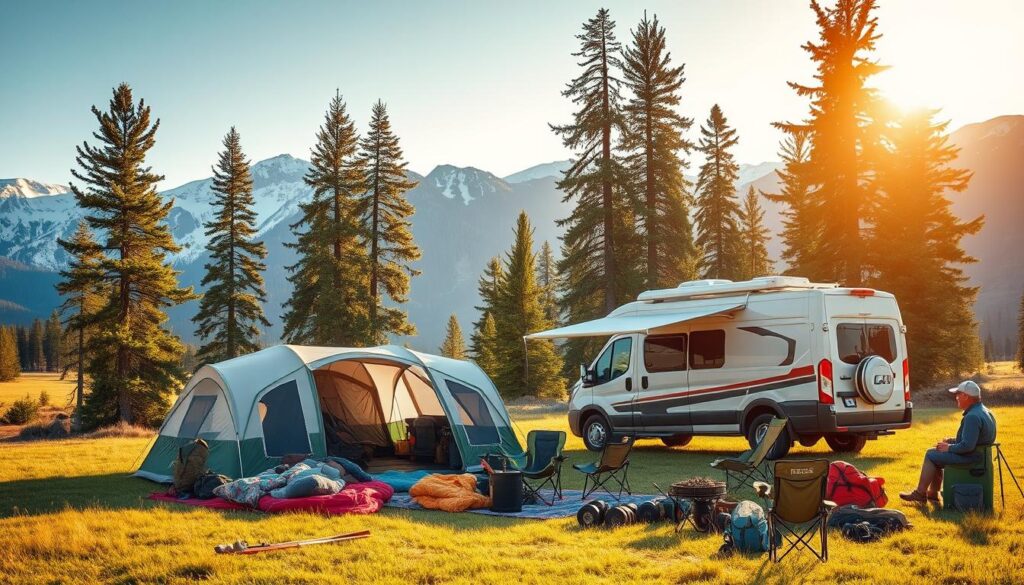
Comfortable Seating and Dining Solutions
Good camping chairs are key to comfort. We suggest one chair per person. Each family member has their favorite chair.
A sturdy outdoor table is more than just for eating. It’s for games, work, and food prep. Folding tables with adjustable heights are great for different activities.
Adventure Gear for Active Families
Choose hiking and fishing gear that fits your plans. You’ll need boots, a daypack, water bottles, and maps for hiking. For fishing, take rods, a tackle box, and fishing licenses.
Start with the basics and add more as you go. A pop-up shelter or hammock is great for shade. Don’t forget campfire essentials, but check local firewood rules.
Entertainment for Young Adventurers
Keeping kids busy outdoors is key to great camping memories. Outdoor games like frisbee, cornhole, and card games are fun. Glow sticks and flashlights make evenings exciting.
Tools for exploring nature are great for learning. Sidewalk chalk and bubbles are fun for creative play. Kites are always a hit.
Remember, camping gear should make your trip better, not clutter your space. Start with the basics and add more as you find your favorites.
Technology and Entertainment Essentials
Choosing the right RV technology is key. It keeps us safe, connected, and entertained. The goal is to pick devices that work well in mobile living without overwhelming us.
Good tech does more than just entertain. It helps us stay connected for emergencies and gives us weather updates. It also makes navigation easier.
RV-Compatible Electronics
Household electronics often don’t work well in RV travel. They struggle with vibrations and power changes. It’s best to use devices made for mobile use or those built to last.
Must-haves include a 12-volt TV with DVD and a portable radio with weather alerts. Backup power banks keep our devices charged when we’re off-grid.
Accessories are important for smooth operation. Quality surge protectors and multiple USB charging stations are a must. They protect our electronics and manage our devices well.
Portable Wi-Fi and Connectivity
Staying connected on the road is more than just hoping for good cell service. Portable Wi-Fi hotspots and signal boosters are game-changers in remote areas.
A cellular signal booster can boost weak signals up to 32 times. Portable Wi-Fi devices from major carriers offer backup internet when Wi-Fi fails.
For serious connectivity needs, consider a roof-mounted antenna system. It offers better reception than handheld devices and supports multiple users at once.
Entertainment Options for Road Trips
Entertainment for RV travel must suit all weather and family interests. We use tablets for movies and shows on rainy days or quiet evenings.
E-readers with lots of books take up little space but offer endless reading. Portable gaming devices keep kids happy on long trips. Music playlists downloaded offline ensure our favorite tunes are always ready.
Board games and card games are great for screen-free fun. They’re perfect when power is low or we want to disconnect from tech.
Technology should improve our camping, not take over. We aim for a balance between staying connected and enjoying nature. The best RV trip essentials are those that do many things while using little space and power.
First Aid and Emergency Supplies
Having the right first aid and emergency supplies is key for safe RV trips. Emergency preparedness turns stressful moments into manageable ones. Every good RV packing guide includes safety gear and comfort items.
Plan smart by preparing for emergencies without overloading. Choose versatile supplies that can be used in many ways. Your RV safety supplies should cover medical, mechanical, and communication needs.
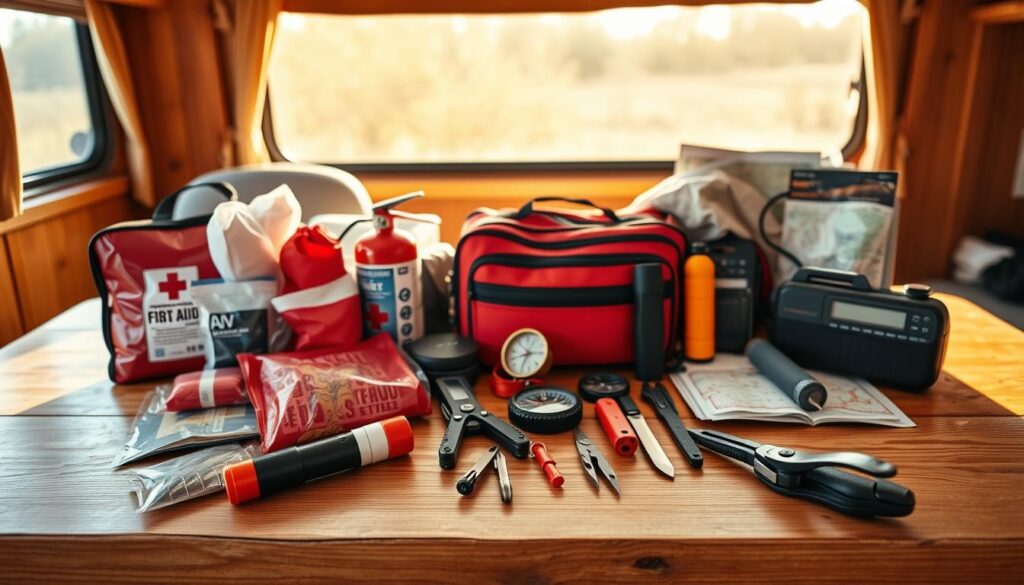
Medical Kit Essentials
A good first aid kit is the base of your emergency plan. We pack bandages, antiseptic wipes, and tape for wounds. For pain, we carry ibuprofen and acetaminophen.
Remember your family’s medical needs. Keep extra prescription meds in waterproof containers. We also have a thermometer, tweezers, and scissors for basic care.
Latex gloves protect you during first aid and cleanup. Antihistamines help with allergic reactions. A first aid manual guides you when unsure.
Emergency Tools and Communication
We also pack essential tools for emergencies. A rechargeable flashlight with extra batteries is key for power outages. An emergency radio keeps you updated on weather and news.
Water filtration is vital if you run low on fresh water. We carry portable filters and purification tablets. A fly swatter is surprisingly useful for pests outdoors.
Keep emergency contact info easy to find. We store insurance papers, roadside help numbers, and medical info in waterproof places. For remote areas, a satellite communicator is a good choice.
Roadside Assistance Equipment
Mechanical issues can happen, so we’re ready with the right tools. Jumper cables help when your RV battery dies. A tire pressure gauge and air compressor keep tires right and fix leaks.
Basic tools prevent small issues from getting big. We have a fuse kit, light bulbs, and a multi-tool for repairs. Emergency flares or reflectors make your RV visible during stops.
A good tool kit includes screwdrivers, pliers, and electrical tape. Emergency preparedness means having supplies for common RV problems like loose connections or leaks.
| Emergency Category | Essential Items | Backup Options | Storage Location |
|---|---|---|---|
| Medical Care | Bandages, antiseptic, pain relievers, prescription meds | Emergency medical manual, extra supplies | Bathroom cabinet |
| Communication | Rechargeable flashlight, emergency radio, extra batteries | Satellite communicator, backup phone charger | Kitchen drawer |
| Vehicle Maintenance | Jumper cables, tire gauge, air compressor, basic tools | Emergency flares, reflectors, spare fuses | External storage compartment |
| Water Safety | Portable water filter, purification tablets | Extra water containers, testing strips | Kitchen storage |
Remember to check and update your RV safety supplies regularly. Every six months, check expiration dates on meds and batteries. Replace used items right away to stay ready.
Quality emergency equipment is worth the investment. Your RV packing guide should balance preparedness with space. Choose items that can be used in many ways.
Packing Smart: Space-Saving Tips
Smart packing makes your RV feel like home. It’s all about RV organization. We pack efficiently to travel well and enjoy our stay.
Good packing makes RV trips fun. These space-saving RV tips help you use every inch. They keep your stuff safe and easy to find.
Organizing Your RV Layout
We pack from back to front. This way, we don’t miss anything and keep things in order.
Clear counters and nightstands before closing slides. This stops things from falling or getting broken. We also put clothes and essentials in easy-to-reach spots.
Our RV newbies checklist includes checking slide areas. We move things like trash and pet food to easy spots. This saves time and hassle.
Multi-Purpose Items
Multi-purpose items are key to good RV organization. They do more with less space.
Collapsible cookware is great for RV kitchens. It folds up when not in use. Ottoman storage cubes hide things like blankets and games.
We like furniture that also stores things. Bench seats and coffee tables with drawers save space. These space-saving RV tips keep your RV tidy and roomy.
Packing Cubes and Bins
Packing cubes and bins keep your RV tidy. They turn messy cabinets into organized spaces.
We use colored cubes for different things. Clear bins are good for seasonal items and emergency gear. Label them so you can find things fast.
Vacuum-sealed bags shrink bulky items like comforters. They keep things dry and pest-free.
| Storage Solution | Best For | Space Savings | Accessibility |
|---|---|---|---|
| Packing Cubes | Clothing, toiletries | High | Excellent |
| Clear Storage Bins | Seasonal items, tools | Medium | Good |
| Vacuum-Sealed Bags | Bedding, winter gear | Very High | Limited |
| Collapsible Containers | Kitchen items, toys | High | Excellent |
Secure loose items before driving. Use bungee cords and cabinet locks. This keeps things in place and quiet.
Creating systems that fit your needs is key. Start with these tips and adjust as you go.
What Not to Pack: Items to Leave Behind
Packing for an RV trip is not just about what you bring. It’s also about what you leave behind. We’ve learned that avoiding common RV packing mistakes makes a big difference. Every item you pack affects your fuel, space, and comfort.
At first, we packed too much. We learned that less is truly more for RV living. Knowing RV weight limits helps you pack smarter.
Heavy and Bulky Equipment
Heavy items are a big no-no for RV trips. Things like big exercise gear, tools, and furniture should stay home. They take up space and weigh you down.
Leave behind treadmills, big grills, and too many chairs. Choose lighter options instead. Every extra pound hurts your gas and makes driving harder.
Non-Essential Kitchen Items
Kitchens are often packed too much for RVs. Don’t bring every kitchen gadget. Bread makers, extra coffee makers, and special appliances take up too much space.
Don’t pack too many dishes, utensils, and big serving platters. We learned to pack only what we really need. Choose items that can do more than one thing.
Personal Items You Can Do Without
Personal stuff can weigh down your RV without you knowing. Too much clothes, shoes, and books add weight. Pack only what you really need and use an e-reader instead of books.
Leave sentimental and valuable items at home. We’ve seen RVers lose precious items on the road. Your memories are more important than the items themselves, so keep them safe.
Start with a simple packing list. Add items only if you really need them. You’ll soon see which items you never use and which are essential for your trips.
RV Maintenance Supplies
Having the right RV maintenance essentials saves time, money, and stress. We’ve learned that being ready with the right tools and supplies stops small problems from getting big. Regular care keeps your RV running well and makes it last longer.
Being smart means having the right tools for both regular care and unexpected fixes. We always carry supplies for common RV problems. This way, we avoid wasting hours and money on repairs.
Essential Tools for Every RV Owner
Every RVer needs a good toolbox with basic RV tools for quick fixes and regular care. Start with screwdrivers, adjustable wrenches, and needle-nose pliers. These tools handle most repairs you’ll face.
A tire pressure gauge is key for safe travel. We check our tire pressure before every trip and weekly when staying long. An air compressor keeps tires at the right pressure and inflates other equipment too.
Don’t forget electrical supplies like a fuse replacement kit and spare bulbs for your lights. We also carry jumper cables for battery emergencies. Duct tape and electrical tape are great for quick fixes until you can get to a service center.
Cleaning Products That Protect Your Investment
RV cleaning supplies need special care because regular cleaners can harm your RV. We use RV-specific cleaners that are safe for different materials. These cleaners clean well without damaging your RV.
Use microfiber cloths, soft-bristled brushes, and non-abrasive sponges for cleaning. We keep separate cleaning supplies for the bathroom, kitchen, and outside. This keeps things clean and prevents cross-contamination.
Use RV-specific window cleaner for better results than regular glass cleaners. We also have special products for awning and slide-out care. These cleaners help your expensive RV parts last longer.
Your Pre-Trip Maintenance Routine
We follow a consistent maintenance checklist before every trip. Start by checking tire pressure and looking for tire damage. Test all lights, including brake lights, turn signals, and running lights.
Make sure all slides and awnings are retracted and secure. Check that propane tanks are turned off and secure. We do a full visual check of the RV exterior.
Inside, make sure all cabinet doors and drawers are closed. Check that the fresh water tank is full and holding tanks have enough capacity. Lastly, check that all electrical connections are secure and working right.
This careful maintenance routine prevents problems and keeps your RV ready for adventure. Spending a few minutes on these checks saves a lot of trouble later.
Final Tips for New RVers
Your RV adventure starts with getting ready and the right attitude. These tips will help you begin with confidence. You’ll make memories that last a lifetime.
Setting Up Your RV for the First Time
Use a checklist app on your phone or tablet. It helps you not forget important steps. Some like paper checklists too.
Take your time setting up. Have someone else check all connections. This includes electrical, water, and brakes.
Our guide suggests one person connects first. The other checks everything is right.
Learning About Campground Etiquette
Good manners at campgrounds make everyone happy. Be quiet during quiet hours. Keep your area clean and control your pets.
Stay in your space and watch your noise. Most RVers are friendly and willing to help.
Resources for Ongoing Support
Join RV clubs, forums, and local groups for help. The RV community is welcoming to newbies. Start with short trips near home.
Each trip teaches you something new. Remember, every experienced RVer was once a beginner.