Your RV is more than a vehicle. It’s your home on wheels, full of precious memories and important things. Sadly, RV theft is a big worry for many owners.
Leaving your RV alone can make you feel worried. Whether you’re out exploring or storing it, you shouldn’t lose peace of mind. That’s why we’ve put together this guide to help you protect your RV.
We’ll show you ways to keep your RV safe. From simple locks to high-tech tracking, we’ve got you covered. Our tips are easy to follow and fit any budget or lifestyle. Small changes can make a big difference in keeping your RV safe.
Let’s look at the best RV Security Systems and Anti-Theft Tips to keep your RV safe and sound.
Key Takeaways
- Multiple protection layers provide better defense than single measures alone
- Physical deterrents like wheel locks and hitch locks offer visible theft prevention
- Electronic monitoring systems enable remote tracking and real-time alerts
- Proper parking strategies significantly reduce vulnerability to criminals
- Insurance considerations should align with your chosen protection methods
- Regular maintenance of safety equipment ensures reliable performance when needed
Understanding RV Security Systems: An Overview
Protecting our RVs is different from securing our homes. RVs face unique risks that change with each place and season. This makes RV theft prevention a special challenge.
The RV industry has come up with new ways to keep our vehicles safe. Today’s RV security devices range from simple alarms to full monitoring systems. We’ll look at these options to help you choose the right protection for your RV.
What Makes RVs Vulnerable to Theft?
RVs are attractive to thieves for many reasons. Their mobility makes them different from homes. When we leave our RVs in remote spots or storage, they’re often alone for weeks or months.
Storage places are risky for RVs. Many are stored in areas with little security. These spots often lack good lighting, cameras, or regular checks. Thieves know these spots and target RVs stored there.
What’s inside RVs also draws thieves. They contain expensive gadgets, appliances, and personal items. Unlike homes, RVs can be stolen whole, taking everything inside with them. This makes them a big target for thieves.
“RV theft is something most people probably don’t put much thought into. Though it’s less common than car theft, RV owners should think about it.”
Weather and seasons also play a part. In winter, many RVs sit unused in storage. Thieves take advantage of this. They know which RVs haven’t moved and whose owners are less likely to check.
Types of RV Security Systems Available
The market has many RV security devices to choose from. Basic alarm systems detect entry and sound loud sirens to scare off thieves. They watch doors, windows, and sometimes movement inside.
More advanced systems offer more protection. GPS tracking lets us find our RV anywhere. Some systems send alerts to our phones if someone moves it without permission. These features are great for quick recovery if theft happens.
| Security System Type | Primary Function | Best For | Average Cost Range |
|---|---|---|---|
| Basic Alarm Systems | Entry detection and sirens | Campground use | $100-$300 |
| GPS Tracking Devices | Location monitoring | Storage and travel | $200-$500 |
| Surveillance Cameras | Visual monitoring | Perimeter security | $300-$800 |
| Integrated Systems | Multiple protection methods | Comprehensive security | $800-$2000 |
Surveillance cameras let us see what’s happening around our RVs. Modern wireless cameras can be watched on our phones. They start recording when they see motion and save footage in the cloud.
Smart security systems are the latest in RV theft prevention. They combine alarms, GPS, cameras, and phone apps. They offer all-around protection with one system.
The Importance of Integrating Multiple Security Measures
No single device can fully protect our RVs. Effective RV security needs different types of protection together. This way, we cover more threats and have backup if one system fails.
Physical security works with electronic systems. Heavy locks, wheel clamps, and hitch locks scare off thieves. With hidden GPS and alarms, they create strong barriers.
Thinking about different risks is key. Theft attempts vary by location. Multiple security measures help us face any situation.
Being far from home makes redundancy important. If our main alarm fails, GPS can help find our RV. If thieves disable visible security, hidden systems keep protecting. This layered approach greatly increases our chances of stopping theft or finding our RV fast.
Planning is also important because of cost. We can start with basic systems and add more later. This way, we spread out the cost while building strong protection. It’s important to plan how different systems will work together from the start.
Essential Features of a Reliable RV Security System
Choosing the right RV security system is key. It’s not just about basic protection. The best systems have three main technologies that work well together. These technologies help protect your RV from theft and unwanted access.
Today, RV owners have access to advanced security features. These features were once only for commercial properties. It’s important to pick what fits your needs and travel style. Let’s look at the three main parts of a good RV security system.
Alarms and Alerts: Keeping You Informed
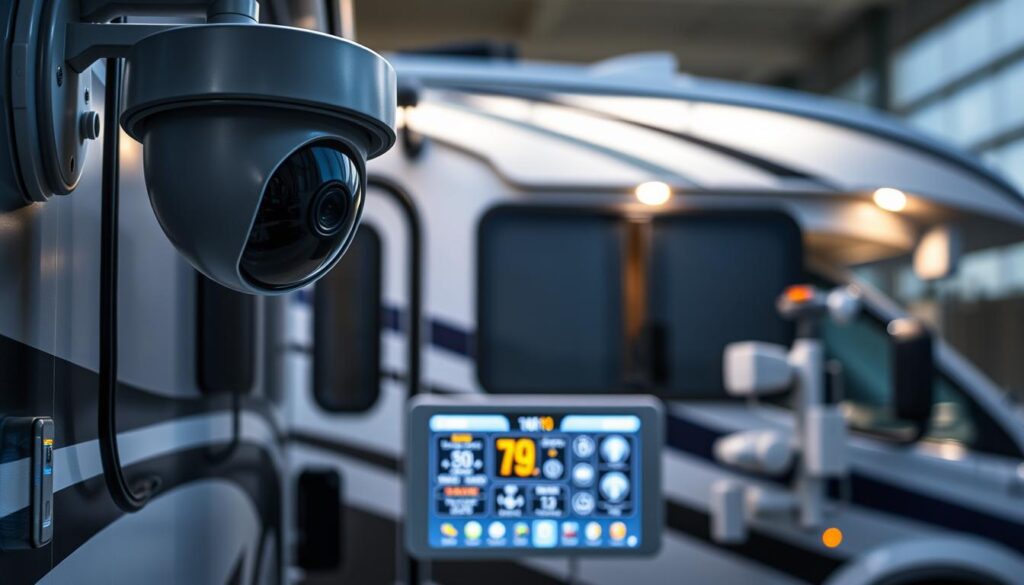
RV burglar alarms have changed a lot. They now send alerts to your phone when someone tries to get in. These alarms can spot entry through doors, windows, and even storage areas.
Today’s alarms use many ways to detect intruders. They have motion sensors for inside movement. Door and window sensors go off when someone tries to get in. Some even have vibration sensors for breaking windows or forced entry.
Remote monitoring is a big plus. You get alerts on your phone, no matter where you are. This lets you act fast or call the police if needed.
GPS Tracking: Know Where Your RV Is
RV GPS tracking lets you keep an eye on your RV always. Devices like WhereSafe GPS send updates to your phone. This is very helpful if your RV gets stolen.
Good GPS trackers do more than track. They send alerts if your RV moves without permission. Some have geofencing to tell you if your RV leaves a certain area.
Different GPS trackers last for different times. The best ones last a long time or connect to your RV’s power. This keeps tracking going, even when your RV is stored for a while.
Surveillance Cameras: Eyes on Your RV
RV security cameras are very useful. The Furrion Vision S system is a great example. It works as a backup camera and a full security system. This is great for RV owners who want strong protection.
Today’s cameras have cool features. They start recording when they see movement. Night vision lets you see clearly in the dark. Some save footage locally, others upload to the cloud for you to see online.
Where you put your cameras is very important. Cameras around your RV are best for catching thieves. Having many cameras means no blind spots. Being able to watch live feeds on your phone adds more security.
Choosing the Right System for Your Needs
Securing your RV starts with knowing what matters to you. Every RV owner has different needs and budgets. Choosing the right RV security upgrades needs careful thought.
Your RV’s value should guide your security choices. More expensive rigs need more protection. Aim to spend 2-5% of your RV’s value on security.
How often you travel affects your security needs. Full-time RVers need different RV security measures than weekend users. Think about your travel habits.
Where you park your RV is also important. Urban, remote, or crowded spots each have their own security risks. Consider your usual parking spots.
Comfort with technology is key. Some like simple systems, while others want advanced features. Know your tech comfort level.
Don’t forget about ongoing costs. Monthly and yearly plans are a small price for peace of mind. Consider these costs when deciding.
Popular Brands and Models to Explore
Several trusted brands lead the RV security market. Viper offers alarm systems with smartphone and GPS tracking. They’re a great value.
LoJack specializes in recovery systems with law enforcement help. They’re a top choice for valuable RVs. The monthly fee includes monitoring.
Dometic provides RV-specific security solutions. Their systems are easy to use and integrate well with RV components.
Hopkins offers affordable systems for those on a budget. They’re perfect for basic protection without spending too much.
When comparing models, focus on features you need. Don’t pay for what you won’t use. Look for reliability and good customer support.
Some cheaper options are easier to break than more expensive ones. Quality components last longer and work better.
Professional Installation vs. DIY
Professional installation has many benefits for RV security upgrades. Certified techs know RV systems well and ensure proper installation. They also offer warranties.
Professional installation costs $200-800, based on system complexity. It ensures your system works right and may be needed for warranty.
DIY installation is for those who like to work on their RV. Many systems come with instructions and support. You’ll save money but spend time instead.
Be honest about your skills. Electrical work needs specific knowledge and tools. Mistakes can harm your RV or be dangerous.
Some makers offer DIY help with phone support. This mix of cost savings and guidance is appealing.
For GPS tracking and complex alarms, get professional help. Simple sensors can be DIY projects.
Choose RV security measures that protect your investment well. Whether DIY or professional, pick systems that fit your budget and skills. Your peace of mind is worth it.
Enhancing Your RV’s Physical Security
Strengthening your RV’s physical barriers creates multiple layers of theft protection. While electronic systems provide monitoring and alerts, RV security devices that physically prevent access or movement offer immediate deterrence. We recommend starting with these tangible security upgrades because they work even when power fails or technology malfunctions.
Physical security measures serve as your first line of defense. They make thieves think twice before targeting your RV. Most criminals look for easy targets and will move on when they see robust security measures in place.
Lock Up: Upgrading Door and Window Locks
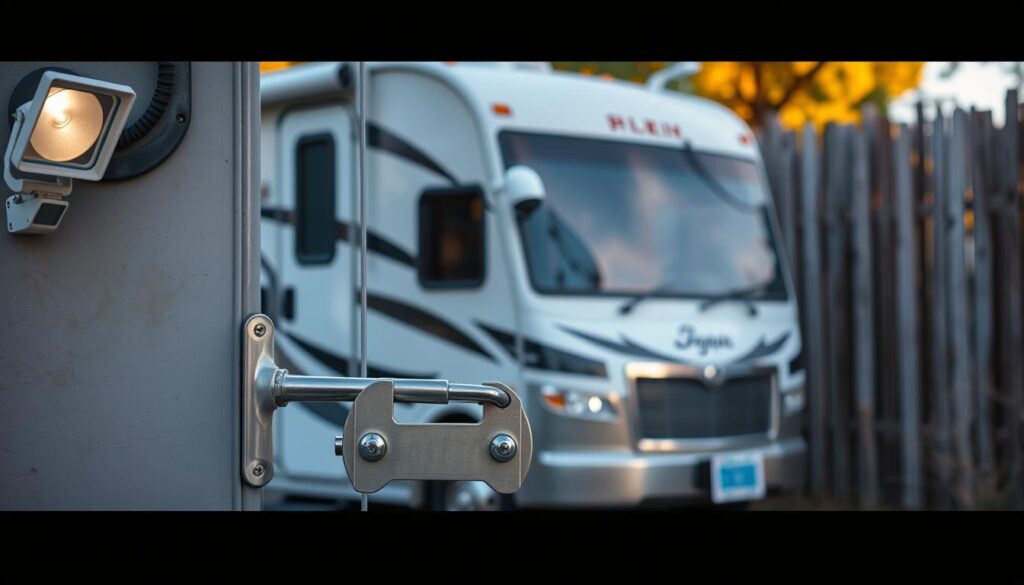
Your RV’s factory locks often provide minimal security. Upgrading to keyless entry systems transforms your RV’s vulnerability into strength. These advanced locking mechanisms eliminate the risk of lost keys while providing superior protection.
Keyless RV locks use numerical combinations that only you know. This means no more hiding spare keys under fake rocks or worrying about lockouts. The combination system also allows you to easily change access codes when needed.
We suggest choosing locks with weather-resistant construction and backup power options. Some models include smartphone connectivity for remote monitoring. Window locks deserve equal attention because they’re common entry points for opportunistic thieves.
Wheel Locks and Tire Chocks for Added Protection
Physical deterrents make it extremely difficult for thieves to move your RV. Wheel locks attach directly to your tires and prevent rotation. These RV security devices are highly visible, sending a clear message that your RV is protected.
Tire chocks work differently by blocking wheel movement. They’re effective when combined with other security measures. Hitch locks prevent unauthorized coupling to tow vehicles, making theft nearly impossible.
The CURT tri-ball lock represents innovative security design. It’s engineered to break at specific points under tampering attempts while maintaining security integrity. This smart engineering prevents thieves from using excessive force to defeat the lock.
| Security Device Type | Protection Level | Installation Difficulty | Average Cost Range |
|---|---|---|---|
| Keyless Door Locks | High | Moderate | $150-$400 |
| Wheel Locks | Very High | Easy | $80-$200 |
| Hitch Locks | High | Easy | $30-$120 |
| Tire Chocks | Medium | Very Easy | $25-$75 |
Combining multiple RV security devices creates overlapping protection layers. This approach forces thieves to overcome several obstacles, significantly increasing their risk of detection. Most criminals will abandon attempts when faced with strong physical security measures.
Anti-Theft Tips for When You’re on the Road
When you’re on the road with your RV, it’s key to use anti-theft tips to protect it. Road travel has its own security challenges. You need to stay alert and make smart choices to keep your RV safe.
Thieves look for easy targets. By following smart strategies and staying alert, you can lower your risk of theft. Here are the best ways to keep your RV safe while traveling.
Best Practices for RV Parking
Your parking choices are very important for your RV’s security. Always park in well-lit areas with lots of people around. This makes your RV less likely to be stolen.
Here are some parking tips to follow:
- Choose spots near main roads or busy areas where people regularly pass by
- Avoid isolated corners or hidden areas behind buildings
- Park close to security cameras when available
- Position your RV so the entry door faces toward other campers or high-traffic areas
- Use additional lighting around your RV’s perimeter when possible
Gas stations, rest stops, and truck stops are good for their lighting and activity. But, only stop there when you must. For overnight stays, campgrounds are safer and have more amenities.
| Parking Location | Security Level | Best Use | Key Benefits |
|---|---|---|---|
| Established Campgrounds | High | Overnight stays | Security patrols, gated access, community watch |
| Well-lit Gas Stations | Medium | Short stops | Constant lighting, regular foot traffic |
| Truck Stops | Medium | Rest breaks | 24-hour activity, security cameras |
| Isolated Rest Areas | Low | Avoid for overnight | Limited visibility, minimal security |
Always Be Aware of Your Surroundings
Being aware of your surroundings is key to RV security. Trust your instincts. If something feels off, it probably is. Always check your area before settling in.
Here’s what to watch for:
- People loitering without apparent purpose near RVs
- Vehicles that seem to be following your route
- Areas with poor lighting or limited escape routes
- Locations where you feel isolated or cut off from help
Walk around your chosen parking area before staying. Look for hiding spots. Check for working streetlights and emergency phones.
“The best security system is an alert and aware RV owner who takes the time to assess their surroundings before settling in for the night.”
Also, do a quick walk around your RV every few hours. This helps you notice any changes and shows thieves you’re watching your space.
How to Minimize Risks While Traveling
Smart travel strategies can lower your risk of theft. Avoid showing off expensive equipment and keep a low profile. This helps you blend in and avoid being a target.
Here are some ways to reduce risks:
- Keep valuable items out of sight from windows
- Avoid discussing your travel plans with strangers
- Don’t leave expensive gear visible outside your RV
- Vary your travel routes and schedules when possible
- Stay connected with family or friends about your location
Always have backup plans for situations that don’t feel right. Know alternative routes and safe stops. Keep emergency numbers handy and make sure your devices are charged.
When traveling through new areas, research your route first. RV forums and travel apps can give you insights on safe stops and areas to avoid. Local knowledge from fellow RVers is also very helpful for finding safe routes.
Remember, these anti-theft tips work best with the security systems and protections we’ve talked about before. Your vigilance and smart choices while traveling add layers of protection. This makes your RV less appealing to thieves.
Securing Your RV At Campgrounds
When you arrive at a campground, it’s easy to forget about RV theft prevention. The friendly faces and communal spirit make it feel safe. But, theft can happen anywhere, even in these safe-looking places.
Many RV owners leave their rigs unlocked at campgrounds. This sense of security can be misleading. While most campers are honest, thieves target campgrounds where people let their guard down.
Safety in Numbers: Choosing a Safe Site
Choosing the right campsite is key to your security. Look for sites with good visibility from main roads or camp host areas. This helps prevent RV theft.
Sites near the camp host or office are safer. They have more foot traffic and oversight. Avoid isolated sites if you’ll be away from your RV.
Consider the natural barriers around your site. Trees, rocks, or other obstacles can deter thieves. But, make sure they don’t hide your RV from view.
Utilizing Campground Security Features
Most campgrounds have security features to help protect you. Use these to boost your RV theft prevention. Look for security cameras, gated entrances, or regular patrols.
Building relationships with your neighbors is helpful. Let them know when you’ll be away. Most RVers are happy to watch your rig and report any unusual activity.
Talking to campground staff is also important. Tell them when you’ll leave and when you’ll return. They can watch your site and contact you if they see anything odd.
| Security Feature | Availability | Effectiveness | Cost |
|---|---|---|---|
| Gated Entry | Common in private campgrounds | High deterrent value | Usually included |
| Security Cameras | Limited to main areas | Good for evidence | No additional cost |
| Camp Host Presence | Most established campgrounds | Excellent oversight | Included in fees |
| Regular Patrols | Varies by location | Strong deterrent | Part of services |
Always lock your RV, even for short trips. This simple habit greatly reduces theft risk. Remember, RV theft prevention needs constant vigilance, no matter how safe it seems.
Regular Maintenance and Checks
We think keeping your RV security systems in good shape is as important as setting them up. Your protection works best when everything is in order. Think of maintenance as a backup for your backup.
Many RV owners forget about their security systems until something goes wrong. This can leave you exposed when you need protection most. Regular care keeps your RV security measures working well.
Importance of Routine Inspections
Make a plan to check your security devices every month. Start with the basics like testing your alarm and checking sensor batteries. Dead batteries are a common reason systems fail.
Your GPS tracker needs attention too. Check its signal strength and make sure it’s sending updates. Many trackers have apps that show battery and connection status.
Don’t overlook your surveillance cameras. Clean the lenses and check they’re recording. Dirty or foggy lenses won’t capture clear footage when you need it most.
Physical security elements need checks too. Inspect door and window locks for smooth operation. Look for wear or damage that could let intruders in.
Updating Security Technology
Security tech changes fast, and old systems can be at risk. We suggest checking your security setup every year to find outdated parts that need updating.
One key upgrade many RV owners miss is their locks. Most RVs use the same key patterns. Upgrading to unique locks is a smart move that boosts your security.
Software updates are also key for digital systems. Many alarms and GPS trackers get updates that fix bugs and add new features.
| Security Component | Inspection Frequency | Key Maintenance Tasks | Replacement Timeline |
|---|---|---|---|
| Alarm System | Monthly | Test sensors, check batteries, verify connectivity | 5-7 years |
| GPS Tracker | Monthly | Check signal strength, test location accuracy, update software | 3-5 years |
| Security Cameras | Bi-weekly | Clean lenses, check recording quality, verify storage space | 4-6 years |
| Door/Window Locks | Quarterly | Lubricate mechanisms, check for wear, test operation | 10-15 years |
Keep records of your maintenance work. Note when you replace batteries, update software, or upgrade parts. This helps you stay on track and can help with insurance claims if theft happens.
Remember, prevention is always cheaper than replacement. A little time each month can save you a lot of money and trouble later.
Insurance Considerations for Your RV
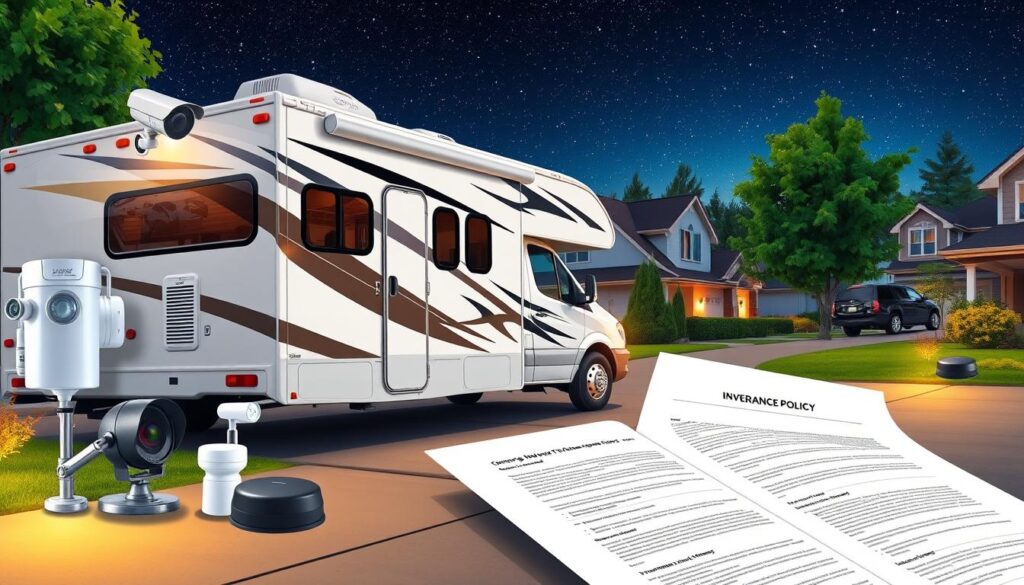
We think that having the right insurance and RV security upgrades gives you total peace of mind. Your insurance is like a safety net when your security measures fail. Knowing how insurance works with your security helps you protect your mobile home wisely.
Many RV owners find that their security efforts can reduce insurance costs and offer better protection. Insurance companies often give discounts to owners who take steps to secure their vehicles. This is a win-win situation where your security investments save you money over time.
Comprehensive Coverage Options
Comprehensive RV insurance does more than just cover basic liability. It protects against theft, vandalism, weather damage, and break-ins. Make sure your coverage limits match your RV’s current value and your belongings inside.
Most policies cover your RV and its contents. But, high-value items like electronics or jewelry might need extra coverage. RV security upgrades like alarm systems and GPS tracking devices can get you discounts of 5% to 15%.
Think carefully about personal property coverage in your RV. Standard policies usually cover contents up to 10% of your RV’s insured value. If you have expensive gear or electronics, you might need to increase this coverage or add specific riders for valuable items.
Understanding Your Policy Against Theft
Theft coverage can vary a lot between insurance providers and policy types. Always read your policy to know what’s covered and what you need if theft happens. Many policies require police reports and detailed inventories of stolen items.
Installing RV security upgrades can help with theft claims and might lower your deductible. Some insurers offer lower deductibles for RVs with approved security systems. Keep all receipts and installation records for your security equipment as proof of your investment in protection.
Documentation is key for successful theft claims. We recommend making a detailed inventory of your RV’s contents with photos and serial numbers. Store this information in a secure place away from your RV. Update your inventory often, after adding new equipment or making changes.
Many insurance companies now offer agreed value policies instead of actual cash value coverage. Agreed value policies pay the full insured amount without depreciation, which better protects your investment. This type of coverage is great for newer RVs or those with significant upgrades and modifications.
Community Resources and Support
Building a network of fellow RV enthusiasts is key to protecting your investment. The RV community offers great resources. These can help you make smart choices about RV security systems and learn from others’ experiences.
Joining Online RV Communities for Advice
Experienced RVers have made online spaces for sharing security tips. Sites like iRV2.com are full of forums where you can ask about RV security. RV LIFE, Do It Yourself RV, and Camper Report have articles, reviews, and guides to help you pick the right security.
Brand-specific forums like Air Forums, Forest River Forums, and Jayco Owners Forum give advice for your RV model. They share which security systems work best and warn about common problems.
Participating in Local RV Clubs and Associations
Local RV clubs connect you with experienced travelers nearby. They often buy security equipment together, share crime trends, and recommend trusted installers. Members also share tips on safe camping spots and offer support on the road.
We suggest using these community resources. The wisdom of fellow RVers can save you money, time, and worry when securing your RV.