We’ve all been there as new RV owners. Standing nervously at our first waste disposal facility, wondering if we’re about to make a huge mess or break some unspoken rule. The anxiety is real, and we completely understand that feeling.
Learning proper dump station etiquette doesn’t have to be overwhelming. Many RVers figure things out through trial and error, but that often leads to embarrassing mistakes that could easily be avoided.
This guide will walk you through everything you need to know about courteous waste disposal. We’ll share real-world experiences and common pitfalls to avoid. Whether you’re completely new to RV life or looking to refine your technique, we’re here to help you navigate this essential process with confidence.
Our goal is simple: help you become a considerate member of the RV community while mastering these important skills.
Key Takeaways
- Proper waste disposal procedures protect both you and fellow RVers
- Following unwritten rules helps maintain clean facilities for everyone
- Preparation and the right equipment make the process much easier
- Courtesy and patience go a long way at busy disposal sites
- Learning from experienced RVers can prevent costly mistakes
- Safety should always be your top priority during waste disposal
What is a Dump Station?
Dump stations are key for keeping RV adventures clean and green. They let us safely dump wastewater from our vehicles. Knowing how they work helps us manage waste well, no matter where we go.
These stations are found at many places like campgrounds and truck stops. They have a simple design that makes dumping easy for everyone.
Basic Components and Function
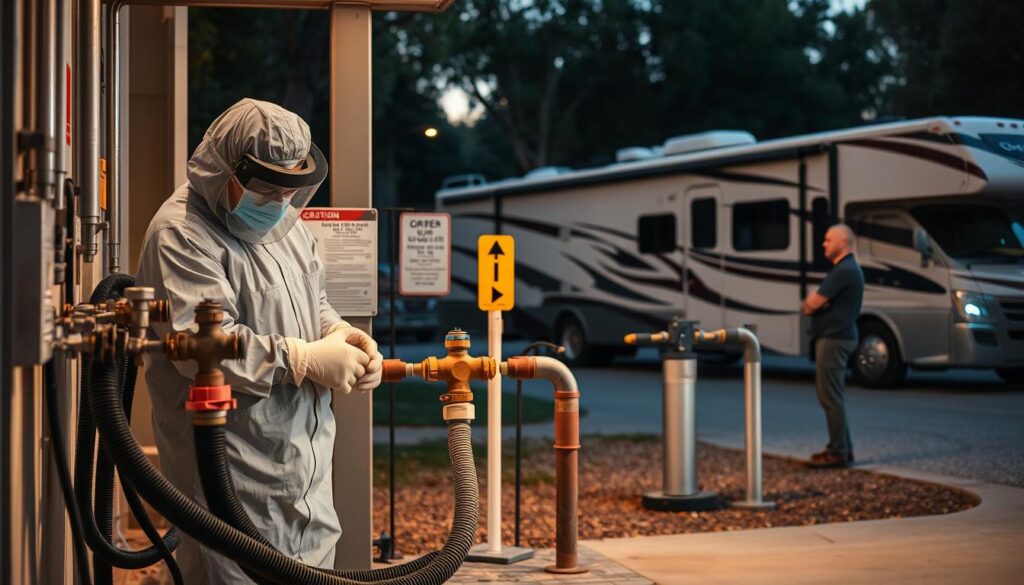
A dump station has a few main parts for effective waste disposal. The big drain is where we hook up our sewer hose. It goes straight to the sewage system or septic tank.
They also have a water spigot for rinsing hoses. Some places even offer potable water filling stations and trash cans. This design lets us safely dump black and gray water.
Why RVers Depend on These Facilities
Dump stations give RVers freedom and flexibility on the road. They let us stay longer in beautiful spots without needing full hookups. We can explore far-off places and stay independent while keeping things clean.
These stations solve a big problem for RVers. Our tanks can only hold so much, and we need a way to empty them. Dump stations help us do this safely, protecting the environment and public health.
Without dump stations, we’d have to stick to places with full sewer hookups. This would limit our travel and cost more. Dump stations open up a world of possibilities for off-grid adventures.
These facilities are more than just a convenience. They help us keep things sanitary and show respect for our destinations. Using them right shows we care about camping responsibly.
Knowing about dump stations and their importance is key. It helps us use them right and shows we value the RV community.
Types of Dump Stations
There are many dump station types for RV waste disposal. Each has its own benefits for different camping needs. Knowing the differences can save us time and money on the road.
Public vs. Private Stations
Public dump stations are key for RV waste management. They’re found at state parks, rest areas, and city spots. Fees range from $5 to $15, but some are free to encourage good waste habits.
These stations are open to all RVers. They have clear signs and clean facilities that follow RV dump station rules. Public stations are great for long trips.
Private dump stations are different. They’re at RV parks, campgrounds, truck stops, and gas stations. Access may be for paying customers or guests, but they offer extra services like water fills and propane refills.

Private facilities have more amenities and are convenient. They often stay open 24/7 and have good lighting. But, we might pay more or need to buy fuel or camping services to use them.
Key Features to Look for
When checking out dump stations, look for certain features. A level concrete pad makes it easier and safer to park. Look for sewer inlets that are clearly marked to avoid mistakes.
Fresh water is key for waste disposal etiquette. The best stations have easy-to-find water spigots for rinsing hoses and cleaning. Good lighting is important, too, for evening visits, which are common in winter.
Space is important for big RVs. We want stations with enough room to move without blocking others. Proper drainage keeps the area clean and safe for everyone.
The best dump station has all these features and comfortable connection heights. This makes the process easier and more enjoyable.
Preparing to Use a Dump Station
Success at any dump station starts with good preparation. Proper preparation helps us follow RV camping etiquette. It makes the process smooth for everyone.
Being prepared shows respect for others waiting behind us. Arriving organized and ready is key. It makes camping communities welcoming for all.
Gather Necessary Supplies
Having the right equipment makes dump station visits efficient. We pack our essential supplies in a dedicated container. This keeps them in our RV storage compartment.
- Quality sewer hose with clear fittings to monitor tank emptying
- Disposable nitrile gloves for protection during handling
- Hand sanitizer and disinfectant wipes for cleanup
- Dedicated non-potable water hose for rinsing
- Valve adapters specific to our RV’s connections
- Paper towels and trash bags for waste disposal
We recommend a clear elbow fitting for the sewer hose. It lets us see when tanks finish draining. This ensures we follow proper dumping procedures every time.
Keep all supplies in a waterproof container. This prevents contamination and speeds up setup at the station.
Check for Station Availability
Smart planning prevents frustrating surprises at dump stations. We always check station details before we go, even in peak seasons.
Key details to confirm include hours, fees, and size restrictions. Stations may close at sunset or have limited weekend hours. Fees range from $5 to $15, so we carry exact change or check payment methods.
We use apps like Campendium and RV Life to find stations. These apps give real-time info and user reviews. RVers often share updates about closures or maintenance.
Size restrictions are important for big rigs. Some stations can’t handle large motorhomes or travel trailers. We check clearance and turning radius before heading out.
Calling ahead is good for private stations at RV parks or truck stops. Staff can confirm availability and give directions. This saves time and prevents wasted trips.
Proper Disposal Techniques
Following proven techniques is key to safe and respectful waste disposal. These methods are the heart of basic dumping etiquette. They help avoid accidents that could ruin our camping fun. By mastering these steps, we protect our gear and show respect for others.
Proper positioning is the first step. We align our RV so the dump outlet matches the station’s inlet. This makes connections easier and safer.

Connecting Your Waste Hose
We start by connecting our waste hose system carefully. First, we attach the clear adapter to our RV’s dump valve. Then, we connect the sewer hose to it, making sure it’s hand-tight.
Before we open any valves, we test our setup with a small gray water release. This helps us find leaks early, using clean water instead of black tank contents. A small test now prevents big problems later.
We double-check every connection before we start. Loose fittings can cause messy problems that break sanitary dump station practices and upset others.
Emptying Tanks Safely
The golden rule for emptying tanks is: black tank first, then gray tank. This order cleans our hose with gray water after emptying the black tank. We never change this method.
We open valves slowly and carefully. Quick movements can cause pressure surges or splashing. We open each valve fully once we start, letting gravity work efficiently.
We watch the clear fittings to see when the flow stops. When it does, we know the tank is empty. Being patient here prevents incomplete dumping and future odors.
Closing Valves Securely
Proper valve closure keeps our RV systems safe and avoids expensive repairs. We close each valve firmly but avoid over-tightening. Firm and secure beats forced and broken every time.
After closing all valves, we do a final check. We look at valve positions, hose connections, and the dump station area. We never rush this important step.
Leaving valves open can cause big problems like backflow, odors, and pests. We always make sure every valve is fully closed before we disconnect. This keeps our RV systems healthy and shows respect for others.
Cleaning Up After Use
Cleaning up after using a dump station is just as important as dumping itself. We show respect by leaving the station clean for the next person. This keeps these facilities good for everyone.
First, we disconnect our sewer hose from the RV. Then, we keep it attached to the dump station. We start cleaning, which only takes a few minutes but makes a big difference.
Rinsing Your Hose
We use the station’s non-potable water hose to rinse our sewer hose. We make sure water runs through it until it’s clear. This step is key to avoid odors and buildup.
We also clean the outside of our hose. We rinse off any leftover residue from dumping. And we pay extra attention to our clear fittings to remove bacteria.
Never use the same hose for rinsing that you use for fresh water. This is to avoid health risks. We keep our water sources separate and labeled.
Disinfecting Equipment
Sanitizing wipes are our go-to for cleaning. We use them on all fittings and surfaces we touched. This keeps us and others safe from bacteria.
We also wash our hands well before touching other RV parts. This stops us from spreading germs. Hand sanitizer or wipes work great for this.
Any spills or splashes get cleaned up right away. We use the station’s water hose and supplies. Leaving the dump station cleaner than we found it is our rule.
We also pick up any trash and wipe down surfaces. Our commitment to cleanliness makes RVing welcoming for everyone. It also helps keep these facilities available for all.
Understanding Dump Station Rules
Dump station etiquette is more than just following rules. It’s about being a good member of the RV community. By following these rules, we protect the environment and our fellow travelers.
Every dump station is different. Some are strict, while others are more relaxed. Learning to adapt to these differences helps us avoid trouble.
Official Regulations You Must Follow
Most dump stations have clear signs with rules. We always check these signs before dumping. These rules tell us what we can and can’t dump.
Only RV waste goes in dump stations. We don’t dump chemicals, paint, or oil. Also, we don’t flush too much when others are waiting.
During busy times, time limits are strict. Some stations have a 15-minute limit per RV. We prepare fast to respect these limits.
How you pay can vary a lot. Some stations have boxes for payment, while others need you to pay first. We always have exact change ready.
Community Expectations and Unwritten Rules
The RV community values respect and responsibility. Helping others and keeping stations clean is important. This guide also talks about these social rules.
We never leave our RV at the dump station. This blocks others and causes delays. Staying with our RV helps us help others too.
In cities, efficiency is key. We dump fast and keep conversations short. In rural areas, we chat more and share tips.
Sharing tips and info helps our community. We tell others about station conditions and nearby spots. This way, everyone has a better camping experience.
The Importance of Waste Management
Proper RV waste management is more than just following rules. It’s about keeping our favorite places clean. When we understand why we need to manage waste, we take it more seriously. Our actions at dump stations affect the ecosystems and communities we visit.
Every gallon of waste we dispose of properly helps keep wilderness areas beautiful. This connects us to something bigger than our camping trips.
Environmental Impact
Improper waste disposal can harm local ecosystems a lot. Black water has harmful bacteria and pathogens. These can contaminate water and soil for months or years.
Gray water also poses risks. It has soaps, food particles, and cleaning chemicals. These can disrupt water systems and harm wildlife if not disposed of right.
Using designated dump stations helps. Our waste goes to treatment systems that remove harmful substances. This protection only works when we use the system correctly.
Staying Responsible as a Camper
As campers, we know our actions affect the places we visit. We go beyond the basics to protect the environment. We can enjoy our RV adventures while keeping natural resources safe.
Using biodegradable soaps and cleaners helps. We avoid dumping food scraps and choose septic-safe toilet papers. These small changes make a big difference.
We also learn about local water protection efforts. Supporting campgrounds that care about the environment helps. This builds a culture of responsibility in the RV community.
By taking RV waste management seriously, we help preserve wilderness. We ensure future generations can enjoy the outdoors like we do. This is our legacy as responsible campers.
Troubleshooting Common Issues
Even the most experienced RVers face unexpected problems at dump stations. These challenges test our problem-solving skills and patience. Knowing how to handle common issues helps us keep everyone safe and follow sanitary dump station practices.
Most problems fall into two main categories. Equipment failures can disrupt our routine unexpectedly. Blockages create messy situations that require immediate attention.
Clogs and Blockages
Clogs are one of the most frustrating dump station problems. They often happen when the wrong items get flushed down RV toilets. Excessive toilet paper, feminine products, or inadequate tank treatments usually cause these blockages.
When we face a clog, our first step involves creating gentle pressure variations. We partially open and close valves to help work the blockage loose. This technique often breaks up minor obstructions without causing damage.
Never force anything or use excessive pressure during this process. Aggressive tactics can damage our RV’s plumbing system. They might also create dangerous situations for other users.
For stubborn clogs, we carry a flexible tank wand in our toolkit. This tool helps break up blockages from inside the tank safely. The wand reaches areas that pressure variations cannot affect.
Sometimes clogs require professional intervention. We know when to stop trying and seek help. Sanitary dump station practices include recognizing our limitations and calling for assistance when needed.
Dealing with Malfunctions
Equipment malfunctions create different challenges than simple clogs. Stuck valves, leaking fittings, and damaged hoses require careful handling. Our priority always focuses on safety and preventing spills.
We keep essential spare parts in our RV toolkit. Valve seals, hose clamps, and basic fittings help us handle minor repairs. These items take up little space but solve many common problems.
When malfunctions create messes or block stations for other users, we act quickly. We immediately notify campground management or facility operators. Most locations have experienced maintenance staff who understand dump station issues.
Communication becomes key during equipment failures. We clearly explain delays to other waiting RVers. Honest updates help everyone plan their time better and reduce frustration.
Professional help sometimes offers the best solution. We never attempt repairs beyond our skill level. Making problems worse helps nobody and can create safety hazards.
| Problem Type | First Response | Tools Needed | When to Seek Help |
|---|---|---|---|
| Minor Clog | Pressure variations | Standard hose | After 3 attempts |
| Stubborn Blockage | Tank wand insertion | Flexible wand | No improvement in 10 minutes |
| Valve Malfunction | Check for debris | Spare seals, lubricant | If valve won’t close properly |
| Hose Damage | Assess leak severity | Hose clamps, tape | Major tears or fitting damage |
Staying calm during troubleshooting helps us think clearly. Panic leads to poor decisions and accidents. We take deep breaths and work through problems systematically.
Most dump station issues have simple solutions when we approach them correctly. Following proper sanitary dump station practices during troubleshooting protects everyone involved. These skills develop with experience and make us more confident RVers.
Best Practices for Efficiency
Knowing when to go to the dump station helps us follow RV camping etiquette. It also cuts down on waiting time. Planning ahead makes our visits easier and shows respect for others.
Being prepared and choosing the right time makes our experience better. This way, we all enjoy shorter waits and less stress.
Strategic Visit Planning
The best times to visit dump stations follow patterns. Mid-week mornings are usually the least busy. Most weekend campers leave by then.
We try to avoid these busy times:
- Sunday mornings between 8 AM and 11 AM
- Friday afternoons from 2 PM to 6 PM
- Holiday weekend departures
- Check-out times at nearby campgrounds
Visiting early, before 8 AM, is often quiet. Late afternoon visits after 4 PM on weekdays can also be good.
Managing Peak Time Situations
When we visit during busy times, efficiency is key. We get everything ready and work steadily without rushing.
Our strategy for busy hours includes:
- Having all equipment ready before we go
- Positioning our RV to not block others
- Working together when we can
- Skipping extra steps like deep tank flushing
We aim to do what’s necessary quickly but keep things clean. This way, we respect others’ time and follow waste disposal rules.
Our goal is to be thorough but also considerate. We want to finish our tasks without holding up others.
In crowded times, we look for chances to help newcomers. Offering help shows we care and follow RV camping etiquette.
Resources for Finding Dump Stations
Finding dump stations is easier when you know where to look. We’ve found that using digital tools and community advice works best. This way, we find clean, easy-to-reach places to dump during our travels.
Digital Tools and Applications
RV Life Trip Wizard and Campendium are our go-to apps for finding dump stations. They offer maps, prices, and reviews to help us plan. The Sanidumps website has a big list of stations in North America, including free ones.
AllStays and iOverlander are great for exploring remote places or traveling abroad. They have stations that other apps don’t, which is perfect for adventurous trips.
Community Insights and Recommendations
Other RVers give us the best tips on dump stations. We join RV forums and Facebook groups to hear about their experiences. They share info on station quality, prices, and access.
Local RV dealers and campground hosts also give great tips. We ask them about their favorite dump stations. Their advice often leads us to the best, most convenient places. Thanks to them, following dumping etiquette is easier.