Planning your first-time RV trip can feel overwhelming. But, we’re here to show you it doesn’t have to be. The open road beckons with endless possibilities for adventure and discovery. Recreational vehicle travel offers unmatched freedom to explore America’s most breathtaking landscapes at your own pace.
A family of five successfully completed a two-week RV journey across eleven western states. They covered over 5,000 miles and visited fourteen major destinations, including seven spectacular national parks. Their adventure proves that beginners can tackle extensive routes with proper planning.
We believe every first-time traveler deserves to experience the magic of motorhome adventures. With the right preparation and carefully chosen routes, your maiden voyage can become an unforgettable experience. Stunning vistas and precious family memories await those brave enough to take that first step into the world of recreational vehicle exploration.
Key Takeaways
- Beginners can successfully complete ambitious cross-country adventures with proper planning
- Western states offer ideal starter routes with stunning national parks and scenic highways
- A two-week timeframe allows sufficient time to cover multiple states and destinations
- Families of all sizes can enjoy comfortable motorhome travel experiences
- First-time travelers should focus on well-established routes with good infrastructure
- Proper preparation transforms potentially stressful trips into memorable adventures
Why Choose an RV for Your Travel Adventures?
Choosing an RV means you’re in charge of your travel. You don’t have to stick to hotel times or restaurant hours. You can wake up to mountains one day and the ocean the next, all while feeling at home.
RV travel makes every trip special. You can pick easy RV routes or stay longer at RV vacation spots. It’s all about what you want, not what others plan for you.
The Freedom of the Open Road
RV travel gives you pure freedom. You can change your plans anytime. This is great for finding new places along easy RV routes that you didn’t plan to visit.
The open road lets you explore at your pace. No rush to catch flights or worry about checkout times. You can stop at attractions, take detours, and enjoy the journey.
“The journey not the arrival matters; the exploring not the finding.”
Flexibility for All Types of Travelers
RVs are great for all travelers, from families to seniors. If something unexpected happens, like someone getting sick, you can rest in your RV. This makes RV travel perfect for exploring RV vacation spots in different places.
Weather changes don’t stop you. Rain or shine, you have your home, entertainment, and comfort with you. Families can keep their routines while seeing new places, and couples can have romantic trips without hassle.
Affordable Accommodations on the Go
RV travel saves money over long trips. You skip expensive hotels and cook your own meals. This lets you see more RV vacation spots without breaking the bank.
| Expense Category | Traditional Travel | RV Travel | Potential Savings |
|---|---|---|---|
| Accommodation (per night) | $120-200 | $30-50 | $70-150 |
| Meals (per day) | $80-120 | $25-40 | $55-80 |
| Storage/Luggage | $25-50 | $0 | $25-50 |
| Transportation | $100-300 | $60-120 | $40-180 |
RVs offer more than just savings. You have your bathroom, kitchen, and bed always ready. These comforts are priceless when exploring remote areas or easy RV routes in less developed places.
Preparing for Your First RV Trip
Success on scenic RV routes starts long before you hit the road. We know that proper preparation makes the difference between a stressful journey and an unforgettable adventure. Smart planning helps you avoid common pitfalls while maximizing your enjoyment of America’s most beautiful destinations.
First-time RV travelers often feel overwhelmed by the preparation process. But breaking it down into manageable steps makes everything much easier. We’ll guide you through the essential areas that require your attention before departure.

Essential Packing Tips
Packing for an RV trip requires a different approach than traditional travel. Start with safety essentials and comfort items before moving to entertainment and convenience products. Your packing strategy should focus on multi-purpose items that save space while serving multiple functions.
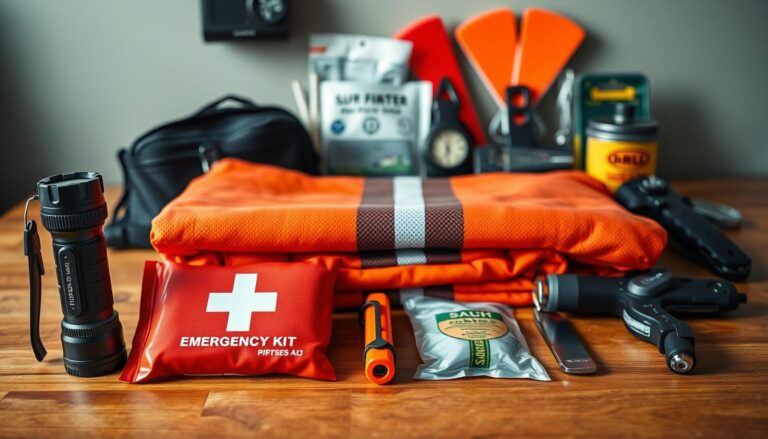
Must-have safety items include a first aid kit, fire extinguisher, and emergency roadside kit. Don’t forget to pack new water bottles for staying hydrated during long driving days. Waterproof hiking shoes are essential for exploring scenic stops along your route.
Consider purchasing an annual National Park Pass for $85 before your trip. This pass pays for itself quickly if you plan to visit multiple parks. We suggest buying it online or at your first park entrance to start saving immediately.
For grocery shopping, stores like Walmart offer excellent selection and competitive prices for RV travelers. Stock up on non-perishable foods, cleaning supplies, and basic medications. Remember that RV refrigerators are smaller than home units, so plan your food storage carefully.
“The key to successful RV packing is thinking like a minimalist while preparing like a Boy Scout.”
Understanding RV Campground Etiquette
Campground etiquette helps create a pleasant experience for everyone. We believe that following these unwritten rules shows respect for fellow travelers and campground staff. Good etiquette also helps you make friends and get helpful RV travel tips from experienced campers.
Arrive at your campsite during designated check-in hours, typically after 2 PM. Keep noise levels low, specially during quiet hours from 10 PM to 6 AM. Respect your neighbors’ space by keeping your belongings within your designated site boundaries.
When using hookups, connect your utilities properly and avoid leaving hoses or cords where others might trip. Clean up after yourself at dump stations and shared facilities. Leave your campsite cleaner than you found it as a courtesy to the next camper.
Be patient with newcomers who might need extra time setting up. Many experienced RVers are happy to offer assistance or advice. This friendly community spirit makes RV camping special and welcoming for first-time travelers.
Pre-Trip Maintenance Checklists
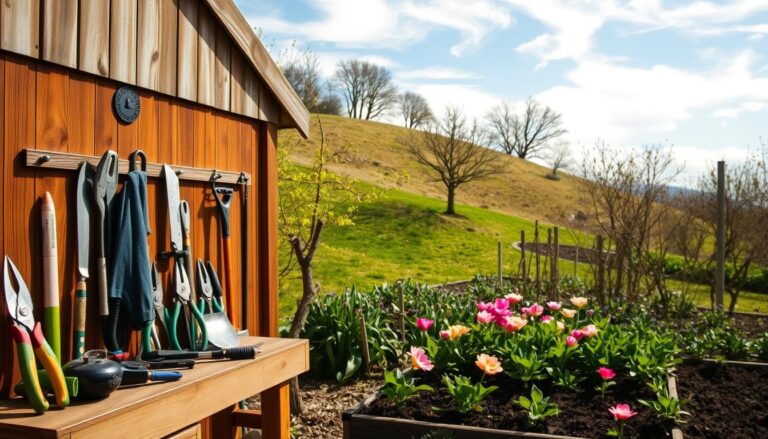
Regular maintenance prevents breakdowns and ensures safe travels on scenic routes. We recommend completing these checks at least one week before departure. This timing allows you to address any issues without rushing or compromising your travel plans.
Driving a 30-foot motorhome requires adjustment time, specially in windy conditions. Practice maneuvering in empty parking lots before hitting the highway. Understanding your RV’s handling characteristics builds confidence and improves safety.
| System | Check Item | Frequency | Notes |
|---|---|---|---|
| Engine | Oil level and condition | Before each trip | Change if dark or gritty |
| Tires | Pressure and tread depth | Weekly during travel | Check when cool |
| Brakes | Fluid level and pedal feel | Monthly | Test at low speeds first |
| Water System | Tank levels and pump operation | Before each trip | Sanitize tanks seasonally |
| Electrical | Battery charge and connections | Monthly | Clean terminals regularly |
Don’t forget to test all appliances, lights, and safety equipment before leaving home. Check that your propane tanks are full and connections are secure. Proper maintenance gives you peace of mind and helps prevent costly repairs on the road.
We also recommend carrying basic tools and spare parts for minor repairs. Items like fuses, light bulbs, and basic hand tools can save your trip when small problems arise. Many RV supply stores offer pre-made emergency kits designed for RV travelers.
Scenic Routes in California
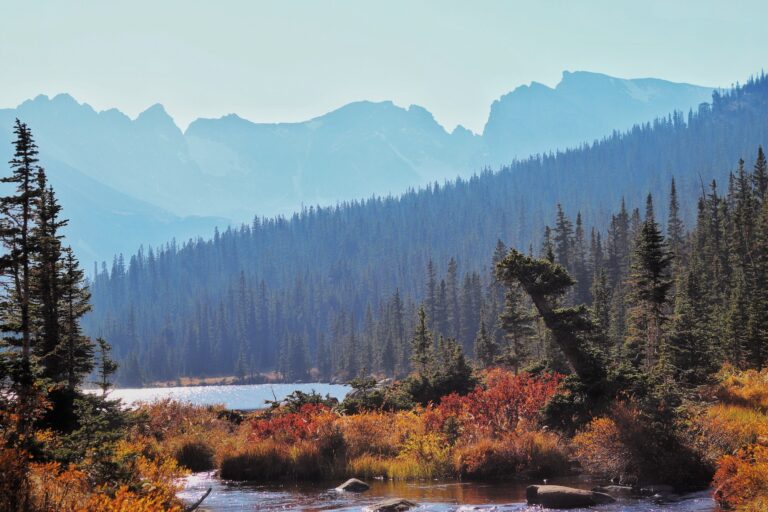
California’s RV-friendly routes offer amazing views. From ocean cliffs to desert vistas, they are unforgettable. The Golden State is a top RV destination in America. It has diverse landscapes that change quickly.
Each route has its own charm. The coastal highway has ocean views and mild weather. Desert parks offer stargazing and wide spaces. Mountain valleys have fresh air and waterfalls.
Pacific Coast Highway
The Pacific Coast Highway runs along California’s coast. It has some of the most breathtaking ocean views in the world. RV travelers can see charming beach towns, redwood forests, and cliffs.
Big Sur is famous for its mountains and ocean views. But, it has narrow roads and steep grades. We suggest starting with the Monterey to Santa Cruz segment for easier driving.
San Francisco is a great place to start. It has many RV parks and is close to the Golden Gate Bridge. From there, you can see the redwood groves, where trees are over 300 feet tall.
Joshua Tree National Park
Joshua Tree National Park is a desert wonderland. It has unique rock formations and plants. The park’s RV camping facilities are great for RV travelers.
The park has two deserts. The Mojave Desert has Joshua trees. The Colorado Desert has cholla cacti and ocotillo plants. Spring is the best time to see wildflowers.
Jumbo Rocks Campground is the most popular spot. It has spacious sites and boulder formations. Book early, as it gets busy.
Yosemite Valley
Yosemite Valley is home to famous landmarks like El Capitan and Half Dome. The valley floor has RV-accessible camping at Upper Pines Campground. It’s close to many viewpoints and trails.
The valley’s cliffs are over 3,000 feet high. Bridalveil Fall and Lower Yosemite Fall are easy walks. They offer great photo spots.
Tunnel View is famous for its Yosemite Valley photo. It’s a roadside spot with parking for RVs. You can see El Capitan, Bridalveil Fall, and Half Dome.
| Route | Best Season | RV Length Limit | Difficulty Level | Key Attractions |
|---|---|---|---|---|
| Pacific Coast Highway | April – October | 35 feet | Moderate | Big Sur, Redwoods, Coastal Towns |
| Joshua Tree National Park | October – April | 32 feet | Easy | Desert Landscapes, Stargazing, Rock Formations |
| Yosemite Valley | May – September | 40 feet | Easy to Moderate | Waterfalls, Granite Cliffs, Valley Views |
These routes show California’s beauty and are top RV spots. Each offers unique experiences and great RV facilities. Plan your trip for the best season and RV size for a safe and fun adventure.
Best RV Routes in the Southwest
The American Southwest turns regular trips into amazing adventures. It’s home to some of the best RV road trip ideas in the country. We’ll look at routes that mix stunning natural sights with rich history.
Deserts stretch far under clear blue skies. Ancient cultures left their mark here long ago. Today, travelers can see this magic from their RV.
Route 66 Adventure
Route 66 in Arizona and New Mexico is like a museum of America’s past. This famous road shows off the golden age of road travel. Vintage motels, classic diners, and quirky attractions line the way.
The Petrified Forest National Park is a highlight. Ancient trees turned to stone create a dreamlike scene. RVs can park at the visitor center.
In Holbrook, Arizona, you’ll find the Wigwam Motel. These concrete tepees offer a fun place to stay. The motel has RV parking for those who want to stay in these unique structures.
Winslow, Arizona, is famous from the Eagles song “Take It Easy.” The town celebrates this with a park and statue. RVs can park easily downtown, making it simple to explore.
Albuquerque to Santa Fe
This route shows off New Mexico’s mix of cultures. Native American and Hispanic influences make it special. The drive covers about 65 miles of beautiful desert.
Albuquerque has great RV spots at several campgrounds. The city’s Old Town has buildings from 1706. RV road trip ideas often include the Indian Pueblo Cultural Center here.
Santa Fe sits high in the Sangre de Cristo Mountains. The city’s plaza is the heart of its art scene. Streets are lined with adobe buildings and Native American art galleries.
RV parks near Santa Fe offer full hookups. Santa Fe Skies RV Park has mountain views and is close to downtown. Book ahead during busy times.
Grand Canyon’s South Rim
The Grand Canyon South Rim is a top spot for RV camping. Mather Campground inside the park takes RVs up to 30 feet. Advanced reservations are a must for this popular spot.
Desert View Drive offers amazing views of the canyon by RV. This 25-mile route connects several viewpoints. Each stop offers a different view of this natural wonder.
The Grand Canyon Village area has visitor services and places to eat. Free shuttle buses run to major viewpoints during busy times. RV parking is available at the visitor center complex.
| Route Segment | Distance | Best RV Campgrounds | Must-See Attractions |
|---|---|---|---|
| Route 66 (Flagstaff to Albuquerque) | 220 miles | Petrified Forest RV Park, Holbrook KOA | Petrified Forest, Wigwam Motel, Meteor Crater |
| Albuquerque to Santa Fe | 65 miles | Santa Fe Skies RV Park, Rancheros de Santa Fe | Old Town Plaza, Indian Pueblo Cultural Center |
| Grand Canyon South Rim | 80 miles from Flagstaff | Mather Campground, Desert View Campground | Grand Canyon Village, Desert View Watchtower |
| Complete Southwest Loop | 500+ miles | Multiple options along route | Combines all major attractions |
These Southwest routes offer amazing variety in short distances. RV road trip ideas don’t get better than Route 66 and natural wonders. Each place offers unique experiences that make lasting memories.
Plan ahead for the best campsites and travel times. Spring and fall are the best weather times. Summer can be very hot in the desert.
Exploring National Parks by RV
Exploring national parks by RV is amazing. We see stunning landscapes and wildlife. Each park has its own challenges and rewards.
Planning is key when visiting national parks by RV. We must check park rules and make reservations early. This helps us find the best campgrounds.
Yellowstone National Park
Yellowstone offers a unique outdoor adventure in an RV experience. We see geothermal wonders like Old Faithful and Grand Prismatic Spring. These sights are right from our campsite.
Weather in Yellowstone can be unpredictable. It gets cold and rainy, even in summer. So, we should pack warm clothes and waterproof gear.
The park has RV-friendly campgrounds with full hookups. Grant Village and Fishing Bridge are best for big RVs. We can see bison, elk, and bears while we’re there.
Zion National Park
Zion National Park needs careful planning for RV travelers. A shuttle system runs during busy times. We park our RV and take shuttles to popular spots.
The Zion-Mount Carmel Tunnel is a challenge for RVs. Vehicles over certain sizes need escort services for $15 each way. This is for RVs that are too tall or wide.
Despite these rules, Zion is great for RV adventures. The red rock formations are beautiful. We can hike many trails from our campsite.
Glacier National Park
Glacier National Park’s Going-to-the-Sun Road has limits for RVs. Vehicles longer than 21 feet or taller than 10 feet can’t go on this road. We need to find other ways to see the park’s beauty.
Smaller RVs can drive the mountain roads. But, bigger RVs must use other roads and viewpoints. The park has great camping spots for all RV sizes.
There are other routes with stunning views of glaciers. We can see beautiful lakes and trails from RV-friendly campgrounds. The park is home to mountain goats, bears, and many birds.
| National Park | RV Restrictions | Special Requirements | Best Campgrounds | Key Attractions |
|---|---|---|---|---|
| Yellowstone | Most sites accommodate RVs | Weather preparedness essential | Grant Village, Fishing Bridge | Old Faithful, Grand Prismatic Spring |
| Zion | Tunnel escort $15 for oversized RVs | Shuttle system required | Watchman Campground | Angels Landing, Narrows |
| Glacier | 21 feet max length, 10 feet max height | Going-to-the-Sun Road limits | Apgar, St. Mary | Lake McDonald, Logan Pass |
Every national park offers a unique RV adventure. We must know the rules before we go. Good planning helps us enjoy these natural wonders fully.
Reservation systems fill up fast during busy times. We should book campgrounds six months ahead. This way, we can secure our spot in these popular places.
Family-Friendly RV Destinations
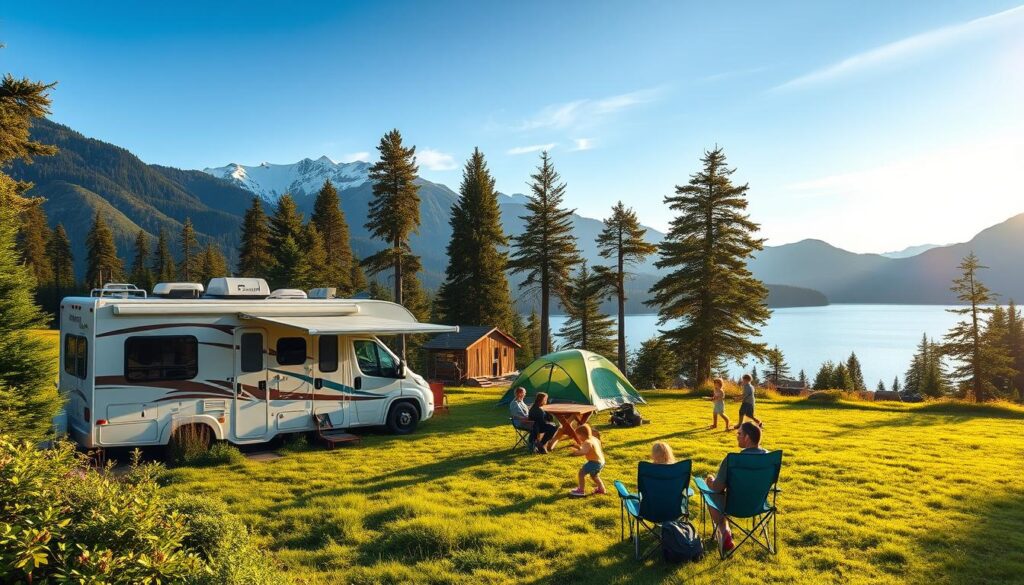
The best RV spots for families mix outdoor fun with activities for kids. Places that offer age-appropriate entertainment and natural beauty make lasting memories. These spots have room for everyone and activities that bring families closer.
RV trips are great when everyone has their own space. A 30-foot Class C Motorhome has separate beds for older kids. Junior Ranger programs at national parks keep kids excited during the trip.
Disney’s Fort Wilderness Resort
Disney’s Fort Wilderness Resort is the top spot for families. It mixes Disney magic with outdoor camping. RVs up to 45 feet long can stay here with full hookups.
Families can enjoy campfires, s’mores, and outdoor movies. It’s just minutes from Magic Kingdom. The resort has special activities that mix Disney with camping.
Children do wilderness explorer programs during the day. They also enjoy character dining at night. The Tri-Circle-D Ranch offers horseback riding, and the marina has boat rentals.
“Fort Wilderness gives families the best of both worlds – the excitement of Disney parks and the tranquility of nature camping.”
Getting around the resort is easy with boats, buses, and the monorail. Families can easily visit all four Disney theme parks without moving their RV. The resort has two swimming pools and beach areas for relaxation.
Niagara Falls State Park
Niagara Falls State Park is a natural wonder with great RV camping. The Reservoir State Park campground has 93 RV sites with electrical hookups. Book early, as it’s popular in summer.
Children are amazed by the falls and rainbow mists. The Maid of the Mist boat tours get you close to the falls. The Cave of the Winds lets families walk behind the water.
The area has more family fun. The Aquarium of Niagara has interactive exhibits and marine life shows. Old Fort Niagara offers historical reenactments and tours.
| Activity | Age Range | Duration | Cost |
|---|---|---|---|
| Maid of the Mist | All ages | 30 minutes | $25 adults, $15 children |
| Cave of the Winds | 6+ years | 45 minutes | $19 adults, $16 children |
| Aquarium of Niagara | All ages | 2-3 hours | $15 adults, $11 children |
| Old Fort Niagara | 8+ years | 2 hours | $13 adults, $8 children |
The Great Smoky Mountains
The Great Smoky Mountains National Park is a top family RV destination. It has wildlife viewing and educational programs. Elkmont and Smokemont campgrounds are the best for families.
Wildlife like black bears and deer are often seen. The Cataract Falls trail is a great hike for families. Kids enjoy finding salamanders in the streams.
There are educational programs all year. Park rangers lead walks and campfire programs. The Sugarlands Visitor Center has exhibits on mountain culture and history.
Gatlinburg and Pigeon Forge have more fun for families. Dollywood theme park has rides and crafts. The area also has dinner theaters and mini-golf for evening fun.
Budget-Friendly RV Route Ideas
Some of the best RV trips are on a small budget. Smart planning and the right spots can make your dreams come true without spending too much. Budget-friendly RV travel is possible with routes that have great views, cheap campsites, and free fun.
Knowing how much campgrounds cost is key. National park sites start at $18 per night. Private sites with full hookups can be $69 or more. An annual National Park Pass at $85 lets you visit many parks, saving money on long trips.
Look for places that are both beautiful and affordable. State parks often have great deals with full amenities. Many scenic routes also have free attractions and activities.
Tropical Paradise in the Florida Keys
The Florida Keys are a cheap tropical getaway. They have clear waters, vibrant reefs, and sunshine all year round at good prices.
Camping costs in the Keys vary by location and season. Bahia Honda State Park has some of the cheapest options at $36 per night. Long Key State Park is another great deal at around $42 per night, right by the ocean.
There are lots of free things to do in the Keys. Enjoy the beaches, snorkel in shallow waters, and watch amazing sunsets. The famous Mallory Square sunset celebration in Key West is free.
- Visit the free Crane Point Museum and Nature Center in Marathon
- Explore John Pennekamp Coral Reef State Park’s glass-bottom boat tours
- Take advantage of free fishing from bridges and piers
- Enjoy complimentary beach access at most state parks
Rugged Beauty Along the Oregon Coast
Oregon’s coast is stunning without the high costs of other coastal places. The state’s public beach access means you can enjoy miles of beautiful shoreline for free.
Oregon State Parks are great for RV travelers. Most coastal parks charge between $24-$31 per night for sites with hookups. Places like Cape Lookout State Park and Jessie M. Honeyman Memorial State Park offer beach access at these prices.
The Oregon Coast has amazing natural sights that don’t cost anything. Spend hours exploring tide pools, watching for whales, and hiking coastal trails. The dramatic sea stacks and rugged cliffs are perfect for photos without spending a dime.
Money-saving tip: Visit during shoulder seasons (late spring or early fall) for lower rates and fewer crowds while enjoying mild weather.
- Explore free tide pools at Haystack Rock in Cannon Beach
- Visit the Sea Lion Caves viewing area for minimal cost
- Hike the numerous free coastal trails
- Watch for migrating whales from any coastal viewpoint
Spectacular Colors on the New England Fall Foliage Route
New England’s fall colors are breathtaking. This budget-friendly route through Vermont, New Hampshire, and Maine is great during peak foliage season.
State park camping is the best deal in New England. Vermont State Parks charge around $18-$27 per night for RV sites. New Hampshire and Maine offer similar rates. Many parks have great views of fall colors right from your campsite.
The area’s small towns and scenic drives are free to explore. The Kancamagus Highway in New Hampshire and Route 100 in Vermont are top spots for free foliage views. These routes go through mountains and valleys with brilliant colors.
Budget-friendly fall activities include visiting local farmers’ markets, exploring historic covered bridges, and hiking trails. Many towns have free fall festivals and events during peak season.
- Drive the scenic Kancamagus Highway for free spectacular views
- Visit historic covered bridges throughout the region
- Explore free hiking trails with panoramic mountain views
- Attend complimentary fall festivals in small towns
- Take advantage of free apple picking at many orchards
Each route shows that affordable RV travel doesn’t mean missing out on great experiences. By choosing places with good campsite prices and lots of free activities, we make unforgettable memories without breaking the bank. The secret is planning well, picking the right times, and focusing on nature’s wonders.
Tips for Traveling with Pets in Your RV
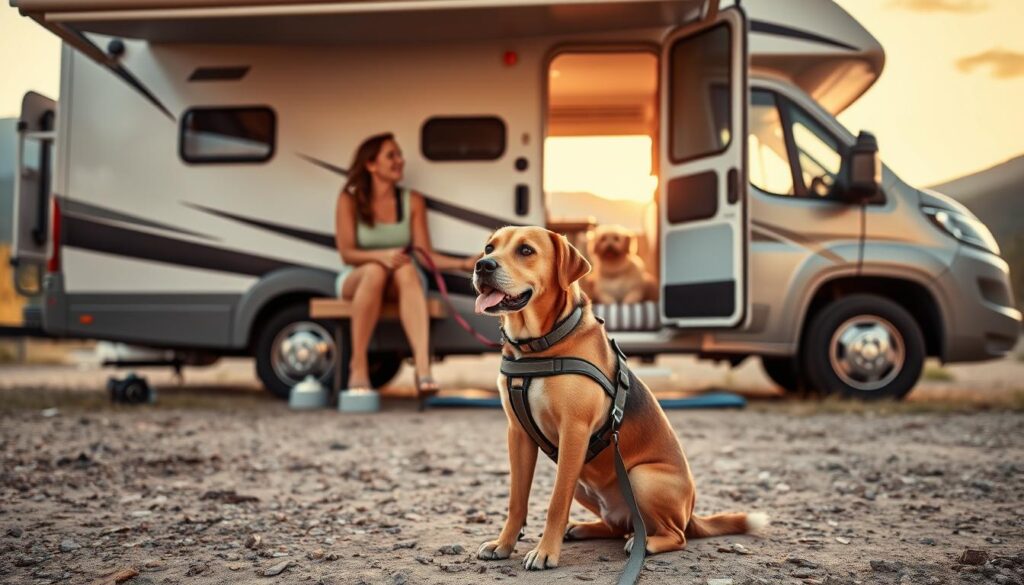
Many RV fans find that pets are the best travel buddies. RV travel with pets needs careful planning for a safe and fun trip. We’ll share tips to make your pet’s journey comfortable and enjoyable.
Understanding your pet’s needs is key. Some pets love RV life, while others need time to adjust.
Finding the Right Pet-Friendly Campgrounds
Not all campgrounds allow pets, so research pet-friendly campgrounds early. Each place has its own rules about pet size, breed, and leash use.
Look at websites of places like KOA and Good Sam for pet policies. State parks are great for pets with trails and open spaces.
- Check pet fees and deposit requirements in advance
- Verify vaccination and health certificate requirements
- Look for campgrounds with designated pet areas
- Read reviews from other pet owners about facility cleanliness
Essential Safety Measures for Your Pets
Pet safety is our main concern on RV trips. Make sure pets wear ID tags and consider microchipping.
Never leave pets alone in the RV in hot or cold weather. Even with AC, things can go wrong fast.
- Pack a pet first aid kit
- Research emergency vet clinics along your route
- Use proper restraints or carriers while driving
- Keep pets away from RV slide-outs and moving parts
Creating Comfort During Long Travel Days
Keeping pets comfortable is important. Stick to their usual routines, like feeding times and exercise.
Keeping the RV cool is key for pet comfort. Proper ventilation and climate management prevent overheating and stress.
- Bring familiar bedding and favorite toys from home
- Plan frequent stops for bathroom breaks and exercise
- Maintain consistent feeding schedules despite travel disruptions
- Create quiet spaces where pets can retreat when overwhelmed
Some pets get motion sickness or anxious during RV trips. Introduce them to the RV slowly before you leave. This helps them feel more comfortable.
Enjoying Scenic Stops Along the Way
RV travel is not just about reaching your destination. It’s about finding treasures along the way. Unplanned stops at roadside attractions and scenic views make your journey special. These stops turn your trip into an adventure of discovery.
Spontaneous exploration makes every RV trip better. The best stories come from unplanned moments. Your RV lets you stay as long as you want at each place.
Charming Small Towns to Visit
Small towns across America welcome RV travelers. Jackson Hole, Wyoming is a great example. It has a western charm and modern amenities.
Main streets in small towns show local history and culture. Many have RV-friendly parking downtown. This makes it easy to explore shops, cafes, and historic sites. You can also enjoy seasonal festivals and live music.
Each small town offers unique experiences. You’ll find antique shops, local breweries, and family restaurants. Take time to chat with locals for the best recommendations.
Unique Landmarks Not to Miss
Iconic landmarks are perfect for photos and memories. The Four Corners Monument lets you stand in four states. Horseshoe Bend in Arizona is a must-see for its view.
Antelope Canyon near Page, Arizona, is a natural wonder. Wall Drug in South Dakota is a classic American attraction. It has quirky attractions and free ice water.
Research landmarks on your route and plan extra time. Many have RV parking areas and facilities. Some need reservations, so plan ahead.
| Landmark | Location | RV Parking | Best Time to Visit |
|---|---|---|---|
| Four Corners Monument | Utah/Colorado/Arizona/New Mexico | Large parking area | Early morning or late afternoon |
| Horseshoe Bend | Page, Arizona | Designated RV spaces | Sunrise or sunset |
| Antelope Canyon | Page, Arizona | Tour company lots | Midday for light beams |
| Wall Drug | Wall, South Dakota | Free RV parking | Anytime during business hours |
Scenic Overlooks and Viewpoints
Scenic viewpoints along your route are breathtaking. Scenic overlooks have pullout areas for RVs. They have picnic tables and signs about the area’s history.
Mountain passes offer stunning views of valleys and peaks. Coastal overlooks show endless ocean views. Desert viewpoints are beautiful during golden hour.
Check road conditions before visiting remote overlooks. Some have narrow roads. Popular overlooks can be crowded, so arrive early.
Many overlooks connect to hiking trails. Short walks can reveal amazing views. Always tell someone where you’re going and carry water in desert areas.
The journey of a thousand miles begins with a single step, but the memories of a lifetime begin with a single scenic stop.
Scenic stops are more than just sightseeing. They let you stretch, walk pets, and refresh. These breaks prevent driver fatigue and lead to spontaneous adventures.
RV Safety Tips for New Travelers
We think confident RV travel starts with knowing safety basics. Your first RV trip should be fun, not scary. Learning RV safety tips helps you face any challenge.
New RV users often face big challenges. But, most RVs don’t need a special license. Driving a big RV is different from driving a car.
Mastering Vehicle Control
RV safety starts with knowing your RV’s size and limits. Practice in empty lots before driving on the road. This helps you get used to turning, backing, and parking.
Wind can be a big problem for RV drivers. Crosswinds can push your RV a lot, on bridges and highways. Try to avoid driving in windy weather.
Start with short drives on your first trips. New RV drivers get tired faster. Drive no more than 200-300 miles a day until you get used to it.
- Check height clearances at gas stations, bridges, and drive-throughs
- Use your mirrors constantly and consider blind spot monitors
- Maintain larger following distances than you would in a car
- Practice backing up with a spotter whenever possible
Building Your Emergency Kit
Being ready for emergencies makes you a confident traveler. Your RV emergency kit should have more than first aid. Include tools for RV travel problems.
Having good communication devices is key when you’re far from home. Cell phone service isn’t always there. Think about getting a satellite communicator for emergencies.
Weather can change fast on RV trips. Severe storms, flash floods, and extreme temperatures need special plans. Check the weather often and have backup plans ready.
- Multi-tool with wire cutters and electrical tape
- Tire pressure gauge and portable air compressor
- Emergency water and non-perishable food for 72 hours
- Battery-powered or hand-crank radio
- Flashlights with extra batteries
Safe Setup Procedures
Setting up your campsite safely protects you and your RV. Proper leveling is key for your fridge and appliances to work right.
Be careful with electrical hookups. Always test the campground’s electrical before plugging in. Bad wiring can damage your RV’s electrical system and cause fires.
Water and sewer connections need safety care. Use gloves with sewer hoses. Don’t drink from campground water spigots without filtering.
| Setup Task | Safety Priority | Common Mistake |
|---|---|---|
| Leveling | Check stability before extending slides | Rushing the process |
| Electrical | Test pedestal voltage first | Skipping surge protector |
| Water | Use pressure regulator | Connecting without filter |
| Sewer | Wear protective gloves | Improper hose storage |
Always do a walk-around after setting up. Make sure all connections are tight and nothing is on the ground. Make your safety checklist second nature after a few trips.
Other campers watch and learn from you. Following safety rules sets a good example for everyone. Take your time, ask questions, and never skip safety steps.
Making the Most of Your First RV Experience
Your first RV trip opens up a world of fun. It’s not just about getting to places. It’s about enjoying the journey too.
Connecting with Fellow RV Enthuasiasts
The RV community is very welcoming. Start talking to people at campsites, join online groups, and go to RV rallies. You’ll learn lots of tips and make friends for life.
Photography Tips for Capturing Memories
Take photos to remember your trip. Snap sunrises, family fun, and beautiful views. Show off your RV in different places. The best photos are during the golden hour.
Creating a Travel Itinerary That’s Right for You
Use tools like Roadtrippers.com to plan your trip. Book some campsites ahead, but leave room for surprises. Collect National Park stamps to remember your travels.