Welcome to the exciting world of mobile culinary adventures! Downsizing to a compact motorhome galley might seem tough at first. But, with the right approach and smart planning, you can make amazing meals on the road.
Our guide focuses on RV Kitchen Essentials that turn cramped spaces into efficient cooking areas. We’ll share tips for making the most of every inch while keeping your passion for great food alive. From clever storage to multi-functional appliances, these ideas will change how you cook on the move.
Whether you’re planning weekend trips or living on the road full-time, our RV cooking must-haves will boost your cooking skills. We know that space shouldn’t stop you from being creative or making delicious meals. Let’s explore the tools and techniques that let you cook like a pro, no matter where you are.
Key Takeaways
- Compact motorhome galleys can produce restaurant-quality meals with proper planning
- Multi-functional appliances maximize limited counter and storage space effectively
- Vertical storage solutions like magnetic racks optimize every available inch
- Strategic meal planning reduces waste and simplifies mobile cooking processes
- Space-saving tools and techniques maintain culinary creativity on the road
- Proper organization transforms cramped quarters into efficient cooking environments
Maximizing Your RV Kitchen Space
Turning your RV kitchen into a cooking space needs smart planning. Think vertically and pick multi-use appliances. Every inch should help you.
When space is tight, old storage methods won’t do. New ideas for walls, ceilings, and appliances open up storage. This makes your kitchen more useful.
Smart Storage Solutions
Vertical storage is a big change for RV kitchens. Magnetic spice racks on your fridge sides save cabinet space. They turn unused space into useful storage.
Hanging pot rails with S-hooks are great for storing cookware. Put them on walls or ceilings. This keeps your cooking essentials close.
Fold-down tables are a big help. They give you extra space when needed and hide away when not. Place them near your cooking area for best use.
Here are more ideas for vertical storage:
- Over-the-sink cutting boards that slide away
- Cabinet door organizers for cleaning supplies
- Ceiling-mounted paper towel holders
- Wall-mounted knife strips
Multi-Use Appliances
Space-saving gadgets that do many things are key. Three-in-one air fryers, toasters, and microwaves like the Ninja Foodi save space. They can reheat, bake, and more.
Collapsible silicone items are another big help. They include colanders, bowls, and kettles that save space. They cut storage needs in half but work great.
Choose appliances that stack, nest, or fold. Pressure cookers that slow cook, blenders with lids, and coffee makers with grinders are good. They save space and money.
The secret to a great RV kitchen is choosing versatile, space-saving tools. Each item should be useful and efficient.
Must-Have Tools for RV Cooking
Having the right cooking tools makes your RV kitchen great. Quality equipment makes cooking fun, not frustrating. Choose versatile tools that save space.
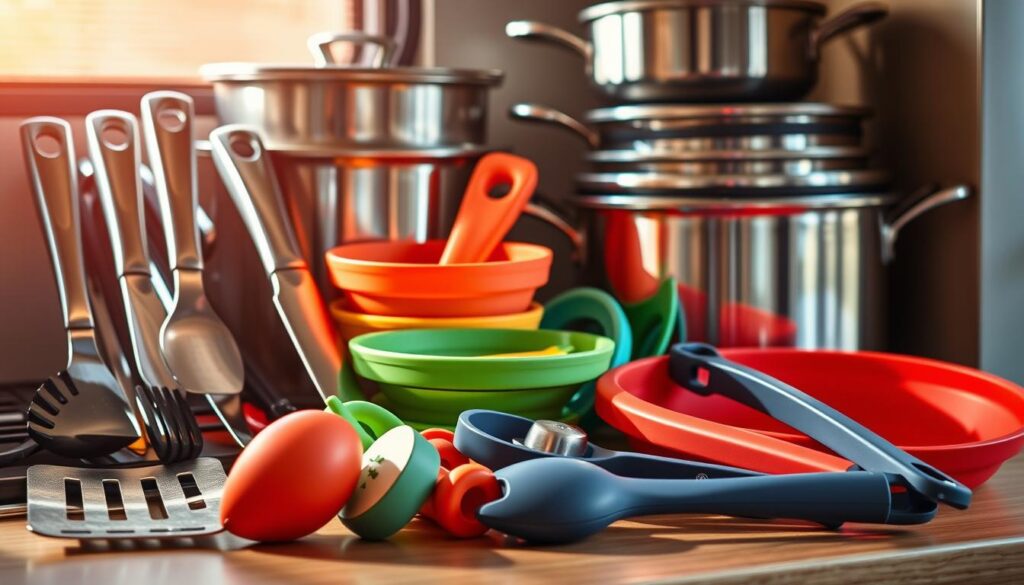
Success in cooking in tight spaces depends on the right tools. Each utensil and piece of cookware should be useful and designed well. Let’s look at the essential utensils for RV cooking and cookware that makes your kitchen better.
Essential Cooking Utensils
Start your utensil collection with the basics for daily tasks. Quality is more important than quantity in small spaces. Your essential toolkit should include these must-haves:
- Sharp knives – A good chef’s knife and paring knife handle most cutting tasks
- Measuring tools – Nested measuring cups and spoons save space
- Can opener – Choose a reliable manual model that won’t break
- Vegetable peeler – Essential for fresh produce preparation
- Multi-purpose grater – Look for compact designs with multiple grating options
Don’t forget complete flatware sets for your entire group. Nobody wants to share utensils during camping trips! Stainless steel options are best because they resist corrosion and handle outdoor conditions well.
Flexible cutting boards are great for saving space. They bend easily and fit under sinks or behind refrigerators when not in use. They’re perfect for small prep tasks and won’t take up valuable counter space.
Quality Cookware and Bakeware
Choosing the best cookware for RV living means finding functional and space-saving pieces. Cast iron skillets are great because they can be used for frying, baking, and grilling.
Stackable cookware sets are a big help for RV kitchens. Look for designs that nest three pots and two pans in one spot. Non-stick surfaces are also valuable for easy cleanup and less scrubbing.
Your bakeware collection should include versatile pieces that expand your cooking options:
- Cookie sheets – Perfect for baking and roasting
- Muffin tins – Great for individual portions and creative recipes
- Casserole dishes – Essential for one-pot meals and leftovers
- Loaf pans – Ideal for bread and meatloaf
Quality materials make a big difference in RV cooking. Stainless steel and cast iron are better than cheaper options because they handle temperature changes and rough handling well. These investments last a long time on the road.
Remember, the best cookware for RV living is durable and has smart storage solutions. Choose pieces that stack, nest, or serve multiple functions to make the most of your kitchen space.
The Importance of Meal Planning
Mastering RV cuisine starts with meal planning. It uses your limited space wisely. Smart meal planning turns your small kitchen into a place of creativity.
Planning ahead saves time, money, and space. It makes sure you have tasty meals anywhere. Good planning means no more chaotic cooking.
Strategies for Efficient Meal Prep
Start with foods that last long and save space. Freeze sauces in ice cube trays for quick pesto or tomato sauce.
Vacuum-packed proteins are a big help. Cook chicken or beef at home and seal it. It reheats fast, saving time.
Root veggies like onions and potatoes last long. They’re key for many meals. These veggies are your RV meal planning heroes.
Here are more prep tips:
- Pre-cut veggies in airtight containers
- Make spice blends in small jars
- Cook grains in bulk for quick reheating
- Make energy balls or granola bars
Easy and Tasty Recipes
One-pan breakfast hash is easy and clean. It has potatoes, eggs, and veggies in one skillet. Just dice potatoes, cook them, add veggies, and eggs.
Mason jar salads are great for lunch. Layer grains, veggies, and dressing in jars. Dressing at the bottom keeps greens fresh.
Campfire foil packets are easy and tasty. Wrap protein and veggies in foil with seasonings. Cook over the campfire or grill. These packets cook everything together.
Other RV-friendly recipes include:
- Slow cooker stews that cook while you explore
- Pasta salads that get better with time
- Breakfast burritos wrapped and frozen for quick mornings
- Trail mix combinations for hiking
These strategies help you enjoy your journey more. With good planning, your RV kitchen is a comfort.
Keeping Your RV Kitchen Organized
Keeping your RV kitchen organized is more than just tidiness. It’s about making a space that works well on the road. Effective RV kitchen organization solutions keep things safe and easy to find. The secret is to pick storage that fits your RV’s special needs.
Having a place for everything makes your RV kitchen efficient. When things move around, cooking can be hard and risky. Good organization stops this and uses your space well.
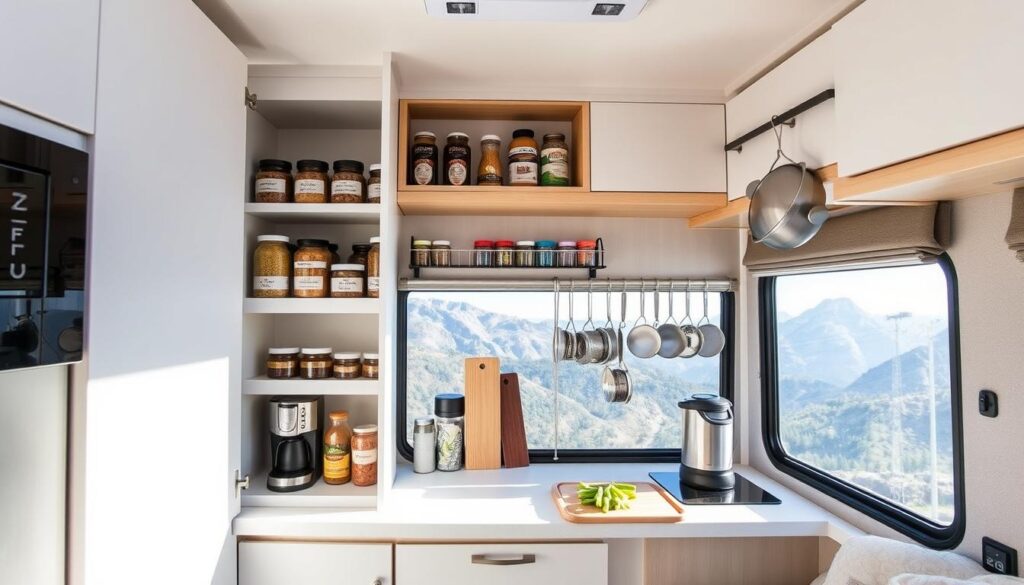
“The secret to RV living is that everything must have a place, and everything must stay in its place while you’re moving down the road.”
Maintaining a Clutter-Free Environment
To keep your RV kitchen tidy, set clear rules on what stays and what goes. Every item must earn its place by being useful or essential. Check monthly to get rid of unused items.
Use vertical space wisely in small areas. Add tension rod dividers in cabinets for extra shelves. This keeps things from falling over during travel.
Over-the-door storage is great for pantry doors. Use clear shoe organizers for snacks and cleaning supplies. This lets you see what you have and avoid buying too much.
Don’t forget about under-sink storage. A portable shower caddy keeps cleaning supplies in order. It’s easy to remove when you need to access plumbing or add more storage.
Organizing Pantry Staples
RV pantry organization needs creative solutions. Vacuum-sealed Mason jars save space and keep pests out. Use them for dry goods like pasta and rice.
Drawer and cabinet organizers make the most of big spaces. Use cutlery trays and folding shelves to keep things in place. This keeps your kitchen organized and safe during travel.
Label everything to keep your system working. Knowing where things are helps avoid clutter. Use a label maker or waterproof markers for durable labels.
Think about the weight of your pantry items when organizing. Put heavy things in lower cabinets and light items up high. This improves your RV’s balance and makes things easier to reach.
These tips make cooking in your RV a breeze. Good organization saves time, reduces waste, and keeps you safe. It takes effort to keep it up, but it’s worth it for a more comfortable trip.
Choosing the Right Appliances
The right appliances can change your RV cooking experience. They can turn small spaces into great kitchens. Every inch of space is important in your mobile kitchen.
Choosing the right appliances is key. They affect your cooking and how much energy you use. Smart selection means picking devices that do more than one thing. Look for compact designs that use less power.
Comparison of RV-Friendly Appliances
We’ve tested many appliances to find the top RV kitchen accessories. Portable induction cooktops are our top pick. They are safe and use less energy.
Coffee lovers have to choose between automatic makers and manual methods. Programmable coffee makers are convenient. But, electric kettles and French presses are more flexible and save space.
Toaster ovens are better than toasters in RV kitchens. They can bake, broil, and reheat. This makes them a must-have for RVers.
| Appliance Type | Power Consumption | Space Required | Versatility Rating | Best For |
|---|---|---|---|---|
| Portable Induction Cooktop | 1200-1800W | 12″ x 15″ | High | Precise cooking control |
| Electric Kettle | 800-1200W | 6″ x 8″ | Medium | Quick water heating |
| Toaster Oven | 1200-1500W | 16″ x 12″ | Very High | Multiple cooking methods |
| Coffee Maker | 600-1000W | 10″ x 12″ | Low | Automated brewing |
Energy-Efficient Options
Energy efficiency is key when boondocking. We look for appliances with low power use. These choices help you camp longer off the grid.
Twelve-volt appliances are the most energy-efficient for RVs. They use your battery system directly. Coolers, fans, and RV microwaves are popular 12V options.
Inverter-friendly appliances work well with RV power systems. Choose models made for RV use. They have lower startup surges and work well on inverter power.
Appliances with multiple power options are very flexible. Some cooktops work on 120V AC and 12V DC. This lets you cook no matter your power source.
Battery-powered tools don’t use any power. Rechargeable blenders, coffee grinders, and vacuum sealers are great. These accessories are perfect for long boondocking trips.
Cooking Techniques for Tiny Spaces
RV cooking gets a lot easier with special techniques for small spaces. These methods help us make tasty meals even when we have little room. Smart cooking techniques make a big difference in how we cook on the road.
There are two main ways to cook well in an RV. First, we use efficient indoor methods. Second, we cook outside to have more room for making meals.
One-Pan Meals
One-pan meals are key for easy RV cooking. They cook in one pot, saving time and water. We love making breakfast hashes in one skillet.
Stir-fries are great for one-pan cooking too. We mix protein, veggies, and sauce in one pan. Cutting ingredients the same size helps them cook evenly. Complete pasta dishes also cook well in one pan, soaking up flavors.
Sheet pan dinners are another good choice for RV ovens. We put veggies and protein on one sheet and roast them. This works well for chicken with veggies or salmon with asparagus.
Grilling and Outdoor Cooking
Outdoor cooking gives us more space and keeps the RV cool. We turn a storage area into a grill station. This makes cooking outside easy and organized.
Pop-up canopy kitchens take outdoor cooking further. We set up tables under a canopy and use magnetic knife strips. This creates a weatherproof prep zone like an extra kitchen.
Solar-powered coolers like the Dometic CFX3 let us cook outside longer without using RV power. They keep food fresh while we cook. We can marinate meats, keep veggies crisp, and store dishes safely.
| Cooking Method | Space Required | Cleanup Level | Best For |
|---|---|---|---|
| One-Pan Skillet | Single Burner | Minimal | Quick weeknight dinners |
| Sheet Pan Roasting | RV Oven | Low | Sunday meal prep |
| Outdoor Grilling | External Setup | Moderate | Weekend entertaining |
| Canopy Kitchen | Campsite Area | Variable | Extended cooking projects |
These cooking methods turn our campsite into a kitchen. We can make more meals and enjoy the outdoors. Using both indoor and outdoor cooking gives us the best RV cooking experience.
Refrigeration and Food Storage Tips
Learning how to store food in your RV is key to enjoying fresh meals on the go. Proper food storage techniques can make a big difference. They help you avoid expensive restaurant food and enjoy home-cooked meals.
RV refrigerators are different from home units. They have hot and cold spots that change when you drive. This can cause a mess when you arrive at camp.
Best Practices for Freshness
Keeping the right temperature is essential for food freshness in your RV. Keep your fridge between 35-38°F and your freezer at 0°F. This stops bacteria from growing and keeps food fresh.
Don’t overload your fridge. Too much stuff blocks air from moving. Good airflow keeps temperatures even in the fridge. Aim for about 75% capacity for best results.
Know how your RV fridge works to store food right. Some areas are colder or warmer. Put dairy and meats in the coldest spots. Fruits and veggies do better in warmer areas.
The key to RV food storage success is working with your refrigerator’s quirks, not against them.
Tips for Space-Saving Storage
Collapsible food storage containers are a game-changer for RV kitchen organization. These leak-resistant containers save space when empty. Look for ones that are safe for the dishwasher, freezer, and microwave.
Use fridge bars and bin organizers to keep things from falling out. These simple tools keep your fridge tidy. Clear bins help you find what you need without digging.
For dry goods, use sealed pantry storage containers. They keep cereal and oatmeal fresh and pest-free. These containers stay in your RV between trips. Just add fresh items before each trip.
Choose stackable containers that fit your cabinets. Custom-fitted storage solutions use every inch of space. Measure your cabinets first to get the right fit.
Label everything clearly with what’s inside and when it was stored. This helps prevent food waste and keeps stock fresh. Use removable labels to avoid sticky messes.
Safety Tips for Cooking in an RV
Cooking in our RV kitchen starts with safety. RVs have unique challenges that need extra care. We must cook safely in these small spaces while keeping our meals tasty.
Knowing these safety tips keeps us healthy and our RV safe. Every RV cook should learn these safety practices before traveling.
Fire Safety Precautions
Fire prevention is key in RV kitchens. Install smoke and carbon monoxide detectors in your RV. These are your first defense against danger.
Proper ventilation is key when cooking. Turn on your exhaust fan and open windows or vents. Never cook with them closed to avoid carbon monoxide buildup.
Keep a fire extinguisher in your kitchen. Mount it near the exit for easy access. Learn how to use it and check the pressure gauge often.
Never leave cooking food alone. RV kitchens have few escape routes. If you must leave, turn off burners and remove pans from heat.
Propane safety is very important. Know where your propane shutoff valve is and practice turning it off. Check propane connections for leaks with soapy water. Replace any damaged hoses or fittings right away.
Safe Food Handling Practices
Food safety is harder in RVs because of limited water and refrigeration. We must adapt our food handling to prevent illness.
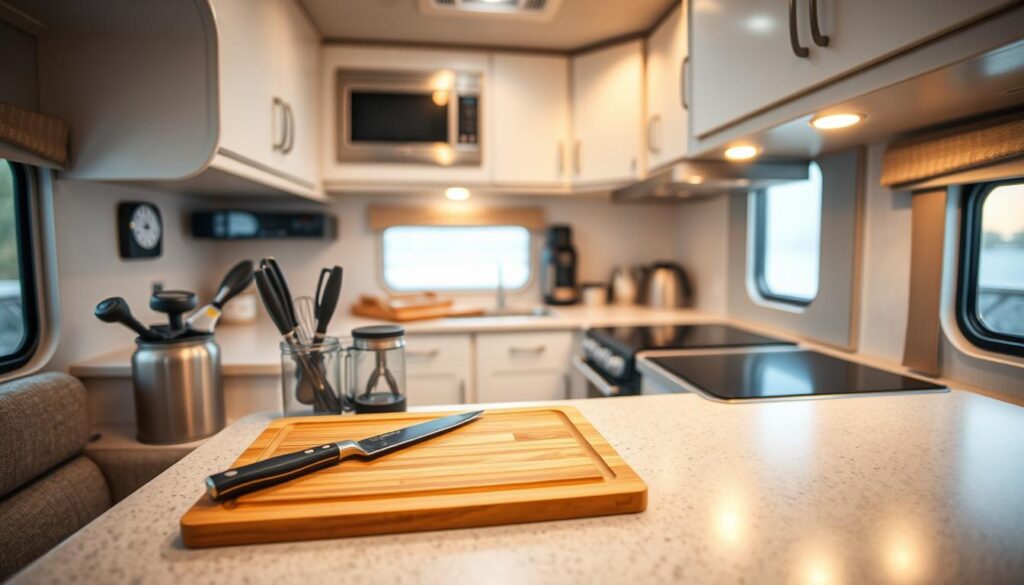
Use separate cutting boards for raw meats and veggies. Color-coded cutting boards help us remember which to use for each. Store them in different places to avoid confusion.
Hand washing is critical when water is scarce. Keep hand sanitizer handy for when soap and water aren’t available. But always wash hands with soap and water after handling raw meats or using the bathroom.
Keep food at the right temperature. Use a food thermometer to check meat temperatures. Store raw meats on the bottom shelf of your fridge to prevent drips from contaminating other foods.
RV fridges may not keep temperatures steady. Practice the “when in doubt, throw it out” rule to avoid illness. Check expiration dates often and trust your senses about food freshness.
| Safety Category | Essential Equipment | Key Practices | Maintenance Schedule |
|---|---|---|---|
| Fire Prevention | Fire extinguisher, smoke detectors, carbon monoxide detector | Never leave cooking unattended, ensure proper ventilation | Monthly detector tests, annual extinguisher inspection |
| Propane Safety | Leak detection solution, propane gauge, spare hoses | Regular connection inspections, quick shutoff practice | Monthly leak checks, annual professional inspection |
| Food Safety | Food thermometer, separate cutting boards, hand sanitizer | Proper food temperatures, frequent hand washing | Daily temperature checks, weekly equipment sanitization |
| Water Safety | Water testing kit, purification tablets, clean storage containers | Regular tank cleaning, safe water sourcing | Monthly tank sanitization, quarterly water testing |
Store cleaning supplies safely away from food. RV storage areas are small and can easily mix cleaning products with food. Use labeled containers and dedicated storage for each item.
Plan meals based on your water and waste storage. Choose recipes that minimize cleanup and waste. This makes your RV kitchen safer and easier to manage on trips.
Managing Waste in Your RV Kitchen
Proper waste management makes your RV kitchen clean and organized. It’s key to handle trash, recycling, and food waste well in a small space. The way you dispose of waste affects your comfort and the cleanliness of your home on wheels.
Start by understanding your RV’s design. Some have special spaces under the sink, while others have trash chutes outside. Choosing the right trash can size and style depends on your RV’s layout.
Measure your space before buying trash containers. RV trash cans come in sizes from 8 to 13 gallons. Make sure to have cleaning supplies ready for spills or messes.
Recycling and Composting Tips
Recycling and composting are important on the road. Many campsites have recycling facilities. Collapsible containers are great for sorting recyclables without taking up too much space.
For composting, use a small bin with a tight lid for food scraps. Empty it at facilities or bury it following Leave No Trace. Avoid composting meat, dairy, or oily foods to prevent pests and bad smells.
Best Practices for Trash Disposal
Effective trash disposal needs good habits and quality supplies. Use trash bags that fit your can to avoid messes. Empty waste often to prevent odors in your RV kitchen.
Biodegradable trash bags are eco-friendly. Reduce single-use items to save space. Keep a handheld vacuum or dustpan for quick cleanups.
| Waste Type | Storage Solution | Disposal Method | Frequency |
|---|---|---|---|
| General Trash | Fitted trash can with lid | Campground dumpsters | Every 2-3 days |
| Recyclables | Collapsible sorting bins | Recycling centers | Weekly or as needed |
| Food Scraps | Countertop compost bin | Compost facilities or burial | Daily |
| Grease/Oil | Small sealed containers | Proper disposal sites | As accumulated |
Keeping your RV kitchen clean is important for your health and travel joy. Proper waste management becomes easy with the right equipment for your RV.
Upgrading Your RV Kitchen Experience
Smart upgrades can make your RV kitchen amazing. The right changes make cooking fun and use space well.
Smart Gadgets for Culinary Enthuasiasts
Upgrades under $30 can make a big difference. Magnetic knife strips save drawer space and keep knives safe. Retractable dish drying racks fit inside sink covers and fold up when not in use. Sink strainer baskets catch food scraps for easy cleaning.
Luxury upgrades make your RV kitchen like a restaurant. Slow cookers let us make favorite recipes on the go. Air fryers cook healthier fried foods faster than ovens. Portable ice makers make up to 25 pounds of ice daily for parties at campgrounds.
Blenders and mixers make smoothies, sauces, and frozen drinks. These make us popular with other campers. A poll shows 68% of RVers love compact espresso makers as their top kitchen splurge.
Creative Culinary Gifts for RVers
Bar essentials make RV life more social. Good bottle openers, corkscrews, and insulated tumblers make outdoor parties better. Wine chillers keep drinks cool during warm weather camping.
These thoughtful upgrades show small investments can make a big difference. The right gadgets make cooking on the road a joy.